Feeds:
Posts
Comments

Archive for July, 2025

In some ways, I can’t believe I’m actually writing this, but there are so many stories around just now of children being killed. Almost every day we hear of children being blown to pieces in Gaza, of children being deliberately starved to death. We hear of children killed in wars and conflicts around the world, and, the truth is, we always have.

Recently the case of 800 bodies and children thrown into an unmarked “grave” in Ireland has come to the fore….a story of nuns who discarded the ones who died in their care. How many stories are there of children abused, beaten, humiliated or sexually exploited in so-called “childrens’ homes”? Many of those stories are historic, but, surely, it’s unlikely all that abuse and killing has stopped?

I’ve also read a few articles recently about how “we” have lost our moral compass. With politicians, and those in positions of power, deliberately lying, never held to account, with their corruption and money-grabbing exploitation of their positions, and with all the dreadful violence perpetrated on children (and adults, of course) in Gaza, with voices of dissent shut down. There’s apparently an epidemic of shoplifting but there aren’t enough police to even bother to attend the shops, or pursue the criminals, despite the fact there seem to be plenty of police available to arrest people for standing quietly on the street holding placards. Moral compass?

Sure, there’s never been a time in history where children haven’t been abused and killed. Sure, there’s never been warfare that didn’t destroy the lives of innocent men, women and children. But it never was OK, and it sure isn’t OK now.

Can we agree? Can we agree that it is NEVER OK to kill children?

And if we can agree that, can we condemn those who do it?

Can we agree that it is NEVER OK to abuse children or to make them suffer?

And if we can agree that, can we condemn those who do it?

That would be a good first step on the path to discovering a moral compass. Maybe if we could do that, we could then start to apply the same standards to all other human beings. Now that would be something!
Read Full Post »

Rebecca Solnit, in her “No straight road takes you there”, quotes the environmental writer, Chip Ward, as referring to “the tyranny of the quantifiable”.

There’s an obsession with numbers in our world. From measurements to statistics, there is a determination to quantify every aspect of life. Yet, Life, itself, is not quantifiable. Neither is Love, Beauty, Goodness, Happiness, Self esteem or self worth, despite the attempts by psychologists to attribute numbers and scales to any invisible phenomena.

This is an issue I had to deal with every day of my working life, because neither “health”, nor the most troublesome of symptoms such as pain, nausea, dizziness, fatigue, itch or breathlessness, can be observed objectively and be measured. Many people used proxies to measure the invisible – scales, such as “from 0 to 10, where 0 is the least troublesome and 10 the most, what number would apply to your “X” today”?

I remember the story of a dentist who ran a facial pain clinic. He insisted that every patient begin the consultation by telling him a figure from 0 to 10 related to how much pain they were experiencing. If they started to describe their symptoms, he’d interrupt, and insist “The next thing to come out of your mouth should be a number”. His successor in the clinic was baffled when the first patients would sit down and rather than say “hello” or start to describe their symptoms, they would say “7”, or “5”, or whatever. The old chief had trained them so well! “The tyranny of the quantifiable” indeed!

But let me return to health, because we all seek that, and doctors, surely, would hope to improve the health of their patients. But health, as Gadamer describes so vividly, in his “Enigma of Health” essays, is not visible, and not quantifiable. Rather, it’s pathology which makes an appearance….in the form of a rash, a swelling, an irregular heart beat, or a restriction of function. When the pathology recedes, health reappears….the painful hand becomes unnoticeable again.

The experiences which make every day seem worthwhile are equally, not quantifiable. Wonder, awe, joy, love, happiness, a sense of connection, of being understood, a feeling of belonging. We can’t measure those with a smart watch, a smart phone, or a fancy scanner.

That’s why our individual stories are so important. Only you can describe what you are experiencing, and only your story helps you make sense of your life. The counter-balance to the tyranny of the quantifiable is appreciation of, and the telling of, our encounters with wonder, joy, love and connection with others.

Your story is unique, and, together, we create a world worth living in by sharing our stories and co-creating the ones which we value the most.

Read Full Post »

I get it.

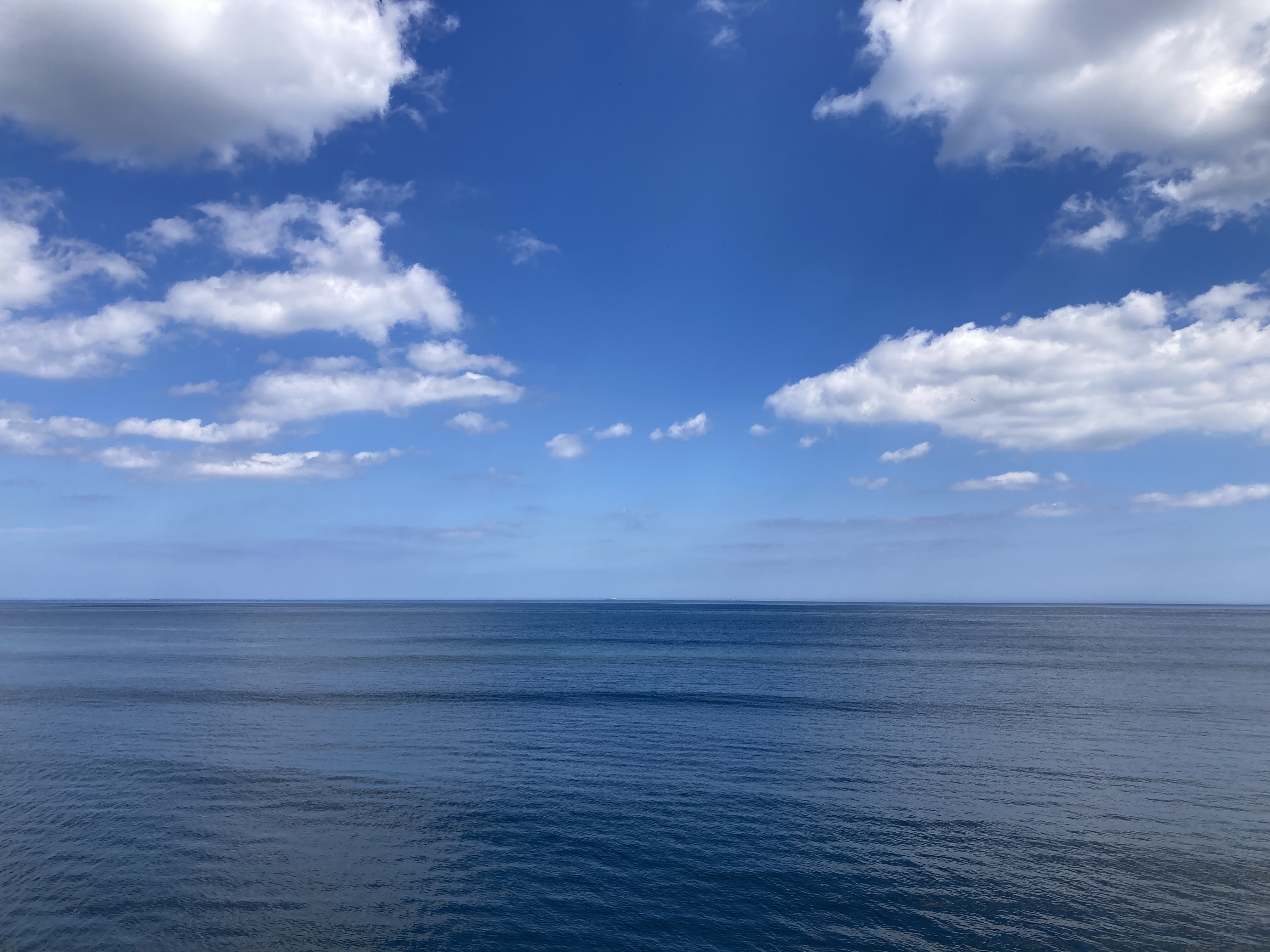
As you stand, alone, gazing out to the vast expanse of the sea, it’s easy to think you are separate. Separate from everyone else, separate from other creatures, standing on the outside, looking in, at this world you find yourself in.

But, that’s an illusion.

We are not separate. We don’t exist apart from Nature. We don’t survive all by ourselves. We are not disconnected.

Yet, this sense of being separate lies at the heart of so much dysfunction and trouble in this world. We have created a system of society, of politics and economics, on the foundations of this delusion. The idea that by encouraging selfishness, actions and choices which put our own interests, not just above those of all others, but with no thought whatsoever to consequences, we can create a healthy, thriving life, is just crazy.

So, why do we live this way? Why do we support the idea that we can consume more and more of the Earth (what we call “resources”) forever and forever? We live in a finite planet. What we burn and destroy won’t come back. The species we eliminate won’t come back. We can argue about timescales, but the Club of Rome’s “Limits to Growth” report, published decades ago, was, essentially, correct. Unlimited growth in a finite world is going to hit the buffers one day, maybe not in our lifetime, but in the lifetime of our grandchildren, or our grandchildren’s grandchildren.

Should we care about our grandchildren’s grandchildren?

I think we should.

Why do we support the idea that a tiny minority of the people in the world should be allowed to grab as much of it as they can? Why do we have billionaires? Does it matter what they do? Does inequality matter? A question which won’t even occur to the narcissist.

Iain McGilchrist’s thesis about our brain asymmetry helps me understand. It rings true and it helps me to see that if we use our left hemisphere excessively, and, as if it is disconnected from our right hemisphere, then we are going to experience the world as if everything is disconnected. Our reductionism and selfishness will narrow our view so much that we’ll fail to see that we, and everything else on this planet, are intimately, inevitably, interconnected.

We are embedded in this world. We exist, for a brief time, in a vast web of relationships. We are the individual waves which appear on the surface of the sea, then dissolve, back into it.

Can we learn to take a longer view? Can we begin to act as if our grandchildren, and their grandchildren matter? Can we make choices which take into account the ripples and effects of those choices, and the effects they have on others, on our environment, on the world in which we belong?

I watched a short video last night which promoted the part of the world where I live, Nouvelle Aquitaine. One phrase they used really struck me – “Vous êtes unique, nous sommes unis” – You are unique, we are united. It’d be good to live that way, owning and respecting our own uniqueness, and that of all others, and feeling connected, deeply knowing, that we are all one.

What do you think? Can we develop and share a different vision for our lives and our world? A vision more consistent with the use of both our cerebral hemispheres, a connected world of embedded lives, where everything we do has consequences, for ourselves, for our loved ones, for others? Can we learn to see the bigger picture, the longer timescale, a better way to live?

Read Full Post »