Feeds:
Posts
Comments

Archive for the ‘books’ Category

Blind Light1

Fritjof Capra, in his “the hidden connections” refers to anthropologist, David Gilmore, who studied images of men, or male “ideologies” in many cultures around the world. He found interesting, consistent themes.

Gilmore found that in culture after culture, ‘real’ men have traditionally been those who produce more than they consume. The author emphasises the ancient association of manhood with material production meant production on behalf of the community. ‘Again and again we find that “real” men are those who give more than they take; they serve others. Real men are generous, even to a fault.

I think that is striking – producing more than you consume for the benefit of the community sounds an excellent ‘manhood’ quality to aspire to. He goes on to say that over time this image has changed, so that now it is common to see the ‘big man’ as the one with the greatest personal wealth and most power over others. Sadly, I guess that’s the image we are more familiar with these days.

So here’s what I’m wondering…….how did that change? And why? How did the image of manhood change from one who serves and provides to one who hogs the most for himself and exerts power over others?

Those questions, naturally, lead me to wonder what we can do (if anything) to reclaim the ancient images of ‘real’ men, and to encourage boys to become such ‘real’ men…….

Read Full Post »

The other day I came across, in David Wade’s beautiful “Crystal and Dragon” book, a little drawing of the paths each planet takes (relative to Earth) and, apart from making me want to dig out an old “spirograph”, I thought it was simple but wonderful.

planets


There are patterns everywhere, and we human beings seem to be particularly good at spotting them.

There is diversity and uniqueness everywhere. In the cosmos, in the solar system, on our planet, Earth, in every living organism.

Read Full Post »

river flows


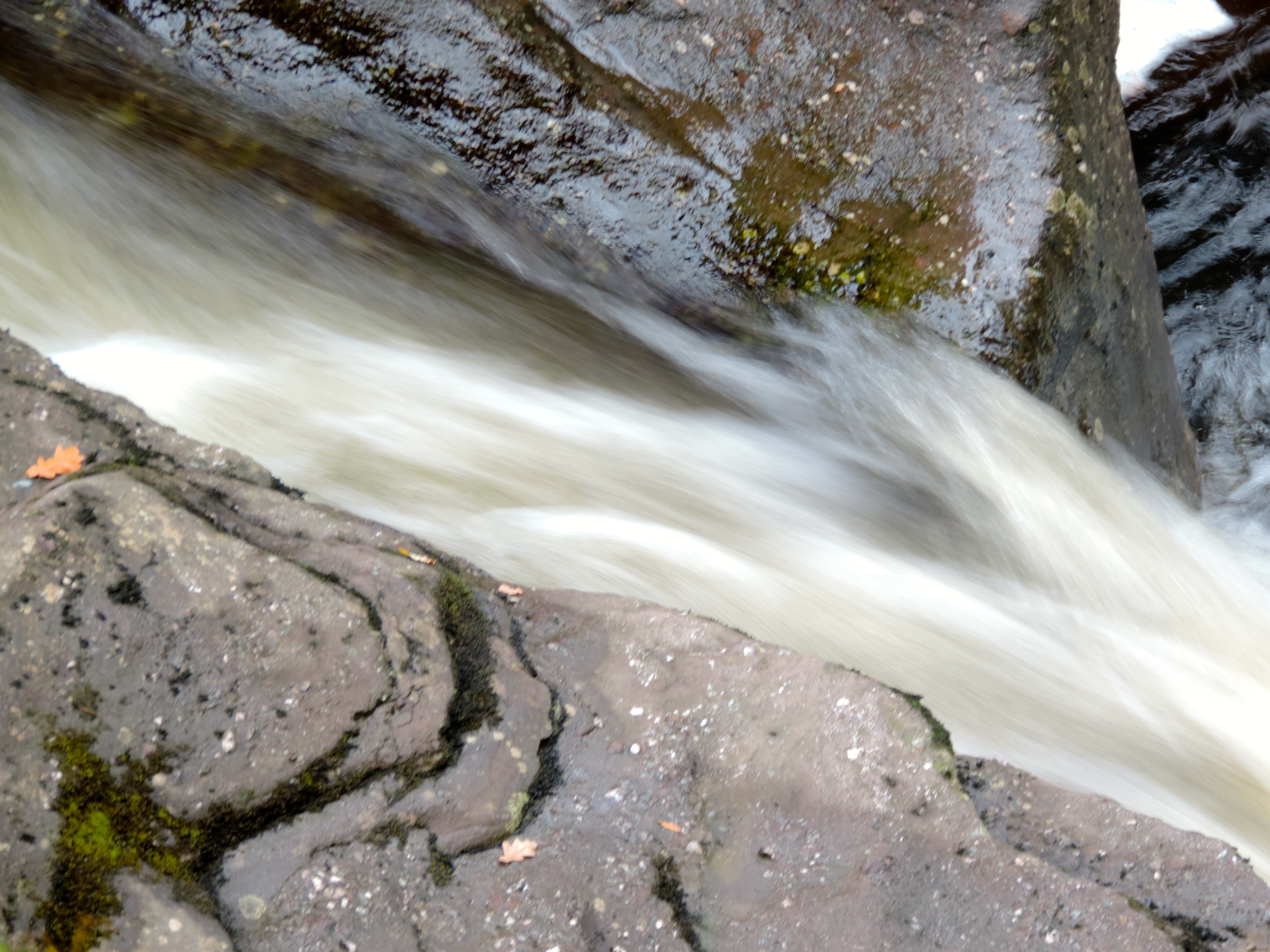
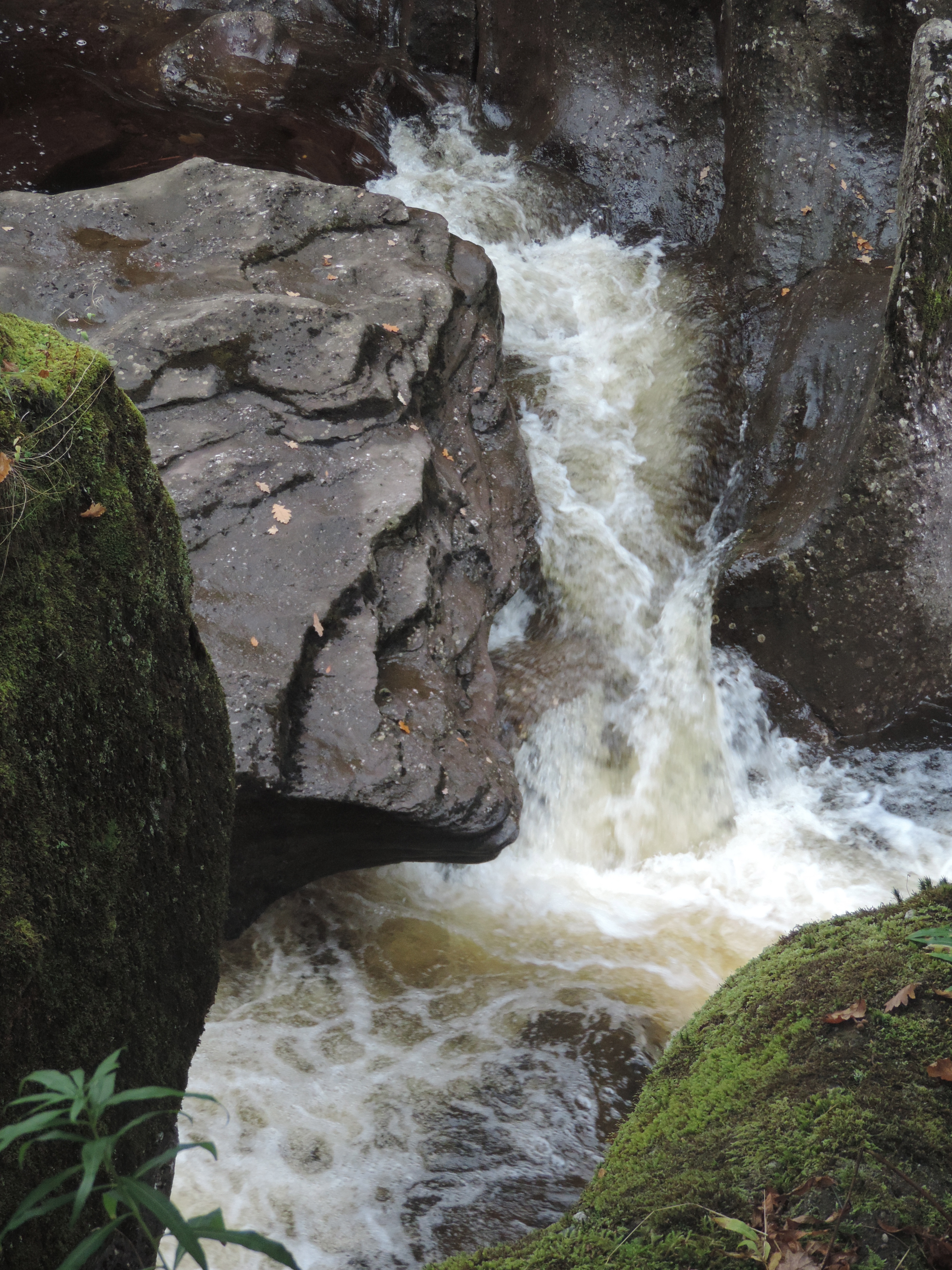
As the river flows over the rocks in the forest around the Bracklinn Falls I stand and wonder about the relationship between the rocks and the water.

I can see the rocks set the boundaries of the river and channel the direction of flow for the water, but I can also see how the water sculpts its own path leaving the rocks far from untouched as it pours down the hillside.

bracklinn


This got me thinking again about that continuous interplay of two essential forces in the universe – the diversity generators and conformity enforcers of Howard Bloom’s “Global Brain”.

That same idea is captured with a different set of metaphors in Thomas Berry’s fabulous “The Great Work”, where he talks of “wildness and discipline”.

I recently came across yet another set of metaphors for this process in David Wade’s “Crystal and Dragon“. In this latter book, David Wade describes the patterns of Nature (actually you could say of the Universe) and Culture which emerge from these two, apparently opposite, forces. Think of how a crystal forms, with a set of rules, which are strictly enforced in a disciplined way to produce the structure required to allow the growth of the crystal. Then think of the patterns of flow which emerge in the creation of clouds, waves and waterfalls. The former containing a certain predictability, and the latter retaining an apparently chaotic randomness. In one section of his book he compares Islamic art to Taoist art, the former known for its beautiful geometric patterns, and the latter for its freehand ink drawings of clouds, waves and water. Interesting then to think of the strict and detailed rules of Islam, and the Taoist focus on constant change, flow and uncontrollable nature of Life. In Chinese culture this force is represented by the Dragon.

So, the crystals of conformity enforcement and discipline, and the flowing Dragon of diversity generation and wildness……and what an astonishing Universe is produced in the process.


Read Full Post »

I read a fabulous book whilst on holiday in France recently – “Ni hasard, ni nécessité” by Marc Halévy. I’ll probably write a few posts inspired by it. Here’s the first –

Marc Halévy refers to the three meanings of the word “sens” in the French language.

The first is sensation, or senses – what we experience subjectively. This is such a great way to be present – to pay attention to, to become aware of, or mindful of, the sensations you are experiencing in the here and now. What colours, what light and patterns can you see? What sounds do you hear? What scents can you smell? What tastes linger on your tongue? What does your body sense?

The second is meaning – “what sense do you make of……..?” We are meaning seeking creatures. We are always wondering why, and what does this mean? Why me? Why this happening now in my life?

The third is direction – “where am I going?” “where will this lead?” “what’s the point, or purpose or direction of my life?” We like to be able to see an overarching narrative in our lives. We like to see how we’ve got to where we’ve got to and where that might lead if we carry on down this road.

I love this unpacking of that one word “sens” – the sensations, the meaning and the direction of my life.

In fact, sticking with French for a moment, it’s not far from “le sens” to “l’essentiel” – as Saint Exupéry said “l’essentiel est invisible pour les yeux”

What is most important to us, what is essential in fact, is what is invisible – and the sensations, the meaning and the direction in our lives are all invisible. They aren’t material. They can’t be measured. But they create “le sens de la vie”.

Read Full Post »

I read Montaigne’s essay yesterday about “Liars” and it made me laugh out loud. I really enjoy Montaigne’s humility. It seems to me that he frequently wrote with a twinkle in his eye. In this essay he refers to his claim that he as a terrible memory. He says that others consider that an affliction of sorts, but he thinks it has advantages.

Firstly, he says that having a poor memory has saved him from being an ambitious person – “the defect being intolerable in those who take upon them public affairs”.

Secondly, he says it has saved him from deafening all his friends with his “babble”

I have observed in several of my intimate friends, who as their memories supply them with an entire and full view of things, begin their narrative so far back, and crowd it with so many impertinent circumstances, that though the story be good in itself, they make a shift to spoil it…for whilst they are seeking out a handsome period to conclude with, they go on at random, struggling about upon impertinent trivialities, as men staggering on weak legs.

…..old men who retain the memory of things past, and forget how often they have told them, are dangerous company; and I have known stories from the mouth of a man of very great quality, otherwise very pleasant in themselves, become very wearisome by being repeated a hundred times over and over again to the same people.

Thirdly, he says he is less likely to remember the injuries he has received (and therefore doesn’t hold grudges)

Fourthly….

the places which I revisit, and the books I read over again, still smile upon me with fresh novelty.

And, finally, (getting to the title of the essay) he says that it has saved him from being a liar, because liars always forget the details of their lies and trip themselves up. Knowing he has a bad memory means he doesn’t trust himself to lie!


Read Full Post »

I was really struck by an article in The Observer the other day. Dr Sam Parnia, a doctor specialising in resuscitation techniques, has studied the experiences of patients who die and are later brought back to life.

Pardon? Yes, people whose heart stops (a cardiac arrest) and whose brains stop working due to oxygen lack, but who are successfully resuscitated and fully recover. Not only does the person return but he has found that about half of them report very similar death experiences (people refer to these experiences as NDEs – “near death experiences” – but he says they are, in fact, ADEs – “actual death experiences”). These two phenomena raise interesting questions – where does the “person” go while they are dead? And how does this “person” observe and remember observations which they make while they are dead?

This particular paragraph really gripped me –

All I can say is what I have observed from my work. It seems that when consciousness shuts down in death, psyche, or soul – by which I don’t mean ghosts, I mean your individual self – persists for a least those hours before you are resuscitated. From which we might justifiably begin to conclude that the brain is acting as an intermediary to manifest your idea of soul or self but it may not be the source or originator of it… I think that the evidence is beginning to suggest that we should keep open our minds to the possibility that memory, while obviously a scientific entity of some kind – I’m not saying it is magic or anything like that – is not neuronal

Now, I’m very familiar with the idea that whilst there are neuronal correlates of mental activity, we cannot say that its the neurones which produce the thoughts, feelings, and indeed consciousness which we all experience. But what a way to put it!

That the mind uses the brain to express itself.

I had to get the book. (The Lazarus Effect. Dr Sam Parnia. ISBN 978-1-84604-307-9)

I raced through it. In the book, Dr Parnia describes his work in resuscitation and reports on his AWARE study into the reported experiences of those who return. The heart of the book, for me, is Chapter 6, “What it’s like to die”, which describes many of these reports in detail. I’ve read this kind of thing before but I had never, ever read reports from children as young as 3 years old. Those stories stunned and moved me. They are amazing. And the story told by the Consultant of his first experience of a patient’s cardiac arrest where he tells how once recovered the patient told him in detail not only what the doctor had done in the room whilst the patient was unconscious, but even what the doctor had thought, but hadn’t verbalised…….

Dr Parnia goes through the possible scientific explanations for these reports and shows how none of them actually credibly explain them. He believes we will uncover a scientific explanation one day, but not until we start to accept these phenomena as real.

Here are a couple of sentences which really struck me

Reality is not neurologically determined, then, but rather it is largely socially determined.

and

The bottom line is that no brain-based chemical change can define whether a sensation or feeling is real or not

I don’t see things exactly as he does – for example, he uses a machine model to explain how the body works – it isn’t a machine, its a complex adaptive system – and the crucial difference is that only complex adaptive systems demonstrate both emergence and self-organisation – ie the whole cannot be explained by the parts. And he says “the goal of Medicine is cure” – well, I wish! But in fact, what does Medicine these days cure? Rather, Medicine manages disease – there are no cures for asthma, multiple sclerosis, Parkinsons Disease, etc etc etc

However, these are not the key points of the book.

Let me just finish with a reference to Chapter 5, “The Orphan” where he says

Asthma has a home in pulmonary medicine. Cancer is in the domain of oncology. Parkinson’s belongs to the neurologist. But cardiac arrest is an orphan by virtue of the fact that it cuts across many specialities because it is death, and death happens in all specialities of medicine but is parented by no-one.

See, this is what I find so wrong about health care – we divide health care into specialities which focus on parts and diseases – not only does death then become an orphan, but so does health.


Read Full Post »

Margaret Wheatley works in the area of leadership and organisational change from the perspective of what we can learn from living reality. She has the complex adaptive systems concept at the core of her work. I recently stumbled across her writings, particularly her four “principles of living systems”. Here they are –

  1. Participation is not a choice
  2. Life always reacts to directives, it never obeys them
  3. We do not see “reality”. We each create our own interpretation of what is real
  4. To create better health in a living system, connect it more to itself

The first principle relates to the reality that everyone, every thing, every aspect of our world, our universe, exists inextricably embedded in the contexts of its existence. A living organism is an “open system”, with information and energy constantly flowing into and out of it. A living system is dynamic and perpetually changing and “co-evolving” with the other elements of the ecosystem in which it lives. You can’t change a part of a person without producing changes in the rest of that person, and you can’t change a person without setting off a cascade of unpredictable changes in the world in which that person lives (and vice versa – you can’t change something in someone’s world without setting off changes in that person). Participation is not a choice, it’s an inevitability.

The second principle is the core of adaptation. Every individual is unique and cannot be controlled like a robot or a machine. You can force people to behave a certain way for a period of time, but ultimately all the organisations and political systems based on force collapse. You can’t force the sun to shine, the wind to blow, the rain to fall, or Life to obey your commands.

The third principle is something we often forget. Iain McGilchrist, in The Master and His Emissary, highlights how the left cerebral hemisphere is particularly well developed to “re-create” reality. It creates “re-presentations” of the raw information and energy which flows into the person. These representations allow us to make sense of the world and to literally to grasp things better. It’s a fantastic development and is probably at the core of our industrial and technological development as a species. We also know now that the part of the brain just behind the forehead, the mid-prefrontal cortex, has many, many functions, but amongst them is a map-making facility. It’s crucially involved in creating, what Dan Siegel calls, “a me map, a you map and a we map”. We never know any of this reality directly. Rather we constantly create our perceptions and our understandings, influencing those creations with our memories, our hopes, our beliefs, our values and our desires.

The final principle is Margaret Wheatley’s way of talking about integration. When a system is well integrated there are healthy, mutually beneficial relationships between all the connected parts. That produces coherence and harmony. It’s the basis of health.

When I first created this blog, I wrote a permanent page on “ACE” – “Adaptation, Creativity and Engagement“. It was really interesting for me, therefore, to discover this quote from Margaret Wheatley (which I believe, essentially highlights the same characteristics)

Over many years of work all over the world, I’ve learned that if we organize in the same way that the rest of life does, we develop the skills we need: we become resilient, adaptive, aware, and creative. We enjoy working together. And life’s processes work everywhere, no matter the culture, group, or person, because these are basic dynamics shared by all living beings


Read Full Post »

Cloud Atlas

Why did I leave this book lying unopened on my bookshelf for about four years? I don’t know. However, while recuperating last week, I read it, and, boy am I glad I did. What a superb piece of writing it is. Maybe you’ve been out to see the movie by now (I haven’t), but Cloud Atlas, by David Mitchell, is a story cycle. It is six interlinked stories, with each story ending on a cliff-hanger before going on to the next story, right up to story number six, then we pick up all the threads, revisiting first story five, then four, then three and so on. The range of genre and styles is astonishing, with everything from a sixteenth century travel journal to science fiction set in the twenty third century. I loved it all. Each story links to the others in a multiple of ways and the very last couple of pages sum up what it’s all about.

Here is what it is all about (don’t worry, no plot spoilers revealed here)

What precipitates outcomes? Vicious acts and virtuous acts. What precipitates acts? Belief.

The character, Adam Ewing, goes on to write….

Belief is both prize & battlefield, within the mind & in the mind’s mirror, the world.

What a great phrase! ….the mind’s mirror, the world.

If we believe humanity is a ladder of tribes, a colosseum of confrontation, exploitation and bestiality, such a humanity is surely brought into being……If we believe that humanity may transcend tooth and claw, if we believe divers races & creeds can share this world as peaceably as the orphans share their candlenut tree, if we believe leaders must be just, violence muzzled, power accountable and the riches of the Earth and its Oceans shared equitably, such a world will come to pass. I am not deceived. It is the hardest of worlds to make real.

With that, Adam decides to dedicate himself to the cause of the abolition of slavery, mindful of how he is likely to be vilified, and attacked for doing so, and how is father-in-law will say

only as you gasp your dying breath shall you understand, your life amounted to no more than one drop in a limitless ocean.

And Adam will reply

Yet what is any ocean but a multitude of drops?

What do you believe? What kind of world are you creating?

Read Full Post »

“In Praise of Love” by Alain Badiou [1846687799] presents a simple but thought-provoking idea about love. He proposes that love is about the creation of a two person view of the world, instead of the single, individual one. As understood from a complexity position, what emerges in this linking up is greater than the sum of its parts

the real subject of a love is the becoming of the couple and not the mere satisfaction of the individuals that are its component parts.

Quite poetically he describes it this way

It is like two musical instruments that are completely different in tone and volume, but which mysteriously converge when unified by a great musician in the same work.

What really resonated most strongly with me, however, was his key insistence that love is about difference – about seeking difference, creating difference, delighting in difference…

what kind of world does one see when one experiences it from the point of view of two and not one? What is the world like when it is experienced, developed and lived from the point of view of difference and not identity? That is what I believe love to be. It is the project, naturally including sexual desire in all its facets, including the birth of a child, but also a thousand other things, in fact, anything from the moment our lives are challenged by the perspective of difference.

Beautiful.

This is a different view of love from the traditional romantic love, which, sadly, I feel, too easily slides into something which turns one person into the love object of the other. I prefer Badiou’s idea – it’s more equal, and, ultimately, incredibly more exciting….

Read Full Post »

This blog name grows on me with the passage of time. People like it, and they tend to “get it” very quickly. I came up with it because I saw that an awful lot of people seem to live life on autopilot, but when you sit down with them in a consultation, you discover one hero after another. People are truly amazing. And every person is the hero of their own story. It’s wonderful to hear the stories unfold and see the heroes emerge.

In Becker’s “Denial of Death”, he writes

Modern man is drinking and drugging himself out of awareness, or he spends his time shopping, which is the same thing. As awareness calls for types of heroic dedication that his culture no longer provides for him, society contrives to help him forget. Or, alternatively, he buries himself  in psychology in the belief that awareness all by itself will be some kind of magical cure for his problems.

And he refers to Kierkegaard who criticised the tendency to live a “safe” life by living at “a low level of personal intensity” as a form of

Tranquilising itself with the trivial

……..there’s a lot of that about!

Read Full Post »

« Newer Posts - Older Posts »