Feeds:
Posts
Comments

Archive for the ‘health’ Category

Here’s an interesting piece of research for this time of year….it’s one of several publications which show that buying stuff isn’t that good for you!

If you’re a materialistic individual and life suddenly takes a wrong turn, you’re going to have a tougher time recovering from that setback than someone who is less materialistic

It’s pretty easy to find research which shows you materialistic values are stronger in people with low self-esteem, and that what people who have these values do when they are stressed is find materialistic coping strategies……you’ll have heard of “retail therapy”. This particular piece of research looks at how this world view and coping mechanism affects recovery from stressful events.

In times of stress, people often seek solace through shopping,” he said. “The idea here is that we need some form of a cultural-based coping mechanism, because the research suggests that there is actually a short-term fix with retail therapy. Soon after purchasing something, there is a reduction of anxiety. But it doesn’t last very long. It’s fleeting. Materialists seek that as one of their coping mechanisms. And Black Friday and the holiday shopping season play into that

I think this issue relates to more complex, underlying factors but it does highlight the issue of how values and how we see the world influences our coping strategies and that not all coping strategies are equal.

I’ve read a number of other works which make it clear that experiences are more powerful than things when looking at their impact on happiness. In other words, spending a good time with someone contributes more to the happiness of the participants than spending in a shop. Retail therapy just isn’t that therapeutic!

Read Full Post »

Angel moon


Yesterday morning I noticed the moon above the Christmas lights in George Square in Glasgow.

This got me thinking about rhythms – the lunar cycle, which so few city dwellers are aware of, and the cultural cycle of the Christmas season. Actually as I wrote that sentence I realised that American readers will probably use the term “Holiday season” instead of “Christmas season” and that’s something else which is interesting….about our cultures, our language, our beliefs and traditions.

The people who I meet in the consulting room day by day have such diverse beliefs – from followers of Islam, to Jehovah’s Witnesses, to Catholics, Hindus, Sikhs, Buddhists, New Age thinkers, agnostics, atheists, materialists…….and does that matter?

Of course it does.

How can I make any sense of what someone is experiencing if I don’t gain an understanding of what kind of world they live in? If I don’t take into consideration their values, beliefs, traditions, their ways of living, how can I understand their illness experience, and more than that…..how can I even conceive of what health might look like for this person?

Rhythms and cycles are such a fundamental characteristic of Life. Which ones are important to you and contribute to your perception of the world?

Which ones are you aware of today?


Read Full Post »

Dr Peter Gøtzsche is the founder of the Nordic Cochrane Centre, a highly respected medical researcher who examines clinical trials.  The Cochrane centres are widely accepted as the most reliable sources of unbiased information about the research evidence for medical interventions. He has written a thoroughly disturbing book comparing drug companies to organised crime. His messages are clear, rational and evidence based. Here’s a quote from his new book, Deadly Medicine and Organised Crime.

‘The main reason we take so many drugs is that drug companies don’t sell drugs, they sell lies about drugs. This is what makes drugs so different from anything else in life… Virtually everything we know about drugs is what the companies have chosen to tell us and our doctors… the reason patients trust their medicine is that they extrapolate the trust they have in their doctors into the medicines they prescribe. The patients don’t realise that, although their doctors may know a lot about diseases and human physiology and psychology, they know very, very little about drugs that hasn’t been carefully concocted and dressed up by the drug industry… If you don’t think the system is out of control, then please email me and explain why drugs are the third leading cause of death… If such a hugely lethal epidemic had been caused by a new bacterium or a virus, or even one hundredth of it, we would have done everything we could to get it under control.’​


Read Full Post »

DSCN0646


Two important characteristics of nature are uniqueness and change.

Every leaf is unique. The lifetime of every creature, every person on this planet is unique.

And that uniqueness cannot be captured, cannot be measured, cannot be fully described at any one particular point in a lifetime.

No story is complete.

Nothing is fully understood, and, as change never ceases, there is always more to unfold, always more to develop.

I love the wonder and awe which spring up from my heart in the face of uniqueness and change.

I love the humility that demands of me.

To know that I will never fully know means I always have more to discover. To know that nothing is ever “finished” means that every day is a new creation.

Read Full Post »

twostone1

twostone2

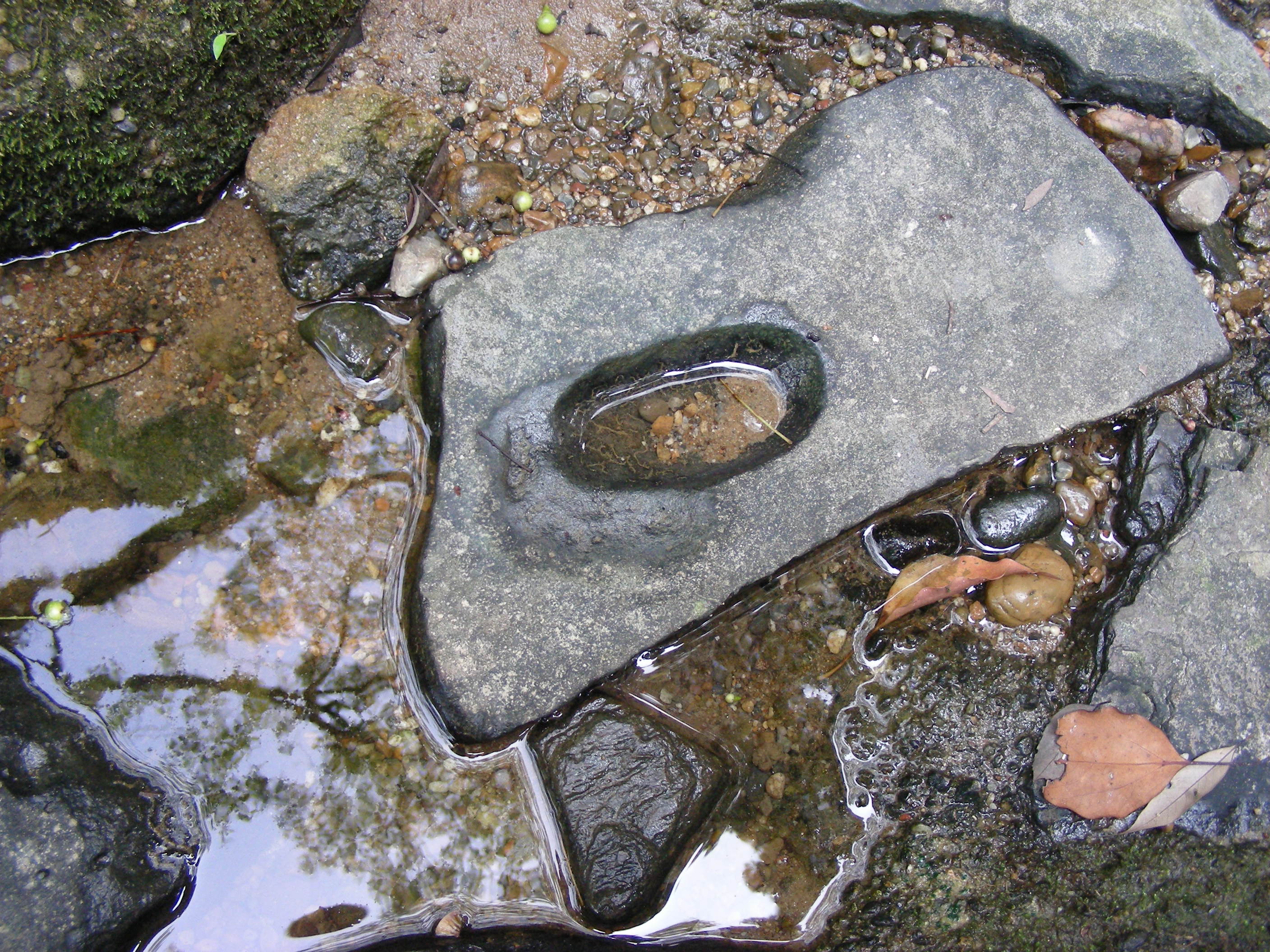
I was gifted this stone recently.
I love it’s yin yang quality of inextricably bound black and white. You can’t have one side without the other. You can’t separate one side from the other.
This is what the “mind body” idea is to me. I don’t tend to use the term “mind body” because I don’t accept it’s duality. I don’t accept the implication that mind and body are separate/separable entities.
We live with our whole being. We become ill in our whole being.
Health involves the coherence of the whole organism, not just a part of it. Aren’t mind and body just two different perspectives on a person? Each with its own qualities, but each inseparable from the other.

Read Full Post »

Facing the Med

There’s a lot of talk around just now about “patient centred care”. It’s one of those concepts that nobody argues against. In fact, pretty much everyone claims to be doing it. If that’s true, then it must mean different things to different people. Or it must have so many aspects, that different people resonate with the concept because they understand and value one of those aspects.

There’s a vast and growing literature on “patient centred care” but I’d like to make a contribution to the debate. I’m writing here from the perspective of a generalist, holistic, integrative doctor. I work at the “NHS Centre for Integrative Care” which, we claim, is a patient centred service within the NHS.

Some health care services are disease centred. There are Diabetic Clinics, Asthma Clinics, Hypertension Clinics and so on. These are specialist services where only people with particular diseases are seen, and where progress is measured primarily by measuring changes in the disease activity.

Some services are therapy centred. When you attend one of those services, only particular therapies will be used, no matter what your diagnosis, or who you are. The two biggies are surgery and drugs. Most services are designed to support the delivery of one of those two therapies. “CAM” (“complementary and alternative medicine”) clinics are often therapy centred too. Acupuncture Clinics, Osteopathic Clinics, Homeopathic Clinics etc. When you go to one of those you will see someone who has specialised in that particular therapy, and they will try to help you using that therapy.

Integrative Care is a patient centred therapy. It delivers individualised, multidisciplinary care using a range of different therapies, based on a holistic, personalised understanding of the individual patient. It is generalist, in that it is not limited to patients with specific diseases, and it is integrated in that it is not limited to the use of one particular therapy.

Now, I’m sure, there are many who will explain why their disease-centred, or therapy-centred service is also patient-centred, but I hope it’s helpful to clarify why an “integrative care” service cannot be defined by either the therapies used, or the disease diagnoses of the patients attending.

Read Full Post »

the colour of light

Václav Havel said

[Hope] is not the conviction that something will turn out well, but the certainty that something makes sense, regardless of how it turns out.

One of the commonest things patients tell me is that our work together has given them hope. That’s always very heart-warming feedback, because without hope, it is difficult to live.

But reading Havel’s statement about hope not being “the conviction that something will turn out well” got me thinking. I suppose because I completely agree. I don’t think hope is about giving people the conviction that all will be well. How could anyone give that guarantee after all? The future remains unknowable….whether we are well, or whether we are sick.

But if hope is not about believing a disease will go away, what is it? Havel says it is the “certainty that something makes sense” and I think that is right. One of the values of integrative practice is that it is sense making. Taking a holistic, individualised approach to a person, listening empathically and non-judgementally, with full attention and acceptance, sets up the potential for understanding – for the practitioner to understand the patient, and, for the patient to understand themselves, their illness and its place in their life. Understanding is sense making.

I think hope is something else too, though. A lot of people who consult me feel stuck, trapped, suffering, or in despair…..they are scared that this is now how life is going to be. Hope emerges when it becomes clear that change is not just possible but probable. Havel uses the word “certainty” and as the future is unknowable in detail we can’t offer certainty about specific outcomes.

But change is one of life’s certainties. As every individual is actively involved in creating their own experience, hope emerges when we realise life can be different, and that our choices can influence how different it can be.

Read Full Post »

worn stone


Jung said “The world will ask you who you are, and if you do not know, the world will tell you.”

Do we make ourselves, or does the world make us?

Actually, that’s one of those questions which poses a false duality. The truth is it’s a two way process, an interaction, a conversation, relationship, a dance.

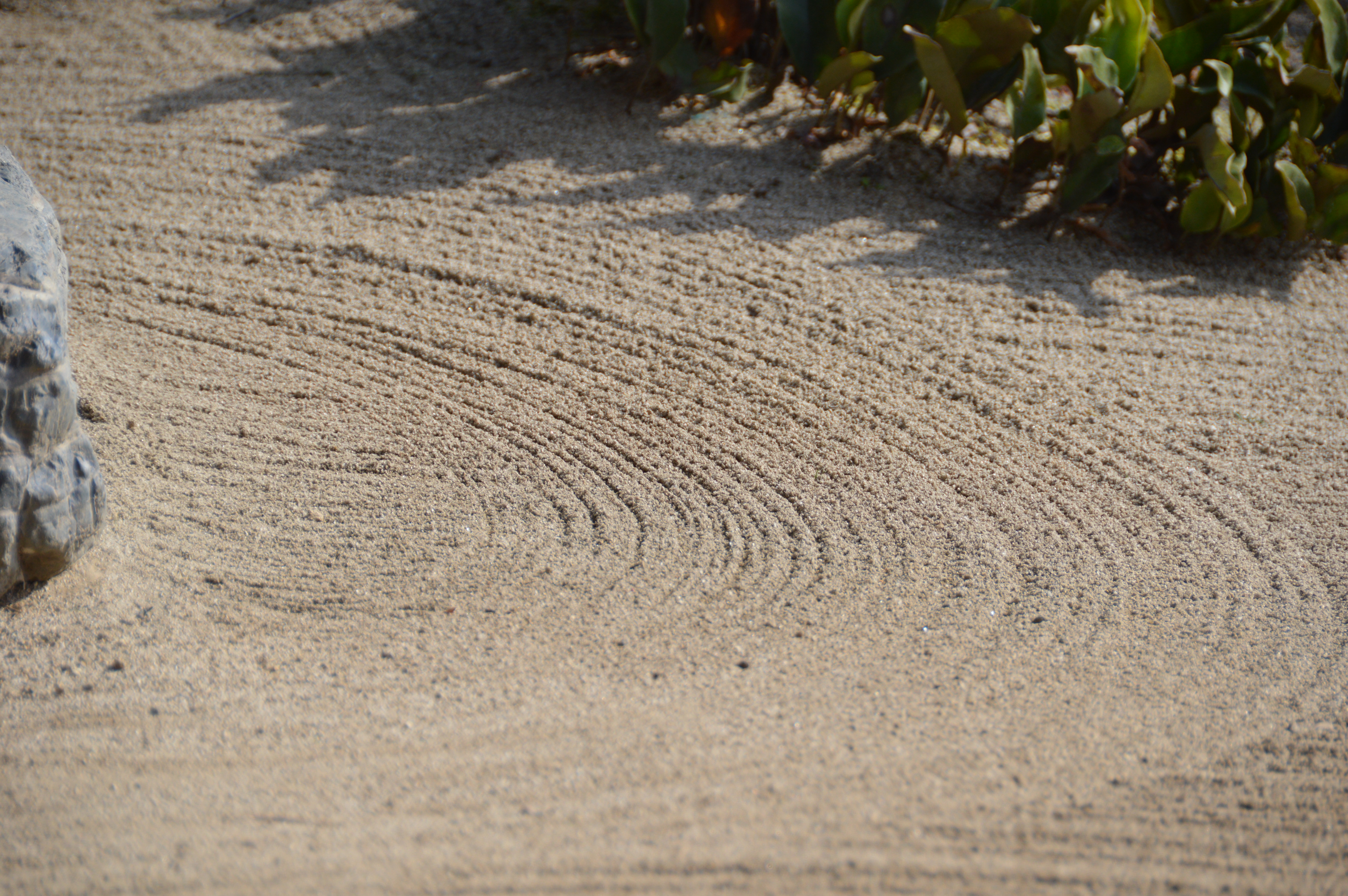
I’m fascinated by the patterns we see everywhere. As I listen to someone’s story, I’m listening for patterns. What kinds of patterns?

Well, I suppose you could call them habits.

  • Habits of the body
  • Habits of the head
  • Habits of the heart

The habits of the body are our physical actions, the ways in which we use our bodies to move and to interact with the world. Think of your eating habits, your exercise habits, your physical preferences, how you experience the world and how you engage with it.

The habits of the head are our thoughts, our beliefs and our world view. Think especially of whether or not your thinking habit focuses on the past, the present or the future? What are you sensitive to? What do you notice? How do you interpret the world? It’s especially helpful to think of how we approach the world, and Iain McGilchrist’s brilliant understanding of the clearly different ways in which the left and right hemisphere’s of the brain approach the world is really exciting.

The habits of the heart are revealed in the patterns of our emotions, our longings, and our passions. What moves you? What touches in you in your heart? In your soul?

This is the examined life – where you become aware of your inherited and acquired patterns which create the habits of your existence. And if you want life to be different, you’re going to have to create some new habits, or change some old ones.

zen sand

Read Full Post »

healingisle


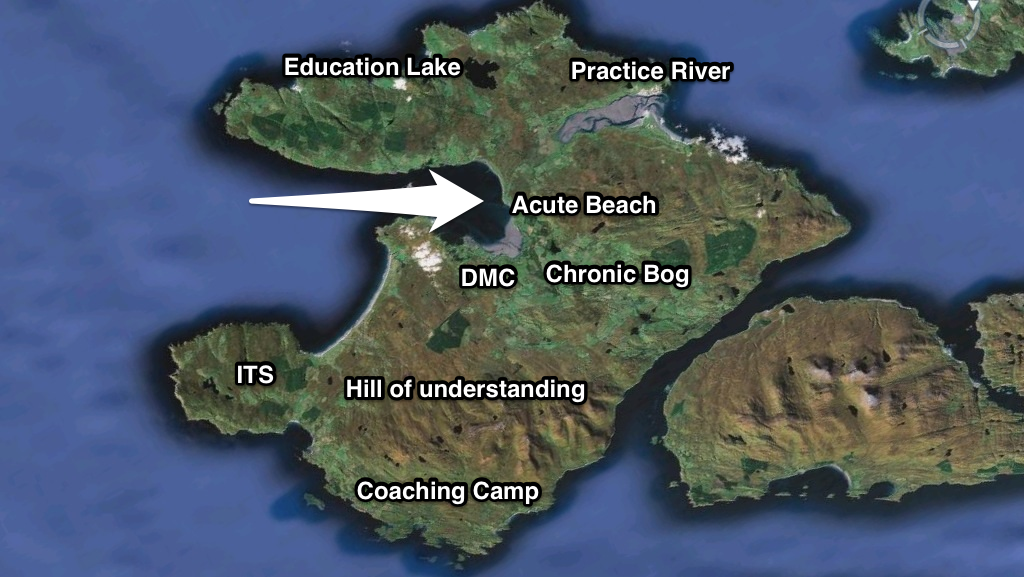
So you’re sailing along, getting on with your life, when suddenly a storm hits, and you are blown onto the “Acute Beach”. Now you are ill, or injured. If you’re lucky you’ll find your way to the “DMC” (Disease Management Centre – that’s probably a hospital, clinic or doctor’s office) where the broken bit will get fixed and you’re back down on the beach, into your own canoe, and paddling off into the rest of your life again.

Except, often, that’s not what happens. It turns out there isn’t a simple part to be replaced or fixed, and before you know it you’re mired in the “Chronic Bog”, only to spend the next few weeks, months, or years trudging back and forward between the DMC and the Bog. Doesn’t feel so good, and it doesn’t get you back into the flow of life again either.

So, what next?

Maybe you meet an “integrative medicine” specialist and they take you on a journey, up the “Hill of Understanding” where you get a good overview, check out the lay of the land, and see more clearly just how you got here in the first place. That feels better. It’s good to be understood. It’s good to be able to put all the pieces together, see the connections, and work out just what needs to happen to get healthy again.

Maybe some time down at the “ITS” is going to be needed (“Integrative Therapy Spa”) – where health-making therapies stimulate and support your recovery, and give you a helping hand to start to heal.

After that, your health coach can help get you some time down at “Education Lake” where you can learn about health and healing, find out what the connections are between the mind and the body and learn what you need to know to get well.

You might also benefit from some time on the “Practice River” learning some new skills, like “mindfulness meditation”, stretching and moving exercises, ways of dealing with stress and so on.

Luckily for you that “integrative medicine specialist” is with you all the way, and you follow the path back down to the sea, and onto your boat to sail off and live the rest of your life.

Wouldn’t that be a good idea?

Read Full Post »

The power to predict

Here are two chestnuts in my hand.
Who can predict what will happen to them? Who can say what their future will be?
Will they become chestnut trees?
If so, where? And how big will they grow, and how long will they live?
Will they get pickled and become champion conkers in a playground game somewhere? Which one will become the champion?
Will they feed a squirrel and help it through the winter? Or some other creature in need of nourishment? Could these particular chestnuts make the difference between life and death for one little animal?

I’m sure, the more you use your imagination, and the more you consider the current and potential connections between these chestnuts and the rest of Life on our planet, you can come up with an almost infinite number of possible biographies for them.

So how easy is it to predict?

In this complex, multiply interconnected, frankly astonishing world, isn’t prediction impossible? Instead we default to guesses, hunches and statistics. None of which actually allow us to predict the details.

In the light of that, I find it amazing that we listen to “experts” who claim the power of prediction – whether they are economists, politicians, scientists or doctors.

The power to predict reality is an illusion. And here’s why……the universe is an emergent process. Life is an emergent process. It’s not a machine with the endpoint already established.

We are all becoming not being………

Read Full Post »

« Newer Posts - Older Posts »