Feeds:
Posts
Comments

Archive for the ‘health’ Category

When I lived in Scotland the first snowdrops to appear each year always caught my attention. These small white flowers hang like little bonnets, which gives them the appearance of being discrete. They aren’t showy, or majestic, but they are obvious all the same. I think it would be hard not to notice them.

Here in France we don’t have snowdrops. Well, not in this part of France anyway. I’ve never seen them growing wild, and I’ve looked many times in nurseries and garden centres for the little bulbs so I could try growing some in my own garden, but I’ve never found them. Somehow, that makes them even more precious, and, perhaps, somewhat obviously, it gives them a new significance for me. I see them now as emblematic of the country of my birth.

Snowdrops don’t appear for long but they are one of those flowers which marks the cycle of the seasons. There are many other flowers which do that, of course, but the snowdrops seem to manage to break through the winter soil, push up their thin, delicate, green stalks, and unfold their beautiful white petals before most of the other flowers do. In that sense, they are like the beginning of something for me. I know that after I see the first snowdrops, the crocus flowers won’t be far behind, and already I find I’m starting to look forward to the daffodils and tulips.

Every flower is new, of course.

No individual flower repeats itself. Every year each unique, particular bulb wakes up, pushes upwards and shares the beauty of its own petals in its own time, its own place, and its own way. That reminds me of the classical spiritual practice of approaching every day as if for the first time……because that’s the truth…..this day has never been lived before. Everything you see, everything you hear, everything you smell, taste and touch, everything you feel, everything you do, will be for the first time today. It might be a lot like yesterday, but, actually, it’s different.

Starting your day with the knowledge that this day is a new day, and that every experience and event which occurs will happen for the very first time, opens up your potential to wonder and to learn. It opens up your curiosity and your consciousness, filling your day with discoveries, delights, and wonder.

All of that is good for the health of your right cerebral hemisphere – this is the part of the brain we use to discover novelty, to see things in their singularity, to appreciate the holistic nature of reality. And just as we develop muscles by exercising them, so we develop mental functions and neurological structures by exercising them.

New every time – a great way to increase the quality of your life, a great way to encourage growth, a great way to become enchanted again by this world we live in.
Read Full Post »

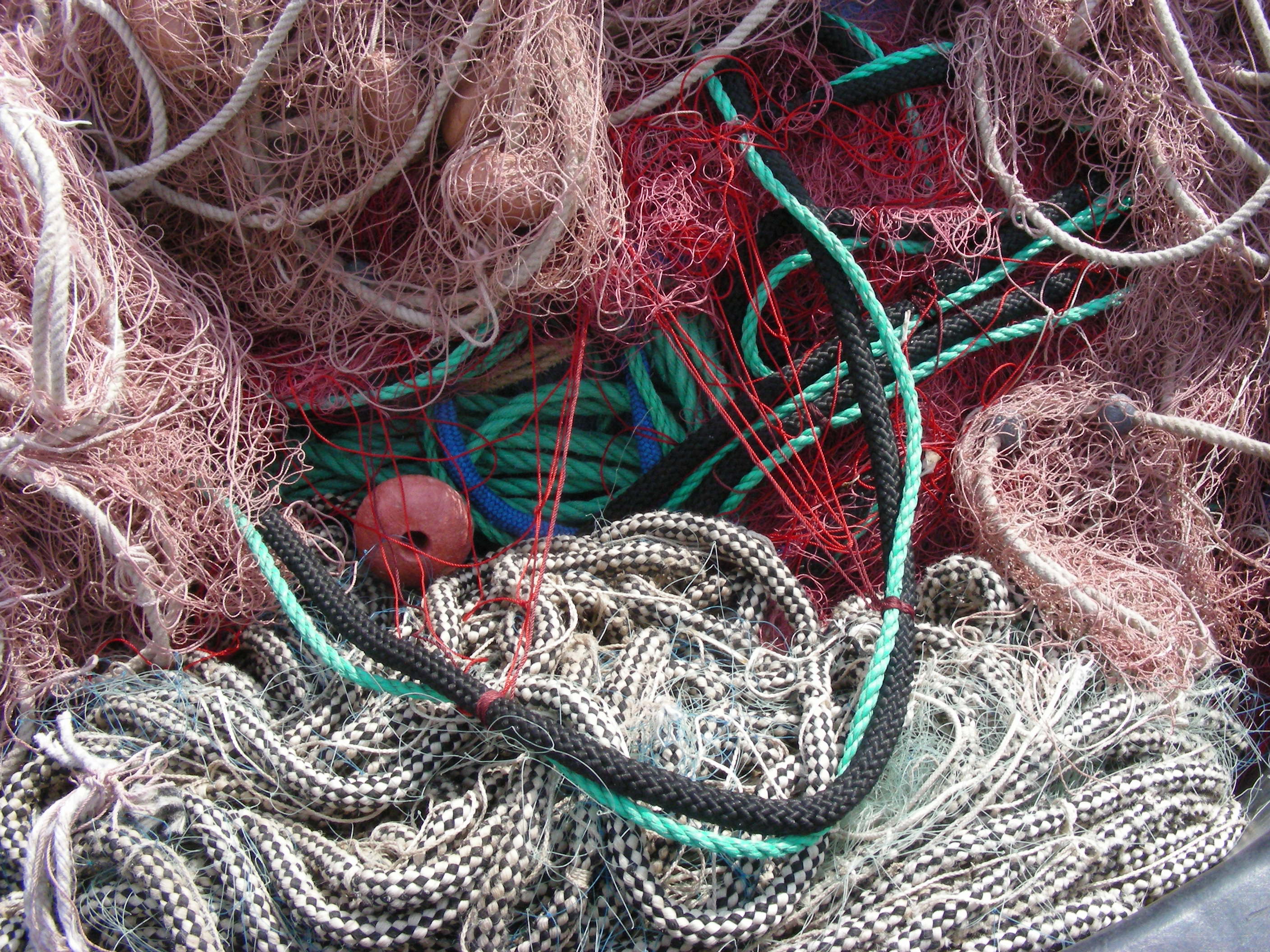
It’s not hard to find a pile of nets and ropes on the dockside at any little fishing village or port. I often find them quite fascinating and sometimes, like this one, quite beautiful. Look at the gorgeous palette of colours in this photo!

Without fail these images make me hear the word “entangled” in my head, and that’s one of my favourite words. It captures both the idea that everything is connected, and the fact that you can’t touch, or interact, with any single “element” without affecting everything else. It’s like the “butterfly effect”, where a small change in a complex system cascades throughout the entire network and has unpredictable significant over all changes – in the case of the butterfly effect linking the changes in air pressure and movement in one part of the world to storm and hurricane systems in other parts.

Well, that’s sure something we’ve had proven to us during the last year isn’t it? Even now, we hear of a “mutation” in the coronavirus, in one country and within a few days we’re hearing of it turning up around the entire planet. We sure are all “entangled” with each other, aren’t we?

There’s an aspect of this entanglement which has bothered me during this pandemic, and it comes up in the way that politicians and, also, many experts, are dealing with it.

It seems pretty clear that the present emerges out of the past. In other words we find ourselves in this current predicament because we’ve been living in a certain way. Yet, repeatedly, governments don’t want to admit “mistakes” or to look back and understand how our societies became so vulnerable. Probably because they don’t want to admit responsibility, but sometimes because it doesn’t fit with their favourite set of beliefs.

Would the health services in Western Europe be under such stress if they had been better resourced and organised over the last couple of decades? Of course, we can’t know for certain, but if the present really is entangled with the past, then can’t we try to understand how we became so vulnerable?

And if the present is also entangled with the future, which surely it is, then if we are to become more resilient then we need to create healthier societies. This virus has made it absolutely clear that those who will be hit hardest are those who are already the most frail and vulnerable.

I’d like to see politicians begin to lay out plans for our “exit strategy” from this pandemic which don’t rely entirely on technological fixes, but which, instead, firstly, develop and deploy better health and social care, to be better able to help and heal when help and healing is needed, but, secondly, to reduce poverty, poor housing, poor education, poor nutrition, inequality and environmental damage.

That would seem like a good place to start.

Read Full Post »

I reckon one of the most important lessons I’ve learned in life is the importance of context. There’s a huge tendency to “abstract” elements from reality – to take things to pieces and examine the pieces; to reduce the whole to a selection of parts; to consider only a single episode or moment in a life story; to pull a single thread from the entire matrix and try to follow just that; to measure what can be measured and disregard the rest. This tendency to “abstraction” is coupled with a tendency to “generalise”, so all is labelled, categorised and filed away; to give precedence to the “average”, the “norm” and the “typical”, over the “individual”, the “specific” and the “unique”.

Our left hemisphere is the champion of all that. Abstraction, labelling, categorisation and generalisation are at the heart of the way it engages with the world. All that can be useful. It can help us to “get a grip”, to “grasp” things, to make predictions and exert some control over the future (at least in small ways for short periods of time).

But it isn’t enough.

Throughout my decades of work as a doctor I interacted with people one-to-one, one after the other, always encountering a unique human being in a specific situation with a particular life story. I never saw two identical people in two identical situations with two identical life stories.

To make a diagnosis, to achieve a better level of understanding, and to establish a personal bond with each patient demanded that I brought my right hemisphere into play. I had to seek the connections, make connections, discern the meaning from the contexts, the contingencies and the uncover the unique, singular story. Only by doing that could I understand this person, in this situation, at this point in their life.

I got thinking about all that again this morning as a I looked at this photo. I mean, at first glance it’s a photo of someone in traditional Japanese dress. At second glance they are standing in front of a statue of Hume, the Scottish philosopher, dressed as a classical Greek scholar. Well, there’s a combination you don’t see every day! I have seen lots of people in traditional Japanese dress, but mainly when I’ve been visiting Kyoto. Not in Scotland. I’ve walked down the High Street in Edinburgh countless times past this statue of Hume

Only once did I see someone wearing a kimono, standing having their photo taken next to it.

So it’s the context of these two figures which makes this photo what it is. Either character by him or herself might tell a different story. But seeing them together here is a sort of “satori” – a “kick in the eye” – it makes me stop, take note, and reflect.

It inspires me to reflect about the importance of contexts and connections, of juxtapositions and synchronicities. And it inspires me to reflect on the two great traditions of philosophy and thought – the Eastern, Taoist/Confucian/Shinto/Buddhist with the Western, Enlightenment/Rationalist/Greek and Roman.

That’s an incredibly rich source of inspiration!

Follow your own special way through the thought chains and connections which unfurl, unravel, and open up before you when you look at this.

Read Full Post »

This pandemic has been going on for months now, and in many countries office workers have been working from home. I had to deal with a government agency recently and I could tell from the background sounds that the person I was speaking to wasn’t working in an office, so I asked him if he was at home. He replied that he was and he thought it was great. He no longer had to commute for about an hour and half in each direction between home and work every day, and when he wanted a coffee, he said, he could just reach behind him and switch on the coffee machine – no queue to join! He sounded relaxed and happy.

In surveys I’ve read it seems a lot of office workers are hoping they will never have to return to an actual office. Maybe this will be one of the big bonuses to come out of the pandemic……a shift away from commuting, from impersonal workspaces, and an increase in both quality of life, and time spent locally with friends, family and in local businesses and communities.

I took that photo above many years ago, one evening as I walked through Aix-en-Provence. I guess these two folk found a way to access free wifi! But that image comes back to me now as I think about how we are breaking out of the old ways and habits of office working.

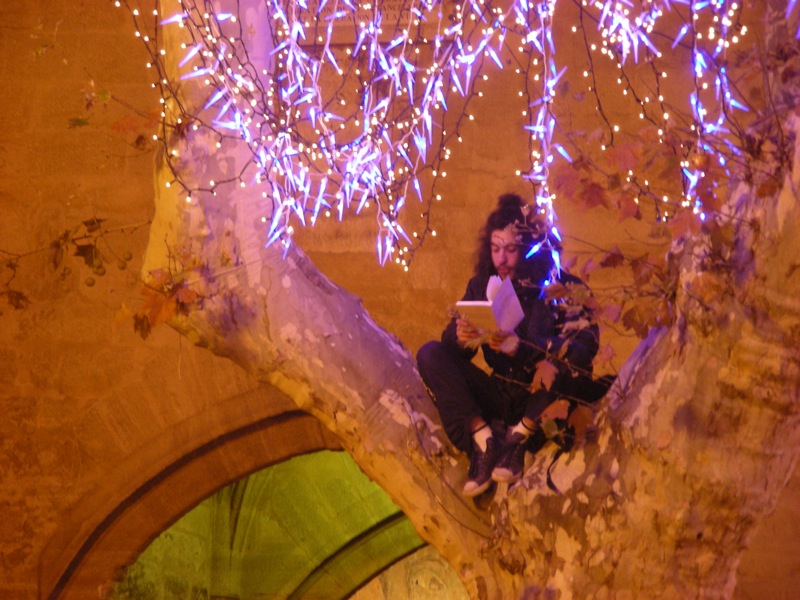
On another evening in Aix I came across this man sitting high up in a tree, reading a book. I don’t know why he picked that particular spot but I remembered him just as I was writing about the unusual places a lot of us now work from, or study in.

I do think one of the main lessons we are going to get from this pandemic is to challenge our orthodoxies, and our habits. You can even make a case for saying that we got to where we are today by doing things the way we’ve been doing them, so if we want to get out of this and not fall back into it, perhaps we are going to have to get creative and come up with new ways of living, new ways of working, studying and sharing our time and space.

Maybe this isn’t the end of the office as we’ve come to know it, but it surely challenges the dominance of the current model. If that leads to more flexibility and more diversity then I think that can contribute to a better, healthier way of living.

Apply this same thinking to education and you can already see that the way we’ve been delivering education to children and young people is also going through a potential revolution. I’m a bit of an optimist at heart, and I can’t help thinking that, although these changes bring lots of challenges and difficulties, they can also bring us the opportunities to learn and to teach differently.

Read Full Post »

I took this photo because I liked the look of the boat with the distant hills on the horizon but ever since I uploaded it to my photo library every time I look at it I think “What’s that boat doing on that side of the wall?” Because the sea is on the other side of the wall!

But actually this is no accident. The boat has been placed here, high up above the water line and behind this wall, for protection.

As I look at it again today I’m seeing it in the context of the new variant Covid, the exponentially rising rates of infection in many countries and a new round of restrictions and lockdowns coming into effect around the world. All of which gets me thinking about protection.

Really, as best I understand it at this point, there is only one way to catch this virus – you get it from somebody else. The more people you share space and time with each day, the greater your risk of getting infected. The more you share space and time with others indoors and with poor ventilation, the greater your risk. All that isn’t really rocket science. So, at a personal level, protection involves avoiding contact with other people as much as you can.

OK, so that’s just not possible for many, many people who have to work to keep us all alive and/or to keep themselves alive, which is why many people ask our governments to financially support those whose places of work are being closed down, and why the authorities have to work hard to make workplaces as safe as possible for those who do have to work. Of course, we can all help protect those who have to work by driving down the community infection rates just by restricting our own personal contacts.

I’m not going to get into the details of other measures in this post, but, more than ever, isn’t it clear now that our societies need to change? We are too vulnerable. Or to put it another way, we are not protecting populations well enough. We need to do better – that, not any technical fix, is our only “way out”, our only real lasting “protection”.

So, I just want to say again – lets massively improve our health care services – we do not have enough facilities, enough nurse, enough doctors. Let’s start training the next generation of staff now – it’s going to take at least five years to get them ready. Let’s recruit and train the teachers and trainers to train the doctors, nurses and other health care professionals we desperately need. Because we have all been living with inadequate health services. Every country could do better.

And, secondly, let’s start NOW to address the underlying vulnerabilities – lets deal with poverty, poor housing, inequality, prejudice, and the environment – including our agriculture, our food supply chain and the issue of clean air.

That would all be a START. What would you add?

Read Full Post »

One of my most favourite sculptors is Anthony Gormley. Many years ago he created one of his works in London, placing his distinct iron casts of a man standing on various roof tops around the city. It caused quite a stir as several people thought they could see real men who looked like they were about to jump from the heights. I never saw it that, thinking more of Wim Wenders’ angels in Wings of Desire (or the City of Angels, American remake of that classic) where you could see the angels sitting or standing high up above the city watching down on the people below. At the same time as Gormley placed these figures around London he had an exhibition in the South Bank Gallery and that’s where I took this photo.

One of his works in the exhibit was a large glass box, the size of a whole room. The glass box was filled with mist, so dense that you could hardly see your hand in front of your face. You could walk around inside the box, dimly making out other visitors who appeared and disappeared continuously in the thick mist. As you walked around the box on the outside you could make out the occasional figure temporarily appearing in the midst of the mist as they walked around inside the box. As I passed someone reached their hand up to place it on the glass, and as I snapped the photo, I noticed the glass wall was reflecting one of the figures high up on a roof outside the gallery.

That lucky moment gave me this image which has kind of haunted me ever since. As I look at it again today, in the context of this surging wave of the pandemic and trying to cope with yet another month of sundays in lockdown, this image seems to have a new meaning and a new poignancy.

It makes me think of this world we are all living in now, hidden behind invisible barriers, or, sometimes, all too visible ones! How we are connecting by email, texts, zoom calls and so on, but how we can’t quite reach out and touch anyone else.

I know that this will pass. Everything does. Nothing remains the same. And maybe this experience of “distancing” which we are experiencing is giving us the opportunity to become more aware of what’s really important to us. Maybe, like me, you’re finding that you are deepening relationships with even more communication that you “normally” do. Maybe you’re making new friends, encountering the kindness of strangers in other lands. I guess I’m saying, it’s not all bad. But I don’t mean in a way which would dismiss the challenge and the struggle.

What better can we do today, tomorrow, and the next day, but reach out and tell our loved ones how much we love them, and extend the hand of kindness to strangers?

Read Full Post »

It’s many years since I was walking around Aix en Provence and came across this ball lying against the kerb. I could have just walked by. After all, what’s so remarkable about a ball just lying in the street? But I didn’t. I crouched down at the side of the pavement and took this photo.

The ball is the centre of attention. I know about the “rule of thirds” in relation to picture composition but I decided this time to make the ball sit pretty much in the middle of the shot. But it’s not just a picture of a ball. It’s a ball in a totally empty street……which really gives the impression of an abandoned ball. I don’t know if the ball had been abandoned or if some kid had just left it outside their house while they had their lunch, but in this particular framing this image still captures a real sense of abandoned play for me.

At this point in our pandemic (it’s January 1st 2021 as I write this) a street like this looks like the “new normal”. I’ve been seeing streets like this for about nine months now. So, now that I return to this old photo it has a new, topical relevance.

But I want to return to the ball itself today, because what is the purpose of ball like this, other than to be something to play with?

I know we are going to have to develop new behaviours, make different choices, change our lives in the face of this pandemic, but I’m going to suggest to you today that one of the behaviours we could do with a bit more of is “play”. I don’t mean that in a trivial way. In fact, I think play is greatly under-rated. Babies and children learn and develop most of their key, lifetime skills, through play – they explore, they press what they can press, push what they can push – I saw a little video of my smallest grandchild opening his first ever Xmas present. He’s not a year old yet. But he immediately spun whatever would turn, pushed whatever buttons would go down, popped a ball into a hole……he just constantly tried out everything. It’s this kind of play we need to cultivate I think and that is going to require –

Wonder – if you can keep in touch with a sense of wonder, not only will every day have something in it to delight you, but you’ll remain curious, you’ll keep wanting to explore. We will find new ways of living through our capacity to wonder. Lose the sense of wonder, lose the ability to invent new ways to live, lose the ability to make sense of this world.

Humility – getting down to a child’s level is a way of having a “beginners mind” – a way of countering any arrogance of knowing it all. We never know it all. That’s just not possible. Unless we retain a sense of humility and acknowledge that we can always learn from our experiences then we just aren’t going to progress. One of the things that frustrates me most about this pandemic is what seems like a systemic inability of politicians to admit they didn’t get things right, to acknowledge that they could have made different choices. Without the ability to do that, they can’t make better choices next time around.

Joy – how much do you let joy guide your actions and choices? Researchers into the neuroscience of emotions, and many philosophers over hundreds of years have shown us that joy is one of the most powerful emotions and drivers in the human psyche. You can see that easily in children. If it’s not bringing them joy, they soon let you know! And, yes, I know, joy is not the only emotion, and can’t be your only guide. I’m just suggesting that there’s a benefit in becoming a bit more aware of brings you joy, understanding why that is, and then feeding that into your decision making.

Imagination – I sometimes think this our superpower. We are literally the co-creators of our daily lived experience and there is no way we could do that without excercising our imaginations. We can’t think ahead without it. We can’t experience what anyone else is experiencing without it. We wouldn’t have memories without it. We couldn’t create without it.

I’ll leave this post with those four things. I think these are four things related to “play” and I think we are going to need them all in spades as 2021 unfurls……

  • Wonder
  • Humility
  • Joy
  • Imagination

Read Full Post »

I’ve read before that one of the major differences between Japanese and English garden design is that in Japan the emphasis is on what the garden looks like from inside the house, whereas in England the garden is designed from the perspective of the observer actually in the garden.

I think that’s probably an over-simplification and as with pretty much all generalisations it should be taken with a pinch of salt.

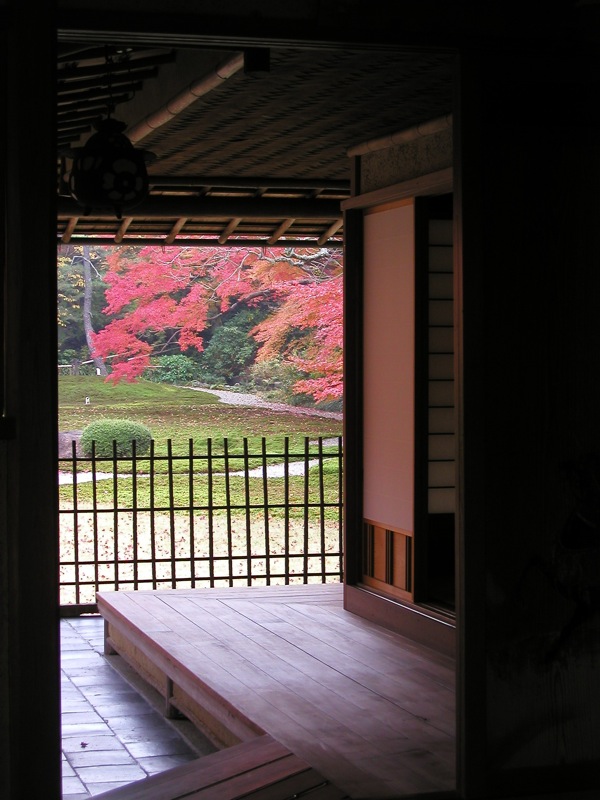
However, here’s an example of a Japanese garden. I took this photo form the interior of a temple, and you can see that the garden pulls your attention towards it. Not only does the window seem to create a frame for a beautiful picture, but the wooden flooring leads you out of the room towards the fence inviting you to enter the garden…..but only to the edge.

Maybe that’s partly where this idea comes from that the aesthetic in Japan is to create the experience for the observer standing just a little bit outside of the garden.

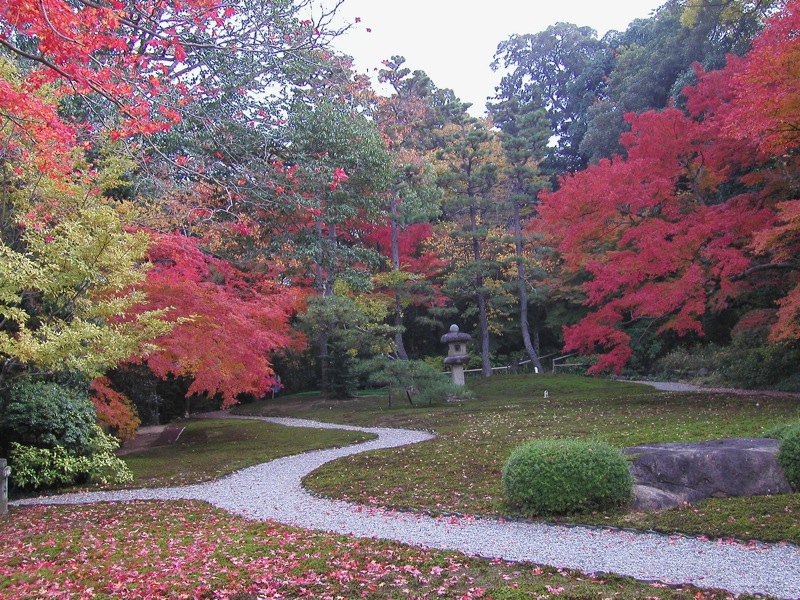
But, now, look at this next photo, which I took during the same visit to the same garden.

This isn’t a garden just to be looked at from the outside. Look at these winding paths, the stone lantern, the opening between the trees, the well trimmed low shrub, the grey rocks. This is all absolutely begging you to get out onto that path and experience this garden as it unfolds around you! This is a garden to be experienced from the inside of the garden itself.

How do I reconcile these two views and these, at face value, conflicting sets of design value?

And not or“.

Here’s some of the true genius of Japanese aesthetics, in my humble opinion…….a resolution of polarities to create something greater than either of the poles can achieve by themselves.

This is a garden created to be beautiful and inviting from inside the temple, AND to be beautiful and inviting once you are in the garden itself. Both of these experiences are so memorable, and dovetailing the two perspectives into one takes the entire visit to a whole other level.

I find this incredibly inspiring. It inspires me to connect to, to seek out, and to create, beauty. It inspires me to break down the artificial boundaries between perspectives – to bring the view from outside the garden into the view from within the garden. It inspires me to create curiosity and intrigue as well…..because don’t you just want to walk along that path and have a closer look at those rocks, that shrub, that stone lantern? Don’t you just want to walk along that path and “bathe” in that gorgeous forest of colour? Don’t you just know in your bones that this is the kind of thing which is “good for you”, which will nourish your soul, stimulate your body and your mind, enrich your life?

Read Full Post »

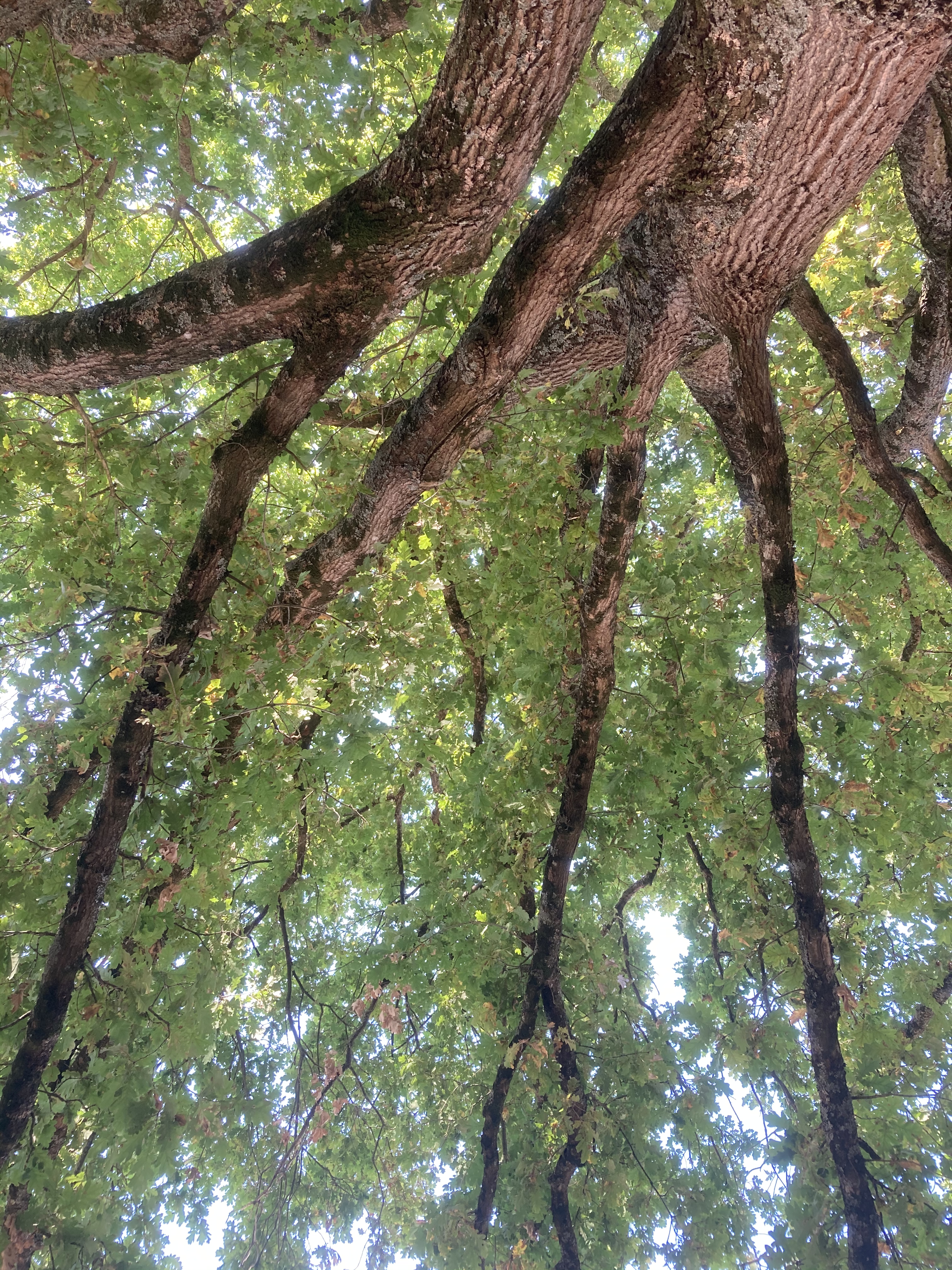
When we look up the world looks very different.

This is not the view of a tree which you’d usually see in a photo, and I think it stands out all the more because of that.

In “Metaphors we live by”, Lakoff and Johnson make a convincing case for the embodied nature of the metaphors which underpin the meaning of so much of our speech. We take these metaphors so much for granted that we don’t even notice them. They give many, many such examples in their book, but the one which comes to mind as I write this is the one I used for the title today – “Looking up”.

Looking up is something we do physically, as you see in this view of a tree. “Looking up” also refers to our position in the physical world. We’d have to be very tall to look down on most trees! We look up to see what is above us…..or to raise our eyes from the ground if we happen to be walking around with our gaze fixed somewhere just between our noses and our feet.

The important insight about the embodied nature of our metaphors is that we can find clues in the language we use which can point in two different directions – they can indicate something about our emotions and our behaviours, but they can also indicate something about our bodies.

Once I learned that insight I became even more alert to the exact language a patient would use when describing their symptoms and experiences. Sometimes the words and metaphors they chose were the clues to finding their pathologies, and the way in which they were unconsciously trying to adapt to those pathologies. But that’s for another day.

Today I just wanted to highlight how physically “looking up” can actually link us in to the emotions, values and behaviours of “optimism”, of “looking forward” and of looking ahead with some flavour of brightness or expectation. Because it seems to me that we are pretty desperately needing a bit more positivity just now.

So, here’s my thought……maybe if we go out and deliberately, consciously, look up more, it will influence our mental state at a deep, unconscious, and emotional level and work as a kind of “reset” to enable us to engage with our lives more positively in the year ahead. And maybe if we do that, then as the active co-creators or reality, we will actually begin to build a better world.

As you raise your glasses at the end of the year, here’s to a time when things begin to “look up”!

Another world is possible.

Read Full Post »

I worked for about 40 years as a doctor. I’ve studied I don’t know how many diets in that time. I’ve seen “miracle” diets come and go, I have seen diets for losing weight, diets for preventing heart disease, diets for preventing cancer…..it goes on and on. And confusingly over the years there have been totally contradictory pieces of advice – especially about carbohydrates and about fat.

However, here’s the good news…..time and time again, the evidence keeps returning to a pretty simple fact – the more your diet is plant based the better. It’s good old fruit and veg which comes out top again and again and again. I know, there are lots of other issues and nuances, and it doesn’t ALL come down to fruit and veg, but if you are thinking of doing one thing to “improve” your diet in 2021 – eat more plants!

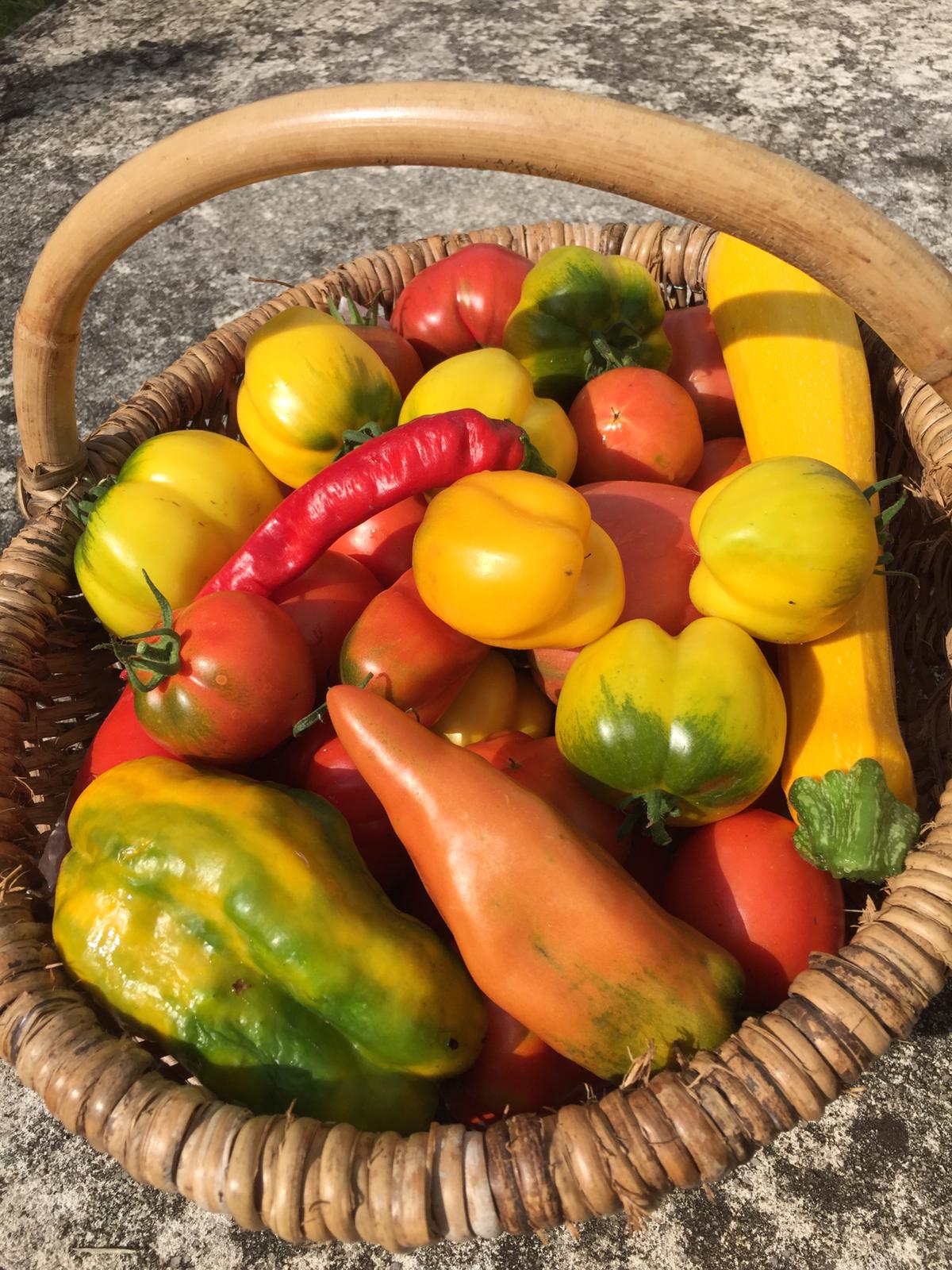
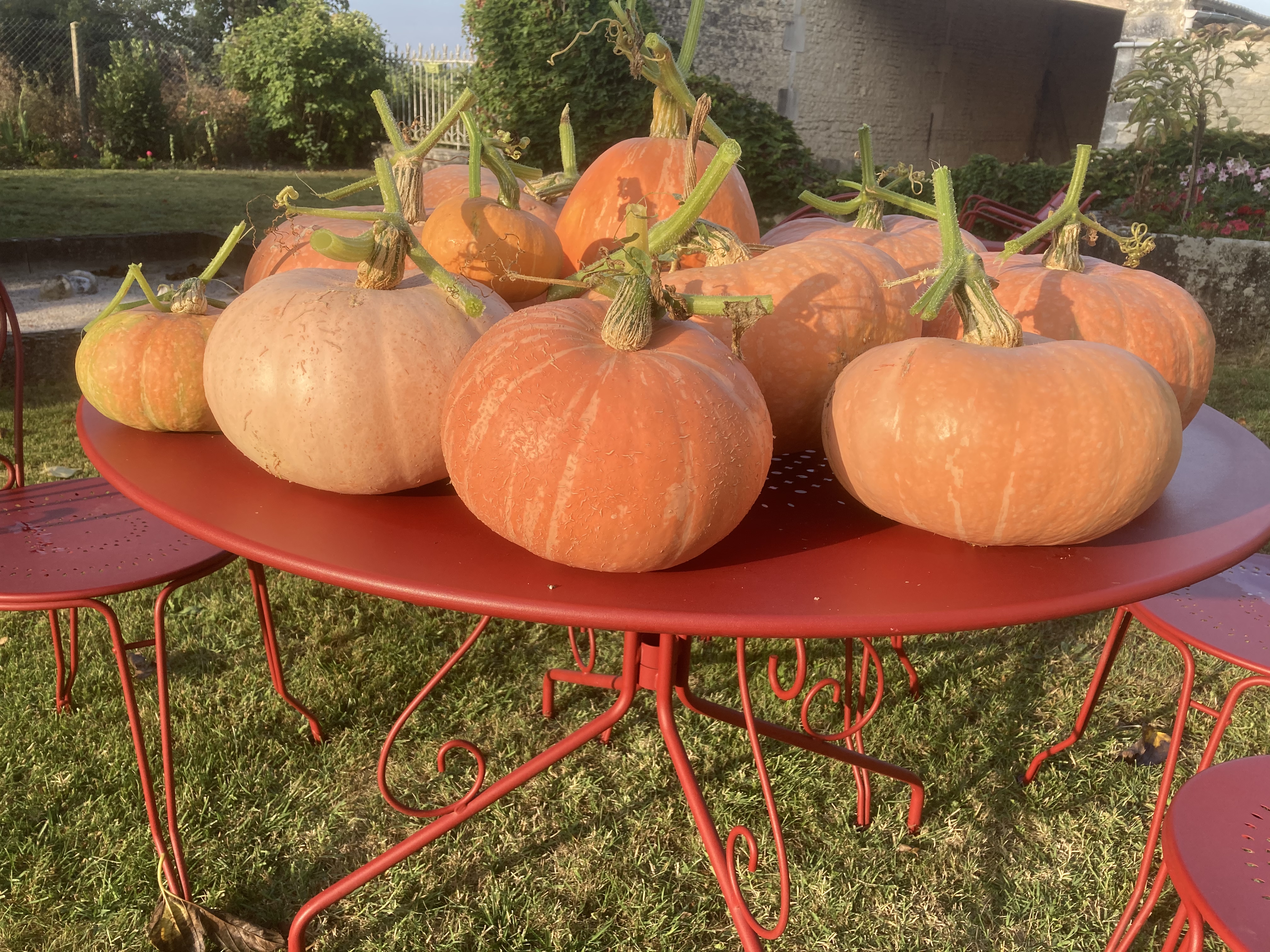
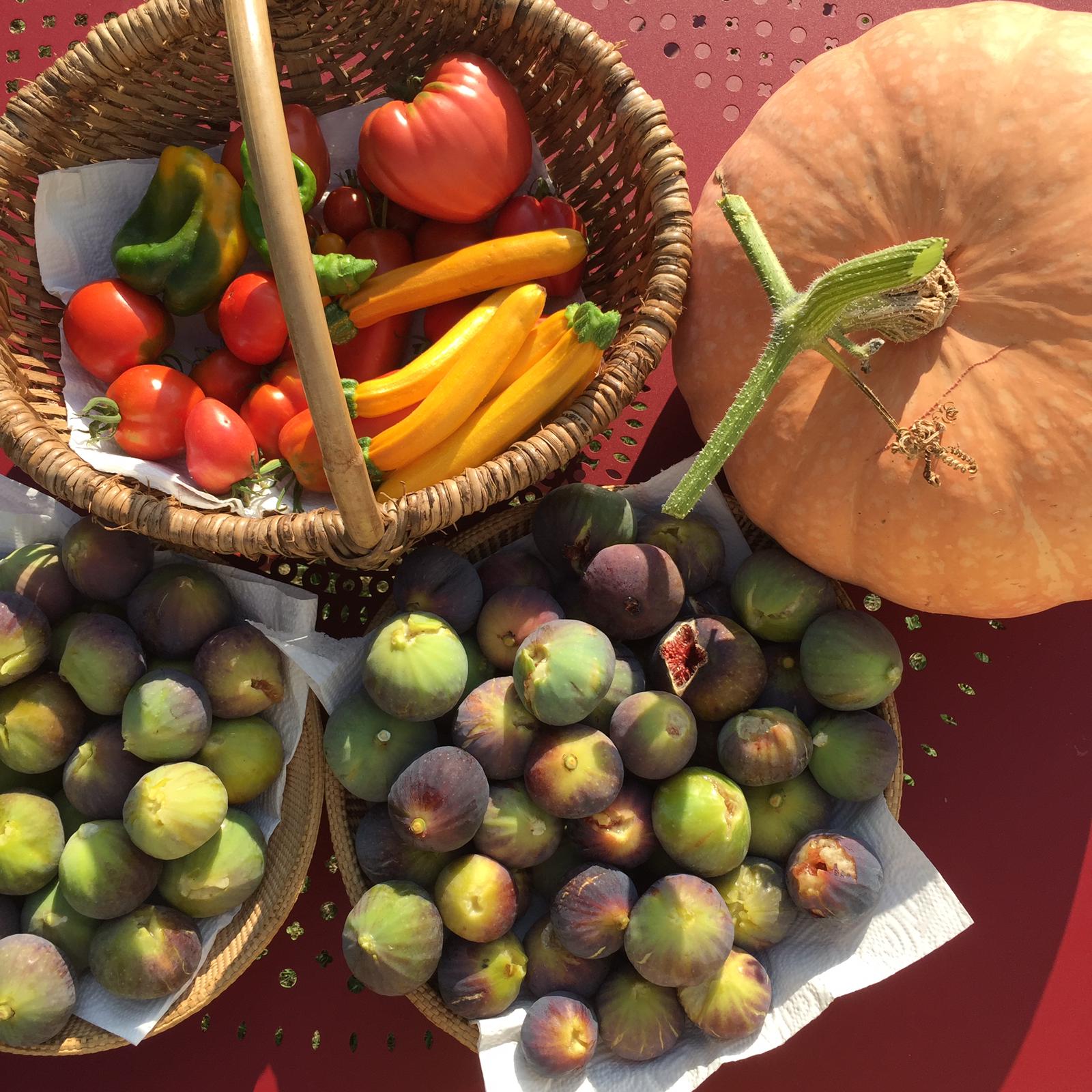
These photos are of some of the harvest we got this year from our little veggie patch. We don’t have a big patch but it’s very productive. I use compost I make from the grass cuttings etc in the garden, and I don’t use any chemicals at all. I live in South West France in an area famous for vineyards where the grapes are grown for cognac production. I’m sure that wherever your live there will be different plants which grow well, which I can’t grow, and others I get in abundance which won’t grow where you are.

As well as geography and environment affecting what you can grow, I believe that we all need individualised diets too – we don’t all enjoy the same flavours, some of us are allergic to certain foodstuffs, and each of us have particular needs in terms of nutrition. But I’m sticking with this one single piece of advice because it applies whatever the variations – eat more plants!

I highly recommend growing some fruit and/or veg if you can. You don’t need a huge piece of ground, and if you live in a city there may be the possibility of getting an allotment, or, increasingly, citizens are getting together to get permission from local authorities to create community gardens where anyone can plant, tend and harvest some fruit and/or veg. See if such a thing exists in your area, and if it doesn’t, maybe you can initiate one…..hey, someone’s got to make the first move!

There is an additional health benefit which comes from growing your own fruit and veg – being outside, exercising and the whole cycle of seeding, tending and harvesting are all good for us. And don’t worry about not managing to become self-sufficient – pretty much nobody is going to become totally self-sufficient from a garden, an allotment or a community project. Just do it for fun, for the bonus of some additional variety to the fresh food in your diet, and there will be a spin off – you’ll become more aware and more informed about ALL the food you consume. For example, the first time I ate a radish I had grown it almost blew my head off! I had no idea radishes could have such a powerful taste! And I’ve had several other mind opening experiences as my taste buds discover flavours for the first time.

So, eat more plants. If you can, grow some plants. And just enjoy the flavours. Honestly, it’ll be a good start.

Read Full Post »

« Newer Posts - Older Posts »