Feeds:
Posts
Comments

Archive for the ‘perception’ Category

One of my most favourite museums in the world is the Glyptoteket in Copenhagen. One of their permanent exhibits is a sculpture room filled with beautiful works by French and Danish sculptors. Many of them are utterly breath-taking. Over the next few posts I thought I’d share some photos I took during my visit there back in the pre-Covid era!

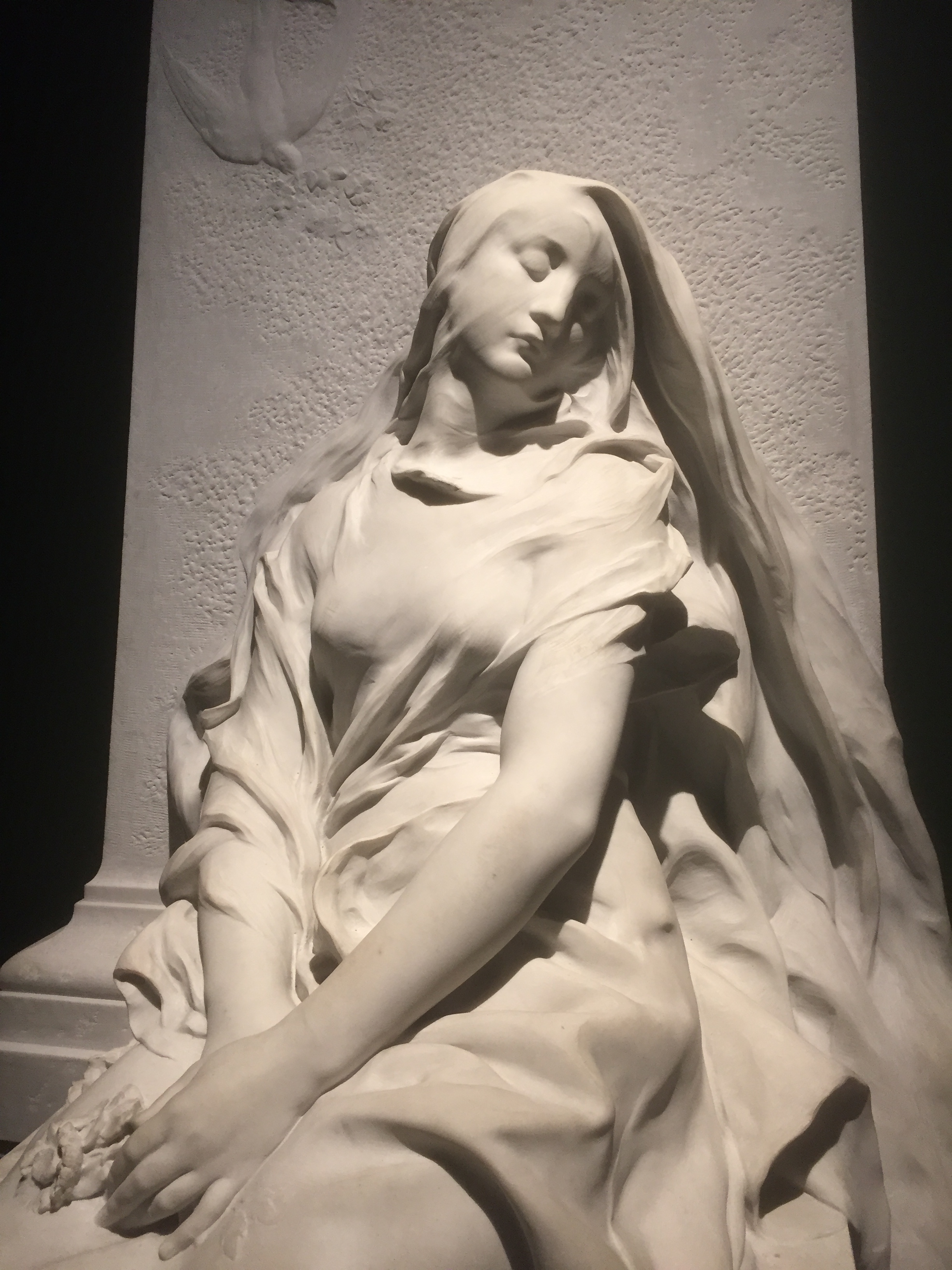
Look at this! Carved from a block of marble. I think it is astonishing. What incredible skill to make solid rock look like soft flowing fabric.

That’s what I wanted to focus on today, because I think when we pay attention to the perceptions and sensations of the everyday present, life seems better. And even though many of us are still living under stringent restrictions, we can experience sights, sounds, scents, tastes and textures every single day. I’m a very visual person. I take lots of photos, and I’ve been re-viewing and organising thousands of my images this year. Despite the fact I suffer from tinnitus and my hearing isn’t as good as it was when I was younger, I also love sounds. Where I live in the French countryside, I’ve been able to hear more bird songs this year than I’ve ever done before, thanks to the quietening of human activities – especially those human activities involving machines! I love music too, and a day doesn’t go by without me listening to, and/or playing music.

This image though, reminds me of the importance of the sense of touch. And with all this physical and social distancing going on, I suspect most of us are missing that kind of contact. Zoom calls, WhatsApp groups and so on can be good for communication but they aren’t a substitute for physical contact, are they?

So, I wonder if it might be an idea to focus on the sensation of touch for a day? What textiles are in contact with your body? How does that feel? What surfaces do your fingers touch today? How does that feel? How many different sensations of touch have you experienced today? And how would you describe them?

That’s my idea for today, inspired by this astonishing sculpture – take a day to consciously experience the sensation of touch. Notice each sensation and make a short note about it in your diary or journal……or in the Notes app on your phone. Then, at the end of the day, review what you’ve written. How does that make you feel? In other words, what emotions are created by the physical texture of your day?
Read Full Post »

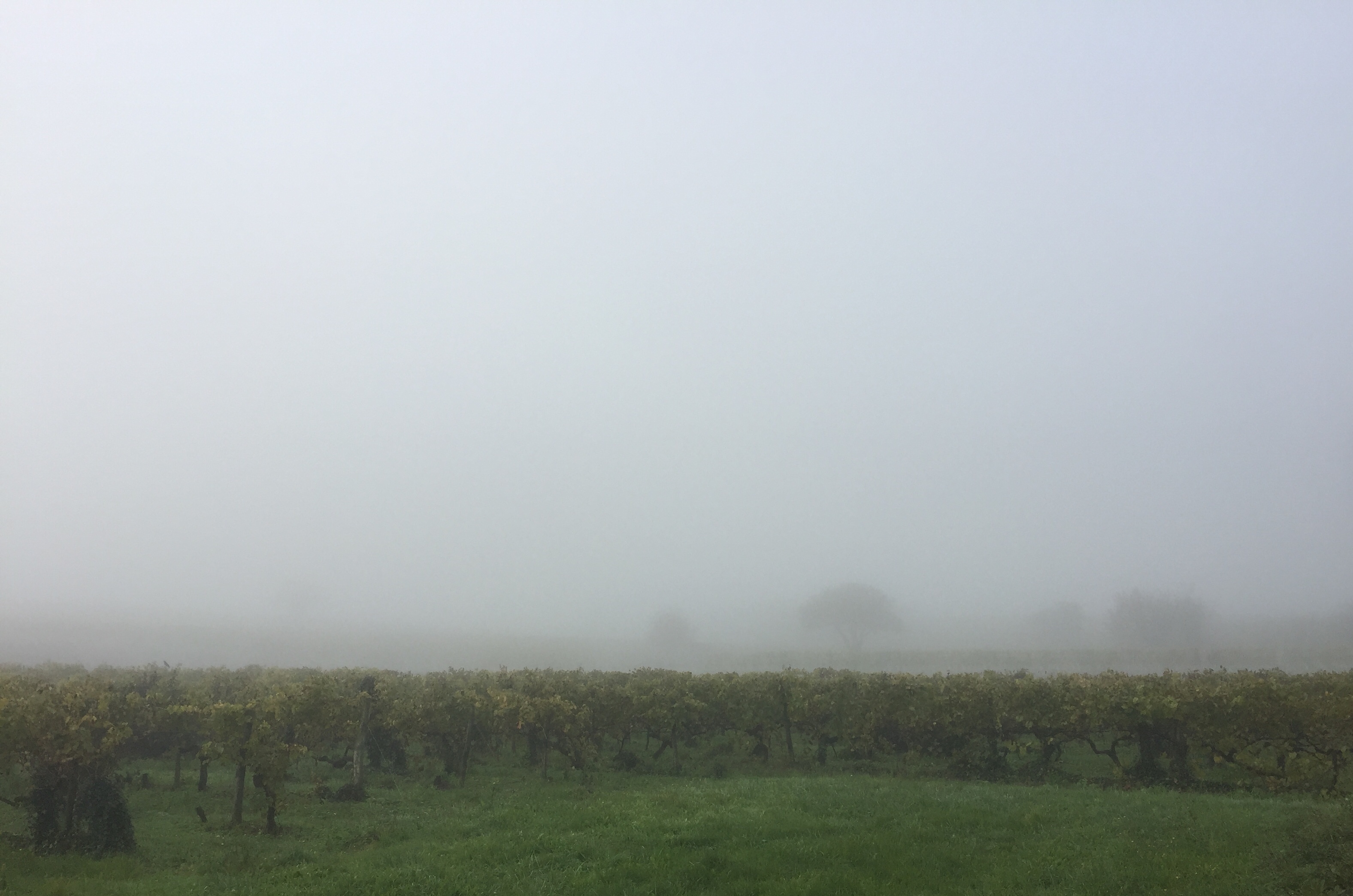
This time of year it’s not uncommon to wake up and find that the vineyards have disappeared. They are hidden in dense morning mist. Just like in this photo here.

I can almost see some of the trees. I can see the nearest vineyard but I know there are several others beyond this one. I can’t see the next village.

The fog brings the horizon much closer. I can only see what is close to me. I’m reminded of a passage by the late, great John O’Donohue –

Today the light is very low so the fog is covering the mountains. When the fog is there, half of them are missing. But, in some sense, that is the duty of the imagination: to help us connect with that which is invisible but is actually very close.

What a great reminder that we need our imagination to “help us connect with that which is invisible but is actually very close”.

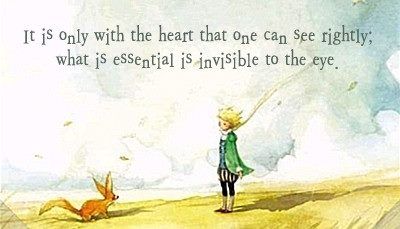
How do we see the invisible? Well, Saint-Exupery told us

Read Full Post »

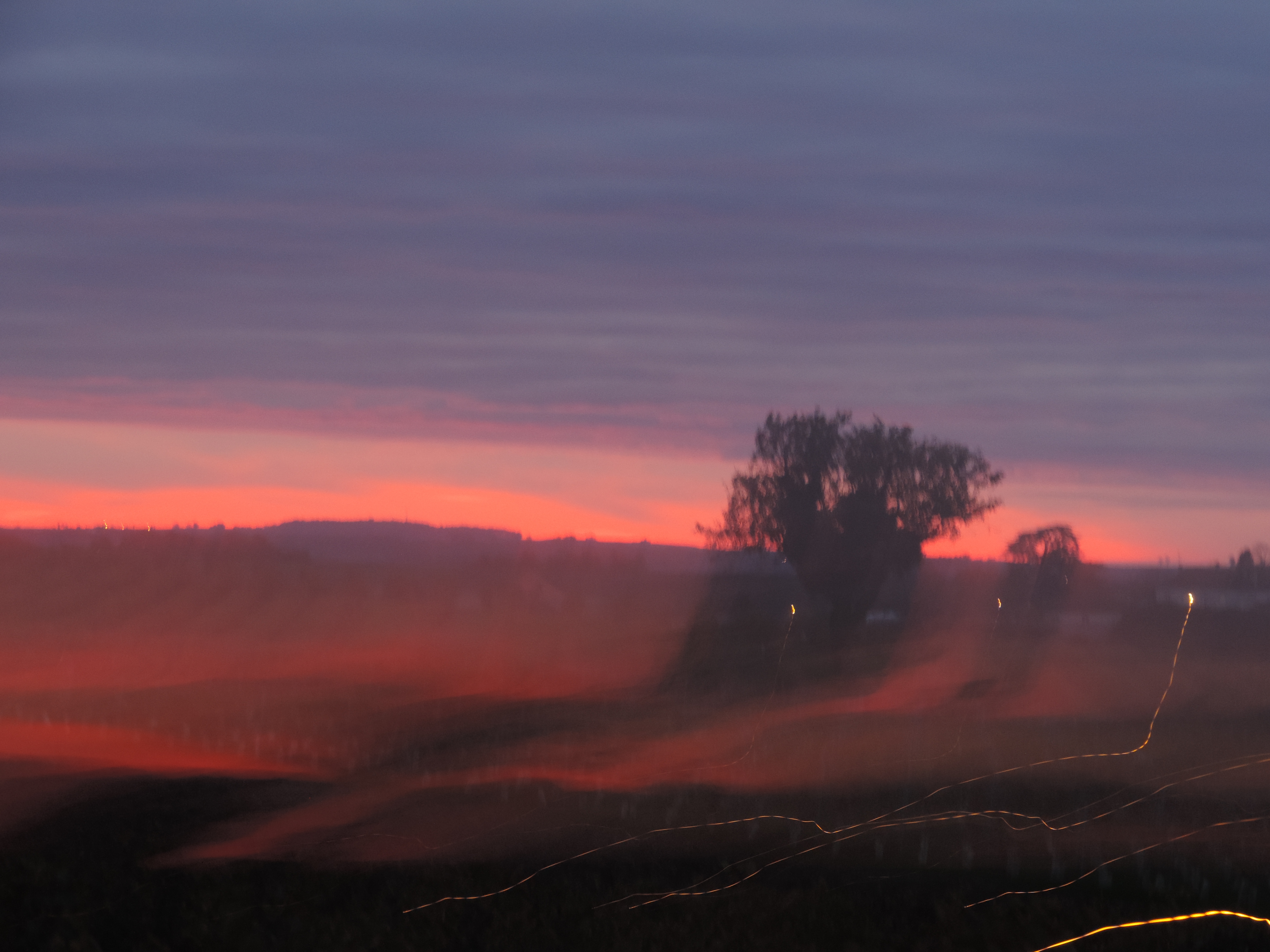
I took this photo of a sunset with a long exposure time and my hand moved a bit but when I looked at the result I really liked it.

OK, it’s obviously not exactly what I saw as I looked out over the vineyards that evening. In fact, it’s almost more like a water colour painting than an exact representation of what I could see with my eyes. But don’t you think that makes it, somehow, all the more appealing?

We have a tendency to prefer clear boundaries, to be able to pick out an object or an individual as separate from all the others, in order to recognise them, to name them. This recognition and categorisation skill takes us a long way. Such a long way that we tend to forget the power of fuzziness, the reality of uncertainty, and the unavoidable fact of dynamic change.

Nothing exists in isolation. Everything changes all the time. The future is unpredictable with any accuracy when we pay attention to the details, to the unique and to the individual.

Seeing how everything flows into everything else, how there are streams of substances, energies and information flowing through us and everything else constantly, streams which form us, which we process, which flow through us on into the future and into other beings and other objects.

We need that skill too. That ability to shift our perspective away from labelling and categorising to flows, to connections, relationships and uniqueness.

Maybe that’s why I find this image so beautiful. Because reality can’t be fully understood as made up of separate “bits”.

Read Full Post »

Since I retired six years ago and emigrated from Scotland to France I’ve lived in a house surrounded by vineyards. Watching the changes across the seasons and seeing how the workers tend to the vines has been an education for me. There’s something very comforting about watching the sweep of the seasons through the year. It helps me to feel more in tune with Nature’s harmonies and cycles.

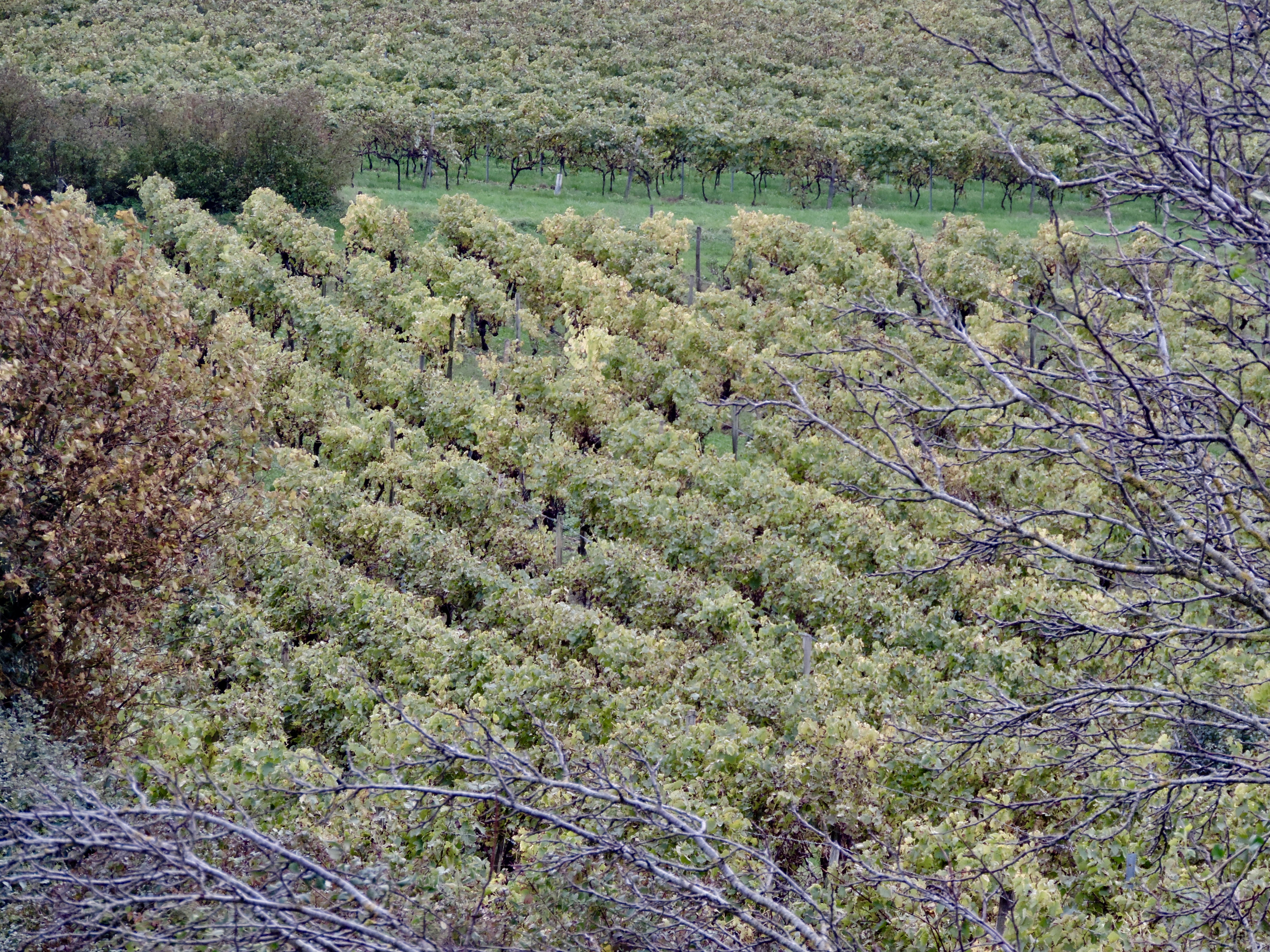
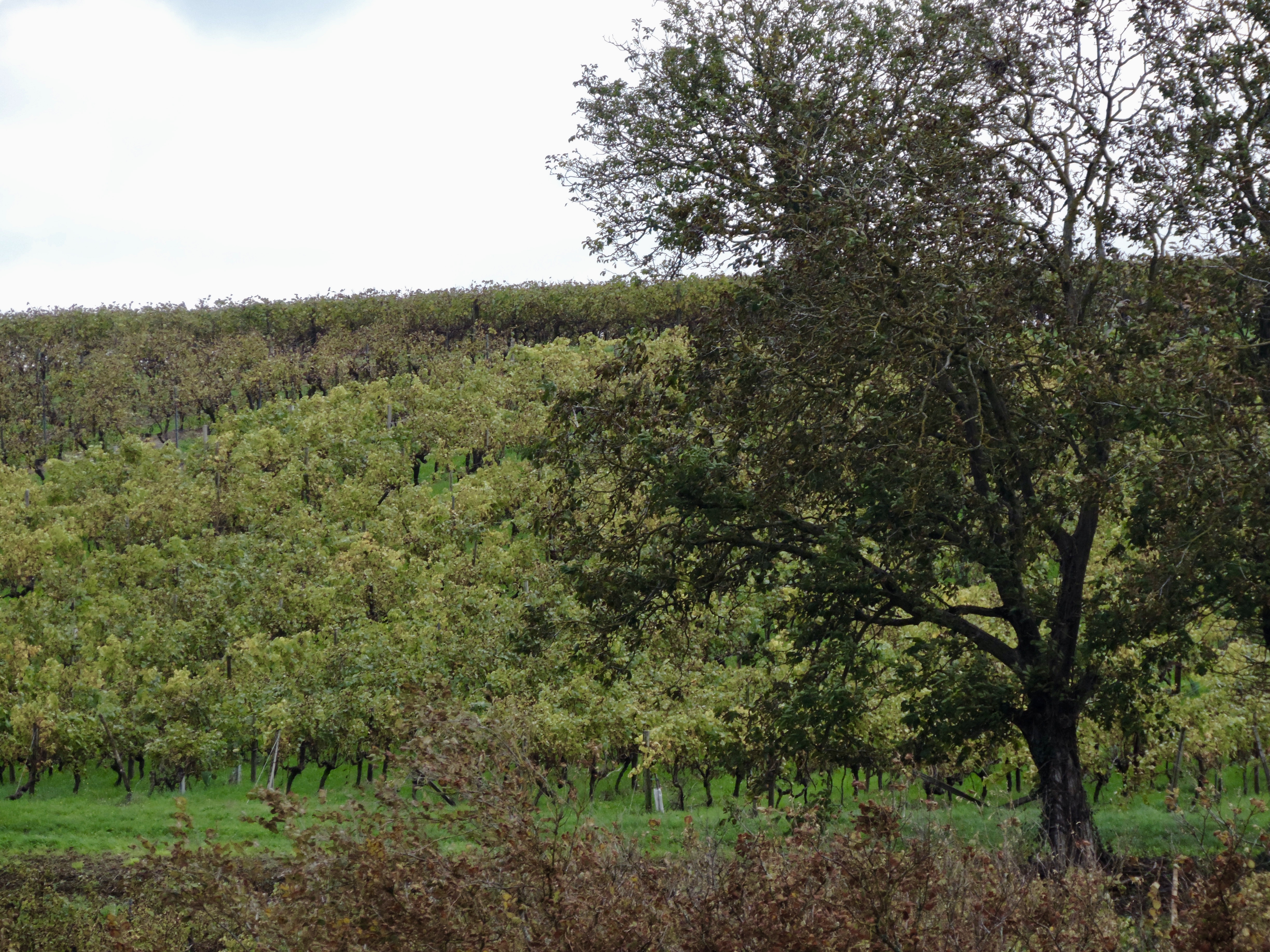
I think these two photos capture two concepts which vineyards can convey – diversity and order.

You can see as you look at these images that the vineyards are not uniform. Although the individual “wires” run parallel to each other within any single vineyard, each yard runs in a different direction. Some run north to south, some east to west, and yet others seem to be on a diagonal. This brings a real sense of diversity to whole landscape, despite the fact that as far as the eye can see there are vines everywhere.

What you can’t really see in these images is that each vineyard is a different age. Each year, some old vines are removed and new ones are planted. As I look out of my window just now I can see one whole vineyard which is row after row of seedlings, each in a bright green protective plastic tube. All the other vineyards are golden or brown. Some still seem to have all their leaves, and others have hardly any left at all.

That diversity strikes me as really important because its in so many dimensions – place, direction of the “wires”, age of the plantation – and so on.

Yet at the same time there is an incredible amount of order. At the time of the pruning the workers move from plant to plant trimming each one back to only two branches, and tying them onto the wires. The row after row of vines is the most ordered, planned and maintained landscape I think I’ve ever seen. Farmland in Scotland is not at all like this. OK, maybe if you see a field with all one crop, be it rapeseed or wheat, it looks pretty uniform, but these vines seem to take order and control to a whole other level.

You might think that diversity and order are opposites, and in some way, they are. So what we have here is that key phenomenon of “integration” – two apparent opposites existing together in synthesis, in harmony, in a way where neither negates the other.

We need diversity in our lives. We need some order too. But most of all we need “integration” – bringing everything together to work in harmony.

Read Full Post »

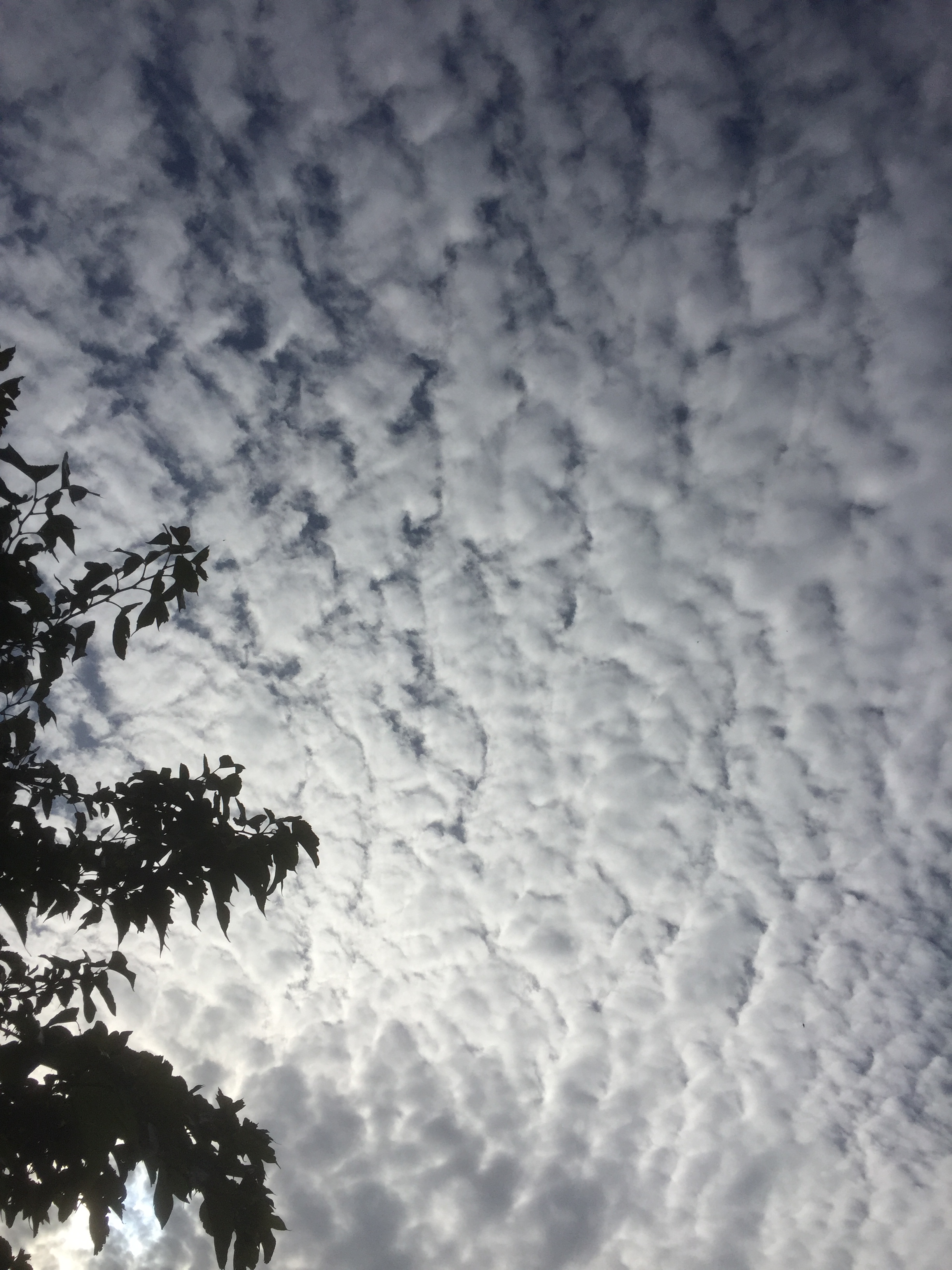
There’s something very beautiful about this cloud pattern. I prefer a sky like this to a homogenous grey one where an apparently solid cloud stretches from one horizon to the other.

I like its “granularity”, the fact it is made of many different smaller clouds, not one of them floating in the sky alone.

When you think about our theory of the origins of the universe – that Big Bang theory – maybe it’s not right but it’s an impressive image isn’t it….the idea that in the beginning was a tiny dense energy which all of a sudden exploded out in all directions to create the universe as we know it. When you think about that, if it is true, then why did these waves of energy start to condense and form clusters, groups and objects? Why when we look at the night sky, even when we look at our own galaxy, The Milky Way, do we not see either just darkness in all directions, or a homogenous grey film stretching from one horizon to the next?

What we see in the night sky are millions and millions of stars, galaxies, and even groups of galaxies. Maybe what lies between them is dark material, and dark energy. But so far we haven’t been able to find it.

The universe is granular. It isn’t homogenous. It’s made of stuff gathered together into clusters and objects. Or, at least, that’s how it seems. So what we see is difference. We see each object as different from it’s surroundings.

We see each object as different from all other other objects, in terms of spatial and temporal co-ordinates, but also in terms of the exact amounts and proportions of elements of which it is made.

We see each object as having a different life story, a different origin in time and space, a different set of environmental influences. We see each object as having a uniqueness which we can only understand by following the multitude of it’s connections – in time, in space, in relationships and in experience.

Beginnings, endings, events and experiences. Edges and boundaries. Connections and relationships. None of this would exist if the universe weren’t full of difference.

Maybe that’s why I find this cloud pattern so beautiful…..because it reveals a fundamental principle of all existence.

Read Full Post »

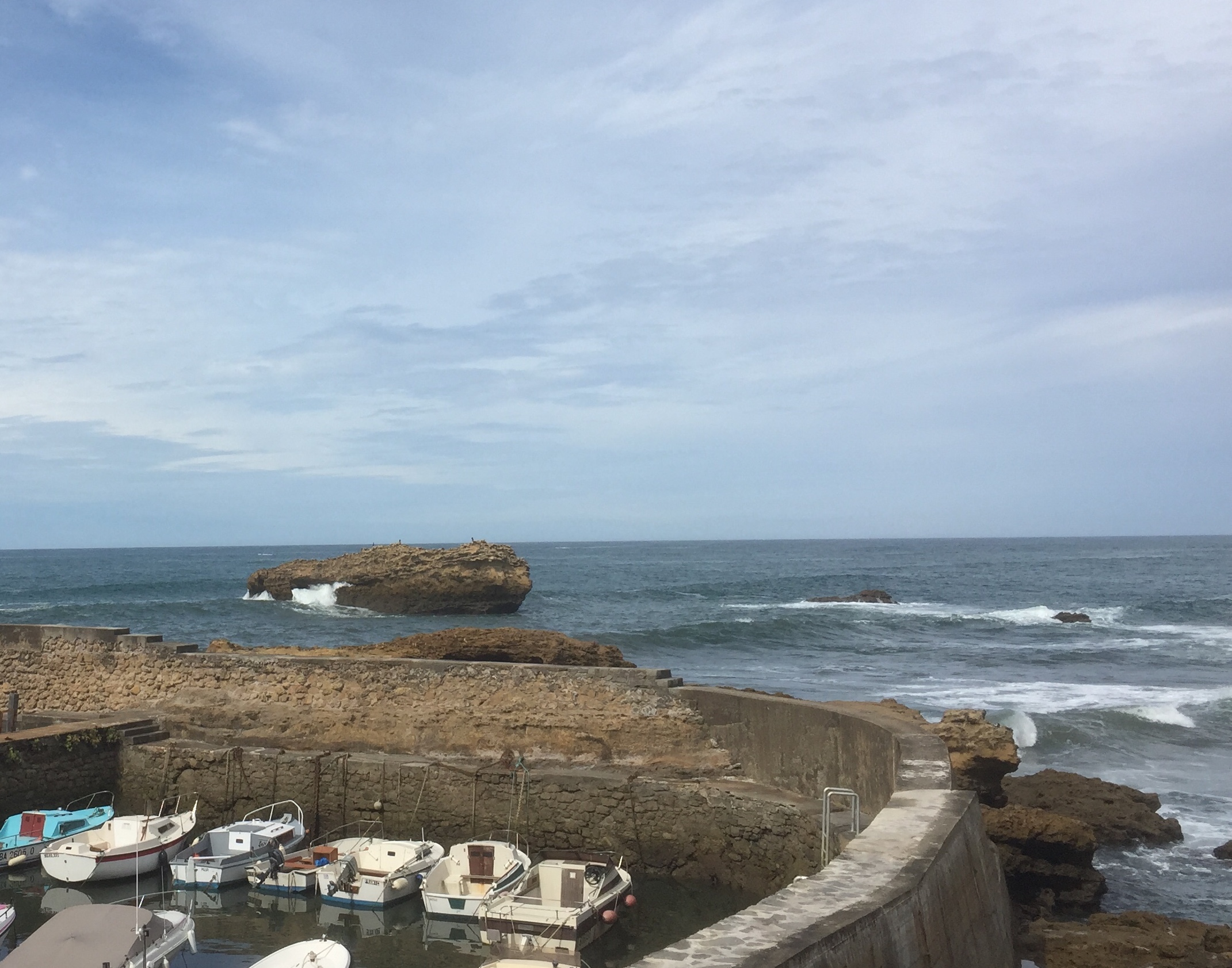
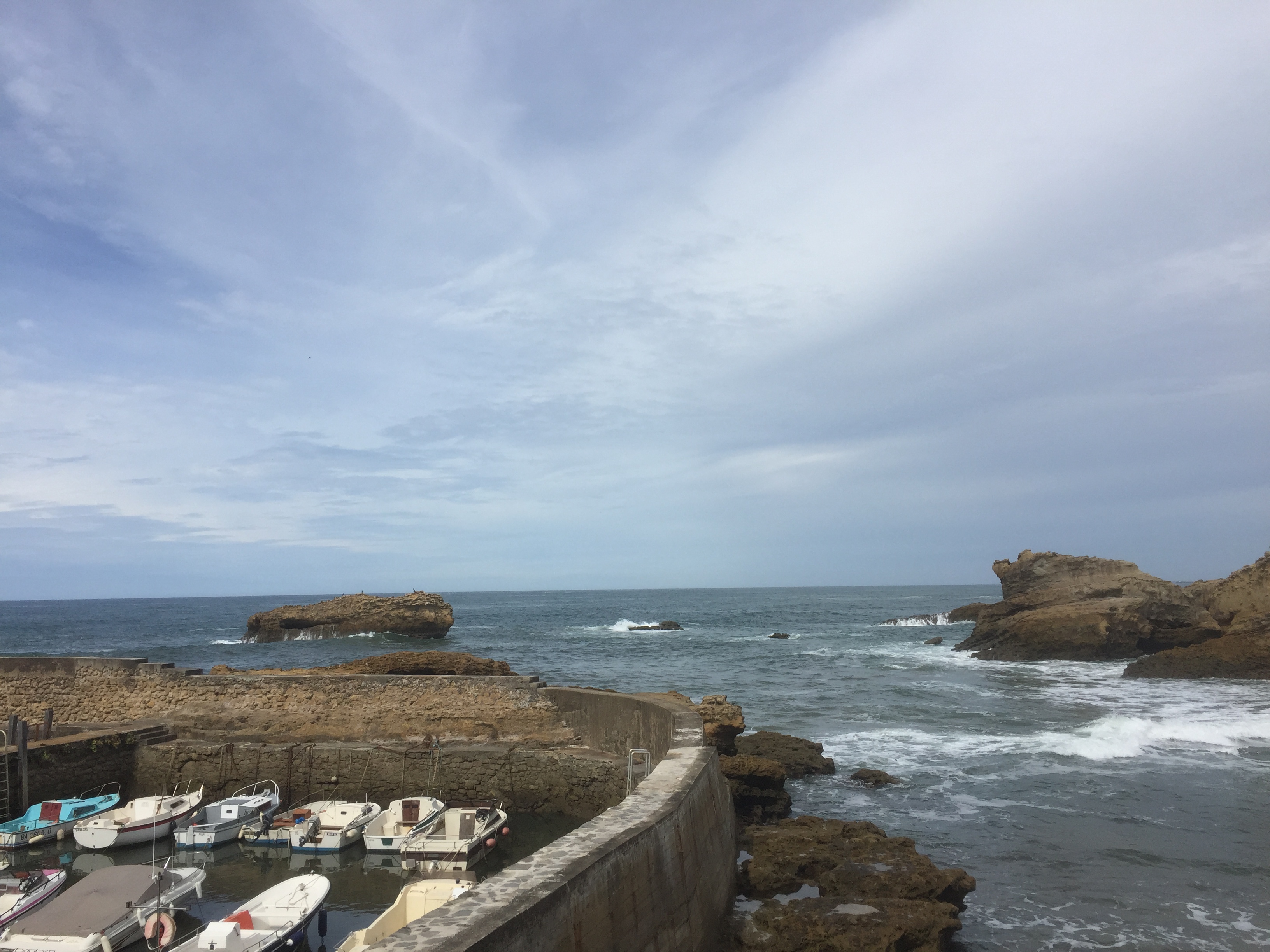
Do you see the rock just beyond the harbour wall? The white foam of the sea catches your eye, doesn’t it? At first, you think it’s water splashing against the rock, because, that’s something you’ve seen many, many times before. But if you keep looking the foam disappears and you can see this –

Click on the photo to get a closer look. Can you see the gap in the rock where the white foam was? If you look very carefully you can still see some water falling down the front of the rock from that gap.

This rock has a gap in it. A long narrow gap. The waves crash against the other side of the rock, the side you can’t see from the land (the dark side of the rock??) and some of the water flows through that gap and cascades down the front.

I don’t know how this began, and I’ve no idea when it began, but it’s quite mesmerising to watch. There’s a rhythm to it, as there always is when you are watching waves breaking on a shore line.

However it began, I know that every time some water forces its way through this gap it widens it just a little bit more. I can’t help but think about that power of water and what it can teach us.

Little by little, probably imperceptibly at first, constant, repeated, pressure of the water against the rock opens, and widens, a hole right through the middle of the rock. It would be tempting to think of the rock as solid and unchanging, and the water as soft and constantly changing, but this reveals that’s not quite right. It’s true that the presence of the rock changes the shape of the water – influences the speed and direction of the waves. But the water actually constantly changes the rock.

Gentle, constant persistence.

I’ve always been a fan of that. The ability to be present, and to pay attention, to sustain that attention, is a powerful skill. I’m pretty sure that’s one of the reasons why so many patients told me the same thing – that they had just told me something they had never told another human being. It always amazed me to hear that. Sometimes it would be an important, even a key, part of their story which made it possible to make a diagnosis. Sometimes it brought about a sudden revelation which allowed the person to make sense of what they were experiencing. One small part of a life story might be like that gap in the rock and as the water of insight flowed through it, suddenly we both understood.

I suppose it’s a bit like that famous line from Leonard Cohen –

There is a crack in everything
That’s how the light gets in

Read Full Post »

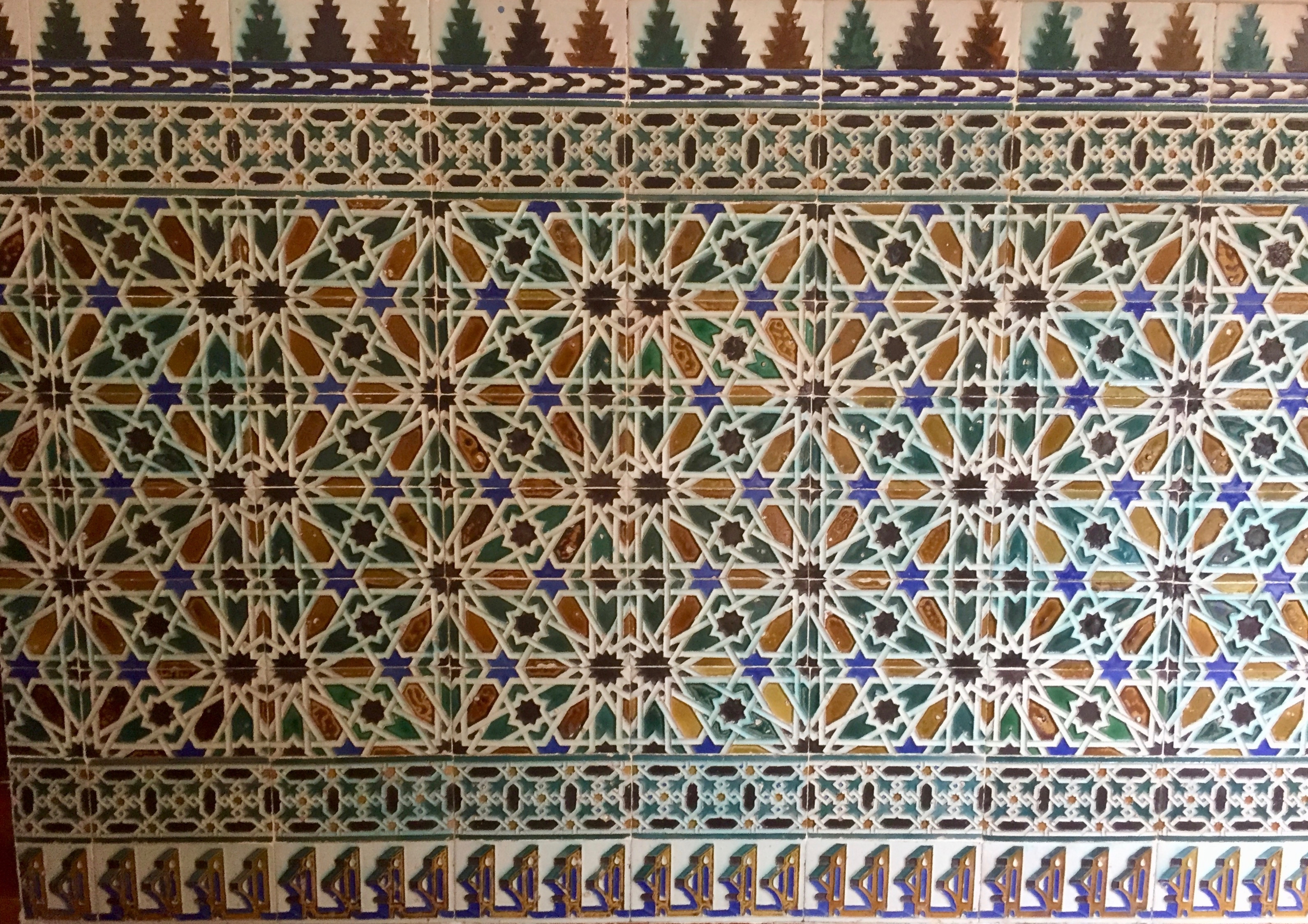
I’ve got a lot of photos I’ve taken which are of this type. They are examples of Islamic art in Spain. Actually there are several different types in my collection, one of which is tiles, like these ones.

I adore these repeating, interconnected, geometric patterns. I love the stars you can see in them. There are small six pointed stars, small eight pointed ones, and small twelve pointed ones. Can you find examples of all of those? Then as the lines spread out from each star, they create hexagons, squares and diamonds.

What I see most clearly when I look at an image like this is a representation of the fundamental connectedness of creation – I see nodes and bonds – an intricately, inter-laced network where nothing exists in isolation and every part emerges from the creation of the web of connections.

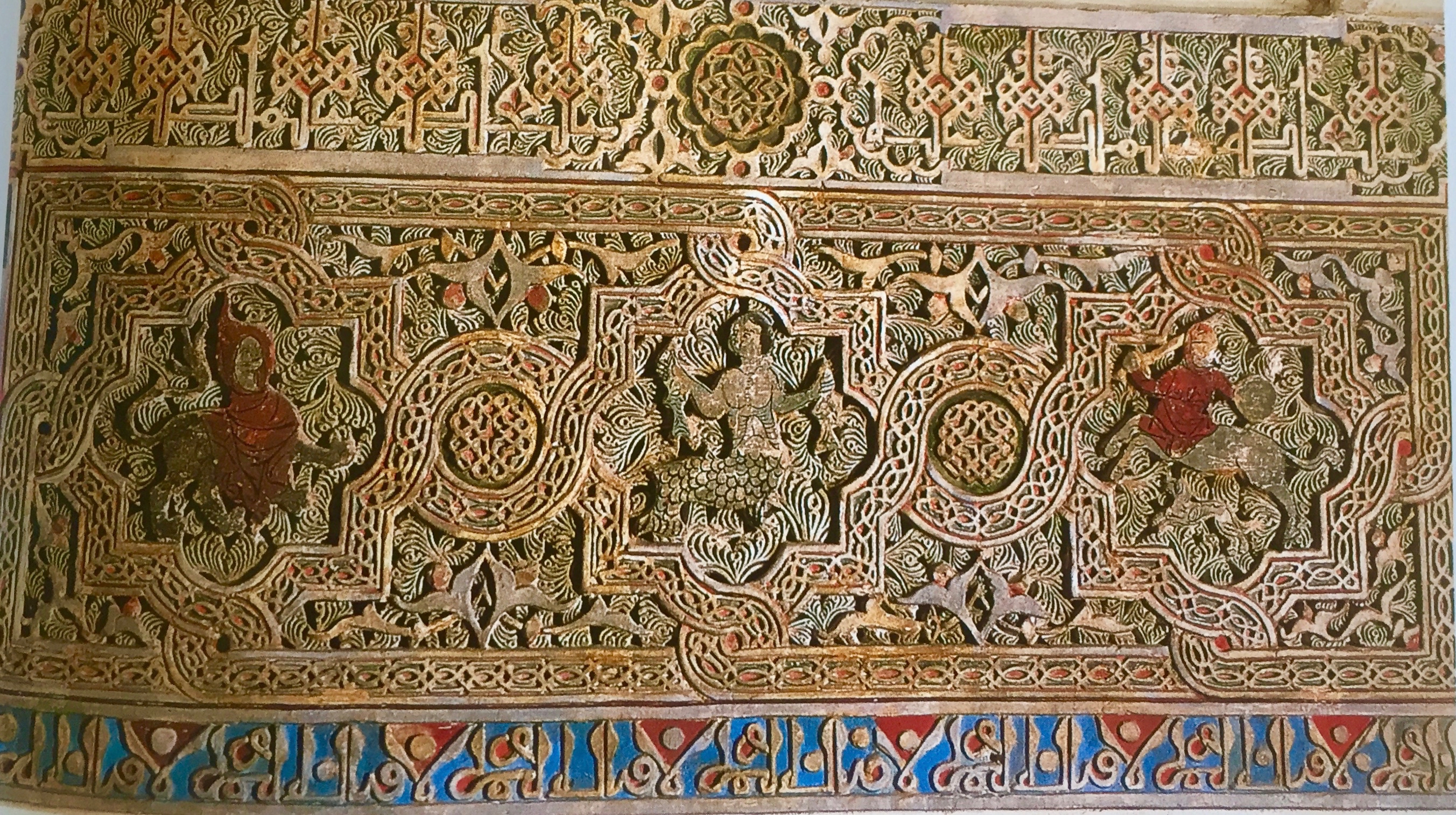
Here’s a somewhat different example. Now, I’m not a scholar of art history, but I do know that there are elements of different cultures in this particular image. There is a hint of Islamic art, a thread of Celtic art, and across the middle there are three chimerical creatures – perhaps a “manticore”, a “mermaid” and a “centaur”?

I love seeing these interwoven influences of different cultures, and it isn’t hard to find examples in Spain which has such a rich history of different peoples living there at different, and even overlapping, times.

These chimerical creatures are really strange to our modern eye and they are often seen as imaginary beasts or monsters, but when I see them here in this panel embedded in webs of inter-locking links and lines, I wonder if they actually represent something of an origin story. Do these half man/half lion, half woman/half fish and half man/half horse actually remind us of our shared origins – we humans and the rest of creation?

We have such a tendency to see human beings as separate from Nature. In fact there is a long tradition in the West in particular of seeing “Man” as superior to “Nature” and even having a God-given duty to subdue and control all the other creatures and forms of Nature on the planet. There are strains of religious teaching in there, but there are also roots in the origins of the “scientific method” and, in particular in a certain strain of darwinism (not put forward by Darwin himself).

We lose a lot when we separate ourselves from the rest of the planet we co-habit with all other forms of Life. We distance ourselves from other creatures and that seems to free us up to treat them with contempt and cruelty. There’s something deeply mistaken in thinking of all non-human reality as “resources” to be “exploited”.

But there is another way. I’m aware of at least three strands of knowledge which contribute to a more holistic, more inter-connected, and, I believe, healthier model.

I start with complexity science, and in particular the concept of the “complex adaptive system“. When I view myself, others, or any phenomenon on the planet through this lens, then the whole of Nature is one inter-connected organism. Nothing exists in isolation. Every action, every thought, every behaviour is influenced by, and influences the actions, behaviours and thoughts of others.

Next I am fascinated by genetics and embryology. It has always been a source of complete wonder and amazement to me that a single egg cell can be fertilised by a single sperm, then divide over and over and over again, differentiating the cells as it grows, to create the billions of cells which make all the tissues, organs and cells of the human body. And all in the right place! It continues to astonish me that all of our cells can be traced back to just two cells – one from each parent. But on top of that, it’s been amazing to see the incredible degree of “overlap”, or perhaps more correctly, of shared origin in the genomes of humans and other creatures. It’s pretty mind boggling to discover how many genes we have in common with earthworms for example!

Thirdly, I’m convinced about Lynn Margulis’ “endosymbiotic theory” – the idea that all multicellular creatures have evolved not only from unicellular ones, but that the individual cell components of nucleus, mitochondria, ribosomes, perhaps chloroplasts, were all originally separate creatures which evolved to live together and form these more complex structures of animal and plant cells. Each cell can be thought of as a little community, and each cell exists as a member of a larger community. This places co-operation, collaboration and symbiosis at the very heart of reality.

Read Full Post »

I’m convinced the images we encounter daily influence what we feel, what we think and how we behave. In fact, I don’t just mean images such as artworks, adverts or photos. I mean how things look – including the shapes and sizes of buildings, the presence of trees, flowers and bushes, the colours of walls, the landscape or the cityscape, depending on where we live, and the decor, light and shapes of the rooms we live in, as well as the objects which surround us.

All of these images influence us deeply, and, largely unconsciously, creating moods, emotions and feelings which stimulate or inhibit well-being, and which change the course of our lives.

One dramatic example of that is in hospital design. There is a lot of research about this, but, to give one example, it was found that patients who had a view of nature from their hospital bed recovered more quickly, needed less painkillers, and had less complications than those who only had a view of a wall.

Of course the advertising industry is well aware of the power of the image. These days there is even a specialist area of knowledge and advised described as “neuro-marketing” which seeks to employ the findings from neuroscience to persuade customers to buy certain products. These things work at the level of image, sound and smell. Mostly, they work unconsciously.

So, I think it’s good to notice our here and now, our everyday reality. I think it’s good to be aware of the images we absorb as we work, play and relax in our home and shared environments.

Taking photos is a good way to become aware. When you look around, or go out somewhere with a conscious intention of photographing what you notice, then your awareness is automatically heightened. These days most of us have smartphones which are more than ably equipped to take photos. You don’t have to have a fancy camera.

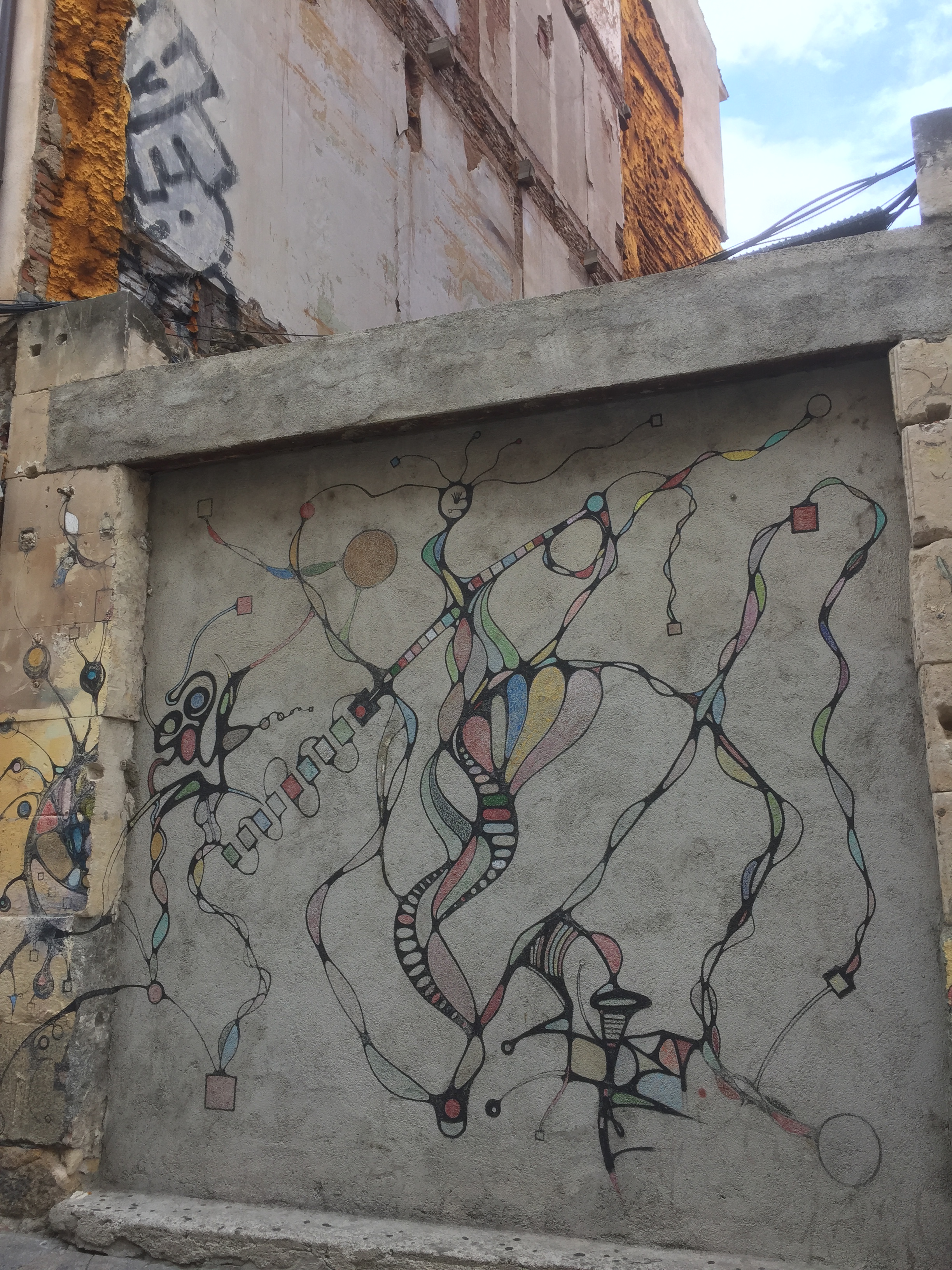
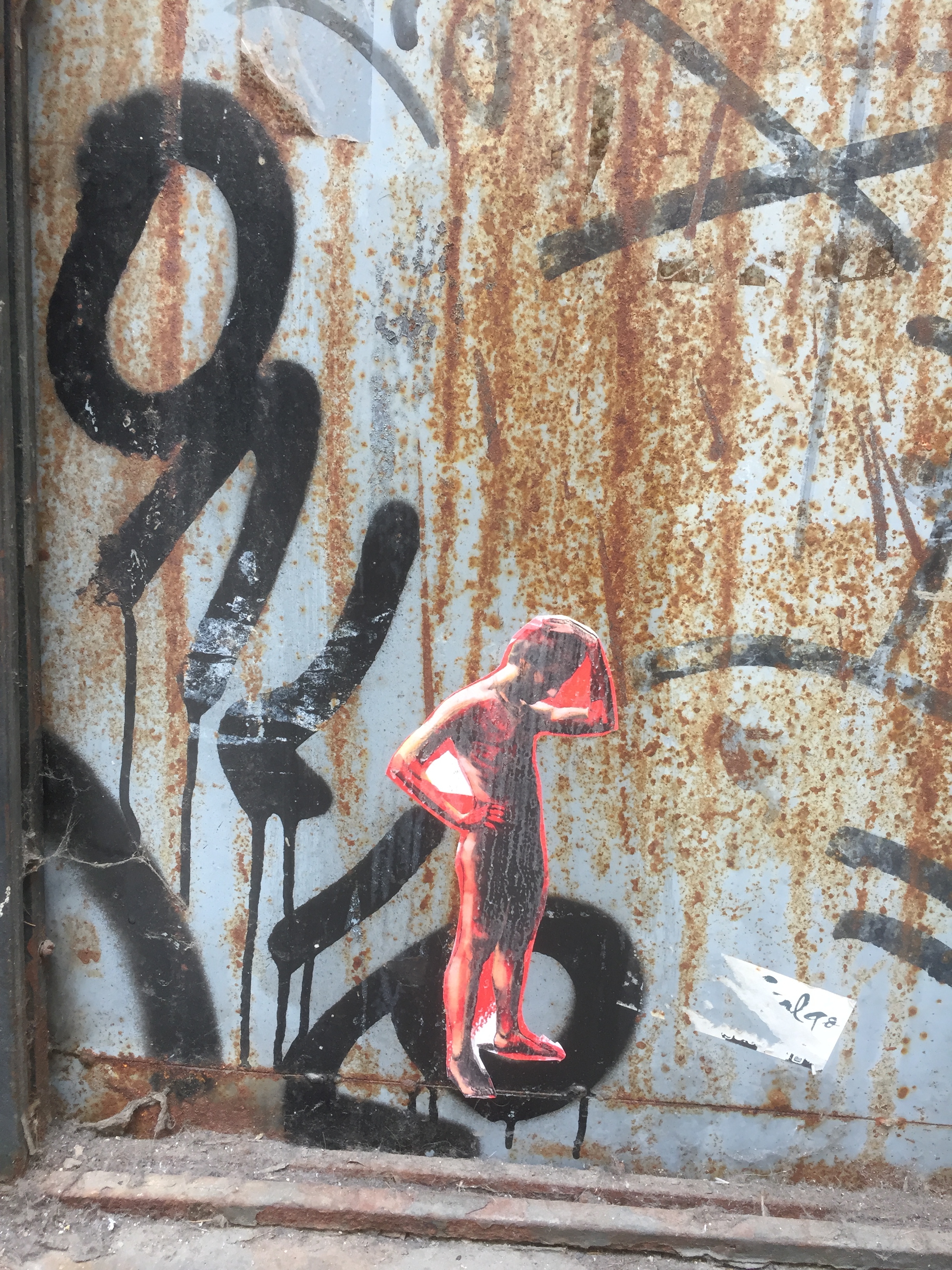
These two photos I’m sharing today are of street art I noticed as I walked around the streets of Salamanca one day last year. The image on the left is like a work of modern art. It looks a bit “Miro” to me! What I really notice about it is how the artist has used the walled off entrance as a frame, using the concrete filling the space as a canvas, but, he or she hasn’t stopped there. They’ve spread their artwork beyond the bounds of that frame….reaching out to cover the left hand pillar. I like that. I like how it demonstrates how creativity can be opportunistic, inspired by what is already there (the walled-in entrance way), and how that inspiration can come from the most unlikely places. Would you have thought that entrance way represented a canvas? I like how the artist isn’t bound by that either. How they kept creating outside of the frame – thinking and creating “outside of the box”. This work inspires me to be creative, to see opportunities for creative work, and to refuse to be constrained by other people’s frames.

The second photo shows the power of stencil. I mean just look at this person holding their head. Are they in despair, or are they trying to figure something out? I can see both. So it’s an image of hopelessness which reflects something we all feel from time to time, but, instantly, it’s also an image of someone thinking, someone deep in thought, trying to come up with a solution. At least, that’s what I see there. How about you?

I know, with every interpretation we bring our own standpoint, our own sets of values and beliefs, our own moods and preoccupations. But that’s one of the great things about art, isn’t it? It isn’t just the power of the work to convey “percept and affect” (as Deleuze would say). It offers us the chance to wake up and change by engaging with it. And even if we don’t wake it, it influences us without us realising. It interacts with us, and we interact with it. It’s a relationship.

Read Full Post »

Picking up on yesterday’s post about threads and weaving life stories, I thought I’d share this photo I took in an old weaving factory in Aubusson. Isn’t this a fabulous stock of yarns? Look at the colours!

Probably because I was thinking about the metaphor of threads and weaving in the way we create our reality through our stories, I looked at this image again today and thought “Well, that’s what they have to work with. That store of colours and shades” So what if we think about how that idea might apply to how we create our daily experiences?

What is there in your palette? What can you select to weave together to create your unique, singular experience of today?

What if these yarns are like beliefs, ideas, thoughts and emotions? Which ones do we have to draw on, and which do we keep going back to, perhaps over-using, when we could be shifting our attention and using a different section of the palette if we want today to be really different?

I remember reading about a theory, which seemed to be validated by studies and observations, that when a baby is born, at the moment when the umbilical cord is cut, they experience their first existential threat. In those first few seconds if the baby doesn’t take their first breath, they won’t live. Perhaps, in those few seconds, the baby experiences certain strong emotions. We don’t have access to those memories because in our early years, our consciousness and memory functions haven’t formed to allow us to access them, but that doesn’t mean to say they aren’t happening, all the same. After all, most emotions occur below the level of consciousness, and becoming aware of them takes time, attention and practice.

So, what emotions might a baby experience in the midst of this first existential crisis? The theory proposes three – fear, anger or separation anxiety. Makes sense to me. So, the idea is that maybe which of the three dominates is genetically determined, but, whether it is or not, that particular pattern of those three emotions sets itself up as a core as we continue through life and try to make sense of our experiences.

So, some people have fear at the core, and that’s the main colour they use in their daily palette. For others, it is anger, and for yet others it is separation anxiety. You can try this for yourself. See if you can think back to your very earliest memory. Preferably one form before the age of five, from before you started school. When you recall that event, what emotions do you associate with it? Is it fear, anger or separation anxiety? I found with patients that some would identify one of these very clearly, some would identify a mix, or find more than one strong early memory, each with a different dominant emotion. Others would find none. They either couldn’t access any early memories at all, or they wouldn’t be able to say which emotions they associated with any they could remember.

For people who can find one, it is interesting to then follow that thread through life. To what extent does that emotion seem a foundation to other significant life events? Remember that with each emotion, we might suppress it, express it, or deal with in some hybrid way. So, if it is fear, then both fear and courage might appear. If it’s anger, both temper and avoidance of conflict might appear. And so on…..

Well, that’s one way to start to think about what palette you have, and what section of the palette you draw upon most frequently to create your daily reality.

You can also become aware of your dominant emotions, thoughts and beliefs by journaling….for example by doing “morning pages”. In fact, there are many ways to become aware of our habitual patterns of emotion, thought and belief.

I think it’s good to explore this, but we can take it a stage further by deliberately choosing certain part of the palette, or even adding new sections. We can decide we want to colour each day with more joy, more wonder, more love. We can decide we want to see each day through more half full glasses than half empty ones. We can do that with affirmations, with visualisations, with making more conscious choices about where to focus our attention, our time and our energies.

But all that is maybe for another day. Today, I’m just suggesting an exercise in awareness. Can you become more aware of what your personal palette looks like? Can you become more aware of which sections of that palette you keep going back to again, and again, and again? Finally, which underused sections of your palette would you like to pay more attention to? Or as you look at the vast range available, which colours of yarn would you like to add now?

Read Full Post »

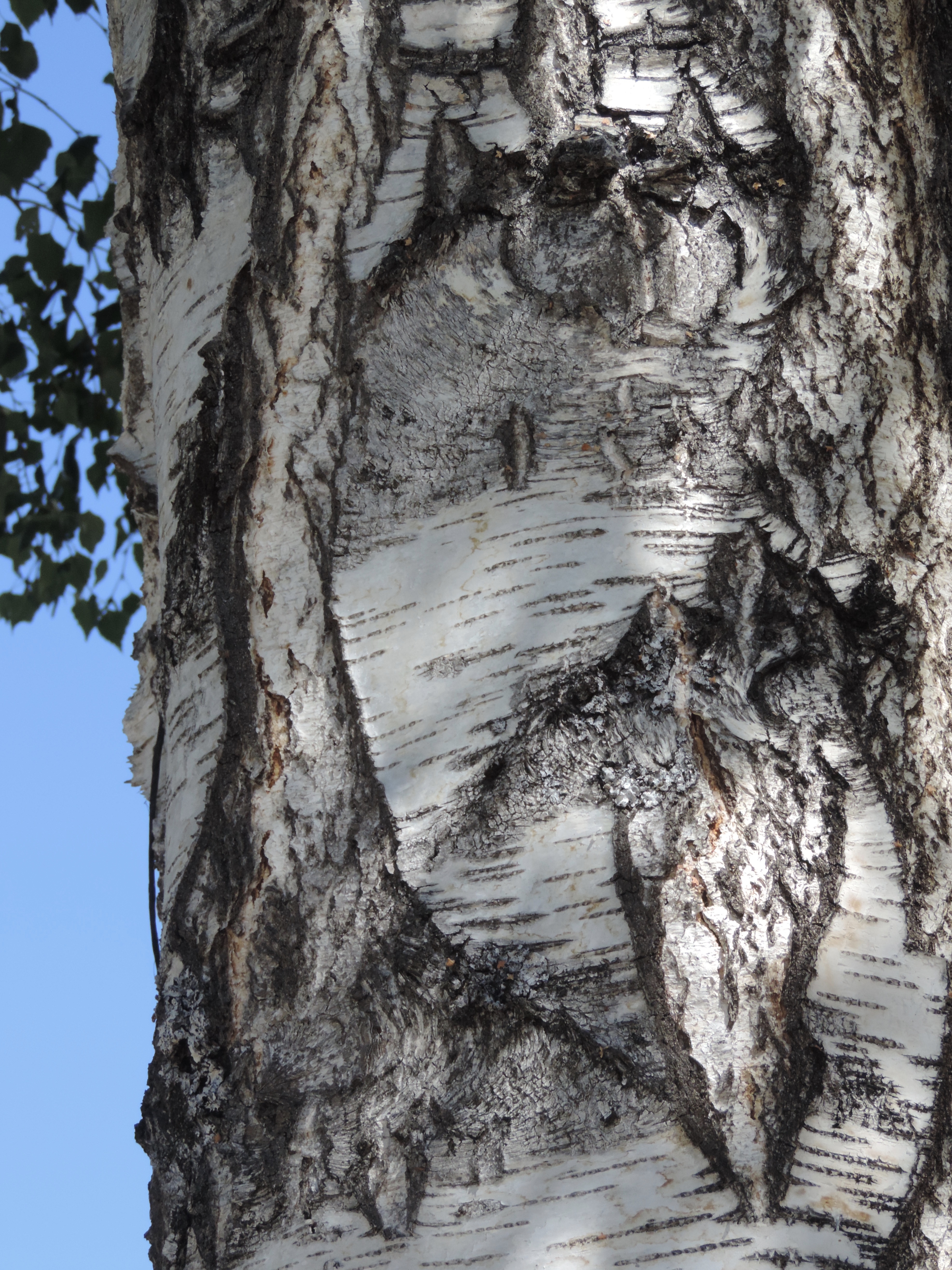
I find that sometimes when I look at the bark of a tree I see eyes, or faces, or other recognisable patterns. This tree definitely seems to have the outline of an owl! Do you see it?

I like owls. I know the symbolism of owls is different in different cultures and that for many people they are associated with death and/or bad luck. But for others they are symbols of wisdom.

That difference reminds me of two other superstitions – there’s the thing about a black cat. Some people say they are sign of luck, but coal miners would turn back if a black cat crossed their path while they were on their way to work. So for some, they are lucky, and for others, very unlucky. Similarly, the horseshoe has opposite meanings, especially when it comes to which way up to hang it on a wall. Some say if you have the opening at the top then it is a witches swing and will bring bad luck, whilst others say if the opening is to the bottom then all your luck will run out.

I suspect the truth is that all of these beliefs and superstitions are social and cultural creations. But I also think they have power. When we get into a mindset of bad luck or being a victim, then it seems to bring more of those experiences into our lives. Luckily, the opposite works too, which is why I am such a big fan of positively valued symbols. So for me, I stick with wisdom, and have a notion that strengthening my connection with owls helps me to develop my wisdom.

Which positive symbols work for you?

I look for those to do with love, hope, wisdom and wholeness. Well, that’s a start anyway……

Read Full Post »

« Newer Posts - Older Posts »