Feeds:
Posts
Comments

Archive for the ‘personal growth’ Category

How would you define fitness?

Take a moment to think of some answers for yourself then read this (I suspect rather different) definition….

“resilience during change”

or

“an adaptation to an environment whose complexity co-evolves with the complexity of the system”

I DO like these definitions – because it does seem to me that fitness is indeed about the ability to adapt to change. In a paper entitled “Technological integration and hyper-connectivity: tools for promoting extreme human lifespans”, Marios Kyriazis suggests that it is by becoming fit that an organism increases its chances of survival.

This question of fitness reminds me (for the second time today) of Hans Georg Gadamer’s essays on health, The Enigma of Health. In those essays he discusses the idea of fitness from the perspective of how well something fits – or, in this newer language, how well it develops, adapts and changes with environmental change. (I was thinking of Gadamer when preparing for a talk I gave this evening about how to make health…..it strikes me that he hit the nail on the head when he talked about the mysterious invisible, even disappearing, quality of health…..that it is a natural quality of all living organisms. He says that if we have a wound in our hand then we notice our hand…our attention is drawn to it by the pain, the heat, the redness…but when that wound heals and the pain, heat and redness disappear, so we become unaware again of our hand)

How do you think of fitness? Is it something to do with resilience, and of adaptability?

If Kyriazis is right then the way to increase fitness is to increase the number and quality of connections. And THAT also strikes me as spot on.
Read Full Post »

Ian McEwan wrote, after 9/11, that one of the crimes of the terrorists was a failure of imagination

If the hijackers had been able to imagine themselves into the thoughts and feelings of the passengers, they would have been unable to proceed. It is hard to be cruel once you permit yourself to enter the mind of your victim. Imagining what it is like to be someone other than yourself is at the core of our humanity. It is the essence of compassion, and it is the beginning of morality.

This touched me deeply when I read it. I think this is the key way I use imagination on a daily basis. I don’t know any other way to understand what patients tell me other than by trying to imagine what it is they are experiencing. I don’t think all of empathy or compassion can be explained as the use of the imagination (mirror neurones, being present, being non-judgemental are all other elements) BUT I do think it’s an essential element. Imagination is my everyday working tool.

We imagine in order to create our world of course. If we imagine that the universe is a cold, hostile place, where it’s every man for himself and dog eat dog, then we will have a particular experience of life….we will create for ourselves a particular kind of world. If we imagine that in the universe we are all connected, and that there is a purpose to existence, then we’ll create quite a different kind of world for ourselves.

IMG_0534

To imagine is to create.

Watch any little children playing. My youngest grand-daughter looks at a cardboard box and sees a palace, or a jungle, or……….

IMG_1519


….an ambulance!

When was the last time you sat down with some blank paper, some crayons, paints, glue and coloured papers, and just let your imagination flow?

What might you imagine this week?

Read Full Post »

Did you ever wonder why March is called March?

It’s named after Mars, the God of War….the idea of war which brings peace and stability. He was also an agricultural guardian. Wikipedia describes his essential nature as follows –

Virility as a kind of life force (vis) or virtue (virtus) is an essential characteristic of Mars. As an agricultural guardian, he directs his energies toward creating conditions that allow crops to grow, which may include warding off hostile forces of nature. As an embodiment of masculine aggression, he is the force that drives wars – but ideally, war that delivers a secure peace.

(also in that wikipedia entry is a surprisingly large list of different Celtic gods associated with Mars!)

In my 12 monthly themes, March is the month of strength and assertiveness. It’s interesting that March comes immediately after February, which is the month of Love. One of the key myths surrounding Mars is the story Mars and Venus……and interesting coupling of love and war!

Venus_and_Mars

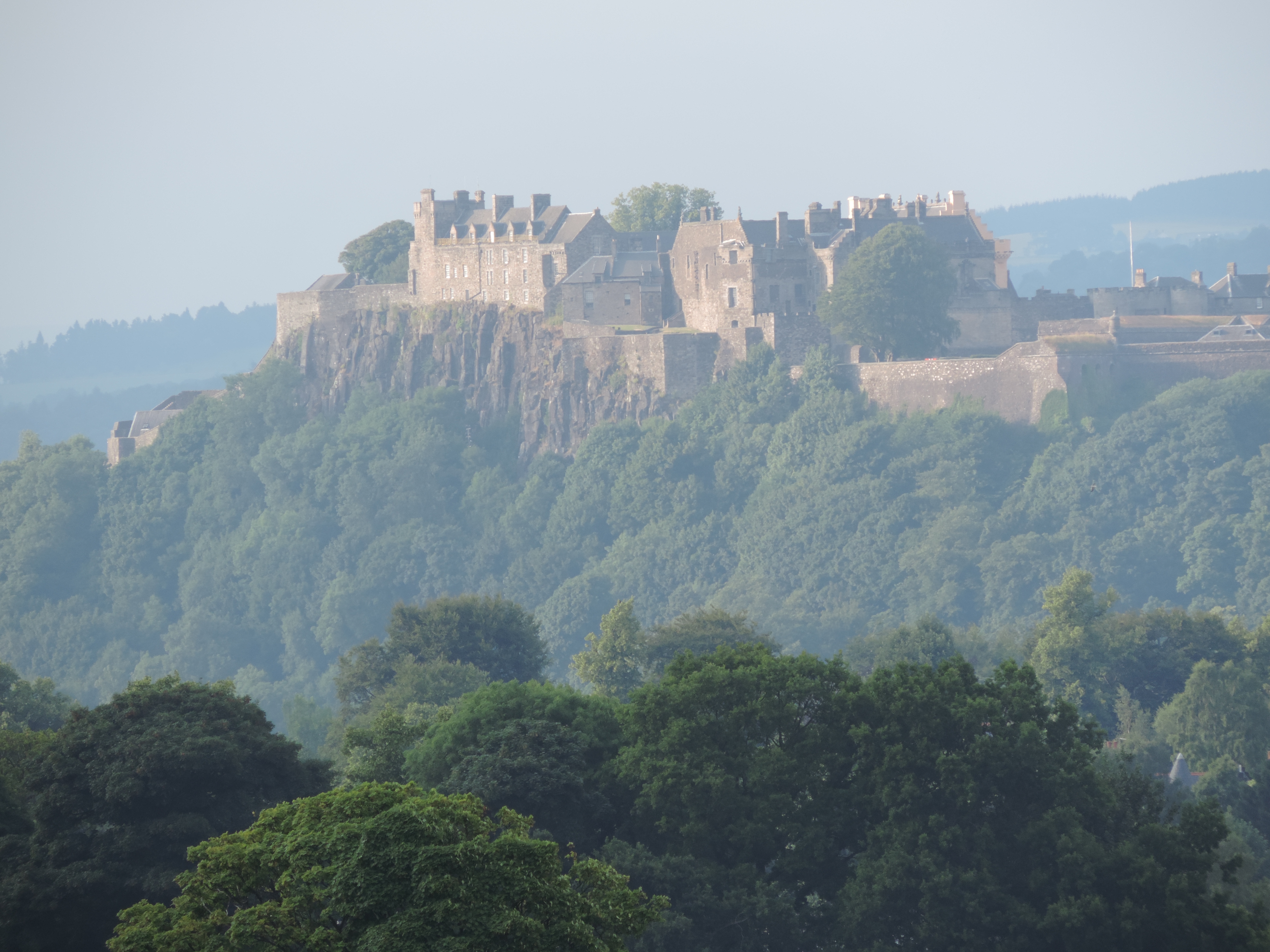
Most of my life, I’ve lived in the presence of a castle (Apart from 4 years in Ayrshire, I’ve lived in either Stirling or Edinburgh), and these ancient castles embody for me the quality of Mars – there is something strong, constant, assertive and stable about them, especially as both Stirling and Edinburgh castles are built high on rocky outcrops.

I’m always keen to consider the positive aspects around me, and as I think of Mars, I think of strength and assertiveness. We need clear boundaries. We need to be able to say “no” when it is appropriate, and we need the strength which gives us both healthy defences and the resilience we need to stay well.

So, here’s my focus for this month. How do you build the strength of your vital force so you can be resilient, healthy and flourishing?

Stirling Castle and Wallace Monument

edinburgh

Read Full Post »

wish

I don’t know how this works. Seriously. I don’t. You could claim it’s about coincidence but when it happens it seems much more significant that a random juxtaposition of events.

Here’s what’s happened. First off, I’m writing a weekly series of blog posts entitled “The A to Z of Becoming” where I’m writing about one verb each Sunday. This week I reached “H” so wrote about HOPE.

Secondly, I’ve subscribed to a bimonthly magazine called “Resurgence” for many, many years, and the March/April issue arrived the day before yesterday. I popped it in my bag to read on the train on the way to work on Monday morning.

So, imagine my surprise when I opened “Resurgence” at a seemingly random place and saw the article “Seeing with New Eyes” by Chris Johnstone. Right in the middle of the page, in a large “pull quote” is

Active Hope is a practice, like t’ai chi or gardening.

“Active Hope”?

Johnstone says there are two meanings of hope (and I didn’t think of that when I wrote my post on Sunday) – the first referring to “hopefulness, where our preferred outcome seems reasonably likely”, and the second refers to desire. I like that. Makes sense to me. The first meaning precipitates us into hopelessness where our preferred outcome seems highly unlikely, but the second can set us off in pursuit of our goal.

Then, what about this for a heroes not zombies idea……..?

Passive hope involves waiting for external agencies to create the future we desire. Active Hope is about becoming active participants in the story of bringing about what we hope for.

Active Hope – the deliberate choice to move in the direction of how we want to change.

Read Full Post »

Snowdrops Edith Shiffert

This week, I’m reflecting on the place of hope in life.
This little Haiku by Edith Shiffert seemed very appropriate and seeing snowdrops bursting out all around at the moment brought these lines back to my mind.


Read Full Post »

rainbow


In the A to Z of Becoming, H is for Hope.

I don’t know how people live without hope.

Despair and hopelessness are killers. I think one of the worst things a doctor can do is tell a patient they have “x months” to live. Nobody can accurately predict the course of an illness, and nobody can accurately predict how long an individual lifetime will be. (I often think of Stephen Hawking and his “motor neurone disease” or “Lou Gehrig’s Disease”, a disease with an estimated life expectancy of 2 to 5 years, where his diagnosis was made over 40 years ago).

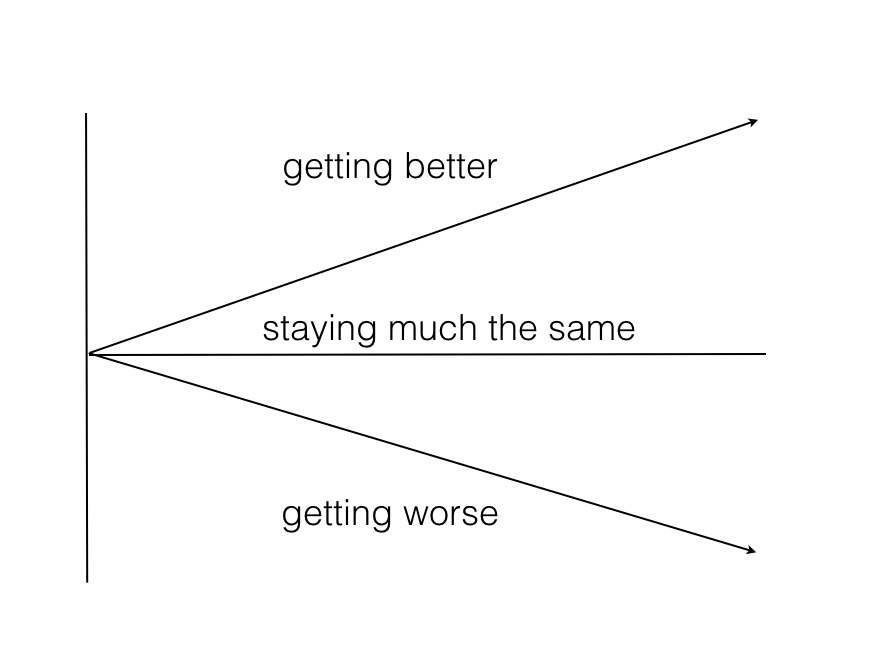
The truth is that with any diagnosis there are three possible future pathways – the patient gets better, they develop a fairly stable chronic illness, or they get worse. The proportions of a population with the same diagnosis experiencing each of these paths varies depending on a host of factors including the person’s prior health, and the severity of the pathology at time of diagnosis. But I think it’s a bit like this –

progress


So, what I usually say to patients is something like “as nobody can tell you which of these directions your illness is likely to take, then what’s the benefit of assuming either of the poorer options?”

At each stage, every day, it seems to me, it’s worth while hoping for the better future.

On “PsychCentral” there’s an article which describes NINE different types of hopelessness, and begins to give hints about how to overcome them.

I know some people say “hope for the best and prepare for the worst” and I’m not sure what I make of that advice, but I can see some sense in it. What I dislike is how fear is used as a tool to control us. Whether it’s about diseases from influenza to cancer, or about terrorism or crime, or the financial future, again and again we are bombarded with messages to make us afraid and make the choices based on assuming that terrible outcomes are just around the corner.

I don’t want to live my life that way. And I won’t live my life that way.

I’m sticking with Nelson Mandela’s advice “May your choices reflect your hopes, not your fears”

What might you hope for this week? What might you hope for this month? And what choices will you make to reflect those hopes?

Read Full Post »

In the A to Z of Becoming, G is for GIVE.

Do you think giving is a satisfying experience?

I do. In fact, I think giving enriches your life.

Some people say life is a game of give and take, and that there are givers and takers. I’m sure you’ve come across that idea, and you can probably also identify individuals in your own world who are givers, and those who are takers. Not many people would be happy to accept the label of “taker”, and being known as a “giver” feels like being appreciated.

I’m not sure how useful labels are however, so I’m not thinking this week about who are the givers and who are the takers. What I want to be aware of this week are my opportunities to give.

What can I give?

My time, my attention, my compassion, my love, my effort, my full engagement with this present moment, my acts of kindness……

None of these are things, but I might have opportunities this week to give things too. What I find interesting is that we tend to think of gift giving as being about things, and I think physical gifts can be important. But, here’s something to experiment with this week….give every day, and make a note of what you give (in fact, even better, write an entry in your journal about it…..describe the circumstances of your giving, what your giving involved and why you decided to give) and then reflect next weekend on your week of giving.

How does it feel to give?

Let me give you this photograph (you can click through on any of my photos and download them for yourself, if you wish)

street games kyoto

I stumbled across this in Kyoto a while back. In fact, I saw it a few times because it was in a street near my hotel.

I love this. Here is a game of Go, with a tub of black stones, and a tub of white stones. Anyone is free to make a move. I don’t think I’ve seen anything like this in any other city. I wonder if the players know each other? It did strike me that every play was an act of giving, a gift of participation, a contributory gift, a gift of engagement.

Read Full Post »

waterfall

Flow is one of my favourite verbs.

As with all words, there are various nuances, or aspects to it.

Maybe you see this word and think “Go with the flow” – as in, don’t resist, don’t fight, don’t challenge, just go along with everyone else. (but look what water can do, just by flowing over rock…..)

water and rock

Of maybe you hear it as a call to relax, take it easy, tune in to the effortless.

feather heart

But those aren’t what I think of when I think of flow – instead I think of Czikszentmihalyi, the positive psychology pioneer, who researched “flow experiences” and published them in his book of that name. He was referring to those times when it feels as if everything is flowing beautifully, everything is coherent….it’s a peak experience, and he found that it was most likely to occur when we are in the process of achieving some challenge we’ve set ourselves. So it often involves a lot of effort to develop the necessary skills, and then as we use those skills, in what can appear an almost effortless way, we have that feeling of complete harmony.

I also like the ideas of flow which emerge when you think about how water behaves. In fact, I like that so much I did a whole photographic project on it and turned it into a book and a website – come and see here.

Read Full Post »

There are three kinds of “attractors” described by complexity science. An attractor is a kind of local organiser, producing distinct forms from the patterning of energy flows.

Here are three photos of mine which will help you see these three common patterns. First up, the “point attractor” which creates spirals or whirlpools, organising the local region around a single point.

photo

Secondly, here’s a “loop attractor” pattern, where there are two points of organisation close to each other. This creates a pattern of alternating zones, or states, figures of 8, or “infinity loops”.

Bark marks

Thirdly, there are “strange” or “chaos” attractors where it is hard to see any distinct pattern but the region is being organised around multiple, interacting points.

amazing detail on stone


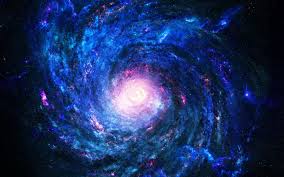
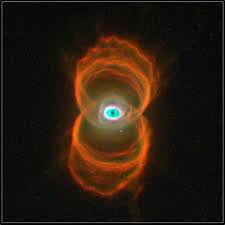
Similar patterns can be seen throughout the universe, from the microscopic to the cosmic level. Here are three astronomical photos showing large scale attractor patterns (I didn’t take these ones!).

A beautiful, point attractor, spiral.

images-1


A fascinating loop attractor….

images


And, finally, a strange attractor pattern….

images-2


I think we see these patterns in disease as well, from situations where everything gets stuck, going round and round the same restricted path, to those alternating, or flip-flopping states, like highs and lows, and, then thirdly, the chaos patterns where there is such a level of dis-integration that everything feels a mess, feels chaotic.

I wonder if you can see any of these fundamental patterns in your world?

Read Full Post »

DSCN0001

As I walked past Kings Park at 7am this morning I could see the lights of Stirling Castle shining high up on the rock. The rain spotted my glasses, and the cold wind blew against my cheeks. On my iPod, Stevie Ray Vaughan played Voodoo Chile, and wave after wave of thoughts washed over my mind.

I thought, right now, 7am, February 4th, 2014, I am the only creature in the whole universe walking past Kings Park, feeling the rain and the wind on my face, hearing the guitar of Stevie Ray Vaughan in my ears, and thinking these exact thoughts.

soul nebula

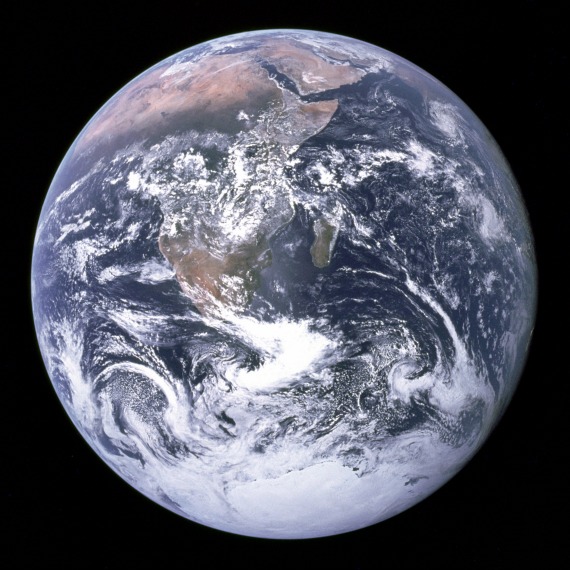
I was struck by the uniqueness of the moment. I was struck by the sense of the universe expanding over the billions of years, developing furnaces of fission and fusion, scattering the elements of the stars far and wide, only for them to collide in a place to become known as the Earth, and for Life to miraculously emerge, and spectacularly evolve from single cell creatures to generation after generation of complex beings we call humans, and here I am…..one, ever changing, distinctly unique manifestation of this amazing story……having this utterly distinct experience of living.

blue marble

Then, on the train, on my phone, I stumbled upon this……

Every man is more than just himself; he also represents the unique, the very special and always significant and remarkable point at which the world’s phenomena intersect, only once in this way, and never again. That is why every man’s story is important, eternal, sacred;

                                                                                                                                                                     Herman Hesse. Demian.

How does that all happen?

I really don’t know

Read Full Post »

« Newer Posts - Older Posts »