Feeds:
Posts
Comments

Rates of change

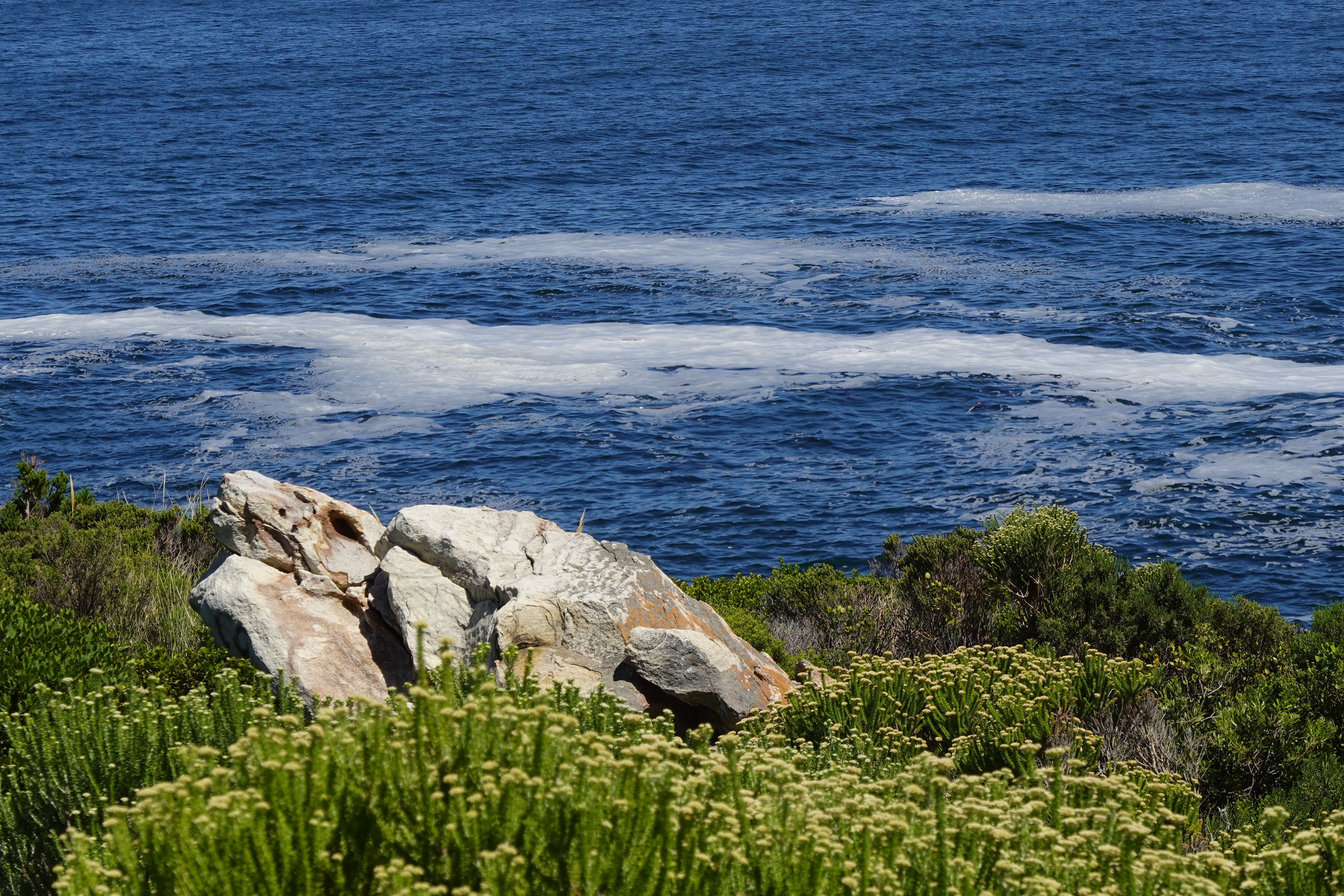
One of the things I like about this photo is how it captures three completely different rates of change in the world.

Most of the image is filled with the sea, which changes constantly and obviously. It’s never still (even when it looks calm). It’s always flowing, breaking into waves, surfacing water molecules and throwing them into the air, deepening others to hide them on the ocean floor. Every wave reminds us of how every individual appears distinct only for a little time, then dissolves back into the source, erasing duality, every one never really separating from the One.

Then we see a large rock. Stable and strong as a rock, we say. But rocks are constantly changing too. They are submitted to daily forces of wind, rain and sunshine. They are sculpted by the weather over thousands, even millions of years. Just as it is hard to see the minute hand move on a clock, it’s really difficult to see the changes taking place in a rock. But change is happening, all the same. Every rock reminds us of how every unique being emerges from the underlying flux of the universe to present a consistency, a transient integrity which allows them to appear as a whole, and separate individual. Just as I look back on my life after a number of years, I can see photos of myself as a baby, as a little child, as a teenager, as young adult, a parent, a maturing adult into retirement, and on, beyond the “three score years and ten”….but all those appearances, all those “selfs”, are a single self. Each photo from a different decade looks so different, but inside, they all feel like me.

We need both – the constant flow and flux of change AND the transient consistency of a structure, an ego, a self.

Thirdly, the foreground in this image is filled with plant life, an abundance of plant life. Plants change both quickly, from moment to moment, hour to hour, with the sunlight, the warmth and the wind. But also seasonly. They change in cycles. The life of a flower isn’t linear, it’s more like a spiral, looping round and round through the four seasons of the year, each season revealing its particular characteristics, of growth, blossoming, reproduction, fruition, then a winter of quiet and apparent inactivity.

We need this third energy too….the cyclical, seasonal, rhythmic change.

Constant flowing change, a certain resistance manifesting as consistency, and spiralling rhythms of reality.

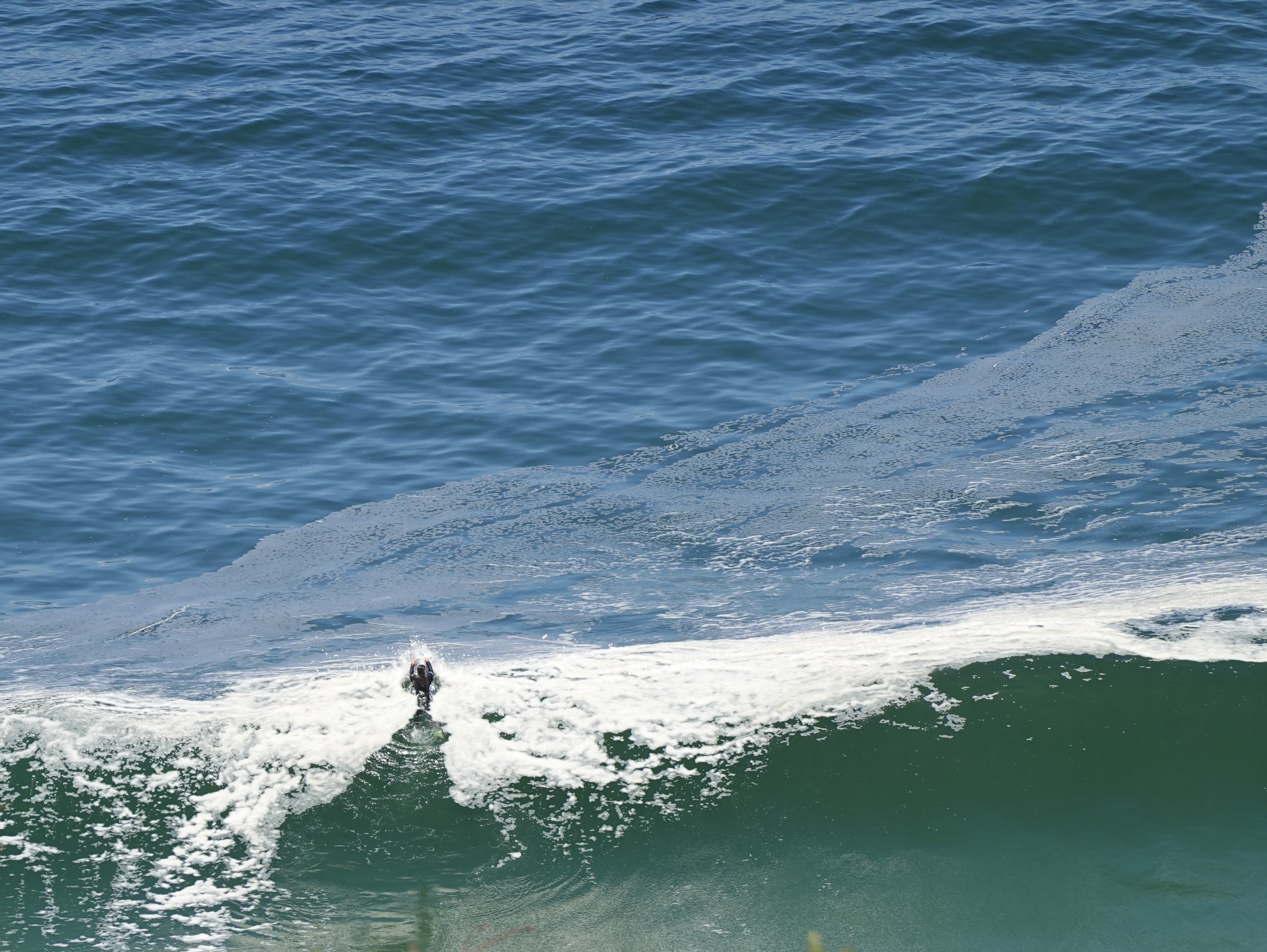
Breaking waves

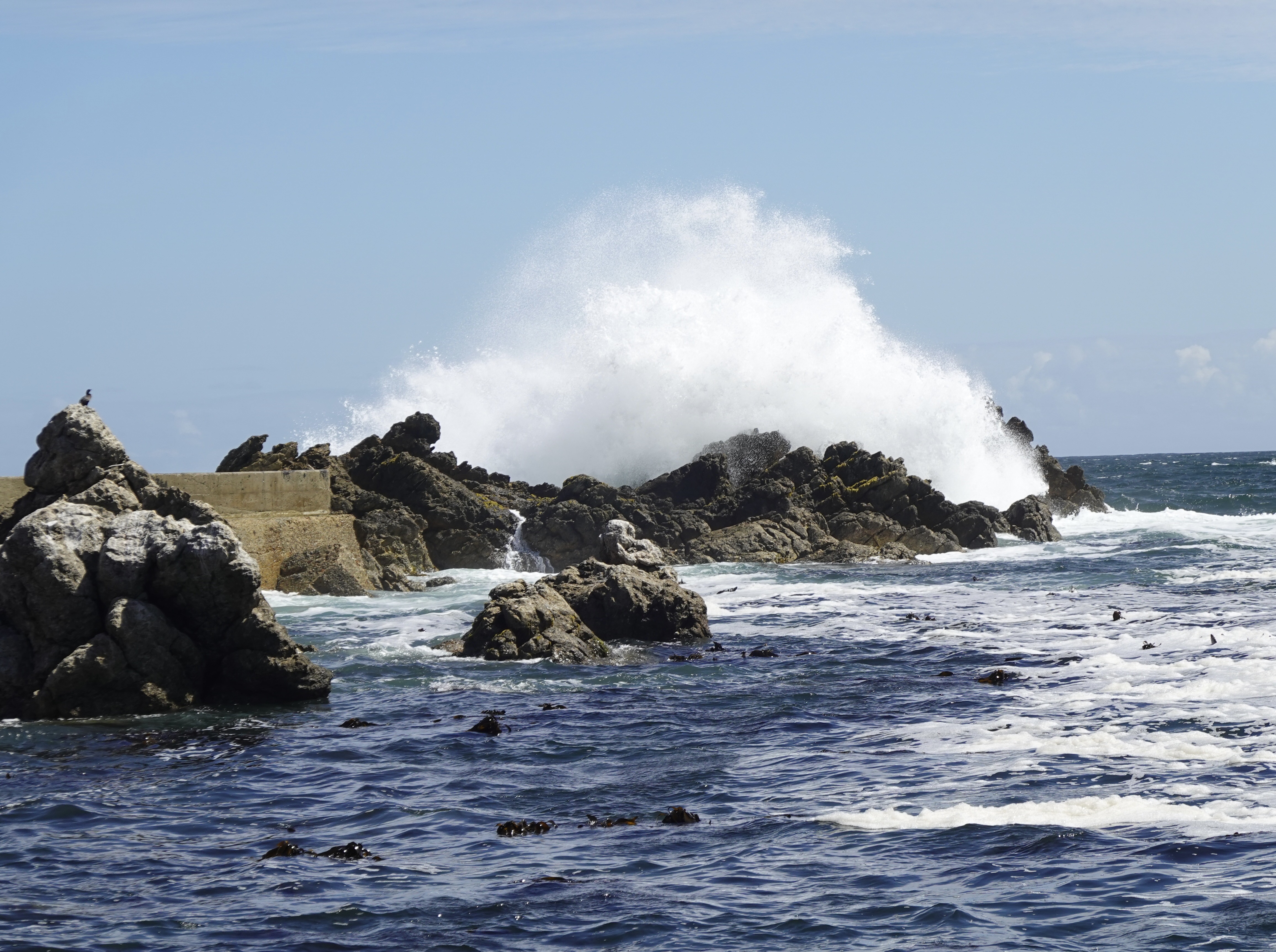
I don’t know if it’s universal, but, a lot of us are enthralled by breaking waves. I know I love to see them, and can stand, or sit, mesmerised for ages watching waves crash onto a rocky shore. I love the colour of them, the size of them, the sound of them, the shapes of them.

These are moments of power and transition. You can tell how much power is in them from the noise they make when they crash against the rocks. I know that it’s the steady, constant, repetition of fairly small, less dramatic waves, which do most of the work shaping the rocks and the land, but these big ones must push things on a bit, don’t you think? The power of the sea is more obvious when it breaks through the surface like this, and smashes onto the rocky outcrops. And it’s a moment of transition. How long do any of these waves last? Seconds, at most. If you’ve ever tried to photograph them, you’ll know you have to take several photos to capture a single moment like this. As the liquid sea bursts into spray and foam, billions of water molecules are released into the air, some to return quickly back into the sea, but many others to dissipate, invisibly into the air….on their way to form clouds and mists, and to dampen the soil and the sand.

I’m also struck by how wave watching like this gives you a vivid experience of the fundamental unpredictability of reality. It’s really hard to predict which wave will hit the rocks the hardest, which will soar highest into the sky.

So, this is what strikes me, as the waves strike the rocks…….power of nature, the beauty of transience, and the fundamental unpredictability of reality.

Three life lessons in a moment, huh? How about you? Do you love watching waves crashing into rocks too?

Natural Awe

Awe is the sensation of connecting to what is greater than you. It’s a moment of dissolution of the self, to less apart from the whole, and more an inseparable part of the whole. It’s where boundaries and limits disappear. It’s expansive, stimulating and life enhancing.

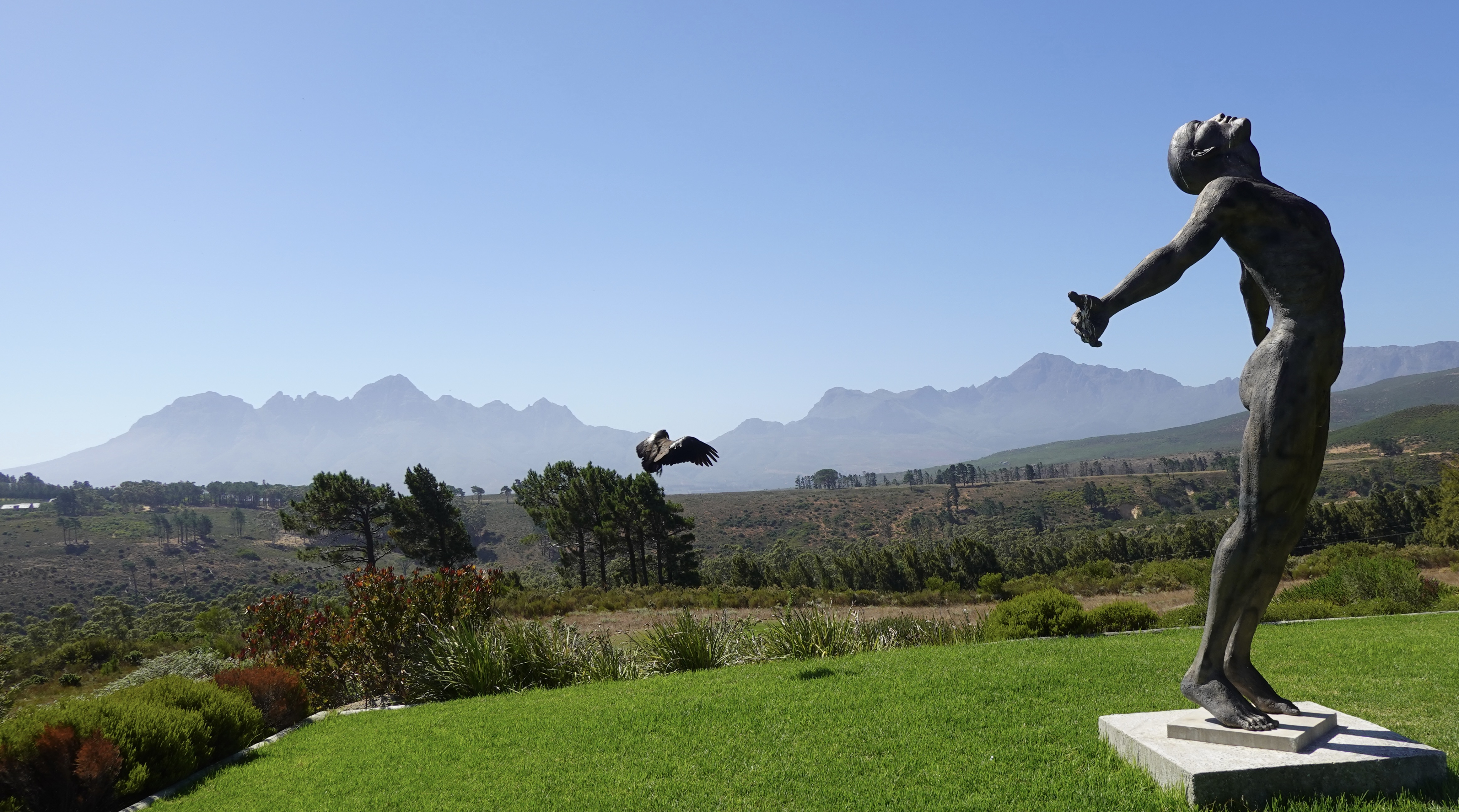
In Keltner’s book about awe, he reports that many people experience it in nature. Here, I looked towards the far blue mountains, saw the vast stretches of bush in the middle distance and the Hadida taking off in flight from the foreground garden. And right in front of me, this astonishing sculpture, which captures a sense of liberation, of freedom, of transition, of aspiration to escape any worldly limitations and soar, just as the Hadida is about to do.

Awe-some.

Loving attention

Maybe this is something we don’t talk about enough, but what’s missing, so often, in this world, is love. Whether we see that aspect of love we call kindness, or the aspect we call compassion, or care, or whether it’s the aspect of desire, and passion, our world is enriched when we pay loving attention.

It’s a bit of a cliché to say that what the world needs is more love, but, it’s true, all the same. But even without such grand dreams as world peace, and a society based on kindness, rather than on ego and greed, we can still make our everyday lives better by loving more.

We pay attention to all kinds of things. Our attention is “caught”, is “attracted”, in order to sell us stuff….goods and ideas. The dominant way of catching attention, magnified by all the algorithms, is to stoke anger, shock, horror and outrage. But I can’t see that any of that is making the world a better place, and I certainly don’t have the experience that a day filled with anger and fear, is a good day.

When we pay loving attention, whatever we are “attending to”, is enhanced, and, here’s the great thing, by paying loving attention, we, too, are enhanced.

It’s a good day when we have filled it with love. It’s a good day when we have paid loving attention to the here and now. It’s a good day when we have felt love for others, humans, animals, and plants. It’s a good day when our hearts have filled, again and again, with love.

Try it for yourself, and see what you experience. Pay more loving attention.

Breathtaking design

In Dacher Keltner’s excellent book on awe, he reports how he and his team of researchers gathered personal descriptions of moments of awe from thousands of people around the world. When they analysed the stories they found that they could fit into about eight categories, which he calls “the eight wonders of life”.

The commonest one was “moral beauty” – witnessing courage, kindness or strength. Next were “collective effervescence”, “nature”, and “music”. I certainly recognise many experiences of all of those. The next one is “visual design”. I wasn’t completely sure what to make of that. I do love art. I love sculpture, especially in natural, or urban environments, but I wasn’t sure that architecture or interior design would be likely to give me an experience of awe.

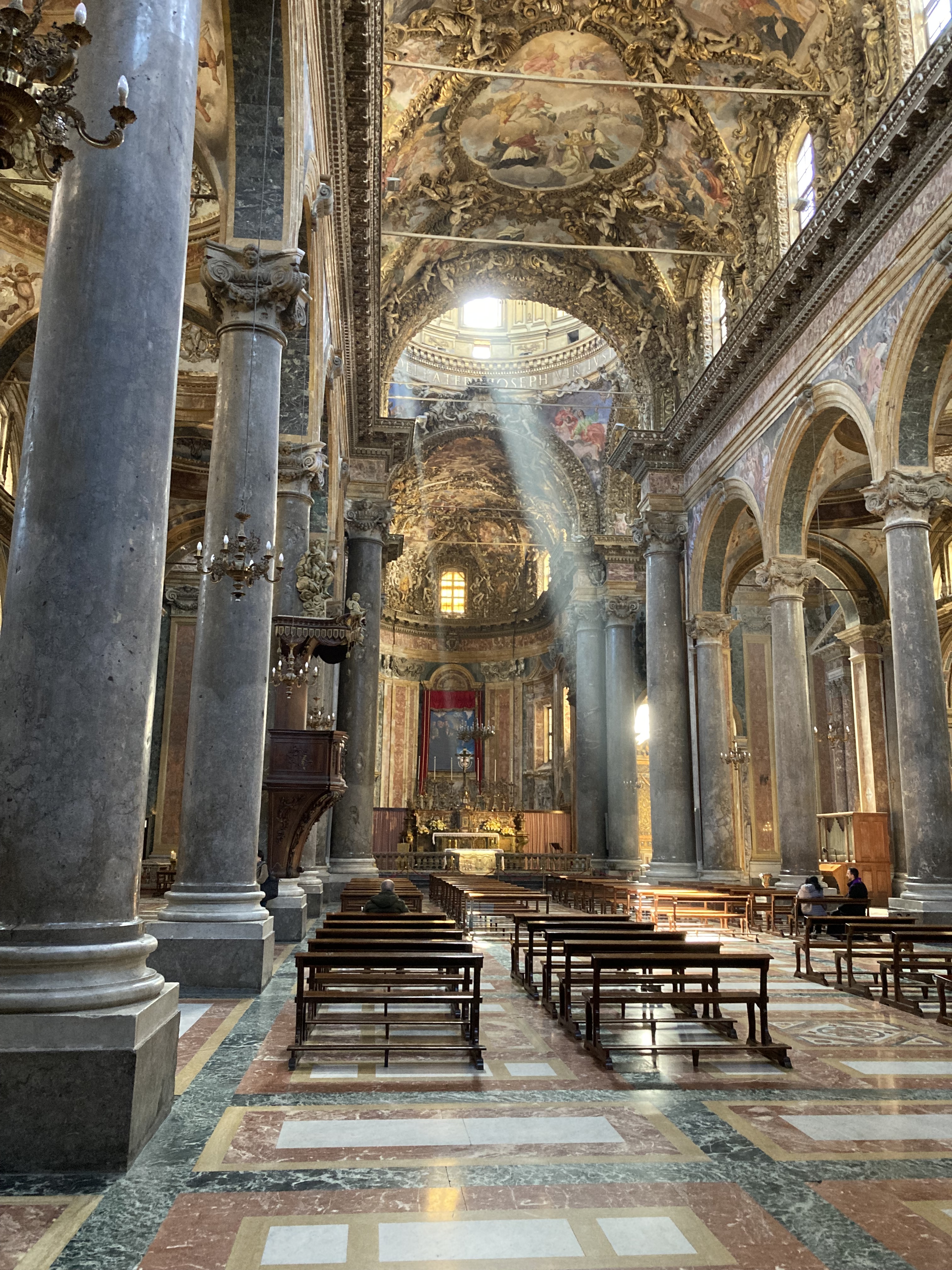
Well, when I walked into this church in Palermo, Sicily, and the Sun cast an intensely bright light through the domed windows in the roof, I got it. Everything from the detailing of the various colours of marble on the floor, to the vast frescos, combined with the sheer volume of the place with its massive pillars, but the shafts of sunlight really did it for me. What a genius design. What an incredible effect. What a moment of awe.

How do we improve the quality of our everyday lives?

One way is to do whatever brings us joy, and makes us wonder. And we can do that, either by pursuing an activity which we know brings us joy, for example, listening to our favourite music. Or, and this adds in the element of wonder and discovery, pay attention to the hear and now.

As I wandered through my garden one day, just looking to see what I might notice, I spotted this tiny plant. First of all, I’d never seen a plant like this before, so I didn’t know what it was called. Secondly, I kneeled down, got up close, and just looked. Isn’t it beautiful? Isn’t it amazing? What an incredible structure, and what beautiful colours. I love those tips of purple emerging from the green. Then I got my phone out and took a close up photo….this photo.

I like to take a photo for two reasons. First of all, I can then go back and look more closely over and over again. I can enrich an already rich experience. Second, because my curiosity has been stimulated, I can touch the little “(i)” button on the phone screen when I’m looking at the photo, and it magically tells me the name of the plant.

Apparently, it’s a “self-heal”. Oh, like all plants, it has many other names too, but the name “self-heal” immediately appeals to me. After all, in all my years working as a doctor, that’s exactly what I was trying to do – to stimulate and support a patient’s self healing. I know we live with a kind of medical myth that doctors heal us with their operations and their drugs. But they don’t. Nobody repairs a single wound without the body’s capacity to self heal. Nobody recovers from a virus without the body’s defence and repair system doing its job. Nobody heals without the body’s complex system of self healing doing what it is designed to do. Doctors should remember that. They don’t heal patients. Patients heal patients and the doctor, when working at their best, support, stimulate and work with, the capacity if the patient to self heal.

Once I had spotted this plant, identified it, explored more about it online later, then I suddenly saw it appearing everywhere in the garden. Well, not everywhere, but over a very wide area. Now there’s something else amazing about gardens. I didn’t plant this beautiful plant. I didn’t “propagate” it. But there it is, and it’s thriving. I find that wonder-full!

Beauty and utility

I was in Cefalu, on Sicily, last year, and took several photographs of the beautiful works of art which fill the streets of the little town. These planters are beautiful. And each of them has a plant in it, which somebody must be looking after. People have taken the time to create these wonderful objects, and to place them on the steps of this narrow passageway ascending to the next street. Isn’t that so appealing? Doesn’t it draw you in? This is a street which is just a delight to walk in. And imagine if this is a street you walk up, or down, every day, to buy your bread, to get to the cafe, to visit your friends. How something this simple changes everything. How it make the lived environment more beautiful, more human, more a celebration of creativity and uniqueness. I love this. Here’s another photo from round the corner….

In a hot place like Cefalu, you need to sit in the shade from time to time. But look at these two benches. Simple, elegant, yes, functional, but also beautiful. And look at the planters. Different from the ones on the stairs, but glorious all the same, and with images from history and myth relevant to this particular place. We humans are great at deepening and enriching our daily lives, through art, design, myths and stories.

Thank goodness, we are not all obsessed with “utility” and “efficiency”. Thank goodness we are humans, not machines.

Bread and Roses

I’m currently reading Rebecca Solnit’s brilliant “Orwell’s Roses”, and, in that book she describes the origin of the phrase “Bread and Roses”. This isn’t a phrase I was familiar with but it seems to have originated with Helen Todd, the early 20th Century campaigner for Womens’ Suffrage in the USA. Helen Todd wrote that women’s votes would ……

go toward helping forward the time when life’s Bread, which is home, shelter and security, and the Roses of life, music, education, nature and books, shall be the heritage of every child….

Rebecca’s chapter on this phrase outlines its history from that time, and how it spread to other countries and languages right up to the present day, including “Pan y Rosas”, a feminist-socialist organisation which originated in Argentina.

I love this phrase and the idea which underpins it. I love how it captures the human needs for, on the one hand material security and nurture, and, on the other hand, for the unquantifiable….beauty, joy, pleasure and learning.

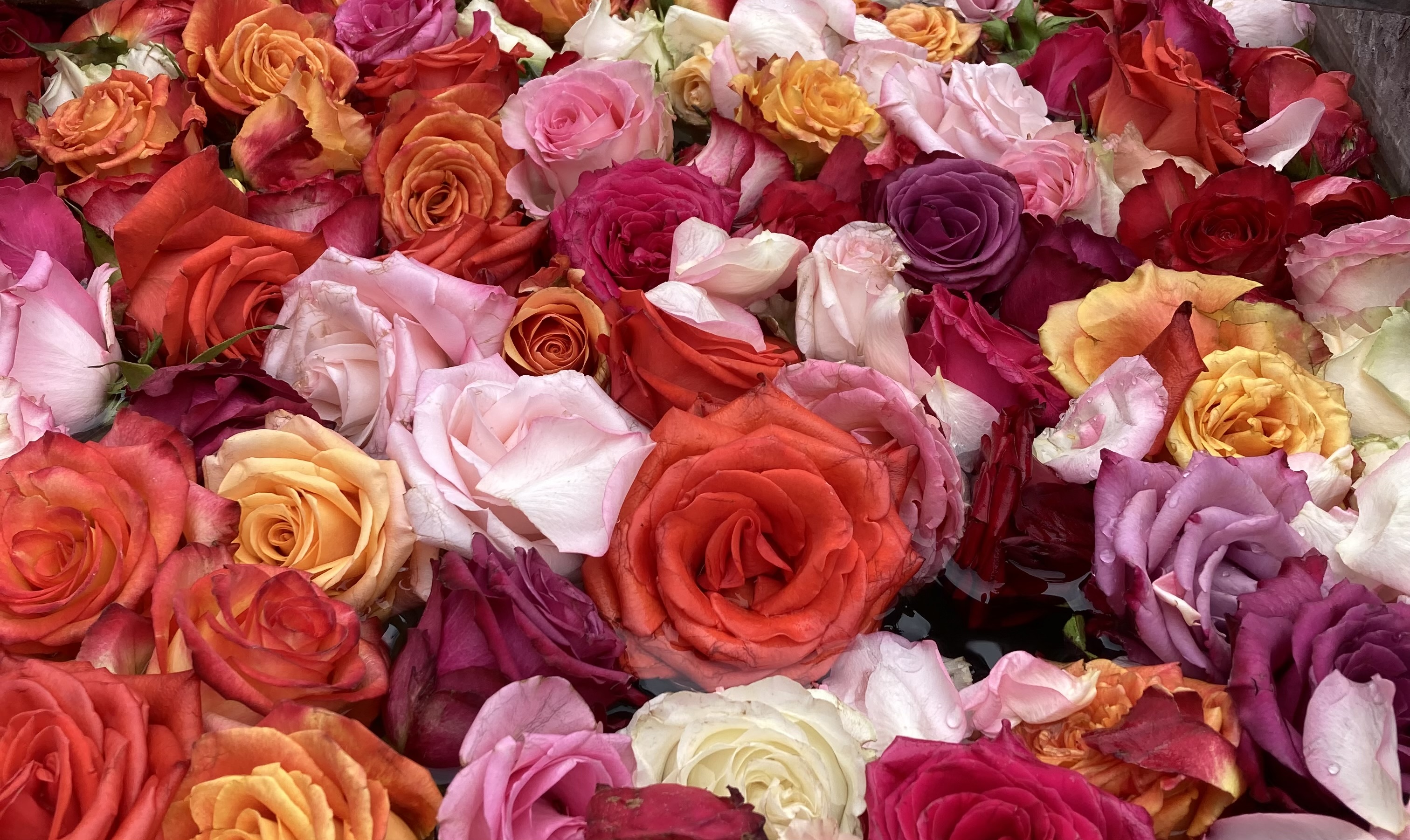
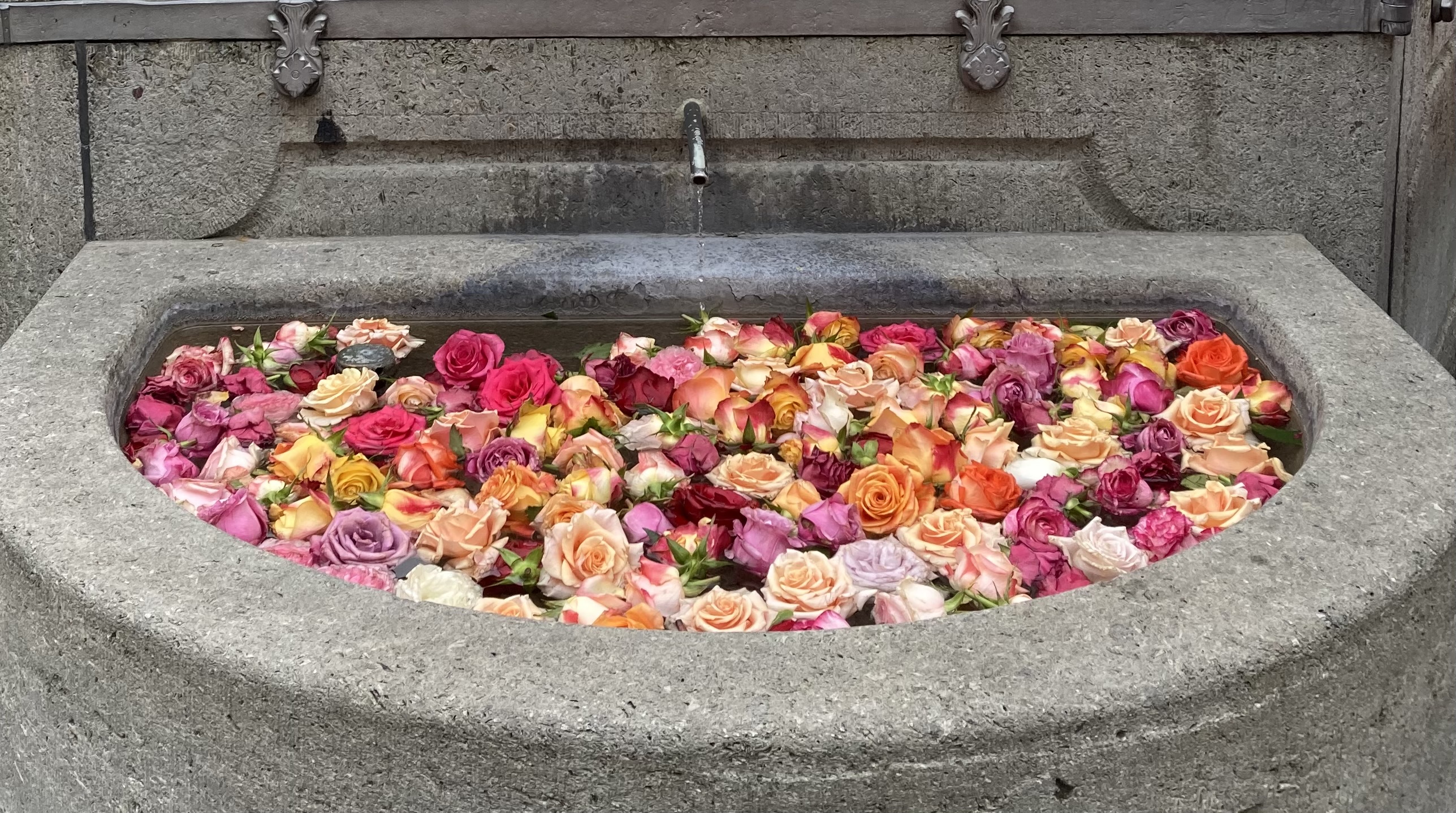
The photo I’m sharing with you today is from a fountain in Zurich. I was there last March. Starting during the pandemic, I believe, people started to fill the fountains with roses in Zurich in the run up to Easter, as a symbol of hope. They’ve carried on that tradition every year since. Here’s another photo I took when I was there.

Wide open

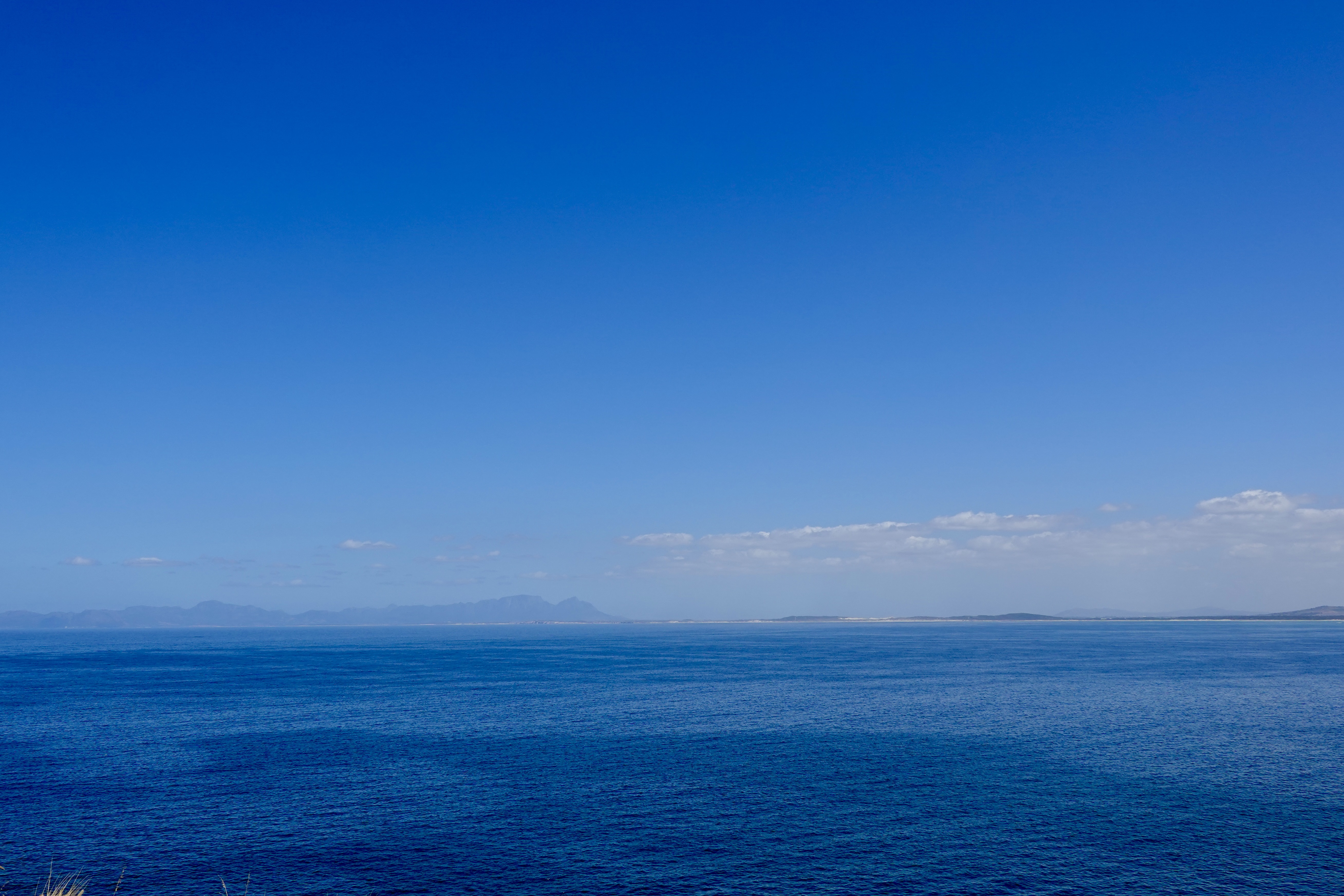
Yesterday I wrote about the exercise of taking the “view from on high“. Today, I’m returning to another of my favourite themes and activities……the wide open.

Maybe it’s because I was born and brought up in Scotland, or maybe it’s something many of us share, wherever we live, or wherever we come from, but a view like this opens me up to the world. An expanse like this, including a clear view of distant, snow covered mountains, reflected on the surface of a body of water makes me want to take a big deep breath in, slowing empty my lungs, and just take it all in.

This simple action of slow, large in-breath, followed by an even slower, longer out-breath, activates the parasympathetic nervous system, and it’s this response in the body which slows the heart, lowers the blood pressure, and relaxes our muscles.

The wide open natural environment opens the heart and the mind. In one and the same moment, I feel calm, feel my consciousness expand, and my heart open to this one, amazing, beautiful planet. I feel gratitude, contentment, and peace.

As the boundaries between my individual self, and the whole of the planet, of the universe even, dissolve, I experience awe, and know, in my heart and my mind, that I am inextricably connected to what is greater than me.

I am quite a fan of forest bathing, of the influence of trees on our health and wellbeing. I’m also a fan of being in the garden, listening to the birdsong, feeling the warmth of the sun (not in the midst of winter however!), and wandering around to discover what new plants and creatures I can find sharing this little space with me. But the experience of standing in the “wide open” is something else. It has a power. I recommend it.

The view from on high

There’s what some people call a spiritual practice taught by the Classical Greek philosophers. It’s called “The view from on high”. I thought of that when I looked, again, at this photo which I took from the train crossing the Alps last year.

The idea of the view from on high, is about taking an overview. It’s about seeing the context of something, seeing the “bigger picture”. We can be too close to something, so close in fact that we can’t “see the wood for the trees”. The answer is to go higher for a more comprehensive perspective.

Although the Greeks didn’t know it, this is advice to access your right hemisphere. The left hemisphere of the brain has a very narrow focus. It enables us to zoom in, separate out elements, and grasp what we are looking at. But the right hemisphere takes in the context, sees the connections, enables a more holistic understanding.

Of course, it’s best when we use our whole brain, not just half, but, sadly, we’ve developed the habit in our cultures of thinking the left hemisphere knows best. It doesn’t. It only helps us when we take its “re-presentation” of reality back into the right hemisphere, to situate it in the whole.

Reality is not made up of pieces which are assembled. Reality is a whole, in constant flow and change. Stepping up a level and taking “the view from on high”, can help us to appreciate that.