Have you ever come across a sphere balanced on a cube? If I understand it correctly, Goethe had a sculpture like this in his garden. It was known as the “Stone of Good Fortune” which Goethe named “Agathe Tyche”. The cube represents stability and structure, whilst the sphere represents dynamism, movement and change.
So simple, but so attractive and powerful. I love this combination. It captures two of the great forces of the universe which work together to create the reality which we experience…….regularity, laws and order combined with constant movement and change. We need both, although some of us have a greater preference for one over the other. Some of us like a life of habits, routines and rituals, where others are always looking for something different. I don’t think we need to choose. And I don’t think one of these forces is “better” than the other. The point is, my preferred, “and not or”. We really couldn’t have the lives we have without a constant interplay between these two apparent opposites.
First non-fiction read of the year. The Internet of Animals by Martin Wikelski. I loved this book. It opened my eyes to a whole world of scientific research I had no idea existed, and it’s expanded my vision of what’s possible into areas I hadn’t dreamed of.
There are three main themes to this book, and each of them is a total revelation. The first is the development of the methodologies and technologies to enable live tracking of all kinds of creatures, from giraffes to dragonflies wherever they are on the planet. Martin tells this story from the perspective of his personal experience which makes it both an engaging read, and, at times, even gives it the flavour of a thriller…hooking you in to wanting to know what they are going to do next. The second, is the way individual animals change their behaviour in relation to individual human beings. I already knew that certain birds, and even, bees, could recognise particular faces, and I had an experience here with a Redstart which got very agitated around me to let me know its chick had fallen down our chimney, and came down beside me, as if to say thank you, once I’d rescued the chick. But I had no idea that so many different species behaved differently according to the attitudes of the humans around them. The third, is about tapping in to the “wisdom of the crowds” in the animal world, and this third theme is really the core of the entire project. He gives many examples, from tagged giraffes and zebras, alerting wardens to the presence and exact location of poachers, to a better understanding of how various animals can predict earthquakes, tsunamis, and even the coming seasonal rainfall. He also describes much inter-species communication, which we haven’t really been aware of until now.
Martin gives a couple of imaginary “animal reports” in the future, where we humans can be alerted to changes in ecosystems and environments by the creatures which live there. In fact, he makes the excellent point that maybe instead of focusing on trying to find communications from potential extra-terrestrial beings, we’d be better served by learning how to interpret the communications from the other actual beings with whom we share this planet.
There’s a lot more to this book than I can summarise here. I highly recommend it. It’s really expanded my consciousness.
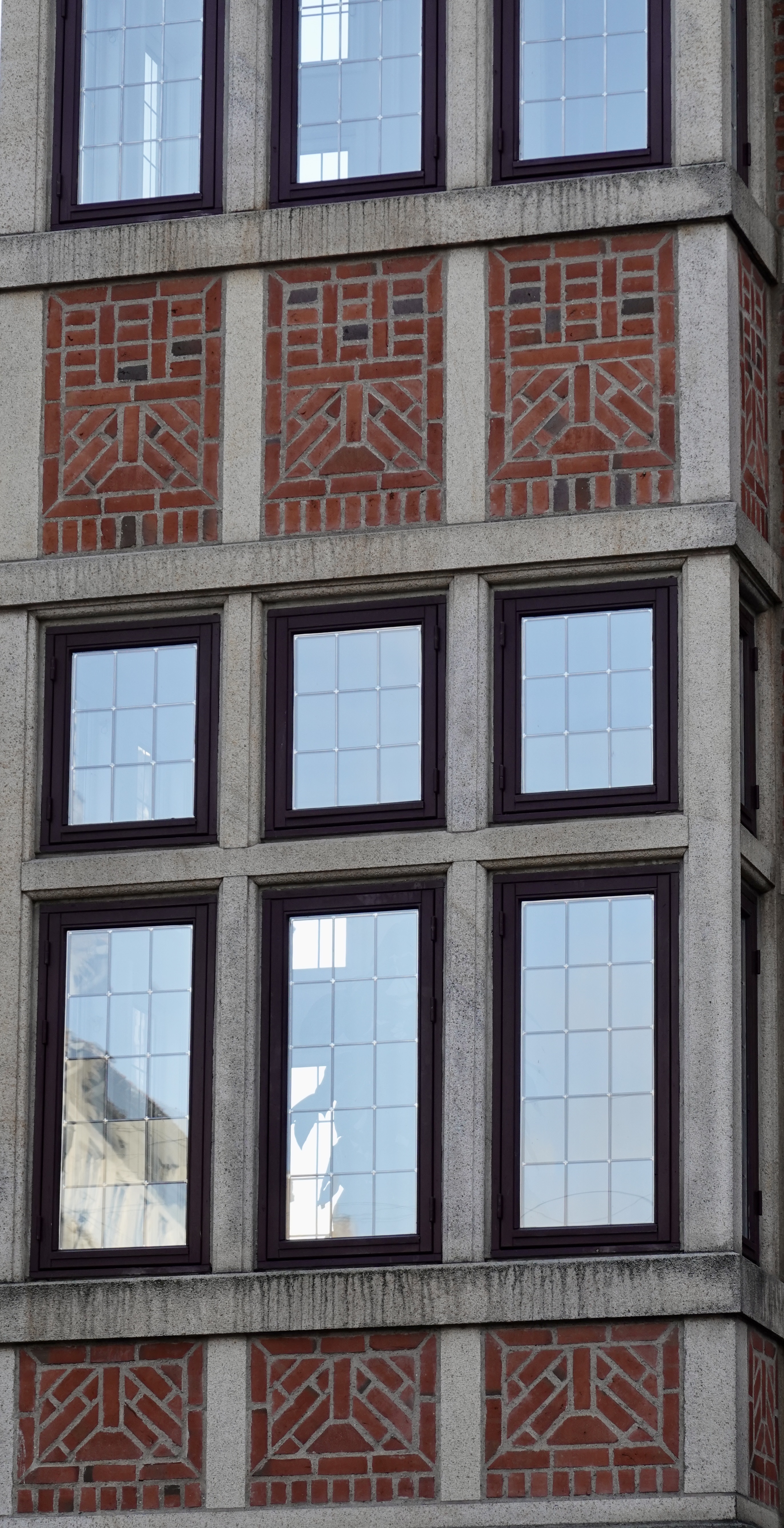
I’m a big fan of Nature’s curves and irregularities, but, sometimes it’s a human-created design based on straight lines that catches my attention……as is the case with this building. This, to me, is very European, but maybe you can find this emphasis on straight lines and geometric designs elsewhere too (you tell me).
It makes me think about the differences in aesthetic between, say the Greco-Roman civilisations and the Asian ones. I’m very familiar with the bold straight lines of “Classical” architecture, including a preference for symmetry. But I’m also very familiar with the Japanese aesthetic of wabi sabi, where asymmetry is preferred, along with curves, circles, and designs which can seem, to Western eyes, “incomplete”.
Travel is a great device for expanding your personal aesthetics!
You’ll know I’m a great believer in “and not or”, so it’ll come as no surprise to you to learn that I can delight in both styles.
How about you? Do you have a preference for any particular aesthetic style? And how much is that connected to the culture you grew up in? Have your preferences changed due to encounters with any completely different cultures?
OK, so I don’t know if these birds are wave watching, (same as I was), or whether they are on the lookout for fish (could you spot a fish in the water from there?), but, waves are pretty mesmerising, aren’t they?
I love to gaze at them, to listen to the sound of them breaking on the shore. I love watching the blue turn to white, the surface water break into foam. And I love to spot a rock or two where the waves burst up into the sky like explosions of surf.
How about you? Do you like wave watching?
When I’m wave watching I always think of the fact that we are like the waves on the surface of the sea….that we appear for a short time, then disappear back into the rest of the universe from which we emerged. I think of how we, as individuals, are never completely separate, and how we are densely interconnected….how our separateness is actually a kind of illusion…..or, at least, an invention….something we make up.
But mostly, wave watching isn’t about thinking for me. It’s about kind of meditation, an exercise in connecting to what is greater than me.
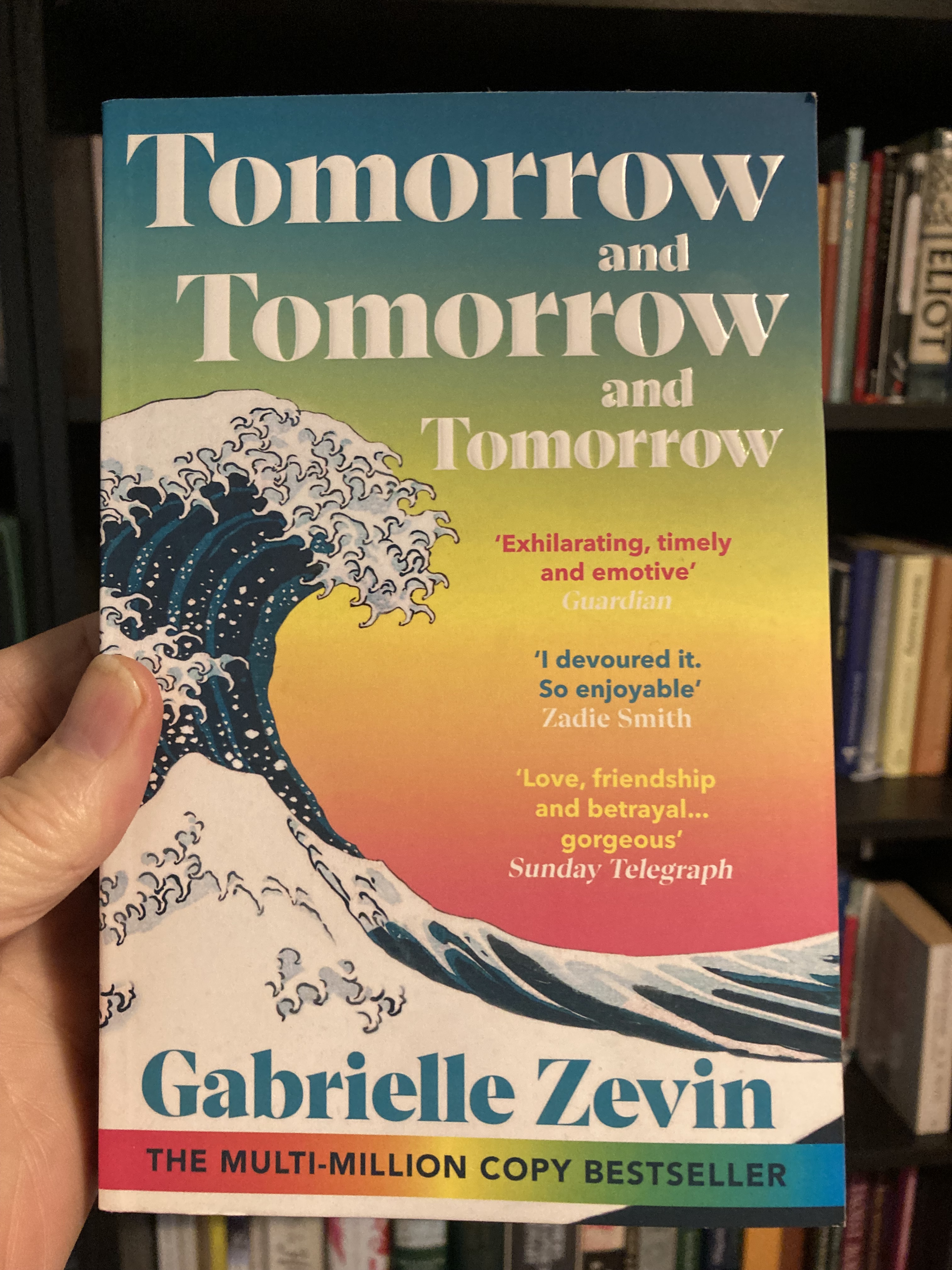
The first book I’ve read in 2025 is “Tomorrow, tomorrow and tomorrow” by Gabrielle Zevin. I didn’t know anything about this book when I bought it. I found it on the English language table in the fabulous Tranquebar bookshop in Copenhagen, and what convinced me to buy it was the blurb on the back, particularly the claim that it was a tale about “our need to connect; to be loved and to love”. However, as clearly displayed on the front cover, several million people had already bought a copy before I did, so, I guess I was a little late to the party. That doesn’t bother me, though.
I thoroughly enjoyed this book. It was well written, engaged me from the very beginning, held my attention and pulled me in. Set in the US, focussed on three characters who create computer games and build a highly successful company, this isn’t a world that I know anything about. I’ve never been a computer game fan, and apart from some very, very early games, haven’t played any, but I didn’t feel out of my depth here at all. I think that’s mainly because there is no focus on detailed tech issues, but, rather on the ideas behind these games. It made me think about computer games more positively than I have done until now (although it hasn’t tempted me to go and play any!). I could see from the story how the experience of game worlds can actually help people to deal with reality, not simply, as I’d believed until now, just escape from it. There can be a power in distraction and escape, especially when someone is trying to recover from significant physical trauma. That’s something I haven’t really explored much even though I worked as a doctor for my whole career. I wonder what part such technology might play therapeutically in the future – and I don’t mean the current wave of data collection and emphasis on numbers and what can be measured. I mean more in the way of stimulating imagination, creativity and relationships.
There’s a particularly believable section of the book which involves a shooting. That felt spot on. It’s easy to see, in the increasingly polarised, judgemental world of America, in particular, that someone could become so enraged by something occurring in a computer game that they’d set off with guns to kill the creators.
The main characters are also very credible, and as the story follows them over many years, we get to experience intensely different phases of their relationships, from the times where all goes well between them, through the times where they drift apart, or even divided. And, as suggested, in that little blurb which caught my attention, it really is a story about the importance of loving and being loved.
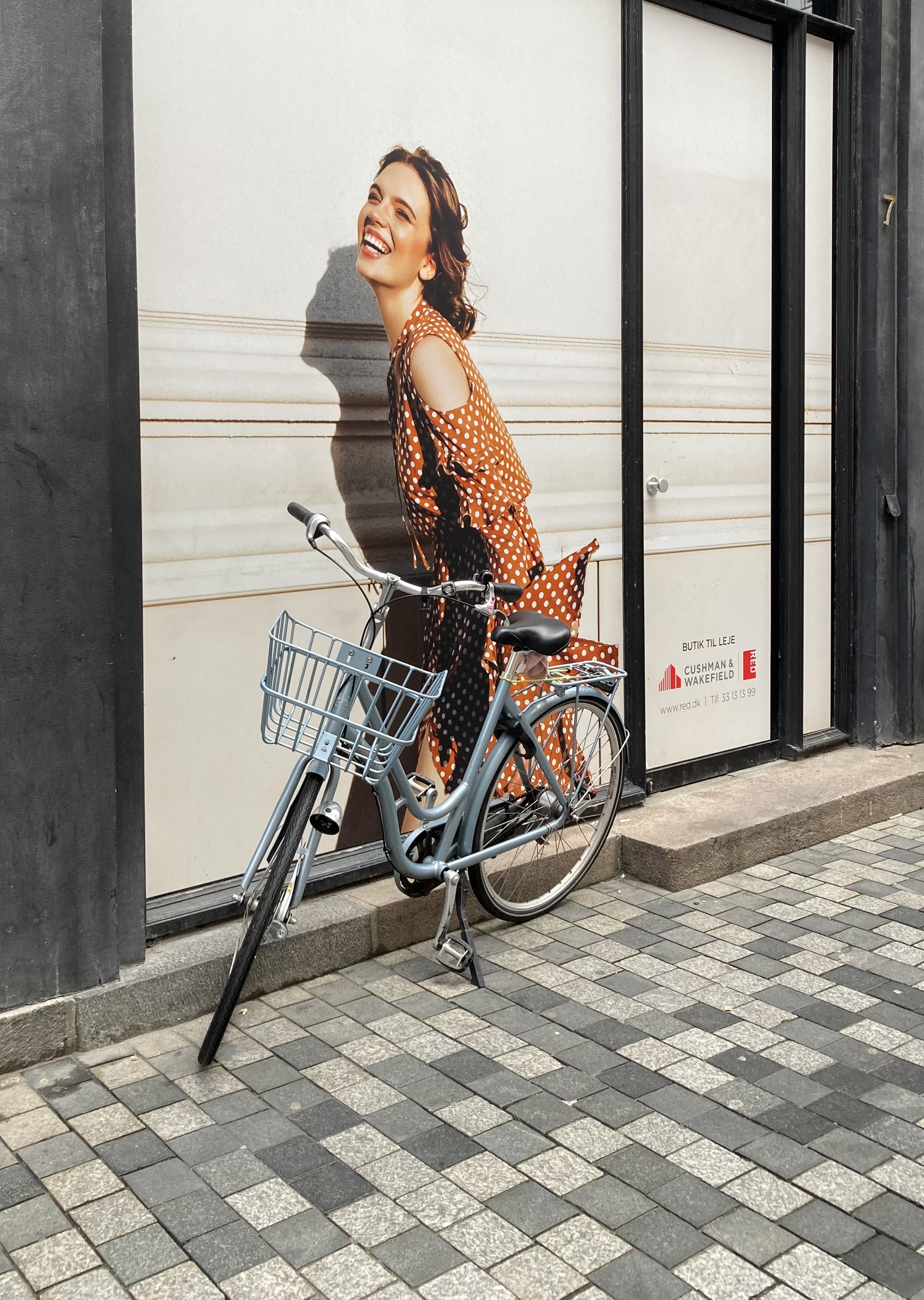
Whether I have my camera in my pocket, or I’m just out and about with my phone, I’m always hoping that something will catch my eye. I love to notice what is beautiful, amazing or makes me wonder. I’m especially happy when something stops me in my tracks. It might be a flower, a butterfly, a view over a lake, or towards mountains. It might be a patch of sunlight, a reflection in a puddle or a fountain, or a splash of colour. But sometimes I notice something that makes me think – what am I looking at here?
This was one such occasion. I was walking through the streets of Copenhagen and this bicycle resting on a poster of a model caught my eye. It was one of those occasions where you do a sort of double take…..wait, what exactly am I looking at here? I could have walked on by once I’d realised exactly what it was, but instead, I stopped, moved to get a good angle, and took this photo. It’s one of my most favourite photos of the year.
These moments of serendipity, when the world grabs my attention, are, I believe, a key to my happiness. I am convinced that having daily experiences of everyday wonder (l’emerveillement du quotidien) make life more beautiful more interesting. Taking a photo on occasions like this gives me the opportunity to return to it and re-experience it, time and time again.
I like to see things clearly. I like to understand. I’m insatiably curious. I know, as I’ve learned from experience, that curiosity never ends, that there is no end point where knowledge or understanding are complete. Not least because all that exists is not fixed. Even if I could fully understand something today, by tomorrow, other factors may have come into play, the situation will have evolved, there will be more to discover. But, in fact, the fantasy of knowing all I need to know, or understanding all that can be understood, is just that – a fantasy…..even if I were to limit my attention to a single moment in time. All that exists does so within an infinite web of connections and relationships.
But even knowing those limitations, my curiosity never dries up. I never cease to attempt a better understanding.
I brought those very ideas and values into my daily work with patients, always trying to understand them today, as best I could, whilst knowing that I could never completely understand them….even over a lifetime of consultations. Every day I’d need to stay open to discovering something new, something unexpected.
In this photo, which I took in the hills just outside Comillas, in northern Spain, I can’t see the landscape very clearly. There are valleys and dips in the countryside filled with mists, and the mountain ranges disappear into the blue distance before my eyes. This photo stirs another delight in me – the delight I have in mystery. I enjoy mystery. It inspires me. It stimulates my curiosity. It delights me.
What kind of life would we have if there was no mystery?
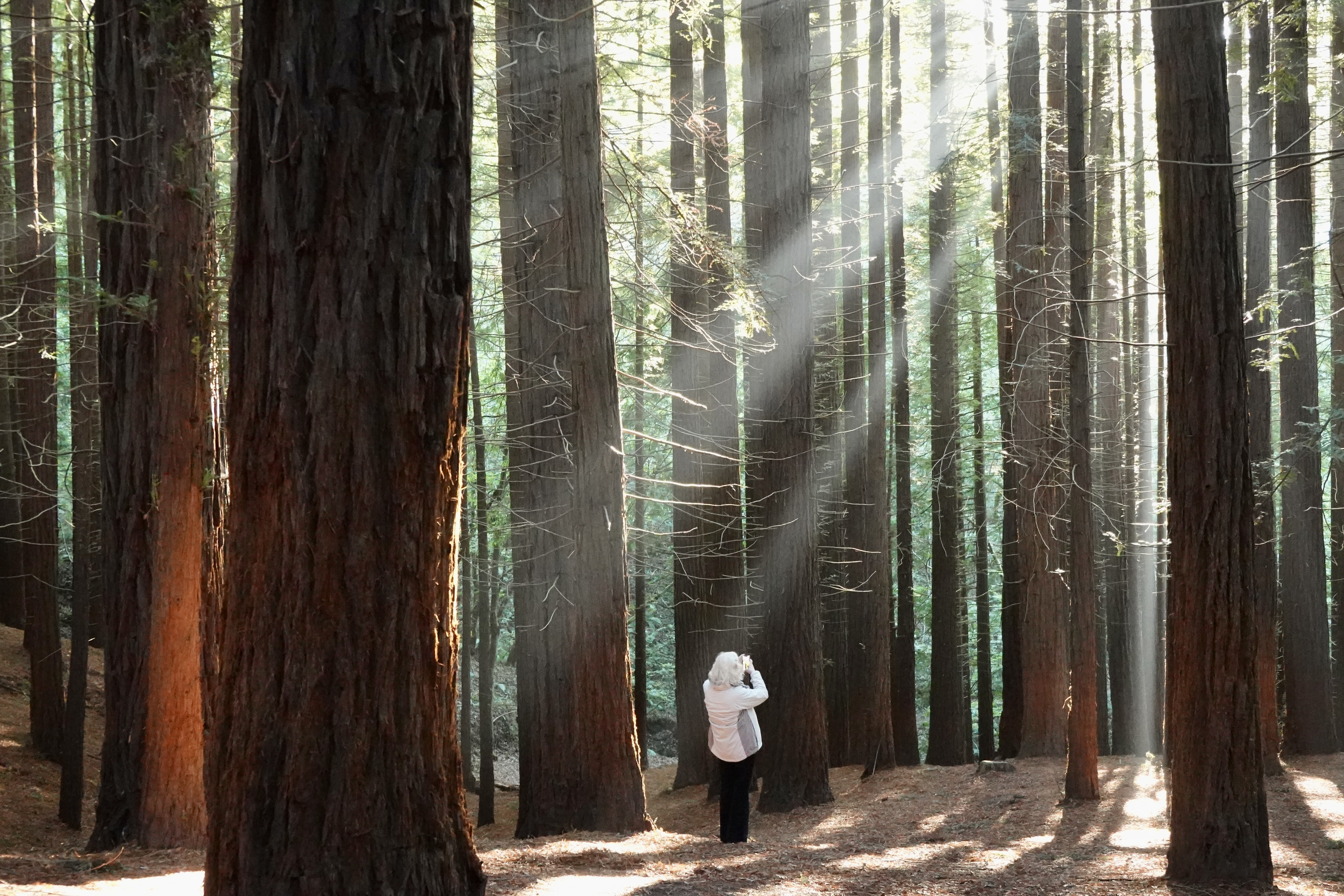
Last year, while watching the coverage of La Vuelta cycle race, I saw them pass through a region I didn’t know well. They mentioned a sequoia forest and so I looked it up online and discovered there were 800 sequoias planted near the town of Comillas in the north of Spain. According to google maps it was only a few hours drive from home. So we set off, stayed a few nights in Comillas, which was a real delight and paid two visits to the sequoia forest.
It is an astonishing experience to spend some time amongst these giant creatures. Quite magical. I took loads of photos, but the best thing was actually just wandering around, sitting from time to time, and just soaking up the atmosphere of the forest.
I’m not surprised to learn that for the majority of people experiences contribute far more to human happiness than “stuff” does. It’s not what we buy, or what we own, that brings most of us the greatest delight, the deepest sense of gratitude for this life. It’s the experiences we have.
If I had one piece of advice for this year, it would be to concentrate on making good experiences, not on accumulating more stuff. I know we have an economy based on consumption, and already there are stories about people “not buying enough” before Christmas, or in the “January Sales”, but, actually literally billions are spent over these few short weeks. I’d love to see a society based on qualities more than quantities, on relationships and experiences more than on stuff to consume. But until that day comes, I (and you, if you wish) can live our lives that way anyway.
Here’s to a 2025 of fabulous experiences of wonder, delight, joy and love. Here’s to a life of flourishing and purpose.
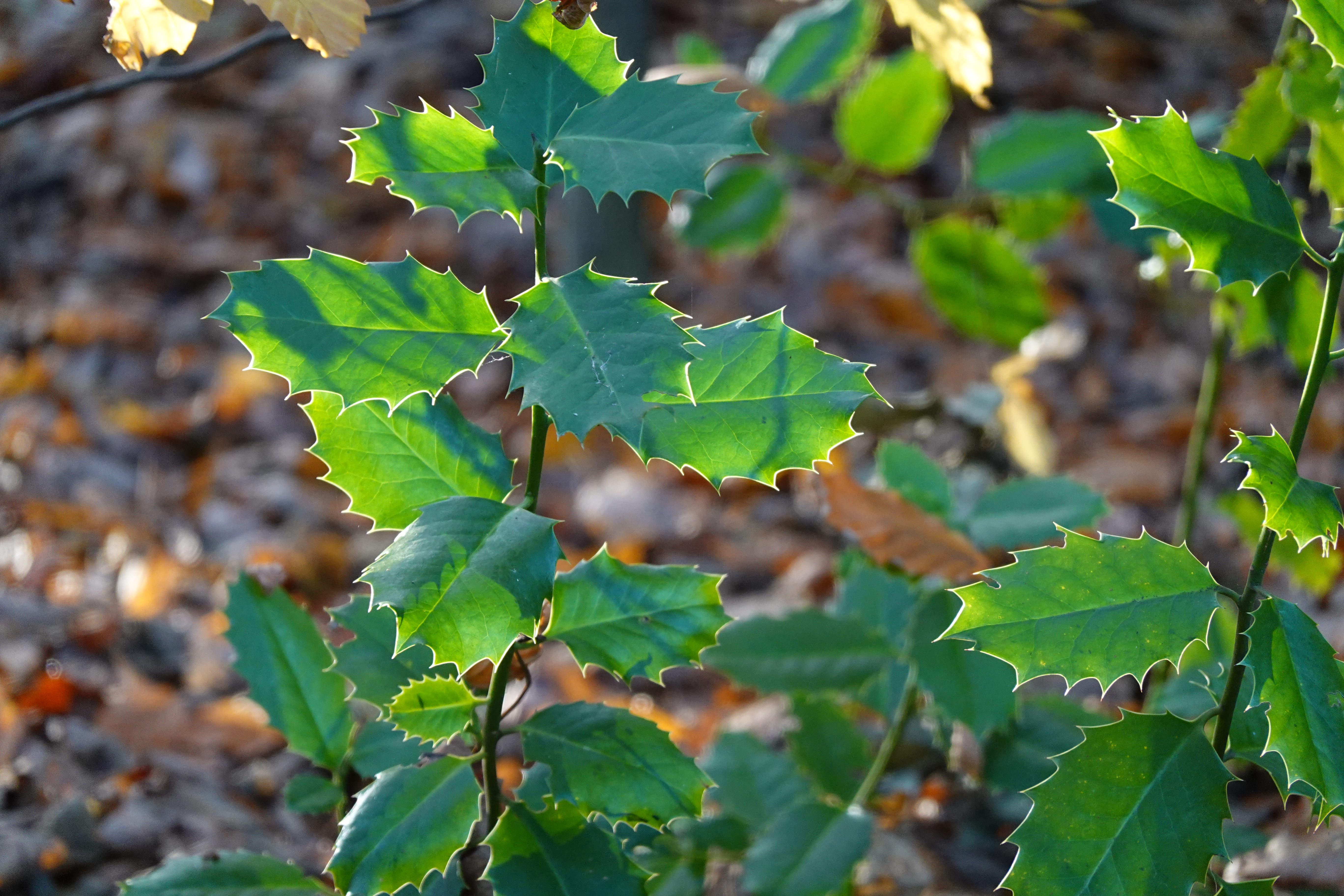
I’m not a botanist but I’m pretty sure that holly leaves have these jaggy edges for protection. I don’t think they are simply a decorative design feature. They are to dissuade animals from eating them. We living organisms have an incredible diversity of defence systems…..from spikes to poisons to….well, the list is huge. We humans also use a huge number of different defence strategies, both behaviourally and with our complex systems of immunity.
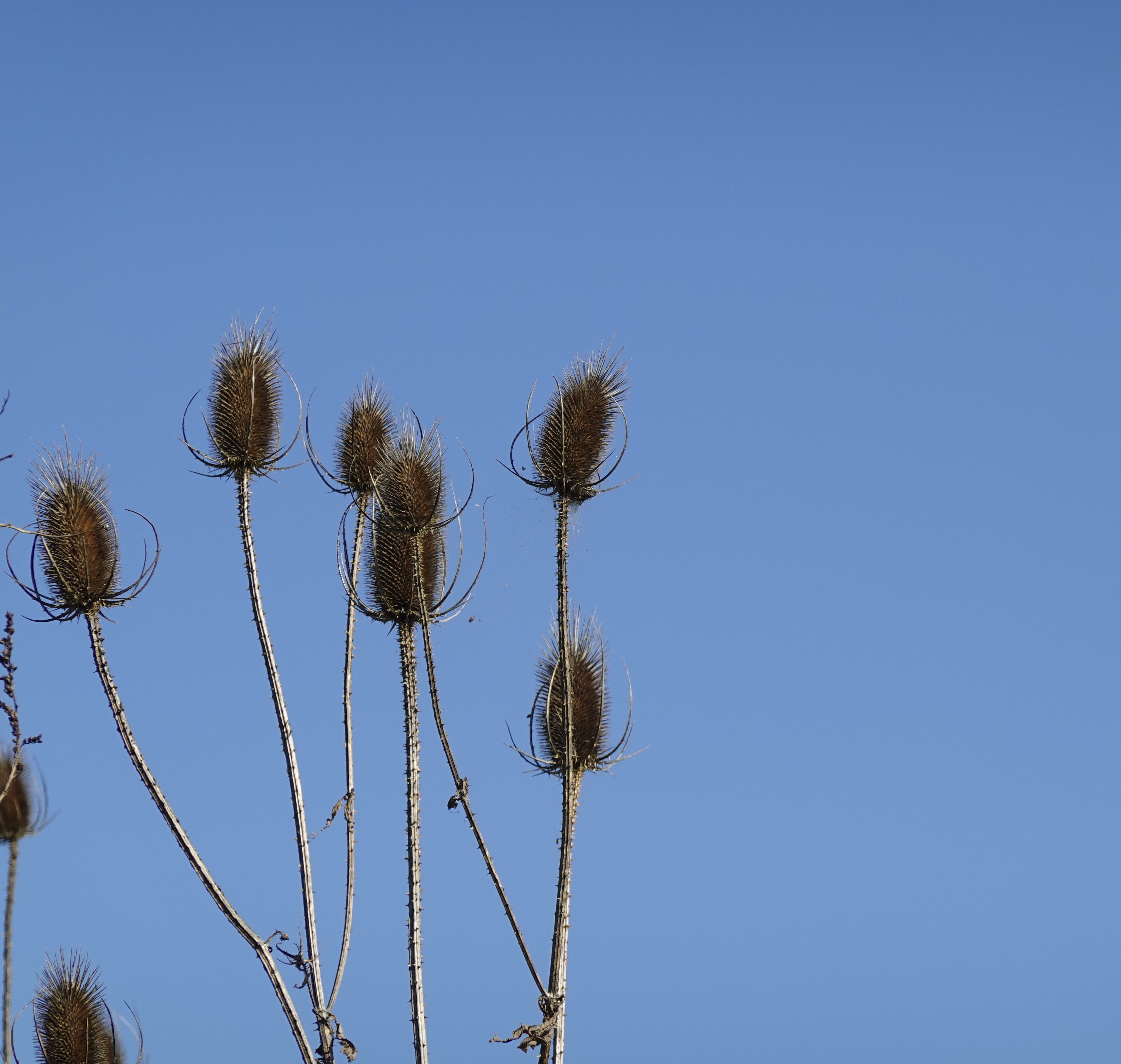
But not all spikes are for defence. Look at these seed heads with their elaborate spikes and hooks. These aren’t, as best I know, for defence, but to hook on to passing creatures, so that the seeds inside are carried by the others, allowing the plant to increase its chances of survival and propagation around the countryside. These systems of seed dispersal remind us that interactions between plants, animals and humans are normal. It’s not just we humans who need each other in order to thrive. All kinds of living creatures need others (sometimes other members of their own species, but often members of quite different ones) in order to survive and thrive.
Nature creates elaborate and complex webs and networks of relationships between living organisms. We call them ecosystems. The more diverse the ecosystem, the more it is resilient and able to adapt to changing conditions. Loss of species diversity is a huge risk to human beings. I’m not sure how aware we are of that fact.
We should be encouraging diversity, encouraging connections and relationships. We should be building physical, social and psychological ecosystems if we want to thrive.
Looking at these images today, on the last day of 2024, reminds me that for each of us to flourish in 2025, we need to pay attention to our relationships, and need to encourage difference between ourselves and others.
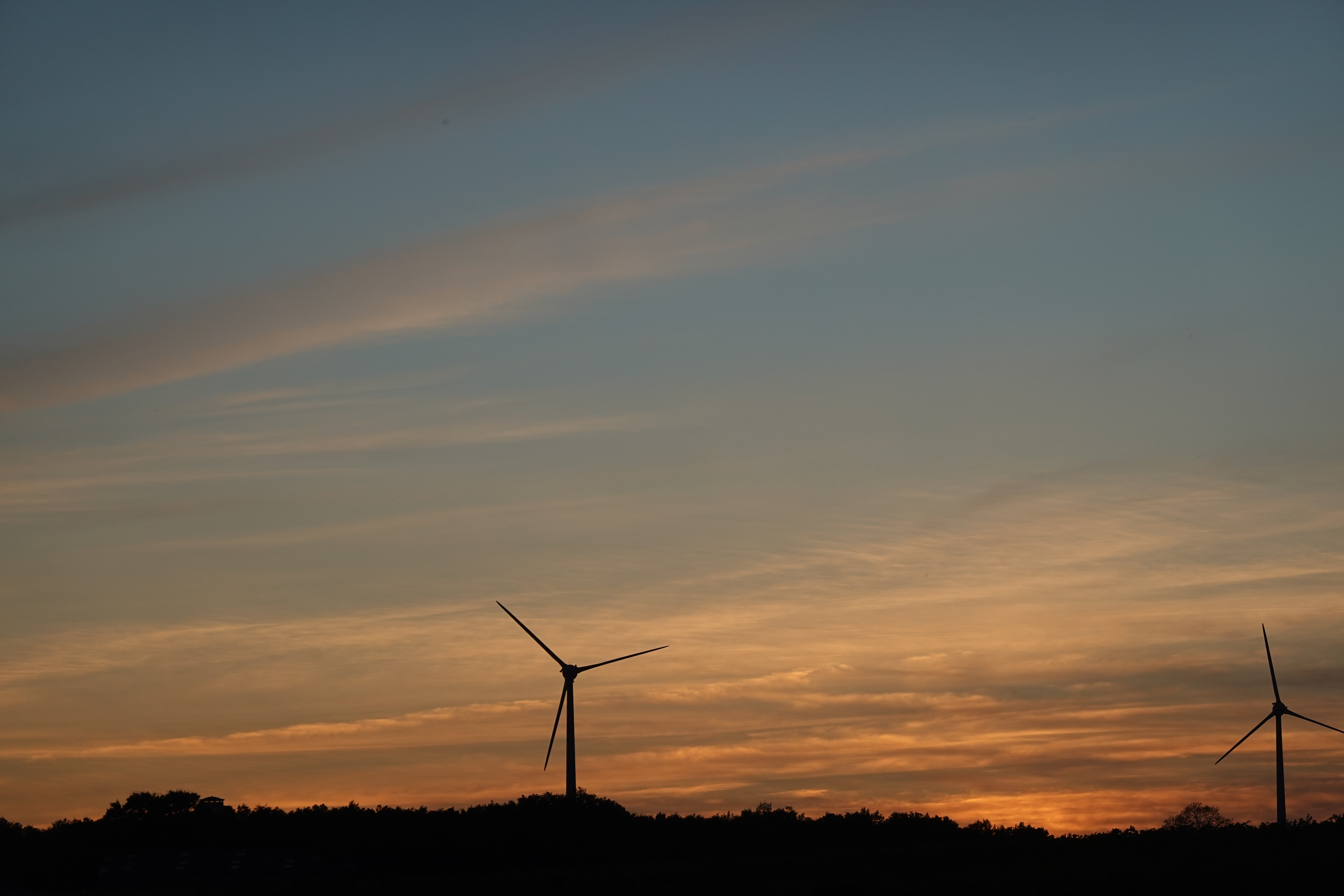
Was this photo taken a few minutes after the sun had disappeared below the horizon? Or was it taken a few minutes before the sun appeared over the horizon?
Sunset and sunrise can look remarkably similar. Imagine you’ve been in a coma, and you just come round and look out of the window. You see this scene. How do you know whether it’s dawn or dusk?
The answer, of course, is just to keep watching for a few minutes. You’ll notice how the sky is changing….either getting darker as the sun sinks still further, or getting brighter as the sun is about to appear over the horizon.
You could say that what helps us to make sense of what we experience in life is context…the circumstances of the event. It’s not the event, frozen in time, separated out from all the moments which precede it, and those which will follow. It’s the flow of change. We understand by taking our time and not limiting ourselves to a snap conclusion.
Physical context helps too, of course. If someone screams “Murder!” while you sit in your seat in the theatre watching the actors on the stage, then you understand there’s no need to call the police (probably!), but if they scream “Murder!” when you are outside in the alley leading to the stage door, then you know to get help a soon as you can.
Context makes all the difference – whether that’s the time context, the space context, or the cultural/social one. We have to be careful with our tendency to separate things out in our perception. We have to be careful with reductionism.
Our left hemisphere is great at separating elements out from each other. Our right hemisphere enables us to place all we see and hear in context. We need both.
I welcome constructive criticism and suggestions. I will not, however, tolerate abuse, rudeness or negativity, whether it is directed at me or other people. It has no place here. ANYONE making nasty comments will be banned.





 Heroes Not Zombies