Feeds:
Posts
Comments

what’s next?

James Hollis, in “The Middle Passage”, says

The invitation is to shift gears for the next part of the journey, to move from outer acquisition to inner development

and

…it is this emphasis on inner, rather than outer truth, that distinguishes the second adulthood from the first.

Whilst I think these developmental shifts are a perpetual presence in our lives, there is no doubt that we are more aware of the transition phases at some times than we are at others, and this is where I am now, at the end of 2013, in one of those transitions. So, I’m enjoying shifting gears, and throwing myself more fully into the process of becoming.

Are you ready to accept the invitation to change gears? I wonder what inner truths we’ll discover?


Light on Earth

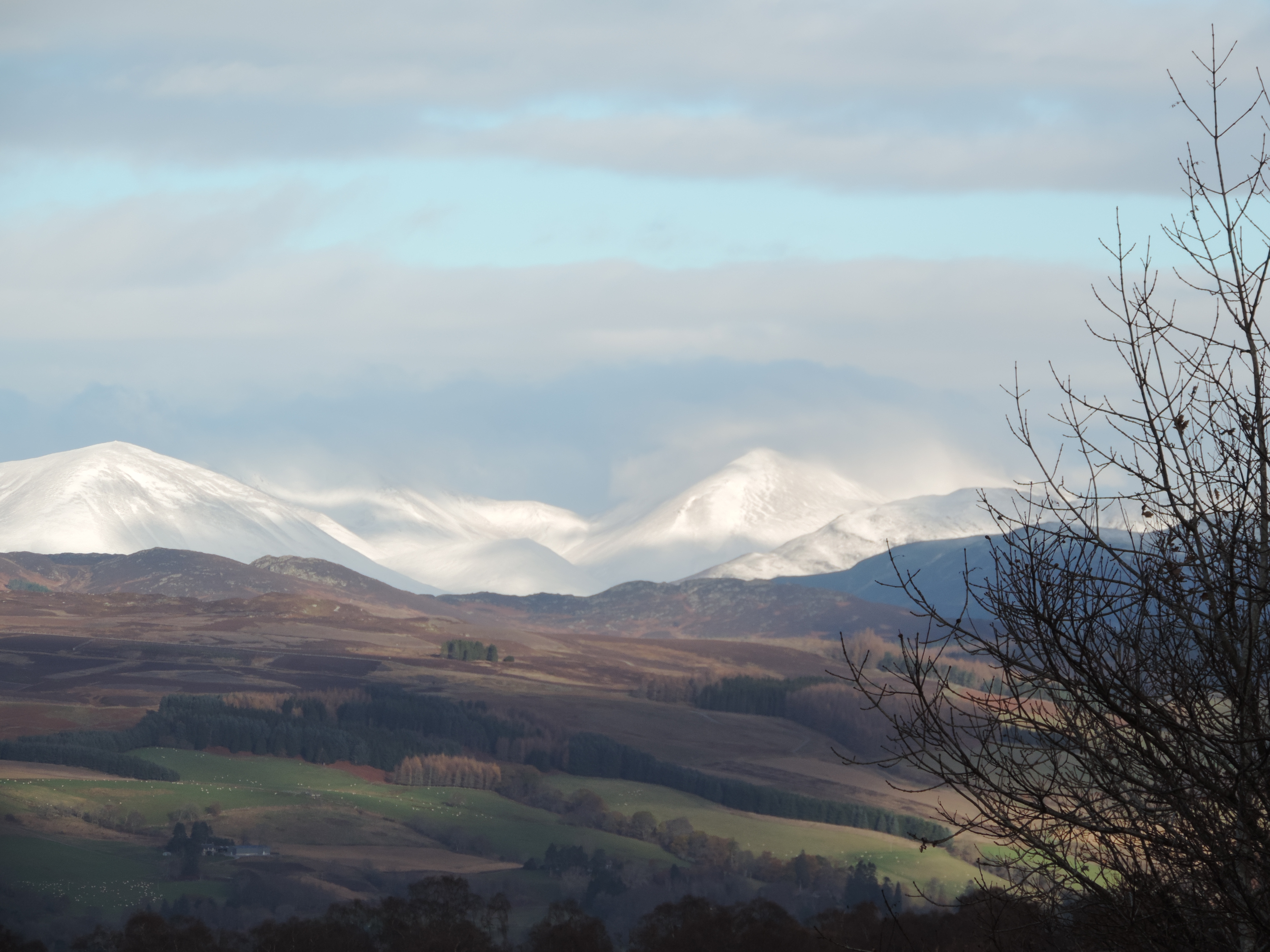
light on earth


What I love about this photo is the way the light appears – it’s almost as if there must be multiple sources of the light, shining with different intensities on different parts of the landscape.

fractal cloud


Ursula Le Guin, in the introduction to her selected short stories, “Where on Earth”, says

I had been writing realistic stories (bourgeois-USA-1948) because realism was what a serious writer was supposed to write under the rule of modernism, which had decreed that non-realistic fiction, if not mere kiddilit, was trash. I was a very serious young writer. I never had anything against realistic novels, and loved many of them. I am not theory-minded, and did not yet try to question or argue with this arbitrary impoverishment of literature. But I was soon aware that the ground it offered my particular talent was small and stony. I had to find my own way elsewhere. Orsinia was the way, lying between actuality, which was supposed to be the sole subject of fiction, and the limitless realms of the imagination.

How liberating! How inspiring! Of course, all fiction is a work of the imagination, whether you call it “realism” or not, and, actually, isn’t Life, which can only be lived from the perspective of the subject, also a work of imagination? Or at least, it’s a work of finding that path between “actuality” (the objective Real), and the “limitless realms of the imagination” (how we subjectively interpret and experience that Real)?

I also love her phrase “arbitrary impoverishment of literature”. Why indeed should we limit ourselves to “realism”, especially if that same realism ignores, or worse, denies, the inclusion of the imagination?

Finally, I like that phrase “the ground if offered my particular talent was small and stony”. Isn’t it true that for each of us, our particular talents flourish in quite different environments, or on quite different paths?

thin to the divine

Atlantic

Kenneth Steven, in his poem of imagined fragments, “A Song Among The Stones”, describes what the journey might have been like for the Celtic Christian monks who are believed to have travelled from Iona to Iceland.
On the first page, these two lines grabbed me

yet this is the place they came to find
an island thin to the divine

That’s a wonderful phrase, “thin to the divine”. I can think of many places where it feels as if the land is thin to the divine, those special places which move and stir your spirit. Off the West coast of Scotland is definitely one of those places for me.

Where are yours?

Christmas Day

Xmas

cuddles, laughs, grazing and nibbling, sipping and drinking, listening to a Christmas playlist on Spotify, playing with tractors and racing penguins, wearing party hats, google-eyed glasses, wearing socks with robins on, sharing time and space and Life……

Love

wishes

I’ve been reading “Stoner”, by John Williams, which has been getting rave reviews in the UK in recent weeks. I’m enjoying it and can easily see why it’s been attracting such positive reviews, but today, I had one of those experiences you get when you read really great writing. Suddenly a phrase leapt out at me, stopping me in my tracks, catching my breath and sparking my thoughts….

…love is not an end but a process through which one person attempts to know another

Oh, yes! Love isn’t a goal to be achieved, or a target to be hit, or a product to be purchased. It’s a process of attempting to know someone. In fact, it seems to me that it isn’t possible to know another unless that attempt at knowing grows out of love. (Incidentally, I also think one of the reasons why many people find it so hard to really know themselves, is a lack of self-compassion…or loving attitude towards the self)

But then Williams, in the very next page writes this about how Stoner thought about love –

he saw it as a human act of becoming, a condition that was invented and modified moment by moment and day by day, by the will and the intelligence and the heart.

“a human act of becoming” – oh I SO love that phrase, and in the rest of sentence he shows us how love constantly changes, how it is a creative act, and how it involves the will, the intelligence and the heart.

Don’t you just love it when a book of several hundred pages, suddenly throws a few words at you and you feel awe, amazement and admiration?

I do.


As we come towards the end of another year, there are many articles and programmes looking back over 2013, and looking forward into 2014. In the socio-economic world what we hear about most is “growth”. Concern about whether or not there has been “enough”, and how we can all strive to produce more. Every single country in the world is measured in terms of the “growth” of its economy. Very little growth, bad marks. Increasingly more growth, good marks!

But growth of what? And for what?

Growth of consumption. That seems to be one marker. Consumption of what? Doesn’t matter. Stuff. Just, the more consumption, the better. Growth of “activity”. That’s another. But what kind of activity? Just activity. Busy turning financial derivatives into even more complex products to sell others. Busy making stuff. Busy moving stuff. Just activity.

Why? Why is more consumption and more activity good no matter what is being consumed, no matter what activities are being carried out?

Is it to produce more and more wealth for less and less people? Because that’s the sure and certain trend we are seeing.

Meantime we are seeing two other forms of growth. Growth of the number of people alive on the planet. Growth of the amount of finite resources we are taking out of the planet. Growth of the number of drugs people take every day. Growth in long term diseases and cancer.

Something isn’t going right, don’t you think?

Marc Halévy, in his “Prospective 2015 – 2025”, [ISBN 270331017X] takes this whole issue by the scruff of the neck and points out with stark clarity that we are just not on a sustainable path. More than that, we seem to be caught in a communal delusion, that this current path of ever more consumption by ever more people is a good thing – in fact THE good thing – THE criterion on which to judge the health of any economy.

This is just crazy. It makes no sense.

Marc suggests an alternative and he captures it in a simple French phrase – “la jouissance de la frugalité”.

These aren’t the easiest words to translate into English (help me out here if you are good at translating!) – but you get a bit of the sense of “jouissance” from the french phrase “joie de vivre” (which, interestingly, is one of those phrases we English speakers use directly as it is). It’s something to do with pleasure, joy, delight, satisfaction, something life enhancing. It’s, fundamentally, about quality. And “frugalité” isn’t exactly “frugality” as we would say in English. In fact, frugality isn’t a word which is used much by English speakers any more, but Benjamin Franklin had it as one of the most important of his virtues. It doesn’t mean something inadequate, or poor. It isn’t about poverty. But it is about “less”…..a kind of making the most of whatever it is you have…..

We can find this suggestion in the “sweetness of life”, and in the “slow movement“.

It’s about more quality for less consumption. It’s about living in the present, savouring, enjoying, mindfully experiencing every single moment.

Once you apply that personal principle to the universal, then you stop to ask yourself at each level. Does this enhance my life? Does it enhance the life of the human species? Does it enhance Life on Earth? Does it enhance the Universe?

Enhance might not be the best word, but I hope you get the idea. We need to shift our focus from more, more, more numbers and stuff, to deeper, greater, more impactful quality of living.

We need more of “la jouissance de la frugalité”

fishermen Lake of Menteith


DSC_0012


Here’s what you can do.

You can do what the whole universe does.

You can do what absolutely everything in the universe can do.

You can realise your potential, your completely unique potential.


Paths

Paths…do you wonder what kind of path you are on? Have you taken any time recently to look at it? To really see and feel what this path is like?
I read a small poem recently by Alec Finlay it was about “today“, the word “today” which starts, in the “t” with a junction, he says, and ends in fork (in the “y”). I like that. A lot. The thought that every day starts with a junction and at the end of it we come to a fork. Because that’s true, isn’t it? We have a choice every day about which path to take next…..

5687106102_705b7d8b24_o


5687105776_2fdcc4c315_o


5686538265_b5dac6b1c9_o


5686537589_f760f0311e_o

(Part 1)

I was taught that bad medical practice was to prescribe a pill for every ill.

I especially remember sessions where we had to reflect on our use of the prescribing pad, asking ourselves exactly why we were choosing to prescribe at all, not just why we chose a particular drug.

That teaching may be long since gone. Prescribing rates grow exponentially. I read the other day about the number of prescription drugs found in waste water in cities, and how around 70% of adult Americans now take at least one prescription drug every day.

I wonder why that is. Why are more and more people being prescribed more and more drugs? Are we, as a species, becoming sicker and sicker? Is it because the drug companies “don’t sell drugs. They sell lies about drugs“? Is it because of the distortion of “evidence” by drug companies?

I think it is at least in part due to the fact that modern medicine is practised on the basis of a delusion that human beings are complicated machines. They are not. They are complex organisms.There is a huge difference. When you see a person as a machine with a part which doesn’t work, the idea that you can sort that part with a drug makes some kind of sense. What’s lost in this way of thinking is a very, very important truth.

The only healing which occurs is natural healing. It is the person’s own healing system which gets the results. Drugs, if they do anything useful, act as adjuncts to steady things up whilst the body gets on with sorting itself out. There is not a drug on the market which directly cures anything. Benjamin Franklin said “God heals and the doctor takes the fee” – same observation, framed in a particular way.

So, given that the truth is we don’t have any drugs which cure, and its only the natural self-healing capacities of the human being which actually repair tissue, and restore health, then why don’t we FIRST of all seek to stimulate and support self-healing, self-care and self-repair, and ONLY when necessary, support the process with a carefully prescribed drug?

The problem with the data, algorithm, drug model of medical practice is that all roads lead to drugs.

We need new maps. We need to be able to understand how to set the conditions for recovery, for resilience and for health. We need to understand how to live differently to have sustainable health, and to maximise health when we have a chronic condition.