Feeds:
Posts
Comments

Posts Tagged ‘health’

I read an article in New Scientist by Florence Gaub and Liya Yu entitled “Nothing’s certain”. The authors explore two different ways that we handle uncertainty. Their specific take is a “political neuroscience” one. Now, let me just say I have a paradoxical relationship with the “neuro” tag. Firstly, it attracts me. I’m interested in the brain, scored my best exam result ever in the neuroanatomy exam at Medical School. I’m interested in pyschology and in the “mind-body connection” (although that, too, is a phrase which can both attract and repel me). Secondly, “neuro-” has become a bit of a fashion, with everything from “neuroscience”, to “neuromarketing” and this “political neuroscience”. I just don’t think neurology can explain everything about human behaviour. Alongside that, the correlations between neurological observations and behaviour are just that….correlations. We still haven’t explained how the physical brain can have subjective experience, and whether or not subjective experience creates the changes in the brain, or vice versa. 

However, what they had to say really interested me. They say “Political neuroscience shows that the brains of people with conservative views favour security and avoid open-ended solutions with no clear closure. They tend to have increased volume in their amygdala, the region responsible for threat signalling” And, “Liberal brains have a higher tolerance for uncertainty and conflict, as they have more grey matter volume in a brain area implicated in the processing of ambiguity called the anterior cingulate cortex.” 

They point out that when uncertainty is high, the former “conservative” people are attracted to whoever offers the idea of certainty (think Hitler and his 1000 year Reich), and are fearful of novelty, whether that be technologies, foreign people or cultures. 

They conclude that we need to learn that “cooperation across identity and interest groups” can be beneficial, and that we can overcome our big global challenges “only by overcoming our brains’ vulnerabilities together”. 

I’m not sure that MRI scans of peoples’ brains reveal their political preferences, and I’m a bit uncomfortable with how this thesis basically implies that “Liberals” need to help “Conservatives” get over their fear and anxiety, but apparently “Liberals” don’t have anything to learn from “Conservatives”.

I say that despite seeing myself as firmly in the “Liberal” camp, not least because I was trained as a General Practitioner, a speciality sometimes described as doctors who specialise in managing uncertainty. Uncertainty was my daily professional experience, one unique, novel, unpredictable patient at a time. 

However it does seem that the “Right” are on the rise across the world, and this might well be connected to an increase in the amount of uncertainty which people are facing in modern times…..uncertainty about climate change, about technology, about both national and personal security. 

So, if I want to make a positive contribution, perhaps I need to understand and address the anxieties and fears of those people with a larger amygdala…. 

In other words, how can I help people to deal with uncertainty more comfortably? How can I help them to enjoy novelty, to delight in diversity and difference, and how can I help to create a more secure society for us to live in together? 

In addition to that, what do I have to learn from those who may be more sensitive to uncertainty than I am? 

Let me start with the last point first. We humans need sufficient certainty. We couldn’t go on without it. When I buy a train ticket, it doesn’t cross my mind that the train I’m about to step on won’t make it to its destination (despite the fact that between Stirling and Glasgow I’ve had several experiences of trains being delayed, cancelled, or even terminating a few stops before my intended one). The point is that I’ve had enough experiences of reliable trains to actually get on a train and expect it to take me to where it says it’s going to go. 

When I first went to university in Edinburgh, my mum, who clearly had a well developed amygdala, used to send me newspaper cuttings about crimes in different parts of the city, with the accompanying advice to avoid those areas. When she sent a story about a boy who was stabbed in Princes Street, I had to ask her to stop sending these cuttings, because there was no way I was going to be able to spend at least the next six years of my life in Edinburgh without walking along Princes Street! 

When we wake up in the morning, most of us don’t wonder if this will be our last day. But one day, it will be. No, we have to have enough confidence, enough of a sense of certainty, that we will make it through to bedtime. Otherwise, how could we even get up? 

My point is, that we need certainty. Or, do we? Is it more that we need confidence? Confidence that, no matter what the day brings, we will get through it, we’ll handle it? I suspect confidence and certainty aren’t the same thing, but the greater the certainty, probably the more confident we feel. And, probably, vice versa, because the more confidence we develop through our practice and experience, the more we will experience certainty in our day to day lives. 

I think this is the key lesson those with a larger amygdala have to teach us……although certainty, like perfection, is an impossible goal, it is still important to have it as one of our goals if we are to survive and thrive. 

We can do that as a society by attending to the circumstances of life which lead to security…..abolishing poverty, driving down inequality, creating decent houses and work for everyone, creating and protecting clean air, clean water, and nutritious food, as well as providing freely available, good quality education and health care to all. 

We can do it individually by attending to the rhythms, rituals and habits of our lives. We pass a lot of each day on autopilot, finding ourselves trundling along the railway tracks of our own well established habits. I wouldn’t be surprised if you told me you wake up about the same time each day (or, certainly, each Monday to Friday), follow the same sequence of toilet, toothbrushing, showering, maybe shaving (well, I do), and having a “regular” breakfast. If you are employed, you’ll probably make your way to your workplace, without any great awareness of your surroundings (unless something unexpected occurs on the way). You’ll have your work routines, with the well established break times, and finish time, before heading back home, retracing your steps. The French have a phrase for this – “Metro, Boulot, Dodo” (metro for the commute, boulot for work, and dodo for sleep) – which captures this sense of a routine, hamster wheel, existence. 

It’s not a bad thing to have habits and routines. They can provide a certain security, a certain sense of certainty, an unchallenging, comfortable, structure. But you can see that, pushed too far, they can create a mode of living where life itself seems to pass us by. 

That brings me to the first question I posed to myself….how can I help others to deal with uncertainty more comfortably? My lifetime work experience would lead me to suggest doing whatever gets us to focus on the here and now. I saw hundreds of patients with paralyzing anxiety and/or mind numbing fear. What they all had in common was that their inner world, the world of their thoughts and feelings, was trapped in a kind of loop, or whirlpool, with one anxious thought feeding the next one. Whilst they were absorbed, even overwhelmed, with this inner world, they were consequently disconnected from other people and from the rest of the world. So, we’d begin by pulling their attention to what was happening around them, in this moment, in this particular place. We had built a hospital around a beautiful garden and I’d take patients out into it to walk along the winding paths, noticing the different plants, blossoms, flowers, birds and other animals along the way. We’d sit on one of the benches and just notice….notice what we could see, what we could hear, what we could smell, what textures we could touch. 

There’s a French phrase I’ve loved since I first encountered it – “L’émerveillement du quotidien” – which translates, roughly, as the wonder of the every day. The truth is that every day is unique. Every moment is lived for the first and last time. And each day is filled with encounters which we’ve never had before….a particular moment with a Robin, a moment when the light catches the dew on the newly woven, intricate spiders web……

Paying attention to what is around us, paying loving attention to what is around us, opens us up to a world filled with wonder, with diversity and novelty, and gives us a lived experience of change, of surprises, of unexpected delights. 

Well, that’s a beginning. It’s a way to calm down that amygdala and strengthen the anterior cingulate cortex, perhaps. 

What’s your own take on uncertainty? How high is your tolerance to it? And what do you do to balance consistency and novelty?

Read Full Post »

My area of work was health. I worked as a doctor over four decades and I learned a lot about what made for a healthy environment and what was a more toxic or harmful one. I reckon the characteristics of healthy environments are pretty universal. We all need to breathe clean air, drink clear water, eat nutritious food, have nourishing and caring relationships. There’s a lot of evidence about the positive healing effects of natural environments. I say “natural” but what I mean is, as opposed to built environments. Trees and forests stimulate healthy changes in body and mind, but busy six lane motorways, not so much. But even within these universalities we are all different, so, for some, it’s healing to walk by the shore, or to gaze out at the ocean, breathing in the salt air. For others, the most healing environments are in the mountains and lakes, breathing the clear, fresh air of a little altitude, surrounded by birdsong and wildflowers (“and not or” remember…..both these environments can be good for the same person) 

I read a section of Rick Rubin’s “The Creative Act” this morning (I’m working my way through, reading and meditating on, one section a day just now. It’s such a rich resource)….this morning’s section was “Setting” where he discusses what environments are creative, illustrating how very different ones allow us access to different flows from the universe, each of which can stimulate our intuition. He points out how tranquil natural environments allow us to appreciate the direct information from the universe, whereas, busy peopled places, like cafes, town centres etc, can allow us to tune in to the universe as filtered through human beings. In all situations it’s a question of detached awareness, so that we can notice patterns, but not allow ourselves to be overwhelmed by them. That made me think of the phenomenon we call doomscrolling, where we get caught up in social media feeds. They too can be sources of creative stimulation if we allow ourselves to notice the patterns and themes, and not get caught up in them. In fact, Rick also suggests cultural environments where we focus on reading, music, visual art, etc to pick up the information from the universe filtered through culture. 

The most important point he makes is that we are all different. His conclusion is that we need to “hear the chimes of the cosmic clock ring, reminding [us] it’s time. Your time to participate.”

It is.

It’s your time to participate, to become aware, to trust your intuition and to engage. 

Read Full Post »

The perfect diet

Throughout my career, both in General Practice, and as a Specialist in Integrative Care, from time to time a patient would ask me if I had a diet sheet.

I didn’t.

But the question opened the possibility to discuss this particular patient’s current eating habits, and to give some guidance and recommendations. The reason I didn’t have a diet sheet is because, as with much else in life, there is no one size fits all.

There is no “perfect diet”.

There’s no diet which, no matter who you are, where you live, and what you normally eat, will be a healthier diet for you. I know, I know, there are masses of posts and articles which promise you that if only you’d eat this particular foodstuff every day, this other one twice a week, and add an extra helping of something else, then your blood lipids would plummet, your blood sugar would normalise, and the inflammation in your body would calm right down. I’m especially sceptical of those articles which claim that a particular food will produce a specific outcome – reduced risk of cancer, or strokes, or whatever. There really isn’t any way to know what a particular foodstuff will do for an individual, because there are so many other factors in play.

However, there are some broad guidelines which seem worthy of consideration. Michael Pollan. I like his “Eat food. Mainly plants. Not too much” because it captures three useful principles – that we should eat food which is nutritious, that we should privilege plants over meat, and that we shouldn’t over eat. I also like the principle that we should eat ultrahigh processed foods, as little as possible. It seems the bigger the list of chemicals whose names are hard to pronounce, or are presented just as letters and numbers, then the less likely the food will be to be nutritious (and the more likely it will have adverse effects on the body).

I also like the broad teaching that more colourful your plate, the healthier it is likely to be. There’s an awful of beige food in the world, and, to be honest, I prefer a bit of colour (as long as the colour doesn’t come from an industrial chemical!)

I also like the teaching to try to eat seasonally. In France, really every town of any size has a weekly, or more frequent, market, and it’s pretty obvious what’s in season, and what isn’t. I look forward to Corsican Clementines every year, for example, but there are many other plant based foods which only appear on the stalls when they’ve been harvested that year.

But, I think perhaps the most important thing to say before giving anyone dietary advice, is “tell me what you normally eat”. It can be difficult for people to that, so, sometimes I’d ask them to go off for a couple of weeks and write down in a notebook, every single thing that passes their lips. Reviewing their pattern, even over a fortnight, can be revealing. It’s also important to explore food allergies, sensitivities and preferences. So, as is usually the case, it’s best to start by listening, or, if you’re doing this yourself, by observing.

I think if you decide to keep a food diary for a period of time to discover your normal habits, it’s important to write down absolutely everything you eat or drink every day, and it’s actually better to it for thirty days, than just a fortnight. Also, no cheating! Because you’d just be cheating yourself! Don’t avoid what you’d normally eat, to record a diet which you think you SHOULD be eating!

Once you’ve listened or observed, then that’s the time to see what might be tweaked, or changed. And, at that point, it’s pretty obvious, we are all different. There’s no point recommending fish twice a week to someone who is allergic to fish, for example.

Bottom line is, there is no perfect diet, so there is no perfect diet sheet. What we can all do is become more aware, and choose to make the changes we would really like to make – whether that involves a move away from UHP foods, from takeaways, from snacks or sweets, or from cutting down on alcohol consumption.

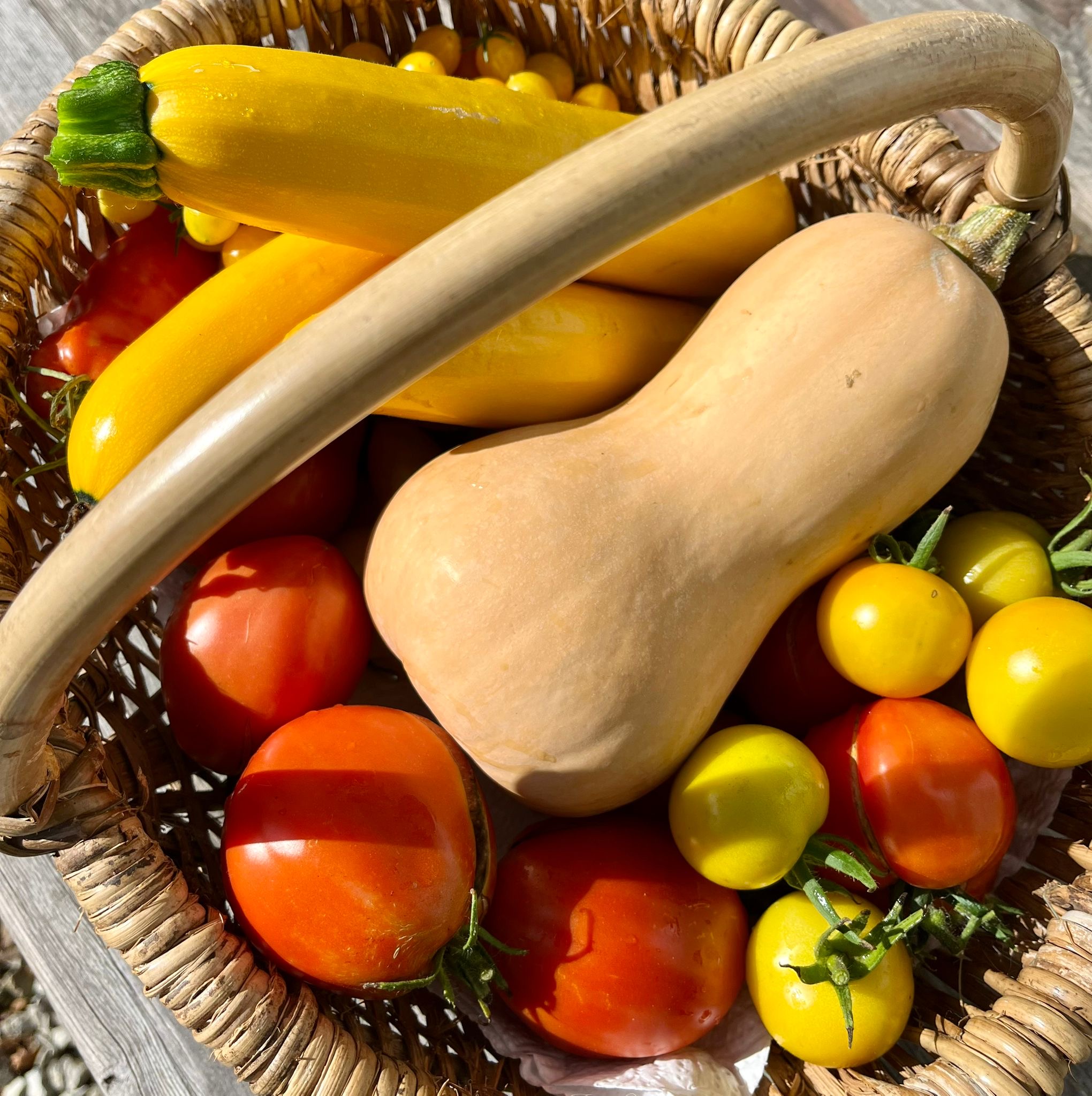
That photo at the top of this post, by the way, is one day’s harvest from our “potager” (veggie plot) here in France. I can honestly say everything in that basket tastes delicious, and all of it has enhanced my quality of life…..which strikes me as a pretty good way to choose my own diet. You should choose yours.

Read Full Post »

A key theme of “heroes not zombies” is waking up and becoming aware. It’s too easy to drift through a day in a state of semi-consciousness, doomscrolling social media, following routines, swallowing the stories corporations and governments want you to swallow. The Romans used “bread and circuses” to control the population. Modern capitalism uses algorithms.

But there’s a way to break out of these mind-numbing loops….paying attention to what strikes you.

In homeopathy, there’s a teaching about looking out for the “Strange, rare and peculiar”, the symptoms a patient relates which strike you, which stand out, which seem particularly relevant, or particularly unusual. These symptoms might be the key to understanding the patient and finding the right remedy for them. It’s a practice which is the opposite of seeking what is “usual” or “typical”. The thing is, in diagnosis you need to grasp both – the typical symptoms can point to a pathology, but it’s the particular, the personal, and striking ones which point to the patient who has that pathology, which open the path to understanding what the patient is experiencing, how this disease emerged in their life and how it’s affecting them.

I’ve often written here about the power of wonder and awe. I experience wonder and awe when something strikes me. I’ll be wandering through the forest and suddenly see a flower I’ve never seen before, or I’ll hear a bird call I’ve never heard before (or, certainly, not around here). The important thing is to follow that noticing. When something strikes me, I’m drawn to it, I slow down, stop, and explore further. I allow myself to pass a few moments appreciating whatever it is.

We can do the same through the day with lines we read in books. I’m sure you have the experience of reading a novel, or a non-fiction book, and a particular phrase or sentence leaps it out at you. It strikes you. When that happens, why not note it down? Why not slow down, and consider it? I use a mix of methods in this situation. In some books I’ll underline the particular phrase. In others, I’ll get out my phone and take a photo of the passage, then save that photo to my Notes app. Or I’ll get out my notebook and copy it down. “And not or” is my motto. I’ll often do a combination of those things.

Sometimes we’ll be struck by coincidences, or by a feeling of deja vu. These moments can be gold. They can stop us in our tracks and inspire some wonder, some reflection. They are worth noting down too.

Other times I’m struck by a phrase I hear, maybe just a snippet of a conversation, or a remark in the cafe, or in a queue. Again, it’s worth noting these down, taking a moment to consider them, to enjoy then, to reflect.

When I visit a gallery I’ll move fairly quickly through a room, scanning the works of art, then, almost always, some particular painting strikes me, grabs my attention, and stops me. Those always become my favourite paintings.

Wherever you are, whatever you are doing, noticing what strikes you changes your day. It jolts you out of zombie mode, and gives you an opportunity to make the day your own, to make the day special.

Try it out….notice what strikes you today, and explore it.

Read Full Post »

I read an article recently about Cognitive Behavioural Therapy and its “evidence base”. The term “Evidence Based” is thrown around these days as a kind of label of approval. You might think it means “proven” or that scientists have examined the therapy and found that it works – well, when they say it works they mean they found it to be statistically superior to the control group. What they don’t say is whether or not the patients actually get well. And here’s the problem with CBT – a recent review found that 75% of people with depression treated with “CBT” did not become well, even though the statistical findings applied by the researchers led them to conclude it was “effective”. Can it be called effective if it doesn’t make people well?

CBT researcher Alan Kazdin put it bluntly in the flagship journal of the American Psychological Association:

“Researchers often do not know if clients receiving an evidence-based treatment have improved in everyday life or changed in a way that makes a difference. It is possible that evidence-based treatments with effects demonstrated on arbitrary metrics do not actually help people, that is, reduce their symptoms and improve their functioning.”

It’s strange really. The second half of my career was spent working at Glasgow Homeopathic Hospital, which developed into the NHS Centre for Integrative Care. We worked exclusively with patients with long term conditions, and, for the most part, with those who had failed to find relief through the orthodox approaches of drugs and surgery….or at least, who had failed to become well again.

We used an in-house assessment tool to measure the patients’ progress. It was a simple scale, 0 to 4, where 0 represented no change, 1 a change which had not made an impact on daily living, 2 a change which had made an impact on daily living, 3 a change which had made a major impact on daily living and 4 for completely well (there was a corresponding scale 0 to negative 4 for people who got worse). The person who assessed the change was the patient. The important point about this simple measure was that it was focused on the question…..has this therapy been of value to the patient in their daily living. That’s quite a different question from what percentage of the patients had a change in their blood lipid levels, their blood pressure, or whatever.

Time and time again our reviews showed that around two thirds of the patients rated a 2, 3 or 4 – in other words, two thirds of the patients experienced a change with had impacted on their daily living.

Yet, our approach, our tools and our therapies were rated as “not evidence based”, and year, after year, the Service was cut back and cut back, whilst at the same time online cognitive therapy programmes expanded on the back of their being “evidence based” (even though most patients didn’t become well again)

It’s a great idea to look at evidence, relevant evidence, but the pioneers of EBM said the clinician should take into account the research evidence, their clinical expertise and the preferences and values of their patients. How often does that happen?

It’s long past the time we should stop rubber stamping an approval on treatments which haven’t been shown to make a difference in most patients’ lives.

Read Full Post »

Rebecca Solnit, in her “No straight road takes you there”, quotes the environmental writer, Chip Ward, as referring to “the tyranny of the quantifiable”.

There’s an obsession with numbers in our world. From measurements to statistics, there is a determination to quantify every aspect of life. Yet, Life, itself, is not quantifiable. Neither is Love, Beauty, Goodness, Happiness, Self esteem or self worth, despite the attempts by psychologists to attribute numbers and scales to any invisible phenomena.

This is an issue I had to deal with every day of my working life, because neither “health”, nor the most troublesome of symptoms such as pain, nausea, dizziness, fatigue, itch or breathlessness, can be observed objectively and be measured. Many people used proxies to measure the invisible – scales, such as “from 0 to 10, where 0 is the least troublesome and 10 the most, what number would apply to your “X” today”?

I remember the story of a dentist who ran a facial pain clinic. He insisted that every patient begin the consultation by telling him a figure from 0 to 10 related to how much pain they were experiencing. If they started to describe their symptoms, he’d interrupt, and insist “The next thing to come out of your mouth should be a number”. His successor in the clinic was baffled when the first patients would sit down and rather than say “hello” or start to describe their symptoms, they would say “7”, or “5”, or whatever. The old chief had trained them so well! “The tyranny of the quantifiable” indeed!

But let me return to health, because we all seek that, and doctors, surely, would hope to improve the health of their patients. But health, as Gadamer describes so vividly, in his “Enigma of Health” essays, is not visible, and not quantifiable. Rather, it’s pathology which makes an appearance….in the form of a rash, a swelling, an irregular heart beat, or a restriction of function. When the pathology recedes, health reappears….the painful hand becomes unnoticeable again.

The experiences which make every day seem worthwhile are equally, not quantifiable. Wonder, awe, joy, love, happiness, a sense of connection, of being understood, a feeling of belonging. We can’t measure those with a smart watch, a smart phone, or a fancy scanner.

That’s why our individual stories are so important. Only you can describe what you are experiencing, and only your story helps you make sense of your life. The counter-balance to the tyranny of the quantifiable is appreciation of, and the telling of, our encounters with wonder, joy, love and connection with others.

Your story is unique, and, together, we create a world worth living in by sharing our stories and co-creating the ones which we value the most.

Read Full Post »

The dominant narrative in our current industrialised society is competition. It’s held up as the key success factor in capitalism, in business, and even, often citing Darwin, in evolution. It’s presented as the main way in which we humans have improved ourselves, succeeding over other species, beating each other to the top. It’s presented as the way to power and wealth. The key to success and happiness.

There is no denying that competition exists, and that its greatest worth is how it pushes people to improve. Sport is all about competition. It’s exciting and it drives human performance constantly to do better than has ever been achieved before.

Clearly, competition has its place.

But putting front and centre of the whole of life seems seriously misguided to me. Throughout history it has brought war, violence, exploitation, abuse and corruption. Because it all depends what you are competing for. If it’s more power and wealth, it too often results in division, xenophobia, racism, selfishness and cruelty. If you’re competing to improve, to achieve your best self, to create the best, fairest, healthiest society, maybe it’ll help.

I worked all my life as a doctor, so my area of knowledge and skill is what makes human beings thrive. If you consider the human body you can see that it contains billions of cells. Billions. Many of those cells grow together to form body organs, like the heart, the lungs, the liver and kidneys. Many grow together to form tissues, like bone, ligaments, skin. Other grow together to form systems of chemicals and cells, like the immune system and the endocrine system. Are all these cells, all these organs, all these tissues in competition with each other to be the best they can be? No, they are not. If our heart was in a continual war with our kidneys, we would be sick. If our immune system was in a continuous race against our endocrine system, we would be sick.

A healthy body is based on collaboration. It’s based on relationships, especially “integrative” relationships. Integrative relationships are defined as “mutually beneficial relationships between two well differentiated parts”. In other words, health, and, life itself, emerges from a vast, interconnected web of collaboration. When it works, we have harmony. We have flow. We have ease. We have growth and maturation. When it doesn’t work we have sickness and death.

I often think of that when I read about society, politics or economics. Why base those systems on something more likely to drive violence and a world of “winners and losers”? The body doesn’t do that.

Not only that, stop for a moment and reflect. Which human being could thrive entirely by themselves? In isolation, with only their themselves to deal with everything? None. There’s not a single baby born who would have made it to adulthood without the care and support of others. There’s not a single human being on this planet who has made it to adulthood without a vast web of “integrative” relationships – between themselves and others, between themselves and other living creatures, between themselves and the rest of Nature.

What would society be like, what would politics be like, what would economics be like, if we based it on the natural reality of life on Earth………not excluding all competition, but putting collaboration, care and sharing at the heart of everything we do?

Read Full Post »

Before he became famous for his predictions, Nostradamus was an acclaimed doctor, who during a plague treated patients successfully. What kinds of treatments did he use which were successful back in the early 16th century?

Well, primarily, he gave good advice about how to live healthily….recommending that people went outdoors to get fresh air as much as possible, teaching them about hygiene in the home, getting them to rid themselves of rats and excreta in the house, changing and washing the bedsheets, and eating a healthier diet (low fat, I read, but I’m not sure of the details).

On top of that he prescribed a herbal remedy based on rose hips which contained high levels of vitamin C.

So about 500 years ago the most successful ways of dealing with infections and epidemics was already known – it came down to good hygiene and healthy living conditions, combined with a decent diet rich in vitamins. When it came to our most recent pandemic, Covid, the same proved to be the case. The highest rates of infection, serious illness and death were in those who were already suffering from chronic diseases and/or who were living in poverty, in overcrowded housing, and with inadequate diets. Great claims have been made for vaccines, but, at the end of the day, the best way to maintain the health of populations is the same as it’s always been – a good healthy living environment.

That’s why I think we should take good care of our commons – the air, the water, the soil – reducing pollution, and investing in healthy environments. It’s also why I think we should radically change our industrialised farming and food production to produce healthy, vitamin rich food, which should be the basis of everybody’s good diet. It’s also why I think we should invest in good housing, well insulated, easily maintained, and accessible to everyone.

In addition, I think Universal Basic Income and taxing the rich to reduce inequality and poverty are worthwhile policies to pursue (even if our current governments don’t seem to be doing that)

Finally, comes better health care. We do need to improve our health services, and our health care methodologies, but the way to healthy, resilient populations, has a lot less to do with health care than it has to the provision of healthy living conditions.

Read Full Post »

The nature of any system cannot be discovered by dividing it into its component parts and studying each part by itself, since such a method often implies the loss of important properties of the system. We must keep our attention fixed on the whole and on the interconnection between the parts

Planck 1936

The Physicist Max Planck wrote this almost a hundred years ago, and he wasn’t the first to make such an observation. Despite that breaking things down into parts and studying them separately is still the predominant approach in the world.

When I studied Medicine at the University of Edinburgh in the 1970s we were taught “Medical Sciences” for the first three years of the six year course. We dissected bodies in the Anatomy class, studied pathological change in tissues and organs in Pathology, learned chemical pathways in Biochemistry and so on. In fact, the first time I saw “cirrhosis” was a diseased liver stored in formalin in a plastic box marked “cirrhosis”. It wasn’t until year 4 that I met an actual patient who had “cirrhosis of the liver”. Maybe all that has changed. But we still practice Medicine by focusing on parts. I often hear from relatives that on a visit to their GP, they are told they can only discuss one problem per visit….so, their asthma today, but come back to talk about their joint pain.

It seems the modern management techniques applied to health care chop the system and the patient’s experience into pieces, sending them to one person for a diagnosis, another for a blood test, another for a prescription, another for advice…..it’s horrendously disjointed. When my dad was in his last month of life in hospital, every single doctor I asked about his progress started their reply with “I’m not your father’s doctor, but I’ll look up his records….” I never found the person who seemed to actually know him.

Yet, we know from research that continuity of care increases both outcomes and satisfaction ratings of patients and practitioners.

In this age where so many people experience multiple “co-morbidities” we need to keep our focus on the whole even more than ever. If we only focus on the parts we begin to believe we know exactly what each drug will do when we prescribe it, yet, not only are the effects different for different people, but in reality, many people are taking multiple medications at the same time (for a multiplicity of disorders)

We need to focus on the whole, and that means giving priority to human beings, their uniqueness and their relationships. It involves trusting doctors and nurses to practice professionally focused on their patients, not on their protocols and clinical guidelines. And we need a lot more whole of life research, which will help us to understand the complexity of the effects of any drug, and the course of any disease in a real person over their lifetime.

It was never a good idea to ignore, or to relegate holistic knowledge. Learning about the parts should include learning about the limitations of learning about the parts.

Read Full Post »

Ethnobotany

This is Echinacea….maybe one of the best known medicinal plants, with a reputation for helping to boost the immune system. If I ever get a cold or flu, I take Echinacea daily until it’s gone. I don’t remember where I read it, but back when I was a GP I remember reading a few studies which seemed to show that taking Echinacea during viral illnesses could be associated with less severe symptoms and a shorter duration of illness. I’ve adopted the practice ever since.

I have quite a fascination for medicinal plants. There’s something extra special about finding or growing a plant with reputed healing powers. I was pretty excited last year to discover “self heal” suddenly growing all over the garden, and I do like to see plants like Echinacea, Chamomile, and Pulsatilla growing nearby. I even like the poisonous ones with potential powerful pharmacological effects (even though I don’t actually swallow any of them!) – Foxglove (Digitalis), Aconite, Belladonna, and Trumpet flowers (Brugmansia) – although the only ones I’ve managed to grow so far are the foxgloves.

I can’t remember when I first encountered the term, ethnobotany, the study of the place of plants in human lives, but I’ve often thought that, in another life, I’d probably have enjoyed studying ethnobotany at university. One of my favourite books on my bookshelves is “Plants of the Gods”, subtitled “Their Sacred, Healing and Hallucinogenic Powers” by Richard Evans Schultes and Albert Hofmann.

When I learned homeopathy as a young GP it fired up my interest in the potential healing powers of plants many fold, and I still think that’s one of the reasons why I enjoyed learning homeopathy so much. To be able to enjoy the beauty of a plant, to be fascinated with its growth, but in addition to know stories about human beings have interacted with it over the centuries seems, to me, to deepen and expand my enjoyment.

Many years ago I went to an ethnobotany exhibition at Inverleith House in the Royal Botanic Gardens in Edinburgh. In the middle of each room were plant filled stalls laid out like a street market, with explanations about each plant. I remember thinking, how on earth did nomadic tribes discover that one particular plant was good for treating diarrhoea, whilst a different one was great for dyeing your clothes purple? I mean, was it decades of trial and error? How many purple people died from diarrhoea?

That still absolutely fascinates me. How did the tribes in South America discover that a particular tree was good for treating fevers, only for us to discover decades later that it contains quinine, a great malaria treatment? And how interesting that when Samuel Hahnemann read about that in Cullen’s Pharmacopeia, he decided to take some of the tree bark himself, leading him to come up with the idea of “like treats like”, and, hence, the whole therapeutic method of homeopathy?

Read Full Post »

Older Posts »