Feeds:
Posts
Comments

Posts Tagged ‘mindfulness’

In the obsessively micro-managed world we live in now it’s more important than ever for us to take a pause. We are being bombarded with talk of crises, of doom, of having to everything faster, consume ever more, do everything so-called more efficiently.

But we humans are not machines. And we shouldn’t lead our lives, or construct our workplaces according to industrial machine-like principles.

Time and time again you can find creatives….artists, writers, composers, musicians, sculptors and so on tell you they need to have some breaks, some times where they just sit, or they sit and daydream. We need times to just step off the treadmill. We need to pause to gather our thoughts, to become more aware of the present moment, and to restore our depleted reserves of energy.

What length should a pause be?

There is no fixed amount. It can be a short as taking three deep breaths. It can be a few minutes, or a few hours. We need bigger breaks than that too, which is why it’s important to take all your annual leave from work. For some people it’s a sabbatical that they need. But the kind of pause I’m thinking about here, is the kind we all need, every single day.

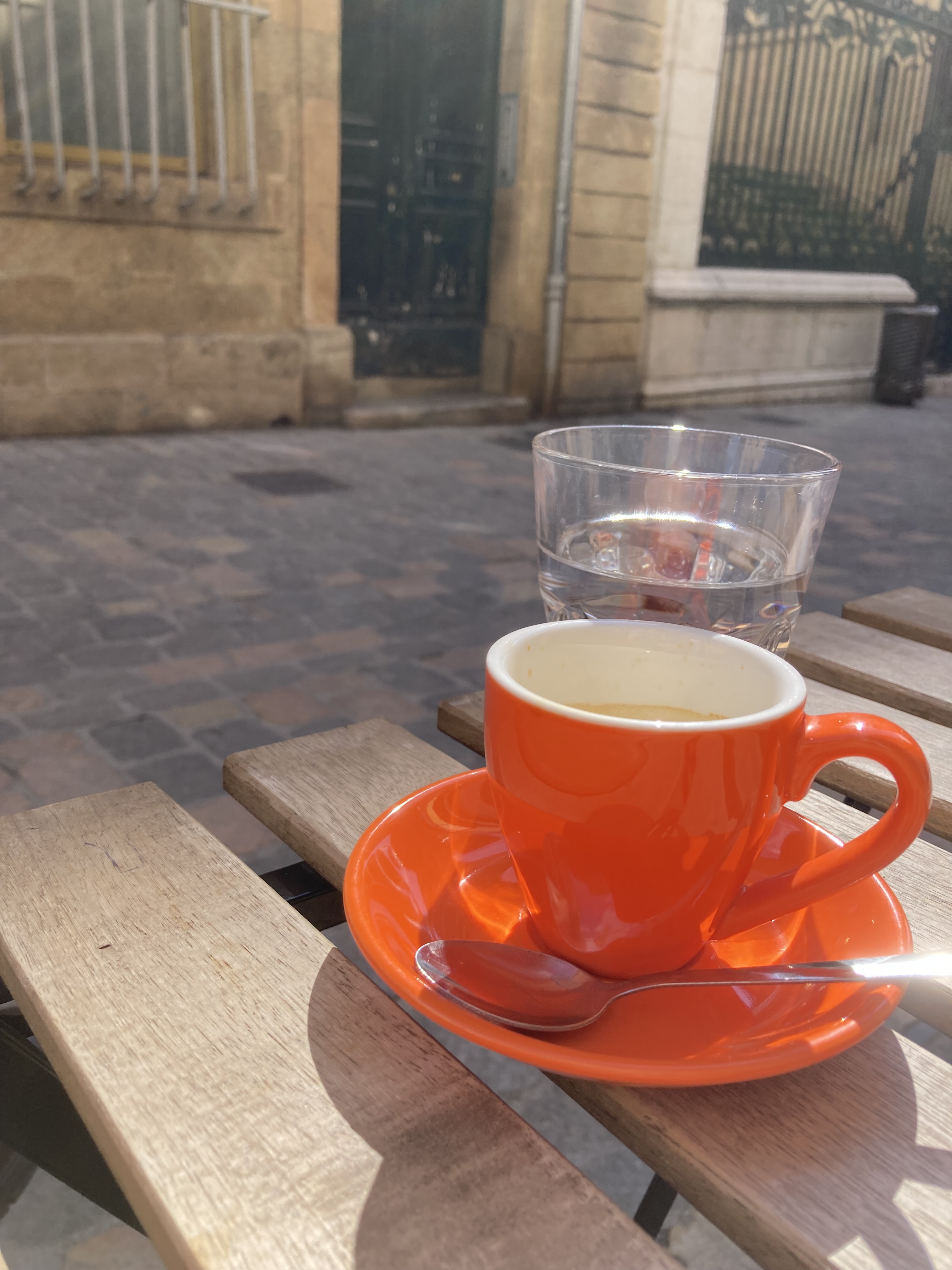
I’m impressed by how in France there is a habit of stopping for a proper lunch…not grabbing a factory produced sandwich and a can of coke on the way to work and wolfing them down at the desk. They take time to go to a restaurant or cafe, to sit down, have a meal and share some time with workmates or friends. Then back to get on with the rest of the day. There’s still a widespread tradition of working five days a week, not seven here, so that everyone can have some family time, some home time, to do with as they want.

How about you? What pauses do you build into your everyday? What pauses would you like to build in, and why not start today?
Read Full Post »

“The reciprocal truth of the observer changing what is observed is that what is observed changes the observer” Iain McGilchrist

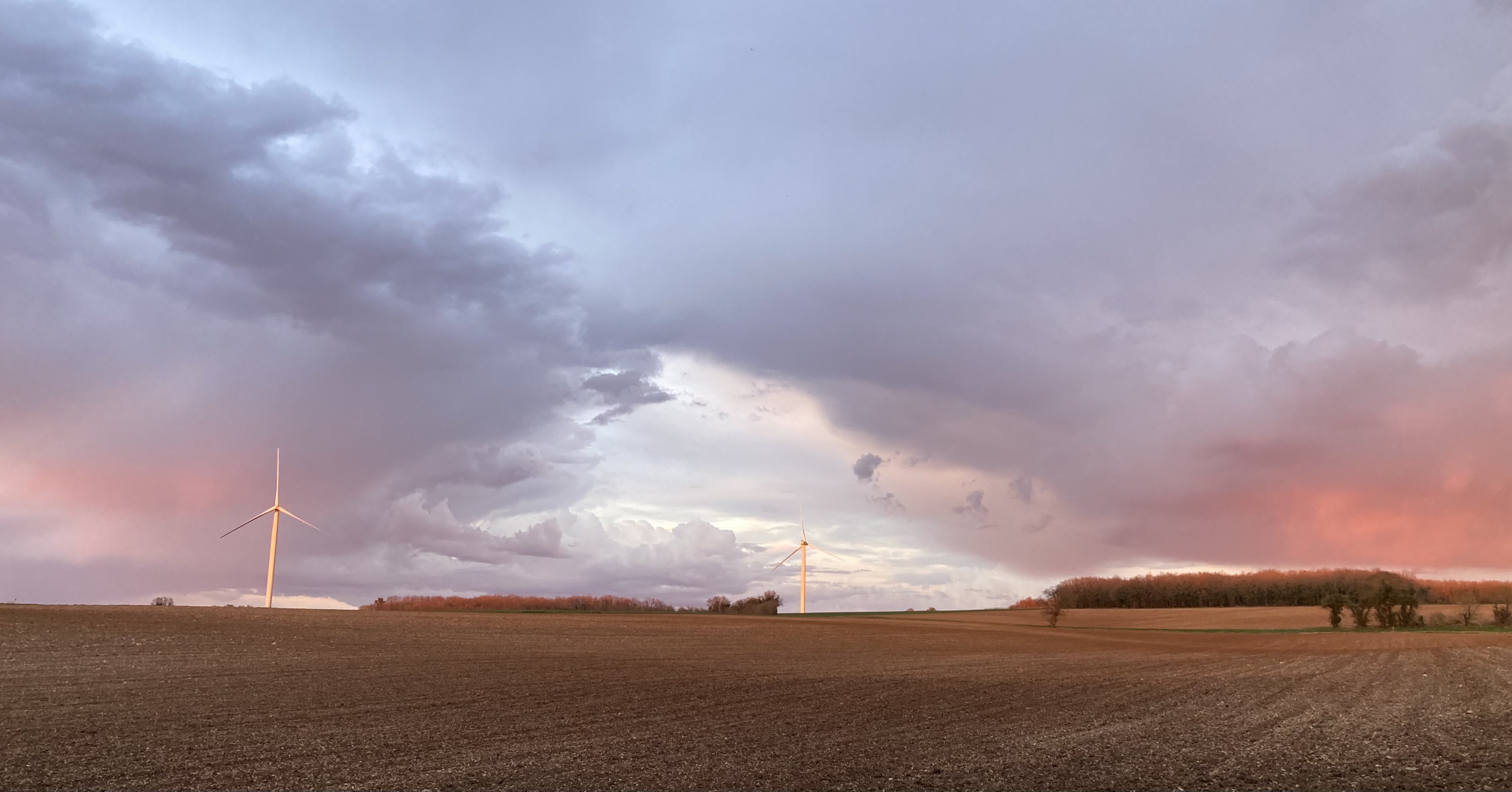
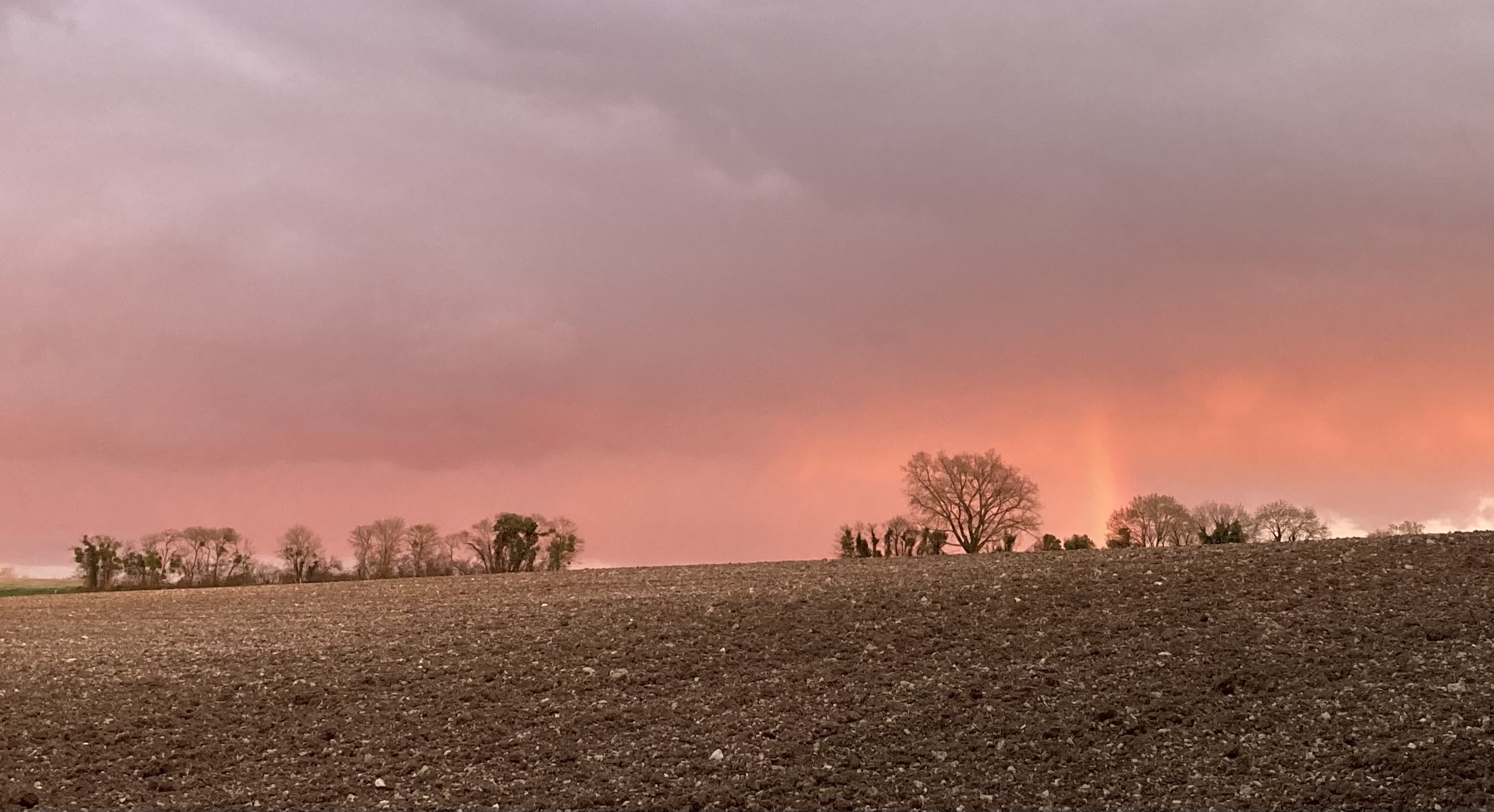
Yesterday afternoon I was sitting in my garden with my wife and we were chatting about how much we enjoy living where we are now. Our garden is surrounded on all sides by tall trees, but it’s a big garden so there’s a sense of space along with this sense of being enclosed. It provides privacy and protection and it also means we are surrounded by birdsong. One thing we don’t have, however, is a long view. In our previous house, for several years, we looked out onto vineyards and my recollection is that there were frequent incredibly impressive sunsets. We still get to see some lovely sunsets here, but I no longer see a sunset where the whole sky turns red, something I saw pretty frequently before.

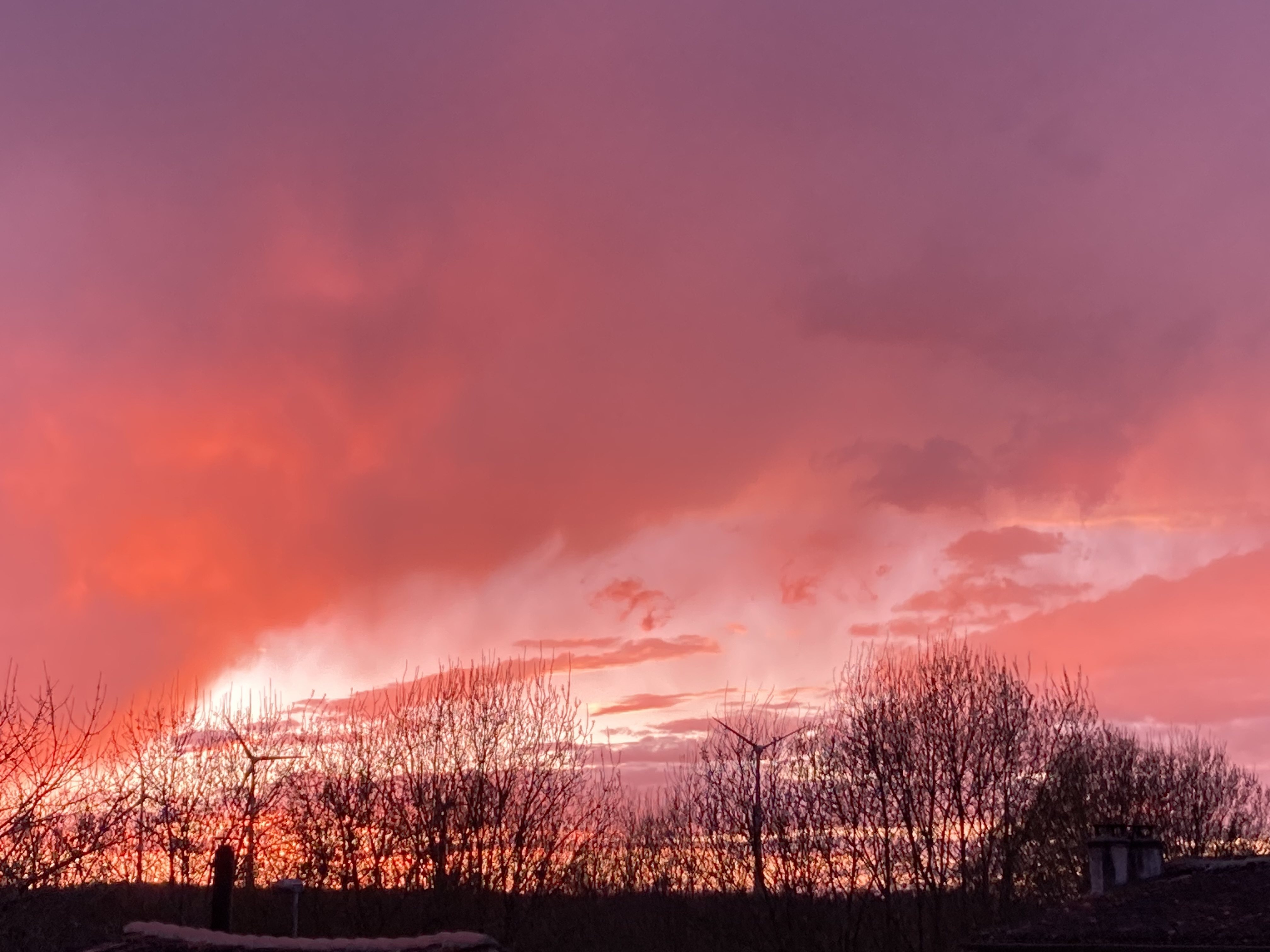
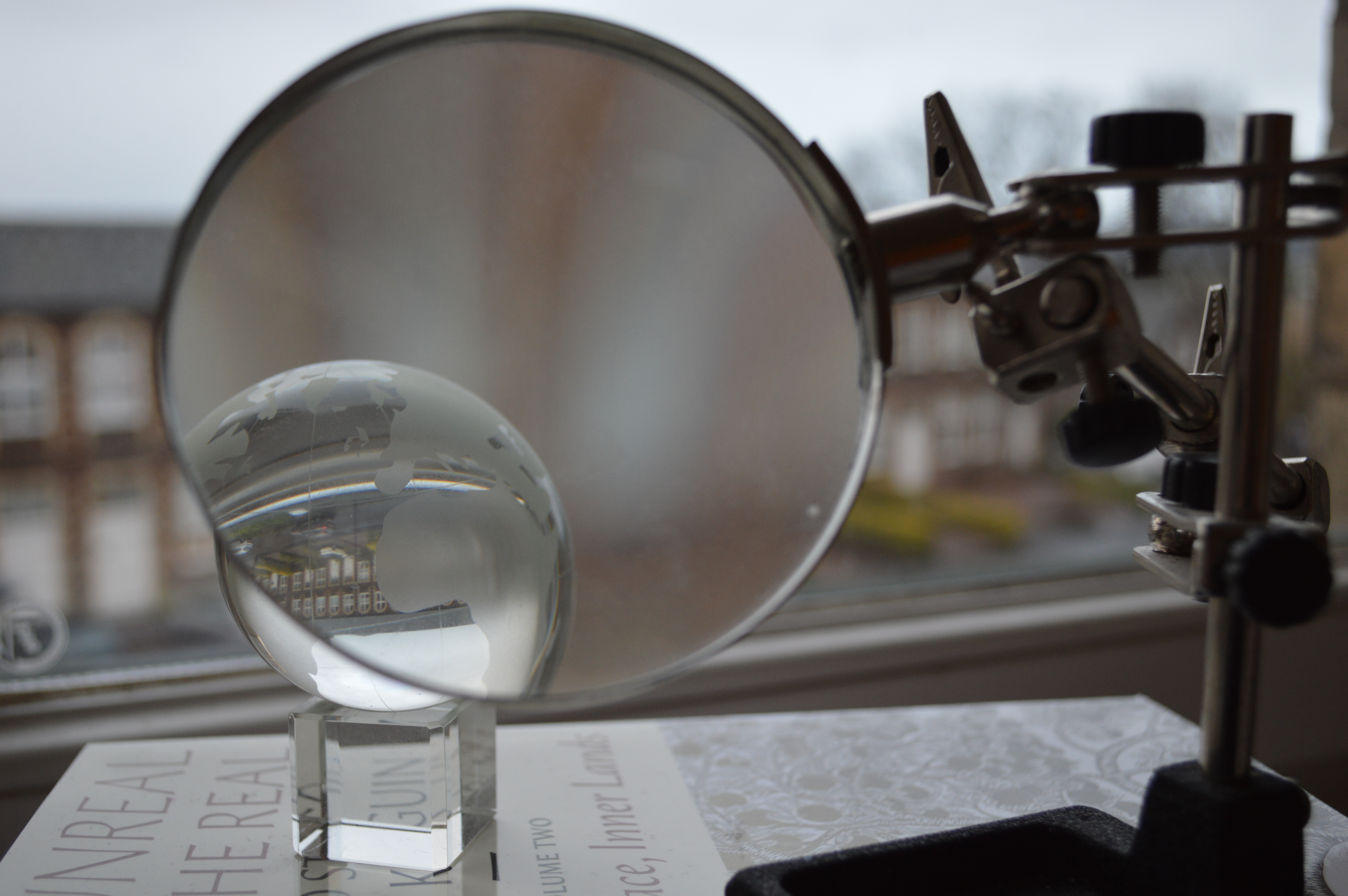
Well, some storm clouds suddenly emerged and we had to go indoors. There were a couple of rumbles of thunder, a single flash of lightning and then a short downpour. It was all over in minutes. By then it was almost time for the sun to set and we noticed that the light in the sky was unusual. So, off out into the garden again, and up to the back fence which borders a field to the east of us. I took the first two of these three photos. Then I turned and looked west and took the third photo.

Aren’t these beautiful?

Sometimes synchronicity surprises me in ways which makes me think my phone is listening to me (it probably is, and, it’s certainly tracking what I do with it!), but, this was one of those occasions where I felt that the universe was listening……listening and delivering.

What we observe changes us, and we change what we observe. We are the co-creators of our reality.

Read Full Post »

We have two focus modes in our brains, with each of our cerebral hemispheres using one or the other. The left hemisphere engages with the world through a narrow focus. It pays attention to re-cognising what we already know. It tries to help us identify objects, literally grasp them, or understand and manipulate them. The right hemisphere engages with the world through a broad focus, paying attention to the bigger picture. It seeks out patterns, connections and relationships. When the left hemisphere identifies something it should pass that info to the right for it to be contextualised. Sadly, we’ve developed habits of not bothering to do that, sticking with our generalisations and abstractions.

What we pay attention to becomes magnified. It is the means by which we engage with the world. It creates our experience of the world. If we prioritise the left hemisphere focus we engage with a world of objects, of tools and “things”. We engage with a desire to manipulate and control. But if we prioritise the right hemisphere we engage with a world of relationships, of contexts and patterns, with a world of subjects. We engage with a desire to belong, to make connections, and to see the whole picture.

We live in what has been termed “the attention economy” where the big digital companies make their money through advertising, and advertising only works by grabbing your attention. Politicians have become adept at this too, casting out statements designed to shock, enrage or stoke fear….because shock, anger and fear are primary responses to threat.

But as you’re “doomscrolling” or reading social media headlines and posts, which of them command your attention? Are they the ones that make you feel enraged, afraid, insecure, inadequate? If so, those are the feelings which are going to get magnified. Those are the feelings that are going to shape your perception of reality. Or are they the ones which delight you, which stir feels of wonder, curiosity or joy? Do they put you in touch with the three classic values of beauty, truth and goodness? Do they increase your feelings of dignity, decency and compassion? If so, that’s how you are going to perceive reality.

What we focus on, and what’s important here is to be aware of what we are focused on, shapes our world and our day to day experience of life.

Our attention is our super power. We should use it wisely.

Read Full Post »

For some people beauty is found in perfection, but what is perfection? The trouble with trying to find beauty in perfection is that we are never really convinced about perfection….there’s always something just not quite right, isn’t there? And, actually, just as beauty is in the eye of the beholder, so perfection is not something everyone can agree on.

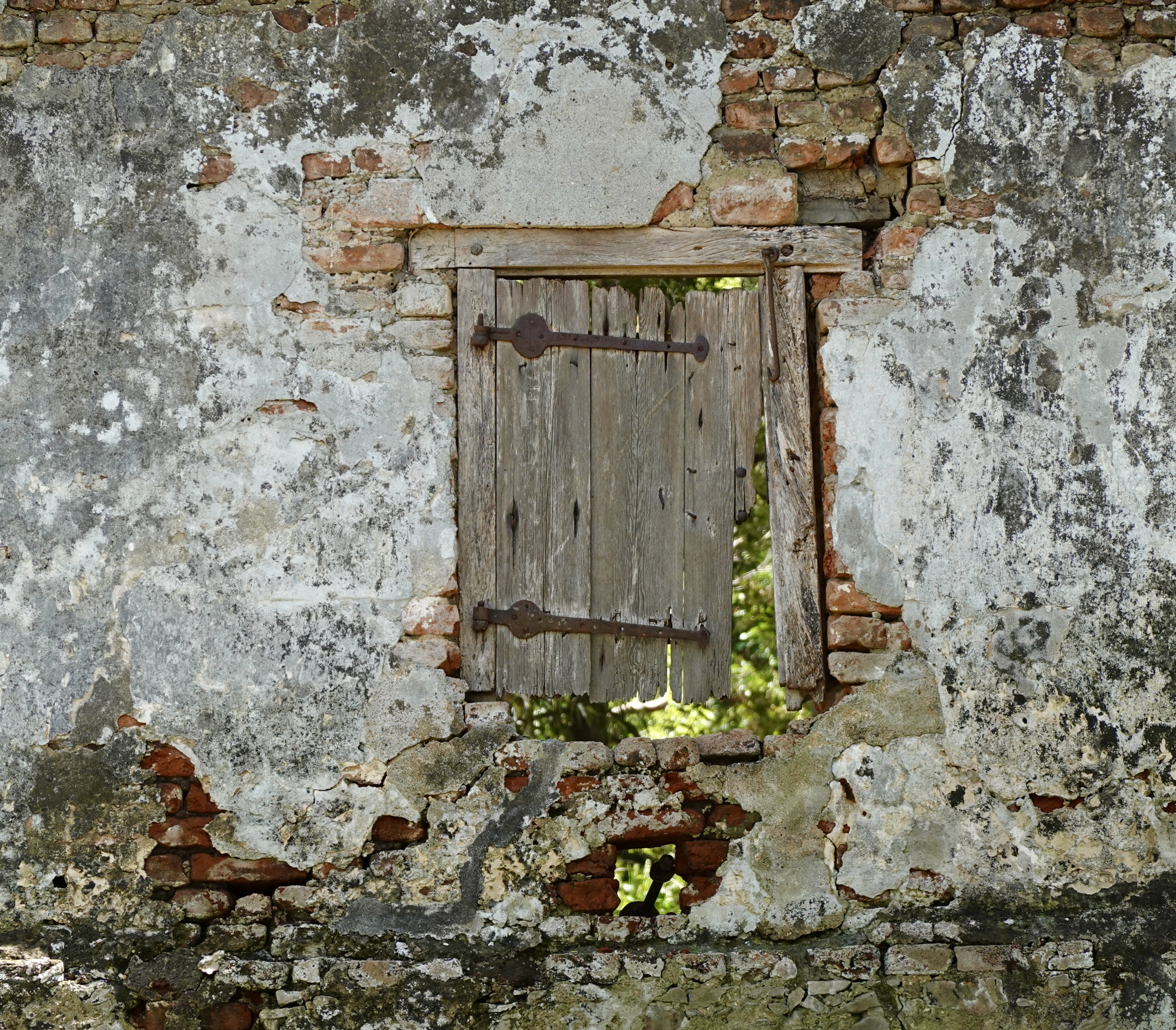
In Japanese culture, one of the many aspects of a concept called “wabi sabi” is finding beauty in imperfection. I think this photo is a good example of that. It caught my eye because I found it beautiful and when I look at it again, now, I find the whole image beautiful.

It’s hard to just put your finger on what makes such an image beautiful. There’s a similar, though different, concept in the West as “shabby chic” – and there is no doubt that when I travel around France, Italy and Spain, I find lots of examples of old, often neglected buildings which have a real charm to them. But I can also walk in areas of urban neglect where I find it hard to see any beauty at all. Were we better at building beauty in the past?

What do you think? Do you find beauty in “wabi sabi”?

Read Full Post »

We don’t live in a world of entirely separate, fixed objects.

We live in a massively interconnected world of flow.

Every living organism is an open system. There is a continuous flow of materials, energy and information into, through, and from every animal, every plant, every ecosystem.

Yet, we continue to swallow the idea of reductionism, which tells us everything is made up of separate, smaller parts, and the way to understand anything is to isolate parts and observe them as if they aren’t connected to anything else. It’s useful to focus closely on something. It’s useful to analyse something and consider it at various different levels, but it’s dangerous and delusional to fail to see that everything is always in a state of flow…..affected by, and affecting, other organisms, by the environment and by the multiple contexts of its existence.

And we continue to be taken in by dualism….the belief that there are objects and subjects….objects which are measurable and “real”, and subjects which are individual and “imaginary”. I’m not going to get into the complexities of the “hard question” here….of how consciousness can emerge from “stuff”….but this dualism leads us to deny or dismiss human experience, when, actually, experience is THE fundamental characteristic of reality.

We are not machines. We are not machine like. We are living creatures, every one of us with a continuous, ever flowing, experience of consciousness. A consciousness which enables us to appreciate beauty, truth and goodness. A consciousness which enables us to be aware and to direct our attention to whatever interests us, whatever moves us, whatever makes us wonder.

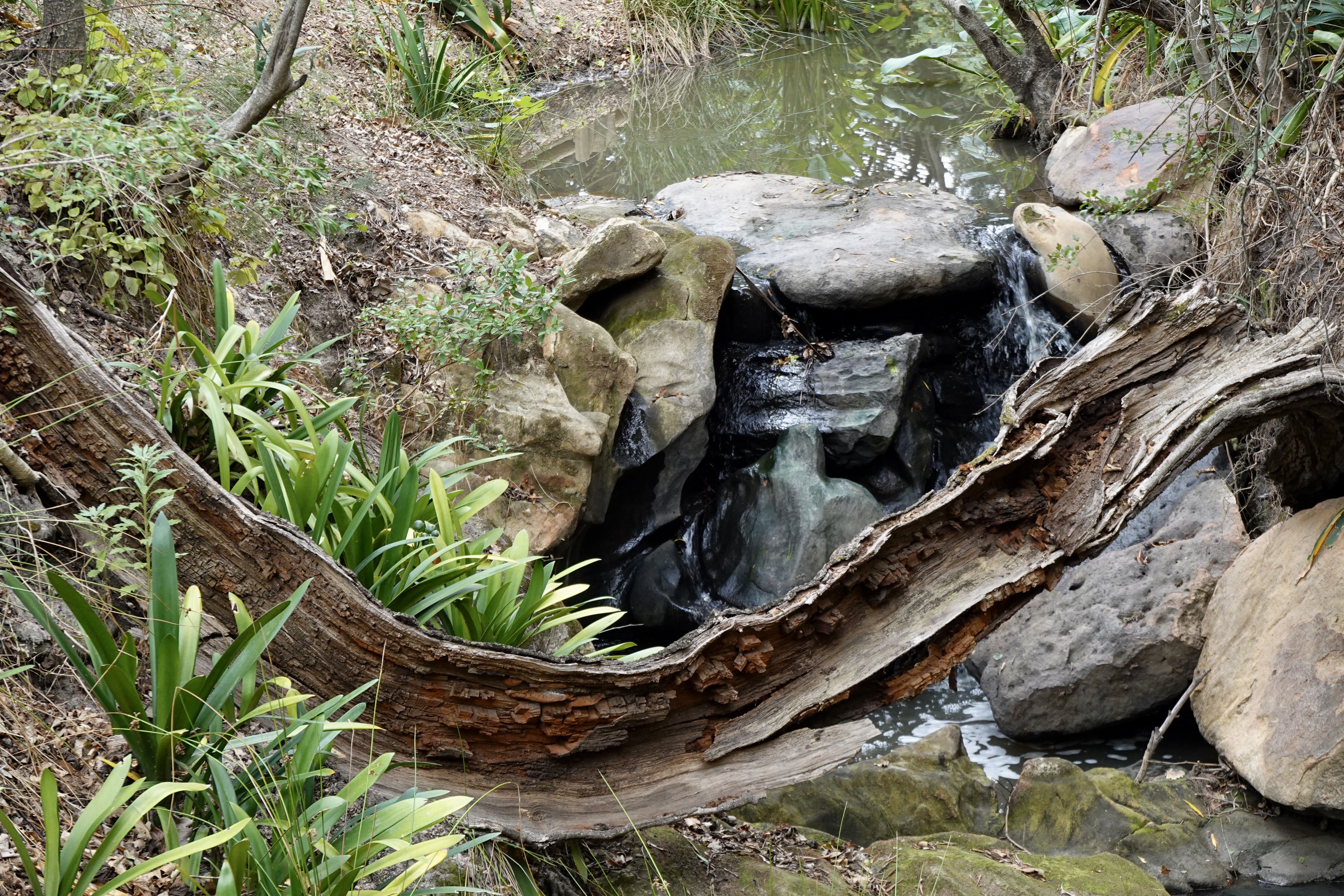
When I look at this photo, I see “flow”. I see it represented in the water. I see it represented in the wood. I see it represented in the green plants. I see it everywhere.

Read Full Post »

Spring and autumn are the two seasons where I notice change happening right before my eyes. Right now, in October, here in France, we are beginning to see leaves change colour. I love to gaze for a few moments at a plant like this, where some of the leaves are still bright green, some have patches of red or brown appearing, and some have gone fully deep red or even purple.

This reminds me of two things – the first is that change never stops. Everything in the world is constantly undergoing change. We are not the same today as we were a few weeks ago, and we are very different from what we were a few years ago (just browse through your photo albums to see how you’ve changed since you were a baby). The reality is that we change moment by moment. That’s why the advice to “be present”, or to “be here now”, is so relevant. Every single moment is unique, and if we breeze past it without noticing, it will be gone forever (except, of course, in the background of our subconscious the changes never cease to play their part).

The second is that change is so variable. It is heterogenous, not homogenous. You and I are unique. Our daily lives are unique. Our moment to moment experiences are unique and become even more unique over time, as nobody shares with us an exact personal history, an identical string of experiences. Just looking at this one plant and seeing the huge variation in colour as the leaves begin to change makes me even more aware of this uniqueness, of diversity.

So awareness of change slows me down, inspiring me to savour this moment, to live today as fully as I can. It inspires me to pay attention to the flow of Nature, to be aware of the fact that there are no fixed objects in this world, only different rates of change.

And awareness of change does something else for me – heightens my appreciation of uniqueness, of difference, and of diversity. Reducing life to abstractions, selecting single characteristics and bundling everyone who shares them into a single category is such a deluded way of living. We need to stop putting people into little boxes, labelling them and judging them, because when we do that, we just stop seeing them as they really are.

Read Full Post »

I’ve read that we live in an attention economy. Marketers, producers, companies and individuals are all competing for our attention. They pay the social media companies to promote themselves to us using attention grabbing, and attention holding tools and techniques. “Influencers” can only influence if they attract attention, so they do whatever they need to do in order to achieve that goal.

I was pretty shocked on a recent trip to Milan to discover how “instagrammable” has become a major force. Certain buildings, certain viewpoints, or “attractions” were surrounded by dozens of, mostly young female, photographers, either taking pictures of themselves in front of whatever it was that had become “instagrammable”, or having someone else take their portraits there. Some even used portable reflectors, to “get the light right”, and had changes of clothing to model. I joked that my wife and I, standing in front of the Duomo, were the only people in the crowd actually facing the building. Most were trying to make it more beautiful, or more interesting, by putting it in the background, and themselves in the foreground.

That’s not a new phenomenon. A few years ago on a visit to the Alhambra in Grenada, I was surprised to find that most people who were taking photos of the amazing art and architecture, were only doings so by putting themselves into the foreground of each frame.

But attention is important. It’s how we see and experience the world we live in, and it influences our moment to moment moods, thoughts, and actions.

Ellen Langer, who studies “mindfulness”, describes it, simply as, “actively noticing things”.

I love that.

This “heroes not zombies” blog is all about living a more mindful life, and, I believe, that requires two things, both created out of attention. The first is, “noticing”, or as Ellen Langer says, “actively noticing”. When we pay attention, when we set out with an intention to notice – to notice the world around us, to notice others, to notice our thoughts and feelings – then we move into a more active, more conscious mode of existence. We reduce the chances of blindly following the influences and powers of others who try to shape our lives. The second is, to pay “loving attention”. I think whatever we pay attention gets magnified. If we focus on problems, we fill our lives with problems. If we focus on joys, of moments of awe and wonder, then we fill our lives with amazement and delight. But when we pay attention from a loving position – from a position of care, of empathy, of genuine interest, and love – then our attention changes, not only our own lives for the better, that of others…..whether they be other people, animals, plants, the environment, or the planet.

So, I’m all for paying attention – do it actively and do it lovingly – not mindlessly.

Read Full Post »

sun's rays

Attention is like the sun’s rays. Whatever we shine it on looks clearer and brighter. Whatever it lands on increases.

Attention is a kind of focus. It’s a way of allocating energy and resources. Whatever we pay attention to receives more of our energy, and as a result, it grows.

Have you ever stopped to wonder what it is you pay most attention to? A lot of people pay attention to the future. Their minds are full of what ifs and if onlys. They experience anxiety and fear of the unknown. If you’ve got a good imagination it’s easy to spend a lot of time thinking about what hasn’t happened yet (and what might never happen!). Other people pay a lot of attention to the past. Their minds are full of memories of the past…..the bad times, the hurts, the wounds…..or the good times (which are now gone). The interesting thing is that you only live in the present. The past is in memory, and the future is in imagination, the present is reality.

If you focus your attention on past bad times, they loom larger in your life. If you focus on future fears, they also loom larger in your life. If you focus on the present, you experience more of the here and now. And whatever you choose to pay attention to in the present is what you’ll experience most strongly.

Meditation practices are ways of training your attention, so that it doesn’t get pulled this way and that by habits or the demands of others.

Morning pages are another interesting way to explore where your attention is hanging out! (that’s a habit I need to re-establish!)

Becoming aware of what we’re focusing on gives us choices – the choices to decide whether or not to focus on that as much as we are doing, or to focus on something else instead.

Whatever it is we pay attention to increases, colours our whole life, becomes our whole world.

Read Full Post »

The ocean of the mind

ripples

waves

The wheel of awareness

big wheel

rose window

I’ve recorded a guided mindfulness meditation practice here.

Read Full Post »

Dan Siegel who has created an area of understanding known as Interpersonal Neurobiology makes the point that most mental health professionals have not been taught a definition of the mind, and, often, aren’t clear about what good mental health looks like.

He answers these issues as follows –

His definition of mind is that –

mind is an embodied, inter-relational process of regulation of the flow of energy and information

His definition of well-being is the integrated flow of energy and information. He explains that health is like a free flowing river with two banks, one of which is rigidity, and the other, chaos. We veer towards one or other of the two banks as we make our way through life.

He uses a three-aspect model of well-being to explore this, the three aspects being the mind, the brain and relationships.

I like this definition. What do you think? Is this an interesting way to think about the mind?

In some ways, this builds on the ideas of embodied and extended minds by writers such as Varela, OgleClark and others.

Read Full Post »

Older Posts »