Feeds:
Posts
Comments

Posts Tagged ‘nature’

Rates of change

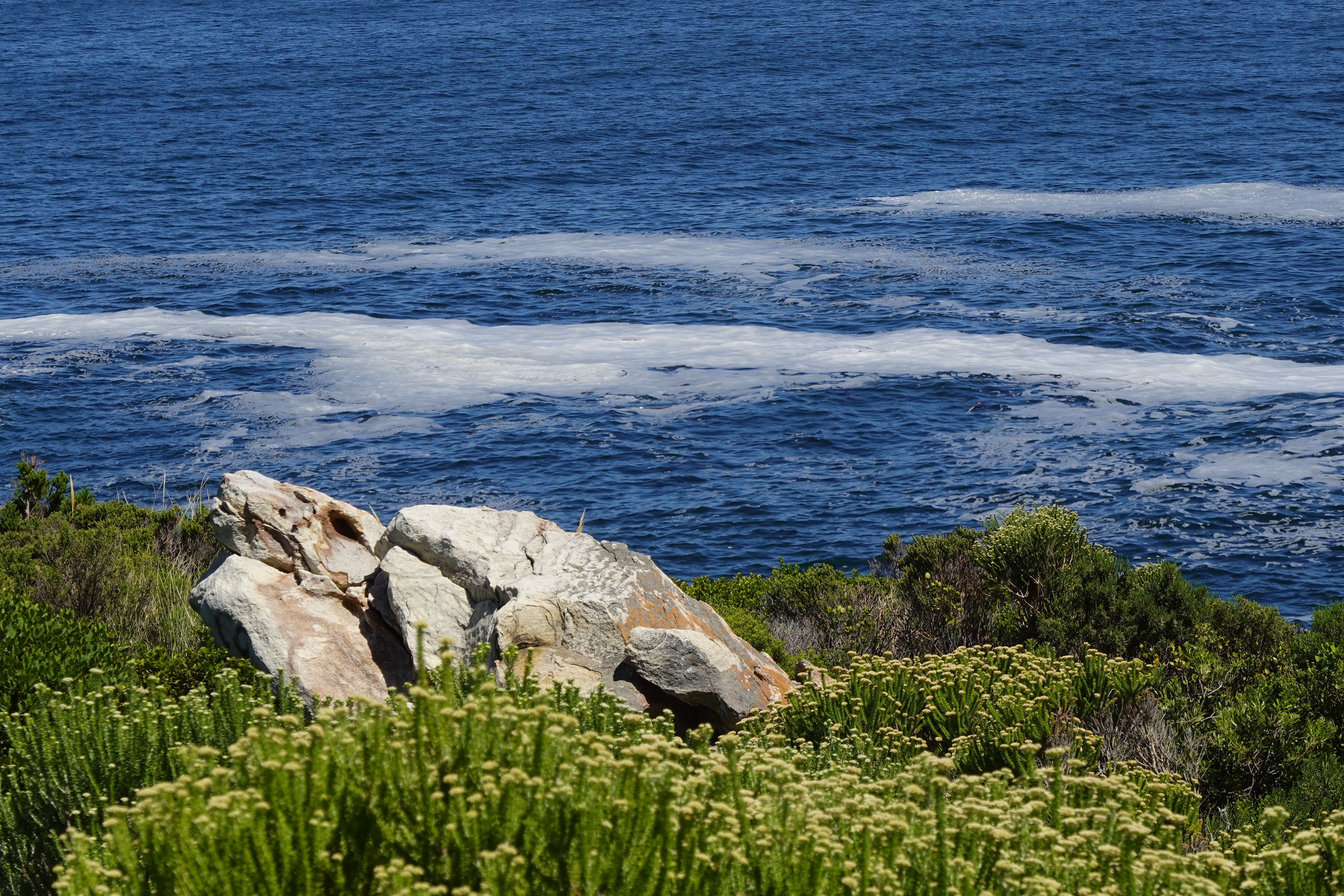
One of the things I like about this photo is how it captures three completely different rates of change in the world.

Most of the image is filled with the sea, which changes constantly and obviously. It’s never still (even when it looks calm). It’s always flowing, breaking into waves, surfacing water molecules and throwing them into the air, deepening others to hide them on the ocean floor. Every wave reminds us of how every individual appears distinct only for a little time, then dissolves back into the source, erasing duality, every one never really separating from the One.

Then we see a large rock. Stable and strong as a rock, we say. But rocks are constantly changing too. They are submitted to daily forces of wind, rain and sunshine. They are sculpted by the weather over thousands, even millions of years. Just as it is hard to see the minute hand move on a clock, it’s really difficult to see the changes taking place in a rock. But change is happening, all the same. Every rock reminds us of how every unique being emerges from the underlying flux of the universe to present a consistency, a transient integrity which allows them to appear as a whole, and separate individual. Just as I look back on my life after a number of years, I can see photos of myself as a baby, as a little child, as a teenager, as young adult, a parent, a maturing adult into retirement, and on, beyond the “three score years and ten”….but all those appearances, all those “selfs”, are a single self. Each photo from a different decade looks so different, but inside, they all feel like me.

We need both – the constant flow and flux of change AND the transient consistency of a structure, an ego, a self.

Thirdly, the foreground in this image is filled with plant life, an abundance of plant life. Plants change both quickly, from moment to moment, hour to hour, with the sunlight, the warmth and the wind. But also seasonly. They change in cycles. The life of a flower isn’t linear, it’s more like a spiral, looping round and round through the four seasons of the year, each season revealing its particular characteristics, of growth, blossoming, reproduction, fruition, then a winter of quiet and apparent inactivity.

We need this third energy too….the cyclical, seasonal, rhythmic change.

Constant flowing change, a certain resistance manifesting as consistency, and spiralling rhythms of reality.

Read Full Post »

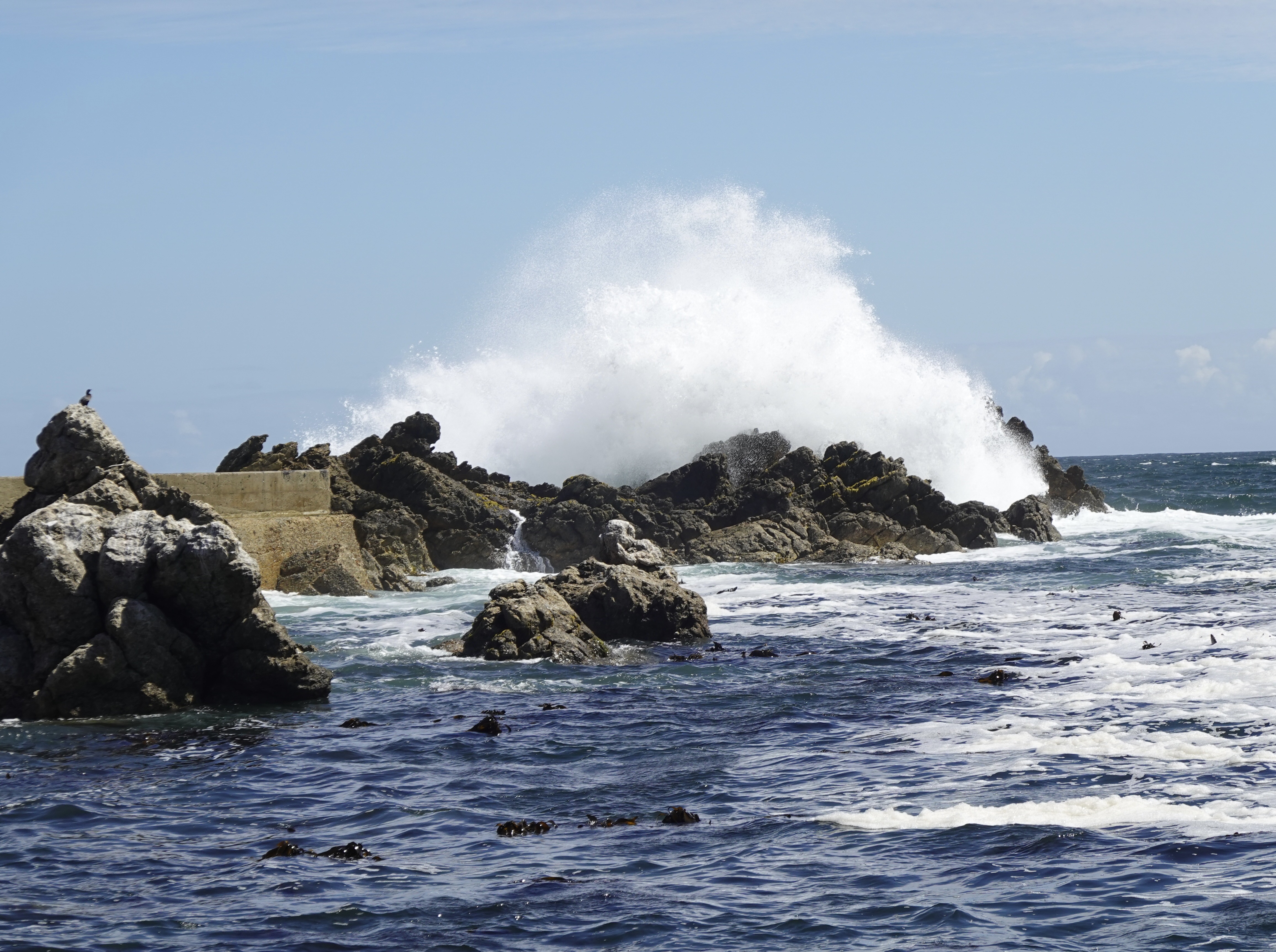
I don’t know if it’s universal, but, a lot of us are enthralled by breaking waves. I know I love to see them, and can stand, or sit, mesmerised for ages watching waves crash onto a rocky shore. I love the colour of them, the size of them, the sound of them, the shapes of them.

These are moments of power and transition. You can tell how much power is in them from the noise they make when they crash against the rocks. I know that it’s the steady, constant, repetition of fairly small, less dramatic waves, which do most of the work shaping the rocks and the land, but these big ones must push things on a bit, don’t you think? The power of the sea is more obvious when it breaks through the surface like this, and smashes onto the rocky outcrops. And it’s a moment of transition. How long do any of these waves last? Seconds, at most. If you’ve ever tried to photograph them, you’ll know you have to take several photos to capture a single moment like this. As the liquid sea bursts into spray and foam, billions of water molecules are released into the air, some to return quickly back into the sea, but many others to dissipate, invisibly into the air….on their way to form clouds and mists, and to dampen the soil and the sand.

I’m also struck by how wave watching like this gives you a vivid experience of the fundamental unpredictability of reality. It’s really hard to predict which wave will hit the rocks the hardest, which will soar highest into the sky.

So, this is what strikes me, as the waves strike the rocks…….power of nature, the beauty of transience, and the fundamental unpredictability of reality.

Three life lessons in a moment, huh? How about you? Do you love watching waves crashing into rocks too?

Read Full Post »

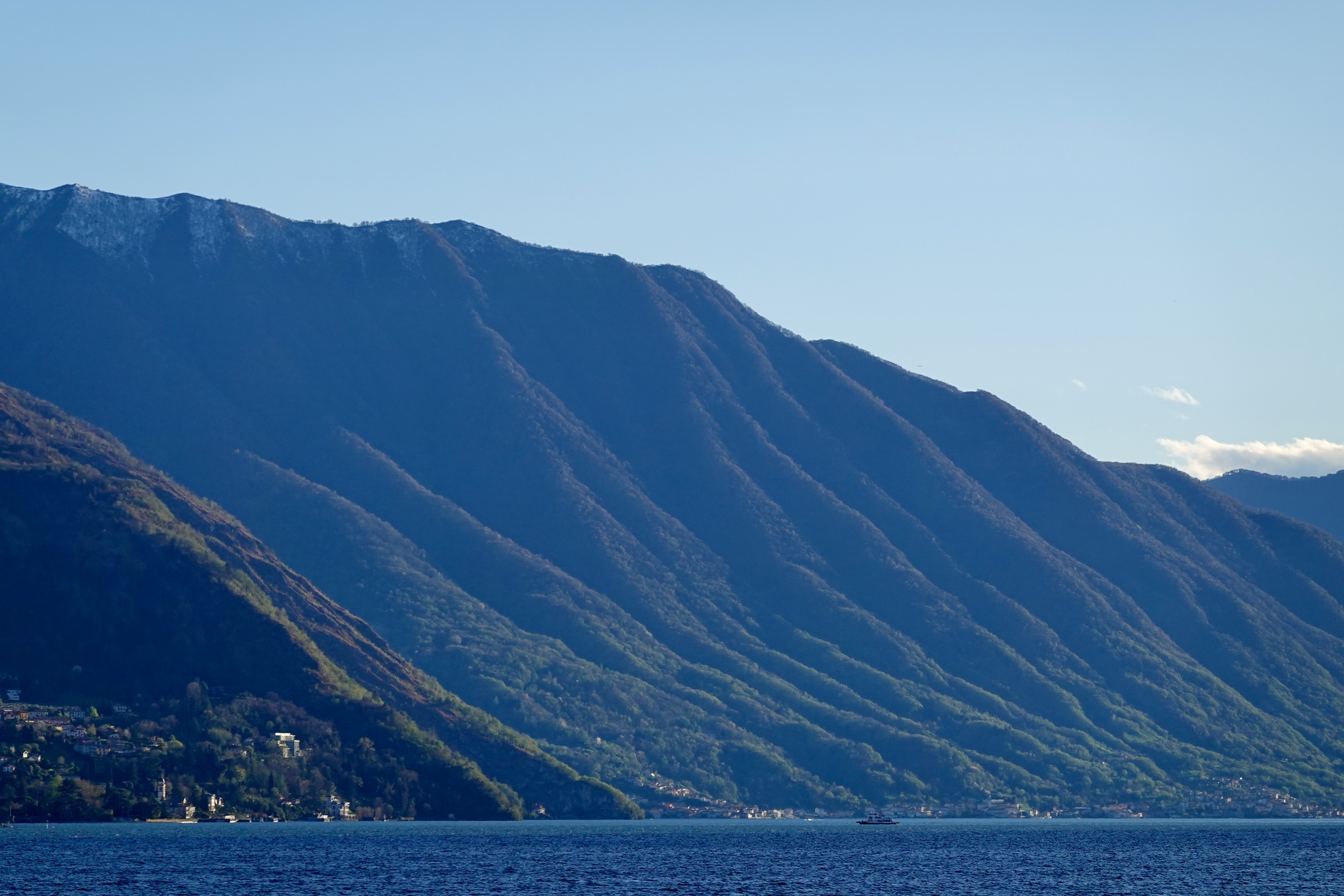
When I look at a mountain, my first thought, my first impression, is how unchanging it is. You can’t imagine a mountain changing. Can you? I used to look out across to Ben Ledi in Central Scotland, and what I saw every day was different. It was different because the light and the weather were different. So sometimes it would glow red with a setting sun, sometimes seem painted white with snow, other times hidden by low clouds and mists, but the mountain, itself, looked the same size and the same shape every single day. I couldn’t imagine a time when it wasn’t there, or when it was just created.

But look at this mountain beside Lake Annecy. It looks pleated. It has so many folds that it looks as if it is draped in a giant cloth. And when I look at that I can easily imagine that this mountain emerged…that it was created by massive forces, stronger than I’ve ever seen.

I can imagine a time when this mountain didn’t exist, and so I can imagine a time when it might disappear.

And I know, that if I was a scientist studying mountains, I’d be aware of just how the mountain changes, little by little, every single day.

Nothing is fixed in this universe. There are no fundamental, unchanging particles, the “building blocks” of all that exists.

The Universe is flow. Reality is always in the process of creation. Every changing.

Read Full Post »

One of the commonest forms you’ll see in the plant world is the spiral. Pretty much any plant which sends out creepers to latch onto something so the plant can grow higher towards the sunlight, uses this form. It doesn’t go for a straight line….what we were taught is the shortest distance between two parts. Why not? There just aren’t that many really straight lines in Nature. It seems there’s a great preference for meandering, changing direction, spiralling around…..not what a machine would do.

Machines, and the industrialised types of management which dominate our lives now, are said to be best when they are most “efficient”. But Nature has a different idea. “Efficiency” seems, these days, to be about expending the least possible amount of effort and money to achieve a standardised outcome. It’s not natural, and it squeezing out beauty and life.

Complex, natural, living forms are not like machines. A plant doesn’t produce the least number of seeds required to produce a second plant. It produces thousands and thousands of them, using a huge number of different methods to have those seeds carried far and wide, relying on the weather and other creatures to do the scattering. Have you ever watched a bee or a butterfly collect pollen? They don’t start top left and work their way “methodically” flower by flower until they’ve harvested the most possible. There’s an inherent, apparent randomness to their flight. You just can’t predict which flower they are going to explore next.

The spiral is a favourite form of exploration in many plants. It’s a way of discovering.

It’s also extremely beautiful. One that artists replicate again and again. Here’s an example from the sculpture park near where I live……

Beautiful, dynamic, attractive, pleasing, and even in a stone carving, bursting with “life”.

I reckon we’ve taken a life destroying path through industrialisation, and I’d love to see us grow whatever we find life enhancing instead. We can do that by paying attention to, and learning from, plants and other creatures. We can privilege beauty, joy and Life instead of consumption, “efficiency” and “profit”. That would lead us to a very different kind of “growth”, and a very different society.

Read Full Post »

Do it now

Last year, while watching the coverage of La Vuelta cycle race, I saw them pass through a region I didn’t know well. They mentioned a sequoia forest and so I looked it up online and discovered there were 800 sequoias planted near the town of Comillas in the north of Spain. According to google maps it was only a few hours drive from home. So we set off, stayed a few nights in Comillas, which was a real delight and paid two visits to the sequoia forest.

It is an astonishing experience to spend some time amongst these giant creatures. Quite magical. I took loads of photos, but the best thing was actually just wandering around, sitting from time to time, and just soaking up the atmosphere of the forest.

I’m not surprised to learn that for the majority of people experiences contribute far more to human happiness than “stuff” does. It’s not what we buy, or what we own, that brings most of us the greatest delight, the deepest sense of gratitude for this life. It’s the experiences we have.

If I had one piece of advice for this year, it would be to concentrate on making good experiences, not on accumulating more stuff. I know we have an economy based on consumption, and already there are stories about people “not buying enough” before Christmas, or in the “January Sales”, but, actually literally billions are spent over these few short weeks. I’d love to see a society based on qualities more than quantities, on relationships and experiences more than on stuff to consume. But until that day comes, I (and you, if you wish) can live our lives that way anyway.

Here’s to a 2025 of fabulous experiences of wonder, delight, joy and love. Here’s to a life of flourishing and purpose.

Read Full Post »

We all need to be nurtured. In fact, we humans are born exceptionally helpless. It takes many months, no years, before a newborn can acquire all the skills necessary to survive.

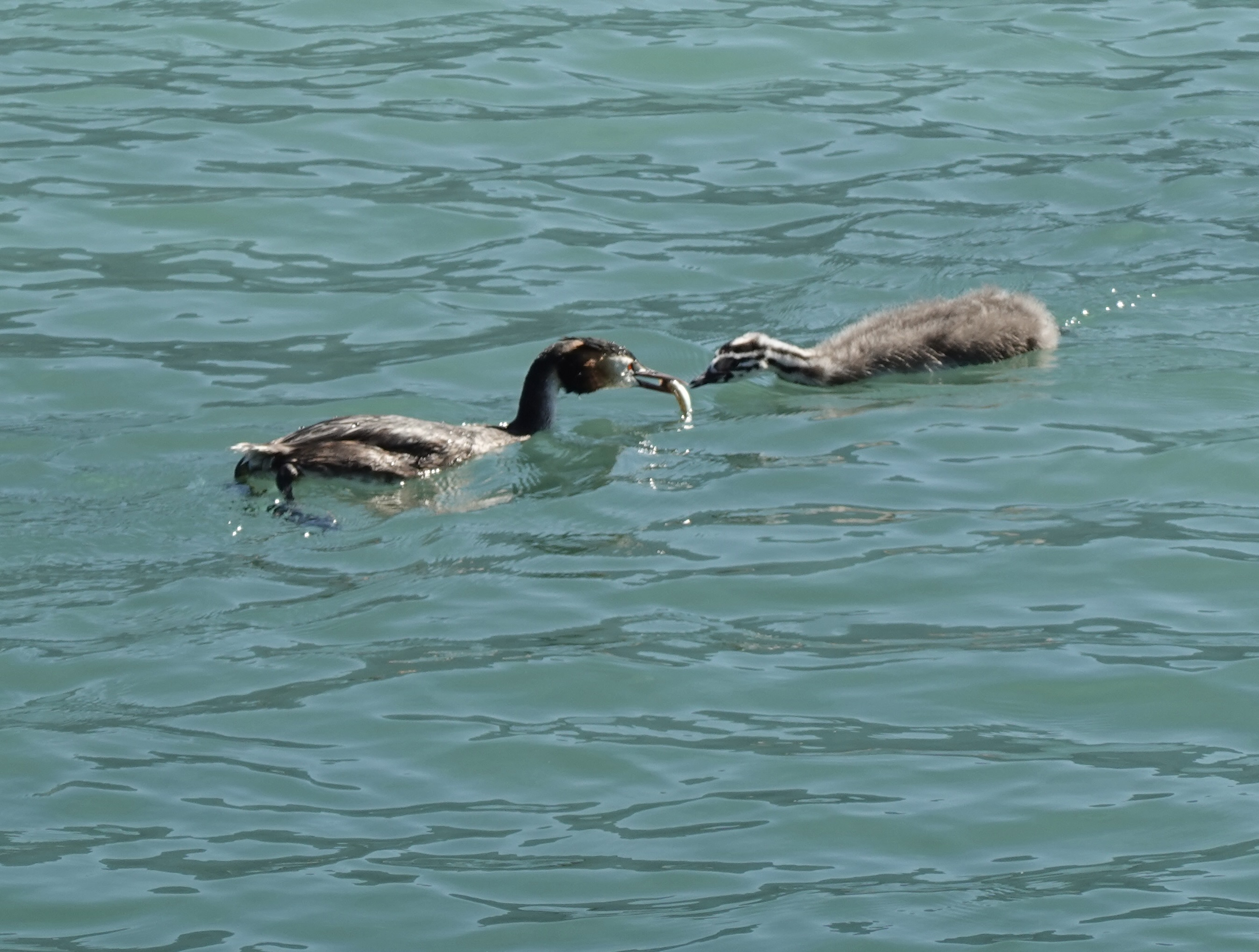
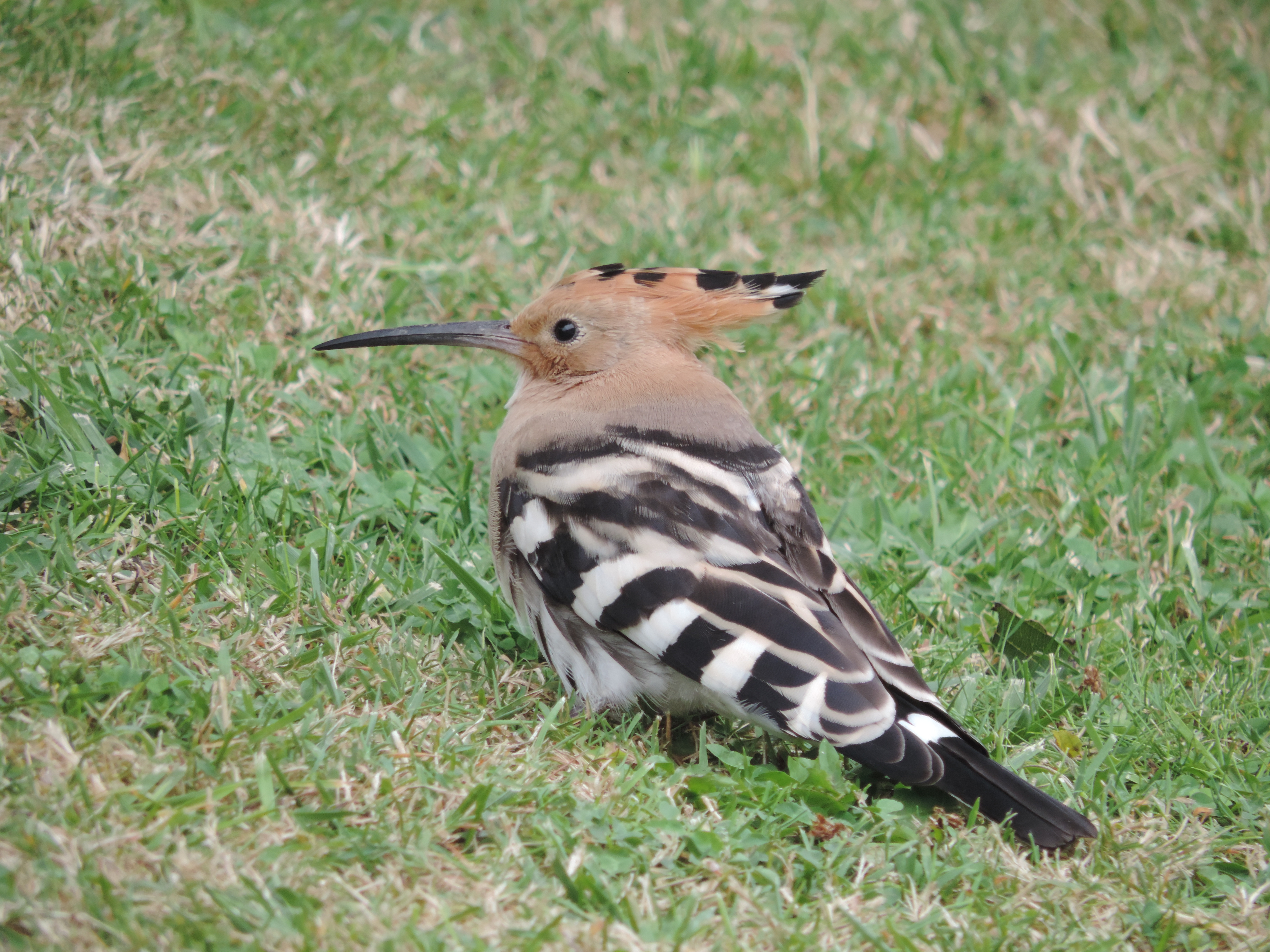
This photo which I took at Lake Annecy this year, shows an adult bird feeding a fish to a young bird. Watching them reminded me of watching the Hoopoes in the garden. You know what a Hoopoe looks like?

The Department where I live in France, the Charente Maritime, has the Hoopoe as its symbol, or mascot. You can see the silhouette of it on information boards and roadsigns, but before I came to live in this part of the world I’d never seen this particular species of bird. It still looks incredibly exotic to me. Often it seems African I feel, and just visiting here. I don’t know enough about its lifestyle to know if it does spend part of every year in Africa, but I wouldn’t be surprised if it did. Anyway, these Hoopoes have long curved beaks which they use to drill down below the grass and come up with a grub or a worm. I have no idea how it does that. How on earth does it know where to dig? More than once I’ve watched a young Hoopoe hopping along near one of its parents, and every time the parent finds some food they feed it to the youngster. Then one day the youngster was there all by itself. It drilled its beak down into the grass and came up with nothing. So it tried somewhere else and still came up with nothing. This went on all morning. I began to think, oh no, how on earth is this little bird going to survive? It doesn’t know how to find food, and nobody is teaching it. A couple of days later I saw it again, and, somehow, something had clicked. Just like its parents, it would drill its beak down and come up with a grub or a worm….almost as often as one of the adults would do.

OK, so for this bird, that learning how to find food and nourish itself took a few days. How long does it take we humans?

I’ve read that it’s this long, long period of dependency which creates, or at least, develops, the human capacity for relationships. If a baby can’t form relationships which nurture them, they won’t survive. And here’s the thing. I don’t know about birds, but certainly for we humans, nurture can’t be reduced to nutrition. The mind needs to be nurtured. The heart needs to be nurtured. We need to noticed, cared for, cared about, loved. People will wither and die without nurture.

We have a tendency to think of ourselves as completely separate beings. Our current societies privilege the idea of a “self made man”, of “independence”, of “individual responsibility”. But, it’s absolutely true that “no man is an island”. We are not “sufficient unto ourselves”. We are probably THE most highly developed creatures on the planet in terms of our sociability. We can empathise, imagine what another life might be like. We can love, and care, and delight in others. We are moved by the pain and suffering of others. Indeed, when we see war, violence and abuse, we can only make sense of it by postulating a pathological inability of the aggressor to imagine the lives of the others?

How different would the world be if we never forgot that? If we could never ignore our empathic imagination? If we KNEW every single day that we only exist because of our intricate web of relationships, past, present and future? We are not completely separate. We never were.

Read Full Post »

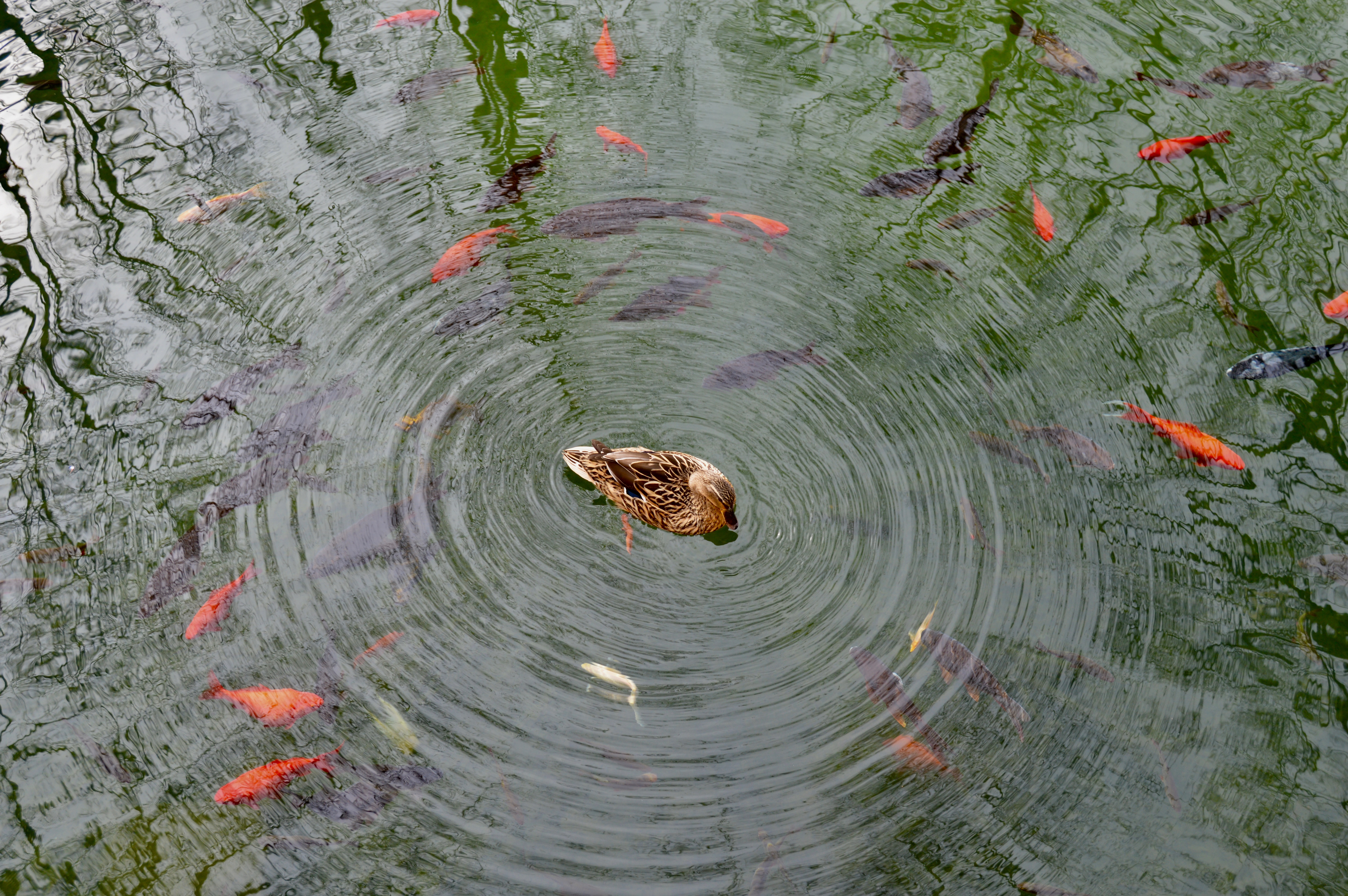
This is one of my favourite photos. It shows two things which always fascinate me. Firstly, the duck, which is apparently just sitting on the water is sending out ripples across the surface in the most beautiful pattern of concentric circles. Secondly, the fish appear to swimming around the duck, some even following the actual ripples.

This is a great example of how just by living we change the world around us and influence the lives of others.

D H Lawrence said –

As we live, we are transmitters of life.

When I’ve looked at this photo in the past, I’ve been struck by how we “influencers”, but, after reading this sentence by Lawrence, I think “transmitters” is a better word to use. Besides, “influencers” has become synonymous with marketers, and, in so doing, has lost some of its beauty for me.

We transmit life just by living. As I breathe, as I consume food and drink, as I digest, as move around this little planet, I change the air, the water, the soil, as I go. As I think, and feel, and imagine, and communicate, I change the lives of others. This blog, which really started just as a personal space to gather things that interest me, has, over the years, become a transmitter. I know that from the feedback I receive from people all over the world. That’s become an explicit part of my writing here. I want to share my life experiences. I want to share my photos, my words, in the hope that you, and maybe others you know, will be touched by them, inspired by them. I hope what I create here brings you some joy, evokes some wonder and reflection, and brightens your everyday. Because, creating these posts, does that for me!

We are transmitters of life, and each of us leads a unique, special, life. We are transmitters of life through our personal stories, none of us telling an identical story to another person. We are transmitters of life through our actions and our thoughts. Collectively, we humans shape and sculpt the Earth. We should stay conscious of that. It’ll help us make better choices.

Read Full Post »

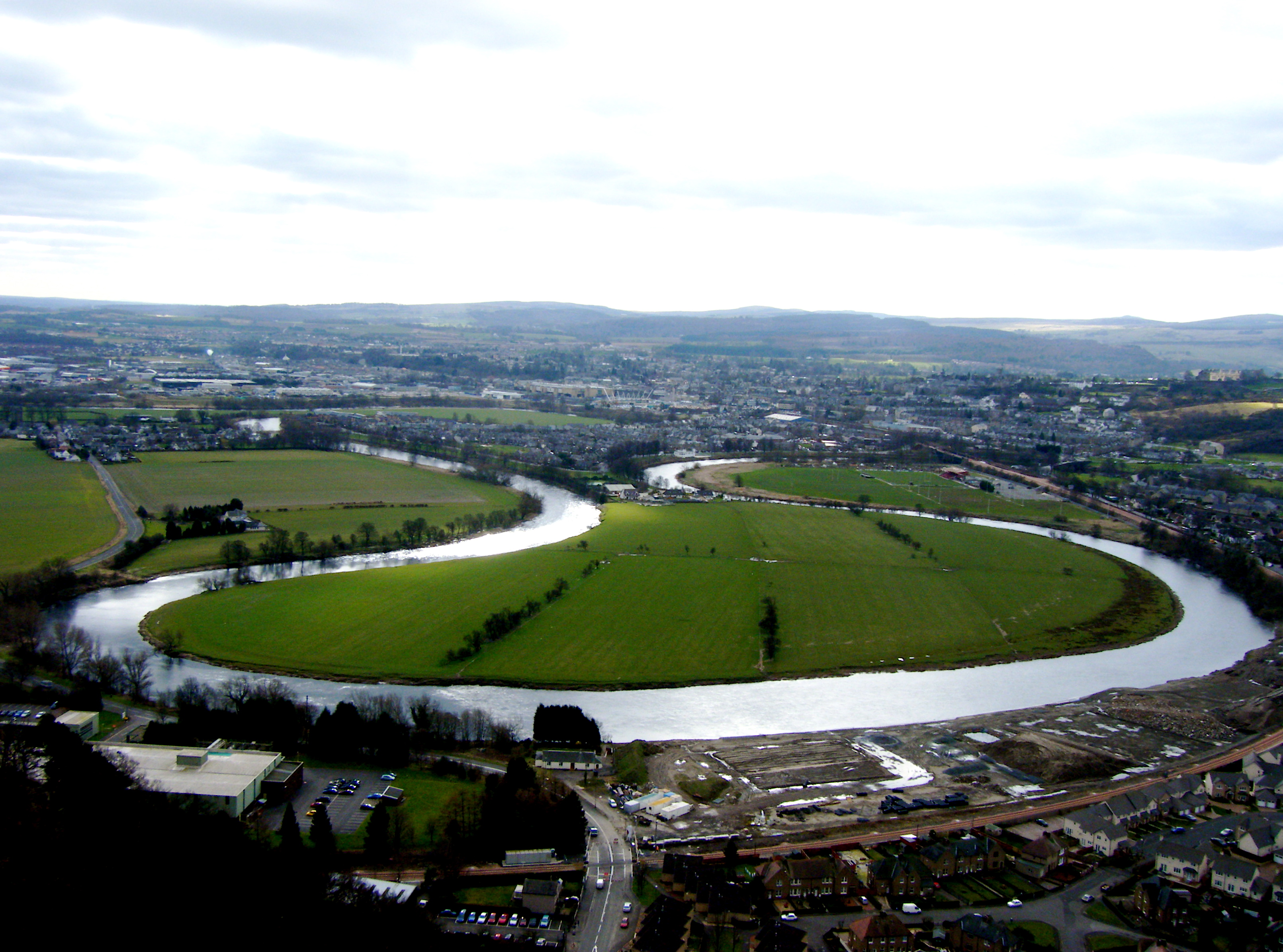
I was looking for exactly this photo the other day, and was delighted when I found it in my library – but I didn’t take it. My daughter, Amy, did. I’m pretty sure I’ve taken photos exactly like this in the past but it must be back to the days of 35mm film because I can’t find any in my digital library. This is a view of part of the River Forth, at Stirling, and it shows beautifully how the river twists, turns and curves around so much at this point in its journey.

I picked up a couple of little books by a French author, Olivier Clerc, when I was in Biarritz fairly recently. One is called “La Grenouille qui ne savait pas qu’elle etait cuite….” (which is about the frog who didn’t know she was being boiled) and the other is “Rien ne peut empecher la riviere de couler…..” (nothing can prevent the river from flowing. In both books, this Swiss author, writes about life lessons he’s learned by taking an analogical perspective on natural phenomena. He argues that as well as thinking analytically, which we are encouraged to do all the time, we should also develop the skills of thinking analogically. That in doing so we will find life itself becomes richer, deeper and more meaningful. I think he’s absolutely right.

The first essay in the second of those books is about how a river can be viewed two ways – first of all, you can see that it twists this way and that (just like the River Forth in this photo), and that if you trace the course of a river from where it starts in the mountains, you find that there seems no logic to its path – it heads west, perhaps, then south, then east perhaps and so on. It disappears at times, flowing into a lake, only to reappear out the opposite side, or into a marsh, or even below ground, before re-emerging perhaps many miles further on. And yet, we call the river by the same name along this twisting, turning, ever changing path. But there’s a second way to look at the river, and that’s to take a lateral slice through the landscape and see that, at every single point, the water is flowing downhill. At no point does it ever, ever turn around and start to flow uphill. It just doesn’t. It continues from Spring to Ocean, in a constantly downhill direction. He points out that these two views of the river show both continuity (as it flows through the landscape) and coherence, as it heads constantly downhill to achieve its goal of reaching the ocean).

He draws several lessons from this, not least being that behaviour is often hard to understand because we see it superficially, and that, we need to look beneath to see the underlying motivations, values and goals, in order to understand why someone is acting the way they do. He says this teaches us to be humble, to accept uncertainty, and to inspire us to look below the surface, to better understand others. What are the coherent threads that run through an individual story, be that of a person, a group within society, a culture, or even a nation? What lies beneath the apparent randomness, the veering this way and that, over years, and decades, that actually reveals the core beliefs, values and purposes?

I like anything which inspires me to pause and reflect. And I think learning to look at the natural world analogically can really deepen the joy of everyday life.

Oh, and just before I leave……I’m suddenly remembering a line from John O’Donohue –

“I would love to live like a river flows,
carried by the surprise of its own unfolding.”

Read Full Post »

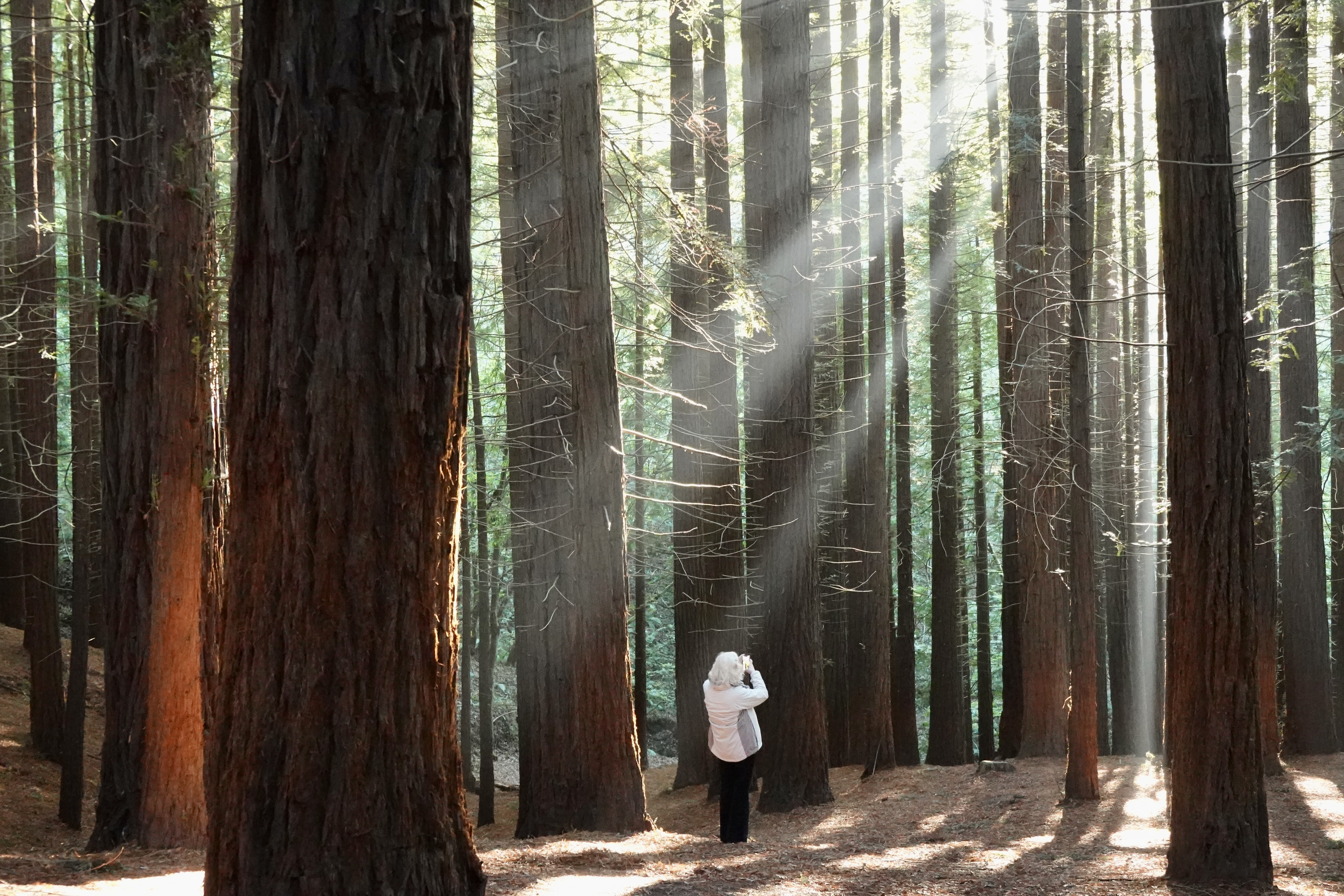
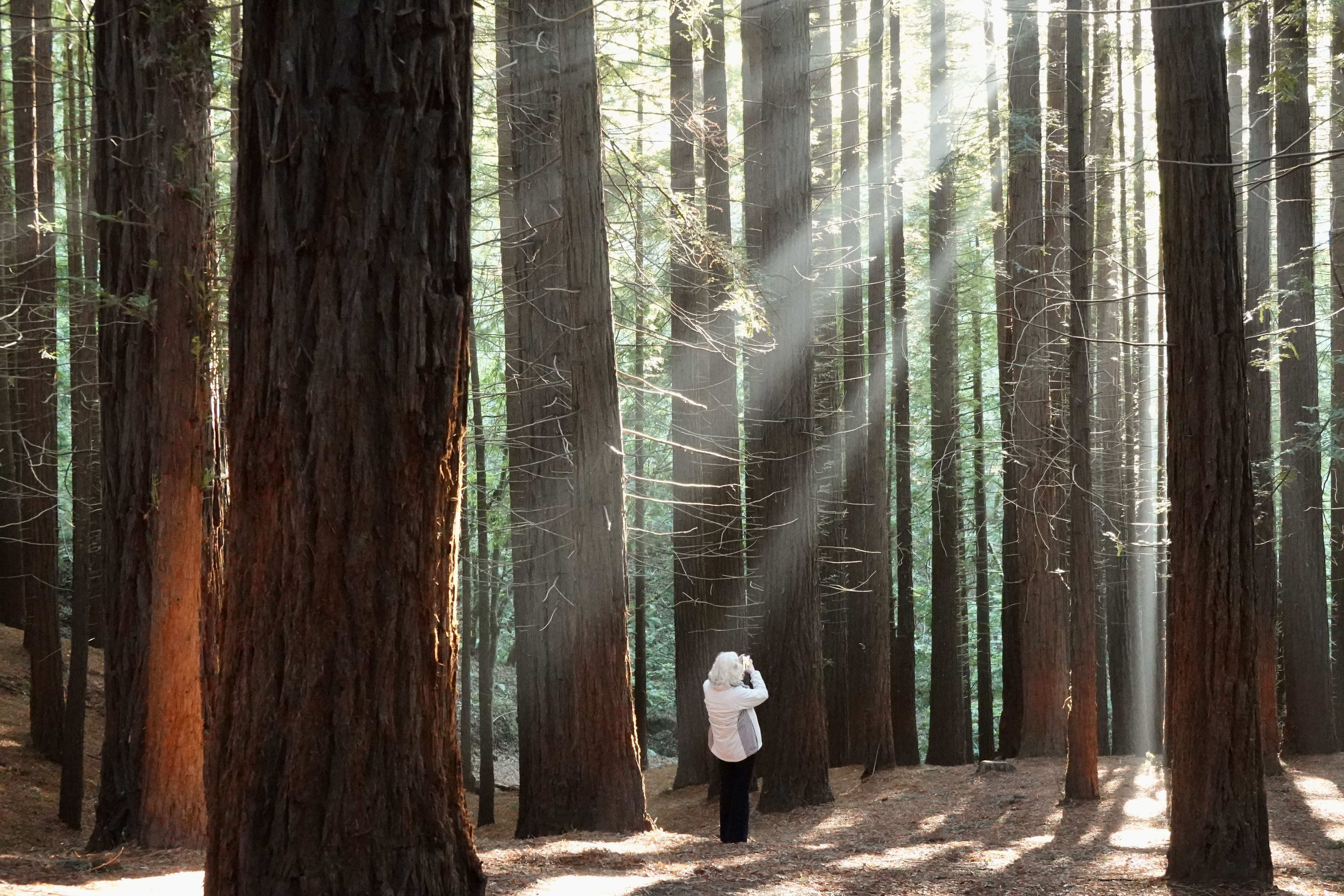
We made a visit to a sequoia forest in Catalonia recently and this is one of the many photographs I took. When I look at it now a passage from C S Lewis comes to mind. It’s many, many years since I read his little essay, “Meditation in a Toolshed”, but I’ve never forgotten it. It’s pretty easy to find online if you search for it. It starts like this –

I was standing today in the dark toolshed. The
sun was shining outside and through the crack at
the top of the door there came a sunbeam. From
where I stood that beam of light, with the specks
of dust floating in it, was the most striking thing in
the place. Everything else was almost pitch-black.
I was seeing the beam, not seeing things by it.
Then I moved, so that the beam fell on my
eyes. Instantly the whole previous picture
vanished. I saw no toolshed, and (above all) no
beam. Instead I saw, framed in the irregular cranny
at the top of the door, green leaves moving on the
branches of a tree outside and beyond that, 90 odd
million miles away, the sun. Looking along the
beam, and looking at the beam are very different
experiences.

He goes on to describe several examples of the difference between “looking at” and “looking along”, where he juxtaposes the “objective” vs the “subjective” (although he doesn’t use those terms), the “quantitative” vs the “qualitative”….and issue which has been at the heart of my career and my life. He summarises his idea with this –

We must, on pain of idiocy, deny from
the very outset the idea that looking at is, by its
own nature, intrinsically truer or better than
looking along. One must look both along and at
everything. In particular cases we shall find reason
for regarding the one or the other vision as inferior.

Most of the essay is about how we seem to have developed a habit of favouring the objective over the subjective to the point where the latter is dismissed as irrelevant, or even, unreal. I’ve heard a junior doctor say that his mentor told him “You can never believe patients. They lie all the time. You can only believe the results (the laboratory findings)”, and time and again, in neuroscience, our inner thoughts, sensations and feelings are reduced to biochemical reactions and neural pathways….as if the MRI scans and biochemistry reveals “the truth”, whereas the patient’s reported experience is dismissed as “anecdote”, or, worse, “illusion”.

As I look at this photo I see my wife, Hilary, standing in a sunbeam in the middle of the forest. I am “looking at” her in the forest. She is “looking along” the sunbeam and photographing the illuminated trees. And I know in that moment that these are two different representations of reality. Both are true. But there’s more – because as I am “looking at” this scene in the forest, I recall, and re-create, the experience I had of standing in the forest surrounded by the massive trees. I feel again the awe which I felt as the sunbeams shone through to the forest floor. I feel again the wonder I had standing amidst this community of trees (which, by the way, were planted only about seven years before I was born!)

We can understand a lot by measuring, by being objective. But we fail to grasp reality if we dismiss both the inner experience of others, and our own subjective one.

That means we need to value personal stories. We need to be curious about them, to respect them and to listen with non-judgemental empathy. Otherwise, we are only scratching a surface. Worse than that, we are in danger of replacing an understanding of what it is to be human, with a distorted and demeaned mechanistic one.

Read Full Post »

The Earth

“The Earth is a mother waiting for her children to return, full of stories and rapture and longing.”

“Orbital”, by Samantha Harvey, describes the experiences of six astronauts aboard the International Space Station. It’s a beautiful little book, which reads as a poetic meditation on The Earth, Nature, Life and Space exploration. One of the lines which struck me, early in the book, was the one above.

The idea of Earth as a mother is an ancient one, but one we’ve become distanced from. The truth is we are born on this planet, emerging from millions of years of flows and interactions between energies, molecules and information. We have evolved as a part of Nature, with the planet’s resources of air, water, and nutrients, supporting us, enabling us, and with the Earth’s atmosphere protecting us from harmful solar and cosmic rays. We couldn’t exist without her. Mother Earth. We only exist because of her. Mother Earth.

But our direction of travel over the last few hundred years has been to distance ourselves from her, to objectify her, to treat her as a resource to be plundered, a wildness to be tamed. We talk of Nature as if “it” is something not human, as if “it” is something “out there”, separate from us, apart from us. And I think we’ve lost a lot along the way.

In this sentence, Samantha Harvey describes the mother as “waiting for her children to return”. Shall we return? We should. We really should.

And we’ll find her waiting for us with our “stories and rapture and longing”. That’s what we humans excel at – stories – telling the stories which enable us to make sense of ourselves, of our lives, of others and of our universe.

What kinds of stories are we telling these days? I think we need more stories of “rapture and longing”. I love the French phrase, “l’emerveillement du quotidien”, the wonder of the everyday. That’s where rapture lies….if we slow down, pay attention and allow ourselves to be filled with the wonder and beauty of the everyday. If we pay a particular kind of attention….the attention of longing and loving. Not a longing to possess, to control, to hold onto. But a heart’s longing, a soul’s longing, of deep resonance with “the other”, a harmony, a connection, a loving, caring attention.

Shall we do that now? Shall we return to Mother Earth filled with our stories of rapture and longing? It would take a change of direction….and a healthy one, I believe. But let’s start today.

Read Full Post »

« Newer Posts - Older Posts »