Feeds:
Posts
Comments

Posts Tagged ‘philosophy’

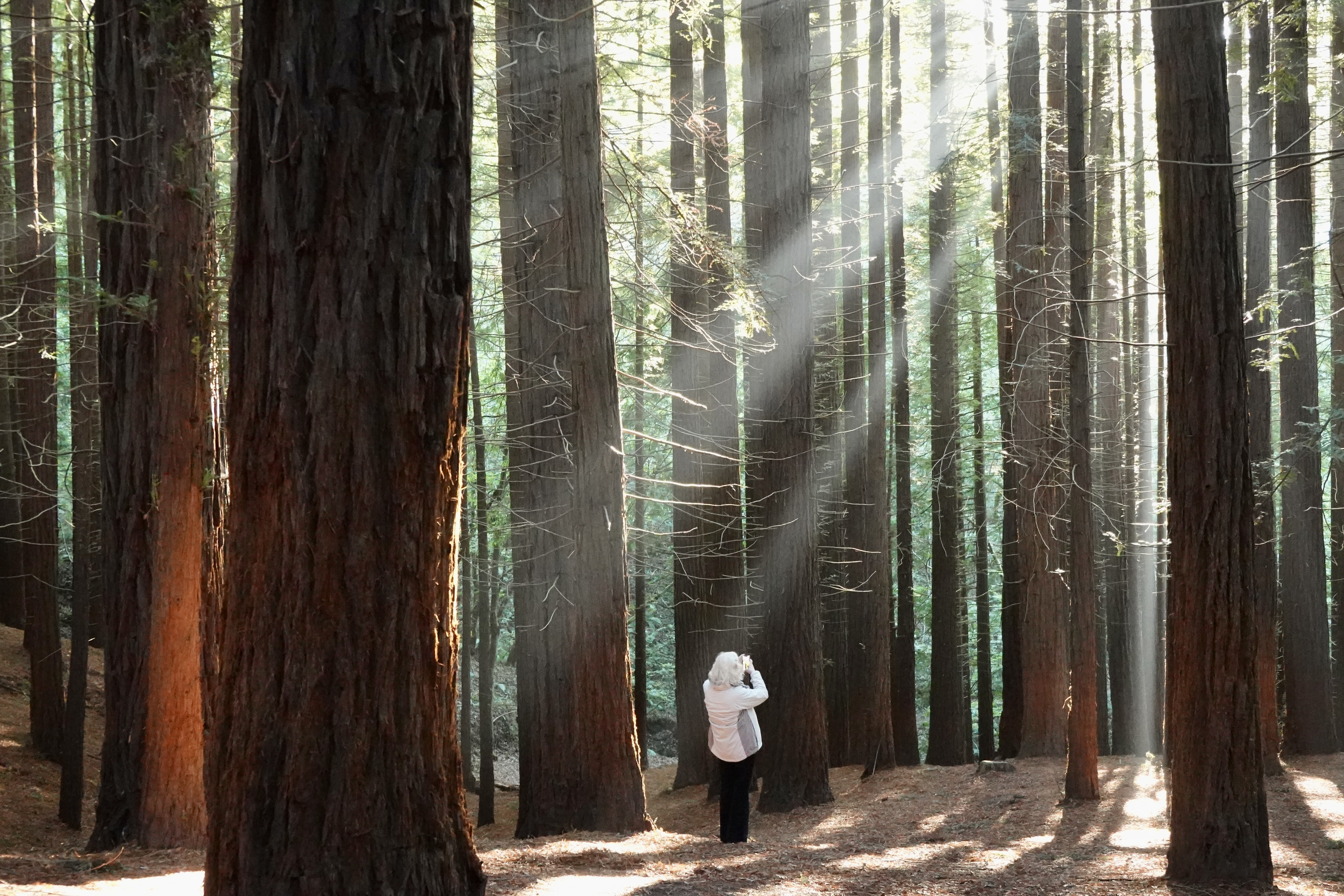
I’m really enjoying reading Aldo Leopold’s “A Sand County Almanac”, published in 1949. He was a naturalist who bought a farm in Wisconsin and this little book is full of beautiful observations and reflections. Read this extract –

We know now what was unknown to all the preceding caravan of generations: that men are only fellow-voyagers with other creatures in the odyssey of evolution. This new knowledge should have given us, by this time, a sense of kinship with fellow-creatures; a wish to live and let live; a sense of wonder over the magnitude and duration of the biotic enterprise.

Fabulous.

But it could have been written yesterday.

How much progress have we made with this understanding and knowledge in the last, over seventy years, since he wrote these words? How’s it going with our “sense of kinship with fellow-creatures”? Maybe there are individuals, and even groups of individuals, who feel this strongly, but where is it in the politics and economics of any country? Which political party, or politician, has risen to power on the back of a promotion of our “sense of kinship with fellow-creatures”? Heavens, they can’t even have a sense of kinship with children dying in war, famine or poverty. They can’t even have a sense of kinship with people who were born on some other patch of land, other than the one they, themselves, were born on. But, I think it’s still something we should aspire to. It’s still something we should call for. Not just kinship with children everywhere, but with our “fellow-creatures” too. The loss of species threatens the very survival of our own species. Industrial farming techniques produce poor quality food to shipped into factories and, not just processed, but “ultra processed”, something we are learning causes inflammation in our bodies, triggers chronic diseases, and, I read today, even pushes microplastics into our brains.

“a sense of wonder over the magnitude and duration of the biotic enterprise”……..I am firm believer in the power of wonder. I haven’t the slightest doubt that it contributes to the experience of a better life, of a better today, of a better present. If we had more wonder, we might be more humble, we might be more careful, we might fall in love more, we might understand more, we might care more.

These are values I think we can build better lives on, values we can create better societies from……let’s have more “kinship”, more “wonder”, and more desire to “live and let live”.

Read Full Post »

I’m reading “A Sand County Almanac”, by Aldo Leopold, published back in 1949. It’s a delightful series of small essays on Nature, conservation and life on a farm in Wisconsin. It’s a breath of fresh air compared to the proclamations of today’s politicians, and a wholly different set of values, and seem to see the natural world as something to be plundered.

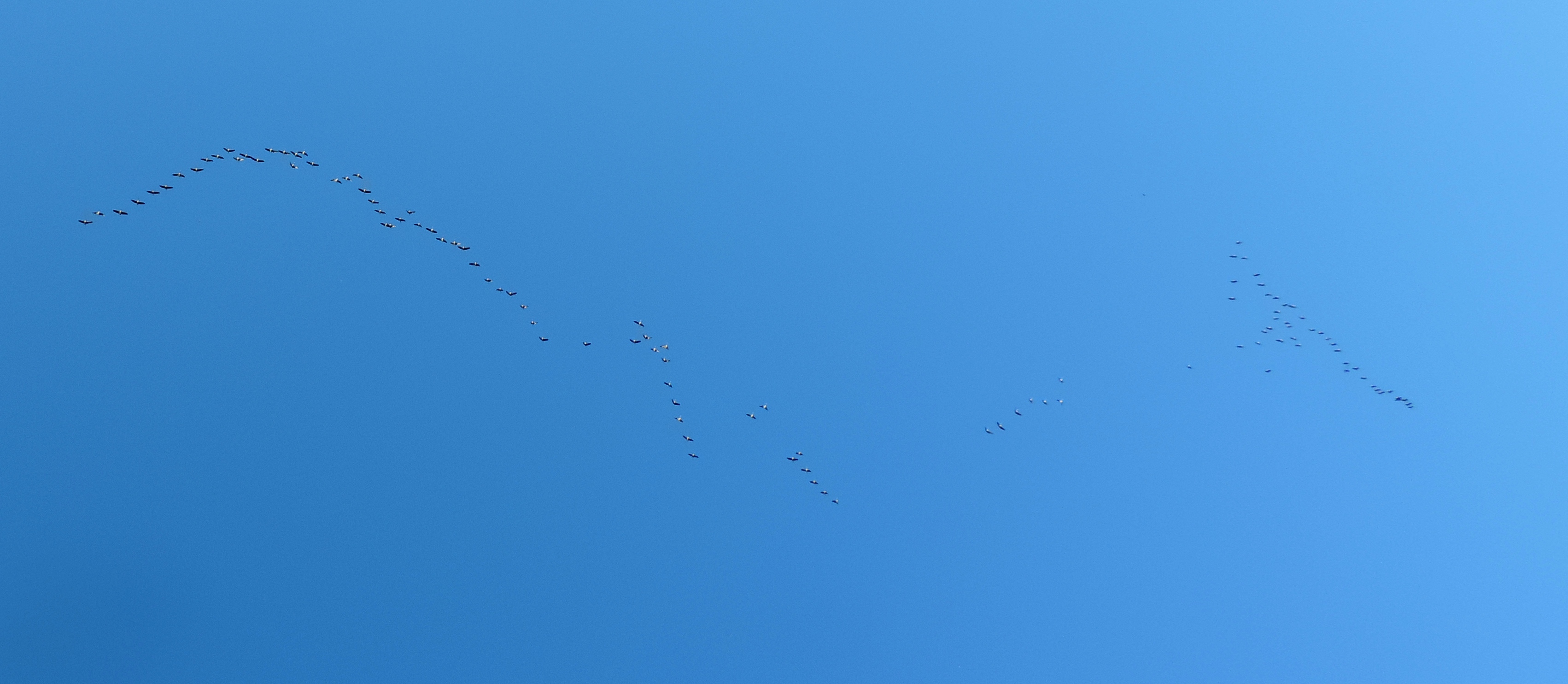
Early in the book, Leopold muses about the return of the geese from their winter migration. And he says this – “It is an irony of history that the great powers should have discovered the unity of nations at Cairo in 1943. The geese of the world have had that notion for a longer time, and each March they stake their lives on its essential truth”

Isn’t it amazing that the “essential truth” is we all share this one small planet, and that borders are totally artificial phenomena created by human beings to either try to grab a part of geography, or to exert power over others, creating a basic feeling of “us and them”. There are those who are included within a border, and there are those who are not – “aliens”, “foreigners”, “migrants” – any title other than fellow human beings.

Life moves around planet Earth.

We see it clearly in migrating creatures, not least the birds who spend part of the year in one hemisphere and part in another. But we only have to look back over a pretty short period of human history to see that we humans too, migrate. There have been great waves of migration in the past (not least to America from Europe in the 19th and early 20th centuries) and constant flows in between. Yet the powers that be seem to promote the us and them idea and think people should be judged and treated differently according to where they happened to have been born, or where their parents happened to have been born.

I think this is a kind of madness. It’s a delusion to think we can divide the human species up into all these separate, invented categories, and cruel to treat others according to where they, or their parents, happened to have been born. Who chooses where they want to be born?

I’ve long thought the problems of our modern societies are not caused by migration, but by greed, selfishness and inequality. Until we reverse the current trend of the rich getting richer while life becomes harder and less secure for the rest, politicians will seek “others” to blame – and, to often, those “others” are those who “were not born here”. Targeting those “aliens” or “foreigners” is a convenient way for keeping the Public attention away from those who are really causing the problems – the elites who grab and hoard more and more wealth, and are in the process of passing it on to their children through inheritance, enabling the next generations of the rich to become even richer, without having to do a single thing to do so.

This current system isn’t working. It’s not good for families. It’s not good for society. It’s not good for Nature. It’s not good for the planet. So who is it good for? Well, I think we know. But the trouble this, those profiting from it are a tiny minority of the human beings sharing this one little planet.

Read Full Post »

The dominant narrative in our current industrialised society is competition. It’s held up as the key success factor in capitalism, in business, and even, often citing Darwin, in evolution. It’s presented as the main way in which we humans have improved ourselves, succeeding over other species, beating each other to the top. It’s presented as the way to power and wealth. The key to success and happiness.

There is no denying that competition exists, and that its greatest worth is how it pushes people to improve. Sport is all about competition. It’s exciting and it drives human performance constantly to do better than has ever been achieved before.

Clearly, competition has its place.

But putting front and centre of the whole of life seems seriously misguided to me. Throughout history it has brought war, violence, exploitation, abuse and corruption. Because it all depends what you are competing for. If it’s more power and wealth, it too often results in division, xenophobia, racism, selfishness and cruelty. If you’re competing to improve, to achieve your best self, to create the best, fairest, healthiest society, maybe it’ll help.

I worked all my life as a doctor, so my area of knowledge and skill is what makes human beings thrive. If you consider the human body you can see that it contains billions of cells. Billions. Many of those cells grow together to form body organs, like the heart, the lungs, the liver and kidneys. Many grow together to form tissues, like bone, ligaments, skin. Other grow together to form systems of chemicals and cells, like the immune system and the endocrine system. Are all these cells, all these organs, all these tissues in competition with each other to be the best they can be? No, they are not. If our heart was in a continual war with our kidneys, we would be sick. If our immune system was in a continuous race against our endocrine system, we would be sick.

A healthy body is based on collaboration. It’s based on relationships, especially “integrative” relationships. Integrative relationships are defined as “mutually beneficial relationships between two well differentiated parts”. In other words, health, and, life itself, emerges from a vast, interconnected web of collaboration. When it works, we have harmony. We have flow. We have ease. We have growth and maturation. When it doesn’t work we have sickness and death.

I often think of that when I read about society, politics or economics. Why base those systems on something more likely to drive violence and a world of “winners and losers”? The body doesn’t do that.

Not only that, stop for a moment and reflect. Which human being could thrive entirely by themselves? In isolation, with only their themselves to deal with everything? None. There’s not a single baby born who would have made it to adulthood without the care and support of others. There’s not a single human being on this planet who has made it to adulthood without a vast web of “integrative” relationships – between themselves and others, between themselves and other living creatures, between themselves and the rest of Nature.

What would society be like, what would politics be like, what would economics be like, if we based it on the natural reality of life on Earth………not excluding all competition, but putting collaboration, care and sharing at the heart of everything we do?

Read Full Post »

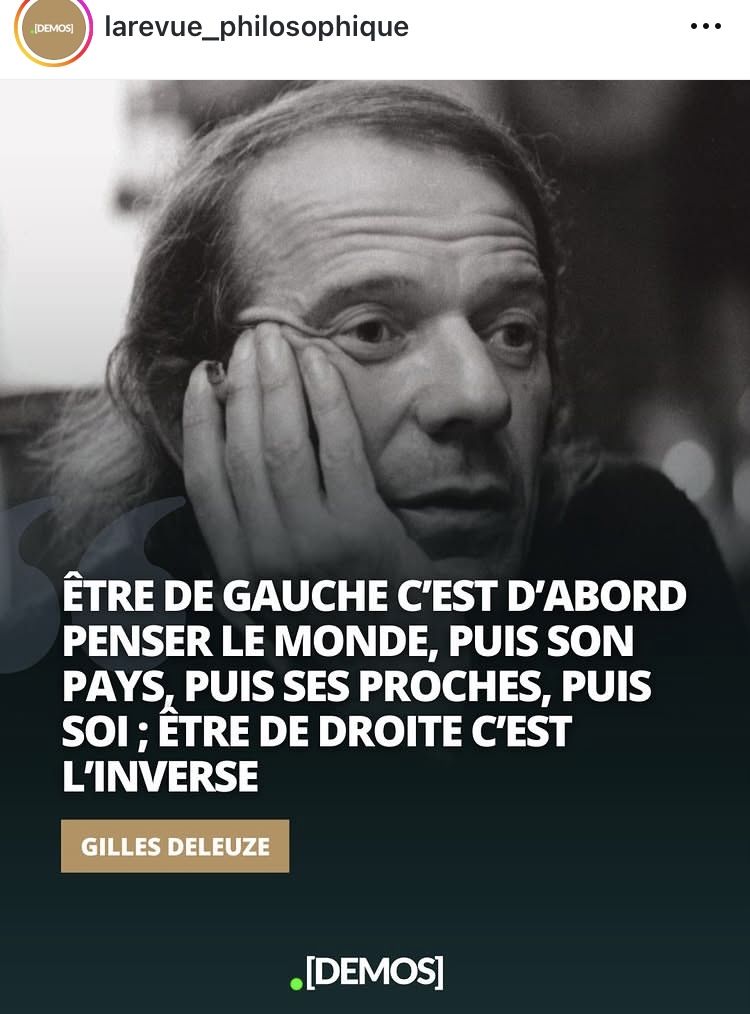
I saw this post on Instagram recently, posted by a French philosophy site. I’ll translate it for you.

“To be on the Left, is to, first of all, think about the world, then your country, then those close to you, and then yourself. To be on the Right, it’s the inverse”

Deleuze is one of my favourite, and most fascinating French philosophers. He seemed to have the ability to get you to see something in a completely new light. This is one of his more political sayings, and, it strikes me, it’s as true today as it was when he said it. In fact, it’s even more true.

Every populist Right wing autocrat we’ve witnessed in the world appears to put themselves first, then their close contacts, then their country, and, finally, if at all, the world. Whether we’re thinking of Trump, of Boris Johnston, of Orban, Putin, Farage, or Milei, it’s hard to avoid the conclusion that they speak and act in their own interests first, some of them to the point of pathological narcissism.

And yet, everywhere, the Left seems to have lost its way. We’re going through a phase where “Left” has become a pejorative term (frequently paired with “hard” or “extreme”) and we see one Right wing populist group after another achieving power, with little effective opposition.

Can we turn this around and embrace Deleuze’s priorities instead? Think first of the world, the planet we are desecrating, polluting and over-heating? Can we think of ourselves as a species, with ALL human beings our fellow citizens? Can we put that before thinking of countries, and seek to build, not destroy alliances and truly “integrative” , genuinely mutually beneficial relationships between countries? Can we then campaign for societies which serve the interests and needs of neighbours, our friends, colleagues and families, over the interests of billionaires and corporations? Can we then think how each of us can contribute to making this a better world for us all to live in?

Does that sound radical to you?

Read Full Post »

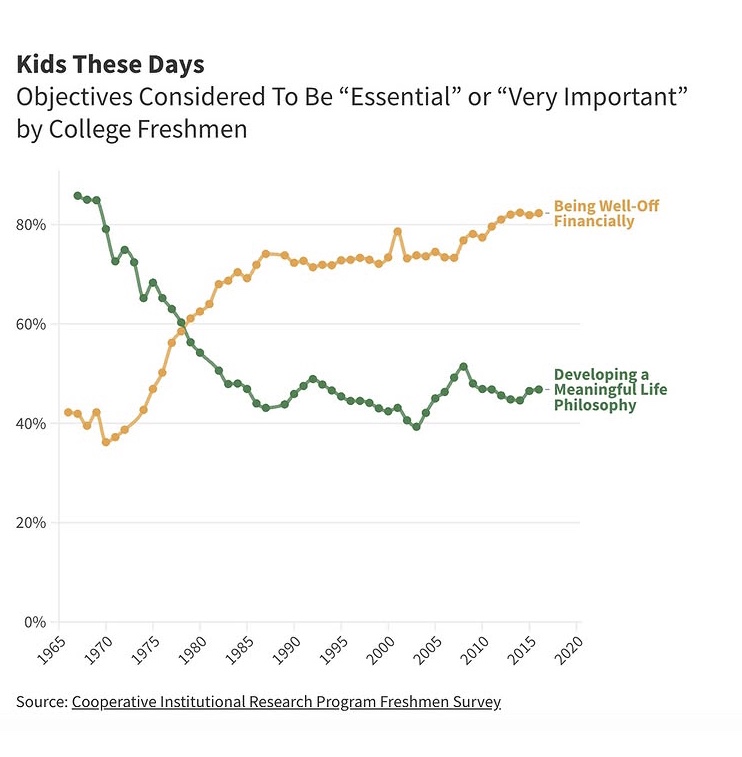
I came across this chart the other day. Isn’t it fascinating? It charts the percentage of college “freshmen” saying that either “”Developing a meaningful life philosophy” or “Being well off Financially” was considered by them to be either an “essential” or “very important” objective.

Basically it shows an almost complete reversal of positions of these two objectives between 1965 and 2020. Now, less than half give “developing a meaningful life philosophy” compared to over 80% of them saying “being well off financially” is essential or very important. Back in the 60s, these figures were almost exactly reversed and the crossover point in the chart seems to be in the latter half of the 70s.

I’ve long held the belief that Thatcher and Reagan, as the main drivers of neoliberal economics, were at the turning point in our societies. I guess I’m part of what is called the “baby boomer” generation, and it seems to many of us that life has got harder and more precarious for most people in our communities over our lifetimes. It seems that Public Services have gone into steep decline, that wages have stagnated, house prices have soared, and jobs have become less secure.

What went wrong?

When we hear the present generation of politicians in the UK, and even more so in the USA, put forward policies which are every bit as neoliberal as Thatcher and Reagan, is it any surprise that this steep decline has been experienced everywhere. Inequality is higher now than it has been for decades. The whole economy has been “financialised” where we’ve been led to believe that the finance sector, and the rich, are the wealth creators, while, actually, their wealth is being created out of wealth, not out of productivity. The goods and services produced now seem cheaper and nastier than they were. The heroes of contemporary society are those who have grabbed the most for themselves over the shortest period of time and the huge numbers of billionaires and millionaires can’t find anything left to spend their money on except ridiculously expensive houses, yachts and private jets, so they’ve turned to buying political influence instead.

When the goals of society are to promote the wealth of the wealthiest and to deny, as Thatcher did, that “society” even exists, has, surprise, surprise, led to exponentially increasing amounts of mental and chronic physical illness.

Maybe Iain McGilchrist would point to likelihood that giving predominance to the left cerebral hemisphere over the right will have been, at least in part, at the root of this problem. But it’s a profound economic problem too. We are still trapped by the delusions of neoliberalism with its so called “free markets” which aren’t free at all, and “trickle down economics” which never trickle down.

We need something better. We need to break free of the neoliberals and the populist far right.

Read Full Post »

We have two focus modes in our brains, with each of our cerebral hemispheres using one or the other. The left hemisphere engages with the world through a narrow focus. It pays attention to re-cognising what we already know. It tries to help us identify objects, literally grasp them, or understand and manipulate them. The right hemisphere engages with the world through a broad focus, paying attention to the bigger picture. It seeks out patterns, connections and relationships. When the left hemisphere identifies something it should pass that info to the right for it to be contextualised. Sadly, we’ve developed habits of not bothering to do that, sticking with our generalisations and abstractions.

What we pay attention to becomes magnified. It is the means by which we engage with the world. It creates our experience of the world. If we prioritise the left hemisphere focus we engage with a world of objects, of tools and “things”. We engage with a desire to manipulate and control. But if we prioritise the right hemisphere we engage with a world of relationships, of contexts and patterns, with a world of subjects. We engage with a desire to belong, to make connections, and to see the whole picture.

We live in what has been termed “the attention economy” where the big digital companies make their money through advertising, and advertising only works by grabbing your attention. Politicians have become adept at this too, casting out statements designed to shock, enrage or stoke fear….because shock, anger and fear are primary responses to threat.

But as you’re “doomscrolling” or reading social media headlines and posts, which of them command your attention? Are they the ones that make you feel enraged, afraid, insecure, inadequate? If so, those are the feelings which are going to get magnified. Those are the feelings that are going to shape your perception of reality. Or are they the ones which delight you, which stir feels of wonder, curiosity or joy? Do they put you in touch with the three classic values of beauty, truth and goodness? Do they increase your feelings of dignity, decency and compassion? If so, that’s how you are going to perceive reality.

What we focus on, and what’s important here is to be aware of what we are focused on, shapes our world and our day to day experience of life.

Our attention is our super power. We should use it wisely.

Read Full Post »

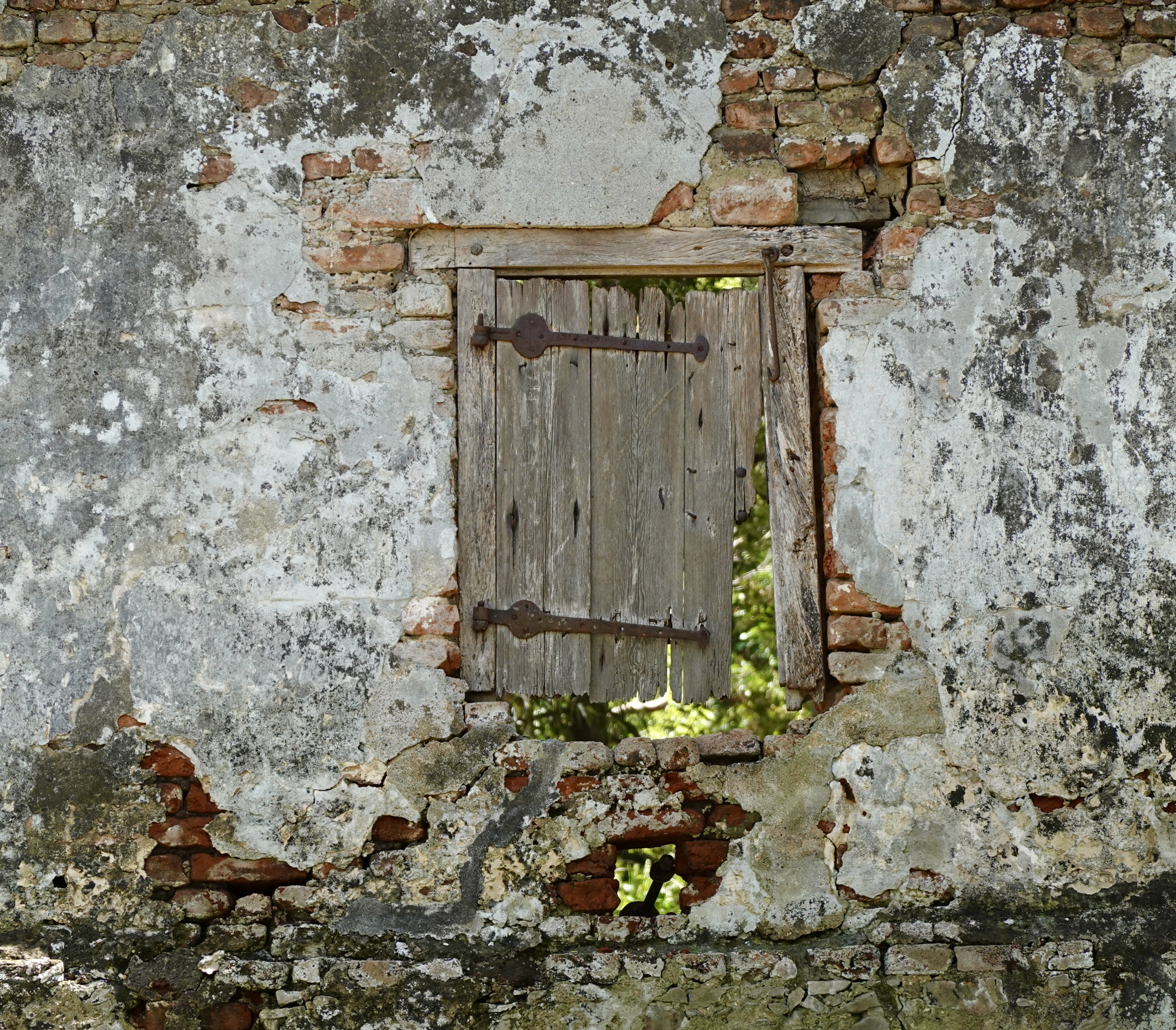
For some people beauty is found in perfection, but what is perfection? The trouble with trying to find beauty in perfection is that we are never really convinced about perfection….there’s always something just not quite right, isn’t there? And, actually, just as beauty is in the eye of the beholder, so perfection is not something everyone can agree on.

In Japanese culture, one of the many aspects of a concept called “wabi sabi” is finding beauty in imperfection. I think this photo is a good example of that. It caught my eye because I found it beautiful and when I look at it again, now, I find the whole image beautiful.

It’s hard to just put your finger on what makes such an image beautiful. There’s a similar, though different, concept in the West as “shabby chic” – and there is no doubt that when I travel around France, Italy and Spain, I find lots of examples of old, often neglected buildings which have a real charm to them. But I can also walk in areas of urban neglect where I find it hard to see any beauty at all. Were we better at building beauty in the past?

What do you think? Do you find beauty in “wabi sabi”?

Read Full Post »

We don’t live in a world of entirely separate, fixed objects.

We live in a massively interconnected world of flow.

Every living organism is an open system. There is a continuous flow of materials, energy and information into, through, and from every animal, every plant, every ecosystem.

Yet, we continue to swallow the idea of reductionism, which tells us everything is made up of separate, smaller parts, and the way to understand anything is to isolate parts and observe them as if they aren’t connected to anything else. It’s useful to focus closely on something. It’s useful to analyse something and consider it at various different levels, but it’s dangerous and delusional to fail to see that everything is always in a state of flow…..affected by, and affecting, other organisms, by the environment and by the multiple contexts of its existence.

And we continue to be taken in by dualism….the belief that there are objects and subjects….objects which are measurable and “real”, and subjects which are individual and “imaginary”. I’m not going to get into the complexities of the “hard question” here….of how consciousness can emerge from “stuff”….but this dualism leads us to deny or dismiss human experience, when, actually, experience is THE fundamental characteristic of reality.

We are not machines. We are not machine like. We are living creatures, every one of us with a continuous, ever flowing, experience of consciousness. A consciousness which enables us to appreciate beauty, truth and goodness. A consciousness which enables us to be aware and to direct our attention to whatever interests us, whatever moves us, whatever makes us wonder.

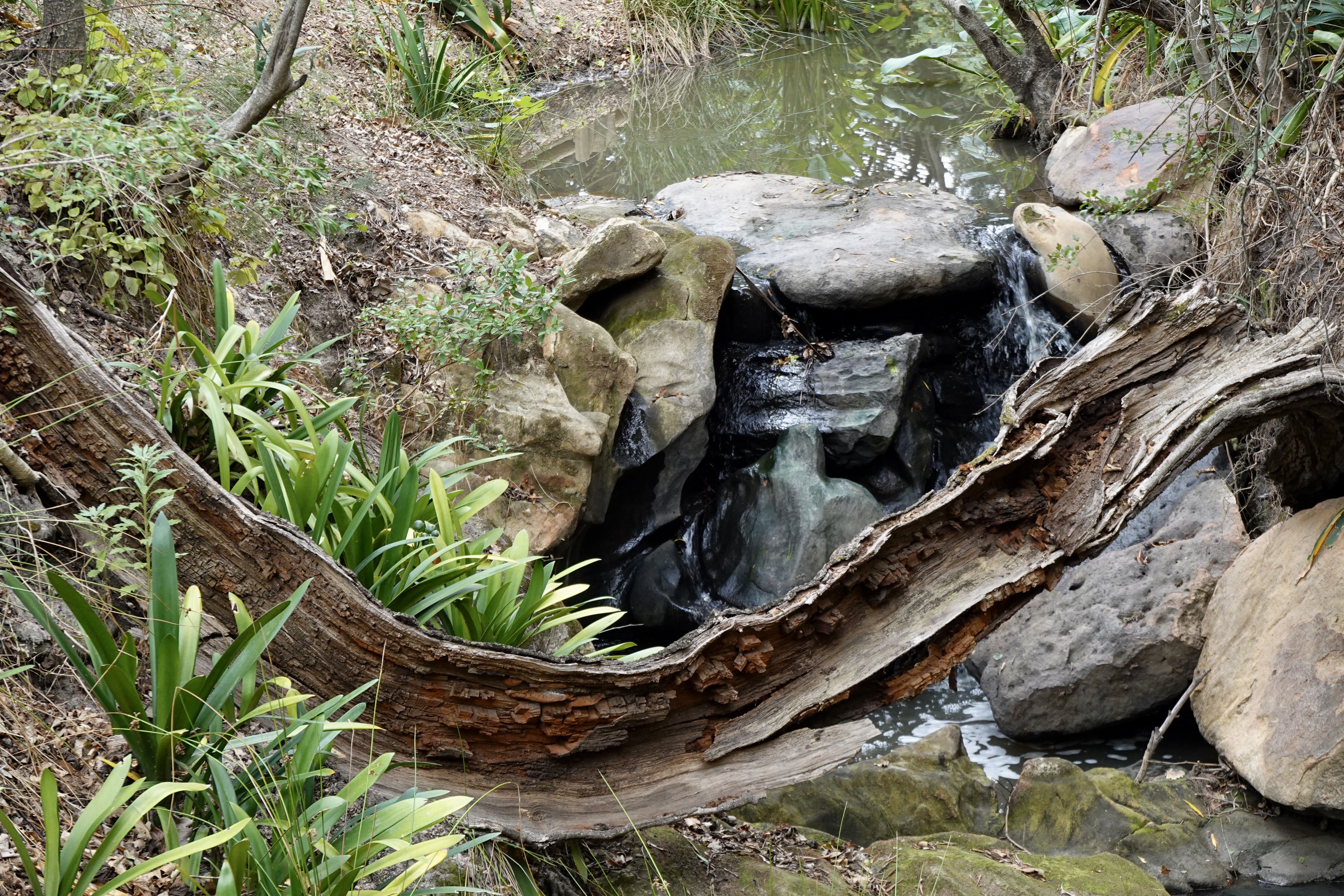
When I look at this photo, I see “flow”. I see it represented in the water. I see it represented in the wood. I see it represented in the green plants. I see it everywhere.

Read Full Post »

There’s what some people call a spiritual practice taught by the Classical Greek philosophers. It’s called “The view from on high”. I thought of that when I looked, again, at this photo which I took from the train crossing the Alps last year.

The idea of the view from on high, is about taking an overview. It’s about seeing the context of something, seeing the “bigger picture”. We can be too close to something, so close in fact that we can’t “see the wood for the trees”. The answer is to go higher for a more comprehensive perspective.

Although the Greeks didn’t know it, this is advice to access your right hemisphere. The left hemisphere of the brain has a very narrow focus. It enables us to zoom in, separate out elements, and grasp what we are looking at. But the right hemisphere takes in the context, sees the connections, enables a more holistic understanding.

Of course, it’s best when we use our whole brain, not just half, but, sadly, we’ve developed the habit in our cultures of thinking the left hemisphere knows best. It doesn’t. It only helps us when we take its “re-presentation” of reality back into the right hemisphere, to situate it in the whole.

Reality is not made up of pieces which are assembled. Reality is a whole, in constant flow and change. Stepping up a level and taking “the view from on high”, can help us to appreciate that.

Read Full Post »

I was looking for exactly this photo the other day, and was delighted when I found it in my library – but I didn’t take it. My daughter, Amy, did. I’m pretty sure I’ve taken photos exactly like this in the past but it must be back to the days of 35mm film because I can’t find any in my digital library. This is a view of part of the River Forth, at Stirling, and it shows beautifully how the river twists, turns and curves around so much at this point in its journey.

I picked up a couple of little books by a French author, Olivier Clerc, when I was in Biarritz fairly recently. One is called “La Grenouille qui ne savait pas qu’elle etait cuite….” (which is about the frog who didn’t know she was being boiled) and the other is “Rien ne peut empecher la riviere de couler…..” (nothing can prevent the river from flowing. In both books, this Swiss author, writes about life lessons he’s learned by taking an analogical perspective on natural phenomena. He argues that as well as thinking analytically, which we are encouraged to do all the time, we should also develop the skills of thinking analogically. That in doing so we will find life itself becomes richer, deeper and more meaningful. I think he’s absolutely right.

The first essay in the second of those books is about how a river can be viewed two ways – first of all, you can see that it twists this way and that (just like the River Forth in this photo), and that if you trace the course of a river from where it starts in the mountains, you find that there seems no logic to its path – it heads west, perhaps, then south, then east perhaps and so on. It disappears at times, flowing into a lake, only to reappear out the opposite side, or into a marsh, or even below ground, before re-emerging perhaps many miles further on. And yet, we call the river by the same name along this twisting, turning, ever changing path. But there’s a second way to look at the river, and that’s to take a lateral slice through the landscape and see that, at every single point, the water is flowing downhill. At no point does it ever, ever turn around and start to flow uphill. It just doesn’t. It continues from Spring to Ocean, in a constantly downhill direction. He points out that these two views of the river show both continuity (as it flows through the landscape) and coherence, as it heads constantly downhill to achieve its goal of reaching the ocean).

He draws several lessons from this, not least being that behaviour is often hard to understand because we see it superficially, and that, we need to look beneath to see the underlying motivations, values and goals, in order to understand why someone is acting the way they do. He says this teaches us to be humble, to accept uncertainty, and to inspire us to look below the surface, to better understand others. What are the coherent threads that run through an individual story, be that of a person, a group within society, a culture, or even a nation? What lies beneath the apparent randomness, the veering this way and that, over years, and decades, that actually reveals the core beliefs, values and purposes?

I like anything which inspires me to pause and reflect. And I think learning to look at the natural world analogically can really deepen the joy of everyday life.

Oh, and just before I leave……I’m suddenly remembering a line from John O’Donohue –

“I would love to live like a river flows,
carried by the surprise of its own unfolding.”

Read Full Post »

« Newer Posts - Older Posts »