Feeds:
Posts
Comments

Posts Tagged ‘photography’

Little Owl

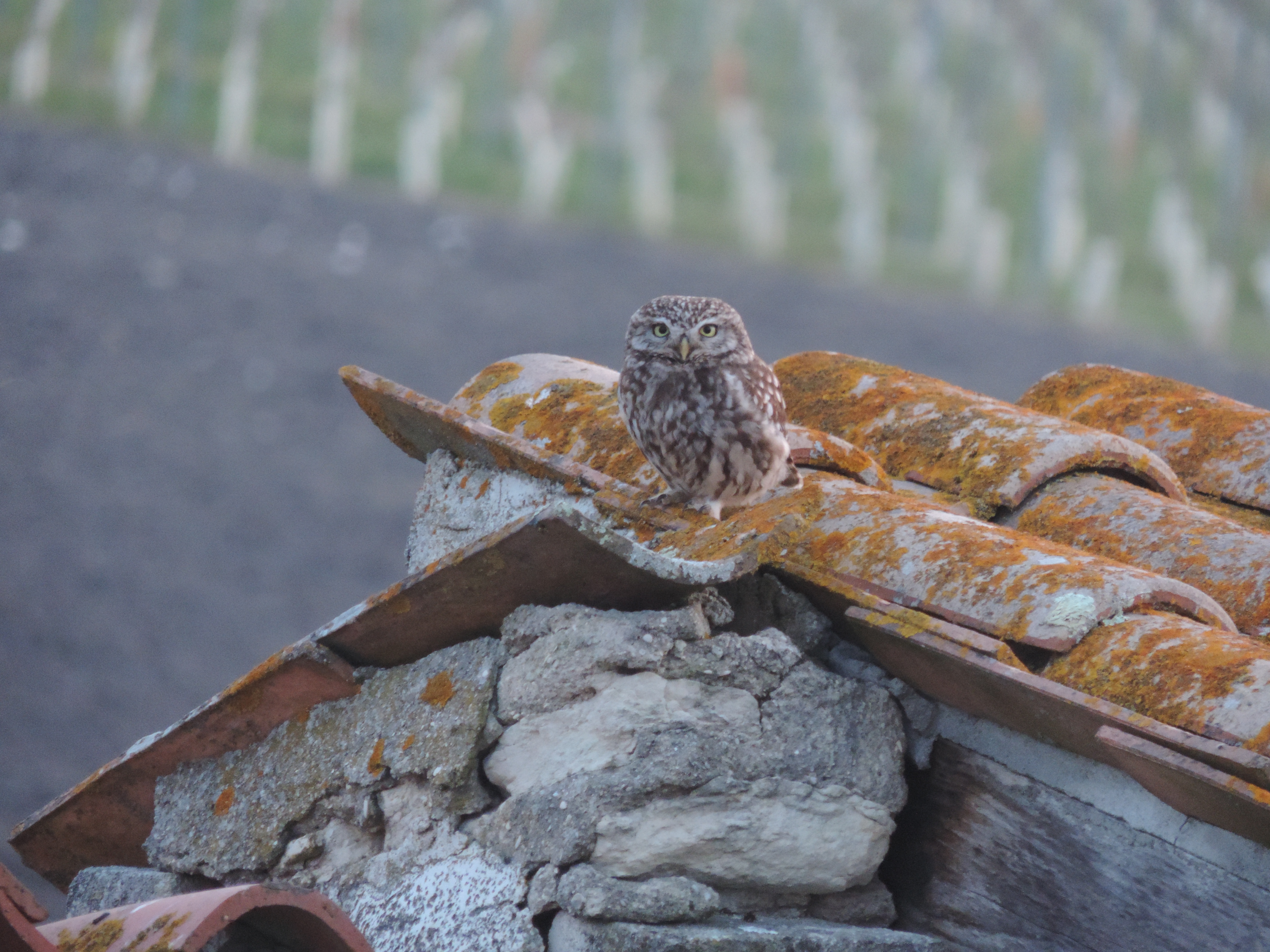
When I lived in Genté I had a studio upstairs looking out over old, abandoned barns to a hillside covered with vines. One day I had that sensation of being watched and when I looked out of the window I saw this bird. It’s a “Little Owl”. Yep, that’s what it’s called. There were several Barn Owls living both in one of the old barns, and in a dovecot cut into the wall of the house, just above our front door. I’d become quite familiar with them, but I hadn’t seen a Little Owl before. I reached for my camera and took this photo. No wonder I had the sensation of being watched! Look at that gaze!

We moved to the Charente Maritime, from the Charente, four years ago. I haven’t seen any Barn Owls since. But over the last few days I’ve heard a really loud bird call at night, and, then, more often, in the daytime too. I use an app on my phone to identify birdcalls. It tells me this is the call of a Little Owl. I haven’t managed to see him yet, but I’m hearing him loud and clear. I think he’s taken up residence in the forest area at the top of the garden.

But to return to this gaze……how do we sense that we are being looked at?

It can happen in a cafe, or restaurant. It can happen in the street. Somehow, we are attuned to the gaze of others (not just other people, but other creatures too). I’m convinced it’s not about scanning the environment and just noticing who, or what, is looking our way. It happens too often that I’ll look up from a book (yeah, I do a LOT of reading) and turn in the exact direction to meet the gaze of another. I don’t know how that works.

But, we all have a need to be seen, to be acknowledged, to be taken into account. Solitary confinement, “sending to Coventry”, and exile are powerful punishments. Intolerable, even. We are social creatures, and we can’t survive entirely without others. Yet, on the other hand, we can receive too much attention. We can wish for times where we aren’t noticed. We are living in a disturbing time of mass surveillance, where corporations and governments are watching, keeping an eye on us, and it’s not comfortable, or welcome.

Like so much else in Life, we have to find some kind of balance, some kind of harmony of two polar opposites. We need connections, we don’t want to be ignored or excluded. But we need privacy too, we don’t want others watching over us, following what we do, whether that’s to feed us advertisements, or policies, or to exert a control over us. And like the other balances we seek to achieve, there isn’t an end point, a place where we get to and then that’s it, we can move on. It’s a way of life.

There’s another question I have when I look at this photo. Why?

Why is this Little Owl looking at me? Why is he sitting out there on the roof, looking through the window into my studio, looking directly at me?

Fear? He’s keeping an eye on me, as a potential threat? I’m definitely no expert in bird expressions, but he doesn’t look afraid.

Because he wants to connect? Not, like have a chat, or start a beautiful friendship, but just to connect. Sometimes making a connection is enough.
Read Full Post »

“The reciprocal truth of the observer changing what is observed is that what is observed changes the observer” Iain McGilchrist

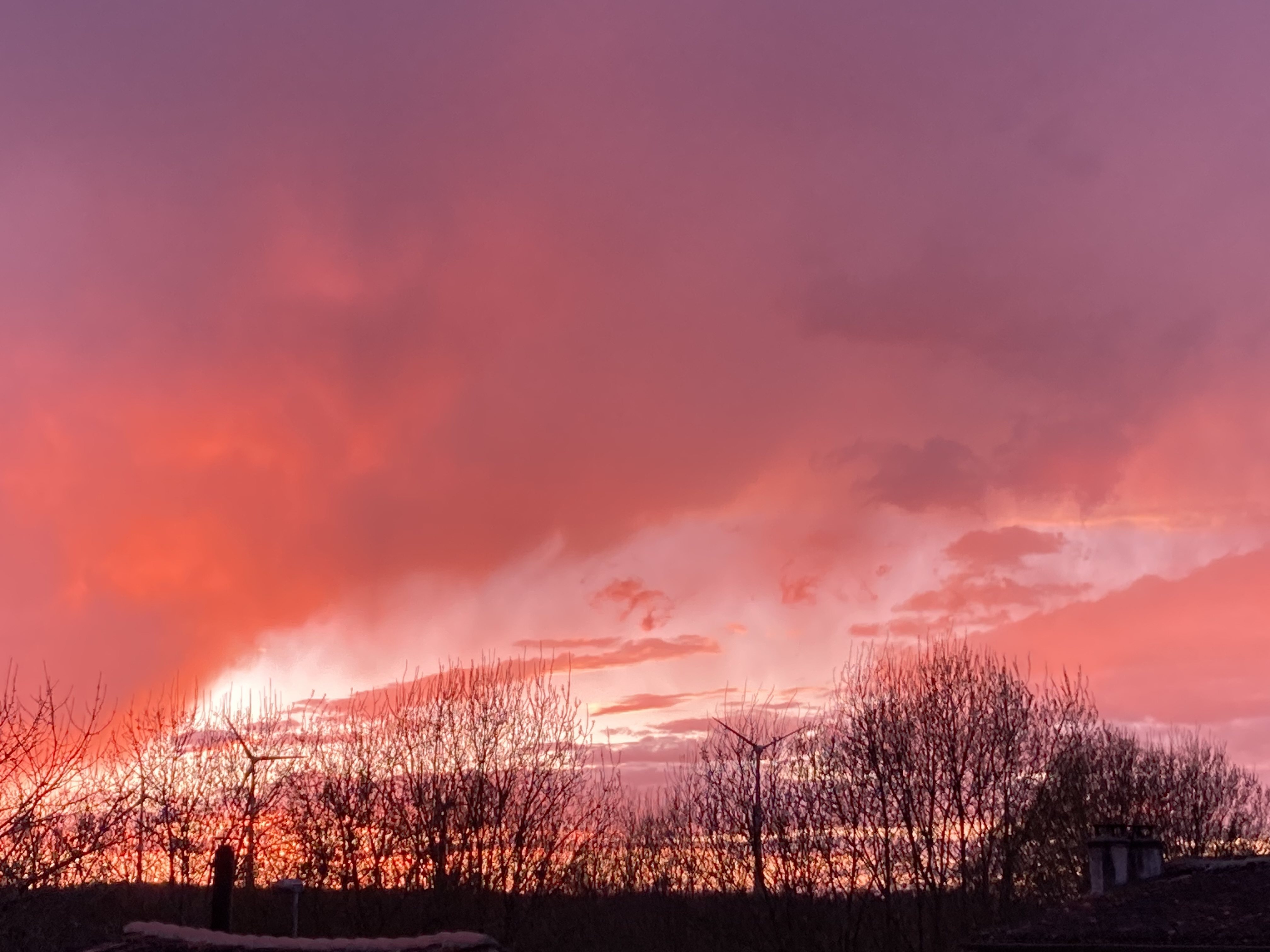
Yesterday afternoon I was sitting in my garden with my wife and we were chatting about how much we enjoy living where we are now. Our garden is surrounded on all sides by tall trees, but it’s a big garden so there’s a sense of space along with this sense of being enclosed. It provides privacy and protection and it also means we are surrounded by birdsong. One thing we don’t have, however, is a long view. In our previous house, for several years, we looked out onto vineyards and my recollection is that there were frequent incredibly impressive sunsets. We still get to see some lovely sunsets here, but I no longer see a sunset where the whole sky turns red, something I saw pretty frequently before.

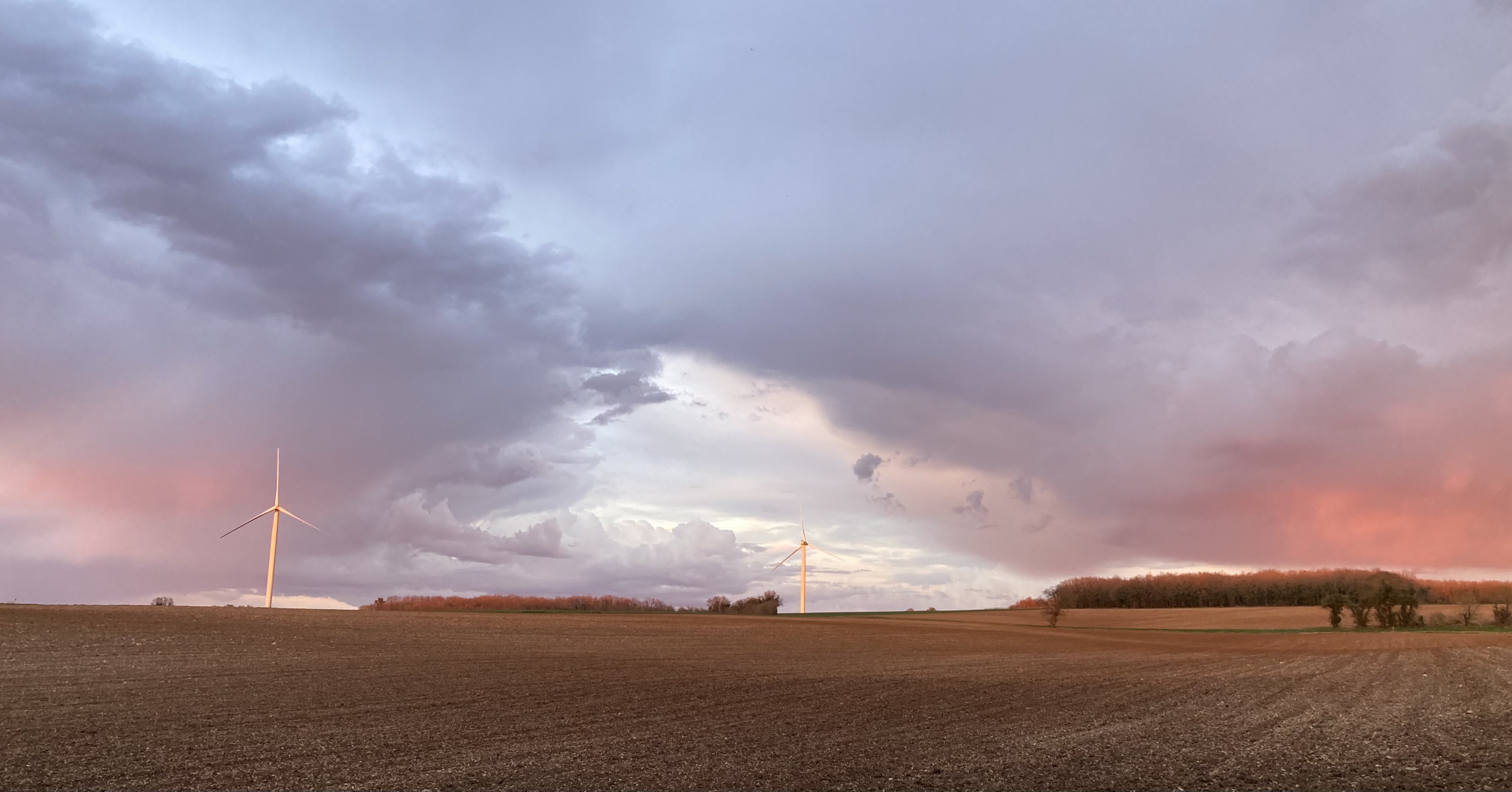
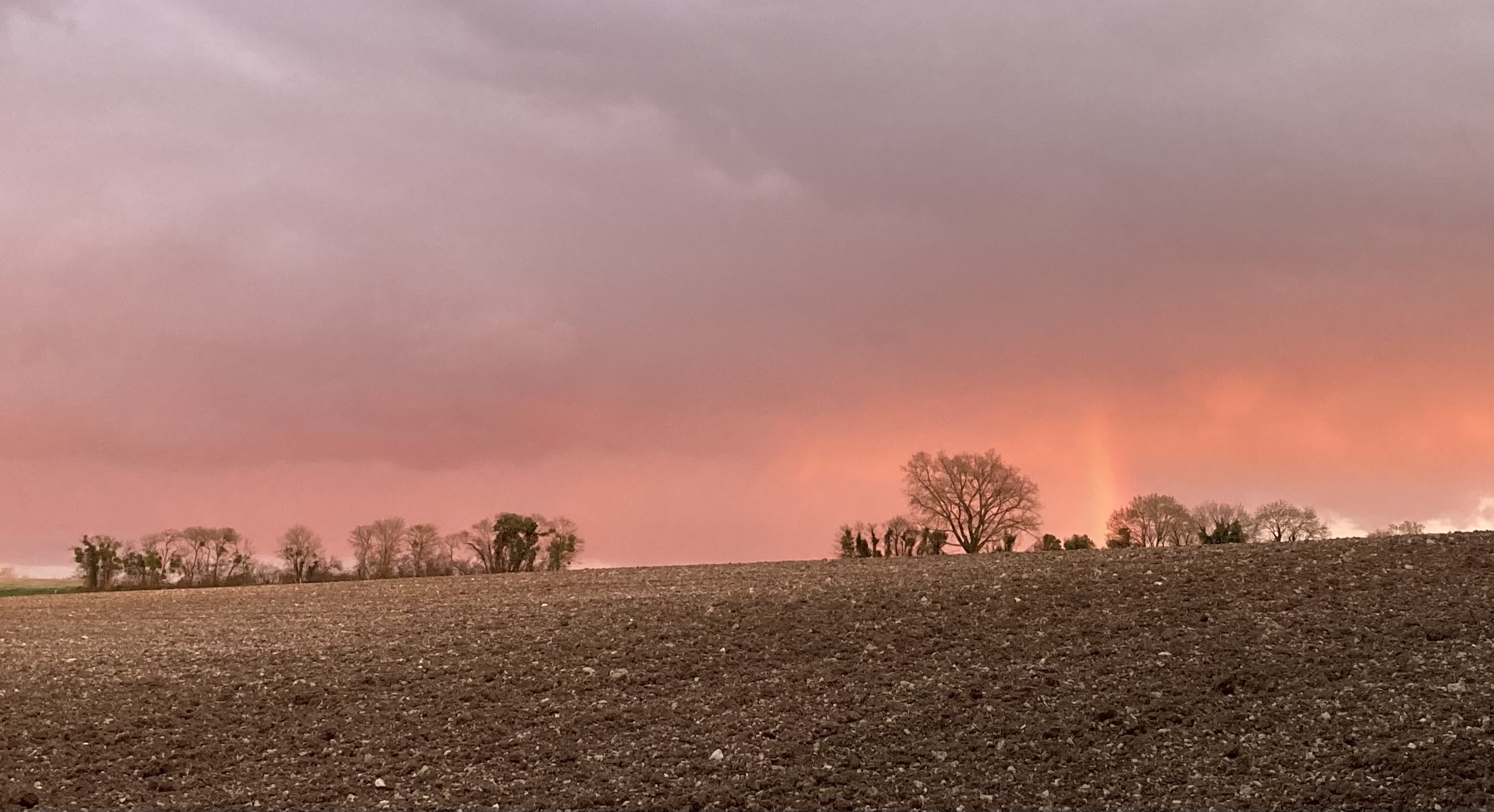
Well, some storm clouds suddenly emerged and we had to go indoors. There were a couple of rumbles of thunder, a single flash of lightning and then a short downpour. It was all over in minutes. By then it was almost time for the sun to set and we noticed that the light in the sky was unusual. So, off out into the garden again, and up to the back fence which borders a field to the east of us. I took the first two of these three photos. Then I turned and looked west and took the third photo.

Aren’t these beautiful?

Sometimes synchronicity surprises me in ways which makes me think my phone is listening to me (it probably is, and, it’s certainly tracking what I do with it!), but, this was one of those occasions where I felt that the universe was listening……listening and delivering.

What we observe changes us, and we change what we observe. We are the co-creators of our reality.

Read Full Post »

What I love about discovery and exploration is that you can do it right on your own doorstep. Our garden here in the Charente Maritime was largely abandoned for a few years before we bought the house. We’ve been working on a bit at a time over the last three years. There’s an area where we had giant brambles, overgrown nettles and fallen trees cleared away and seeded grass where it had until then been impenetrable but we left all the healthy trees which surrounded that area. I made a few paths amongst the trees and it feels like a little forest walk.

One of the things I love about this garden is that so many plants grow here after having found their own way here. I think there’s very little which has been deliberately planted (until we arrived!). So, the other day, the sun lit these lovely yellow flowers and I thought, what on earth are these? These days it’s dead easy to find out. I took a photo with my phone, pressed the “info” button and it told me this is Calendula arvensis. I only knew Calendula officinalis, so I then searched online and found a research article on PubMed Central about traditional uses of this particular plant. Wow, was I amazed! The researchers say it has “anti-inflammatory, antiviral, antimutagenic, antimicrobial, insecticidal, antioxidant, and immunomodulatory activities” – well, that sounds a lot! They list about 45 different areas of the world where there are recorded traditional uses of this plant, describing in each instance what parts of the plant are used and what they are used for.

I find all that absolutely fascinating, and it reminds me how much we limit our knowledge and therapeutic skills when we ignore how populations around the world have used particular plants over millennia. Surely we shouldn’t dismiss all this information just because we haven’t studied them the same we study our manufactured, artificial drugs?

While I was admiring this little flower I was aware of how much bird song I could hear, so I fired up another app on my phone, “Merlin”, which is a kind of Shazam for birdsong, and it found and identified seven different species of birds all singing like mad. I don’t think I’ve ever lived somewhere where there were so many birds around every single day.

I like how modern technology helps be to recognise plants and birds and how easy it is now to discover so much about them. It makes me aware of how little I know and how I’ll never stop discovering and exploring.

Read Full Post »

“I would love to live like a river flows,
carried by the surprise of its own unfolding.” – John O’Donohue

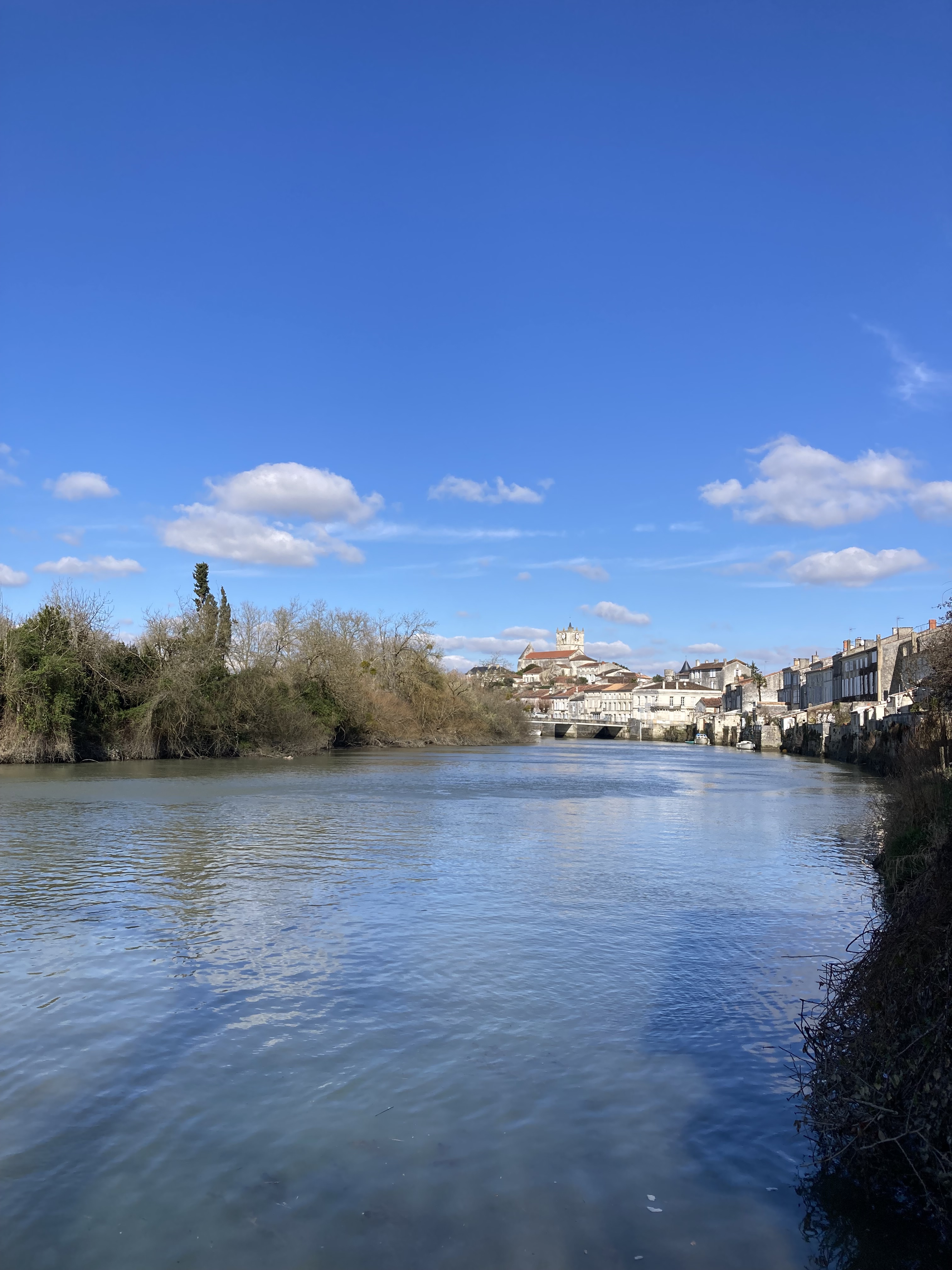
I live in the Charente Maritime, in South West France. I took this photo in Saint Savinien which is a small town just a few kilometres from where I live. The River Charente runs through the town, as it also runs through Cognac, near where I lived when I first moved to France a decade ago. It winds and twists its way through both the Charente and Charente Maritime departments and as you travel around you come across it again and again.

The primary characteristic of the River Charente is that it pretty much always looks the way it does in this photo. It flows incredibly smoothly. Maybe there is somewhere along its way where it breaks into white river rapids, but I’ve never seen that. It just never seems choppy, no matter whether it is flowing fast or slow. In fact, the impression you get is that it is at ease. It’s a river which flows calmly and almost effortlessly. So much so that people around here will tell you it is responsible for the rather laid back, “zen”, “take it easy” attitude so typical of this area.

Flow is a fundamental characteristic of all life. You could argue that it is the key characteristic, distinguishing the animate from the inanimate…..except that even the inanimate also flows, just over a much longer duration than the animate. You have to take a longer view to be able to see the flows of glaciers, continents and mountains.

I think flow is a marker of a good day. I feel I’ve had a good day when my activities, my thoughts, and my feelings have all been flowing like the Charente…..strongly, smoothly and incessantly…..with an ease, a freedom and purpose.

Read Full Post »

I know the old saying is “Red sky in the morning, shepherd’s warning”, but when I look out my window when I get up and see a sky like this I am delighted. I’m delighted because it’s beautiful. Don’t you agree?

And every encounter we have with beauty contributes to making today a good day. I notice beauty everywhere in nature. It’s easy to experience just by walking round the garden and noticing. There is so much beauty in the plant world. But while I’m in the garden I notice something else beautiful….birdsong. I’ve never lived anywhere else where I hear so much birdsong every day. I’m surrounded by it. Probably because my garden is surrounded by trees on every side. Looking up to the sky is another way to encounter beauty, whether it’s in the gorgeous reds of a sunrise, or sunset, or the amazing blues of a clear day, or the astonishing shapes of clouds as they drift by, or the sparkling night sky with the parade of planets.

A lot of the beauty I encounter is visual. You’ll know from browsing this blog that I’m a keen photographer. I photograph whatever catches my attention. I photograph what I find beautiful and what stirs my sense of wonder. But a lot of the beauty I encounter is also auditory. I love music and listen to music for a good part of every day. And a lot of the beauty I encounter is in other human beings. I am repeatedly struck by the kindness of others, by the shining delight in a happy face, by the strength and resilience of those coping with adversity, with the radiance of those who love.

Where will you encounter beauty today? Take a moment to notice, and a moment to reflect at the end of the day. It’ll make your day a better day.

Read Full Post »

Silver linings

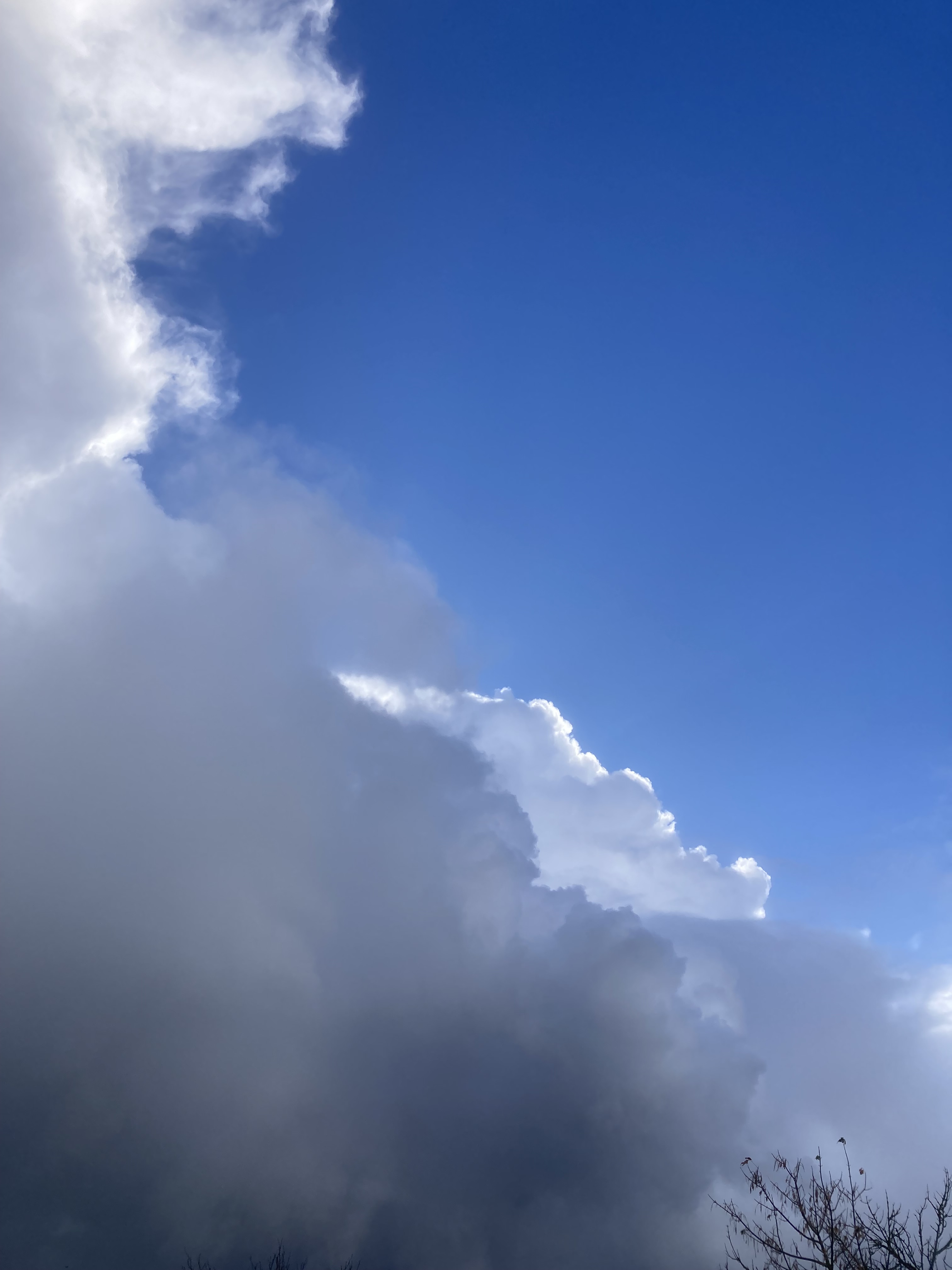
Silver linings – even behind the darkest storm clouds we can see sunlit fluffy white ones ready to emerge. When I look at this image I realise you can approach it two ways, partly because it’s a snapshot. You can see a white cloud in the process of being obscured by a black stormy one, or you can see a black stormy cloud moving away to reveal a white one. But it’s not just the lack of time context which allows us to approach this image in two ways. We can apply the same old glass half full, half empty adage. If you are of an optimistic disposition you’ll probably be tempted to see this as an image of the end of a storm. On the other hand, if you’re rather more pessimistic, or fearful, then you’ll see this as a storm approaching.

Pretty much the same thing happens all the way through the average day, doesn’t it? Don’t you know some people whose stories are full of mishaps and “bad luck”? And others who seem to land on their feet in every circumstance. Why is that?

Well, again, you can’t really know without context. When someone has suffered a lot of trauma in the past, it’s easy to understand why they might be fearful, and wary. And when someone is currently in difficult circumstances…..poverty, poor housing, surrounded by violence, even war, it’s not difficult to understand they will have trouble seeing the positive potentials in each day.

However, as ever, it’s not black and white. Psychologists who study happiness can find high levels of positive thought and happiness amongst very poor populations, although they also find that being extremely rich and famous is no guarantee of happiness either.

It’s not fixed either. If circumstances are changed that can help a lot….one of the best arguments for “Universal Basic Income”. We can choose, as a society, to create healthy, affirming and supportive environments for children to grow up in. We can, and should, expect politicians to look after the Commons, to tend to the water, the air, the soil, to the food supply and so on. That would be a good start, don’t you think?

Read Full Post »

Not simple

Living organisms are not simple (no, not even the simplest of them!). Look at this tree. How could you begin to trace its beginning and its end? Where do its roots begin and end? Where does the trunk begin and end? What makes the branches emerge exactly where they do, and what determines the direction they will grow and distance they will stretch?

And, to think, this tree began as a single seed. How absolutely impossible to predict the exact shape and size of this tree from an examination of that seed.

We like to chop reality into pieces, calling this a part, and that, another part, as if there are clear divisions between what we are calling “parts”. But that’s just what our brains do. Specifically, that’s how we engage with the world from the perspective of our left cerebral hemisphere. That hemisphere was never intended to function alone, and all its hyper-focus, all its re-presentation, all its re-cognising, labelling and categorising, was always meant to be passed back to the right hemisphere for re-contextualisation, for re-absorption into the whole, so we could see the connections, the relationships, the ever changing, developing flow of the world.

I’m convinced that the world is a more satisfying place, that life is better, when I open my mind to awe, to wonder. I’m convinced that the world becomes meaner and more shallow when I reduce it to “things”, “objects” and utility.

How amazing it is to really stand and see a tree, a single tree, to gaze, and to wonder at its origins, its history, its connections and its here and now reality. How amazing.

Read Full Post »

Rates of change

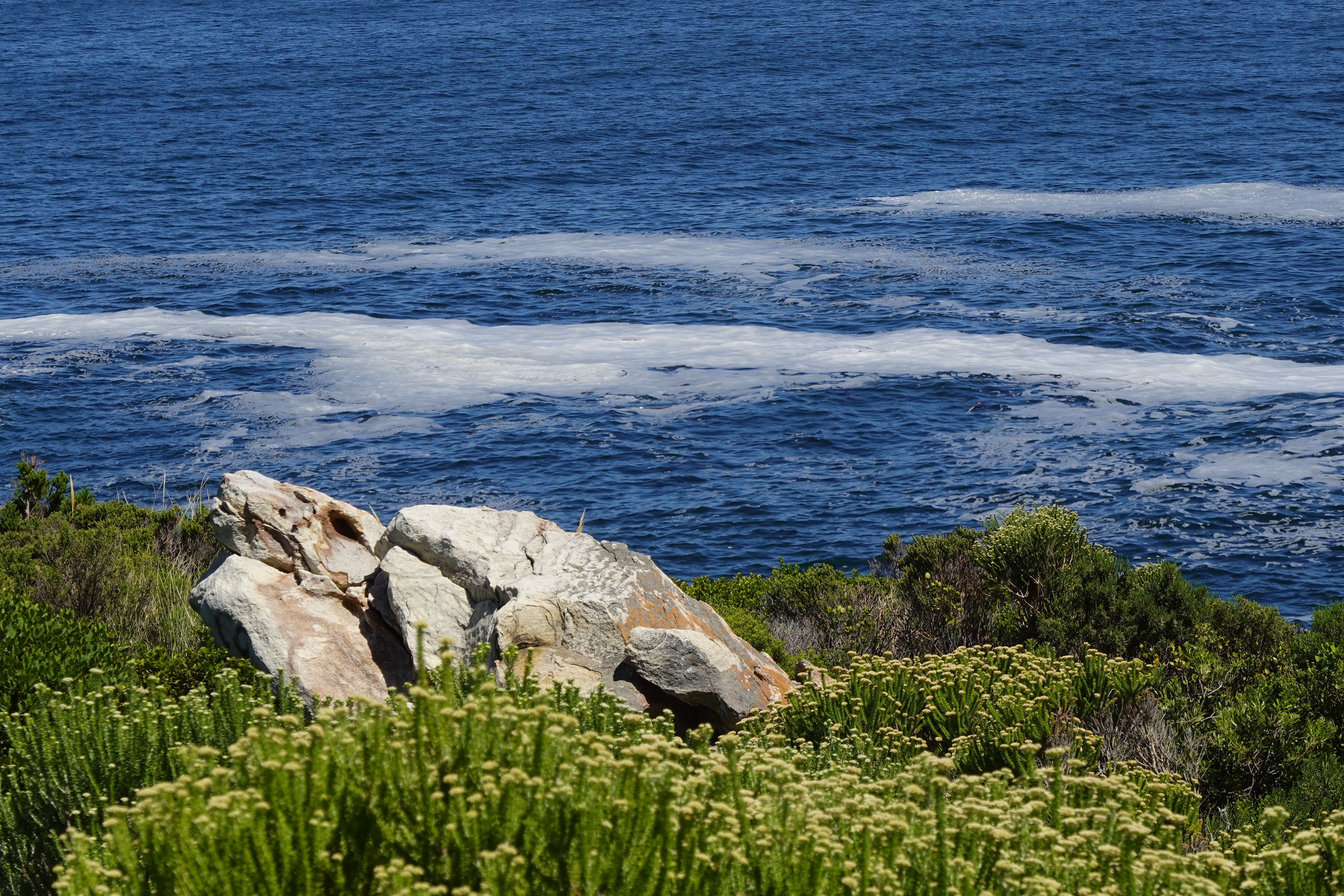
One of the things I like about this photo is how it captures three completely different rates of change in the world.

Most of the image is filled with the sea, which changes constantly and obviously. It’s never still (even when it looks calm). It’s always flowing, breaking into waves, surfacing water molecules and throwing them into the air, deepening others to hide them on the ocean floor. Every wave reminds us of how every individual appears distinct only for a little time, then dissolves back into the source, erasing duality, every one never really separating from the One.

Then we see a large rock. Stable and strong as a rock, we say. But rocks are constantly changing too. They are submitted to daily forces of wind, rain and sunshine. They are sculpted by the weather over thousands, even millions of years. Just as it is hard to see the minute hand move on a clock, it’s really difficult to see the changes taking place in a rock. But change is happening, all the same. Every rock reminds us of how every unique being emerges from the underlying flux of the universe to present a consistency, a transient integrity which allows them to appear as a whole, and separate individual. Just as I look back on my life after a number of years, I can see photos of myself as a baby, as a little child, as a teenager, as young adult, a parent, a maturing adult into retirement, and on, beyond the “three score years and ten”….but all those appearances, all those “selfs”, are a single self. Each photo from a different decade looks so different, but inside, they all feel like me.

We need both – the constant flow and flux of change AND the transient consistency of a structure, an ego, a self.

Thirdly, the foreground in this image is filled with plant life, an abundance of plant life. Plants change both quickly, from moment to moment, hour to hour, with the sunlight, the warmth and the wind. But also seasonly. They change in cycles. The life of a flower isn’t linear, it’s more like a spiral, looping round and round through the four seasons of the year, each season revealing its particular characteristics, of growth, blossoming, reproduction, fruition, then a winter of quiet and apparent inactivity.

We need this third energy too….the cyclical, seasonal, rhythmic change.

Constant flowing change, a certain resistance manifesting as consistency, and spiralling rhythms of reality.

Read Full Post »

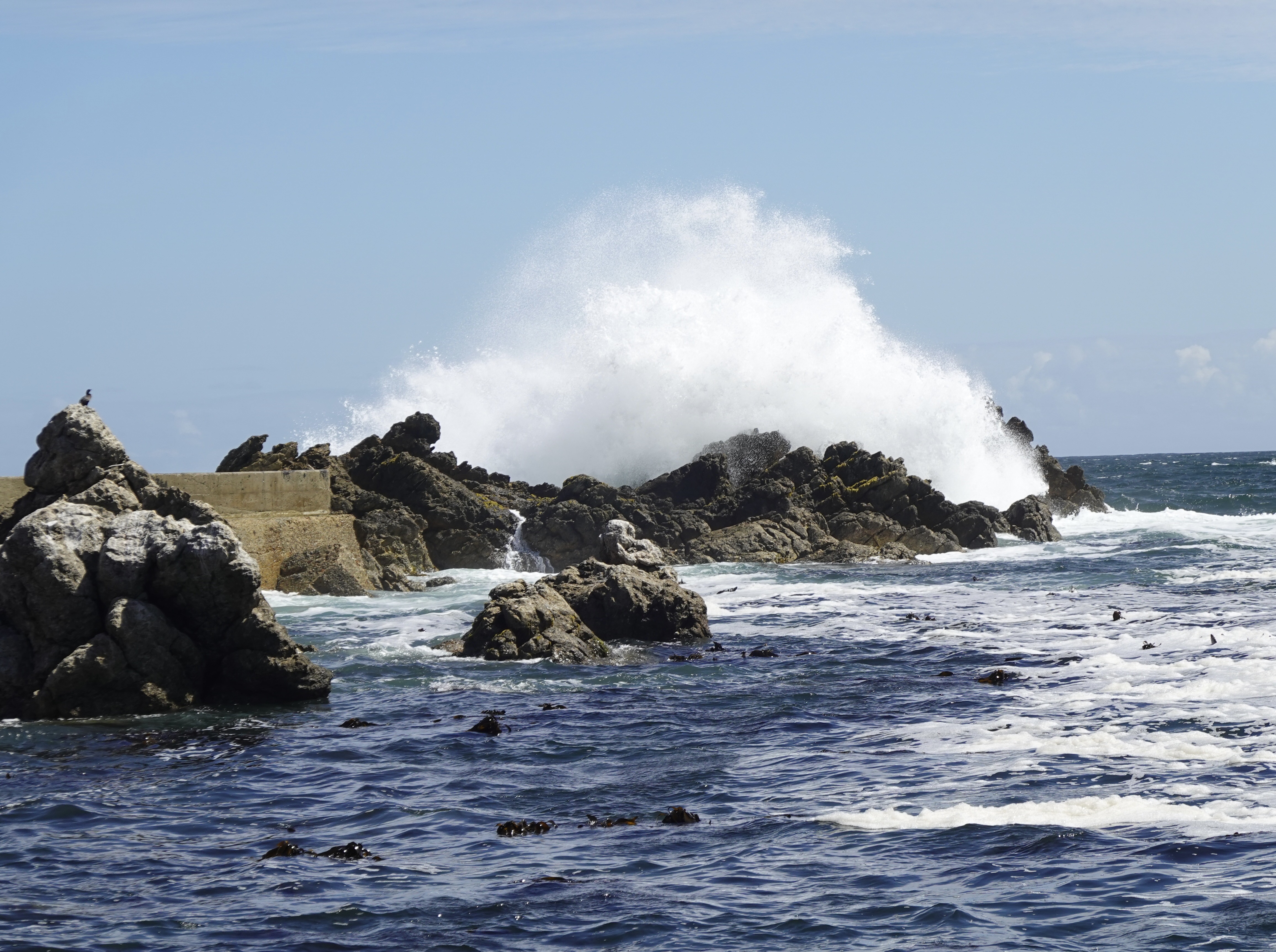
I don’t know if it’s universal, but, a lot of us are enthralled by breaking waves. I know I love to see them, and can stand, or sit, mesmerised for ages watching waves crash onto a rocky shore. I love the colour of them, the size of them, the sound of them, the shapes of them.

These are moments of power and transition. You can tell how much power is in them from the noise they make when they crash against the rocks. I know that it’s the steady, constant, repetition of fairly small, less dramatic waves, which do most of the work shaping the rocks and the land, but these big ones must push things on a bit, don’t you think? The power of the sea is more obvious when it breaks through the surface like this, and smashes onto the rocky outcrops. And it’s a moment of transition. How long do any of these waves last? Seconds, at most. If you’ve ever tried to photograph them, you’ll know you have to take several photos to capture a single moment like this. As the liquid sea bursts into spray and foam, billions of water molecules are released into the air, some to return quickly back into the sea, but many others to dissipate, invisibly into the air….on their way to form clouds and mists, and to dampen the soil and the sand.

I’m also struck by how wave watching like this gives you a vivid experience of the fundamental unpredictability of reality. It’s really hard to predict which wave will hit the rocks the hardest, which will soar highest into the sky.

So, this is what strikes me, as the waves strike the rocks…….power of nature, the beauty of transience, and the fundamental unpredictability of reality.

Three life lessons in a moment, huh? How about you? Do you love watching waves crashing into rocks too?

Read Full Post »

On reflection

One of the things I enjoy most about photography is taking the time to really look at the photos I’ve taken. I see things on review that I swear I didn’t see when I was actually there taking the photo. Or I see better something I had noticed, but didn’t take the time to look more closely while I was actually there. When either of those things happen it reminds me to slow down and pay attention in everyday life. I know some people feel that taking photos separates you from the moment, and maybe, in some ways, it does, but actually I find taking some photos, AND taking time to pay attention in the moment, AND reviewing the photos at home, (repeatedly), enhances the joy and pleasure I get out of life, and allows me to make more sense of the everyday.

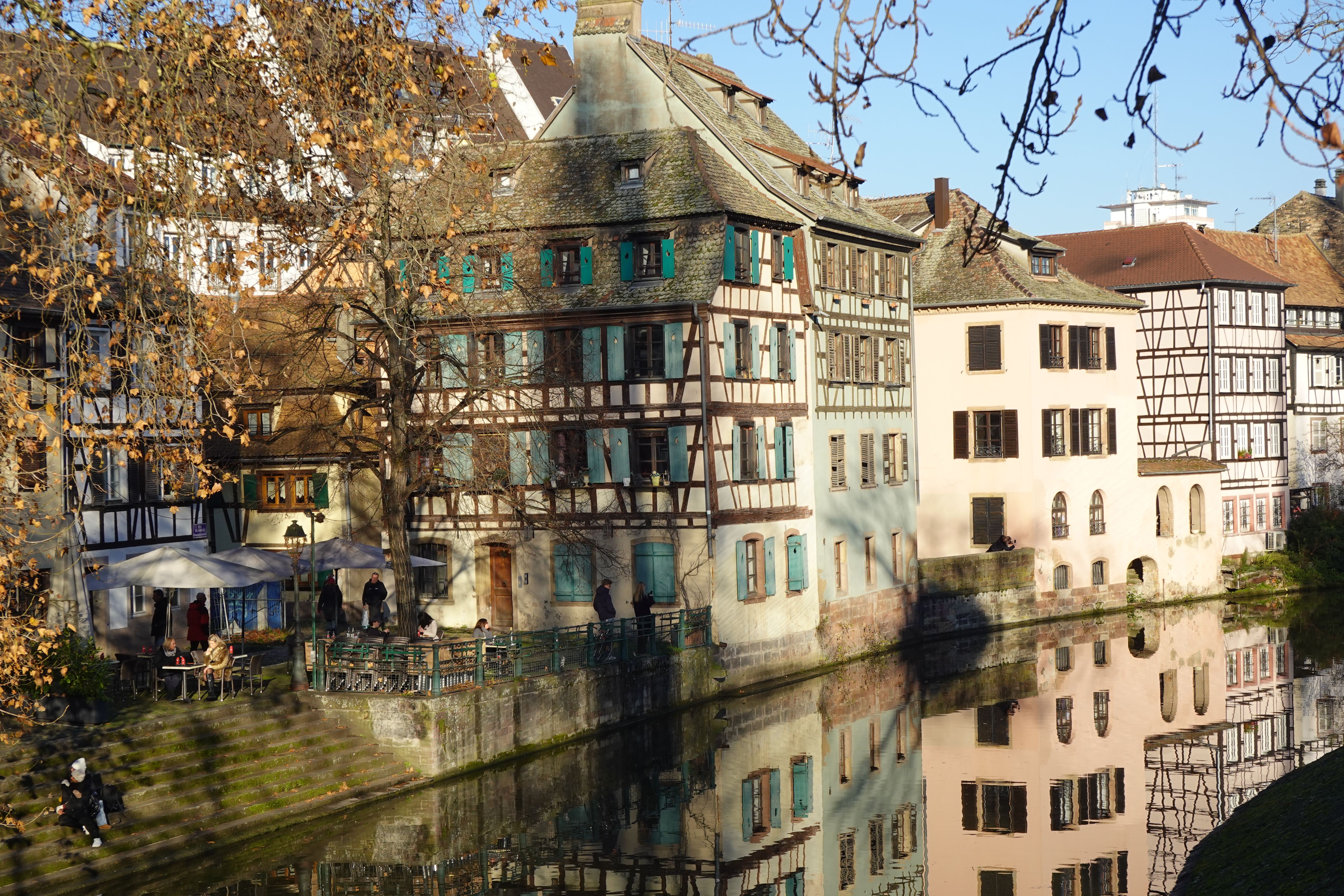
Here’s an example. I was in Strasbourg and noticed the beautiful reflections of the old buildings. Probably thousands of people have taken a photo like this, standing at the exact same spot as I was standing on this bridge. You can see that happening more and more as particular views and locations become “instagrammable”. However, just as in life, every photo is unique. I framed this particular shot, not just to capture the buildings and their reflections in the water but to include the couple sitting on the steps (bottom left of the image) – because I thought that made a more appealing composition.

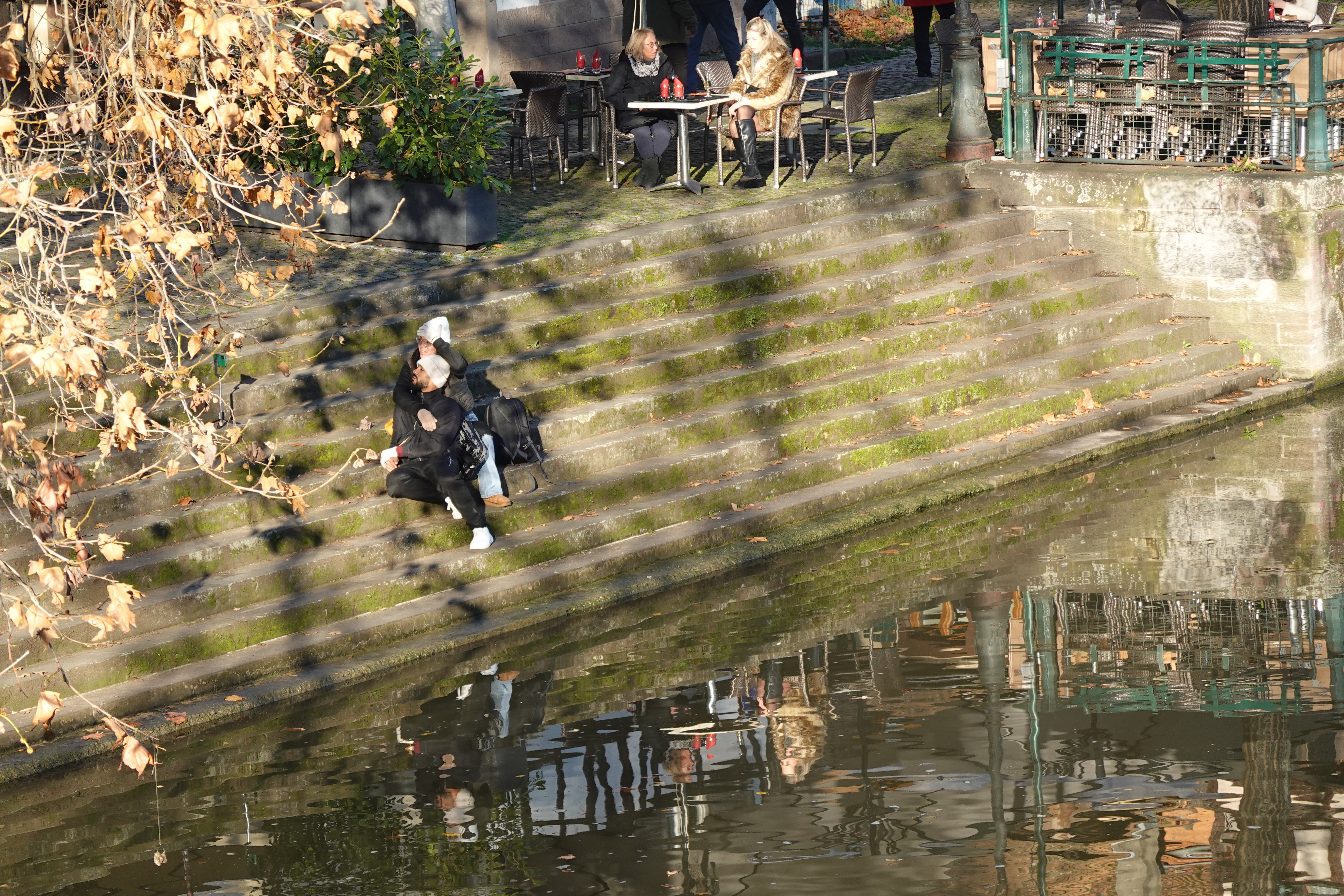
Having noticed them in the viewfinder, and taken the shot, I zoomed in to take a second photo, where the couple and their reflection in the water became the main subject. Here’s that second photo –

I think, at the time, my thought was, what a nice image of “reflection” this would be…..a reflection in the water, and a couple of people, well, reflecting (taking a moment).

But now that I’m revisiting these photos I’ve just seen something else. These people aren’t looking at the water, or the reflections. They are looking at something off screen to the left (there was a beautiful and very ancient tree growing at the end of the bridge. I think that’s maybe what they were looking at). Then I noticed something else. At first, I thought, oh, they’re sharing a pair of white gloves. Because it looks like they both have one gloved hand, and one ungloved hand. Now, sharing a pair of gloves is an interesting thing to do. I think I might have done that while we walked on a cold wintry day, with one hand gloved, and the other thrust deep into a jacket pocket….but, looking closer, I see that for each of them, the gloved hand is the left one. They are both wearing a left hand glove. Well, I’ve never seen anyone do that before. That sure makes me curious and stimulates my wonder and my imagination. What’s that about?

I do love it when a photo I’ve taken leads me off down very different paths of wonder the more closely I look at them.

I am convinced that taking photos, and reviewing them repeatedly, encourages me to reflect more….on the world, on other people, on my life, and on my every day experiences.

Read Full Post »

Older Posts »