Feeds:
Posts
Comments

Archive for the ‘life’ Category

Booksellers lunch


When I was in the South of France recently, I visited the coastal town of Sète. Just before lunch time we found a booksellers market in one of the town’s squares. After browsing the bookstalls, we sat down at one of the tables outside a little restaurant and ordered what might be one of the most delicious salads I’ve ever tasted in my life. It came with a little bowl of gazpacho in the middle of the plate, and, honestly, I couldn’t recommend it more highly!

As we ate, I noticed that the booksellers were gathering some spare tables together in the middle of the square. They then ordered up lunch from the little restaurant and all sat together over the next hour or so chatting, sipping wine, and eating the tasty salads.

I mean, is this what they call “quality of life” or what?

Read Full Post »

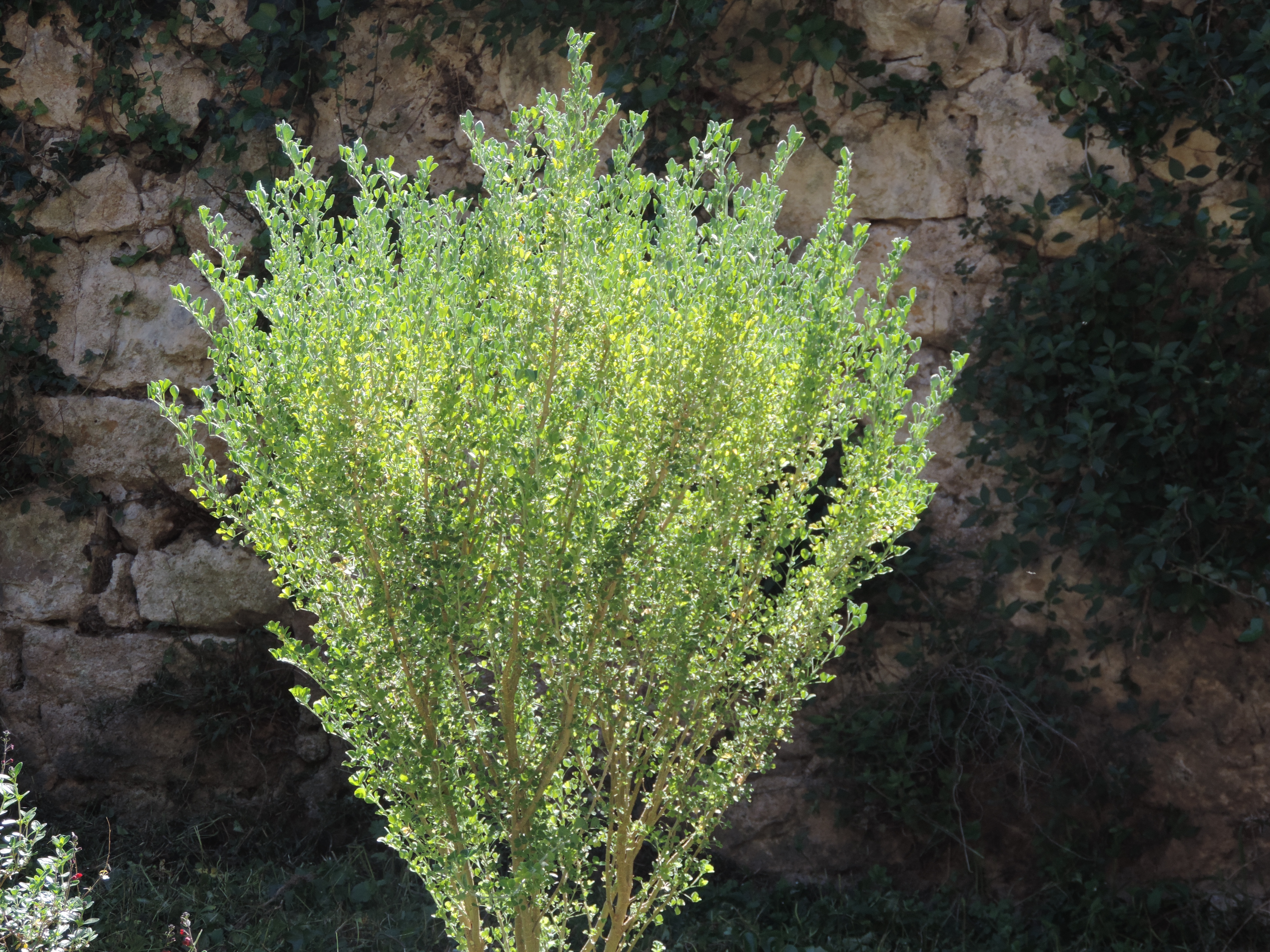
In my twelve monthly themes, May is the month of blossoms and new growth.

I wonder what is beginning to blossom in your life?

I wonder what new buds of opportunity are appearing, reaching for the sun?

I wonder what new direction your life will take this year?

DSCN1149 DSCN1152 DSCN1099

Read Full Post »

It’s very common for us to say something like “My head is sore”, or “My stomach aches”, or even “I have a rash” when we experience one of those symptoms. So who is it who has this head, stomach or rash? This way of talking confirms our feeling that we “have” a body, but that our bodies are not us. Stop and think about it for a moment. Are you your body?

You might answer that your body is part of you but it isn’t YOU. That the you who has this body is maybe your mind?

But then we do the same thing with our minds too, don’t we? We say “I’ve lost my mind”, or “I’m out of my mind with worry”. Who is the “I” who is referring to this mind?

So your body isn’t you. Your mind isn’t you. But both your mind and your body are a part of you.

The physicalist approach to this claims that this “you” which you experience is an illusion. It’s just something your brain makes up.

But stop and think about that one for a moment. If “you” are an illusion, who is having this illusion?

This is what Mary Midgley is exploring in her latest book, “Are you an illusion?”

I highly recommend you read it. It’s short, and it’s an easy but deeply thought provoking read.

She asks of those who write the books claiming that only the physical is real, and that the subjective sense of self is an illusion

Unkind observers sometimes enquire who, in that case, actually writes the books that expound this doctrine? Do the brain cells really do this work on their own?

She quotes the neuroscientist, Susan Greenfield, saying in an operating theatre, “This was all there was to Sarah, or indeed any of us…..we are but sludgy brains” and Colin Blakemore saying “The human brain is a machine which alone accounts for all our actions” and she responds

Thus if we want to understand why (for instance) Napoleon decided to invade Egypt or Russia, what we need is not – as we might think – some knowledge of the political background and of Napoleon’s state of mind, but simply facts about the state of his brain, which alone can account for his action.

Does the claim that you are only your brain cells, or only your DNA, ring true for you?

The materialist credo rules that thoughts, not being physical, cannot cause physical events. And as we know from every activity of our lives that thoughts actually can and do affect those events – that they are often all too effective, producing practical results in the world even when we wish they wouldn’t – this doctrine puts materialism into a radical conflict with reality.

This is the nub of it for me. These materialist beliefs don’t only not ring true, they don’t adequately explain reality. So why are they so prevalent? One of the authors she draws on to answer this is Iain McGilchrist who has shown us how the left and right hemispheres of the brain work together to produce and integrated understanding from their two very different ways of approaching reality. She quotes him saying

Mind has the characteristics of a process more than of a thing; a becoming, a way of being rather than an entity

This is almost identical to the way Dan Siegel and the Interpersonal Neurobiologists put it – “the mind is a process of regulation of energy and information flow”.

She hits the nail on the head time and again. Let me finish with this one

The bizarre anti-self campaign which is the main subject of this book is surely intended, among other things, to put us off taking notice of everybody’s inner life: to persuade us that this is a trivial, contemptible subject by the simple device of pretending that it isn’t there.


Read Full Post »

Do you ever wonder why we are here? Or are you someone who thinks there is no answer to that question because the Universe is totally random and meaningless?

When the Universe created human beings, it created consciousness, and with consciousness came some new abilities – a combination of the ability to wonder (to be amazed by, to be in awe of, to have that émerveillement du quotidien), the ability to enjoy (to experience a wide range of sensations and subjective experiences), and the ability to care for (to look after, and to nurture).

Walking in the garden at the hospital where I work today brought all of that home to me….


Clematis

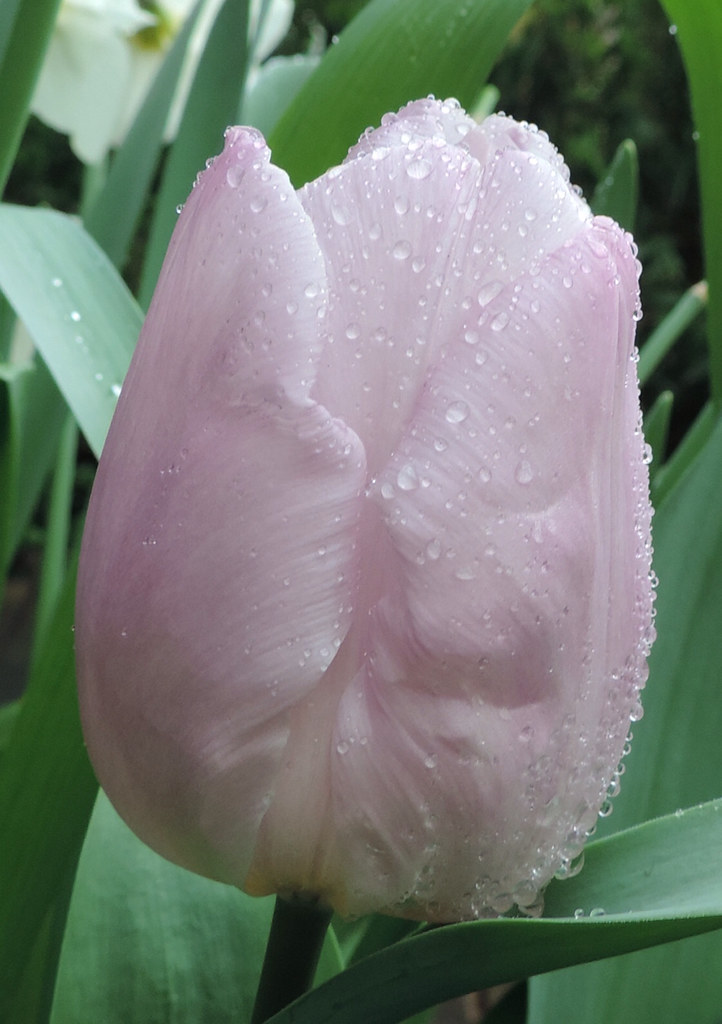
Tulip and rain

Read Full Post »

In the A to Z of Becoming, Q is for Question.

Human beings have an unstoppable curiosity and it appears very, very early. If you have children who are old enough to talk, you’ll probably have encountered the “why?” question. Repeatedly. “Why?” “Because X”. “Why?” Because Y”. “Why?” In fact “Why?” might be THE most common question children ask (just above “Are we there yet?” when they are in a car!)

We never really give up on the why question, do we? We consider our lives and wonder how to live and what purpose there might be to life, and the question why is an important part of that.

But “Why?” isn’t the only question you could be asking. “Who am I?”  is another good one, and Marc Halévy stresses “What for?” which is also great for breaking through the walls of unthinkingness. (Is there such a word? There is now!)

Gary Lachman, in “Caretakers of the Cosmos” says

As far as we know, no animal wonders why it exists. Or, to out it another way, we are the only animals that do, and that wonder is precisely the threshold between our being only animals and being fully human. Whoever asked the first question about his existence was, by this reckoning, the first human.

That makes asking questions pretty essential doesn’t it? To be “fully human” we should think about why we exist.

I also like Montaigne’s repeatedly asked question which he puts in his essays – “Que sais-je?” (What do I know?) – that’s a great question to keep you in touch with humility!

I’ve just completed Robert McKee’s four day “Story” seminar today and we did a scene by scene analysis of “Casablanca”. Here’s one of the passages which leapt out at me today.

Rick: Who are you really? What were you before? What did you do? What did you think?

Ilsa: We said “No questions”

Rick: Here’s looking at you, kid.

Well, here’s looking at YOU, kid, but I say keep asking questions!

Read Full Post »

Seedling


I woke up up the morning with this phrase in my head “witnessing not measuring”, which was quickly followed by “witnessing not controlling”.

I’ve been wondering about that since.

That’s the essence of my work. I sit with people, engage with them, enable them to tell their stories and be heard without judgement which leads to understanding and recognition. Everything I do therapeutically is intended to support and stimulate the individual’s self-healing. I think this is something we often forget in health care – there really is only one way to heal, and that’s by the person’s own ability to self heal. Stop and think for a moment. If you have a cut, how does it heal up? If you break a bone how does it knit back together? If you have a viral infection how does your throat return to normal? Ultimately it’s done to your amazing capacity to self heal and self repair. Any therapy should assist that process if it is to be effective. It’s not ME who produces healing. It’s not my therapies which produce healing. It’s the patient’s own healing system which does the work.

And I can’t control that. Nobody can accurately predict the outcome of any particular treatment given to any particular individual on any particular day.

We like to pretend that by making measurements we can predict and so control. It’s an illusion.

I amazed every single working day by human beings and their amazing healing powers. Witnessing this is powerful. Understanding and caring come with the witnessing, and therapies are then tried within that context. It’s humbling.

Today I read in Gary Lachman’s excellent “Caretakers of the Cosmos”

Love, for Scheler, was the sine qua non of phenomenology, which in its essential form, is a way of allowing the world to be what it is, without interference by human concepts or aims. It is, in a sense, a way of listening to what the world has to say to us, from which follows the recognition that it has something to communicate, and is not simply a vast inanimate machine.

I think, by the way, there is a lot to be gained from witnessing yourself……whether through mindful meditation, reflective writing, or however you might do that for yourself.

Maybe that’s the third variation of the phrase I woke with – witnessing not judging.

Read Full Post »

Emerging branch

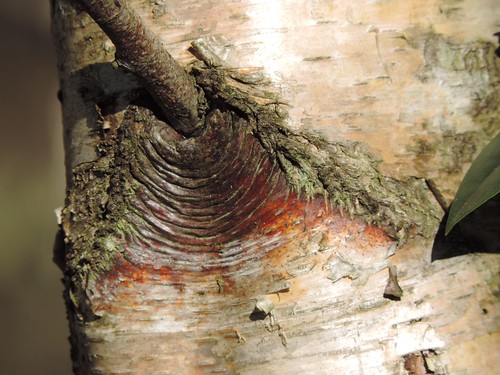
Take a look at this photo. It shows the growing new(ish) branch emerging from the trunk of a birch tree.
What stuns me is the beauty and the complexity. We don’t just see the new branch emerge like a stick or a stem, but we see all those ripples of activity on the main part of the tree.

I find all new life amazing but this is the first time I have noticed such elaborate and beautiful effects on a tree. It’s clear that how this birch tree grows is surprising and, I suspect, neither completely explained by science, nor in any way predictable in detail.

Could anyone predict exactly where a particular tree will produce new branches, and can anyone explain how the cells organise themselves to differentiate and multiply in this specific pattern?

I find it engaging and wonderful.

Read Full Post »

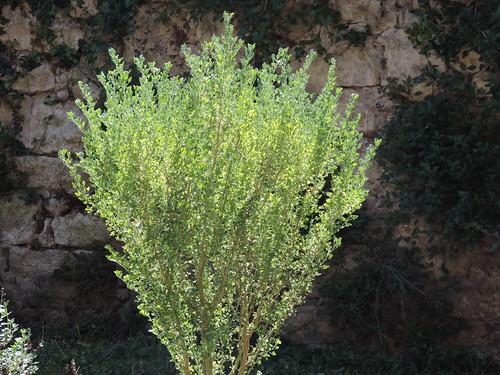
Light catches my eye, especially when whatever is lit seems to glow as if the light emerges from within….


Sunlit birch bark

The light in the plant

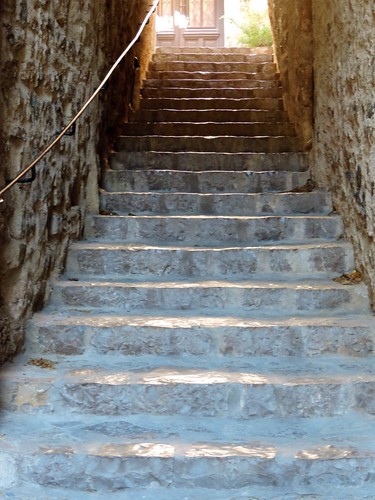
and sometimes, the light seems to lead you somewhere

The Stairway to...

Read Full Post »

Orange sky from Pointe Rouge


In the A to Z of Becoming, P is for Pause.

A pause is a break, a temporary stopping. I first encountered the concept of the “bardo” in the Tibetan Book of Living and Dying, where it was helpfully described as a space where enlightenment could emerge. The meditation teaching in that book is to become aware of the space between two thoughts, and gradually to practice increasing that space. In daily life the suggestion is to become aware of the space (or bardo) which occurs before an emotion arises eg anger or fear.

So, let’s look at two types of pausing.

The “pause of now” and “the long pause”.

The “pause of now”. One way to consider what goes on in our minds is to think of two default brain states – “reactive mode” and “responsive mode”. In reactive mode our minds work almost like reflexes. Someone or something “touches our buttons” and off we go, into a real state of anger, anxiety, fear or some other learned pattern of thought, feeling and behaviour. In this reactive mode we can feel entirely the victim of other people and of circumstances. It can feel as if we have no choices, that our happiness is entirely at the mercy of others. We are on automatic. We are in “zombie” mode. The responsive mode arises as we become aware of the early changes, recognise them, understand what is happening, and then make a choice about how we want to respond. So if we frequently find ourselves becoming angry or anxious when a certain person speaks to us, then if we can become aware of the reaction starting to happen, we can pause, then choose how to respond – sometimes we will choose to respond angrily, or anxiously, but sometimes we won’t. We will be doing the choosing as we open up this “necessary gap” and in the “pause of now” we gain flexibility, confidence, tolerance, autonomy, and move away from a victim or zombie way of living.

One of the easiest practices I know to begin to develop the skill of creating this pause to shift from reactive mode to responsive mode is Heartmath (see a simple introduction here). The first two steps of “quick coherence” in Heartmath are known as “getting neutral”. It’s a variant of “count to ten”, and it works. The more you practice it, the more quickly and powerfully it works.

There’s another kind of pause though, and it’s not the kind of pause which happens just over a few seconds, or at best few minutes. I got this idea from reading about the concept of “the long now“. We hear a lot about “living in the moment”. Maybe you’ve read “The Power of Now” by Eckhart Tolle? If not, then maybe you’ve read elsewhere about the idea of being present, instead of spending your time on the past or the future (which might focus your thoughts on grief or anxiety). But when you stop to think about it, “now” hardly exists. This present moment has become the past by the time you’ve said “this present moment”. Henri Bergson, the French philosopher introduced the concept of “duration” to allow us to think differently about time (instead of splitting it up into moments, like frames of a movie), but his work can be quite hard to understand. Here’s a short summary of his duration idea –

Instead, let us imagine an infinitely small piece of elastic, contracted, if that were possible, to a mathematical point. Let us draw it out gradually in such a way as to bring out of the point a line which will grow progressively longer. Let us fix our attention not on the line as line, but on the action which traces it. Let us consider that this action, in spite of its duration, is indivisible if one supposes that it goes on without stopping; that, if we intercalate a stop in it, we make two actions of it instead of one and that each of these actions will then be the indivisible of which we speak; that it is not the moving act itself which is never indivisible, but the motionless line it lays down beneath it like a track in space. Let us take our mind off the space subtending the movement and concentrate solely on the movement itself, on the act of tension or extension, in short, on pure mobility. This time we shall have a more exact image of our development in duration.

One other concept I found easier to grasp was the idea of the “long now” – which, I suppose, in even simpler terms could be thought of as “now-ish” (reminds me of how Italian friends would often use the term “15 minutes” which if you used your watch to measure would produce huge frustration because they didn’t mean a number of minutes, they just meant a “piece of time” (of around 15 minutes in size!).

Drawing on these ideas of time, I think we can usefully propose “the long pause”

The long pause is a space, a few minutes, hours, days, or even weeks. I think a holiday often is a kind of a pause. It lets you step off the treadmill, get some distance between your working life and the rest of your life and provide a vantage point from which to see things more clearly, or a place from which to allow a new pattern of thinking, a new set of decisions, some new habits, or, yes, even enlightenment, to emerge.

So, here’s your verb for this week – pause.

Practice pausing in the moment to move from reactive mode to responsive mode, and build into your life some long pauses, some “time out” – daily, weekly, monthly, annually.


Read Full Post »

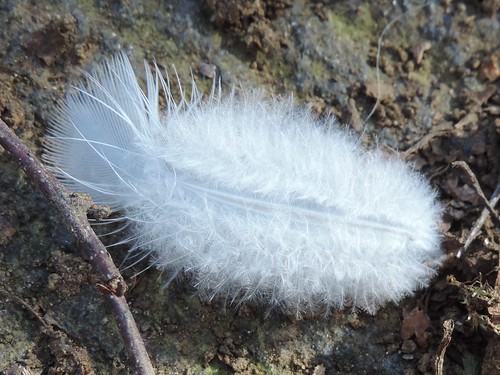
Feather

Burrrrr


When you look at these two photos, do you think, like I do, that the first one looks “soft” and the second one looks “spiky” or “sharp”?

I don’t mean in terms of photographic quality, I mean, in terms of sensations.

When I look at that feather, I think it looks soft. When I look at the burr, I think it looks prickly.

But isn’t that odd?

These are photos. I’m using my eyesight to perceive them, not much touch sensory organs. I cannot feel their softness or their sharpness. But that’s the first thing that comes to my mind when I look at them.

This is what we do all the time.

We are constantly bathed in information, some of which we detect with our sensory systems of vision, hearing, smell, taste or touch. We use our brains somehow to direct attention towards some of those inputs and away from others. So sometimes what we notice is a sound, and at other times, a colour, or a light.

But we are not unidirectional. We don’t process only one type of information at a time. We use all our ways of knowing and we put the results together to create a unified, whole perception. So I can look at this feather, and think “soft”, or at the burr and think “spiky”, even though my eyes cannot experience those qualities.

The one way of knowing cannot be reduced to another. There are always multiple ways of knowing. What we are really great at is synthesising those ways to gain a greater understanding of what we perceive than we could ever achieve by using only one way.

On a different level, this is what Iain McGilchrist has highlighted in the different ways our two cerebral hemispheres approach the world. Our two hemispheres allow us different ways of knowing. How much more fruitful, however, to synthesise their activity, and to use our whole brains?!

Read Full Post »

« Newer Posts - Older Posts »