
This week, I’m reflecting on the place of hope in life.
This little Haiku by Edith Shiffert seemed very appropriate and seeing snowdrops bursting out all around at the moment brought these lines back to my mind.
Posted in from the dark room, from the living room, life, personal growth, photography on February 24, 2014| Leave a Comment »
This week, I’m reflecting on the place of hope in life.
This little Haiku by Edith Shiffert seemed very appropriate and seeing snowdrops bursting out all around at the moment brought these lines back to my mind.
Posted in from the dark room, from the living room, life, personal growth, photography on February 23, 2014| 3 Comments »

In the A to Z of Becoming, H is for Hope.
I don’t know how people live without hope.
Despair and hopelessness are killers. I think one of the worst things a doctor can do is tell a patient they have “x months” to live. Nobody can accurately predict the course of an illness, and nobody can accurately predict how long an individual lifetime will be. (I often think of Stephen Hawking and his “motor neurone disease” or “Lou Gehrig’s Disease”, a disease with an estimated life expectancy of 2 to 5 years, where his diagnosis was made over 40 years ago).
The truth is that with any diagnosis there are three possible future pathways – the patient gets better, they develop a fairly stable chronic illness, or they get worse. The proportions of a population with the same diagnosis experiencing each of these paths varies depending on a host of factors including the person’s prior health, and the severity of the pathology at time of diagnosis. But I think it’s a bit like this –
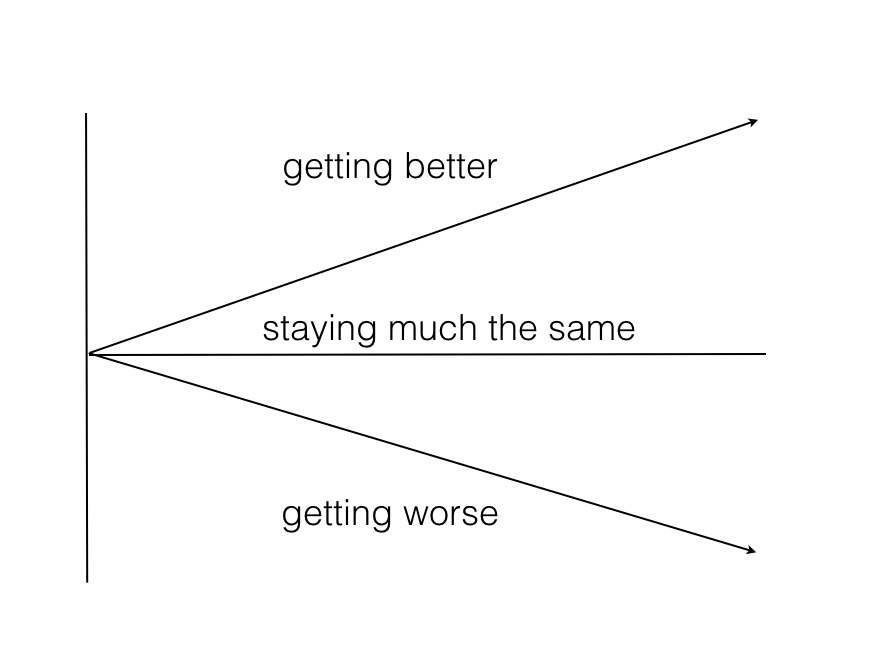
So, what I usually say to patients is something like “as nobody can tell you which of these directions your illness is likely to take, then what’s the benefit of assuming either of the poorer options?”
At each stage, every day, it seems to me, it’s worth while hoping for the better future.
On “PsychCentral” there’s an article which describes NINE different types of hopelessness, and begins to give hints about how to overcome them.
I know some people say “hope for the best and prepare for the worst” and I’m not sure what I make of that advice, but I can see some sense in it. What I dislike is how fear is used as a tool to control us. Whether it’s about diseases from influenza to cancer, or about terrorism or crime, or the financial future, again and again we are bombarded with messages to make us afraid and make the choices based on assuming that terrible outcomes are just around the corner.
I don’t want to live my life that way. And I won’t live my life that way.
I’m sticking with Nelson Mandela’s advice “May your choices reflect your hopes, not your fears”
What might you hope for this week? What might you hope for this month? And what choices will you make to reflect those hopes?
Posted in from the living room, life, science on February 22, 2014| 1 Comment »
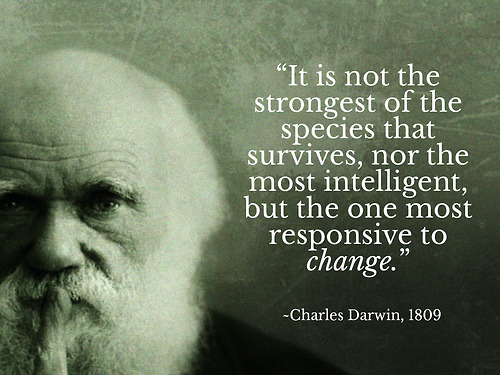
These last few days, I’ve been thinking about change. I was inspired do so when I read this quote from Darwin
I was also inspired by the writing of Marc Halévy who summarises four major changes in the Introduction to his “Petit traité du sens de la vie”, and as I started to write I could hear the sounds of Bob Dylan’s “The times they are a’ changin'” in my mind (little did I know that this month is the 50th anniversary of his release of the album of that name!)
In Part 1, I reflected on the ecological changes, especially the incredible population growth and consumption of non-renewable resources since 1800. Halévy says this change signals the end of the Age of Abundance.
In Part 2, I looked at the explosion of digital connections producing not just a web, but an entire noosphere. Halévy says this is the end of the Age of Ignorance.
In Part 3, I considered the replacement of the machine model with the organic one. Halevy refers to this as the end of the Age of Hierarchy.
So, here we are with the final part. Part 4. The end of the Age of “Abnégation”. What does he mean by that?
Well, where do we expect to find happiness and wellbeing? We have been through the eras where our happiness and wellbeing was taken care of by the Church, by the State, by the Party, or the University, or the Unions, or the Market. But now we know that happiness is found on the inside, not supplied from the outside.
With this realisation we can rediscover our uniqueness, and claim for ourselves our responsibility for our own happiness and wellbeing.
We can make our own quality of life autonomously, by changing our relationships with others, with institutions, organisations, Nature, and the world.
We now have the chance to become heroes not zombies.
Posted in from the dark room, from the living room, life, photography, science on February 21, 2014| 1 Comment »
We are coming to end of a 500 year or so period where we’ve engaged with Life as if it is a machine. The machine model is of distinct, definable components which when assembled in a regular, repeatable pattern produce a mechanism which produces stable, predictable outcomes.
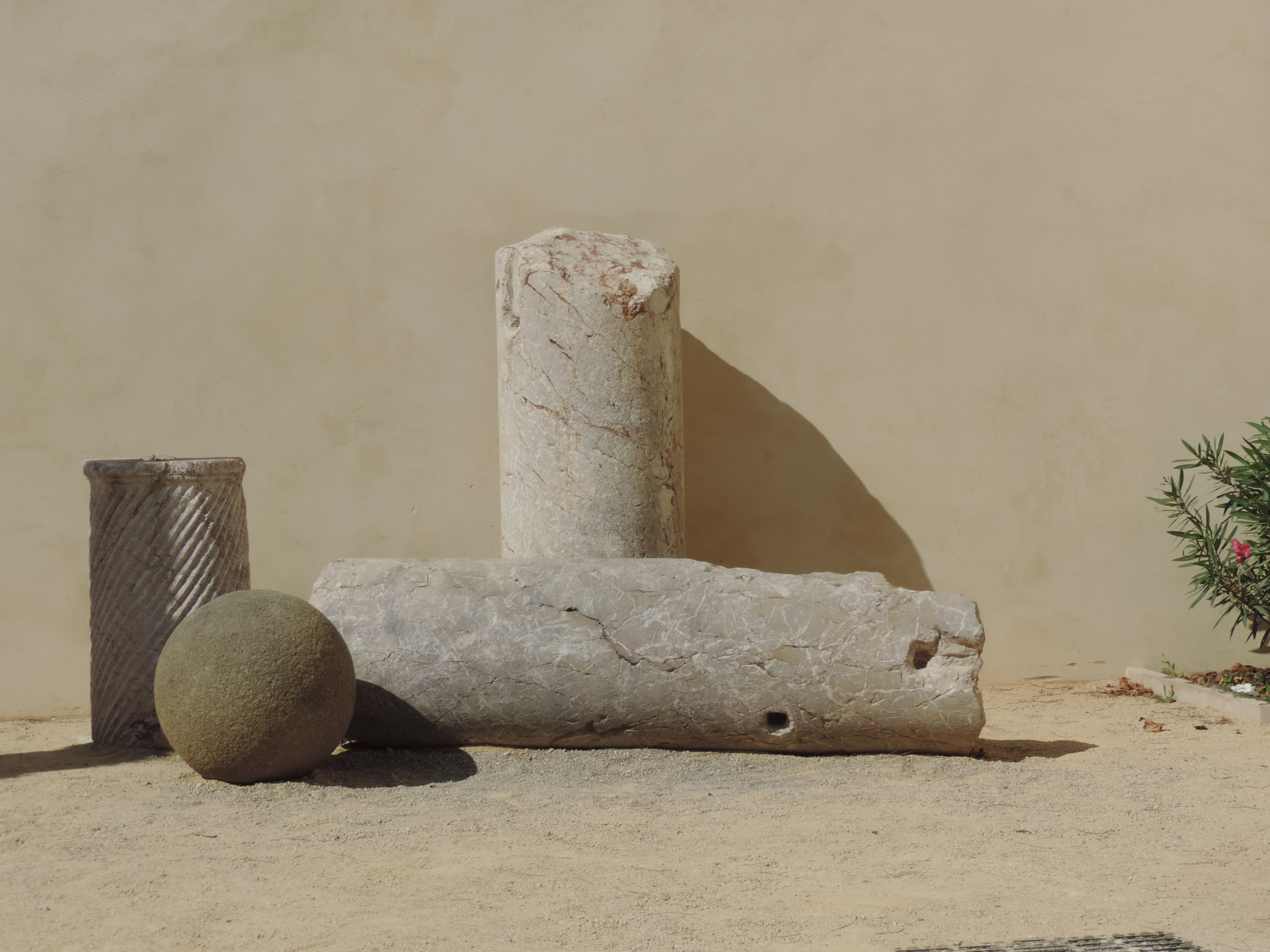
That model was the foundation of the industrial and technological age. We used it to create ever more efficient tools to work with.
One problem with that model is that we went on to apply it to the world, and, indeed, to Life. From this perspective, the Earth is a storehouse of resources to be consumed, and Nature is something which human beings have to subdue and control. From this perspective disease is a malfunctioning part, and the application of an “evidence based” tool will fix it. From this perspective, organisations of humans, from communities, to factories, shops and offices, to whole societies can be controlled by applying a strong hierarchy. A ruling elite can control the cogs in the machine – the rest of the human beings in that organisation. With the “right” rules and processes, all organisations can be made to do whatever the planners, controllers and managers want it to do.
We’ve even squeezed our understanding of science into this model. The mechanistic view of science states this – science is a matter of “observation, description, explanation, prediction and control”. This might work with machines, but we are beginning to discover, it doesn’t work when dealing with Life, human beings, Nature, or what the rest of us might call reality.
So, what’s the new model which is going to help us to see things differently for the next 500 years? It’s the network model. Take a look at this
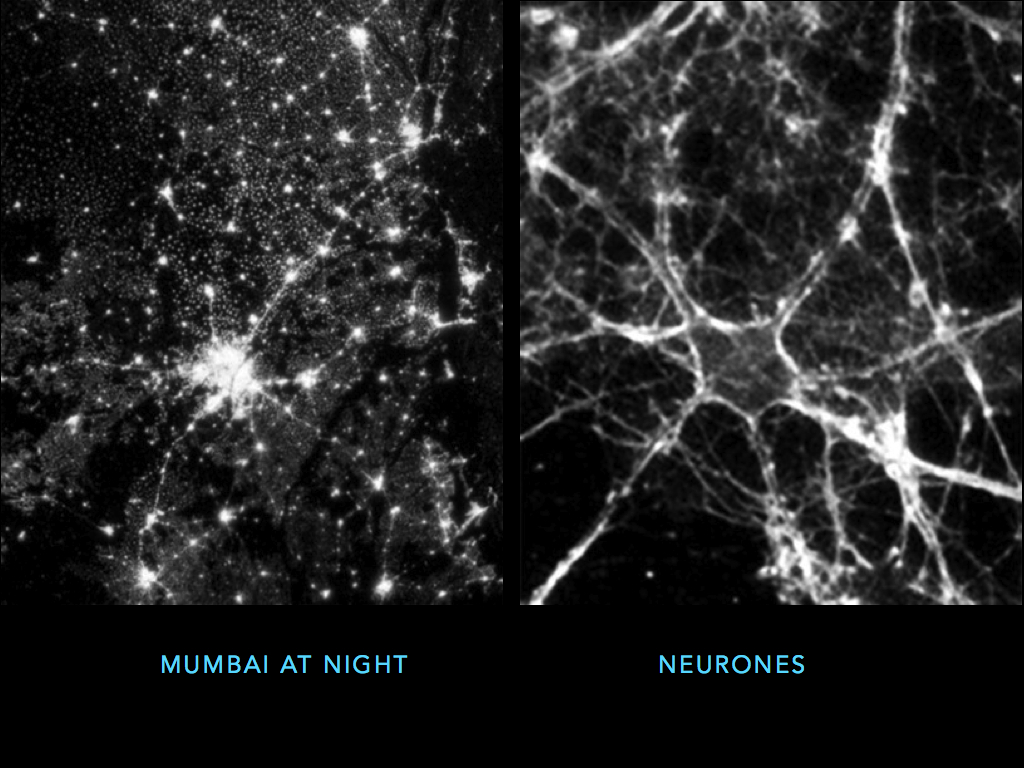
Quite simply, networks are nodes and links. Some nodes have many links, others have only one or two. The nature of the links in organisms is “non-linear” , and a connected network of non-linear links produces a “complex adaptive system”.
Here are a couple of characteristics of complex adaptive systems which change everything –
They develop “emergent” behaviours. That means that the parts combined create something new, a new form, a new behaviour which could not have been predicted from an analysis of either the parts or the links. Emergent behaviours are one of the keys to growth and evolution. They are the basis of adaptability. They are unpredictable. You’ve heard of the “butterfly effect”? Where a small change in the starting state of a system produces huge changes in the end state?
The economy is like this. It is not predictable. 2008 financial crash. Predictable? Controllable?
Nature is like this. Tsunamis and earthquakes. Predictable? Controllable?
Human beings are like this. Choices, illnesses, responses to treatments. Predictable? Controllable?
Life is like this. Every single living organism is a complex adaptive system embedded in higher and higher orders of complex systems, from families, to communities, to species, to ecosystems, to planets……Predictable? Controllable?
But here’s another characteristic of these systems –
Self-organisation. Organic, complex, adaptive systems have the capacity to self-organise, self-regulate, self-repair, and in the case of living organisms, to self-replicate and make themselves (autopoiesis)
So the organisations of the future will be networks, not hierarchies. We can see now that human beings are not separate from Nature, and that all of Life on planet Earth is co-dependant, connected, and co-evolves. There isn’t Nature out there to predict and control. There isn’t an Earth out there to be plundered and consumed with no consequences to Life.
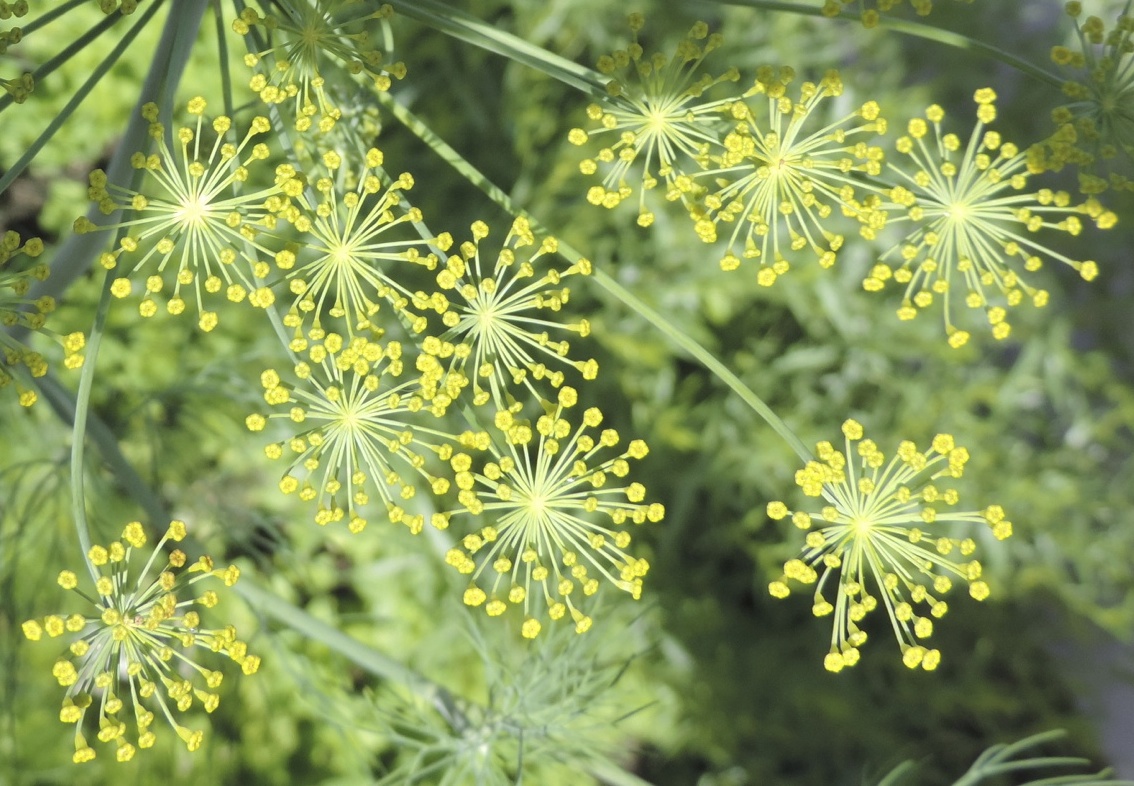
We can see a different way to live coming down the track towards us. We’re only at the beginning of this one, but here it is – we live, not in giant machine, but as complex organisms inextricably connected in a finite, complex Earth.

Posted in from the dark room, from the living room, life, photography on February 20, 2014| 1 Comment »

My mother was telling me recently that she remembered her father having electricity installed in their house 76 years ago. When they moved into that house the room lights were all gaslights, and the street lights were gaslights. My grandfather had the gas in the house replaced with electricity and he was the first person in his street to do so.
In my mother’s lifetime there was a time when electricity was a new thing! I’m amazed by that.
Let’s whizz ahead to when I was a GP in Ayrshire in 1982. When I went out to visit a patient, my wife would have to wait anxiously until I returned to tell me about the next patient who had called while I was out. There was no way to be in touch with me other than by telephoning my house. When I moved to Edinburgh in 1986, my partner and I bought one of the first mobile phones. It was the size of a brick and over half of it was its battery. Edinburgh only had one mobile phone mast at the time and when out on call to Portobello, the great Arthur’s Seat blocked its single signal.
Just for fun I bought a dial up modem for my PC, and spent hours (yes I mean hours) adjusting “initialisation strings” to get the chirping little device to connect to a computer in Grangemouth so I could send an email (not that there were that many people I knew who used email!)
In 1982, (yes, same year I started General Practice), the world saw the birth of the “world wide web”.
Thirty years later, the web is everywhere, and it’s changing everything. Especially because now we can access it on our mobile phones wherever we are. What does this do? I makes connections easier to make and maintain. I am no longer bound by time and space. We can communicate back and forth in real time, or asynchronously – I can send a message to a Japanese friend right now and they can read it when they get up in the morning and send a reply for me to read tomorrow. I have formed friendships in Holland, France, Italy, Japan, South Africa, America which I’d never have been able to form and continue in my twenties.
The web doesn’t just let me form friendships, it lets me find others who share my world view, and it lets me learn and discover whatever piques my curiosity. We can learn what others experiences are of particular hotels or restaurants, we can learn to speak other languages, we can access information and knowledge to such a greater degree that now people talk about the “noosphere” – like the atmosphere which surrounds our Earth, but a blanket of knowledge, rather than air.
Patients come to the doctor now having already learned something about their illness, its potential treatments, the potential side effects. This shifts the power towards the patient in such a good way.
We can’t claim the ignorance we used to be able to claim. And we can’t claim to be isolated they way we used to.
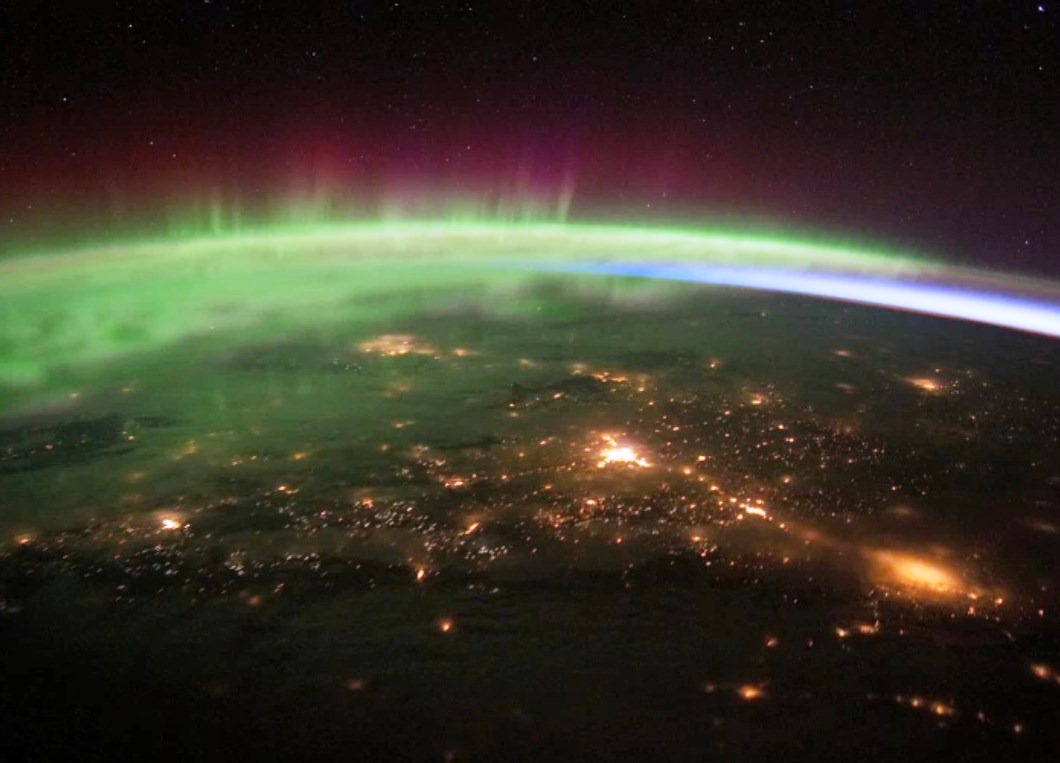
Look at this photo of the atmosphere around the Earth, and imagine it as a noosphere held within a great world wide web….
Posted in from the dark room, from the living room, life, photography, science on February 19, 2014| 1 Comment »
There is a lot change going on. Let’s consider some of the big changes over the next few days.
Part 1 – ecological change

Two disturbing elements – population growth and resource depletion
First up, population growth – the increase in the number of people living on this little Earth is phenomenal in the last couple of hundred years. We’ve gone from 1 billion to 8 billion between 1800 and now. It’s not just the sheer numbers which are important, it’s the rate of change – the increase is increasing!
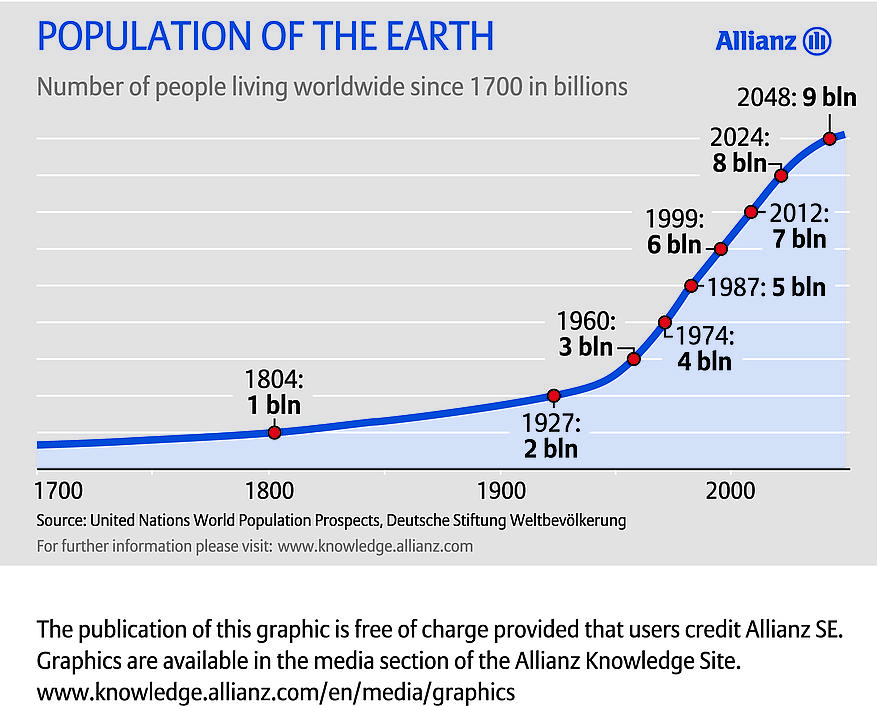
Secondly, non-renewable resources. So far, human beings have treated the world as if it is an infinite source of anything we want. But the problem is that we have consumed 80% of ALL known NON-RENEWABLE resources since 1800. Most of it has gone. How much is left?

Put these two developments together and what do you have? A rapidly increasing number of human beings rapidly consuming the finite resources of the Earth.
What does this mean?
The Age of Abundance is past.
And yet, in every country of the world, economists and politicians push for “growth” – greater and greater consumption by more and more people. This isn’t sustainable. We are going to hit the point where the “growth curves” start to dive, dive, dive.
So, the questions include, when and how are we going to change course?
The times they are a’changin’……….
Posted in from the consulting room, from the living room, from the viewing room, health, life, science, video on February 18, 2014| 1 Comment »
“Blue zones” are communities around the world where the life expectancy and quality of life is higher – in these communities more people live to be 100, and more people are still healthy when they are 80. (In fact, it turns out that most people who live to 100 were healthy when they were 80)
Researchers have found that there are common themes amongst these communities. David Buettner, who published these findings, identifies nine of them, which he calls the “Power 9”
In summary, the first common theme is movement – and not vigorous exercise or actually using a gym membership! They mention “natural movement”….you know, the opposite of sitting all day.
(Oh, of you’ve got a minute, check out this video about how to move more…watch out for the brilliant suggestion about where to part at the supermarket)
Three are about food and drink – the 80% rule, which is about stopping eating before you are full ie when your stomach is 80% full; the “plant slant”, which is the same as Pollan’s “mainly plants”
(see Michael Pollan’s Food Rules)
….and drinking a glass or two of wine a day!
Then there is one about “time out” or “down time” – taking a pause in the day to relax or nap.
Two left……one is having a sense of purpose. Do you know that having a sense of purpose can be worth an extra seven years of life!? By sense of purpose they mean everything from having a reason to get up today, to still having important things to fulfil in your life.
And, finally….and last, but not least, I’d say….THREE that are about our relationships with others –
“Loved ones first” – having children, parents, partners, siblings who you really care for.
“Belong” – almost ALL the centenarians interviewed belonged to a faith-based group
“Right tribes” – this is an interesting one….it’s about being part of social circles where the others are also healthy and long living. I think that’s fascinating, because I remember reading that if your friend’s friend becomes obese, then you are more likely to become obese. So, there is a common phenomenon of social networks where people influence each other through apparently indirect ways – goes both ways apparently – healthy or unhealthy – I wonder what tips the scales from the one to the other given that most networks will have both…..careful who you hang around with!
Posted in from the dark room, from the living room, life, personal growth, photography on February 16, 2014| 1 Comment »
In the A to Z of Becoming, G is for GIVE.
Do you think giving is a satisfying experience?
I do. In fact, I think giving enriches your life.
Some people say life is a game of give and take, and that there are givers and takers. I’m sure you’ve come across that idea, and you can probably also identify individuals in your own world who are givers, and those who are takers. Not many people would be happy to accept the label of “taker”, and being known as a “giver” feels like being appreciated.
I’m not sure how useful labels are however, so I’m not thinking this week about who are the givers and who are the takers. What I want to be aware of this week are my opportunities to give.
What can I give?
My time, my attention, my compassion, my love, my effort, my full engagement with this present moment, my acts of kindness……
None of these are things, but I might have opportunities this week to give things too. What I find interesting is that we tend to think of gift giving as being about things, and I think physical gifts can be important. But, here’s something to experiment with this week….give every day, and make a note of what you give (in fact, even better, write an entry in your journal about it…..describe the circumstances of your giving, what your giving involved and why you decided to give) and then reflect next weekend on your week of giving.
How does it feel to give?
Let me give you this photograph (you can click through on any of my photos and download them for yourself, if you wish)

I stumbled across this in Kyoto a while back. In fact, I saw it a few times because it was in a street near my hotel.
I love this. Here is a game of Go, with a tub of black stones, and a tub of white stones. Anyone is free to make a move. I don’t think I’ve seen anything like this in any other city. I wonder if the players know each other? It did strike me that every play was an act of giving, a gift of participation, a contributory gift, a gift of engagement.
Posted in from the dark room, from the music room, from the viewing room, life, music, photography, video on February 15, 2014| 2 Comments »


When you’re looking for something to photograph, just looking out of your window, or looking up to the sky, gives you enough inspiration.
I just love the multi-layered effects here….looks like range after range of mountains disappearing into the distance.
What you can’t see here is that the clouds were all moving very fast. This particular view changed before my very eyes…..as the Japanese culture emphasises – transience increases the beauty
Actually, when I look at clouds, I often hear Joni Mitchell singing in my head! If you’ve got a few minutes watch these two videos.
Firstly, this is Joni singing Both Sides Now in 1970
The, here she is singing the same song in 2000
What a difference! I know Heraclitus said you can’t step in the same river twice, so maybe it’s obvious that you can’t sing the same song twice
Posted in from the dark room, from the living room, life, photography on February 14, 2014| Leave a Comment »
well, Valentine’s Day, so I strolled through my iPhoto library to find some kind of heart shaped image which wasn’t like all the other heart shaped images you’ll see today.
Here’s what I found
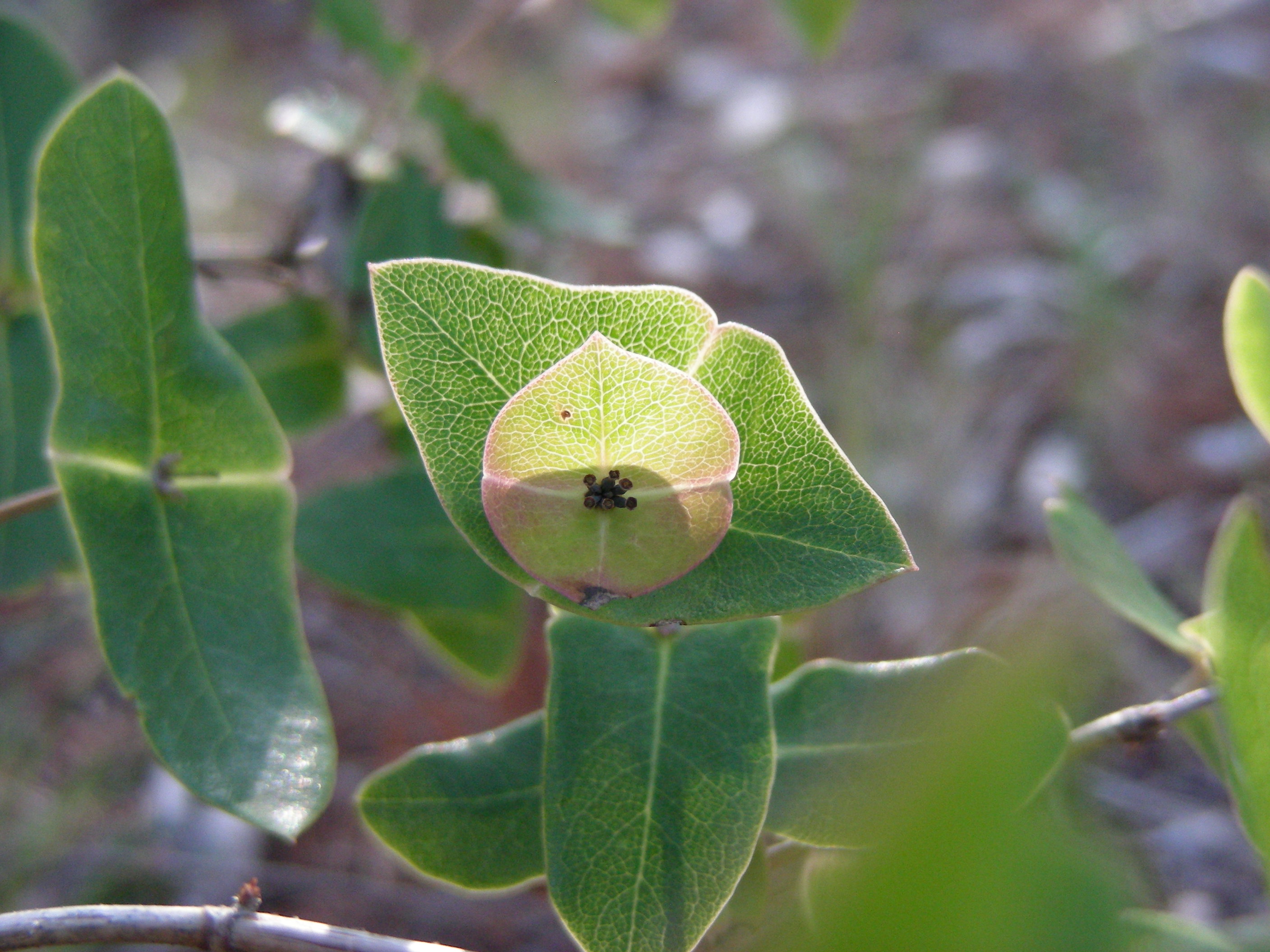
It’s a suggestion of heart shaped on the suggestion of lip shaped……so here’s my Valentine to you – hope you feel some love stirring in your heart today


