Feeds:
Posts
Comments

Archive for the ‘life’ Category

DSCN4463

What if we built a health care system starting by ensuring that every patient gets enough time with the doctor, nurse or therapist for them to be seen, heard and treated as an individual?

Jacques Lacan said that the greatest gift we can give someone is to listen fully without judgement or interpretation.

What if we gave that gift to every patient, every time?

Also, so that every time a patient met a doctor, nurse or therapist, they didn’t have to start to tell their story all over again, but rather, the story could be deepened and extended enabling understanding to increase and a relationship to be built, what if we also built a health care system based around continuity of care?

If we started from there, what might that lead to…..?

Individualised care, enough time with every patient, continuity of care…..what would you add next?

Read Full Post »


That’s one of my favourite Kevin Spacey movie lines.

It’s a phrase which often comes to my mind in relation to health care. We’ve developed a very bureaucratic way of providing health care in Europe and North America. It seems to me that the system comes first now instead of the patients and the doctors.

Health care is a supremely human activity. It involves one human being trying to help another. Both of those human beings are unique and when we reduce the patient to a case of a disease and a doctor to a person who implements a protocol then we de-humanise Medicine.

I think it is important to prioritise uniqueness. We should always be on the lookout for what is new and what is different in every situation. Instead the bureaucratic approach demands we look for what is the same and fit everyone into pre-set categories and treatment paths.

Does anyone know you better than you do? Does anyone really know better what choices you should be making instead of the ones that you are making? Who should finally decide what to do about your life? (How you should eat, how you should spend your time, what “treatments” you should subject yourself to?)

I think it is you!

So when I hear a manager or a “skeptic” tell a patient that they can’t have the treatment which they say is the one which made the most difference for them (relieved their pain, settled their panic attacks, made their breathing easier….whatever) because the “evidence” says that treatment “doesn’t work”, it amazes me.

There not a treatment on the planet which does the same thing for every person who receives it, so there is no such thing as only two categories of treatment – those which work and those which don’t – as some would claim. We need a wide diversity of treatments to be available because human beings are so, well, different….

But I think about this not only in relation to rationing health care, protocol based medicine and so on. I think it’s something to consider in every therapeutic relationship. Here’s the question I’m exploring –

Is it an expert’s job to tell people what to do, or to help them to see how to change, then to support that change?

I’m pretty sure I don’t want anyone telling me what to do!


Read Full Post »

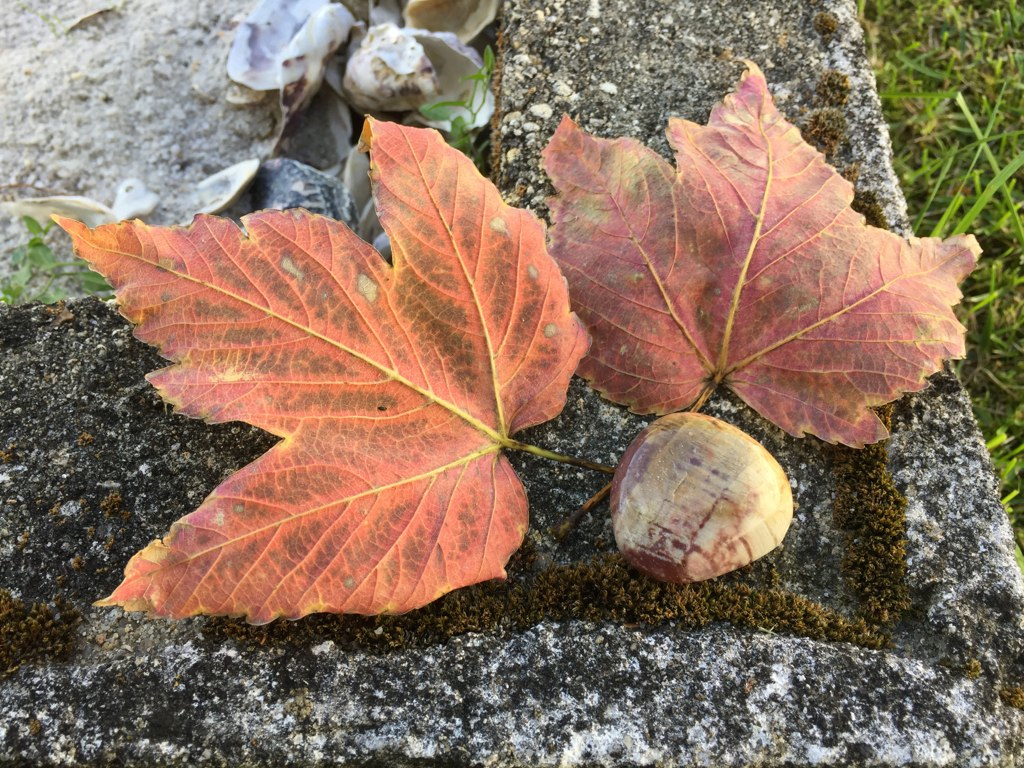
IMG_3283

As I walk around I like to notice things – you’ve probably realised that! And when I notice them, I often take a photo. I’ve written before about the benefits of keeping a camera in your hand, but nowadays with smartphones many more of us have cameras in our hands!

I found a leaf which caught my eye. Then I found another. I picked them up, took them home then laid them in the garden, on the corner of the sandpit where my grand-daughter, Ava, had left a stone she liked.

I took the photo.

Pleasing, don’t you think? And now I can look at this scene again as much as I like.

I recommend it – everyday, simple creativity.

Read Full Post »

DSCN4475


DSCN4476

Have you ever come across a little book entitled “Li: Dynamic Form in Nature” by David Wade?

It’s tiny, but it’s a total treat.

He takes and old Chinese philosophical concept “li” and translates it in a particular way which throws an amazing light on what we see around us.

Simply put, he describes li as the invisible forces, or energies which produce the different shapes and forms of the natural world – you know the kind of things – the branching forms of a tree or root system, the wave forms in water and sand, the feathery patterns of clouds and, ah, well, feathers!

I love encountering these kinds of echoes and symmetries, especially when we can see a similar form in two or more completely different contexts – like the sky I look up at, then the feather I find on the grass at my feet.


Read Full Post »

DSCN4485

One of my favourite podcasts is “onbeing with Krista Tippett”. Recently she interviewed Ellen Langer on the Science of Mindfulness.

Ellen Langer has carried out some really interest research, some of which she mentions in the interview, but I first encountered her work when studying Dan Seigel’s Interpersonal Neurobiology course. Her take on mindfulness is different from that of the more dominant meditation based one.

She says that meditation can be a good form or mindfulness practice but, it’s not necessary.

She says we can go through life either mindfully, or mindlessly.

Doesn’t that seem crystal clear?

I like it, because, for me, it maps directly onto my heroes not zombies. I do think we tend to slip into autopilot, or “zombie mode”. But if we wake up and become aware we can become the conscious authors of our own stories (the ones where we are the main protagonist, the hero)

How do we do that?

How do we wake ourselves up? Jolt ourselves out of autopilot/zombie/mindless mode?

She says – search for the new.

It’s novelty and the search for novelty which creates the mindful state.

And I think she’s right, because to search for the new involves intention and attention. We wake ourselves up first of all by deciding to do so. We live consciously by choosing to live consciously. Then when we are looking and listening out for what is new, different, or changed, then we not only paying attention, but we are paying attention to reality. (Instead of painting over reality with habit)

Try it for yourself.

She says see if you kind find out something new about the next person you speak to.

But what about right now?

Right now, wherever you are. Once you stop reading this, look around you and see if anything is new, if anything has changed since yesterday. Look for what’s new, different or changed.


Read Full Post »

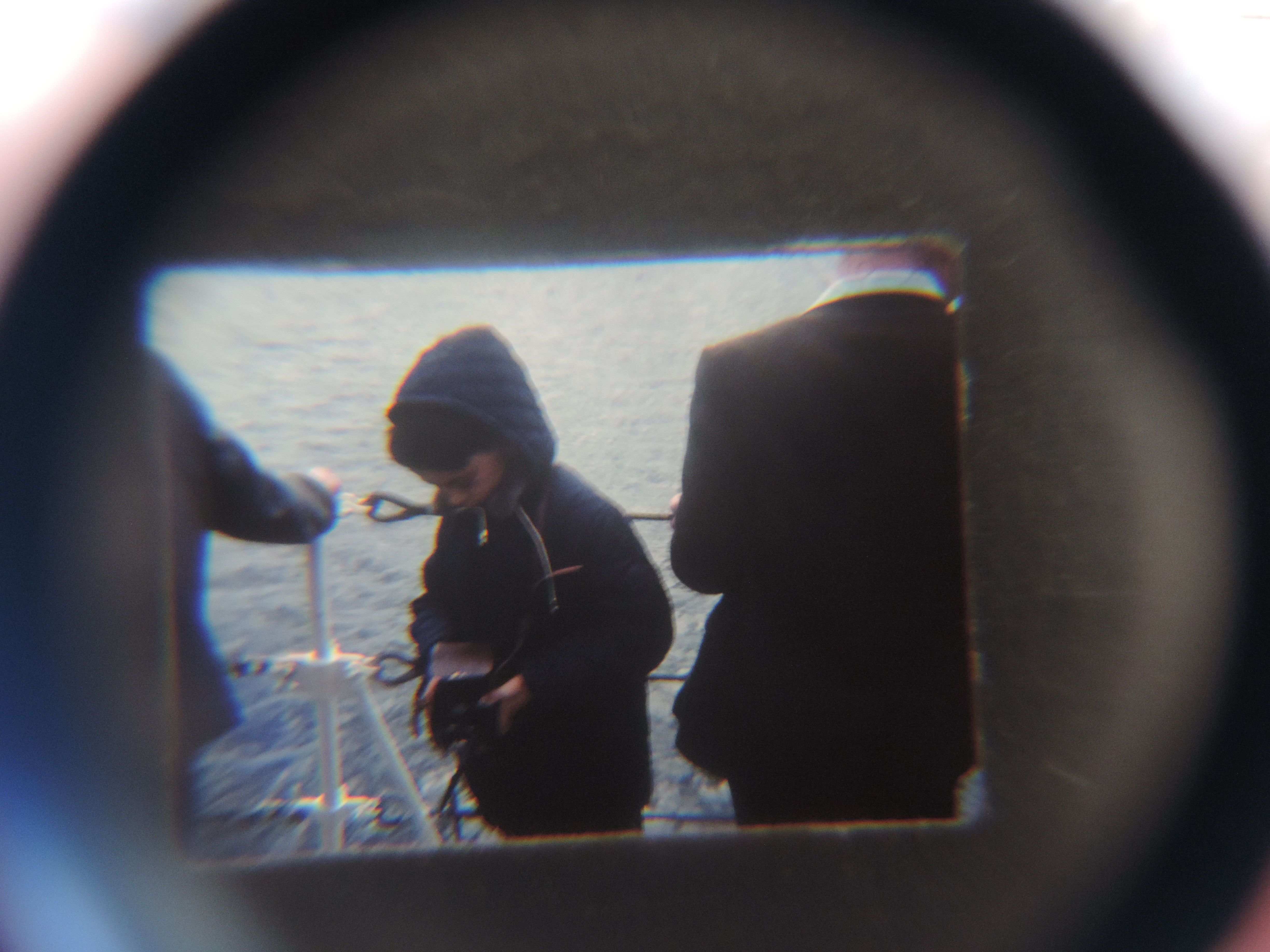
IMG_3200

(me, aged 8, on a boat to Orkney, taking photos with my box camera)

If in every field the triumph of life is creation, must we not suppose that human life has its goal in a creation which, unlike that of the artist and philosopher, may be pursued always by all – the creation of self by self, the developing of the personality by an effort which draws much from little, something from nothing, and adds unceasingly to whatever wealth the world contains? (L’Énergie spirituelle. Henri Bergson. 1919)

I talk a lot about creativity. I think it is one of the defining characteristics of human beings. We constantly make and re-make our world.

It’s quite common for people to think that creativity is what artists have and if you aren’t an artist you aren’t creative. I think that’s a way too limited understanding of what creativity is.

We are creative when solve daily problems. We are creative when we make food. We are creative when we tell stories (which do all the time). We are creative when make plans. We are creative when we sing, play an instrument, make something, express ourselves.

We are creative all the time as we make our selves – we are constantly engaged with the process of self-making, and we never stop developing, evolving and growing – all of which are creative acts.

Own your creativity.

I think it’s one of the three basic characteristics of human life.

Read Full Post »

DSCN2160

When our destiny is attained Nature alerts us by a clear sign. And that sign is joy. I mean joy, not pleasure. Pleasure is only a contrivance devised by nature to preserve life, and does not indicate the thrust and direction of life. But joy always announces that life has succeeded, gained ground, conquered. All great joy has a triumphant note…….wherever there is joy, there is creation; the richer the creation, the deeper the joy (L’Énergie spirituelle, Bergson. 1919)
Joy.
What a great way to know we’re on course.
I like the way Henri Bergson teases out the differences between pleasure and joy. He says that joy includes pleasure but not all pleasure brings us joy.
There’s something heart-filling and truly life enhancing about the emotion of joy.
Psychologists talk about the six basic emotions – fear, sadness, anger, disgust, surprise and JOY. Doesn’t joy really stand out in that group? All the others carry some negative quality about them. Sure they are probably there to protect us and to help us survive but what about flourishing? What about creative growth and development? Do we achieve those things through fear, sadness, anger, surprise or disgust? Not so much….
But do we achieve them by honing our choices to be in tune with joy? We sure do.
As Bergson says “wherever there is joy, there is creation; the richer the creation, the deeper the joy.
This focus on joy reminds me of Csikszentmihalyi’s work on “flow” – great video here. He researched what he referred to as peak experiences. You know those times where you are in the zone, where you lose track of time and where you feel at one with the universe. He showed that we experience flow most commonly while we are in the process of achieving something we’ve strived for. Like climbing a mountain, just as we get to the top and we see over that last shoulder and the land stretches out before us as far as we can see.
It also reminds me of Seligman’s work on positive psychology, and some of the happiness research. It does seem that we’ve paid most attention to what is negative or problematic and maybe we need to redress the balance somewhat and consider the positive emotions we experience.
Another thing it makes me think about is Joseph Campbell’s advice to “follow your bliss“.
Finally, it also makes me think about the Heartmath technique where the deliberate re-creation of joy is one of the fundamental steps in that method.
So, there’s something to explore this week – when do you experience joy? And how can you do more to have more joy in your life?

Read Full Post »

IMG_3197

William James wrote –

Practically everyone knows in his own person the difference between the days when the tide of this energy is high in him and those when it is low, though no one knows exactly what reality the term energy covers when used here, or what its tides, tensions and levels are in themselves . . . To have its level raised is the most important thing that can happen to a man, yet in all my reading I know of no single page or paragraph of a scientific psychology book in which it receives mention. (The Energies of Men, 1907)

What is this energy he is talking about? I’ve often wondered about that. When I gave talks to young medics I would often start by saying “Let’s make a scale for energy. Let’s say 0 is the lowest energy you can imagine experiencing, and 10 is the greatest. Where would you put yourself on that scale right now?” Then I’d go round the room getting everyone to say what level of energy they were experiencing. Everybody answered. Everybody instantly offered a number on the scale. Then I’d ask “How did you do that?” “What did you check to arrive at the number you gave?” Nobody knew.

Dan Seigel and his group who developed “Interpersonal Neurobiology” (IPNB) came up with this definition of “mind” (see if you can find other definitions of “mind”) –

A embodied, interpersonal process of regulation of energy and information flow

Pretty useful, isn’t it? But what is the “energy” which is being regulated?

Having read the IPNB definition it struck me that as complex adaptive systems, living organisms are constantly exchanging energy, molecules and information with their environments.

But again, just what is this “energy”?

What do you think? (And where are you right now on the energy scale of 0 to 10?)

Read Full Post »

IMG_3256

Many scientists now take a similar view, seeing reality as a vast force field in which every part influences every other part, with unpredictable consequences.
Long  before physicists split the atom only to discover there wasn’t anything solid inside, Bergson wrote –
So matter resolves itself into countless vibrations, all linked together in uninterrupted continuity, all influencing each other, and travelling in every direction like shivers through an immense body. (Matière et mémoire) 
Michael Foley points out that one of the most important consequences of seeing how connected everything is –
If organisms are mutually dependent then it is wiser to cooperate than to dominate, and if life requires constant adaptation then nimble ingenuity is more effective than brute strength. (Life Lessons from Bergson)
For a long time the capitalist lesson drawn from Darwin’s insight into evolution was that competition, “survival of the fittest”, was the driving force behind the evolution of Life on Earth. Richard Dawkins even claimed in his “Selfish Gene” that self-interest (and hence, selfishness) lies at the root of all evolution.
However, many other authors are now highlighting the importance of co-operation, collaboration and the evolutionary advantages of togetherness. (See Howard Bloom’s Global Brain, Thomas Berry’s The Great Work,  Lynne McTaggart’s The Bond, and Barabasi’s Linked just for starters!)
As Michael Foley notes, the reality of intense, complex connectedness, is not just that everything influences other things, it’s that, due to the two way nature of many of the connections, the initiator of an action or event, often ends up being changed by it.
If everything is connected to everything else then every action propagates its effects for ever, and if feedback loops are the method of propagation then every action also modifies the character of the actor.
So, karma turns out to be real after all?!
Who was it who said we reap what we sow?

Read Full Post »

DSCN4425

Is there anything more thrilling than witnessing or participating in creativity?

Whether it’s watching day by day as a seed grows into a full blossoming flower, or seeing a child acquire new skills through play and experimentation, acts of creation surround us.

We are a process of creation.

Every day we wake up changed, with new cells, new thoughts, new visions, new hopes and ideas.

Bergson wrote –

The more we study the nature of time, the more we shall comprehend that duration means invention, the creation of forms, the continual elaboration of the absolutely new. (L’Évolution créatrice, 1907)  
This way of thinking puts creativity at the heart of all Life. Creativity is just something which artists have. It’s how we live.
As Michael Foley writes –
This idea, that Life is its own creator and that creativity is not a late aesthetic refinement but the very principle of existence, was Bergson’s most radical and inspiring insight.
To see the universe as a creative process, stretching from the earliest formation of stars, through the appearance of galaxies and nebulae, to the creation of Earth and the emergence of life……isn’t it breathtaking?
Stuart A. Kauffman, sounding exactly like Bergson:
‘In the new scientific worldview I’m describing, we live in an emergent universe of ceaseless creativity in which life, agency, meaning, consciousness and ethics . . . have emerged. Our entire historical development as a species . . . has been self-consistent, co-constructing, evolving, emergent, and unpredictable. Our histories, inventions, ideas, and actions are also parts of the creative universe.’
Creativity is not just about art as practised by gifted, or professional, artists.
It’s our every day reality.
We, every one of us, is engaged in a continuous process of co-creation of our universe. A universe that grows, evolves and develops.
What makes creation thrilling?
Awareness.
The conscious awareness of it. Try it for yourself today.
See if you can notice the unfolding creation of the new.
Or perform a creative act. Make something. Express yourself.
Or notice how what you are doing involves creativity, as you make something new, bring something new into this universe.
See what that feels like.

Read Full Post »

« Newer Posts - Older Posts »