Feeds:
Posts
Comments

Archive for the ‘personal growth’ Category

sunset


Thoreau writes, in Walden –

I learned this at least, by my experiment; that if one advances confidently in the direction of his dreams, and endeavors to live the life which he has imagined, he will meet with a success unimagined in common hours.

There’s a lot in that sentence. Does it inspire you? If it does, what does it inspire you to do?

It inspires me to become more aware of my dreams (and to try to distinguish my dreams from the dreams I’ve acquired). It inspires me to experiment, to see whether or not I’m surprised by how well those dreams can be realised if I take action – if I choose to “advance” in the direction of my dreams.

Read Full Post »

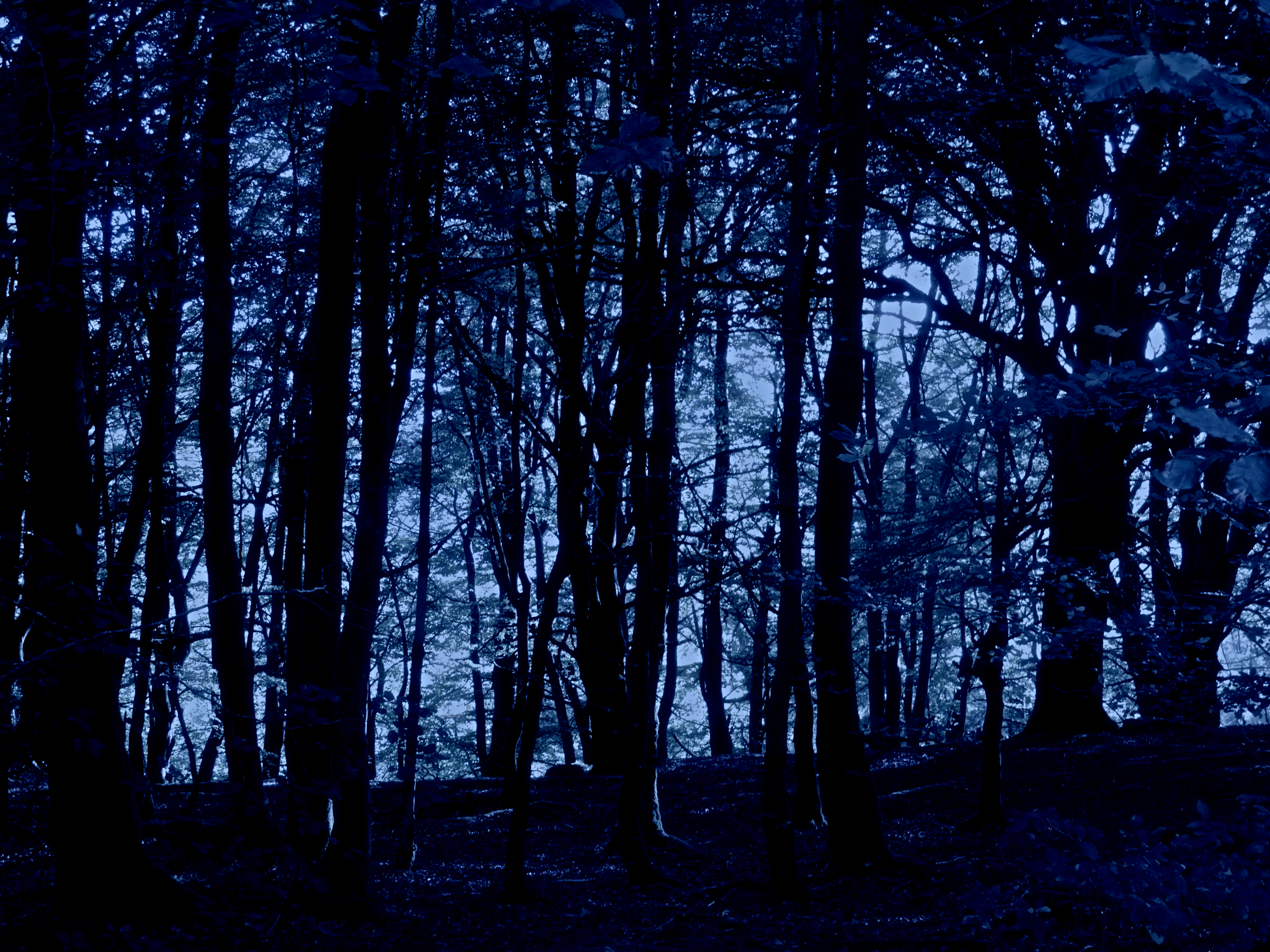
moonlit forest


James Hollis, in his “Creating a Life” says

As powerful as the will is, as urgent and insistent the élan vital, the imagination creates the world in which we live. The only question is: whose imagination, whose images, whose myth are we living in the course of that which we call our life?

I couldn’t agree more. Imagination is one of our most powerful qualities. We need imagination to see the possible. We need it so see the invisible. We need it to create. We need it to put ourselves into the shoes of others (and without that, where is compassion?). We need it for hope.

But imagination also allows us to fear – and how often is fear used now to control us?

So whose imagination are you living?


Read Full Post »

I read a lot about “complex adaptive systems“, and so a lot about “complexity science”. I think this gives me a set of concepts to create a framework for myself which helps me understand life. I think it gives me a language with which to think and communicate, but the trouble is the word “complex”. When people hear that word they think of “complicated” – which isn’t the same thing at all.

What’s the difference?

A machine can be complicated. A machine is constructed from parts, each of which can be understood separately. A machine can be understood by examining the parts and how they interact with each other. You can take it to pieces and build it back up to be the same machine. You can predict how the machine will behave….what it will do. The more parts a machine has, and the more connections there are between the parts, the more complicated it is. That means it is harder to understand. But it can be understood.

A living organism is not complicated. It’s complex. A living organism might have billions of parts (cells, for example), but there are two distinct features about how they interact – they are all “agents” – that is every single part affects, and is affected by, other parts; and the nature of the interaction is “non-linear” – that means you can’t add one part to another and predict what the result will be…..a small change at the beginning, can produce enormous differences in how the organism as a whole changes – think of the “butterfly effect”.

Once you grasp the basically simple concepts which underpin this idea of “complex systems”, then you can look at everything from living organisms, to ecosystems, forests, organisations, communities or institutions from this perspective. I think it’s amazing what such a perspective reveals.

One paper I read recently looked at understanding leadership from the complex adaptive system perspective. The author, Kowch, highlights three characteristic of organisations which learn, adapt and grow. Each of these characteristics is worth thinking about because the less your organisation has of these, the less healthy it will be, the less likely it will thrive, or even survive in these rapidly changing times.

  1. Diversity – Nature loves diversity. The more conformity and uniformity in a system, the less adaptable it is. Monoculture might produce large quantities of something for a while, but, ultimately, it becomes vulnerable. Yet, command and control seems to be the preferred management method. Great effort is put into achieving conformity and uniformity. With globalisation, and the power of oligopolies, differences are often seen as problems to be removed.
  2. Specialisation – nobody can do everything. Although Darwinists have pushed the idea that evolution occurs through a “survival of the fittest”, with a perspective of continuous competition and warfare, in fact, others argue that its the ability to co-operate which has allowed human beings to develop as a species. Co-operation involves both good relationships (integrative relationships ie where the relationship is mutually enhancing for all the individuals involved), and specialisation – some develop a lot of skill in one area, whilst others in quite a separate area.
  3. Redundancy – this means duplication, or having “more” than it seems the organism “needs”. In organisational terms, if all the staff are fully employed, fully scheduled, each in their own specialist area, then when something changes (such as sickness, increase in demand etc) then there is no way to cope with that – there’s nobody to cover, and there’s no ability to meet the change in demand.

So, what does your organisation look like? How’s it doing in terms of diversity, specialisation and redundancy? How healthy and adaptable do you think your organisation is?

floribundance


Read Full Post »

When I was reflecting (for my annual appraisal) the other day, I got to wondering again about just how we understand what a doctor does.

Then I stumbled upon the Greek origin of the word therapy – therapeuein……which means to pay attention or to listen to.

That’s it!

That’s what I do – I pay attention.

That’s what I hear is most appreciated – patients tell me they appreciate having the chance to express themselves, to tell their story, and for that story to be listened to, attentively and without judgement. But paying attention isn’t just about listening, it’s looking out for patterns, seeking out connections, creating meaning and sense by weaving it all together.

Paying attention is therapeutic.

And that got me thinking…..isn’t that how I try to go through life…..paying attention? So is that therapeutic? For Life? For Nature? For the world? For me?

Read Full Post »

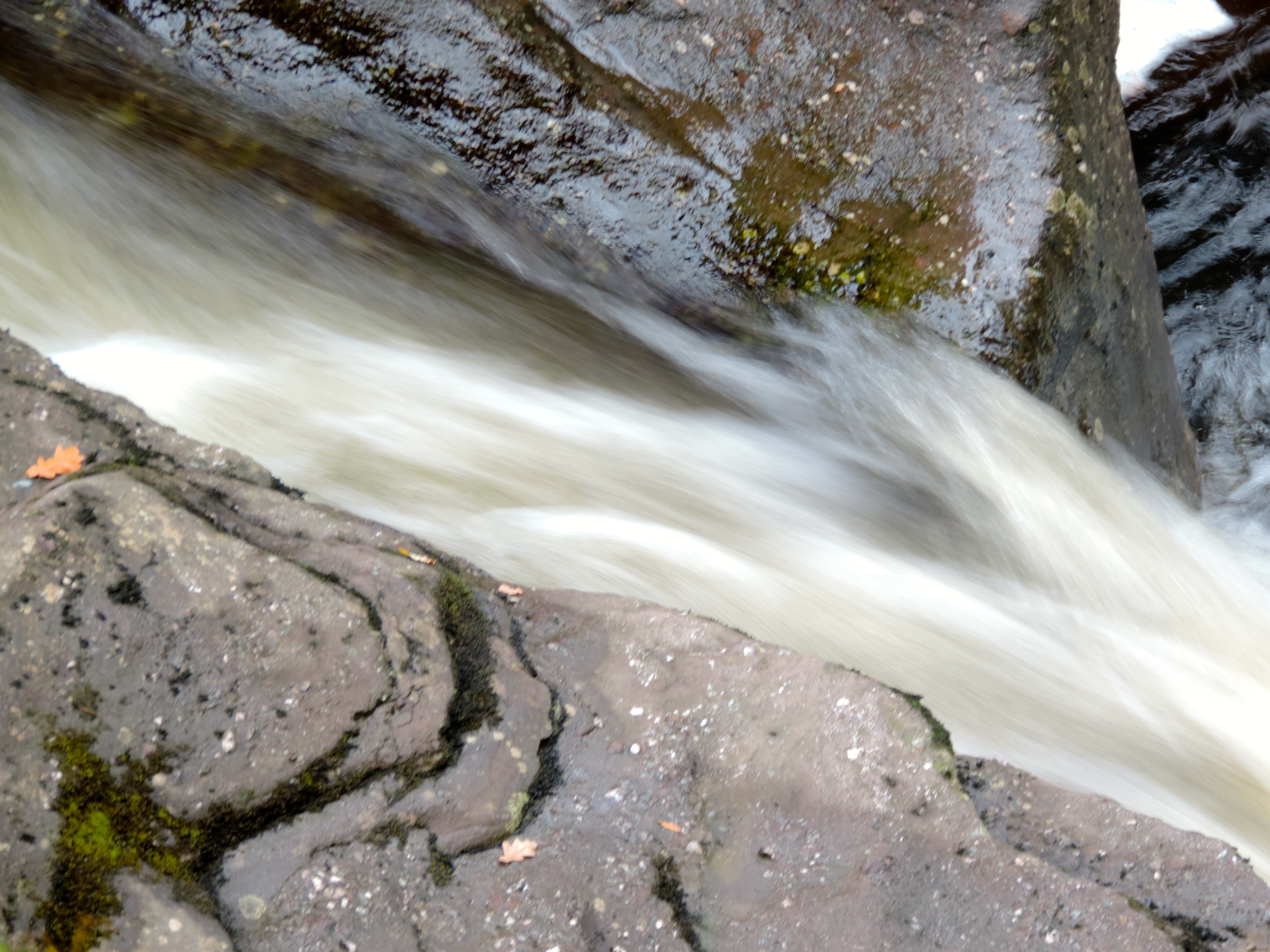
river flows


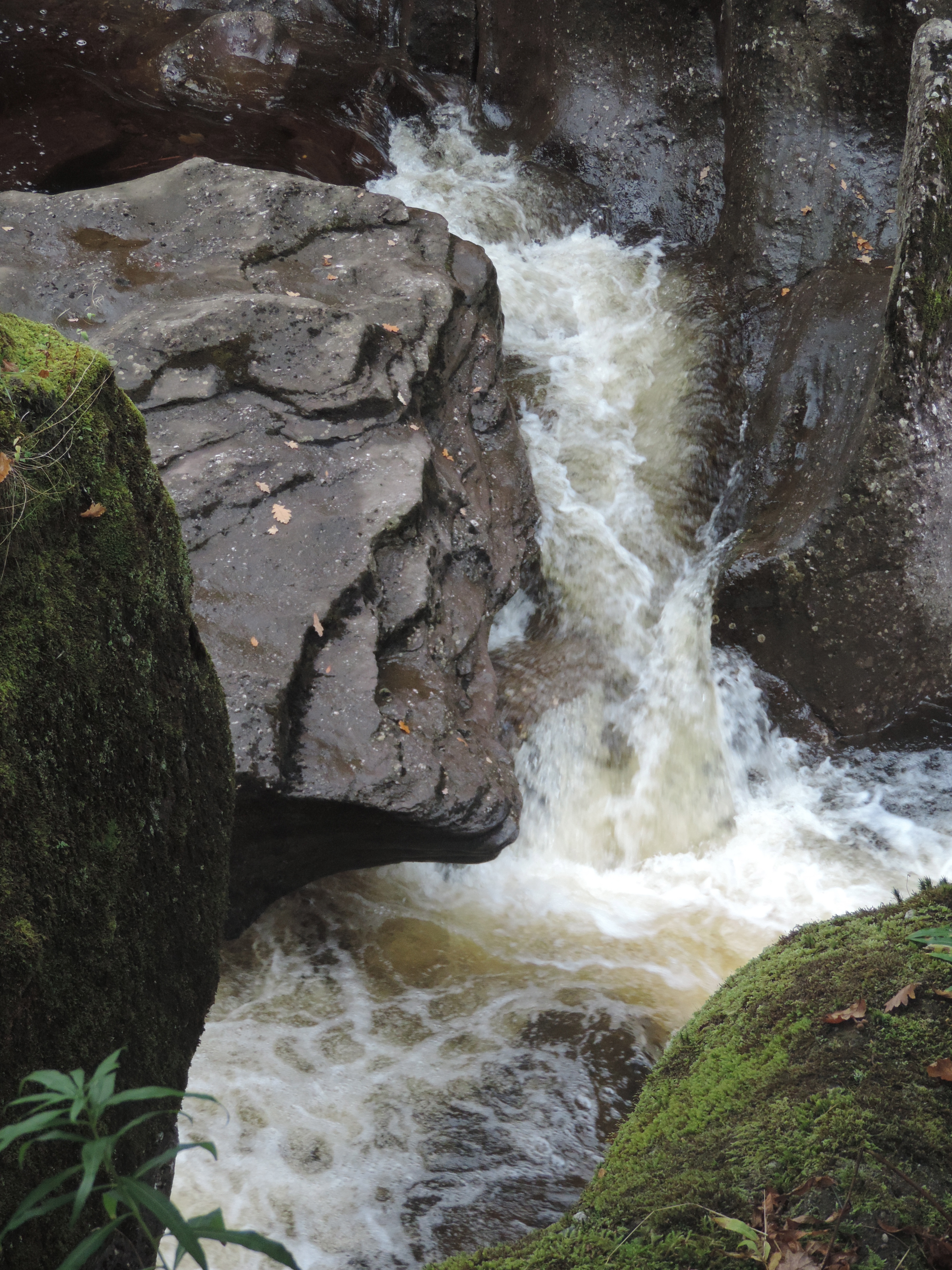
As the river flows over the rocks in the forest around the Bracklinn Falls I stand and wonder about the relationship between the rocks and the water.

I can see the rocks set the boundaries of the river and channel the direction of flow for the water, but I can also see how the water sculpts its own path leaving the rocks far from untouched as it pours down the hillside.

bracklinn


This got me thinking again about that continuous interplay of two essential forces in the universe – the diversity generators and conformity enforcers of Howard Bloom’s “Global Brain”.

That same idea is captured with a different set of metaphors in Thomas Berry’s fabulous “The Great Work”, where he talks of “wildness and discipline”.

I recently came across yet another set of metaphors for this process in David Wade’s “Crystal and Dragon“. In this latter book, David Wade describes the patterns of Nature (actually you could say of the Universe) and Culture which emerge from these two, apparently opposite, forces. Think of how a crystal forms, with a set of rules, which are strictly enforced in a disciplined way to produce the structure required to allow the growth of the crystal. Then think of the patterns of flow which emerge in the creation of clouds, waves and waterfalls. The former containing a certain predictability, and the latter retaining an apparently chaotic randomness. In one section of his book he compares Islamic art to Taoist art, the former known for its beautiful geometric patterns, and the latter for its freehand ink drawings of clouds, waves and water. Interesting then to think of the strict and detailed rules of Islam, and the Taoist focus on constant change, flow and uncontrollable nature of Life. In Chinese culture this force is represented by the Dragon.

So, the crystals of conformity enforcement and discipline, and the flowing Dragon of diversity generation and wildness……and what an astonishing Universe is produced in the process.


Read Full Post »

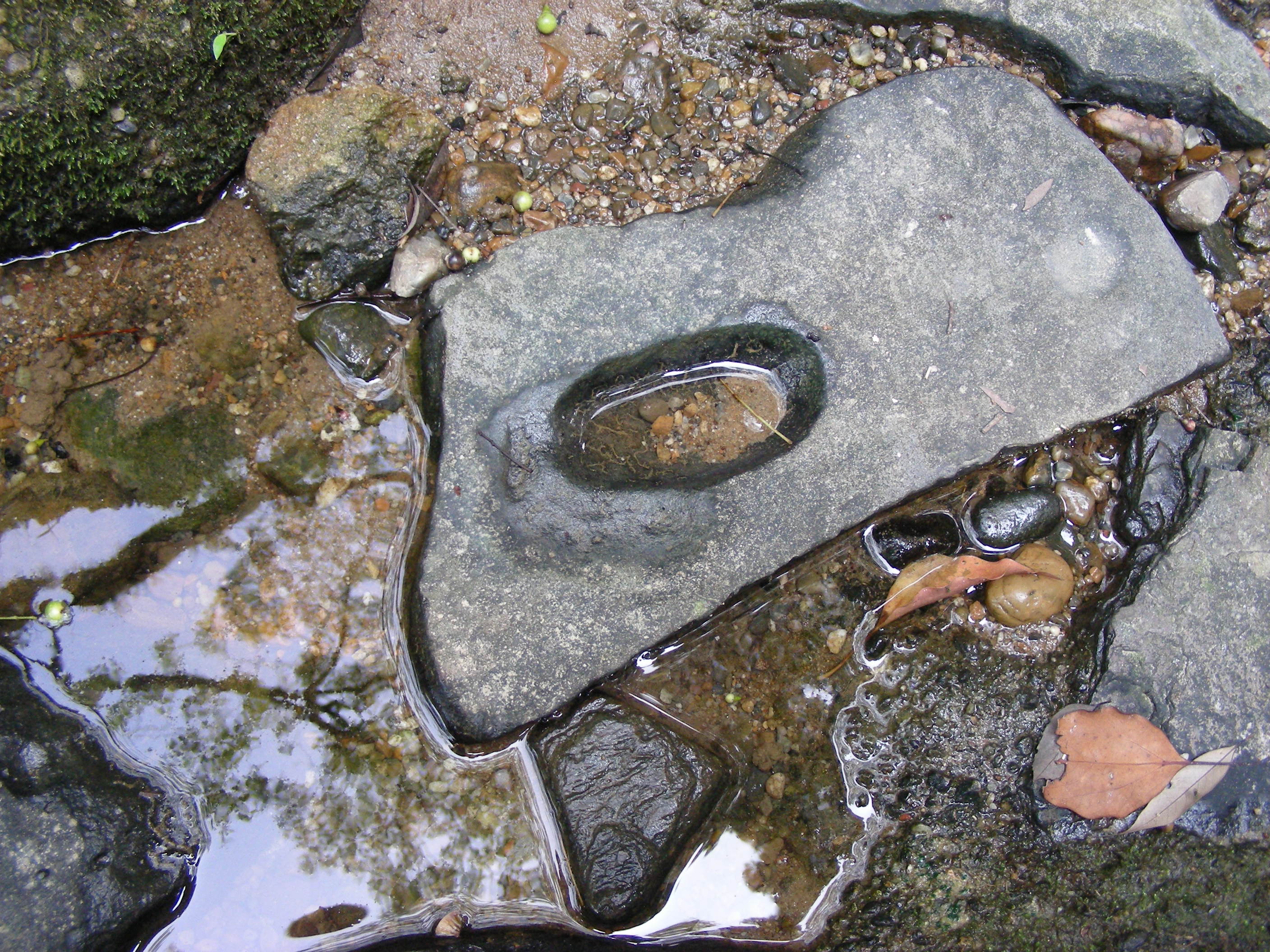
worn stone


Jung said “The world will ask you who you are, and if you do not know, the world will tell you.”

Do we make ourselves, or does the world make us?

Actually, that’s one of those questions which poses a false duality. The truth is it’s a two way process, an interaction, a conversation, relationship, a dance.

I’m fascinated by the patterns we see everywhere. As I listen to someone’s story, I’m listening for patterns. What kinds of patterns?

Well, I suppose you could call them habits.

  • Habits of the body
  • Habits of the head
  • Habits of the heart

The habits of the body are our physical actions, the ways in which we use our bodies to move and to interact with the world. Think of your eating habits, your exercise habits, your physical preferences, how you experience the world and how you engage with it.

The habits of the head are our thoughts, our beliefs and our world view. Think especially of whether or not your thinking habit focuses on the past, the present or the future? What are you sensitive to? What do you notice? How do you interpret the world? It’s especially helpful to think of how we approach the world, and Iain McGilchrist’s brilliant understanding of the clearly different ways in which the left and right hemisphere’s of the brain approach the world is really exciting.

The habits of the heart are revealed in the patterns of our emotions, our longings, and our passions. What moves you? What touches in you in your heart? In your soul?

This is the examined life – where you become aware of your inherited and acquired patterns which create the habits of your existence. And if you want life to be different, you’re going to have to create some new habits, or change some old ones.

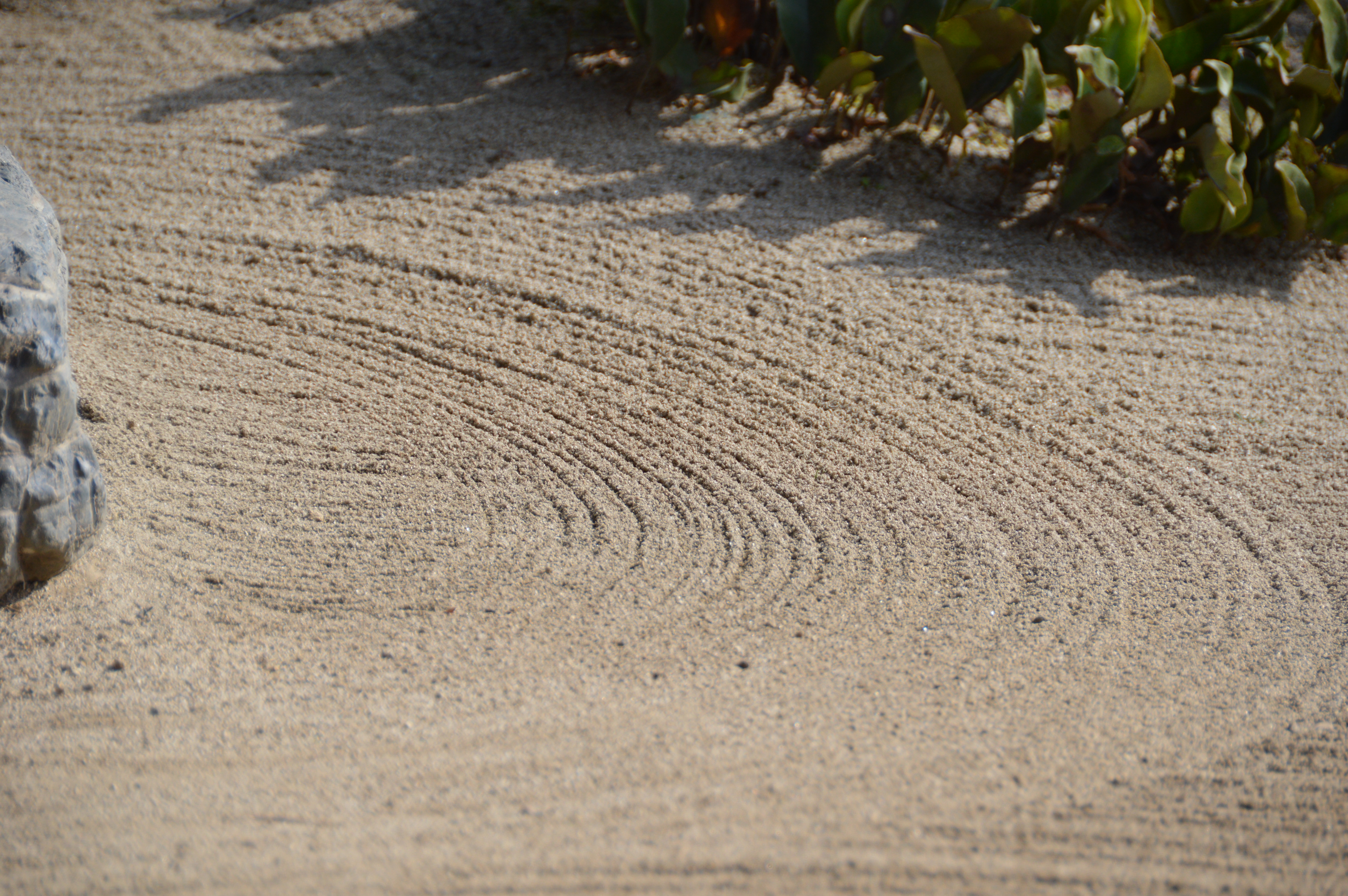
zen sand

Read Full Post »

The forest becoming

If you go into the forest just now you’ll see how everything is connected.
You’ll see the trees shedding their leaves.
You’ll see fallen trees covered in moss.
And you’ll see all kinds of fungi pushing up from the forest floor.

Here’s one thought that occurred to me in the forest – where does the past go?

We often think of time as being like a river, the future rushing towards us as we stand in the present moment and watch it all flow by and into the past.
So, once it has passed, it’s gone. Right?

Except it often really doesn’t feel like that. So try this instead.

The past is always with us. The present grows from the undergrowth, from the forest floor, of the past. It’s always here. It’s what we are shaped by. (Well partly……we are also shaped by the present and even the future, but I’ll return to that another time)

We are changed because of this ever growing relationship between the present and the past. Can’t have the one without the other.

But here’s the other part which occurred to me. The past doesn’t stay the same. Just like this forest floor is changing minute by minute, so the past itself is changing, constantly being altered by the present.

So it doesn’t go somewhere. It’s always with us. And it’s always changing.

Beautiful.

Read Full Post »

I read a fabulous book whilst on holiday in France recently – “Ni hasard, ni nécessité” by Marc Halévy. I’ll probably write a few posts inspired by it. Here’s the first –

Marc Halévy refers to the three meanings of the word “sens” in the French language.

The first is sensation, or senses – what we experience subjectively. This is such a great way to be present – to pay attention to, to become aware of, or mindful of, the sensations you are experiencing in the here and now. What colours, what light and patterns can you see? What sounds do you hear? What scents can you smell? What tastes linger on your tongue? What does your body sense?

The second is meaning – “what sense do you make of……..?” We are meaning seeking creatures. We are always wondering why, and what does this mean? Why me? Why this happening now in my life?

The third is direction – “where am I going?” “where will this lead?” “what’s the point, or purpose or direction of my life?” We like to be able to see an overarching narrative in our lives. We like to see how we’ve got to where we’ve got to and where that might lead if we carry on down this road.

I love this unpacking of that one word “sens” – the sensations, the meaning and the direction of my life.

In fact, sticking with French for a moment, it’s not far from “le sens” to “l’essentiel” – as Saint Exupéry said “l’essentiel est invisible pour les yeux”

What is most important to us, what is essential in fact, is what is invisible – and the sensations, the meaning and the direction in our lives are all invisible. They aren’t material. They can’t be measured. But they create “le sens de la vie”.

Read Full Post »

Meeting of the lizard minds

Well, these little guys got me thinking. They just sat there doing this motionless three way meeting thing in the sun.
I thought look at the three lizard minds meeting!
And of course that set me off on thinking about the three brains we each have, and how only one of them is a lizard mind! You know that model?
You can think of the human brain as having three distinct waves of evolution, each with its own main area of responsibility and each, intricately connected to the other two. We use all three all the time.
The oldest one is what people call the lizard brain. It’s the brain stem. The deepest and, in evolutionary terms, the oldest part of the brain. It’s the part at the top of the spinal cord and its all about survival. The autonomic nervous system spins out from here (its the accelerator and the brake system which produces, respectively, the fight or flight, and the rest and digest, responses to immediate threats. In fact those are the brain stem’s main duties – to control the heart rate, the breathing rate, the release of sugars and energy and so on. It’s our survival centre. It’s also involved in the production of emotions through its links to the second brain, the limbic system. Some people call the limbic system the mammalian brain, because mammals have it. It has a number of main tasks, primarily associated with memory processing, attraction, and the production of emotions. The big bit on the top, the cerebral cortex, split into left and right hemispheres, is the youngest part in evolutionary terms. It’s a great co-ordinator, analyser, synthesiser, map maker and thinker. This is the bit where we seem to get conscious thought from.
Ok, that’s a VERY simplified account, but I wanted to whet your appetite and hopefully make you curious to become more aware of what’s going on inside your head. We can learn to become more aware of these different areas and their processes and through their intimate two way massive links between each other, and between the brain and the body, we can begin to understand why it makes no sense to create a false model which posits that we can think of the brain and the body as separate. We can’t separate them. What goes on in one part affects all the other parts.
And how do we begin to claim we understand illness when we don’t understand yet what good mental and physical health is (I didn’t even like writing that last phrase because I just don’t think you can divide things between “mental” and “physical” that way)
The other thing I thought, in my meeting of the lizard brains rumination, was thank goodness we don’t have three lizard brains in our heads! Thank goodness, that instead, we have something much more complex, much more evolved, which allows us to experience the world in such unique and intricate ways. I do love uncovering some of the patterns in there by listening to people’s stories and seeing them in the contexts of their lives.
It’s an amazing world. Full of incredible creatures, all so inextricably connected in so many ways……I think we are only just beginning to realise that.

Read Full Post »

my new motto

I saw this on the wall of a little village house down at the end of a long track to the East of Marseille. I love it. I’m going to adopt it as my motto.
Roughly translated it means, “slowly, gently in the morning, not too fast in the evening”
I’m a great fan of the slow movement – the idea that we should take our time to be present, to savour the details of our lived experience, and to be fully open to the wonder of the every day.
I think this saying captures all that for me.

Read Full Post »

« Newer Posts - Older Posts »