Feeds:
Posts
Comments

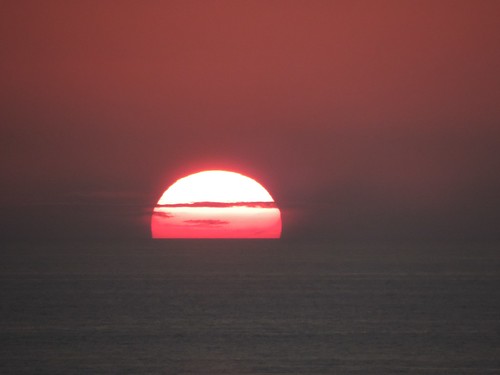
Twilight over the estuary

In the A to Z of Becoming a “D” verb is “de-clutter”.

What does it mean to “de-clutter”? It’s going to mean something different to each of us. I’m not making the case here for a physical environment which is minimalist (although my personal preference tends towards minimalism).

This photo of the sea at twilight looks calm and open to me. That’s the feeling I want to get when I de-clutter.

It’s amazing how much “stuff” we accumulate unconsciously – both physical stuff in our rooms, our cupboards, shelves, drawers (and floors!) – and mental stuff in our heads which we carry around with us everywhere.

De-cluttering for me is just a process of making conscious choices. Do I really want to keep that (whatever “it” is) and if I do, do I want to keep it just there where it is at the moment. I find when I de-clutter I do throw a lot of things away – de-cluttering the bookshelf consists of putting into bags books I have read which I know I’ll never want to read again and then taking those books to a charity shop, or giving them away to friends and relatives. De-cluttering a room is often more a process of tidying rather than throwing, or giving, anything away. De-cluttering a wardrobe involves trying clothes on to see if they fit (and realistically am I EVER going to be that size again??) and if they don’t, out they go.

De-cluttering might take effort but once you start the liberation and freedom and space which starts to emerge can be quite thrilling.

De-cluttering your mind is something else again. Meditation practices definitely help to de-clutter the mind. Just taking the time to watch the stuff (the thoughts) which are looping through your mind and watching them go is a de-cluttering all to itself.

Go on, make some space – in your room, in your house, in your head!
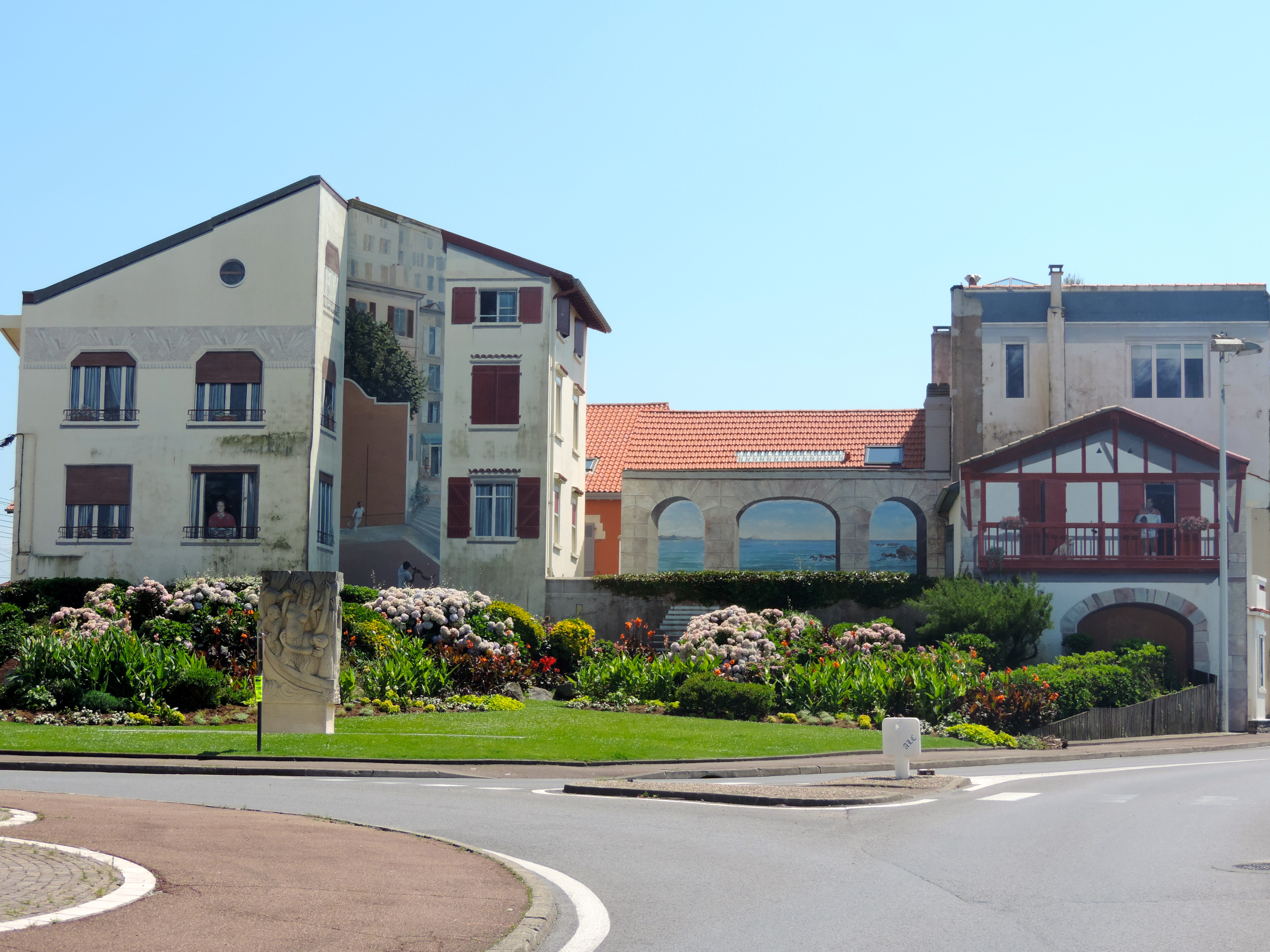
Look again

What do you see?

trompe

I saw the gable ends of a couple of blocks of flats.

I saw a woman looking out of her window and a man with a rugby ball in his hand standing on his balcony.

I saw the see through the arches.

Then I looked again……..

I saw a mural.

This provokes two thoughts for me –

Firstly, how often do we take the time to really see what we can see? What’s familiar is often worth a brand new look.

Secondly, how much attention do we pay to the creation of our lived, physical environments?

First and last

There’s a classical teaching about living life to the full which says to embrace each experience as if it is the very first time you are having this experience (which is true…..every experience you have today is for the first time). This is quite like the mindfulness or awareness teachings which tell us to be fully present, as fully aware as possible, as much as we can. This, in fact, is the essence of “heroes not zombies” – it’s about waking up, living consciously and not on autopilot all the time.

There’s another teaching which says to embrace each experience as if it is the very last time you will be having this experience (which is also true……you will never have exactly the experiences you have today ever again).

I find both these teachings come to mind as the sun rises and the sun sets (or Earth Falls and Earth Risings?). Have you ever seen the movie, “City of Angels”? (an American re-make of Wim Wenders, “Wings of Desire”) There are beautiful scenes there where the angels all gather on the beach each morning to experience the sunrise. To be quite honest, I’m not out and about experiencing sunrises all that often, but the other end of the day, sunset, is an equally entrancing event.

If you are ever somewhere where you have an unobstructed view of the sun setting, you’ll likely see that you aren’t experiencing the sunset alone. I was lucky the other day to watch some spectacular sunsets from Biarritz, watching the sun sinking below the horizon of the Atlantic Ocean (and, no, I didn’t see any green rays)

The play of the light on the waves and the wet sand were amazing…..


Sun set light on surf

Low sun on sand

Sunset Biarritz

Setting sun up close


Live life fully today – living every single experience for the first time and the last time.

Verbs into nouns

Osho, when talking about relationships, makes the point that “relationship” is a noun, whereas “relating” is a verb.

I understand the importance of our doing words, our actions and choices as represented by the verbs we use. Have a look on this blog for the “A to Z of Becoming”, or read about William Glasser’s “Choice theory” to explore more about the verbs in your life.

Osho adds another interesting element to the importance of understanding the difference between verbs and nouns. He says verbs are uncertain and nouns are an attempt to be certain.

That made me think of the Creation myth where God told Man to name the other creatures and so have “dominion over them”. This element of control is typical of the left hemisphere approach to the world, as described by Iain McGilchrist – it’s a process of “grasping”, getting a handle on, or getting a hold of something.

Nouns describe objects. They turn activities and experiences into things. Things which can be measured, known and controlled.

But Life is a process, not a thing, and living, loving or relating can never be fully known, grasped or controlled.

It can be exciting to let go of the delusions of certainty and to relish with heightened pleasure the living fully in this present moment.


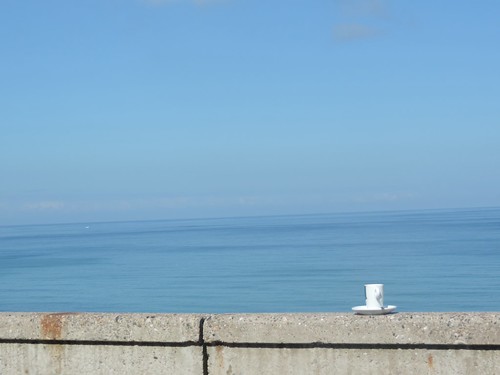
Breakfast

I’m sure we all fall into routines or habits quite easily. As I was having breakfast yesterday here in Biarritz (on holiday!) I got to thinking about how our start to the day influences our experience of the whole day.

I imagine that starting the day with an expresso and a croissant taking in a view like this might set up a good experience for quite a long time!

But I wonder what our routine morning starts set up?

Do you start the day in a rush?

Do you start slowly?

Do you have breakfast or grab something on the run? Or do you meet up with friends or colleagues in the same cafe each day?

Do you watch, listen to, or read the news, and fill your mind with stories of deaths, disasters and crimes?

Do you start with meditation, or exercise, or reading (and if so, what do like to read first thing?)

However you start your day, why not try changing something…..and see how that feels?

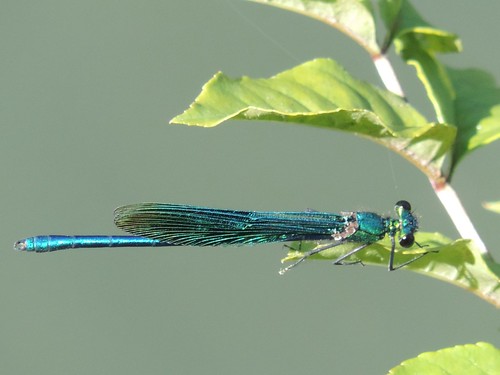
La libellule

I came across a discussion the other day where various scientists were asked to say which species would take over the Earth if human beings eliminated themselves. (I think the question was provoked by the movie “Planet of the Apes”)

The discussion raises interesting questions for us. What does it mean “take over the Earth”?
In what sense? As one of the respondents pointed out bacteria have already far exceeded human beings in numbers (also in sheer biomass) and in adaptability – there are bacteria everywhere – in the mouths of volcanoes, in ice flows, at depths of the ocean unreachable by human beings and living on, and in, human beings to the extent that about 90% of the DNA found in your body is bacterial.
Insects such as ants also exceed humans in biomass and numbers and can co-ordinate activity amongst millions in ways which are just astonishing to human beings.
Many organisms already live many more years than human being do – some species of trees for example live hundreds of years.

So if the question is about colonising, adapting to, and surviving on, planet Earth, we’ve already been surpassed.

Which begs the question about simple evolutionary theory – if evolution is about survival of the fittest with random mutations being selected for, what’s the evolutionary advantage in producing such complex creatures as human beings?

Different species have adapted in extremely different ways. Isn’t it a bit naive to think of human beings as being in control of the Earth in any sense? And isn’t diversity beautiful? And astonishing!

Oh, and when it comes to evolution isn’t it the evolution of consciousness, not survival of the fittest that helps us to understand our place in the universe?

Far away

Some scenes seem to brim over with narrative potential.

I think this is one of them.

A prisoner's labyrinth

In the A to Z of Becoming, the second “C” is CONNECT.

We connect all the time. This week, think of two ways in which we connect – connecting to others – we are highly social creatures; who could you connect with the week, and what kind of connection would you like to make with them?

Secondly, we connect up our experiences and our perceptions. This is one of the ways we make sense of our lives – by creating narratives of connections which help us to make sense of life.

This photo is of a labyrinth carved into the prison wall in a chateau in the eighteenth century. As we connect this labyrinth to others we know, as we think of other castles we have visited and we think of the person who might have created this particular labyrinth we create many stories.

Have you a story to tell from the connections in your own life to this labyrinth?

Miroir d'eau Bordeaux

Bordeaux

In Bordeaux there is a spectacle well worth waiting for – le miroir d’eau. It’s a large area which fills periodically with a thin layer of water and once the movement in the water settles down it make a giant mirror. The absolute best time to see it is just after the lights are turned on in the streets and surrounding buildings.

Really, it qualifies for the adjective “spectacular”

Little tripods

Chateau D'Oleronne

Here’s a wee photography tip today – I always carry a tiny, flexible tripod in my bag so in a really low level lighting situation like this I can pop it on, sit on the ground and get a nice clear image like this. Without the tripod, I end up with very blurry photos in this light.