Feeds:
Posts
Comments

seeds


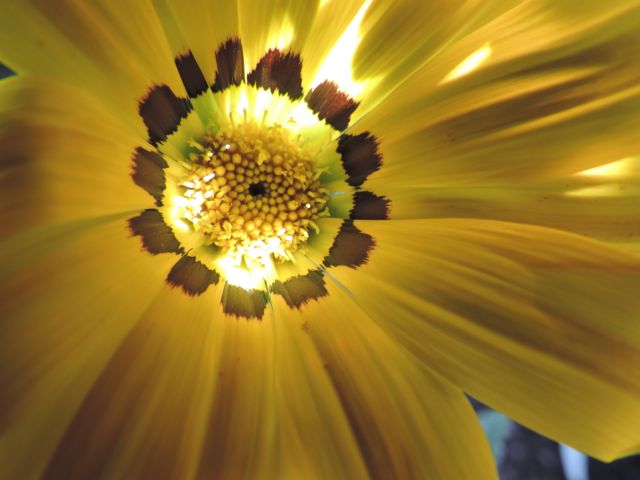
Look at this wonderful cluster of seeds with the sun shining through…..simply bursting with potential…..this is me, today. This is you, today…..

simply bursting with potential

Which seeds will you water?

Reminds me of Thich Nhat Hahn’s teaching on watering the seeds…..

If you live in a couple, if you live in a family, if you live with another person or several persons, you may ask them to be careful. You may ask them to be aware of the seeds you have in your store consciousness. “Darling, I know that I have these negative seeds in me. And every time these seeds manifest, I make myself suffer and I make you suffer, also. So, please, if you love me, if you care for me, be careful not to water these seeds in me.” Among lovers, there should be such an agreement. That is the practice. “Darling, if you really love me, water the positive seeds in me, because I do have the seeds of understanding, of compassion, of forgiveness, of joy in me. Even if they are still small, if you know how to touch them in me every day, I become a much happier person and when I am happy, you don’t have to suffer as much.”


The Heartmath technique involves recreating a positive emotion – not just remembering a positive event, but actually feeling the feeling again.

When I found this project from “soul pancake” it struck me that they were making little “heart math” moments in the street. Watch the video. It’s delightful, and I’m pretty sure it will make you smile……

……and remember, to flourish, you should try to have a 5:1 ratio of positive to negative feelings/experiences each day.


web


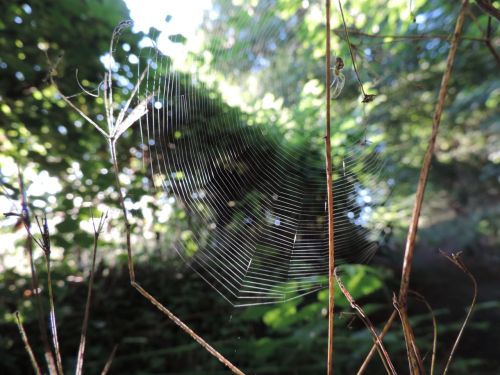
When I was little, my grandfather read me Walter Scott’s Tales of a Grandfather. One of the stories was about Robert Bruce who had lost a number of battles with the English, and was sitting in a cave, feeling defeated and in despair. He noticed a spider trying to make a web. Time and again, it tried to spin its thread, and time and again, it failed. But it didn’t give up. As he watched, attempt after attempt, finally he saw it successfully create its web. He was inspired. “If this little spider never gives up and so succeeds, then so might I”. He went on to his famous victory in the Battle of Bannockburn in 1314.

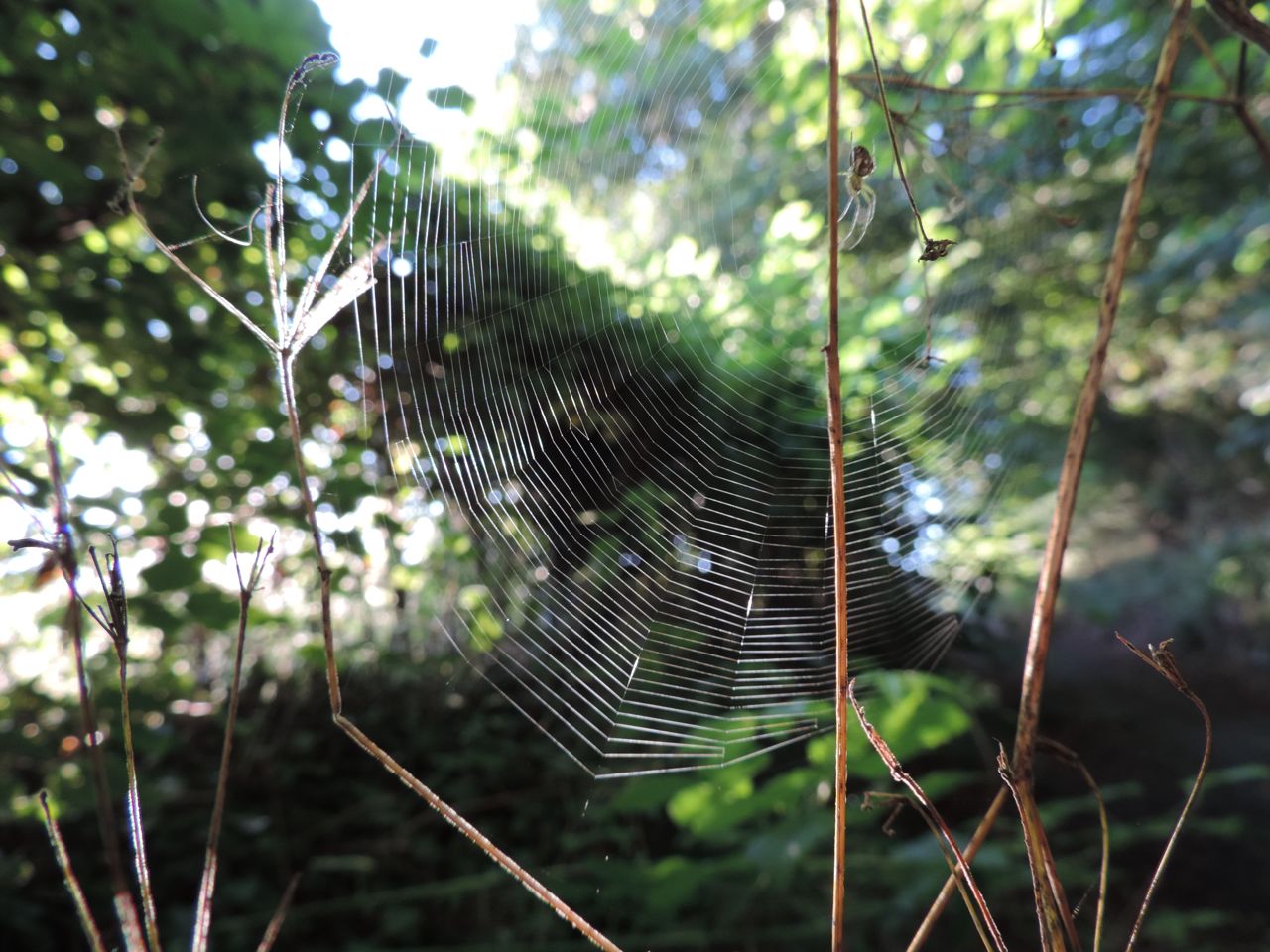
This old story came to mind as I walked along the lane on my way to work this week when I noticed how the early morning sunlight was illuminating this web.

A few days on (my mind never stops, and seems to continue to make connections even when I’m not aware it’s doing so!), I was thinking about how this strategy of the spider can help us understand how to achieve those less tangible goals in life – you know the ones like happiness, love, and health.

I go to work every day to be involved in health making. For much of my working life as a doctor my focus was on disease management, but in this latter half of my career, it’s been squarely on health making.

So how do we make health?

I explore that pretty much all the time. But this web brought a different verb to mind – “catch”.

How do we catch health?

We talk about catching diseases after all, so why don’t we think about how to catch health?

The spider isn’t like a hawk, or a lion, or some other predator. It doesn’t spy on it’s prey, then jump on it. (OK, some spiders do, and you could argue that the rest do once the fly is caught in the web, but bear with me here)

What spiders do is create the conditions for success.

They don’t say “there’s a fly over there, if I run fast enough I can catch it”. They spin a web.

The web hangs there and the spider waits to see what gets caught in it. This requires first of all a lot of effort and creativity on the part of the spider. Look at the web in my photo. It’s both beautiful and quite stunningly amazing when you stop to consider that the spider there spun all of the raw material, the thread, out of its own body, then created this distinct pattern of the web. The spider can’t just sit about and wait till a fly hops into its mouth. I has to create the conditions. It has to put in the effort and it has to choose where to apply its effort.

This choice of where to put the web is probably both instinctive and learned. (Is it? I don’t know. Maybe a spider expert out there can enlighten me) But there is also an element of luck. It’s affected by weather conditions, other creatures, and the amount of passing fly traffic!

I think health making is a bit like this you know.

We can catch better health by creating the conditions for it.

We need to apply ourselves, we need to draw upon our instincts and our learning, and there’s an element of chance.

But I’ll tell you one thing for sure, and it’s the same old lesson Robert Bruce learned. You have to persevere. It’s a way of life, not an event.
 

Credo

I came across this the other day –

The Atheist Credo

I believe in one method

of data, hypothesis, and experiment

which was conceived by ancient Greek thinkers,

born in the Age of Enlightenment,

suffered under superstition

is struggling under religion

is bound to make people’s lives better

and will one day bring about a perfect world.

I found it on the blog of a neuroscientist called Kathleen Taylor, having read about her in a French magazine article.

My first reaction was what?!

“data, hypothesis, and experiment” ………. “will one day bring about a perfect world”

Really?

It’s niggled away at me since. Here’s my problem. Well, two problems actually. I’ll start with the last one first. What’s a perfect world? I wonder what the author imagines a “perfect world” would look like?

Do you have an idea what a perfect world would be like?

Do you have an idea of how to bring that about?

But before we get to that closing sentence, its the earlier statement that really worries me. Right from the outset.

“I believe in one method”

OK this “one” anything always worries me. It worried me when Mrs Thatcher said “there is no alternative” (“TINA”). It worried me because it made me think of totalitarian regimes, from Stalin to who knows who else? It made me think of fundamentalists – theists, as well as atheists. Nature loves diversity. The “one method” stance strikes me as being about power over others.

It brought back to mind Deleuze and his “three ways of thinking” – science is thinking about function, philosophy is thinking about concepts and art is thinking about percepts and affects. (I know I’m way over-simplifying what he said here, but that’s the gist of it as far as I’m aware). And that quickly led me onto to that second line  – “data, hypothesis and experiment” – she means, of course, “the scientific method” – as interpreted by modern day materialists. And again, I find myself thinking “Really? Is she having a laugh? Is this tongue in cheek?” …… maybe it is. But I suspect there are people who would resonate with this all the same.

So what about music, and painting, and poetry, and novels, and the theatre, and love, and laughter, and passion, and relationships? We can make those perfect through this one method too? This one method is enough to create a perfect world full of love, laughter and flourishing?

What do you think?


DSCN0031


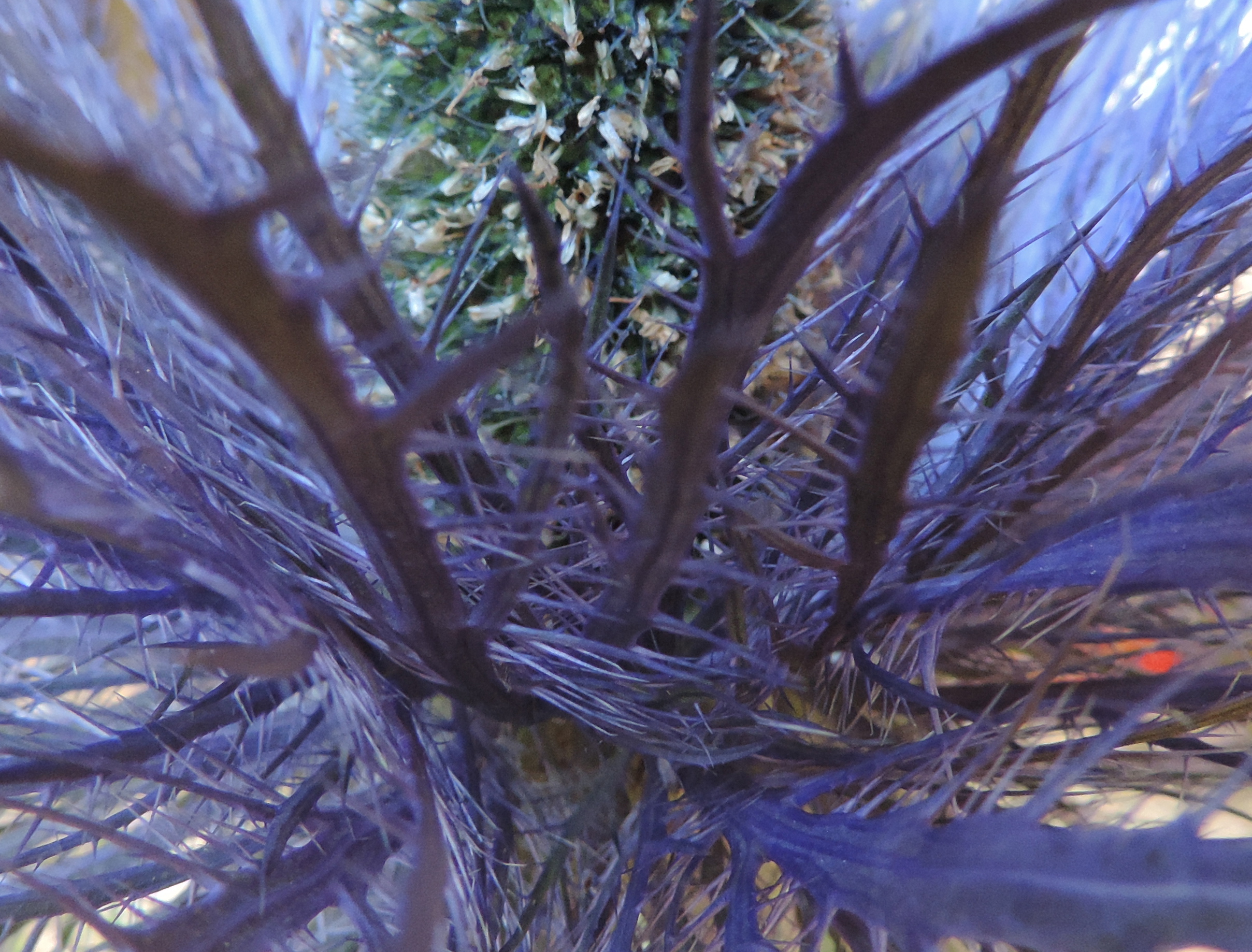
When you look closely at a spectacular flower, like this Eryngium, you can really immerse yourself in the present moment.

This is a kind of meditation for me…..an exercise in being fully present, in flowing into that amazement and wonder of the everyday reality, and of savouring it fully.

The colours and shapes bring me such aesthetic pleasure.

The astonishing delicate complexity fills me with awe and wonder.

Life is living these moments.

After the rain….

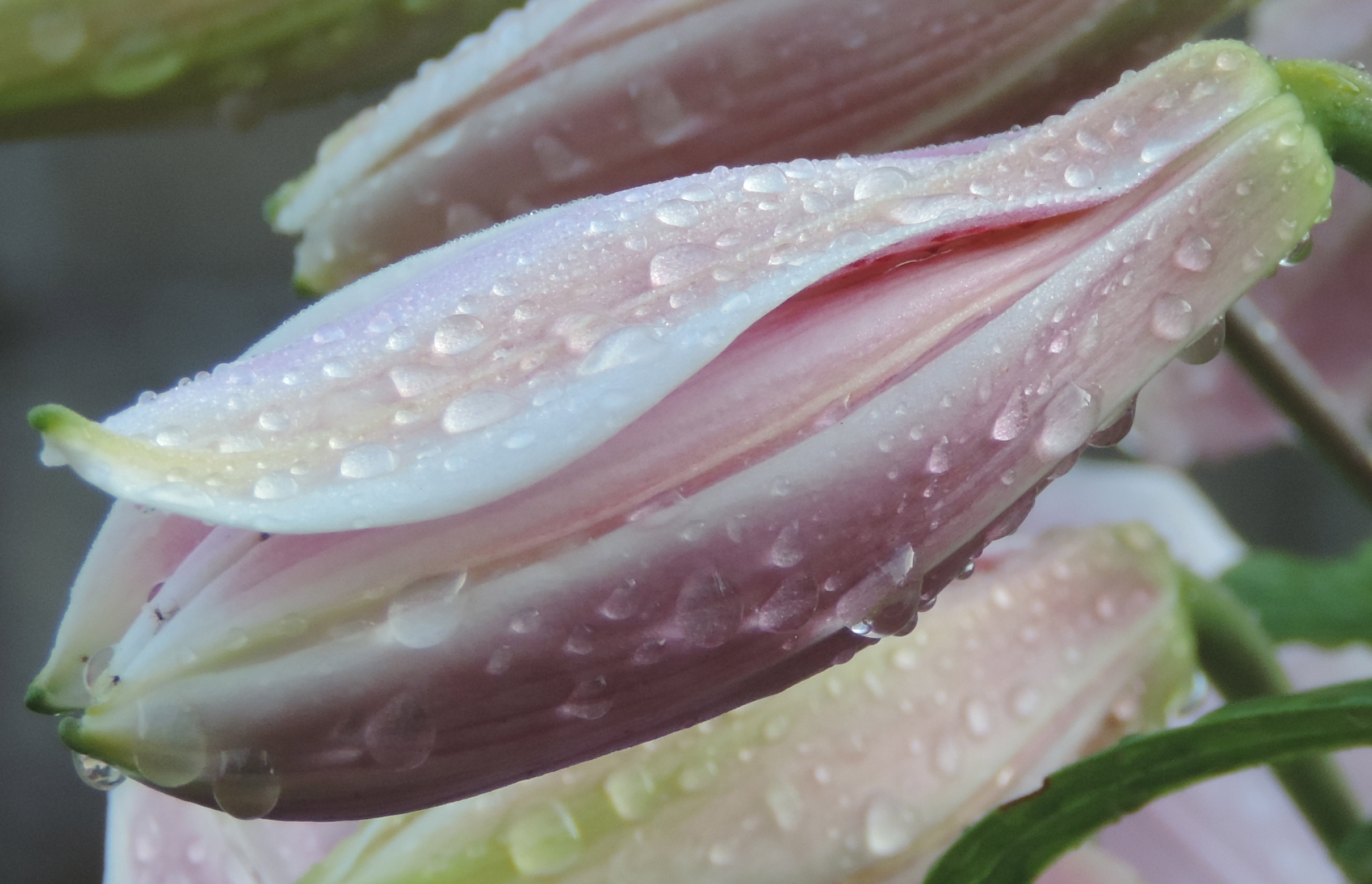
After days and days of sunshine, the storm clouds gathered, and down came the rain

I love how the garden smells and looks after the rain

DSCN0022

I don’t know if you are familiar with the hexagrams of the I Ching, which are created from a set of trigrams, but I had it in my head there was one called “mountain”, and one called “cloud”. However, it turns out that, whilst there is a “mountain” one, there isn’t a “cloud” one.

So, here’s the scene from my living room window the other day, which has inspired me to think of a hexagram entitled “Mountain over cloud”

DSCN0024

Well, here’s a very interesting study from New Zealand. Researchers took a group of 49 adults from 64 to 97 years old and got them all to write for 20 minutes each day for three consecutive days. One group had to “write about the most traumatic/upsetting experience in their life, delving into their deepest thoughts, feelings, and emotions about the event, ideally not previously shared with others”, and the other, “write about their daily activities for tomorrow, without mentioning emotions, opinions or beliefs.”

Two weeks later, all participants received a standard 4mm skin biopsy on their inner arm. The resultant wounds were photographed regularly over the following days to determine the rate at which they healed. On the 11th day after the biopsy, the wounds were completely healed on 76.2 percent of those who had done the expressive writing. That was true of only 42.1 percent of those who had written about everyday activities.

Measures of stress levels and depression were the same in both groups, so just how this faster healing resulted from the expressive writing isn’t clear. Fascinating though!


meadow1 meadow2 meadowclose meadowcastle

There’s an old Scottish phrase, “A hae ma doots”, which roughly translates as “I have my doubts”. We use it when we don’t agree with another person’s view, but we think there might be something in what they say. Fundamentally, it’s the essential Scottish expression of skepticism.

I haven’t been very impressed with the modern version of skepticism which seems to have evolved from something people refer to as “scientific scepticism”. There are a number of “skeptics” societies around in the UK, and one of their main activities has been to organise attacks on homeopathy and “alternative medicines”. What’s always struck me about the pronouncements and activities of these groups is their utter conviction, their complete, unflinching sense of the rightness of their own opinions, and their often contemptuous dismissal of the opinions or beliefs of others. In fact, it seems that the only thing they are really skeptical about is any view they don’t agree with. When it comes to doubting their own conclusions, their skepticism flies out the window.

Scientific scepticism (you’ll see I use the two spellings interchangeably), has a distinct characteristic. In some ways, its the attitude of “doubting Thomas”…..”I’ll only believe what I can see with my own eyes”. There seems to be some core to scientific scepticism which is materialistic. Objective, measurable data is what counts for the scientific sceptic, and they are likely to dismiss, or at least to be sceptical of, any perspective, view or opinion which isn’t based on a physical reality.

Not all scientific scepticism can be reduced to materialism of course. There’s a scepticism which is intertwined with humility and curiosity. Humble, curious scepticism is based on believing that we can never know everything about anything. There will always be something new to discover, some further research, or exploration which will deepen or even radically change our understanding. Modern physics, it seems to me, is even sceptical about the physical basis of the universe (at least in the sense that the universe can be understood to be made of “things” which exist independently of each other)

It’s this latter kind of skepticism which we find in the writings of Montaigne. His essays are peppered with phrases like “peut-être”, “je crois”, “ce me semble”, and even “encore ne sais-je” (“perhaps”, “I believe”, “it seems to me” and “again I don’t know”).

I am very attracted to this kind of healthy skepticism. It’s about keeping an open mind; remaining curious; desiring to hear, and being respectful of, the views of others.

So when modern day “skeptics” campaign on the basis of their convictions, I have to say that “A hae ma doots” about their claim to be skeptics! But then, what do I know?