Feeds:
Posts
Comments

The spring

There’s a spring opposite my house here in South West France. The Romans built the walls and the aqueduct a couple of thousand years ago. The water in the spring is the clearest water I’ve ever seen. I’ve been told that scientists have traced the origin of the water to the mountains in the middle of France, and it takes about three weeks, flowing underground, to reach here.

When I arrived here eight months ago the spring water poured powerfully over the little wall and into the aqueduct beyond. This summer, with France experiencing a historic drought, the water level in the spring has fallen and fallen. You can see how far away it is from tumbling over into the aqueduct now.

The locals tell me they’ve never seen it this low in their lifetime, which is pretty troubling. But it’ll be restored I think. “Normal” rainfall isn’t expected until October or November so I wonder if the water will be flowing vigorously again by the anniversary of my moving here.

Nature is full of cycles and seasons and we’re told that climate change isn’t stopping that. It’s just making the swings more extreme.

As they say around here, “On vera” (we’ll see)

Iain McGilchrist, in his The Matter with Things, says that the most important, deepest and hardest to answer question is “why there should be something rather than nothing”.

The current orthodox answer is it’s all down to chance. We live in a purposeless random universe. Human beings are insignificant little creatures on one tiny planet floating in an empty universe.

But that orthodox answer is pretty hard to swallow. Lee Smolin, Physicist, says “we should ask just how probable is it that the universe created by randomly choosing parameters will contain stars. Given what we have already said it is simple to estimate this probability….the answer in round numbers comes to about one chance in ten to the power 229. (We might note the part of the universe we can see from earth contains ten to the power 22 stars)…..

That probability that our “something not nothing” is purely down to chance is mind boggingly small. So small it’s surely hard to believe.

The fact there is something instead of nothing is, frankly, astonishing.

The second question is why this something has “turned out to be complex and orderly, beautiful and creative, capable of life, feeling and consciousness, rather than chaotic, sterile and dead.”

If you aren’t amazed by everyday reality, you’re not paying attention. The sheer complexity and beauty of this world stops me in my tracks every day. I’m in awe of Life in all its diversity, complexity and beauty. Every flower, tree, butterfly, bird, every unique and astonishing human being……I am amazed.

Like everyone else I don’t have the answers to those two questions but I find that when I start to consider them I become ever more humbled, ever more blessed.

Maybe that’s what makes those two questions so great….not that we can find the answers but that in their contemplation we are opened up to the sheer, immense wonder of this world.

Walk in beauty

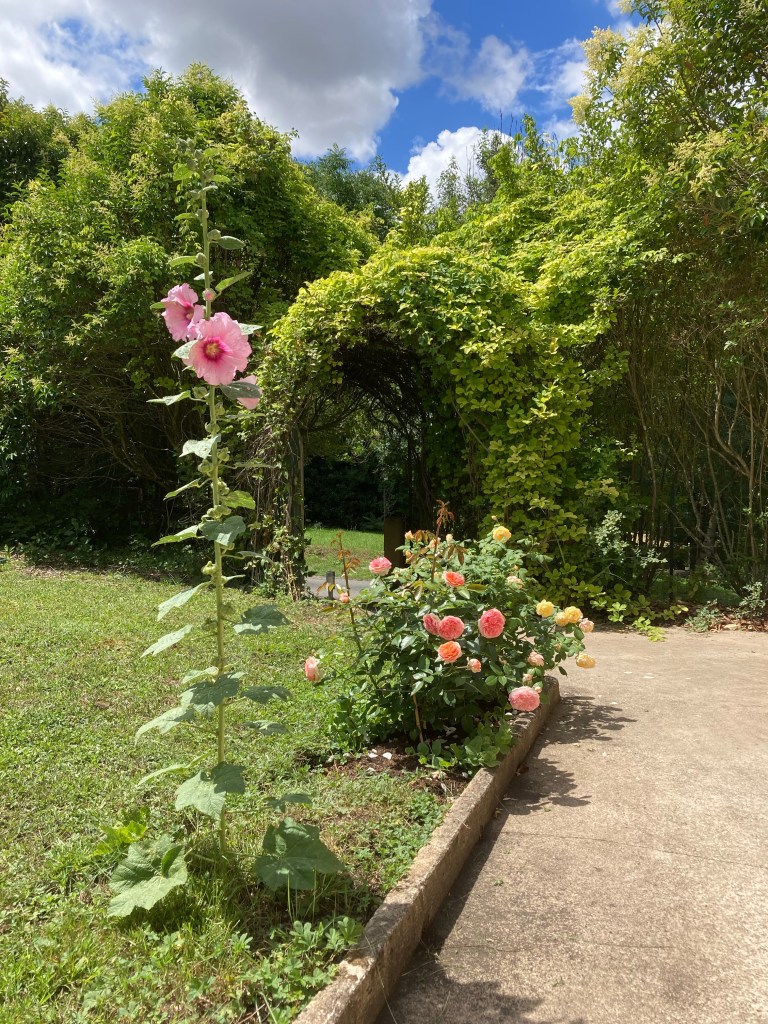
This is the entrance to my garden. The first time we came to view this house we walked through this archway and thought “This is it”. Everything we saw after that just confirmed the initial feeling. We bought it. I know many people view lots of places before finding the one where they really want to live, but we were lucky. The first place we viewed was horrid, and the second was the one we bought.

What made the choice so clear?

I’m pretty sure it all began with beauty. Of course there was a lot more to consider…the location, the house itself, the condition of the house, the price etc but I’m sure it was the initial impression of beauty which enabled us to see solutions where there problems and potential which could be realised.

Iain McGilchrist argues in his latest book, The Matter with Things, that values are foundational to our conscious universe. Those values are Good, True, Beauty and Meaning. Further, he makes a good case for how beauty opens us up to the discovery of what’s true and what’s good. And I’m so doing we discover meaning in life, purpose in the universe.

So here’s my challenge for you today. Notice beauty. Find beauty in your life today…in your surroundings, in others, in music, in creations, in the flowers, trees and birds….just decide today you are going to notice beauty.

Branching

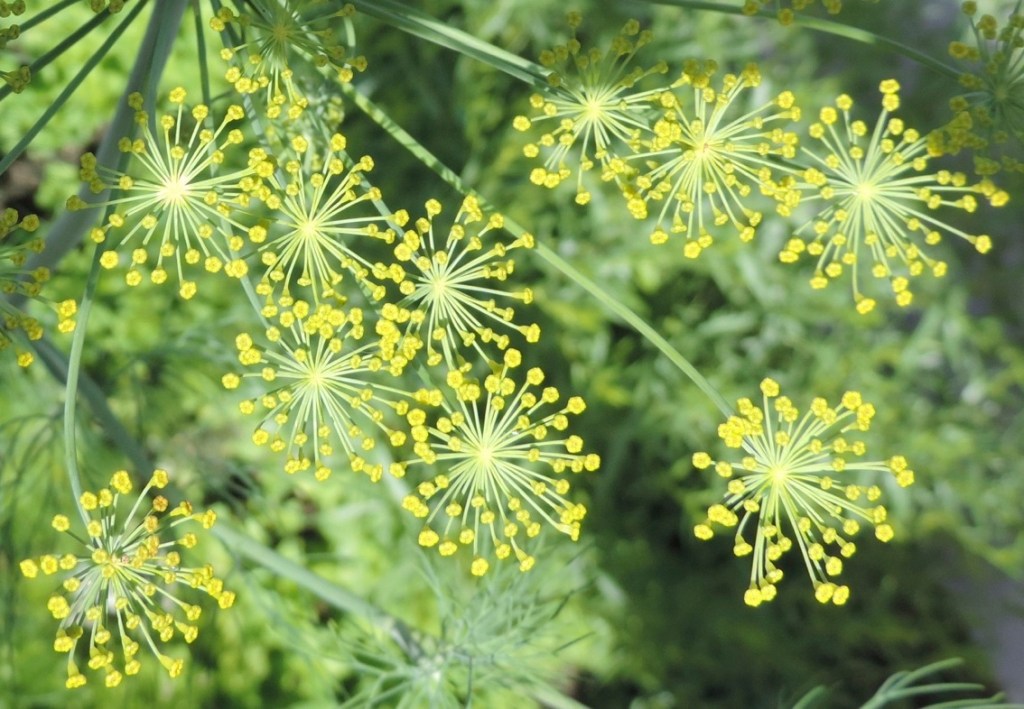
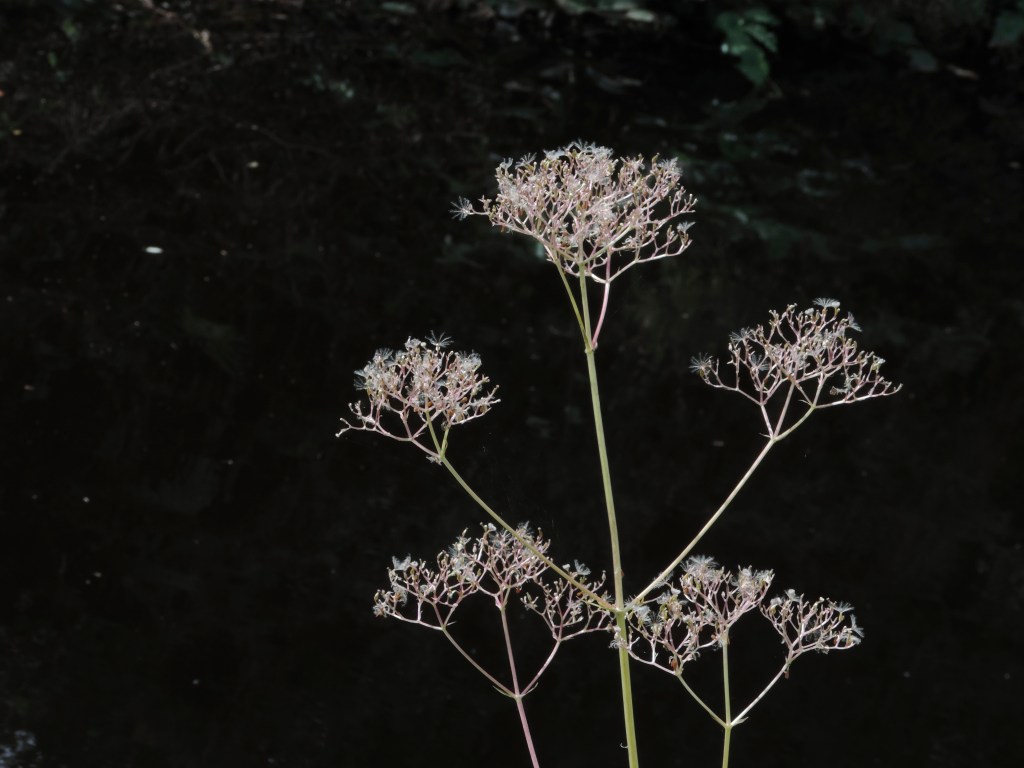
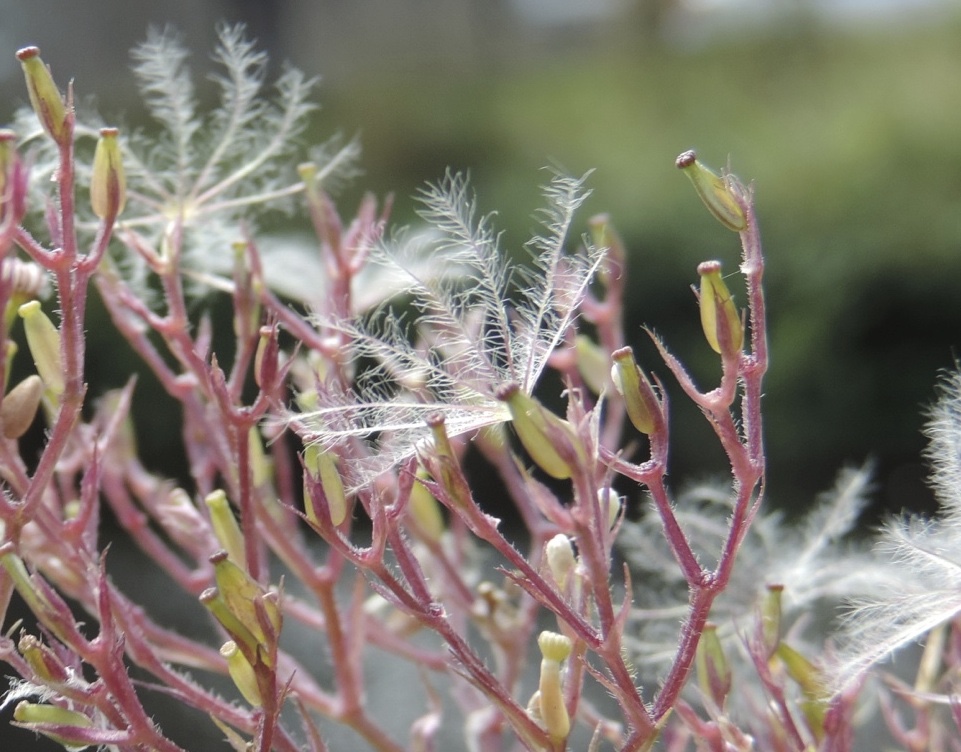
This is one of my most favourite patterns in nature – branching. You can see it in this plant. You can see it in a tree, both above and below ground. You can see it in river formation as small streams gather to former larger ones which then collect into rivers all the way down to the estuary where the pattern emerges again as the river approaches the sea.

You can see it in lungs. You can see it in the circulatory system of arteries and veins. You can see it in the nervous system and inside our kidneys and our liver.

It’s no wonder we use this pattern to create family trees, to classify and categorise species and families of all living creatures.

But we have to be careful with this pattern because the further out the branching structure we ponder, the further apart seem the objects of our study. We always have to zoom out and follow the paths back to the common ones to remind ourselves of the ultimate connections.

There is, in fact, nothing separate from anything else, even in a common structure like this.

But there’s a key point. We need “and not or” because we need to distinguish one from another to see every instance of uniqueness whilst also needing to see the connections and realise how much is shared.

Plants have several different strategies to disperse their seeds. One of the commonest is to use the wind. You’re probably most familiar with the seed head of a dandelion. Maybe you even played a game with one as a child counting how many puffs of breath it took to blow away every single seed. The dandelion was probably quite delighted that you enjoyed doing that….a win, win. A mutually beneficial relationship!

Can a dandelion be delighted? Can plants be happy or sad? Of course there’s no way to answer that question because happiness and sadness are subjective experiences. Nobody can really know what your happiness or sadness feels like. But through empathy, observation and imagine we can pick up when someone else is happy or sad. We see it in their expressions and behaviour. We hear it in their tone of voice. We understand it by listening to their stories.

Plants don’t have faces and they can’t tell stories. But we can still observe their appearance and behaviour. We can see when they are flourishing. We can see when they need water. We can see when they are struggling to cope with the heat of the sun.

Plants are aware. They detect the environment around them and respond to threats, challenges and opportunities. Plants have memories. They can remember which direction the sun will rise and turn to greet it. Plants communicate, through the release and reception of chemicals warning others of a present threat, through electrical signals amongst their cells, through vast networks of micro rhizomes entangled in their roots.

Plants, I feel, are a bit taken for granted. Probably because they don’t have faces, can’t tell stories and are limited in their ability to move.

But, hey, don’t you agree that they are absolutely amazing creatures? Often arrestingly beautiful. Frequently astonishing. Simply wonderful.

Order and chaos

It’s probably just me but I’m walking along and I notice the contrast between these two patterns in this path, and I think “order and chaos”……

On the one dude are regular parallel lines. Highly ordered. On the other side, chaos.

The universe wouldn’t exist without the synthesis of this polarity.

Whether you think of it as order and chaos, or discipline and wildness, Cristal and Dragon (search for any of those pairs on this site), we have a brain which is perfectly evolved to appreciate both, and to integrate them.

Our left hemisphere organises what we see, analysing, categorising, labelling. It seeks and creates order, routine, habits. Our right hemisphere gathers what we see and focuses on patterns, seeks novelty and creates links, connections and relationships. Between them they enable us to make some sense of our existence.

Wow, well there’s the key! The secrets of the universe are right in front of us, right behind us, all around us. We discover them through the practice of everyday wonder.

L’émerveillement du quotidien.

He saw metabolism, repair, and replication. And there it is! The key to a system evolving to become an organism is that it must reach some point where it achieves all three of these functions. We have never designed a machine like this and for very good reason. We build machines to last. One of the first and most crucial aspects of the evolving living system was its failure to last! It was in a condition of being torn down as fast as it was being built up and this is what allowed it to evolve. Stability is the return to a condition after being perturbed from it. How much more stable could something be than to have both its construction and destruction under strict limits? Both construction and destruction are systems properties. The systematic tearing down allows rebuilding, replication and evolution. The details we know, but the strategy was masked by the details. Molecular biology is indeed an oxymoron. Biology is the study of life and life does not exist at the molecular level.

Mikuleky

“Metabolism, repair and replication”….In those three words lie the key to understanding why human beings are not machine like. We are not assembled from a collection of independent different objects. Disease is not a wonky part or a piece needing replaced. You can’t maintain health the way you maintain a machine.

We have never invented a machine which can achieve all three of these processes – metabolism (the assimilation of, transformation of, and breaking down of nutrients), repair (the only healing which exists is that delivered by the self repairing capacity of the living organism) and replication (not just reproduction but making new cells in order to grow and develop).

This passage adds a further important insight though. When you buy a lawnmower it stays a lawnmower. It doesn’t grow into a bigger lawnmower. When you buy a car, it stays a car. It doesn’t grow into a stronger, larger car. But when an egg is fertilised and an embryo grows into a baby in the womb, and that baby is born, it never ceases to change. It grows and develops into a child, an adult, a mature person.

Over a lifetime every single cell of the billions in the body die and are replaced by new ones. This happens several times over.

Machines are built to “do what it says on the box” and to stay the same.

Living creatures never stay the same. Not for a moment. Without that triad of metabolism, repair and replication there would be no growth, no development, no evolution.

Living cells are designed to constantly create and constantly tear down.

Astonishing, isn’t it?

We need to rid ourselves of the mechanical models of reductionist materialism if we are to create health and healing. We need to see that Life is nothing like an assembly of separate bits.

Life is, rather, a constant flow of energy, information and materials. Wholly interconnected, inextricably embedded in contexts, environments and relationships. Every organism unique but interdependent living a singular life which is unpredictable but not random.

Beautiful, awe inspiring, wonderful.

The materialist view of reality continues to be the dominant one. In this view complex phenomena like this flower can be understood by breaking them down into smaller and smaller units. Starting with the whole plant we can focus on just the flower, then just the petals, then the cells which live together in the plant, just the cells in the petals, then the various “organelles” inside each cell, right down to the DNA. Now we find the essence of the plant, say the geneticists. But wait we go further down to the molecules in the DNA, then the atoms which constitue the molecules. But still we don’t find “life”. Still we don’t find the essence of this little plant. So, then we look at the atoms which the molecules are made of. Surely now we’ve reached the essence, the solid bedrock of reality? Nope, say the physicists, turns out we can look inside atoms, find subatomic “particles”, but then we look further and “poof!”, they disappear.

Now the physicists tell us reality is fields of energy and particles are impermanent manifestations of ripples produced by the fields.

It turns out the essence of a plant isn’t in its cells, its DNA, or its particles. It’s in its whole being. Because reality is what emerges from the interactions, from the ripples, from the relationships between the “parts”, not the parts themselves.

It turns out that relationships are the basis of reality. We’ve been looking in the wrong direction. The universe isn’t made of solid objects. Living creatures are not “machine like” at all.

It’s energy all the way down. And understanding emerges from a consideration of whole beings and their interactions.

Rock faces

I know our brains are particularly good at spotting and recognising faces but when we see faces where “there aren’t any” that always fascinates me.

I took this photo because I liked the swirly shapes in the rock which make the rock look dynamic. In contrast, this rock pool is so still you can’t see any sign of movement in the water. That contrast flipping what we’d normally expect to see caught my attention.

I still like this photo for that reason. It also speaks to me of co-creation – how the rock is shaped by the water and vice versa. And it’s also a good representation of how everything changes – even unseemingly changing rock.

But after taking this photo and looking at it later I was struck by something else – if you look at the vertical line down the middle it seems to me that I can see two faces, one pressed up against the other! Both of them smiling!

Now maybe you find that creepy or troll like, but I don’t. It’s delightful!

I know there aren’t “people” in the rock face but I wonder if this sort of experience led people to think of gods or spirits in Nature. Did this contribute to a more enchanted experience of the world? I think it probably did because I still feel it enchanting.

And even if I don’t believe there are gods or spirits in the rock, this perception inspires me and triggers my sense of wonder leading me to reassert my conviction that everything in this world has value….a value which can’t be reduced to a mere “resource”, and it reminds me that every day we can find wonder and delight and we can be enchanted.

Don’t you think that life could benefit from a little more enchantment?

The instinct to care

I’ve been getting pretty upset at all the terrible stories of selfishness and cruelty in the world these days. Whether it’s acts of war in some countries, mass shootings in America, or stories of women raped and/or murdered as they walk in their own neighbourhood, it seems stories of violence are everywhere.

On top of that there are increasingly bitter divisions in many societies, a huge rise in anger and abuse towards people both in person, but especially on the internet.

Inequality has gone through the roof and while more and more people go hungry and live in fear of soaring fuel bills and inflation, a significant minority seem to possess insatiable greed, grabbing ever more just for themselves.

On top of all that we are facing climate change with both more and more extreme weather events and disastrous loss of habitat and diversity.

It’s all enough to make you despair, because who, in power, either through politics or wealth, is actually trying to change the system which is favouring all of this?

But then I see something like the forest fires south of Bordeaux, and I see neighbours looking after each other, opening their houses to each other, providing food and shelter. I see dozens of firemen from eight countries across Europe speeding to France to help the French “pompiers” get the fires under control.

I see the same instant and generous help in floods, again with ordinary people saving neighbours, providing food and shelter.

And I realise there is a strong, natural instinct to care in human beings.

The problem seems to be that our current mechanistic view of reality has created an economic and social system which encourages greed and enables narcissists to rise to positions of power. Somehow those with power and wealth repeatedly exhibit the worst of what it is to be human, while neighbours, families and friends at a local level are those most likely to help others, and to act on our instinct to care.

We need a system change and we need a change of world view. We need a system which privileges empathy, care and tolerance in those who gain power and wealth, and we need to return to a view of reality which allows us to see that everything is connected, the Earth’s “resources” are limited, and that neither human beings nor the living planet are machines.

Can we shift our dynamic away from privileging individualism, selfishness, greed and competition towards the creation of systems and societies which nurture and support uniqueness, empathy, generosity and collaboration?