Feeds:
Posts
Comments

“The reciprocal truth of the observer changing what is observed is that what is observed changes the observer” Iain McGilchrist

Yesterday afternoon I was sitting in my garden with my wife and we were chatting about how much we enjoy living where we are now. Our garden is surrounded on all sides by tall trees, but it’s a big garden so there’s a sense of space along with this sense of being enclosed. It provides privacy and protection and it also means we are surrounded by birdsong. One thing we don’t have, however, is a long view. In our previous house, for several years, we looked out onto vineyards and my recollection is that there were frequent incredibly impressive sunsets. We still get to see some lovely sunsets here, but I no longer see a sunset where the whole sky turns red, something I saw pretty frequently before.

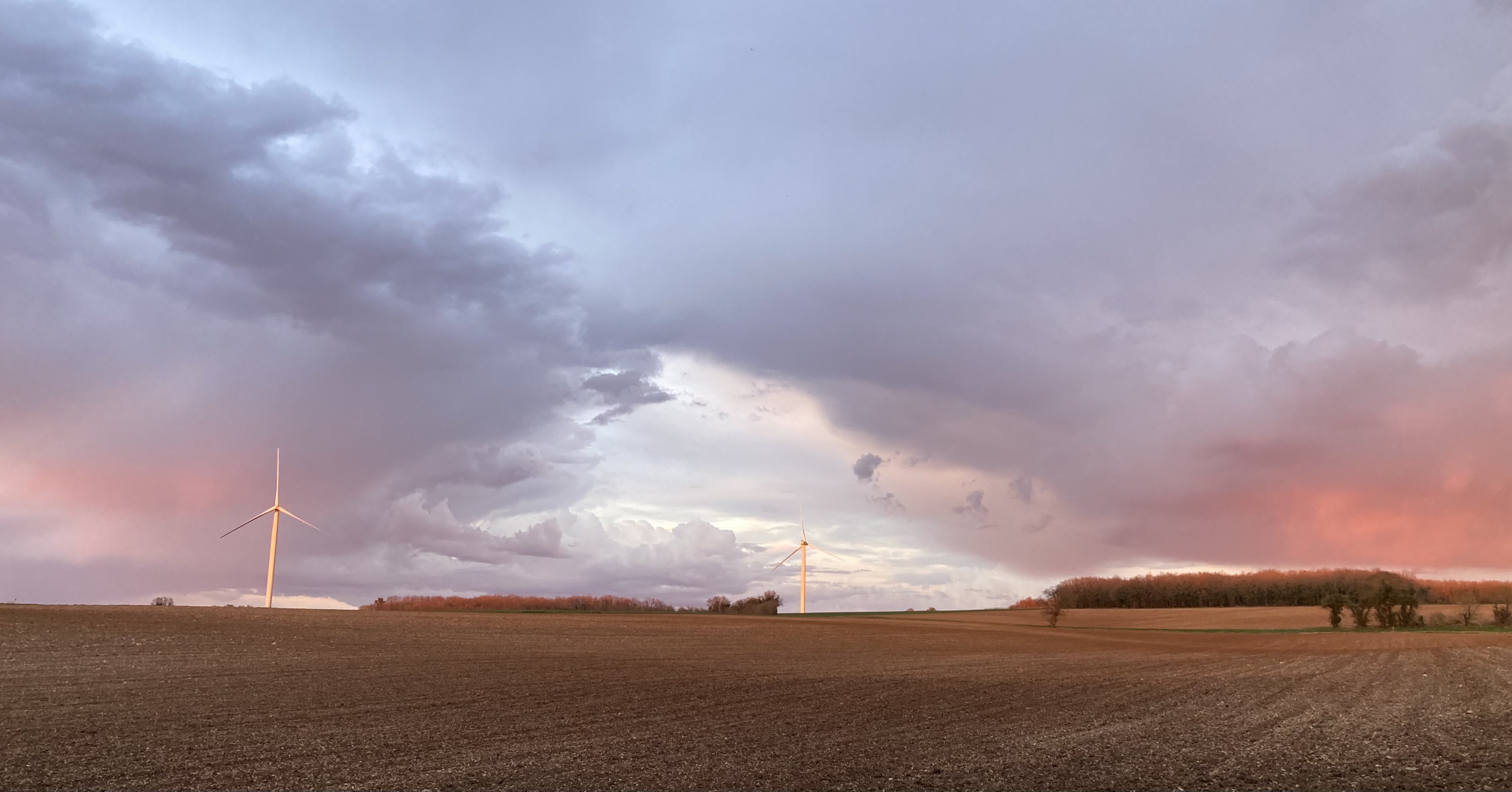
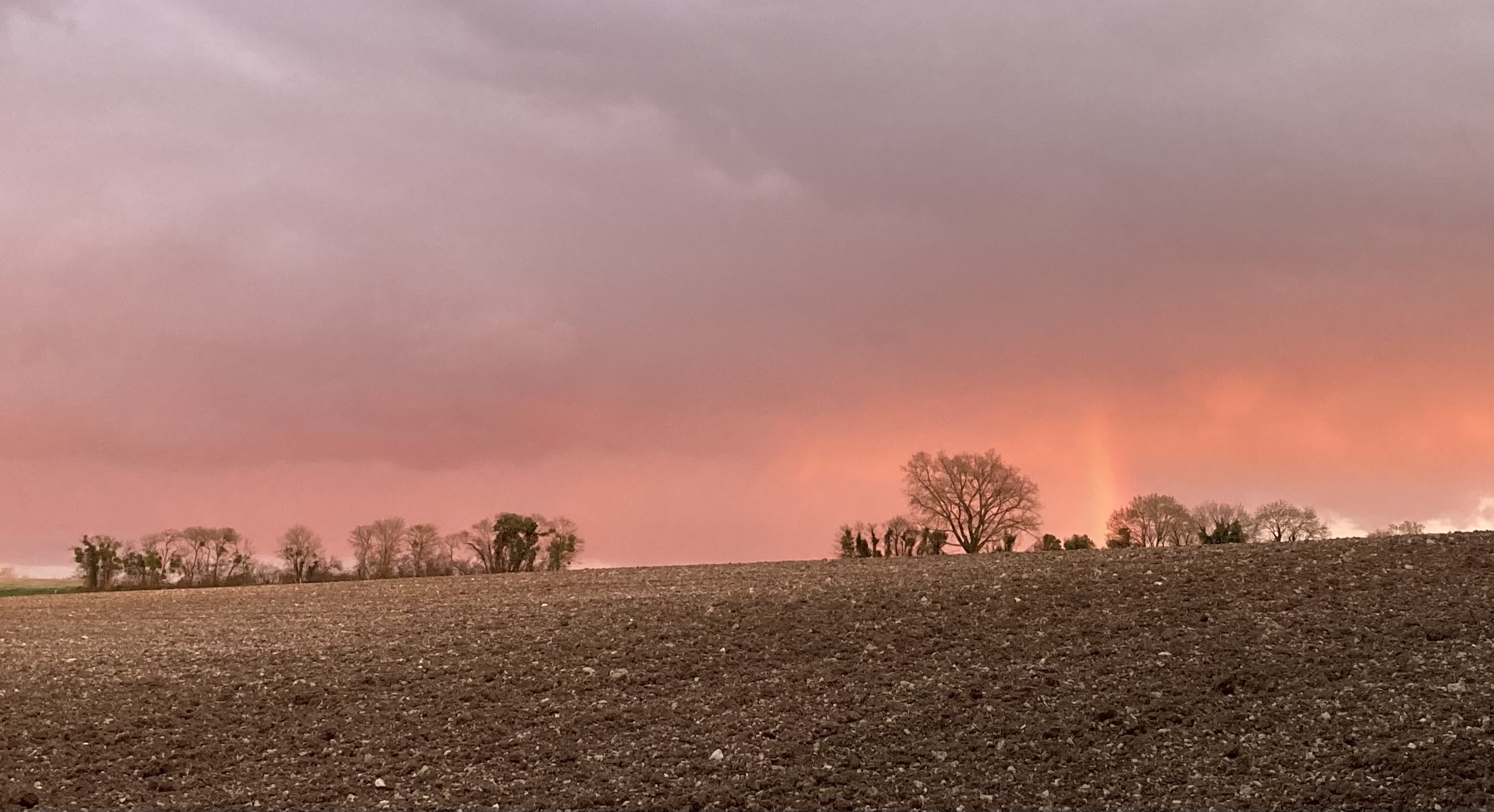
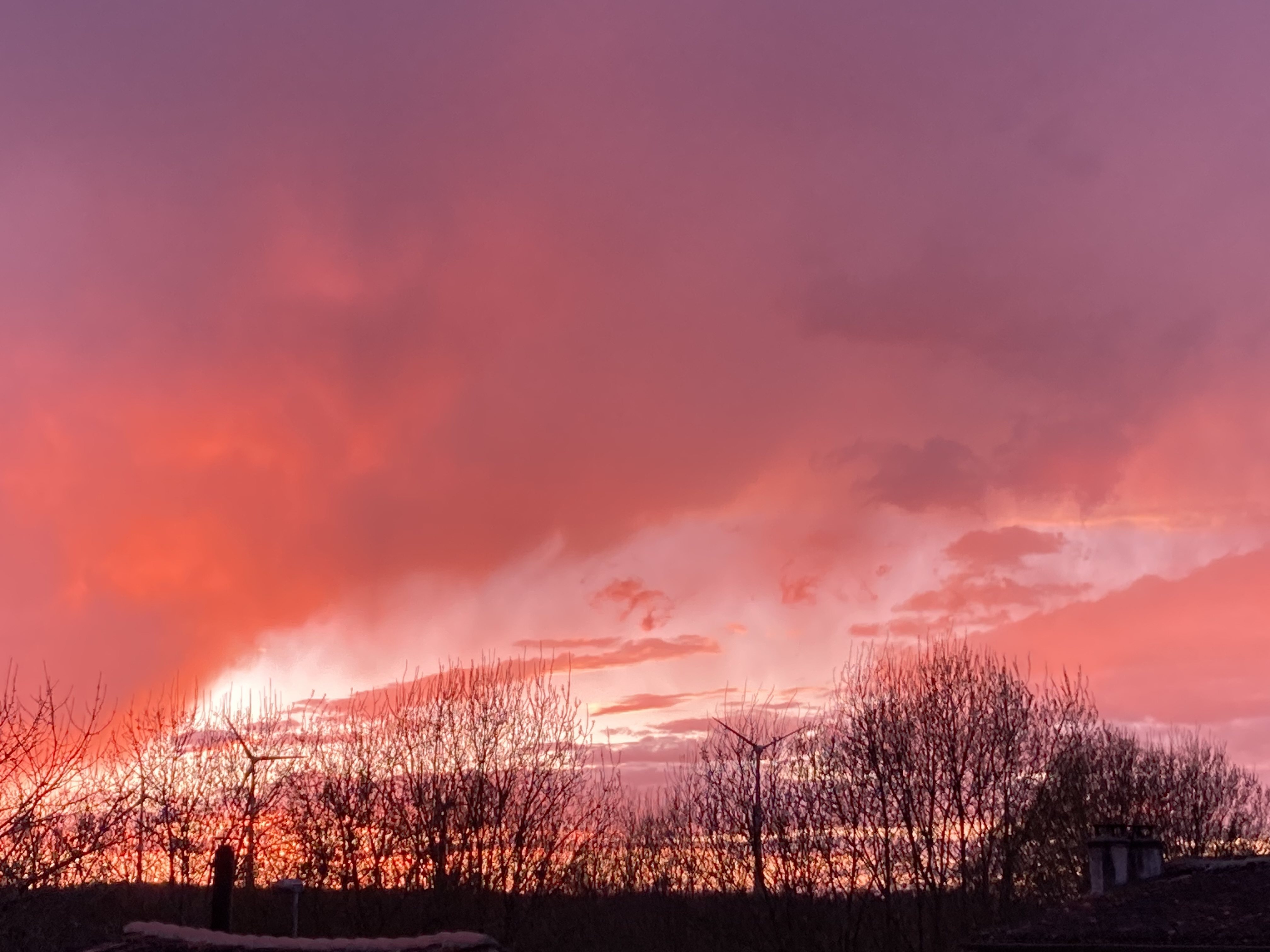
Well, some storm clouds suddenly emerged and we had to go indoors. There were a couple of rumbles of thunder, a single flash of lightning and then a short downpour. It was all over in minutes. By then it was almost time for the sun to set and we noticed that the light in the sky was unusual. So, off out into the garden again, and up to the back fence which borders a field to the east of us. I took the first two of these three photos. Then I turned and looked west and took the third photo.

Aren’t these beautiful?

Sometimes synchronicity surprises me in ways which makes me think my phone is listening to me (it probably is, and, it’s certainly tracking what I do with it!), but, this was one of those occasions where I felt that the universe was listening……listening and delivering.

What we observe changes us, and we change what we observe. We are the co-creators of our reality.

The nature of any system cannot be discovered by dividing it into its component parts and studying each part by itself, since such a method often implies the loss of important properties of the system. We must keep our attention fixed on the whole and on the interconnection between the parts

Planck 1936

The Physicist Max Planck wrote this almost a hundred years ago, and he wasn’t the first to make such an observation. Despite that breaking things down into parts and studying them separately is still the predominant approach in the world.

When I studied Medicine at the University of Edinburgh in the 1970s we were taught “Medical Sciences” for the first three years of the six year course. We dissected bodies in the Anatomy class, studied pathological change in tissues and organs in Pathology, learned chemical pathways in Biochemistry and so on. In fact, the first time I saw “cirrhosis” was a diseased liver stored in formalin in a plastic box marked “cirrhosis”. It wasn’t until year 4 that I met an actual patient who had “cirrhosis of the liver”. Maybe all that has changed. But we still practice Medicine by focusing on parts. I often hear from relatives that on a visit to their GP, they are told they can only discuss one problem per visit….so, their asthma today, but come back to talk about their joint pain.

It seems the modern management techniques applied to health care chop the system and the patient’s experience into pieces, sending them to one person for a diagnosis, another for a blood test, another for a prescription, another for advice…..it’s horrendously disjointed. When my dad was in his last month of life in hospital, every single doctor I asked about his progress started their reply with “I’m not your father’s doctor, but I’ll look up his records….” I never found the person who seemed to actually know him.

Yet, we know from research that continuity of care increases both outcomes and satisfaction ratings of patients and practitioners.

In this age where so many people experience multiple “co-morbidities” we need to keep our focus on the whole even more than ever. If we only focus on the parts we begin to believe we know exactly what each drug will do when we prescribe it, yet, not only are the effects different for different people, but in reality, many people are taking multiple medications at the same time (for a multiplicity of disorders)

We need to focus on the whole, and that means giving priority to human beings, their uniqueness and their relationships. It involves trusting doctors and nurses to practice professionally focused on their patients, not on their protocols and clinical guidelines. And we need a lot more whole of life research, which will help us to understand the complexity of the effects of any drug, and the course of any disease in a real person over their lifetime.

It was never a good idea to ignore, or to relegate holistic knowledge. Learning about the parts should include learning about the limitations of learning about the parts.

Love and kindness

One knows nothing save what one loves, and the deeper and more complete that knowledge, the stronger and livelier must be one’s love – indeed passion

Goethe

Love is fabled to be blind, but to me it seems that kindness is necessary to perception

Emerson

Both Goethe and Emerson agree…..we can’t know, maybe even can’t even perceive, unless we direct our attention in a loving, or kind manner. I found that was a foundational principle to medical practice. Unless you genuinely cared for the patient you never got to know them, never really understood them. I’m sure that’s why many patients would say after a good consultation that they had felt, not just heard, but seen, or even “felt” for the first time.

I do believe you can teach that to doctors, but I think it should be taught explicitly. We should be taught not just the importance of the “necessary distance” to see the whole picture and to be objective, but the importance of genuinely caring and engaging with the patient in a kind, even loving manner.

It’s the same in an ordinary day. When we pay loving attention to whatever we encounter, be that a flower, a bird, a person, a work of art, then we really perceive. When we drift carelessly through a day, we don’t perceive reality at all.

Love and kindness are important principles if we want to live a full, expansive, and satisfying life. It matters not just what we pay attention to but the manner in which we attend to it.

Through the light

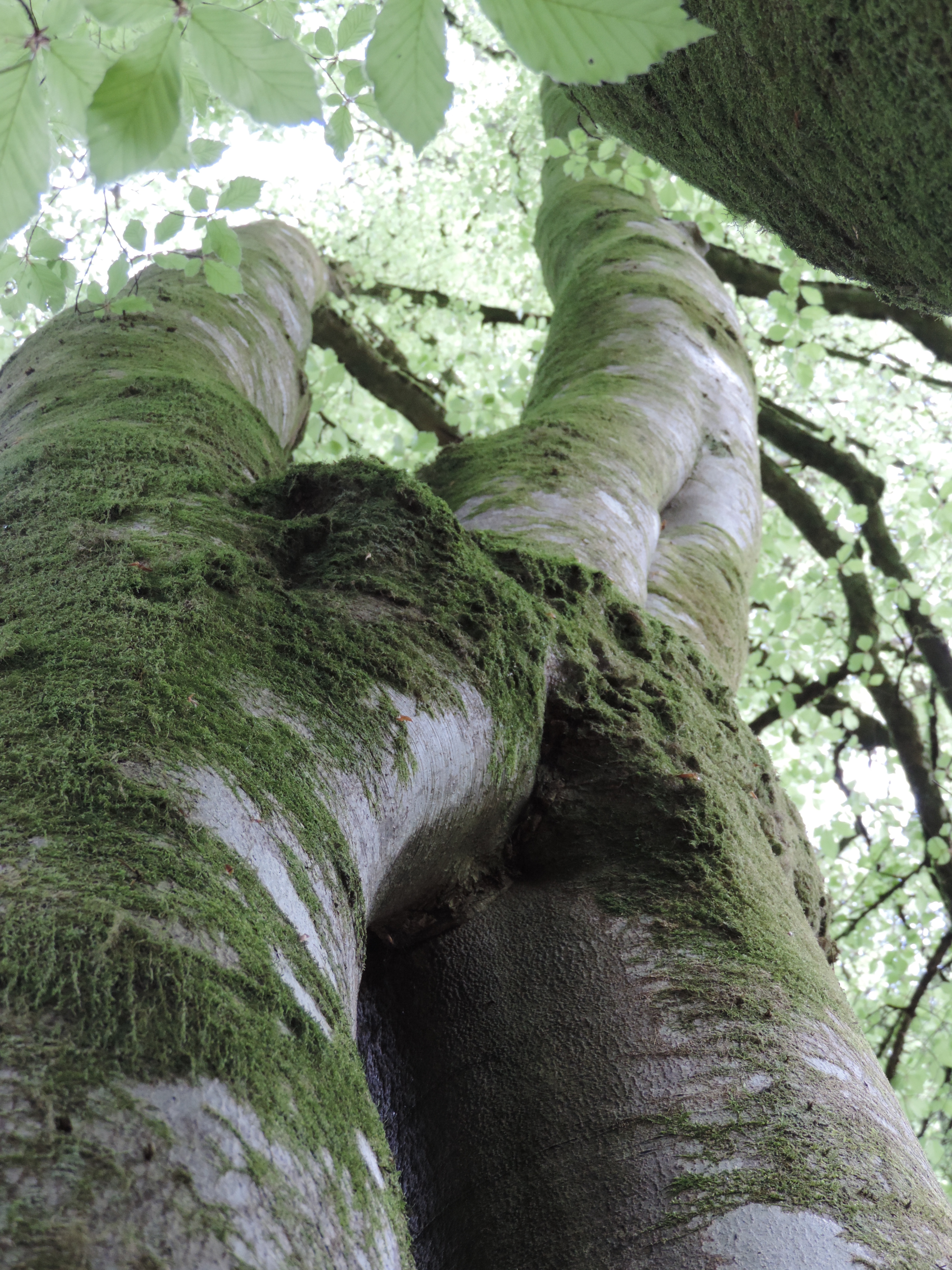
One thing which catches my eye time and time again is a flower, a leaf, or a tree, lit by sunlight. I love to get down and frame a photo which captures the impression of a natural glow. In a picture like this you have the idea that the light is emerging from within the plant. Even though the light is actually shining through, not from, the plant, I think a scene like this always puts me in touch with the sense that there is a life force, a vital force, which enlivens all that is alive….call it a spirit, call it a soul, call it a consciousness, call it the vibrant, glowing energy of LIFE.

The light which shines THROUGH leads us to what is vital, what is alive.

“The trees made the past seem within reach in a way nothing else could: here were living things that had been planted and tended by a living being who was gone, but the trees that had been alive in her lifetime were in ours and might be after we were gone. They changed the shape of time.”
Rebecca Solnit. Orwell’s Roses

What a great phrase….”they changed the shape of time”.

We tend to think of ourselves as being at some peak of evolution, but when it comes to longevity, we humans are surpassed by many other life forms…not least trees, some of which can live thousands of years, and many of which can live for several hundred. If we stop to think what was going on in the world over the many years since a tree was planted, or since its seed first sprouted, we get a totally different perspective on life. It’s a bit like the temporal equivalent of the “view from on high” – we stand back and see a much greater whole – and in so doing we situate ourselves differently. We experience the “change in the shape of time”

Time and presence

There’s an Etruscan word, saeculum, that describes the span of time lived by the oldest person present, sometimes calculated to be about a hundred years. In a looser sense, the word means the expanse of time during which something is in living memory. Every event has its saeculum, and then its sunset when the last person who fought in the Spanish Civil War or the last person who saw the last passenger pigeon is gone.

Orwell’s Roses. Rebecca Solnit

From time to time I muse about what it is to be a person, and whether or not that uniqueness of an individual is bound to the presence of their physical body. It seems clear to me that it’s not. Great artists continue to have an impact on others and on the world through their art, long after they are gone. Great musicians and composers too. Great writers, thinkers, inventors, also. But even within a family, a loved one has never completely gone…..maybe not ever, but at least not until there are no more stories told about them, no more memories lodged in the minds of the living, no more of their creative works still in existence, whether that be a poem, a song, a garden, or a something made by their own hands.

I’m sure that what it is to be a person, a unique, individual, is not bound to the presence of a physical body, nor is it limited to the short span of life that any of us are likely to experience.

I read this recently –

Residents of Jersey have been recommended bloodletting to reduce high concentrations of “forever chemicals” in their blood after tests showed some islanders have levels that can lead to health problems.

I thought, “What? Bloodletting? Good job we didn’t get rid of all the leeches!” Then I read a bit more and discovered the leeches involved in this story aren’t the kind that suck your blood.

Private drinking water supplies in Jersey were polluted by the use of firefighting foams containing PFAS at the island’s airport, which were manufactured by the US multinational 3M.

So, the proposed solution from the Jersey government was to offer repeated blood letting to reduce the levels in residents’ bodies. It’s going to cost several thousand pounds a year to do this. Will the company responsible for the pollution pay? Well, it turns out that back in 2005, 3M secured an agreement with the States Assembly (after a behind-closed-doors debate), resulting in 3M giving the government of the day £2.6m, which went towards cleaning up the contaminated training ground and building a new rig on the site. In exchange for the money, the government agreed to “forever release, acquit, discharge, and covenant not to sue 3M or any 3M entity in relation to any and all Airport claims.”

What?

The details of the agreement are pretty shocking, the government agreed to –

“not take any action or other steps […] to procure, permit, promote, suggest, support or induce any company or other persons to make any claim or bring any proceedings against 3M or any 3M entities in relation to the supply to Jersey Airport and/or Jersey Airport’s Fire Service of any Firefighting Foam, the environmental, health, or safety effects of any Firefighting Foam or any substances in Firefighting Foam, or the presence or possible presence of any Firefighting Foam or any substances in Firefighting Foam in surface water, groundwater, or public water supply at or in the vicinity of Jersey Airport or Jersey Airport Fireground. They and all or any of their Government Committees shall use their reasonable best endeavours to provide information to 3M or any 3M Entity that might assist them in defending claims made or proceedings brought by any third party or parties in Jersey relating to the supply to Jersey Airport and/or Jersey Airport’s Fire Service of any Firefighting, the environmental, health, or safety effects of any Firefighting Foam in surface water, groundwater, or public water supply at or in the vicinity of Jersey Airport or Jersey Airport Fireground save that upon providing Information to 3M or any 3M Entity the States of Jersey and all or any of their Government Committees can at their entire discretion provide the same information to the other party or parties to the claim or proceeding. For the avoidance of doubt, this obligation to use reasonable best endeavours to provide information also means ensuring that the personnel and agents of the States of Jersey and their Government Committees with information in their possession make themselves available to 3M or 3M Entity, save that in the case of individuals in their possession who are not employees of the States of Jersey, the States of Jersey may discharge this obligation by using their reasonable best endeavours to encourage such individuals to make themselves available.”

This seems an example of how wealthy individuals and corporations can use their wealth as power – to secure protection against criminal or civic suits, and to never have to pay for the pollution and/or harms they cause.

Hardly a day goes by without my seeing some story or other which involves a “Non disclosure agreement”, or some other such procedure which involves money paid to avoid Public scrutiny and responsibility, and, in many cases, to avoid being held to account for harmful or careless behaviour. Corporations and wealthy individuals are able to buy themselves a variety of “justice” which is never available to ordinary citizens.

It’s time to reform corporate, and contract, law to stop these individuals from escaping their responsibilities, and to hold them to account in the exact same way that a non-wealthy citizen would be held to account. How is it just or fair to allow the rich, whether individuals, companies or institutions, to buy themselves a different variety of justice?

Screenshot

I got a Christmas present of a bird feeder with integrated solar powered camera. It was a bit fiddly to get going, but I persevered and am glad I did. It connects to an app on your phone where you can either watch live what the camera can see, or you can scroll back through the events where motion triggered a short video and capture some stills from there.

So far the blue tits and robins are the commonest visitors, and I’ve been able too see many short clips of them.

I really enjoy my encounters with the birds in my garden. Yesterday I mentioned how another app I have on my phone recognises birdsongs and told me that there were seven different species all singing at the same time.

So, these are two technologies I never knew existed, and probably, actually didn’t exist until pretty recently, which are enhancing my daily life.

How about you? Have you been discovering any technologies which make an every day a better day?

What I love about discovery and exploration is that you can do it right on your own doorstep. Our garden here in the Charente Maritime was largely abandoned for a few years before we bought the house. We’ve been working on a bit at a time over the last three years. There’s an area where we had giant brambles, overgrown nettles and fallen trees cleared away and seeded grass where it had until then been impenetrable but we left all the healthy trees which surrounded that area. I made a few paths amongst the trees and it feels like a little forest walk.

One of the things I love about this garden is that so many plants grow here after having found their own way here. I think there’s very little which has been deliberately planted (until we arrived!). So, the other day, the sun lit these lovely yellow flowers and I thought, what on earth are these? These days it’s dead easy to find out. I took a photo with my phone, pressed the “info” button and it told me this is Calendula arvensis. I only knew Calendula officinalis, so I then searched online and found a research article on PubMed Central about traditional uses of this particular plant. Wow, was I amazed! The researchers say it has “anti-inflammatory, antiviral, antimutagenic, antimicrobial, insecticidal, antioxidant, and immunomodulatory activities” – well, that sounds a lot! They list about 45 different areas of the world where there are recorded traditional uses of this plant, describing in each instance what parts of the plant are used and what they are used for.

I find all that absolutely fascinating, and it reminds me how much we limit our knowledge and therapeutic skills when we ignore how populations around the world have used particular plants over millennia. Surely we shouldn’t dismiss all this information just because we haven’t studied them the same we study our manufactured, artificial drugs?

While I was admiring this little flower I was aware of how much bird song I could hear, so I fired up another app on my phone, “Merlin”, which is a kind of Shazam for birdsong, and it found and identified seven different species of birds all singing like mad. I don’t think I’ve ever lived somewhere where there were so many birds around every single day.

I like how modern technology helps be to recognise plants and birds and how easy it is now to discover so much about them. It makes me aware of how little I know and how I’ll never stop discovering and exploring.

Hope buds

I got a lemon tree for my birthday last June and it took a while, but, in the autumn I enjoyed two lovely, large, juicy lemons which it produced. Like so much in the garden the lemon tree has been pretty dormant throughout the winter. I’ve lifted inside for a day or two during the days where the frost has been most severe (although I don’t think we’ve had less than minus four centigrade), but brought it back outside again to get maximum sunlight as soon as possible.

Today I see there is a little bud. Do you see it? In fact, there are two, close to each other. I know I had some kind of fantasy of a lemon tree laden with lemons all year round, but, hey, sometimes scarcity and having to wait just adds to the sense that you’re having something special, when, eventually the fruit matures.

This little bud gives me hope. I’m never very sure about a lot of the plants in the garden over winter. The fig tree and the walnut tree I planted are reduced to little sticks for the season, but, last year, once Spring came, they produced green leaves and started to grow again.

It might not seem like much, but, psychologically, in the midst of a lot of global news which can be rather dispiriting and demoralising, I find it really helps to be able to stumble across something like this and feel the sensation of hope and brighter future starting to stir in my heart.