Feeds:
Posts
Comments

Posts Tagged ‘writing’

I watched the prequel to “Yellowstone” recently, “1883”. There’s a character in it called “Shea Brennan”, who has a monologue about death of loved ones, how we deal with grief, and how that can inform our life choices.

“An Apache scout told me once, when you love somebody, you trade souls with ‘em. They get a piece of yours, and you get a piece of theirs. But when your love dies, a little piece of you dies with ‘em. That’s why you hurt so bad. But that little piece of him is still inside you, and he can use your eyes to see the world. So, I’m takin’ my wife to the ocean, and I’m gonna sit on the beach and let her see it. That was her dream.”

I thought it was a really moving, and rather beautiful, scene. Surprisingly, I haven’t heard that idea before, the idea that when you love someone you exchange a piece of your soul for theirs. In fact, I don’t think I’ve ever come across the idea that the soul can be broken up and a piece given away before. I’m more familiar with the idea that when you love someone your soul becomes entwined with theirs.

In fact, I prefer the image of the entwining, over the one of pieces being exchanged. The soul doesn’t feel a divisible concept to me, and, I’d say, my experience of life is that when you love someone you entwine your soul with theirs, and that your souls are entangled for ever after. Even if a relationship ends, through, drift, breakup, or death, the souls remain entangled.

However, let’s stay with the movie quote for now, because the other aspect of the belief he outlines, is that if your loved one has died, then they are able to experience the world through you in some way. That, too, strikes me as a beautiful thought, and, again, isn’t one I’ve really considered before. In the movie the character’s wife had a dream to see the ocean, so he decides to make his way to the coast so he can sit on the beach and she can see the ocean through him.

I think those with whom our souls are entangled, do continue to be affected by our experiences. Even as I write that, it strikes me as a radical, perhaps even crazy, idea, but there’s something there rings true. And it’s something I’ve encountered many times, in my dealings with patients and their relatives.

I follow the work of Christopher Ward on Instagram. He has something he calls “modelstrangers” where he stops people in the street and asks if he can make their portrait with his camera (he makes really wonderful portraits). As he takes photos he speaks to them, or actually, he does little interviews, and lets them do most of the talking. Recently, he encountered a young woman called “Amaal”, who said her brother, aged 20, had died last year, and she said “I have to live for both of us as he can’t enjoy it”, “so I want to enjoy everything” and she goes on to describe the beautiful, ordinary experiences of everyday life, which she nows pays close attention to, and which she enjoys. Really, it was a beautiful little interview. She’s obviously a very special person, but it’s the same sentiment…..that a loved one who is no longer with you can now only enjoy the delights of this world through you.

Whatever you believe about souls and about afterlife, I think this notion that we become entangled with others through love, and that we can consciously choose to share our daily experiences with them, wherever they are, for ever after, is a beautiful, life enhancing, deeply nourishing idea.

I’ve long believed that we should “relish the day”, that we should be “heroes not zombies”, becoming ever more aware of the beauty and mystery of this world, that we should stir our capacity to wonder as we go through an “ordinary” day, but, now I think I can take that a step further, and call to mind my loved ones, and share these daily delights with them, even if they aren’t here in my same time and place, to enjoy them for themselves. In fact, especially if they aren’t here in my same time and place, to enjoy them for themselves.

Here’s a link to the Instagram video (I don’t think you have to sign up for Instagram to watch it) – https://www.instagram.com/reel/DJraxjsoFw9/

Read Full Post »

In the obsessively micro-managed world we live in now it’s more important than ever for us to take a pause. We are being bombarded with talk of crises, of doom, of having to everything faster, consume ever more, do everything so-called more efficiently.

But we humans are not machines. And we shouldn’t lead our lives, or construct our workplaces according to industrial machine-like principles.

Time and time again you can find creatives….artists, writers, composers, musicians, sculptors and so on tell you they need to have some breaks, some times where they just sit, or they sit and daydream. We need times to just step off the treadmill. We need to pause to gather our thoughts, to become more aware of the present moment, and to restore our depleted reserves of energy.

What length should a pause be?

There is no fixed amount. It can be a short as taking three deep breaths. It can be a few minutes, or a few hours. We need bigger breaks than that too, which is why it’s important to take all your annual leave from work. For some people it’s a sabbatical that they need. But the kind of pause I’m thinking about here, is the kind we all need, every single day.

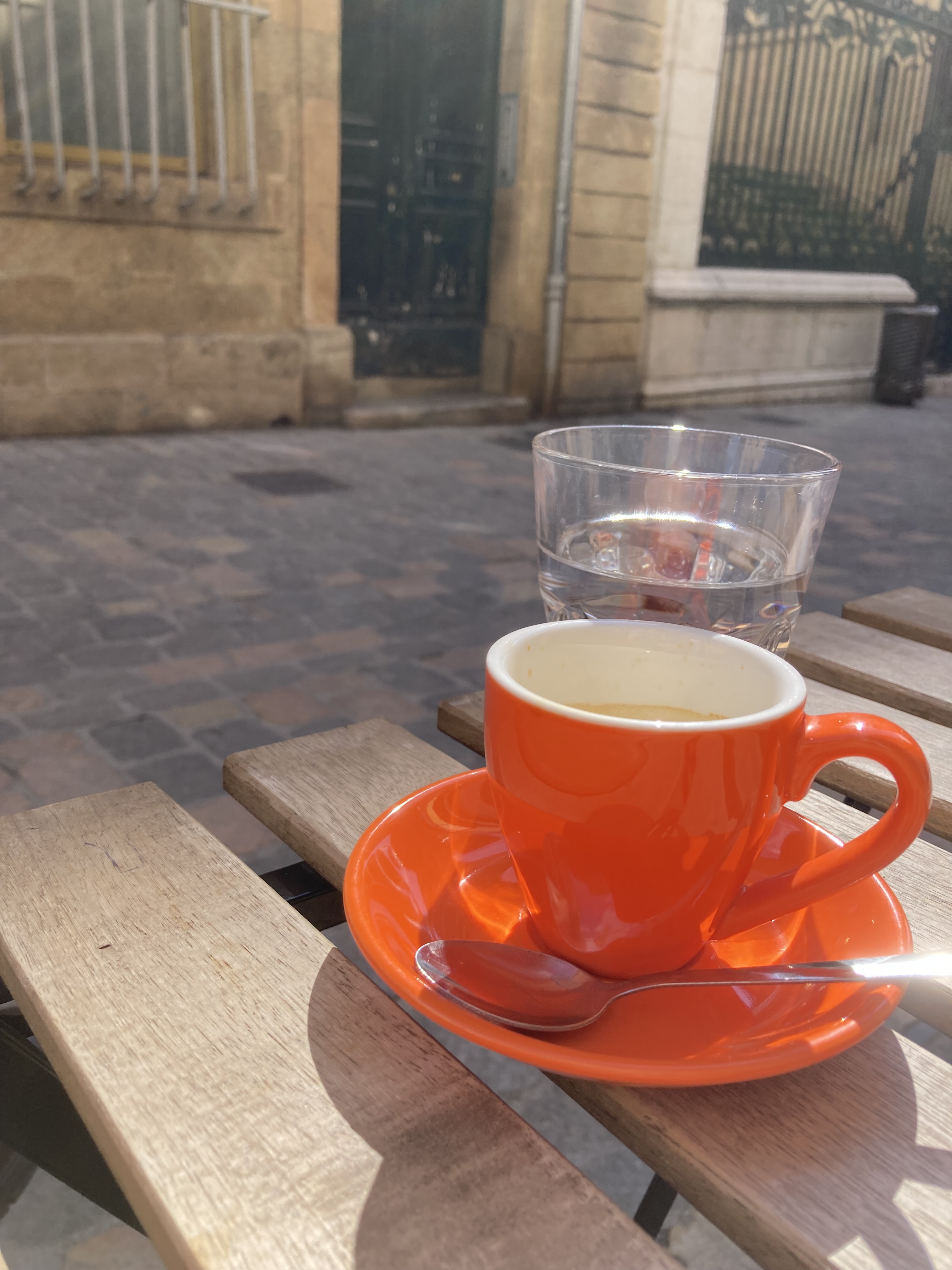
I’m impressed by how in France there is a habit of stopping for a proper lunch…not grabbing a factory produced sandwich and a can of coke on the way to work and wolfing them down at the desk. They take time to go to a restaurant or cafe, to sit down, have a meal and share some time with workmates or friends. Then back to get on with the rest of the day. There’s still a widespread tradition of working five days a week, not seven here, so that everyone can have some family time, some home time, to do with as they want.

How about you? What pauses do you build into your everyday? What pauses would you like to build in, and why not start today?

Read Full Post »

“I would love to live like a river flows,
carried by the surprise of its own unfolding.” – John O’Donohue

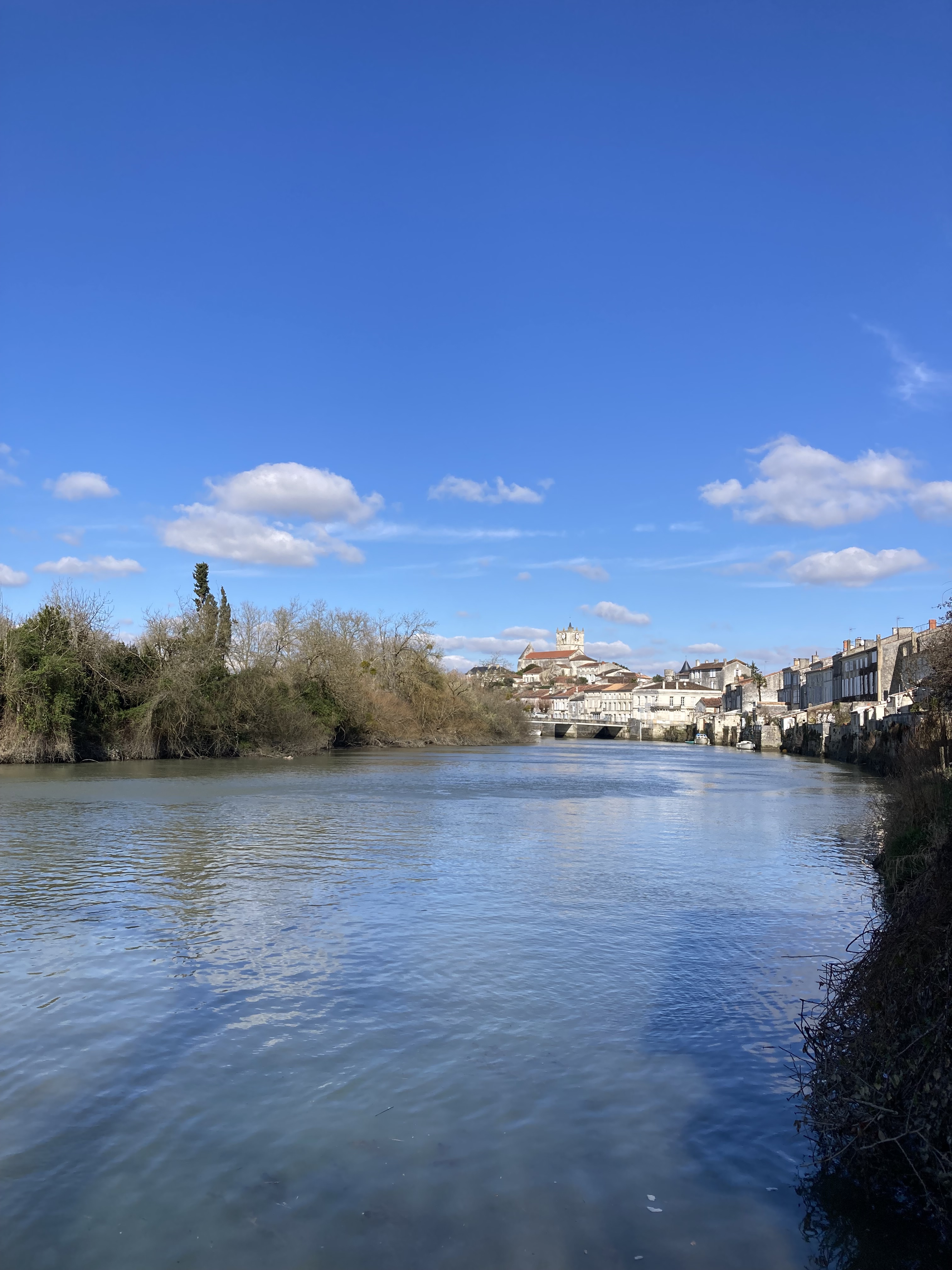
I live in the Charente Maritime, in South West France. I took this photo in Saint Savinien which is a small town just a few kilometres from where I live. The River Charente runs through the town, as it also runs through Cognac, near where I lived when I first moved to France a decade ago. It winds and twists its way through both the Charente and Charente Maritime departments and as you travel around you come across it again and again.

The primary characteristic of the River Charente is that it pretty much always looks the way it does in this photo. It flows incredibly smoothly. Maybe there is somewhere along its way where it breaks into white river rapids, but I’ve never seen that. It just never seems choppy, no matter whether it is flowing fast or slow. In fact, the impression you get is that it is at ease. It’s a river which flows calmly and almost effortlessly. So much so that people around here will tell you it is responsible for the rather laid back, “zen”, “take it easy” attitude so typical of this area.

Flow is a fundamental characteristic of all life. You could argue that it is the key characteristic, distinguishing the animate from the inanimate…..except that even the inanimate also flows, just over a much longer duration than the animate. You have to take a longer view to be able to see the flows of glaciers, continents and mountains.

I think flow is a marker of a good day. I feel I’ve had a good day when my activities, my thoughts, and my feelings have all been flowing like the Charente…..strongly, smoothly and incessantly…..with an ease, a freedom and purpose.

Read Full Post »

I know the old saying is “Red sky in the morning, shepherd’s warning”, but when I look out my window when I get up and see a sky like this I am delighted. I’m delighted because it’s beautiful. Don’t you agree?

And every encounter we have with beauty contributes to making today a good day. I notice beauty everywhere in nature. It’s easy to experience just by walking round the garden and noticing. There is so much beauty in the plant world. But while I’m in the garden I notice something else beautiful….birdsong. I’ve never lived anywhere else where I hear so much birdsong every day. I’m surrounded by it. Probably because my garden is surrounded by trees on every side. Looking up to the sky is another way to encounter beauty, whether it’s in the gorgeous reds of a sunrise, or sunset, or the amazing blues of a clear day, or the astonishing shapes of clouds as they drift by, or the sparkling night sky with the parade of planets.

A lot of the beauty I encounter is visual. You’ll know from browsing this blog that I’m a keen photographer. I photograph whatever catches my attention. I photograph what I find beautiful and what stirs my sense of wonder. But a lot of the beauty I encounter is also auditory. I love music and listen to music for a good part of every day. And a lot of the beauty I encounter is in other human beings. I am repeatedly struck by the kindness of others, by the shining delight in a happy face, by the strength and resilience of those coping with adversity, with the radiance of those who love.

Where will you encounter beauty today? Take a moment to notice, and a moment to reflect at the end of the day. It’ll make your day a better day.

Read Full Post »

Silver linings

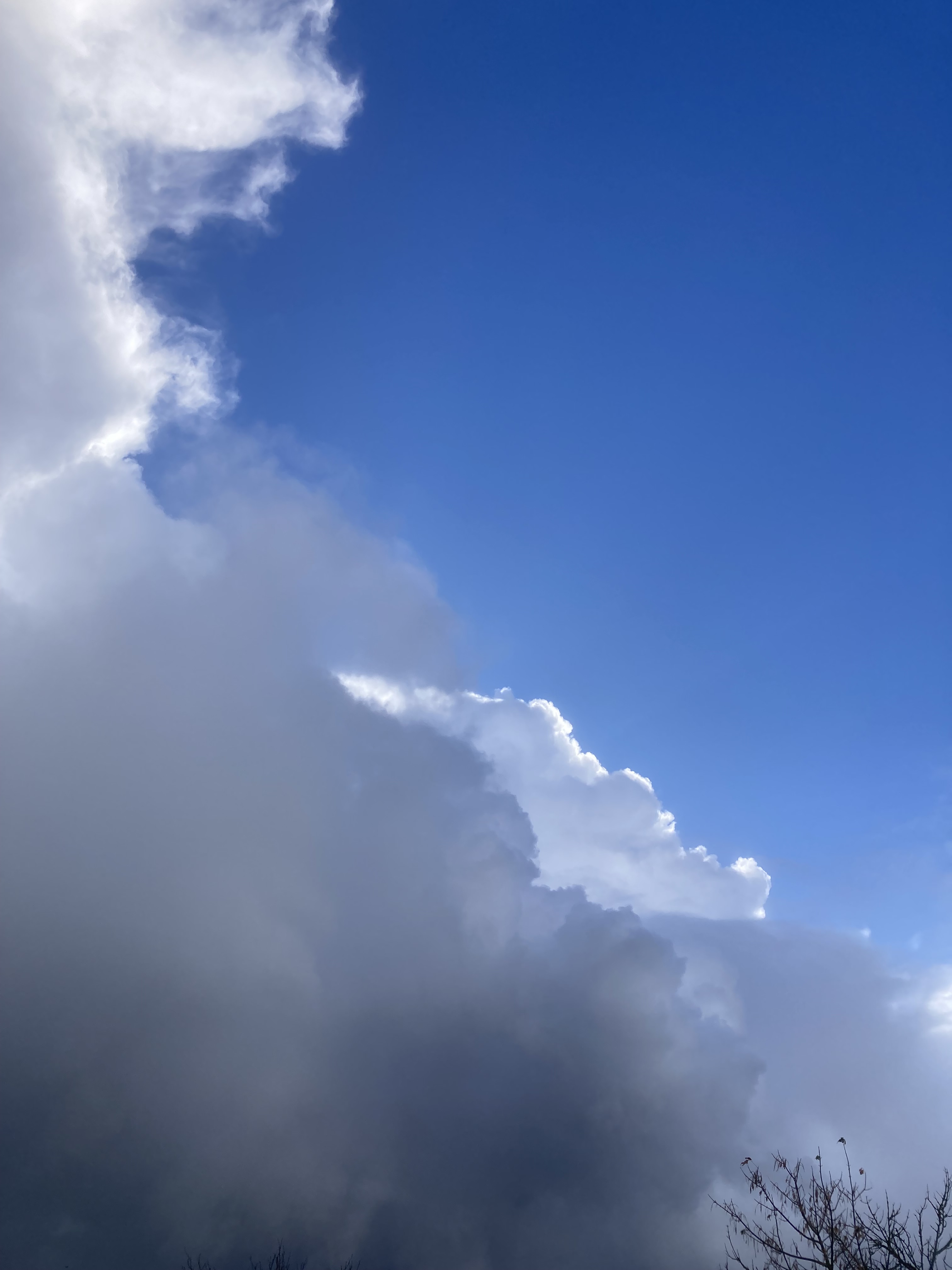
Silver linings – even behind the darkest storm clouds we can see sunlit fluffy white ones ready to emerge. When I look at this image I realise you can approach it two ways, partly because it’s a snapshot. You can see a white cloud in the process of being obscured by a black stormy one, or you can see a black stormy cloud moving away to reveal a white one. But it’s not just the lack of time context which allows us to approach this image in two ways. We can apply the same old glass half full, half empty adage. If you are of an optimistic disposition you’ll probably be tempted to see this as an image of the end of a storm. On the other hand, if you’re rather more pessimistic, or fearful, then you’ll see this as a storm approaching.

Pretty much the same thing happens all the way through the average day, doesn’t it? Don’t you know some people whose stories are full of mishaps and “bad luck”? And others who seem to land on their feet in every circumstance. Why is that?

Well, again, you can’t really know without context. When someone has suffered a lot of trauma in the past, it’s easy to understand why they might be fearful, and wary. And when someone is currently in difficult circumstances…..poverty, poor housing, surrounded by violence, even war, it’s not difficult to understand they will have trouble seeing the positive potentials in each day.

However, as ever, it’s not black and white. Psychologists who study happiness can find high levels of positive thought and happiness amongst very poor populations, although they also find that being extremely rich and famous is no guarantee of happiness either.

It’s not fixed either. If circumstances are changed that can help a lot….one of the best arguments for “Universal Basic Income”. We can choose, as a society, to create healthy, affirming and supportive environments for children to grow up in. We can, and should, expect politicians to look after the Commons, to tend to the water, the air, the soil, to the food supply and so on. That would be a good start, don’t you think?

Read Full Post »

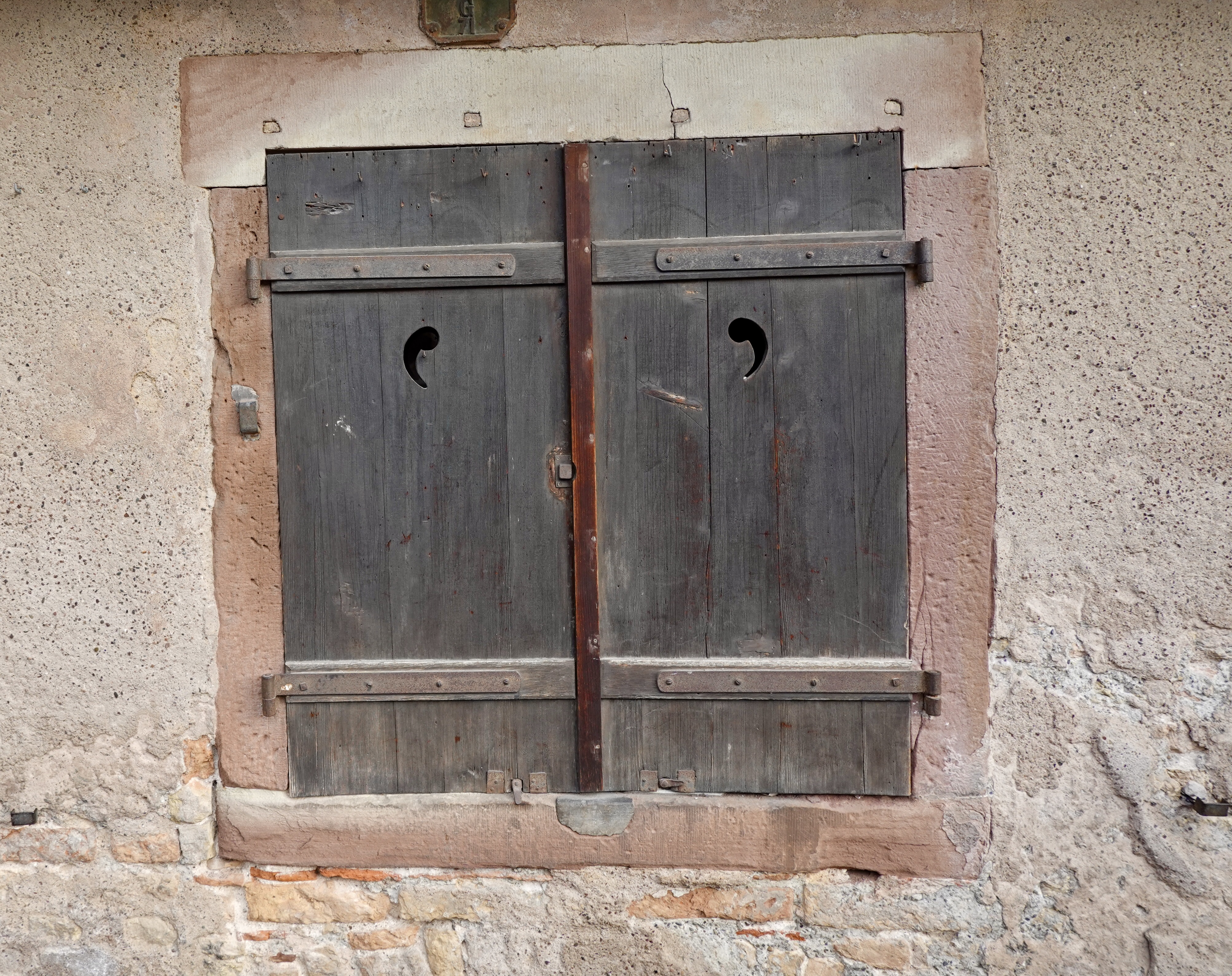
You could argue that these little “commas” cut out of the shutters covering this window are to let some light in. But if you wanted to let light into the room, you’d open the shutters, wouldn’t you? But maybe you just want some light in, not much. So why cut the holes into these carefully crafted shapes? Or maybe we need to think of this from the other side. Maybe these are holes to look out through….viewing points to see a bit of the world outside. But there again, why make them this shape? You know what? Maybe they aren’t carved for a utilitarian function. Maybe they are neither for letting in light, nor for facilitating observations of the street outside.

Maybe the creator just wanted to make something beautiful. Because they are beautiful, aren’t they? And without them, the shutters would look pretty, well, uninteresting. It’s the comma-shaped holes which have caught my attention, made me pause, take a photo, and return to it again to wonder……what are these all about? Who made them? Questions to which I’ll never find the answers. But, this much is sure…..they bring me a moment of delight and wonder…..”l’emerveillement du quotidien“.

I’ve looked at these shutters several times now, spent some time with them, reflecting, and wondering. But this morning, something else comes up – don’t they suggest a word? If you look at them, there is one on the left, a space, then another on the right, and if you saw them on a page like that, you’d assume that in that space there should be a word. Wouldn’t you? A word. Or a quotation.

So, here’s something to play with today…….what word, or what words, would write in this particular space?

Read Full Post »

I have long been a critic of reductionism. I mean, I get how it brings something to the table. Our ability to isolate a certain element from within the flux of phenomena and experience, to focus on that element closely, allows us to further our understanding of the world. I suspect it also does, what Iain McGilchrist describes as a left hemisphere trait….it allows us to grasp, to manipulate and control. Therein lies its power.

But it all goes wrong when we fail to integrate our new understanding of a part back into the reality of the whole.

In her novel, Elixir, Kapka Kassabova, writes –

Medicine emerged from alchemy’s noble attempt to marry the subjective and the objective, matter and mind, inner and outer, and in this way, to lift humanity out of superstition and senseless pain. 

But like magic, the bias of modern medicine went too far in the opposite direction. Like magic, it assumes too much and has many blind spots. 

These blind spots come from its many uncouplings, one of which is the uncoupling of psyche from soma, the soul-spirit from the body. Another is the uncoupling of one organ system from another, and another is the uncoupling of the human being from her environment. 

Both Folk Medicine and Western Medicine discourage you from taking ownership of your well-being through knowledge. Both of them keep you dumb and dependent. 

In this passage she critiques both Modern and Folk Medicine for taking power away from individuals. Too often Medicine, in all its forms, comes across as a body of secret knowledge, with an expectation that patients will have faith, and hand themselves over to the practitioner with the superior knowledge.

Personally, I think this is a terrible way to practice Medicine. Diagnosis, prognosis and potential treatment should be a joint process emerging out of a caring, open relationship between a practitioner and a patient. Ultimately, the goal should be to increase an understanding of the self, and to empower individuals towards greater knowledge and autonomy.

I love how Kapka describes Medicine as emerging “from alchemy’s noble attempt to marry the subjective and the objective, matter and mind, inner and outer, and in this way, to lift humanity out of superstition and senseless pain.” That’s exactly how it felt to me. Medicine, at its best improves the lives of others by “marrying the subjective and the objective, matter and mind, inner and outer.”

But in fact what really strikes me most in this passage is “These blind spots come from its many uncouplings, one of which is the uncoupling of psyche from soma, the soul-spirit from the body. Another is the uncoupling of one organ system from another, and another is the uncoupling of the human being from her environment. ” It’s that use of the word “uncoupling”.

I’ve never used “uncoupling” in this context before. But it resonates with me much more deeply than “reductionist”. This, surely, is the heart of the problem – when we “uncouple” one organ system from another, “uncouple” the mind from the body, “uncouple” ourselves from each other, and from the rest of the lived world with whom we share this one, finite, interconnected, little planet.

Here’s to undoing as much “uncoupling” as we can.

Isn’t that something to aspire to?

Read Full Post »

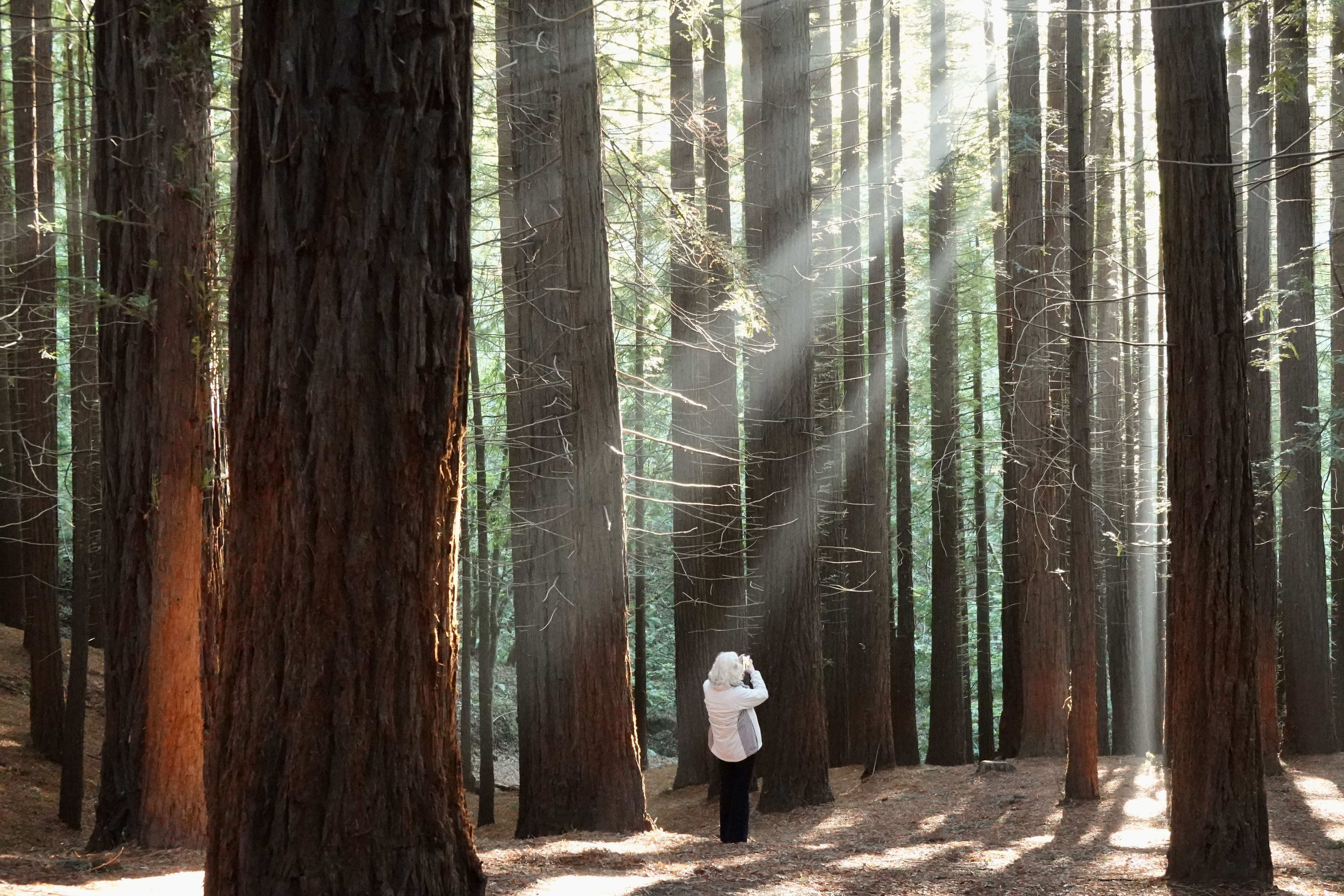
We made a visit to a sequoia forest in Catalonia recently and this is one of the many photographs I took. When I look at it now a passage from C S Lewis comes to mind. It’s many, many years since I read his little essay, “Meditation in a Toolshed”, but I’ve never forgotten it. It’s pretty easy to find online if you search for it. It starts like this –

I was standing today in the dark toolshed. The
sun was shining outside and through the crack at
the top of the door there came a sunbeam. From
where I stood that beam of light, with the specks
of dust floating in it, was the most striking thing in
the place. Everything else was almost pitch-black.
I was seeing the beam, not seeing things by it.
Then I moved, so that the beam fell on my
eyes. Instantly the whole previous picture
vanished. I saw no toolshed, and (above all) no
beam. Instead I saw, framed in the irregular cranny
at the top of the door, green leaves moving on the
branches of a tree outside and beyond that, 90 odd
million miles away, the sun. Looking along the
beam, and looking at the beam are very different
experiences.

He goes on to describe several examples of the difference between “looking at” and “looking along”, where he juxtaposes the “objective” vs the “subjective” (although he doesn’t use those terms), the “quantitative” vs the “qualitative”….and issue which has been at the heart of my career and my life. He summarises his idea with this –

We must, on pain of idiocy, deny from
the very outset the idea that looking at is, by its
own nature, intrinsically truer or better than
looking along. One must look both along and at
everything. In particular cases we shall find reason
for regarding the one or the other vision as inferior.

Most of the essay is about how we seem to have developed a habit of favouring the objective over the subjective to the point where the latter is dismissed as irrelevant, or even, unreal. I’ve heard a junior doctor say that his mentor told him “You can never believe patients. They lie all the time. You can only believe the results (the laboratory findings)”, and time and again, in neuroscience, our inner thoughts, sensations and feelings are reduced to biochemical reactions and neural pathways….as if the MRI scans and biochemistry reveals “the truth”, whereas the patient’s reported experience is dismissed as “anecdote”, or, worse, “illusion”.

As I look at this photo I see my wife, Hilary, standing in a sunbeam in the middle of the forest. I am “looking at” her in the forest. She is “looking along” the sunbeam and photographing the illuminated trees. And I know in that moment that these are two different representations of reality. Both are true. But there’s more – because as I am “looking at” this scene in the forest, I recall, and re-create, the experience I had of standing in the forest surrounded by the massive trees. I feel again the awe which I felt as the sunbeams shone through to the forest floor. I feel again the wonder I had standing amidst this community of trees (which, by the way, were planted only about seven years before I was born!)

We can understand a lot by measuring, by being objective. But we fail to grasp reality if we dismiss both the inner experience of others, and our own subjective one.

That means we need to value personal stories. We need to be curious about them, to respect them and to listen with non-judgemental empathy. Otherwise, we are only scratching a surface. Worse than that, we are in danger of replacing an understanding of what it is to be human, with a distorted and demeaned mechanistic one.

Read Full Post »

« Newer Posts