Feeds:
Posts
Comments

Archive for the ‘from the living room’ Category

coloured drop


I photograph what I notice.

Something catches my attention, draws me to it. I become aware of it, and a sense of wonder, or an appreciation of beauty rises in me.

Then, so often, when I upload the photo onto my computer later and look at it on the big screen I see something even more striking, even more amazing than I was consciously aware of at the time I pressed the camera button.

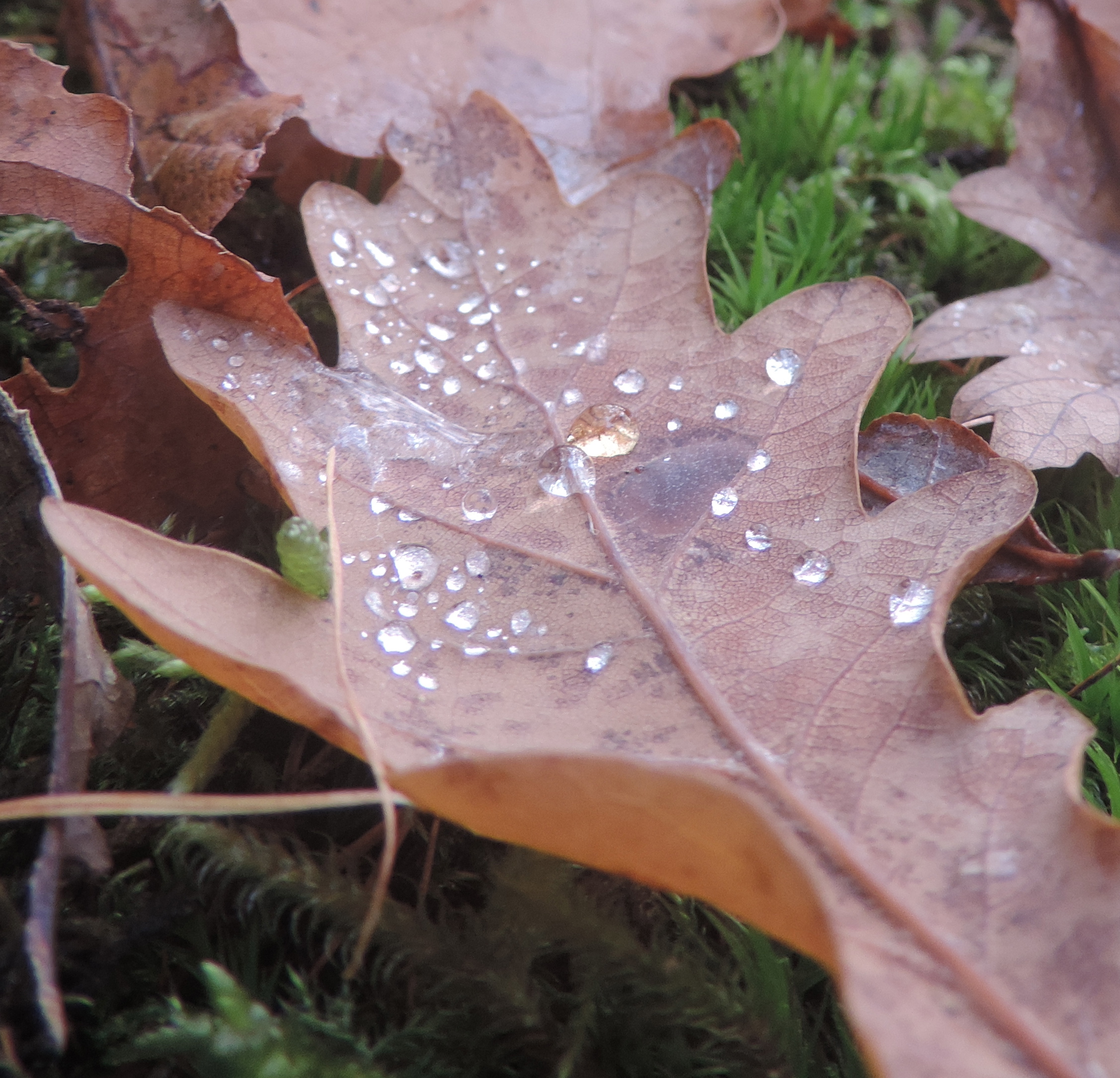
Look at this photo. What caught my attention was a sparkle. The light and the water glistened like little gems. I took a few photos. When I looked at this one later I noticed that one of the drops of water is different. It’s like a little drop of honey, or amber, rather than like a small diamond or crystal of clear glass.

When I notice this, something else happens.

My delight increases. My sense of wonder increases. (How come this one drop on this leaf is such a different colour?) And it activates those deep values in me – the values of presence, of becoming consciously aware of this present moment, the beauty of transience, knowing that this present moment is fleeting, and all the more precious because of that, and the love of diversity and uniqueness.

All in a drop, all in a moment.

Read Full Post »

river flows


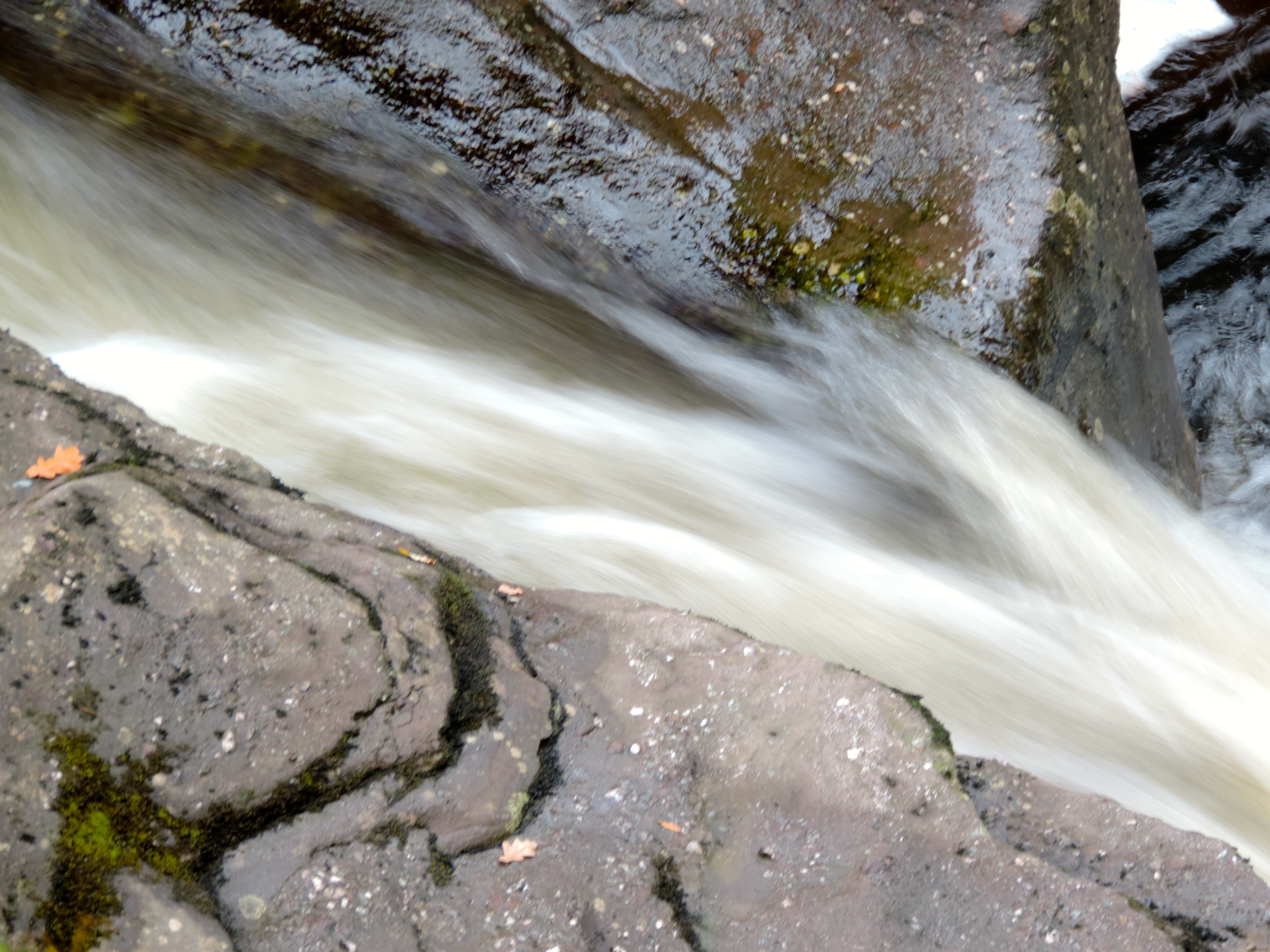
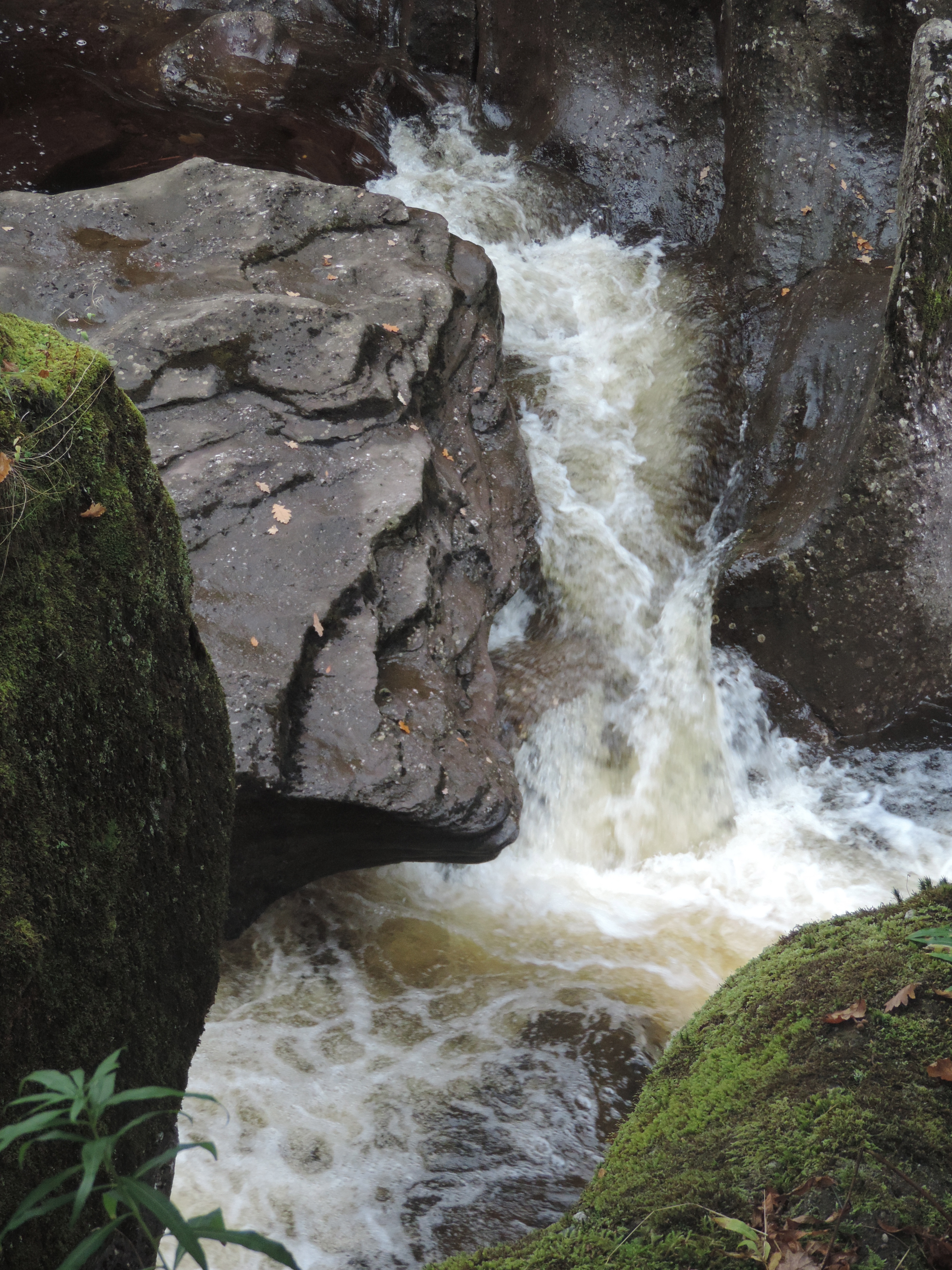
As the river flows over the rocks in the forest around the Bracklinn Falls I stand and wonder about the relationship between the rocks and the water.

I can see the rocks set the boundaries of the river and channel the direction of flow for the water, but I can also see how the water sculpts its own path leaving the rocks far from untouched as it pours down the hillside.

bracklinn


This got me thinking again about that continuous interplay of two essential forces in the universe – the diversity generators and conformity enforcers of Howard Bloom’s “Global Brain”.

That same idea is captured with a different set of metaphors in Thomas Berry’s fabulous “The Great Work”, where he talks of “wildness and discipline”.

I recently came across yet another set of metaphors for this process in David Wade’s “Crystal and Dragon“. In this latter book, David Wade describes the patterns of Nature (actually you could say of the Universe) and Culture which emerge from these two, apparently opposite, forces. Think of how a crystal forms, with a set of rules, which are strictly enforced in a disciplined way to produce the structure required to allow the growth of the crystal. Then think of the patterns of flow which emerge in the creation of clouds, waves and waterfalls. The former containing a certain predictability, and the latter retaining an apparently chaotic randomness. In one section of his book he compares Islamic art to Taoist art, the former known for its beautiful geometric patterns, and the latter for its freehand ink drawings of clouds, waves and water. Interesting then to think of the strict and detailed rules of Islam, and the Taoist focus on constant change, flow and uncontrollable nature of Life. In Chinese culture this force is represented by the Dragon.

So, the crystals of conformity enforcement and discipline, and the flowing Dragon of diversity generation and wildness……and what an astonishing Universe is produced in the process.


Read Full Post »

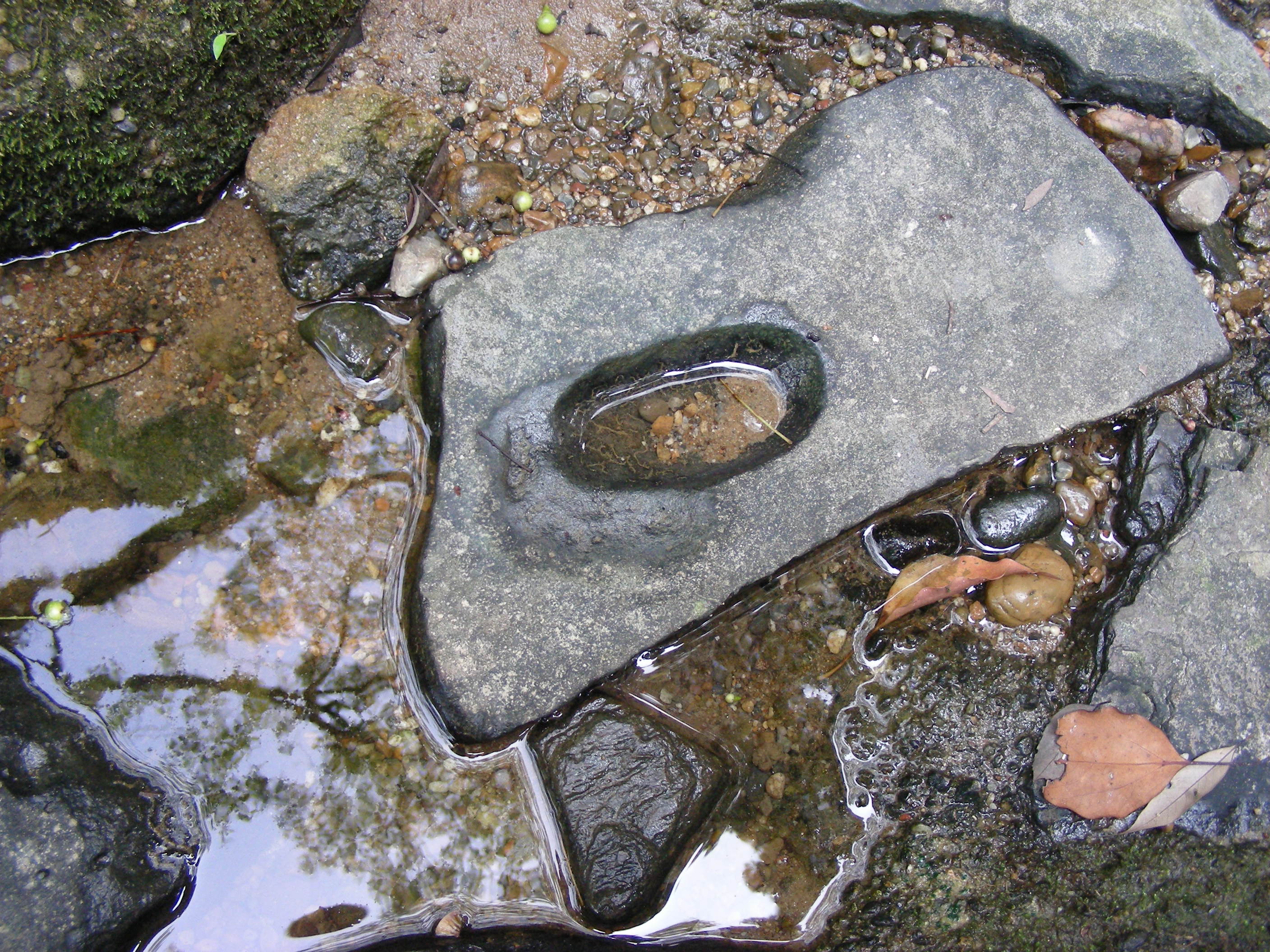
worn stone


Jung said “The world will ask you who you are, and if you do not know, the world will tell you.”

Do we make ourselves, or does the world make us?

Actually, that’s one of those questions which poses a false duality. The truth is it’s a two way process, an interaction, a conversation, relationship, a dance.

I’m fascinated by the patterns we see everywhere. As I listen to someone’s story, I’m listening for patterns. What kinds of patterns?

Well, I suppose you could call them habits.

  • Habits of the body
  • Habits of the head
  • Habits of the heart

The habits of the body are our physical actions, the ways in which we use our bodies to move and to interact with the world. Think of your eating habits, your exercise habits, your physical preferences, how you experience the world and how you engage with it.

The habits of the head are our thoughts, our beliefs and our world view. Think especially of whether or not your thinking habit focuses on the past, the present or the future? What are you sensitive to? What do you notice? How do you interpret the world? It’s especially helpful to think of how we approach the world, and Iain McGilchrist’s brilliant understanding of the clearly different ways in which the left and right hemisphere’s of the brain approach the world is really exciting.

The habits of the heart are revealed in the patterns of our emotions, our longings, and our passions. What moves you? What touches in you in your heart? In your soul?

This is the examined life – where you become aware of your inherited and acquired patterns which create the habits of your existence. And if you want life to be different, you’re going to have to create some new habits, or change some old ones.

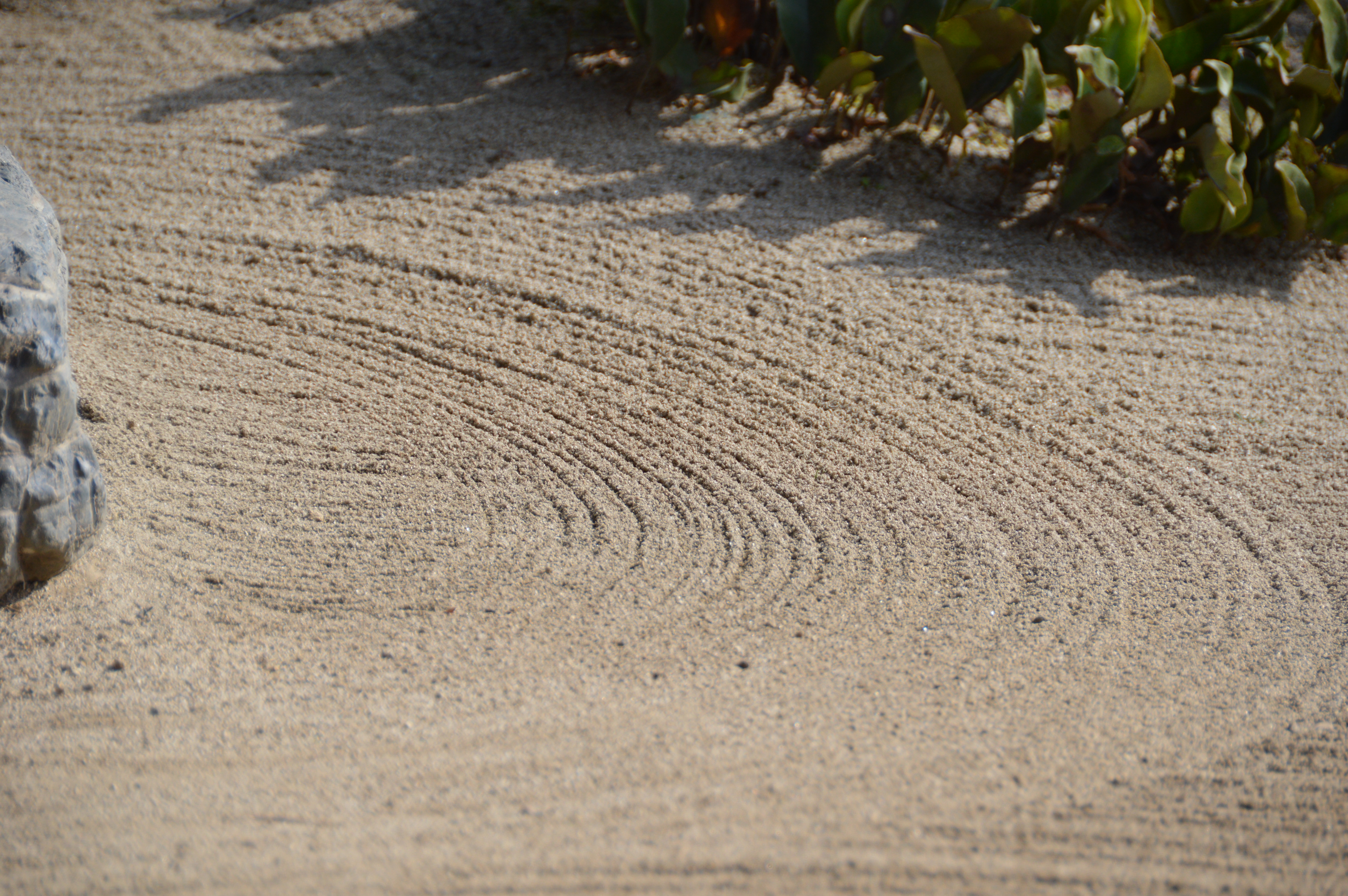
zen sand

Read Full Post »

The forest becoming

If you go into the forest just now you’ll see how everything is connected.
You’ll see the trees shedding their leaves.
You’ll see fallen trees covered in moss.
And you’ll see all kinds of fungi pushing up from the forest floor.

Here’s one thought that occurred to me in the forest – where does the past go?

We often think of time as being like a river, the future rushing towards us as we stand in the present moment and watch it all flow by and into the past.
So, once it has passed, it’s gone. Right?

Except it often really doesn’t feel like that. So try this instead.

The past is always with us. The present grows from the undergrowth, from the forest floor, of the past. It’s always here. It’s what we are shaped by. (Well partly……we are also shaped by the present and even the future, but I’ll return to that another time)

We are changed because of this ever growing relationship between the present and the past. Can’t have the one without the other.

But here’s the other part which occurred to me. The past doesn’t stay the same. Just like this forest floor is changing minute by minute, so the past itself is changing, constantly being altered by the present.

So it doesn’t go somewhere. It’s always with us. And it’s always changing.

Beautiful.

Read Full Post »

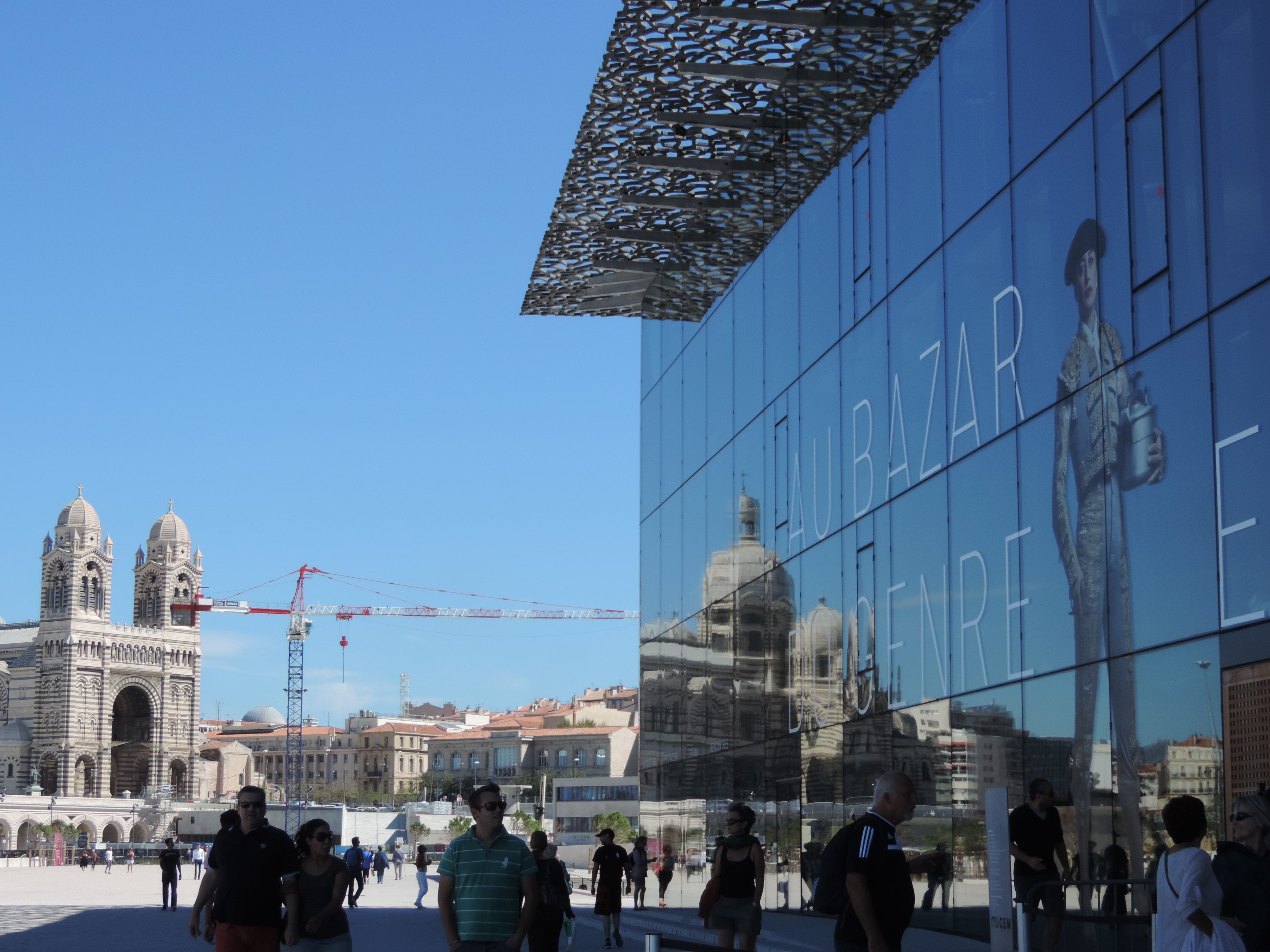
mucemreflect

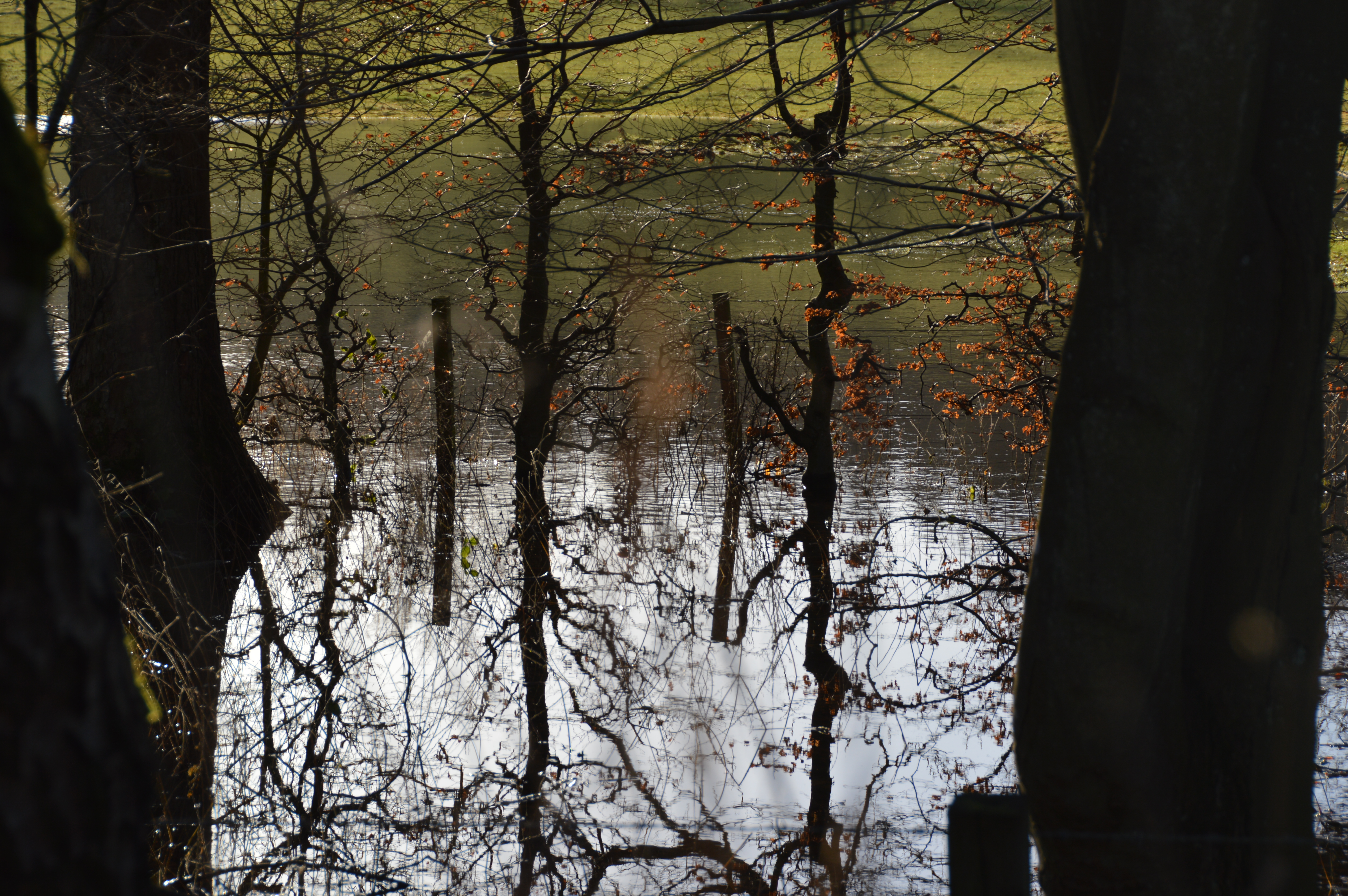
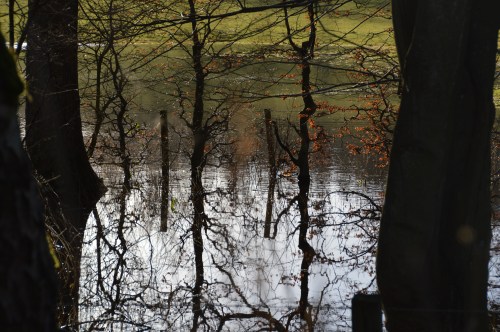
When I was a little boy I thought that vision was like a kind of projector, casting images from the outside world up into my brain.
puddletrees

As I got a little older I thought the eye was like a prism, which would capture the outside view  and transmit it upside down onto the back of my brain, then my brain would flip the image back the right way up somehow.

Once I learned more about it I discovered that neither of those explanations are even remotely correct. In fact, (of course), light doesn’t pass through our eyes at all so they are not in the slightest like camera lenses, or prisms. What happens is that light stimulates special cells which line the insides of our eyeballs, and those signals are converted into electric/chemical signals which are sent through nerve cells to the “visual cortex” at the back of the brain – yes the back of the brain! Isn’t it odd that the back of the brain is the bit we use to see with?!

For a while I pretty much left it at that. But then as I learned more I discovered that vision is a MUCH more creative process than I’d considered so far. Not only is there a patch inside the eye which has no specialised cells for responding to light at all – in other words there is a “blind spot” in each eyeball which is incapable of seeing anything, but the visual cortex isn’t even a single part of the brain.
goldman

In fact, nobody has managed to completely map out just how our brains created the experience of seeing. The visual cortex is now considered in six separate areas of the each hemisphere (named V1 – V6) – that is 6 areas for each hemisphere, or 12 separate areas altogether to create our experience of a seamless image with no blind spots or missing bits. Some of those parts respond to movement, some to colour, some to shapes, some are wired to perception and some to actions……really, it’s too complex so far for us to fully grasp.

So, here’s what surprises me – each eyeball has a bit in it that doesn’t create the images we see – we call that bit the “blind spot” and it’s where the nerve cells which lead into the brain gather together at the back of the eye. Then each eye sends its signals to a complex of six different areas of the brain.
woman

And somehow, we weave together all those stimuli, and all those signals and computations to instantaneously create whole, seamless images. Amazing! Really, it’s astonishing.

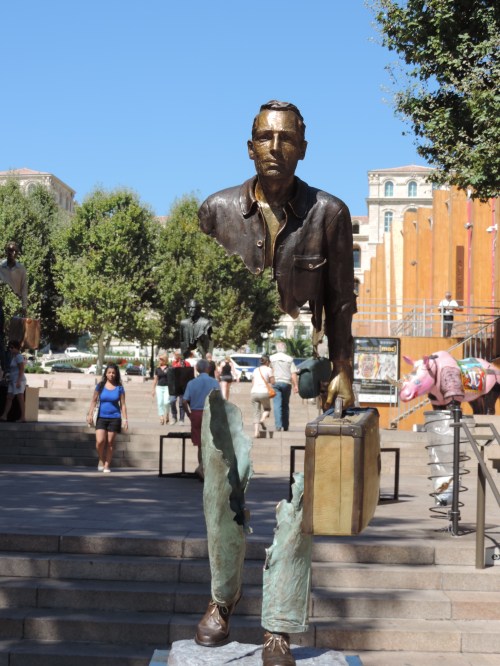
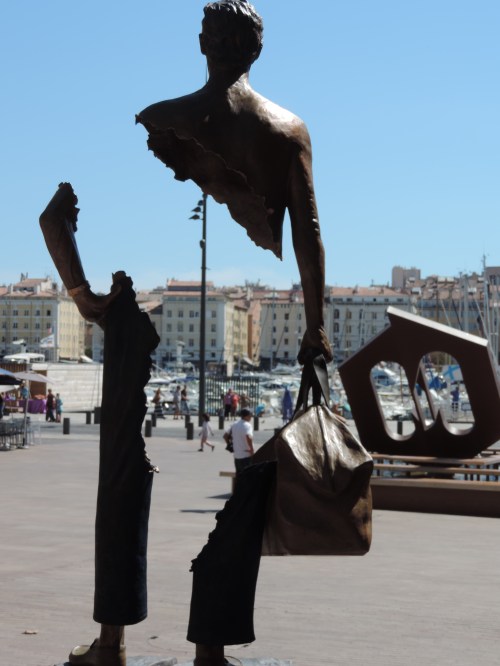
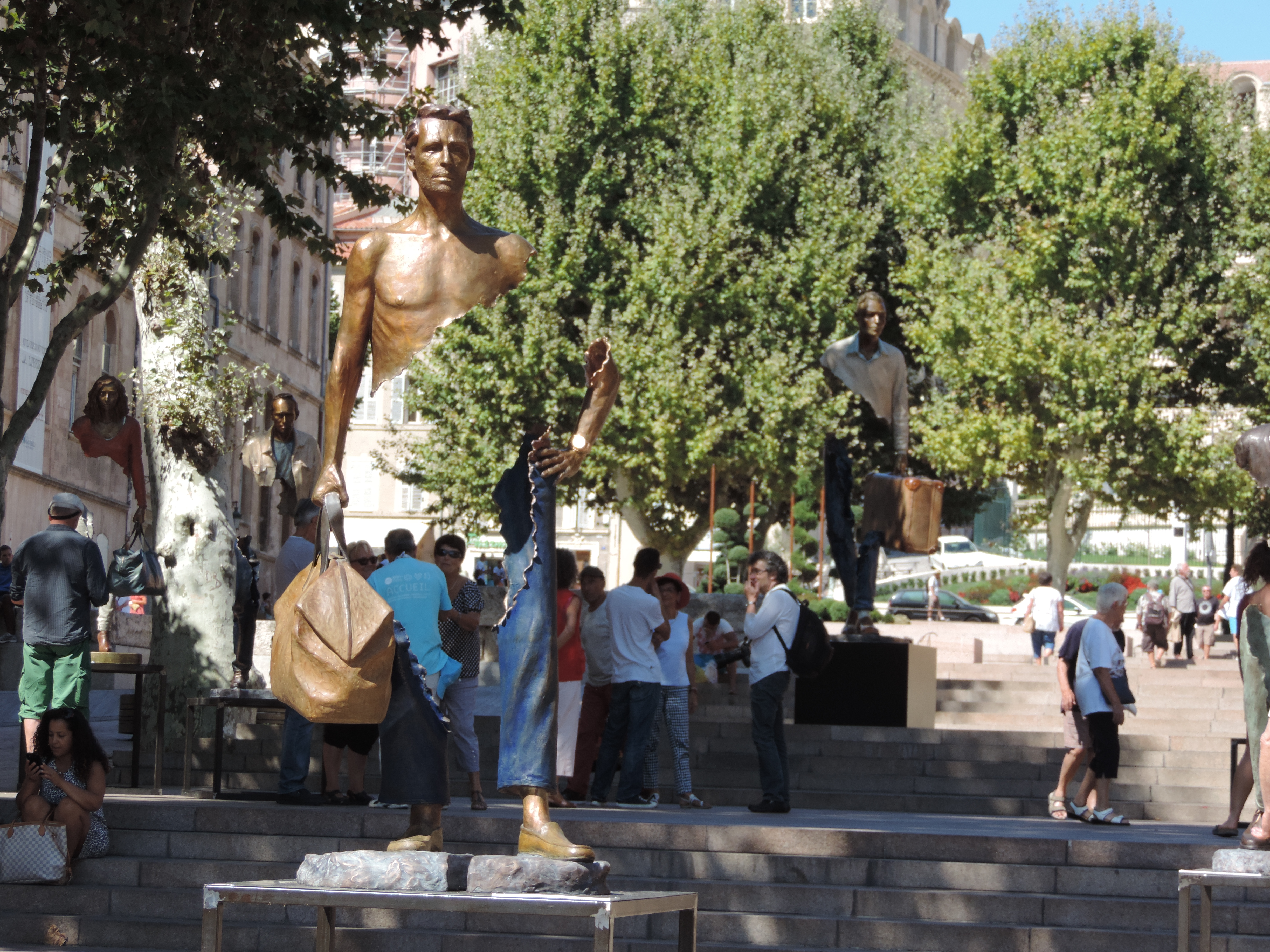
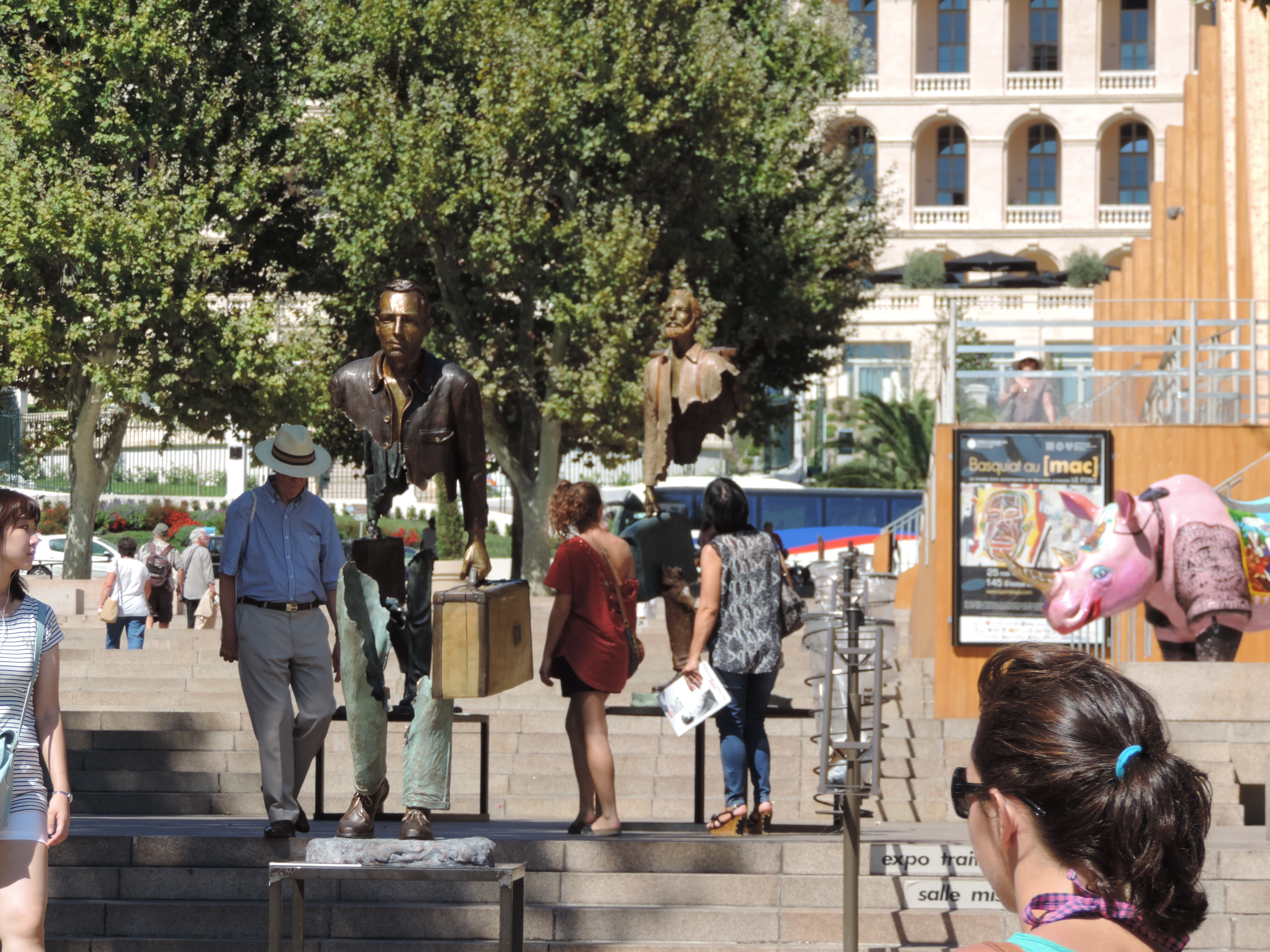
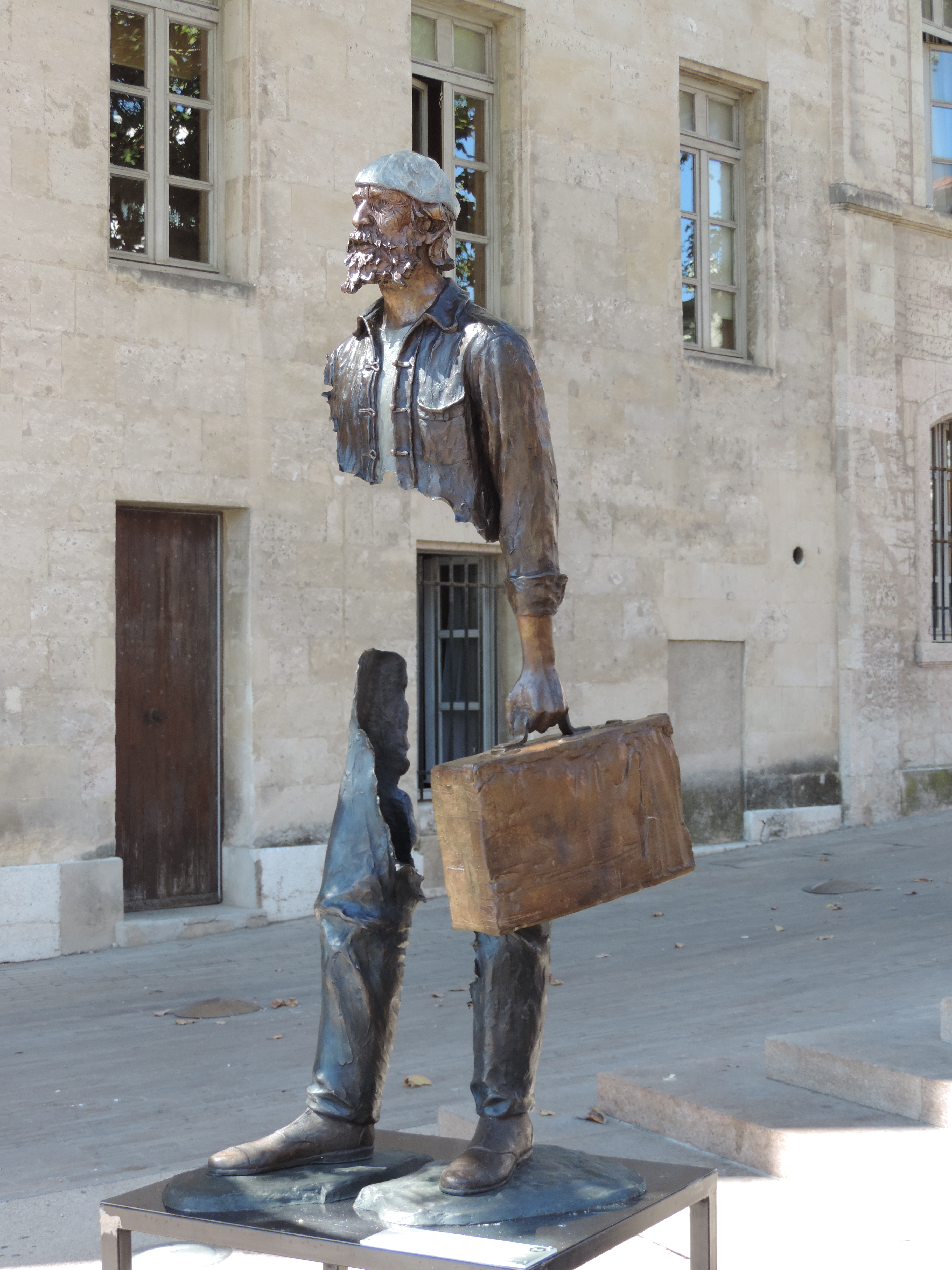
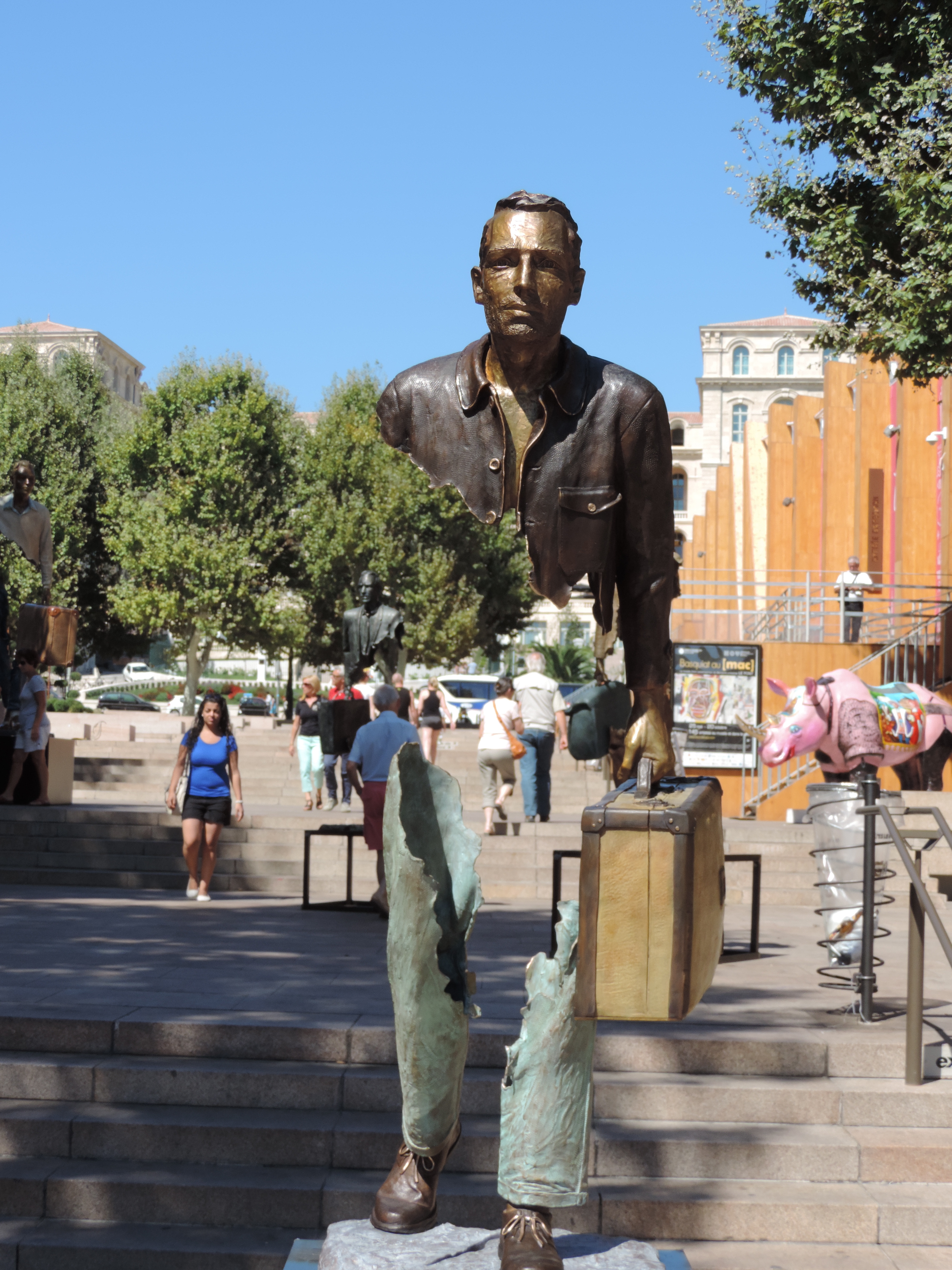
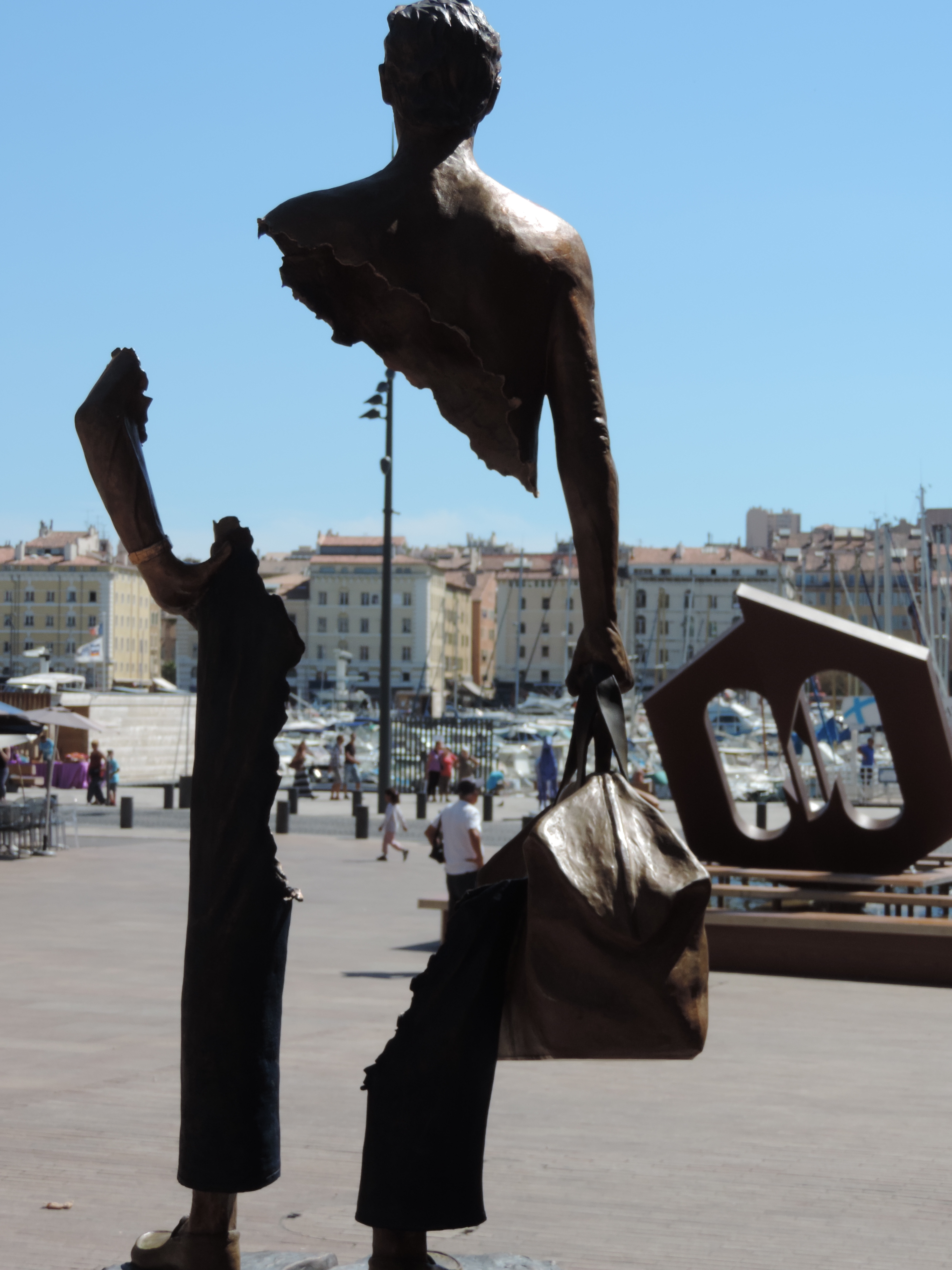
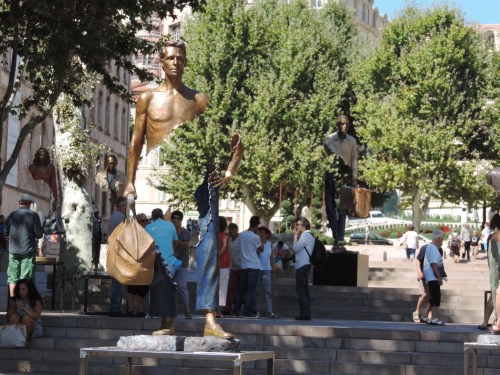
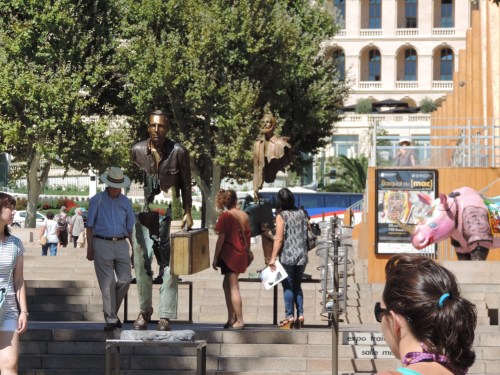
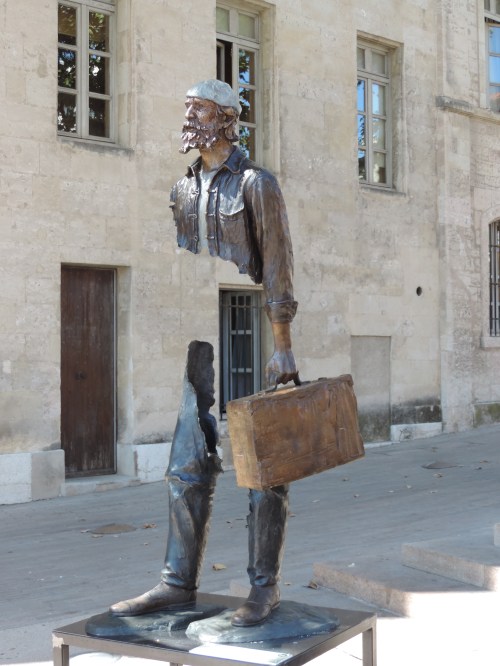
So what do you think of these sculptures which were placed near to the town hall in Marseille?
bandana

travelcase

docker

Read Full Post »

I read a fabulous book whilst on holiday in France recently – “Ni hasard, ni nécessité” by Marc Halévy. I’ll probably write a few posts inspired by it. Here’s the first –

Marc Halévy refers to the three meanings of the word “sens” in the French language.

The first is sensation, or senses – what we experience subjectively. This is such a great way to be present – to pay attention to, to become aware of, or mindful of, the sensations you are experiencing in the here and now. What colours, what light and patterns can you see? What sounds do you hear? What scents can you smell? What tastes linger on your tongue? What does your body sense?

The second is meaning – “what sense do you make of……..?” We are meaning seeking creatures. We are always wondering why, and what does this mean? Why me? Why this happening now in my life?

The third is direction – “where am I going?” “where will this lead?” “what’s the point, or purpose or direction of my life?” We like to be able to see an overarching narrative in our lives. We like to see how we’ve got to where we’ve got to and where that might lead if we carry on down this road.

I love this unpacking of that one word “sens” – the sensations, the meaning and the direction of my life.

In fact, sticking with French for a moment, it’s not far from “le sens” to “l’essentiel” – as Saint Exupéry said “l’essentiel est invisible pour les yeux”

What is most important to us, what is essential in fact, is what is invisible – and the sensations, the meaning and the direction in our lives are all invisible. They aren’t material. They can’t be measured. But they create “le sens de la vie”.

Read Full Post »

The power to predict

Here are two chestnuts in my hand.
Who can predict what will happen to them? Who can say what their future will be?
Will they become chestnut trees?
If so, where? And how big will they grow, and how long will they live?
Will they get pickled and become champion conkers in a playground game somewhere? Which one will become the champion?
Will they feed a squirrel and help it through the winter? Or some other creature in need of nourishment? Could these particular chestnuts make the difference between life and death for one little animal?

I’m sure, the more you use your imagination, and the more you consider the current and potential connections between these chestnuts and the rest of Life on our planet, you can come up with an almost infinite number of possible biographies for them.

So how easy is it to predict?

In this complex, multiply interconnected, frankly astonishing world, isn’t prediction impossible? Instead we default to guesses, hunches and statistics. None of which actually allow us to predict the details.

In the light of that, I find it amazing that we listen to “experts” who claim the power of prediction – whether they are economists, politicians, scientists or doctors.

The power to predict reality is an illusion. And here’s why……the universe is an emergent process. Life is an emergent process. It’s not a machine with the endpoint already established.

We are all becoming not being………

Read Full Post »

Meeting of the lizard minds

Well, these little guys got me thinking. They just sat there doing this motionless three way meeting thing in the sun.
I thought look at the three lizard minds meeting!
And of course that set me off on thinking about the three brains we each have, and how only one of them is a lizard mind! You know that model?
You can think of the human brain as having three distinct waves of evolution, each with its own main area of responsibility and each, intricately connected to the other two. We use all three all the time.
The oldest one is what people call the lizard brain. It’s the brain stem. The deepest and, in evolutionary terms, the oldest part of the brain. It’s the part at the top of the spinal cord and its all about survival. The autonomic nervous system spins out from here (its the accelerator and the brake system which produces, respectively, the fight or flight, and the rest and digest, responses to immediate threats. In fact those are the brain stem’s main duties – to control the heart rate, the breathing rate, the release of sugars and energy and so on. It’s our survival centre. It’s also involved in the production of emotions through its links to the second brain, the limbic system. Some people call the limbic system the mammalian brain, because mammals have it. It has a number of main tasks, primarily associated with memory processing, attraction, and the production of emotions. The big bit on the top, the cerebral cortex, split into left and right hemispheres, is the youngest part in evolutionary terms. It’s a great co-ordinator, analyser, synthesiser, map maker and thinker. This is the bit where we seem to get conscious thought from.
Ok, that’s a VERY simplified account, but I wanted to whet your appetite and hopefully make you curious to become more aware of what’s going on inside your head. We can learn to become more aware of these different areas and their processes and through their intimate two way massive links between each other, and between the brain and the body, we can begin to understand why it makes no sense to create a false model which posits that we can think of the brain and the body as separate. We can’t separate them. What goes on in one part affects all the other parts.
And how do we begin to claim we understand illness when we don’t understand yet what good mental and physical health is (I didn’t even like writing that last phrase because I just don’t think you can divide things between “mental” and “physical” that way)
The other thing I thought, in my meeting of the lizard brains rumination, was thank goodness we don’t have three lizard brains in our heads! Thank goodness, that instead, we have something much more complex, much more evolved, which allows us to experience the world in such unique and intricate ways. I do love uncovering some of the patterns in there by listening to people’s stories and seeing them in the contexts of their lives.
It’s an amazing world. Full of incredible creatures, all so inextricably connected in so many ways……I think we are only just beginning to realise that.

Read Full Post »

my new motto

I saw this on the wall of a little village house down at the end of a long track to the East of Marseille. I love it. I’m going to adopt it as my motto.
Roughly translated it means, “slowly, gently in the morning, not too fast in the evening”
I’m a great fan of the slow movement – the idea that we should take our time to be present, to savour the details of our lived experience, and to be fully open to the wonder of the every day.
I think this saying captures all that for me.

Read Full Post »

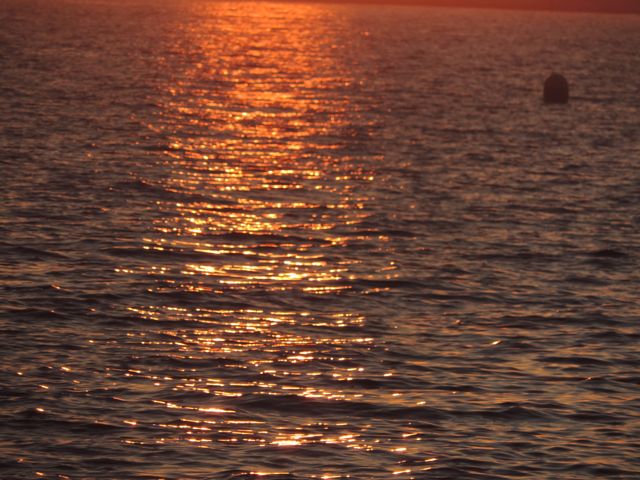
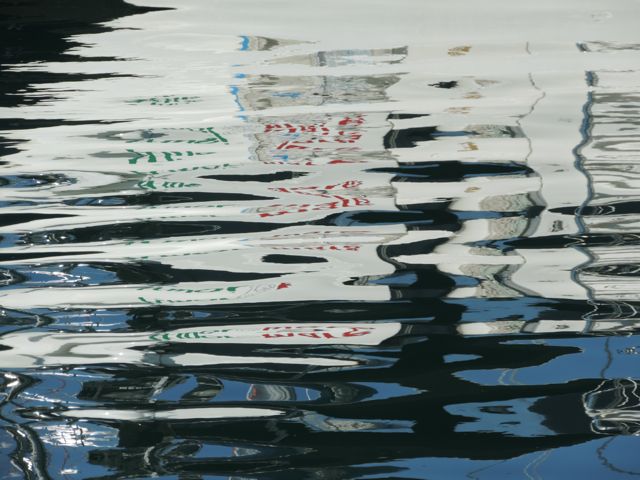
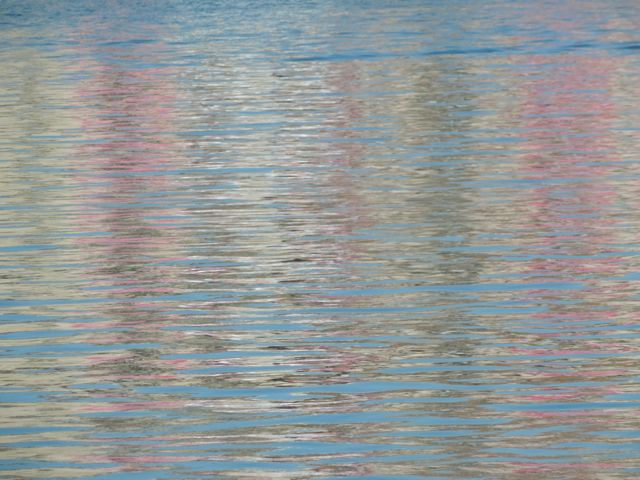
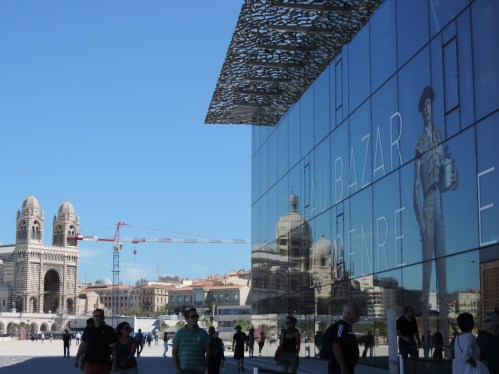
I have a fascination with water and its wonderful to see how either direct or reflected light creates real natural works of art.

sunwater vieuxportwater mairiewater batobuswater

Read Full Post »

« Newer Posts - Older Posts »