Feeds:
Posts
Comments

Archive for the ‘life’ Category

In the wonderful “The Republic of Tea” Mel says

The whole problem with Western civilisation is that ever since the Greeks we’ve been trying to squeeze the mind into the brain and it won’t fit.

Wonderful!

My first thought was Alva Nöe’s point in “Out of our Heads” – “Brains don’t have minds, people do

Then I recalled Dan Seigel’s definition of mind as being an “embodied inter-relational process of regulation of energy and information flow” – which certainly doesn’t fit the mind into the brain!

Andy Clark talks about the “extended mind” in his “Supersizing the Mind” –

According to BRAINBOUND, the (nonneural) body is just the sensor and effector system of the brain, and the rest of the world is just the arena in which adaptive problems get posed and in which the brain-body system must sense and act.
Maximally opposed to BRAINBOUND is a view according to which thinking and cognizing may (at times) depend directly and noninstrumentally upon the ongoing work of the body and/or the extraorganismic environment. Call this model EXTENDED. According to EXTENDED, the actual local operations that realise certain forms of human cognizing include inextricable tangles of feedback, feed-forward, and feed-around loops; loops that promiscuously criss-cross the boundaries of brain, body and world. The local mechanisms of mind, if this is correct, are not all in the head. Cognition leaks out into body and world.

And then there was that recent map of body emotions which showed where we locate different emotions (certainly not just in our brains!)

But the mention of the brain-based focus of Western civilisation since the time of the Greeks producing such limits to our understanding, I couldn’t help thinking again of Iain McGilchrist and how I’m sure he’d say it’s not just that we’ve been trying to squeeze the mind into the brain, but that we’ve been tried to squeeze it into the left hemisphere!

Read Full Post »

inequality

You’re familiar with this, aren’t you? It shows how the top 1% of the population have increased their share of wealth fantastically since 2003 while the 99% (that’s probably you and me!) have seen their income stay the same or decline over the same period.

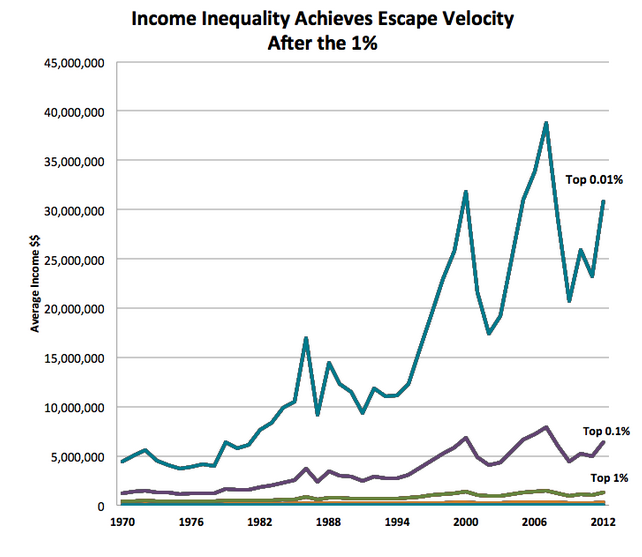
However, check out this interesting graph from an article in The Atlantic this week.

0.01%

It shows, amazingly, that within that top 1%, 99% of them have NOT increased their wealth, but 1% of them have enormously increased their wealth. That means the only ones to gain in this period of austerity are the top 0.01% of society and they have MASSIVELY increased their share. This unprecedented centralisation of wealth sucks the life blood out of society. This small elite hoards the world’s wealth to themselves. And if we can say anything about healthy economies, they need circulation and movement. Remember the credit crunch? What happened? The money stopped circulating.

There are a mass of other problems which are linked to huge socio-economic inequality. Have a look here if you’re unfamiliar with the work of Prof Wilkinson.

Hamish Mcrae, writing in the Independent, reflects on this finding. He says

Once the majority of people in a democracy feel it is not working to their advantage, they will seek a remedy.

He then goes on to say that taxing the rich won’t work, and that we can only hope they will learn to “change their ways”. Really? That’s your big solution, Hamish? Karl Marx said

Accumulation of wealth at one pole is, therefore, at the same time accumulation of misery at the opposite pole.

Bloomberg Business Week published an article noting the reemergence of Marxist economics last June. And Pope Francis said

Just as the commandment “Thou shalt not kill” sets a clear limit in order to safeguard the value of human life, today we also have to say “Thou shalt not” to an economy of exclusion and inequality. Such an economy kills. How can it be that it is not a news item when an elderly homeless person dies of exposure, but it is news when the stock market loses two points? This is a case of exclusion. Can we continue to stand by when food is thrown away while people are starving? This is a case of inequality.

and goes on

While the earnings of the minority are growing exponentially, so, too, is the gap separating the majority from the prosperity enjoyed by those happy few. The imbalance is the result of ideologies which defend the absolute autonomy of the marketplace and financial speculation…. A new tyranny is thus born, invisible and often virtual, which relentlessly imposes its own laws and rules…. The thirst for power and possessions knows no limits. In this system, which tends to devour everything that stands in the way of increased profits, whatever is fragile, like the environment, is defenseless before the interests of a deified market, which become the only rule.

What does he suggest?

I exhort you to a generous solidarity and to the return of economics and finance to an ethical approach which favors human beings.

It’s a long time since Schumacher published “Small is Beautiful” but maybe we are beginning to see a clamour for the development of economics, politics, science and humanities which enrich not just the 0.01%, but the 99.99% too.

Any ideas?


Read Full Post »

DSCN0914

This is cherry blossom time and in Japan the coming of the cherry blossom is a cause for celebration and of great interest.

Follow through this link here and you’ll see a map showing when the blossom comes out in different parts of Japan (over March and April – we’re a bit later with our blossom here in Scotland)

Why is it such a celebration? Well, not just because it is beautiful (which it is) but because it makes us so much more aware of transience. The blossom comes, the blossom goes. It’s not here for long. Everything is like that. Our lives are like that. We are here with these bodies for a while, and then we are gone.

This is a transition time for me in my life. I’ll be retiring from medical practice this summer, which is a huge life change. So I’m acutely aware of the beauty and the power of transience right now. There is celebration of the life lived so far, of how much it has changed, and an intensity to the everyday experience which comes with the awareness of change.

This is a good month to notice the daffodils coming out, or the cherry blossom briefly flourishing on the trees. Nature is showing off the wonderful beauty of transience.

I know we have a human tendency to cling, to want to keep the status quo, holding onto not just what is good but what is familiar. But we also have this deep human capacity to know that we are mortal, to know that change is the inescapable reality of Life, and somehow, that makes today even more precious, even more important, even more beautiful.

Read Full Post »

DSCN0872

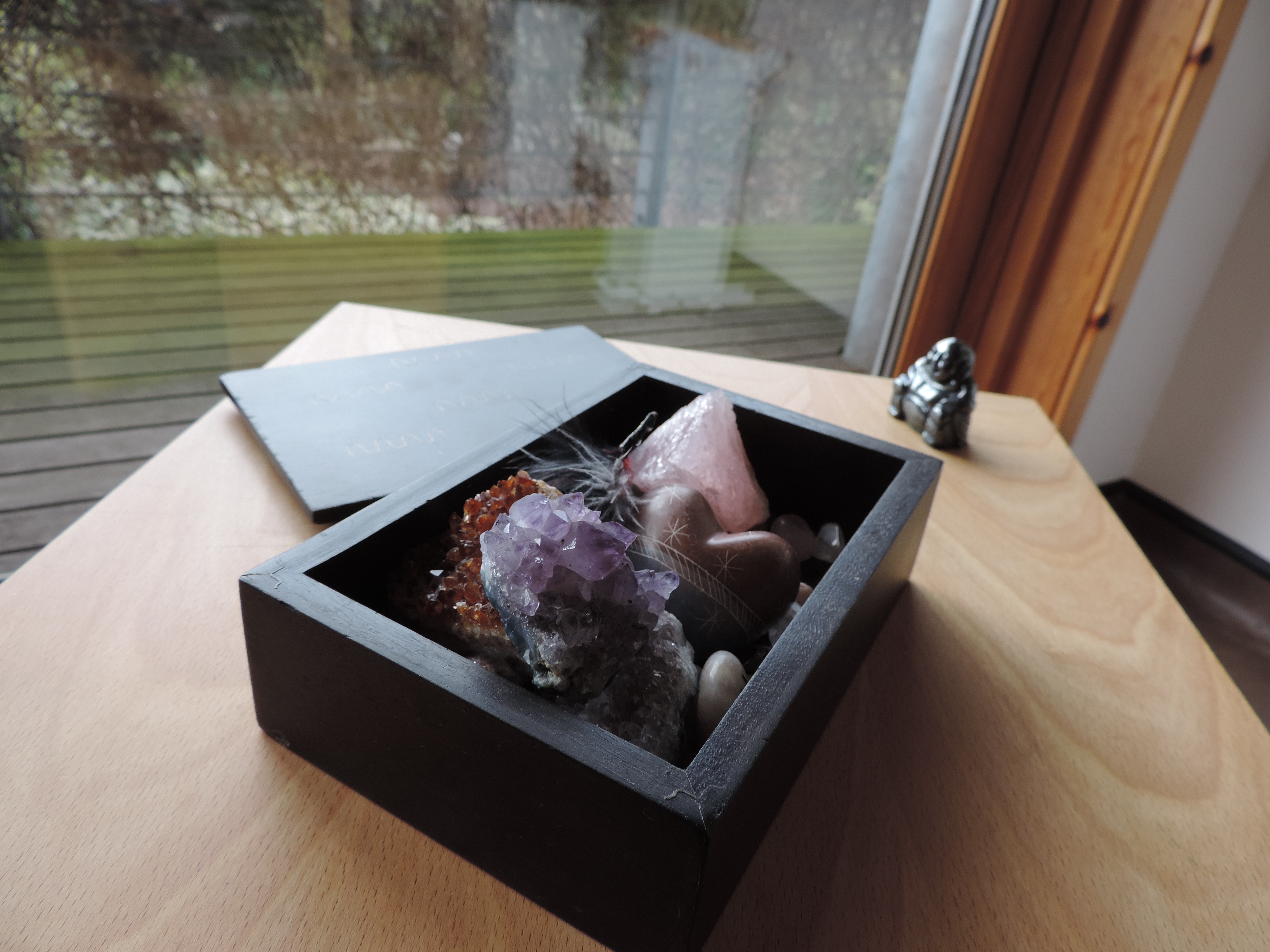
Over the years patients and colleagues have given me little gifts which I’ve collected in this box which sits next to my chair in my consulting room. In some ways I’ve thought of it as my little “cabinet of curiosities“.

It’s often a talking point, but the recently one five year old girl came into my room, made a bee line for the box and squealed “Ooh! Treasure!”

I hadn’t thought of it as a treasure box until then, but that’s what it is.

Have you a treasure box? If not, why not start one? What would you put in it?

Read Full Post »

Move, move and be moved.

DSCN0496


DSCN0381


DSCN0905


DSCN0928

Move your body. If you wanted to do just one thing to improve your health then I’d suggest you move. Recent research has shown that rather than focus on certain types of exercise, or certain numbers of minutes exercising, what makes the most difference is the amount of time you spend sitting down in a day.

If you’re 60 and older, every additional hour a day you spend sitting is linked to doubling the risk of being disabled — regardless of how much exercise you get, reports a new study.

and

If there are two 65-year-old women, one sedentary for 12 hours a day and another sedentary for 13 hours a day, the second one is 50 percent more likely to be disabled, the study found.

Move from here to somewhere else. Travel, go trips, have a journey. Try something new. Try the 30 minute discovery challenge.

Be moved. Go to the movies. Listen to some music. Read a poem. Spend some time with someone who touches your heart. Stir your positive emotions.

Movement is Life.

Read Full Post »

I was struck by a recent study looking at how much psychosis patients with schizophrenia (SZ) experience on anti-psychotics.

At each follow-up assessment over the 20 years, a surprisingly high percentage of SZ treated with antipsychotics longitudinally had psychotic activity. More than 70% of SZ continuously prescribed antipsychotics experienced psychotic activity at four or more of six follow-up assessments over 20 years. Longitudinally, SZ not prescribed antipsychotics showed significantly less psychotic activity than those prescribed antipsychotics . . . the condition of the majority of SZ prescribed antipsychotics for multiple years would raise questions as to how many of them are truly in remission.

In other words, not only do most patients with schizophrenia who are prescribed anti-psychotics continue to experience psychosis, but those who aren’t prescribed them experienced “significantly less psychotic activity”. What makes this study particularly unusual is that it was conducted over 20 years. This is highly unusual but more real life than the vast majority of studies which are quoted to give a drug “evidence based” status. Maybe it’s just not a good idea to keep somebody on the same drugs for decades?

That got me thinking about a related issue of prescribing drugs to healthy people to try and prevent disease. Think about statins for example. I found a good summary here.

Experts calculate that to save one life, or avoid a non fatal heart attack or stroke, you would need to treat 11 high-risk patients for 10 years.To save a life or avoid cardiovascular morbidity among low-risk patients the number you need to treat increases to 23. But different studies have looked at different types of patients and have yielded different results, so it is difficult to know if this pans out.US researchers estimate that for every 100 people without known heart disease who take statins for five years, 98 would see no benefit, and only one or two would avoid a heart attack that they might not have otherwise

Just read that last phrase again “for every 100 people without known heart disease who take statins for five years, 98 would see no benefit, and only one or two would avoid a heart attack that they might not have otherwise”. Seriously? Is this a great way to a healthier life, if you don’t already have heart disease? Well, for 98 out of 100 people, the answer is “no”. And what about the one or two who might avoid a heart attack? Nobody wants a heart attack, but time and time again, a “non-fatal heart attack” is a turning point for people. They make serious decisions about life style and change direction. They re-assess what is important to them, and if they stop smoking, cut back on their alcohol consumption and/or start exercising for 30 minutes a day, then the health benefits they will experience go way, way beyond the reduction in heart disease risk which a statin would bring.

We just can’t go taking one drug after another to avoid one disease after another, can we?

Doesn’t it make more sense to only take medication for short periods when it is really necessary, and to start to lead fuller, healthier lives right now, no matter what our current state of health?


Read Full Post »

DSCN0925


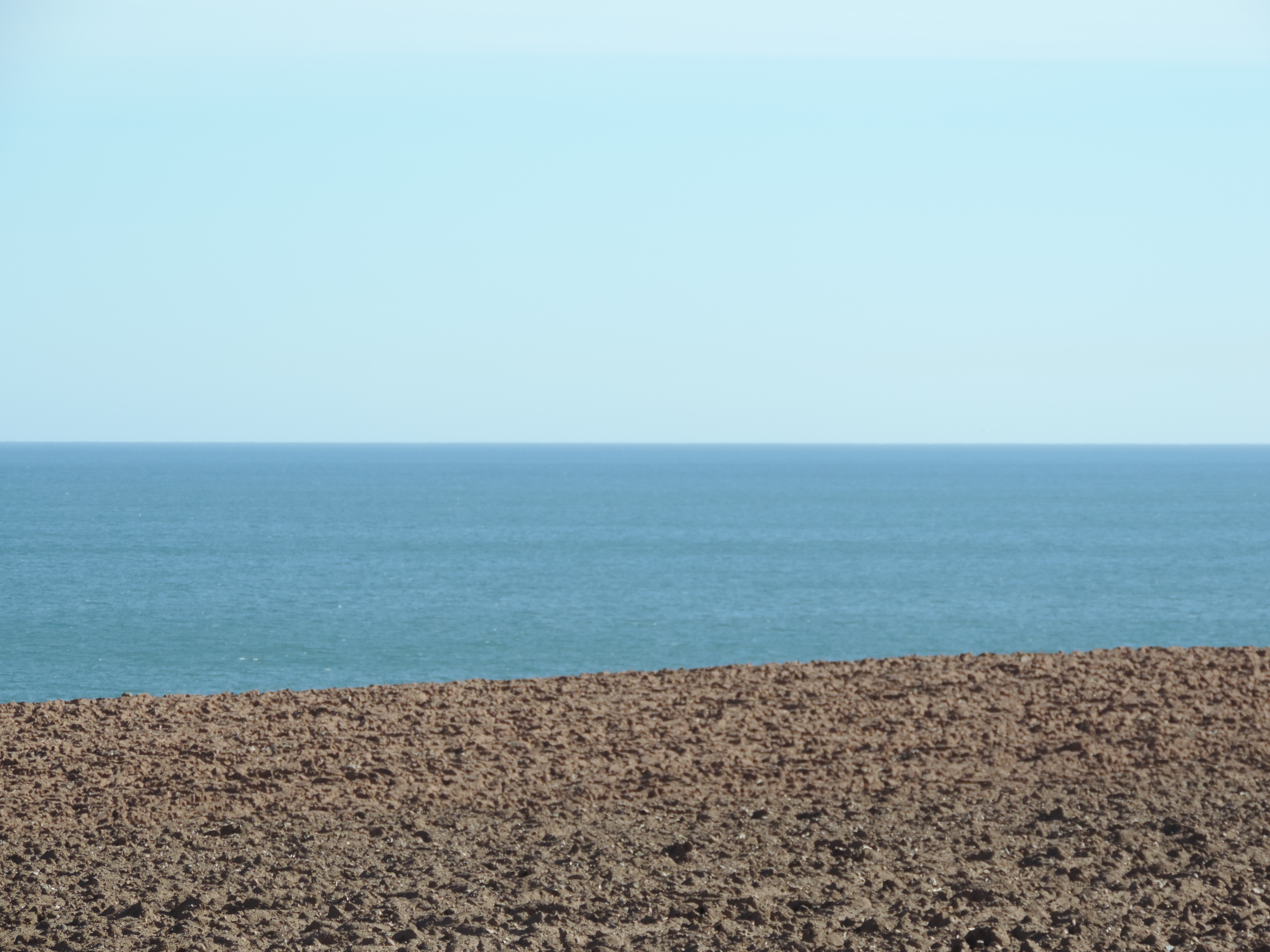
As I drove down the A1 the other day, this view across the fields to the North Sea caught my eye.

How lovely – Earth, Water and Air.

OK, I know some of you will be asking what about the Fire? (The Sun perhaps, even though its not directly in this shot!), but let’s stick with three for now. Three is a very common, holistic number.

DSC_0051

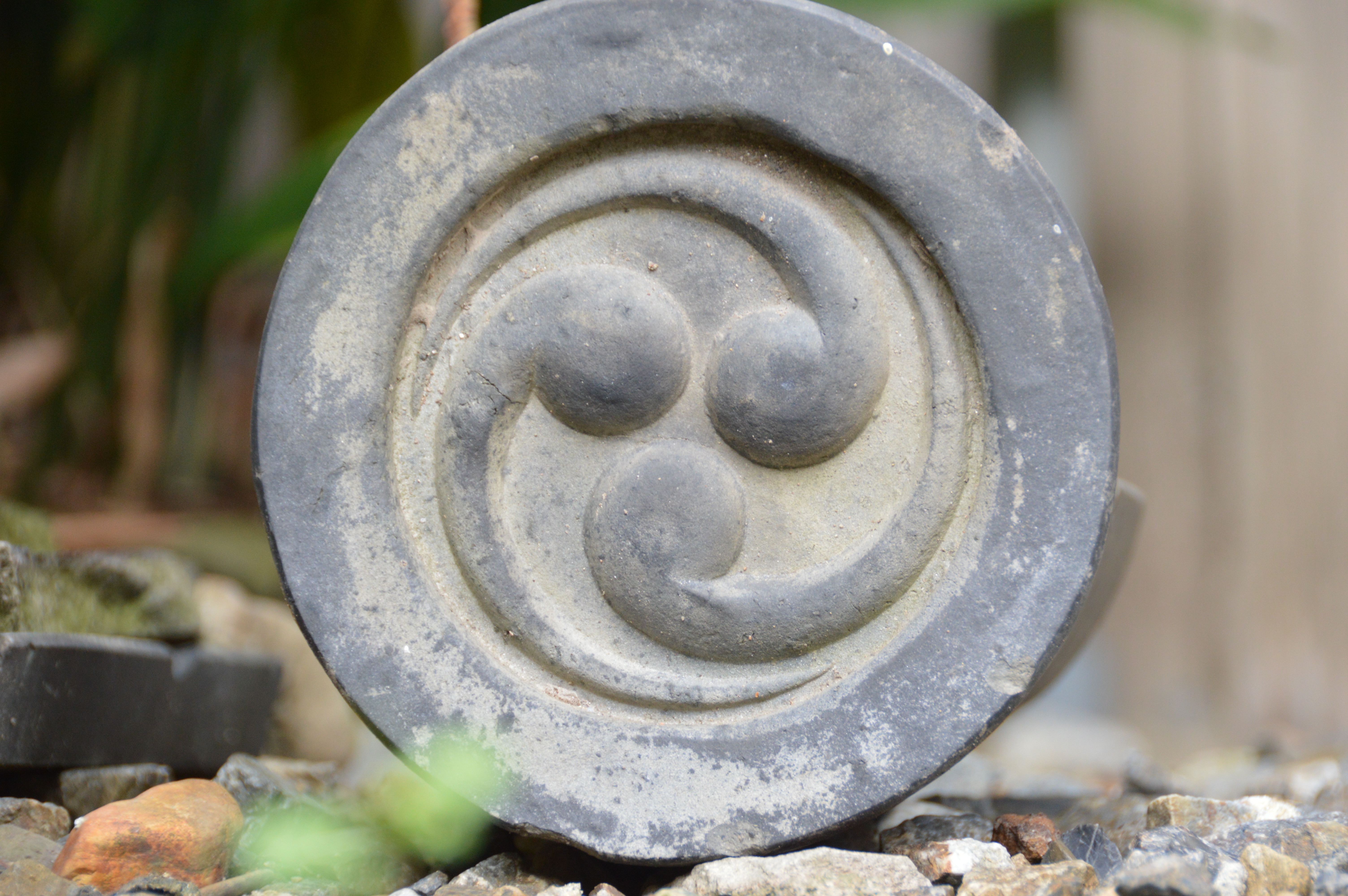
In Japan, this “mitsudomoe” symbol historically represents Man, Earth and Sky.

Body, Mind and Spirit is one of our common triads, and in Celtic symbolism, that is captured with a “triskele“.

We created a charity in Scotland at the end of 2012 – The Vital Force – we chose this version of that ancient symbol –

IMG_0492


Do you have a favourite triad – either in words or in a symbol?


Read Full Post »

Yesterday I stopped to photograph some of the new lambs in the field near my house. I spotted this one –

DSCN0929

…so took a couple of shots in quick succession – I think it clocked me – and this is what he, or she, thought about it –

DSCN0930

Read Full Post »

IMG_0571

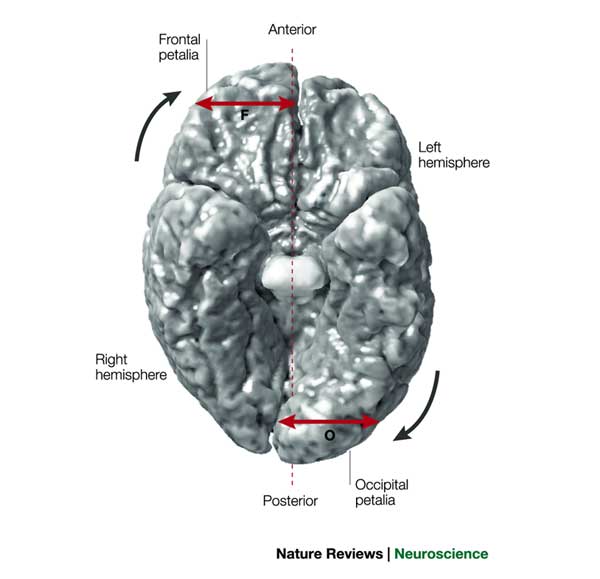
When I learned neuroanatomy at Medical School I was taught that the two cerebral hemispheres were symmetrical. There was no mention at all that they were in any way different. But look at this image above. (This is referred to as Yakovlevian Torque)

Clearly, the two hemispheres are NOT identical. In particular the right one is bigger at the front, and sits just a bit in front of the left, and the left one is bigger at the back, and sits just a little further back than the right.

Why might that be? Why the larger frontal area on the right, and occipital (back) area on the left?

Iain McGilchrist nicely summarises it by pointing out that how the left hemisphere approaches the world is by trying to grasp it. We try to make sense of the world by literally getting a hold of it – we want to understand it, to measure it, to predict what it going to happen by matching the patterns we see to those we have already learned from our experience, and we try to manipulate or control it. This is what the left hemisphere is really great at doing. Interestingly, the areas at the back of the brain are primarily for processing the outside world (our visual and auditory areas are toward the back, and the cerebellum which helps us to know whether we are standing up or falling over by orientating where we are in 3D space, is also to the back). The right hemisphere majors in making connections and maps. It has a significant role to play in all the skills we need to act as social animals.

So, one nice summary of why there might be this asymmetry in the brain, is to enable us to both grasp the world and to be social creatures. Amongst all the creatures on this planet we are probably the most able to manipulate our environment and the most developed as social animals.

There’s a huge amount more to this left brain/right brain understanding but I do think this is a fabulous starting point. Oh, and by the way, look at this

IMG_0349

Interesting, huh? And how come this has been pretty much completely ignored for so long?

Well, Iain McGilchrist’s theory, written up in full in The Master and His Emissary, or summarised in the Kindle Single, The Divided Mind, is that we have over developed the left hemisphere approach so much that we have developed the tendency to see only what we have already “learned” – so if we were taught that it was symmetrical, and we haven’t explored the differences between the two hemispheres, then we’ve become a bit blind. Time to start using our whole brains?


Read Full Post »

IMG_1536


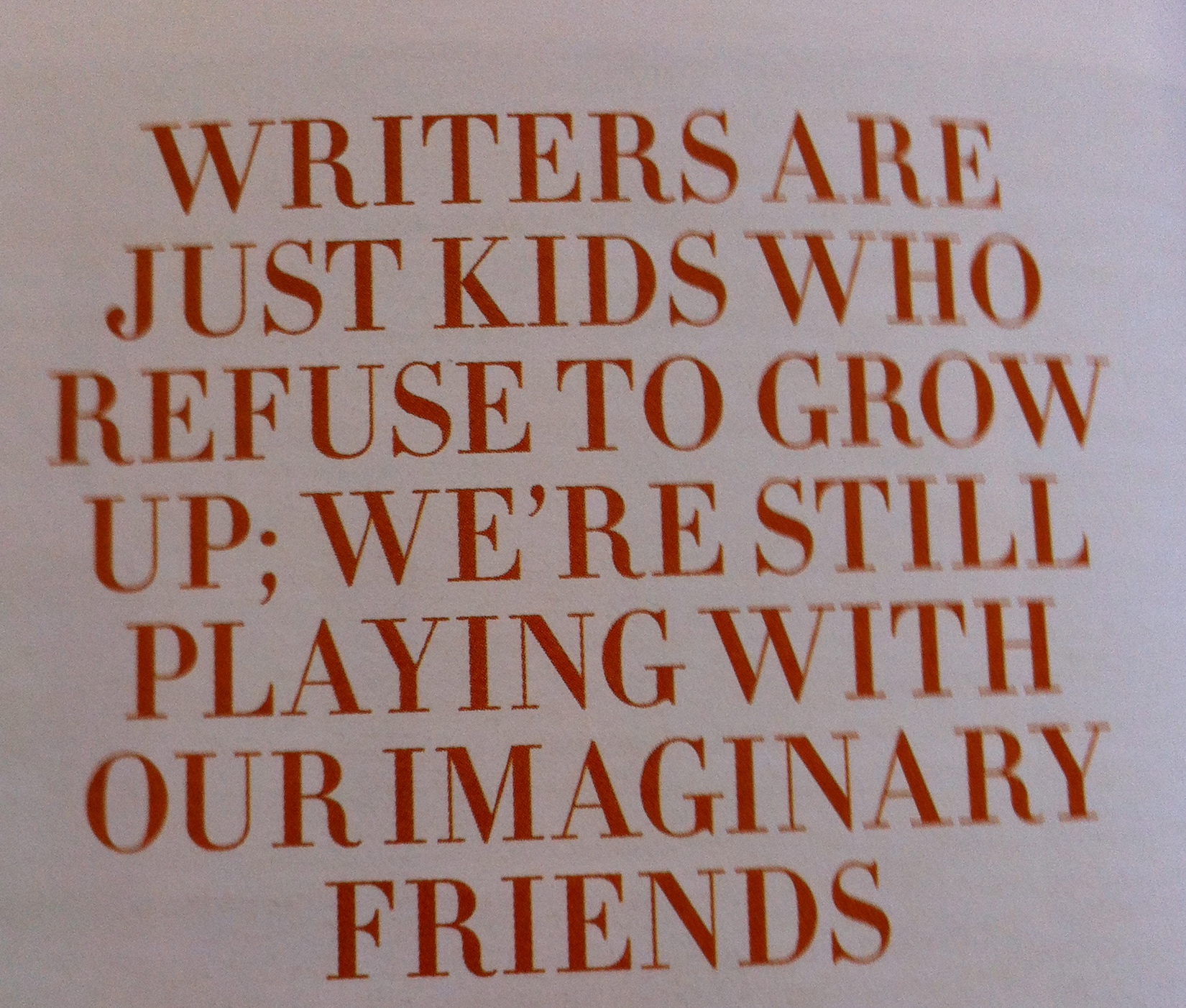
I came across the above quote in an interview with Ian Rankin, the author of the Rebus crime fiction books.

I think this is a such an important point about creativity. If we really want to let our imaginations flourish, don’t we need to stop being too serious, and setting it artificial limits. Have you seen how rich a life children create with their imaginations? It’s a constant inspiration!

So, with all the serious advice around about happiness, health, flourishing, etc, here’s an additional piece with quite a different flavour – play with your imaginary friends!

2866185000_27420d198a_o


2340960907_c7a7f1645e_o


2698797966_914511a3c7_o

Read Full Post »

« Newer Posts - Older Posts »