Feeds:
Posts
Comments

Archive for the ‘Uncategorized’ Category

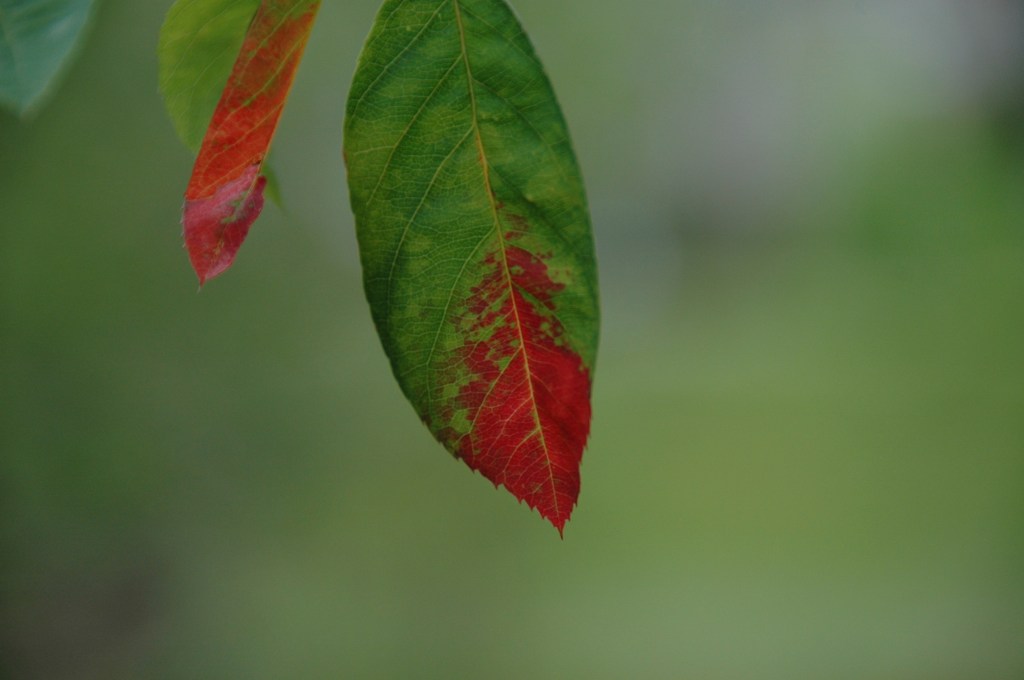
Is this a green leaf or a red one? If the colours represent two parties or choices in most modern democracies you’d have to say the greens won and the reds lost.

That kind of thinking does my head in! It produces everything from a tyranny of the biggest minority over all the other minorities to deepening divisions and resentment.

I understand that in a game, football, or tennis, for example, one team or player will score the most, be declared the winner and all the other contestants have to come to terms with their loser status. But that’s no way to run a society or a country.

Every population contains a diversity of individuals with different, probably evolving, or changing views and beliefs about everything. Democracy, if I understand the idea correctly, is a system designed to build consensus and promote social cohesion. But the current varieties of it don’t seem to work that way.

From first past the post voting, to us or them political groupings, to for or against votes where “winner takes all”, all of these practices deny the reality of complexity and diversity.

Does “we won” so “you” have to “shut up”, “suck it up”, or “move on” ever build understanding, improve relationships or build communities of people who want to work together? I don’t think so.

We need a better way to live together if we want to get off this divisive one track road to hatred, anger and resentment.

In politics, as in life, nothing is ever “finished”, “done” or “settled”. We need to be able to adapt, to make different choices as the world changes rather than digging deeper trenches and building bigger tribal walls.

I love this image of the green and red leaf, and I love it in this moment of its transition which speaks to me of Life, of dynamic cycles and seasons of change and difference. More than anything, in response to the question of its colour, I resort to “and not or”. It’s green AND red.

Would it be so hard to create a democratic system based on that reality? One that works for all of us, not just a minority?
Read Full Post »

Ways

I moved house six months ago. Since moving I’ve been very busy, every day. The house and garden haven’t been lived in for a few years so they’re needing to be brought back to life. They’re needing some care and attention. Some of that busyness is very satisfying. Some of it can be pretty frustrating. Much of it can be really exhausting. It’s certainly squeezed out other activities, blown away old habits.

My every day now feels quite different to my every day a few years ago. But then that’s pretty normal isn’t it?

Sometimes I think of my life as a book, so here I am in the next chapter. The title of my blog, heroes not zombies, reminds me that each of us is both the author and hero (main character) of our personal life story. So I’m busy writing this new chapter, and embracing fully every paragraph!

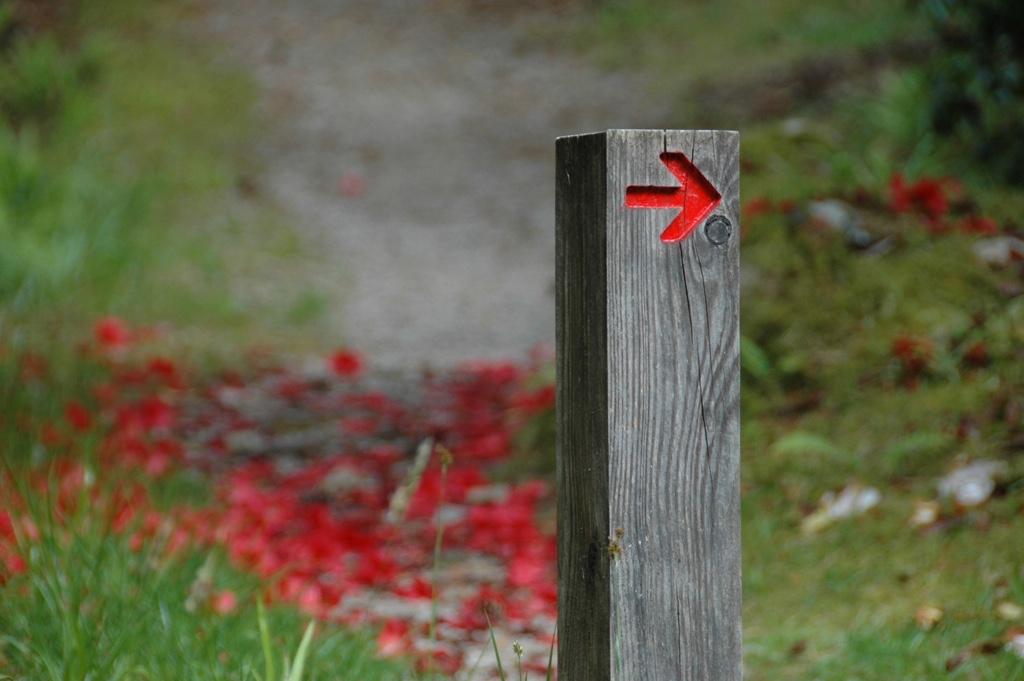
But this photo reminds me of another metaphor which I’ve always liked – the path, with it junctions, intersections and, occasionally, signposts.

My garden has a neglected overgrown area of trees in it and one of my main activities just now is opening it up and reclaiming it. I’m doing that, not by following any signposts, but by creating brand new paths.

It’s delightful, even when it’s tricky and hard work, to make your own new paths into the unknown, the unexplored, and to make new discoveries every day.

Sometimes there are helpful direction indicators in life, but they are always only suggestions, and the path we choose will always be unique, will always be our own.

Read Full Post »

Reality, which we can appreciate, and apprehend, directly in the natural, living world isn’t like the re-presentation, the model, or the map which is used most commonly in contemporary society.

What is that model or map? The machine.

A machine is constructed from parts, each of which is complete and independent from the others. It functions linearly, each movement or change leading to a predictable and exact outcome. The best machines are the ones which work most “efficiently”, producing the same outcomes time and again with the least amount of energy consumption.

The living world is not like that. Human beings are not like that. Reality is not like that. Machines and models are artificial. Complicated perhaps, useful perhaps, but not something we should try to emulate.

Reality is a constantly changing interactive flow of materials, energy and information. Everywhere we look in the natural world we see subjects, not objects…..living organisms which are born, grow and develop, flourish, reproduce, decline and die. We see unique creatures, every one with a different life story, living in a particular place over a particular period of time.

Living creatures are self-balancing, self-repairing, self-making individuals living in vast, intricate webs of relationships and connections, open to the flows of materials, energy and information from which they emerge, and into which they return.

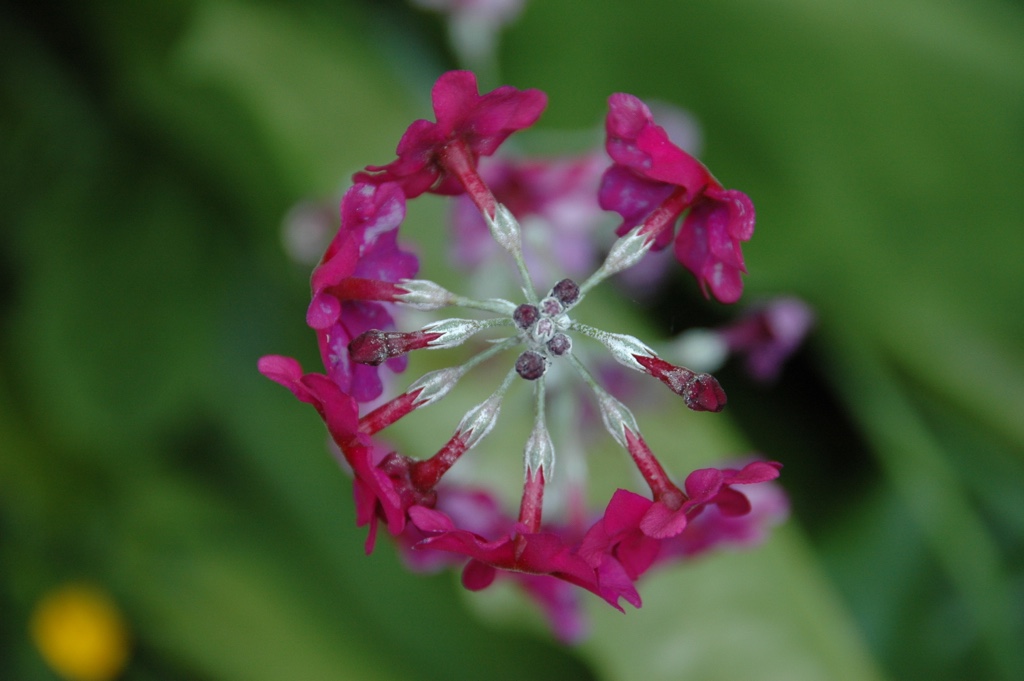
A plant like the one in this photo lives abundantly. It produces as many blossoms as it can, it produces as many seeds as it can. An excess, some might say. It isn’t parsimonious and it isn’t “efficient” like a machine.

There’s a characteristic in all complex adaptive systems known as “redundancy”…..it involves having more ways to do something than you “need”. When some is lost, or some part of the system is damaged, there’s always more to come on stream or take over.

We seem to be in a bit of a mess these days, with crises and shortages everywhere. From airports, to ports, to supply chains, hospitals, GP Practices, ambulance services, or food production, the pandemic, we are told, has made them all collapse.

Well the pandemic highlighted something and made it worse, but it’s not THE cause. It’s a factor.

We entered the pandemic in the midst of a time when we’ve been trying to organise ourselves as if we are machines. Economic and management theories based on machine models – of identical, predictable parts working efficiently to produce the greatest financial profits with the least human input.

It’s not working because reality isn’t a machine.

We can try something different, can’t we? By seeing that each of us are living, complex, adaptive creatures who exist and flourish in a living world wide web of relationships and interconnectedness. We can create organisations and societies, as diverse communities and families of unique, singular, particular, unpredictable, uncontrollable, glorious, amazing individual beings.

What might that look like?

Not a machine.

But then the main focus would have to shift – from making money and consuming “stuff” to nourishing and nurturing Life.

Might be worth a try….it works in the natural world.

Read Full Post »

I was never a gardener. I didn’t grow up in the tradition of gardening and for many years I lived in a top floor apartment with no garden. But since I retired and moved to rural France I’ve become a gardener.

It began with living in a house surrounded by vineyards and in a climate which drew me outside pretty much every day. I’d eat in the garden throughout the summer and I’d take a book outside to sit under the mulberry tree and read. I started to notice the birds which lived there or came to feed there and I’d notice the changes in all kinds of plants through the cycle of seasons.

I bought a battery operated lawnmower and found I’d enjoy listening to podcasts as I cut the grass. Cutting the grass would take between an hour and an hour and a half, an ideal podcast length of time!

We planted some vegetables in a “potager”, and I was amazed at the taste of fresh tomatoes, courgettes, lettuce, radishes and cucumbers. We planted a fig tree which quickly began to offer an abundance of fruit. Have you ever tasted figs just plucked from the tree? Amazing.

I don’t think I’ve ever felt more connected to Nature, never felt more in Nature at any other time in my life.

Now I’ve moved and bought a house in a small hamlet in the countryside. I’m no longer surrounded by vines, but by trees and fields. This house has a big garden and it’s needing to be reclaimed, to be re-inhabited. There’s still plenty of grass to cut, but no potager yet, and it has a significant area of overgrown trees – a little forest really. Most of the plants here have arrived without the assistance of human hands so there are surprise discoveries every week, different kinds of wild orchids, massive roses, sprawling ivy, wild clematis and honeysuckle.

This is not a garden which is ever going to be “finished”. Is any garden? It’s to be lived in, enjoyed, nurtured and cared for.

And there’s my greatest lesson I’ve learned from gardening. You can’t force it. You don’t fix it. It isn’t a giant machine with parts which need replaced or repaired.

To enable a garden to flourish you have to live with it, over time, get to know it and understand it. You have to “attend” to it, pay an engaged, committed attention to it. You have to care about, and for, it. You have to nurture it……especially the soil.

I think my work as a doctor was like that too. I knew that true healing only occurred when the individual patient was attended to, understood, cared for and nurtured. I knew that it wasn’t me who healed, nor was it any drug or procedure. It was the natural ability of a living organism to self-repair, self-heal and to grow and flourish. It was my job to support and facilitate that through long term healing relationships and by helping people to understand why they were suffering and what they might do to live differently, and thrive.

So there are threads in common here, between my work as a doctor, and my recent experiences as a gardener. Paying a particular kind of attention is perhaps the main one. Our left hemisphere facilitates a narrow, analytical focus on parts, helps us to grasp and manipulate the world. But left to itself, it produces a false sense of control and power, a false view of reality. Our right hemisphere enables us to have engaged attention. It helps us to find connections, to discover uniqueness, promotes a sense of wonder and wholeness. It helps us to “attend” to the real world directly.

Whether in gardening, or in Medicine, it turns out it’s best to use the whole brain, but to allow the right hemisphere to integrate all the activities of both sides. That allows us to realise life is not about fixing and controlling. It’s about the creation of caring relationships, attending and tending to, learning and growing together.

At least, that’s how it seems to me.

Read Full Post »

Leaf skeletons are beautiful and fascinating. You really don’t know they are there until the green substance of the living leaf has gone. It reminds me of the cyclical nature of the seasons and of the phases of our lives. From buds bursting with potential to full flourishing and on to dissolve back into the world from which the leaves emerged.

But there’s something else….this feels like a revelation….a glimpse at the underlying structure of the universe. Not a permanent, fixed structure of course, but a transient one based on a fundamental tendency to create nodes and links – the network or web-like nature of our universe which connects everything to everything else.

The Chinese concept of “li” captures this idea – it’s the multiplicity of patterns we see in all living forms which manifests itself in the beautiful patterns which we see.

However you think of it, I think this wonderful leaf skeleton opens a door to understanding that the universe is not totally random, and matter is not distributed smoothly and evenly everywhere. But that reality structures itself and the hidden structures create, or at least profoundly influence, the myriad of individual forms which we see around us, and within us.

Read Full Post »

One May, a few years ago I saw this rainbow at the top of the vineyards behind the house where I was living near the town of Cognac. It was quite the most extraordinary rainbow I’ve ever seen. One thing that made it different and powerful was how it seemed to divide the Earth below into two separate areas…..the one within the rainbow’s arch, and the one outside it.

I’ve seen many rainbows but I’d never seen this phenomenon where the sky and the land below the bow itself turned a completely different colour. That had a powerful effect on me which is hard to describe but which was a profound state of awe – such a small word for such an intense experience.

The second thing about this rainbow was the intensity of colour it reached. You know how if you look at a rainbow you can see it clearly but soon it starts to fade, the colours weakening until it disappears. Well this rainbow intensified to the strongest light I’ve ever seen. It was if the strongest multicoloured searchlight was beaming down from heaven onto the vines.

The third aspect of this extraordinary rainbow was its sheer presence. Not only did it manifest as a full arc, but it lasted a long, long time…..over 20 minutes. I’d never witnessed such a complete and long lasting rainbow ever before, and haven’t since.

So this rainbow is obviously unique. Yes, I know every rainbow is unique, but these characteristics combined to take it to a completely other level. One I’ll never forget.

I think these intense experiences change us. They alter our consciousness. They change how we see the world. I’ve always valued wonder, awe and beauty but this particular experience brought my connection to the universe to another level.

Read Full Post »

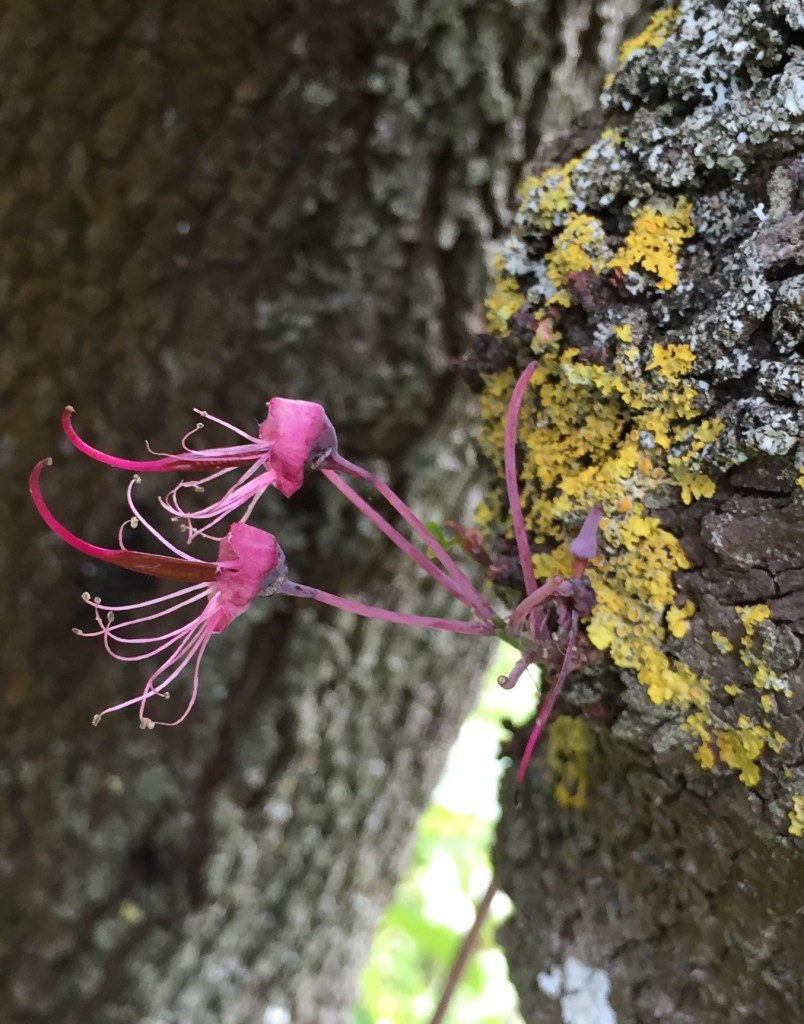
Look at these fabulous flowers. I love this photo. It’s simple and pretty ordinary yet at the same time it reveals complexity and seems extraordinary.

These two flowers with their gorgeous red, pink and purple petals. Waving their “pistils” in the air, sending out signals which say “come closer”, “touch me”, “caress me”.

Isn’t it amazing how plants use beauty and the most delicate of elegant shapes to exert the power of attraction. Of course, what you can’t see in a photo, and often can’t see at all, are the tiny chemicals each plant sends out into the air, the scents, pheromones, chemical messengers, all magnifying that power of attraction.

What’s essential is invisible to the eye.

The Little Prince

Plants don’t survive and flourish through violence and bullying. They do it through beauty and attraction. There’s a lesson for us there……that Nature shows us these are the most important, most successful ways to live…..by making connections, by establishing relationships, by giving and receiving.

Read Full Post »

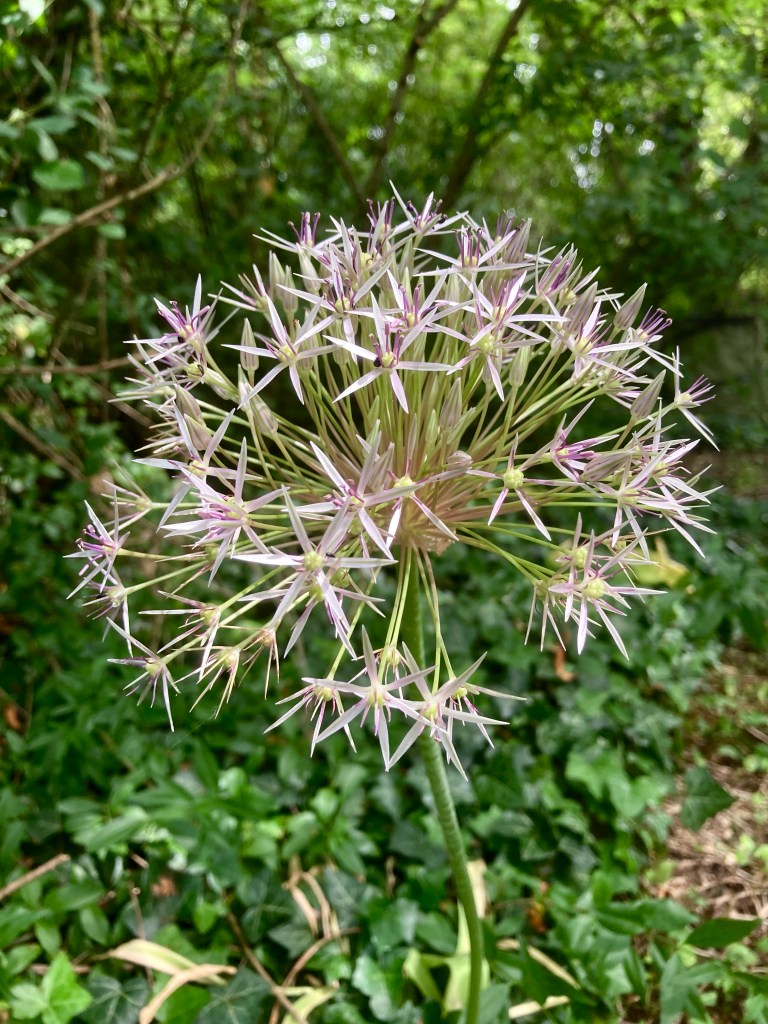
From the other end of the garden I suddenly noticed this flower shining in a sunbeam which had made its way through the trees. I was drawn towards it pulled by the force of its beauty and took this photo.

It’s an allium and this flower head is typical of this family. Just look at it! Isn’t it astonishing. It really looks like one of those fireworks which bursts open high in the night sky. Or like a starburst as a distant sun explodes.

It simply exudes Life – you can feel the energy surging through it. It’s glorious. I love how Nature surges forward in such abundance. There’s nothing mean, or constrained, about this. It’s a “hallelujah!” It’s a “it’s good to be alive!”

Plants live such different lives from we humans but I can’t help but be touched by these astonishing displays of beauty, uniqueness and creativity.

This is what the Life Force looks like. This is what “the Vital Force” feels like.

Read Full Post »

A good life

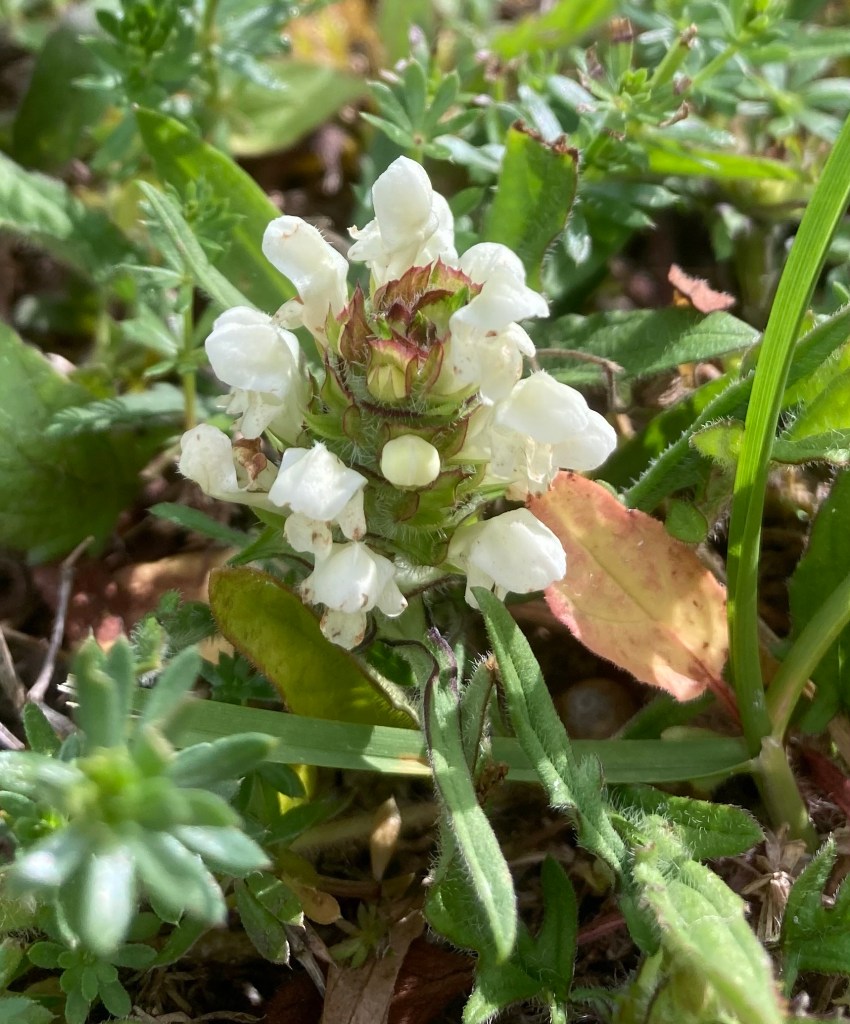
This week, I noticed this tiny little flower blooming in the grass. It’s only about the size of my middle finger. When you get down on your knees and take a closer look it’s got a thick, stubby stalk with tiny white flowers all over it.

Extraordinary. I’ve never seen a plant quite like this. Having noticed this one I then realised there were many more of them scattered over a large area of grass. This happens all the time. Flowers appear suddenly. One day they aren’t visible, the next they’ve shot up and unfurled their petals. Just like that. It still astonishes me.

Of course, the next thought is, “what is this?” which is a question that’s easier to answer in this age of phone apps. There are several which enable you to take a photo of any plant and upload it for instant identification. “Picture this” and “PlantSnap” are two I’ve used a lot. But recently a neighbour showed me “Seek” which lets you put in your location then it will show you the wildflowers, birds, mammals and fungi which are common where you live. Brilliant!

I’ve now discovered that the latest iPhones have this recognition function built in, without needing any apps. I don’t have the latest iPhone however, so I’ll be sticking with the apps for now.

This little plant turns out to be “Prunella laciniata”, commonly known as “Self heal”, or, “All heal”, a plant used in traditional and herbal medicine to promote natural healing.

As a retired doctor, discovering that I’m surrounded by healing plants in my garden is an added treat. This is only the latest of several species I’ve found, and I’m adding to them by planting others.

From the sheer pleasure of discovery, to the delight in beauty, to the joy of wonder and the provocation of curiosity, these everyday discoveries deepen my enjoyment of life. This is one important aspect of what I’d call “a good life”.

Read Full Post »

Yesterday I wrote about how power corrupts so we need the means and ways to insist on transparency and accountability. As I thought about the dominant model of democracy around the world it struck me that most systems foster conflict.

In the U.K. there is the government and the “opposition”. The role of latter is to oppose, and the procedures and practices in parliament seem designed to foster argument and conflict. In the USA it’s perhaps worse with a more two party system than there is in most European countries.

The first past the post voting system creates the narrative of a winner and a bunch of losers.

“Us and them”.

Division and conflict seem to be worsening in those countries which foster this idea of politics as conflict.

But there are other models out there which make some attempt to force a number of parties to work together. There are some countries which use proportional voting to try to get a better representation of a spread of views in parliament. And there are various examples of participative democracy in recent years with citizens assemblies and attempts to foster genuine discussion.

One thing which strikes me is that if the wind blows in the direction of competition there will be winners and losers, division and conflict. But if the wind blows in the direction of consensus, there might be more listening, more discussion and more cohesion.

When the aim is to agree how to live together then we might develop the systems which foster active listening, tolerance and consensus. But if we continue to favour competition where one group “beats” another group, what kind of society do we have then? A divided, angry and frustrated one, it seems.

We are all different. We won’t ever all see the world the same way, and nor should we. I often think of the human body made up of completely different organs and tissues which don’t compete with each other. They integrate with each other.

Integration is the formation of mutually beneficial bonds. That’s how all our organs work so well together. If they started to fight each other, they’d all die.

Imagine what a political system would look like if integration was the aim. Imagine what society would look like if we gave priority to the formation of mutually beneficial bonds, rather than to dividing into us and them and creating winners and losers.

Read Full Post »

« Newer Posts - Older Posts »