Feeds:
Posts
Comments

Tranquility

Tranquille

Saturday afternoon…..a stroll along the banks of the Charente.

image

That’s the statement I came across in an interview with a “new realist” philosopher the other day. I’m not going to get into what on earth is “new realist” here just now but when he was asked if science (or more precisely Physics) had proven that the universe had no purpose, that it made no sense?

Well that’s a claim we often hear from people who claim the only reality is physical, the universe is random, and evolution isn’t “going anywhere”. This isn’t a world view I’m attracted to.

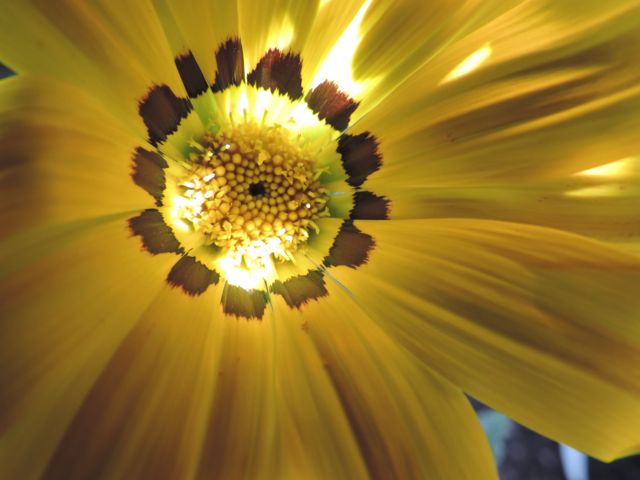
My understanding is that human beings exist, and that we all have consciousness and subjective experience. Values are important to us. For example, you can look at that photo above and describe it according to its botanical classification. I look at it and see a beautiful image. It’s the beauty of the image which strikes me.

This philosopher said that science is the study of objects, whereas for human beings it was often something not at all like an object which brought meaning to life. The example he gave was democracy. He said what colour was democracy? What were its dimensions? Science has no answer to these questions. Because democracy is not an object, it’s something which gives lives meaning.

I don’t know about you but that certainly gets me thinking. What about the “sciences” which don’t deal with objects? Like economics, or psychology, or “social sciences”?

Then I got to thinking about health and how, as a doctor, I needed to understand the body in a scientific way. I needed to know what to measure when, and what to do with the results. But I also needed to understand the lived experience of a person. When they talked to me about pain, about an itch, about nausea or dizziness, they were not talking about objects which could be measured. And what about the narrative…..how a person experienced and made sense of their illness?

So, there is something helpful in this idea of science being the study of objects. It helps us see the relevance of science and the absurdity of scientism (which claims ultimate and absolute authority for the “truth” as revealed by science.

Objects are an important part of reality, but they sure aren’t everything that exists!


Art changes the world

Art is such a characteristically human activity. What would the world be like without art? What would the world be like if we only had science and judged everything only by its utility?

These beautiful works of art, so contextually sensitive and clever, change the lived environment of Angoulême.

Angoulême

Moon and plane

The newborn ange d'Angoulême

L'hotel sur l'hotel

Just after sunset

image

I’ve taken lots of photos of sunsets, but last night decided to take a photo just AFTER sunset……day becoming night, so to speak

Just after sunset

image

I’ve taken lots of photos of sunsets, but last night decided to take a photo just AFTER sunset……day becoming night, so to speak

seeds

There are some rhythms to the year which I really enjoy. Spring, with the cherry blossom, or autumn with the golds and reds of the trees are two seasonal ones for me. In my monthly themes, I think of September as being the start of the academic year, so this is my month to make some plans for learning in the year ahead. 

As I write this I’m sitting on a balcony in the courtyard of a B&B near Jarnac, in France. I’m looking for somewhere to move to, now that I’ve retired, and I’ve chosen France. So my main learning for the year ahead is a language goal – to become fluent in French.

i’ve got other learning plans too (not least starting to play music again, after a break of some 40 years!)

What would you like to learn this year? 

September is a good month to think about it, courses will be starting soon……

Healing first

tree repair

If you cut yourself, fall over and scrape your skin, or if you break a bone, your body’s healing response kicks in and makes a quick repair, then over a few days or weeks completely repairs the injury. Sometimes medical treatment is needed to support this process (cleaning the wound, applying a dressing, holding the broken bone in place with plaster, bandages, or even screws and plates), but the only way the damaged tissue recovers is through the body’s own healing system.

If you are infected with a virus or a bacteria, again your body’s healing response kicks in, attacking the offending organism, and repairing any tissues damaged by the infection. Antibiotics can kill some bacteria, and some viruses can be killed with drugs too, but we have no medication which heals the tissues or organs damaged by the infection.

There’s a third kind of disease/illness which isn’t caused by either trauma or organisms, and that’s the kind which is rising relentlessly, it seems, throughout the World. Everything from many cancers, to “inflammatory diseases” like asthma, “autoimmune diseases” like rheumatoid arthritis, chronic diseases like diabetes, multiple sclerosis, dementia and Parkinson’s disease, to genetic disorders, are understood best by us as pathologies, and whilst the body’s healing system constantly struggles with these disorders it never quite manages to throw them off. However, the healing response does try to limit damage, to repair what can be repaired, and to increase the over all resilience (defence and recovery) of the individual.

We seem to understand pathology better than we do healing. Maybe we need to invest more time, people and resources into changing that. 

And although people will always get sick or injured, and we will always need to find the ways to assist people with these illnesses, shouldn’t we also integrate actions and support which stimulate and enhance the healing response, not just in every therapeutic plan, but first of all, before we do anything else? (Well, of course, that depends on the urgency of the situation), but is there ever a case for ignoring the healing response?

Real healing is natural. But that doesn’t mean we can take it for granted.


Inspire – one of my most favourite verbs.

In this week’s A to Z of Becoming, the letter “I” stands for the verb “inspire”.

So, here’s what I’m interested to explore (and maybe you’ll be inspired too!)

Who inspires you?

Make a list. Who do you know who inspires you? Which characters from history inspire you? ( a variation of that which I’ve read is to imagine having a dinner party, who would you choose to invite….given that you could invite anyone who’s ever been alive). Which fictional characters inspire you?

Once you’ve made this list, maybe you could spend some time with some of these people – that is, arrange to meet, or read a biography, watch a movie about them, read the book where the fictional character appears……..

What inspires you?

A particular work of art, a poem, a song, or other music, a particular place, a certain movie, play or novel? (Maybe some of my blog posts??) Make another list.

Again, once you have this list, expose yourself to these inspirations – go see that painting, listen to that music, watch that movie, spend some time in that particular place.

Here are a couple of more ways in which you can engage with this “inspire” verb this week…..

Describe in what you are inspired by the people and things on your lists. Are you inspired to take particular actions? Are you inspired to create…..to paint, write, compose, sing….? Are you inspired to change something in your life? Just describe how you are inspired in a way which helps you to decide to actually do something!

Finally, how might you inspire others? What could you do this week that someone else might be inspired by?

[here’s some of the things which inspire me……]

rembrandt_anatomy_lesson_dr_tulp

Field_jw

invisible

IMG_0534

IM short intro .005

DSCN0872

DSC_0051


my new motto


Symbols

I love symbols, and am always drawn to explore the symbolic meaning of a drawing, or other communication. They have such deep, and rich power.

Here’s one I found recently on the Cathedrale Saint-André Primatiale d’Aquitaine.

DSCN1983

I suspect this might be quite modern, but I love it all the same…..see the scallop shell from the Compostella Pilgrims’ Way

DSCN1100

…..a very modern version of a triskele (body/mind/spirit? or earth/sky/heaven?)

DSCN1091

……the waves of the sea, and the stars in the sky to guide you.


Moonlight on water

I was struck today by this paragraph about Romanticism in Iain McGilchrist’s Master and His Emissary –

Romanticism in fact demonstrates, in a multitude of ways, its affinity for everything we know from the neuropsychological literature about the workings of the right hemisphere. This can be seen in its preferences for the individual over the general, for what is unique over what is typical, for apprehension of the ‘thisness’ of things – their particular way of being as ultima realitas entis, the final form of the thing exactly as it, and only it, is, or can be – over the emphasis on the ‘whatness’ of things; in its appreciation of the whole, as something different from the aggregate of the parts into which the left hemisphere analyses it in self-conscious awareness; in its preference for metaphor over simile, and for what is indirectly expressed over the literal; in its emphasis on the body and the senses; in its emphasis on the personal rather than the impersonal; in its passion for whatever is seen to be living; and its perception of the relation between what Wordsworth called ‘the life of the mind’ and the realm of the divine; in its accent on involvement rather than disinterested impartiality; in its preference for the betweenness which is felt across a three-dimensional world, rather than for a seeing what is distant as alien, lying in another plane; in its affinity for melancholy and sadness, rather than for optimism and cheerfulness; and in its attraction to whatever is provisional, uncertain, changing, evolving, partly hidden, obscure, dark, implicit and essentially unknowable in preference to what is final, certain, fixed, evolved, evident, clear, light and known.

Well, well….for those of you who are already familiar with Iain McGilchrist’s hypothesis about the differences between the left hemisphere and right hemisphere ways of approaching the world, I’m sure you’ll agree this is a terrific, comprehensive summary. He, of course, is at pains to point out, time and again, that he is not saying that the left approach is bad and the right is good, or vice versa…….that we need BOTH, and that we need to integrate the functions of the two hemispheres, not allow the left to dominate the right.

But take your time, and read through that paragraph carefully. He is highlighting what is consistent in the values of Romanticism with the tendencies, or preferences of the right hemisphere of the brain. 

I enjoy what the left hemisphere does for me, but I resonate SO strongly with ALL of these “right hemispheric” qualities he describes so beautifully in this paragraph. It captures my fascination for the personal, the particular, the transient, for “becoming not being…..”