Feeds:
Posts
Comments

Untitled

What was/is your experience of school?

David Richard Precht, the German philosopher argues that our schooling system continues to be based on the industrialism of about 100 years ago. We still seek to teach sets of facts to all children of the same age, and then test their ability to recall those facts in examinations leading to qualifications. The intention of the education is to produce compliant workers and consumers who will conform to the demands of industrial society.

He argues that we are not fostering creativity, emotional intelligence or relationship skills which enable communities and teams to work together, and individuals to develop and express their unique talents.

He draws his ideas from philosophy, from neuroscience (NOT materialist neuroscience which seeks to reduce all human experience and cognition to identifiable areas of the brain), and from an understanding of how society has changed over the last few years.

Many of his recommendations are in line with teachings from people like Montessori and Steiner, so he can be understood to be part of a more child-centred, holistic movement in education.

I found myself agreeing with much of what he had to say in a recent interview published in Cles magazine (“Notre école est un crime”). He points out that asking children to sit still for an hour and pay attention is not a good starting point – most children, and indeed most adults, are able to concentrate on one topic for about 15 to 20 minutes (which is why TED talks do so well, and why youtube is the new television), and that one thing we know about health is that sitting still isn’t good for you!

He thinks schooling de-motivates learners and that the average 12,000 hours of education leading to the “Bac” qualification in Europe are experienced as pure boredom by most children.

He also thinks we are not teaching the right kind of skills for the 21st century – we need more innovation, creativity, diversity, the ability to use the internet to gain knowledge and to connect with others, more emotional intelligence and a greater ability to form and grow healthy relationships with others.

His proposals include moving away from classroom curriculae to a more project-based system of education which is by its nature multi-disciplinary and encourages children to pursue their own curiosity.

What do you think? How would you change the educational system?

It’s becoming increasingly clear that bacteria and human beings interact in profound and complex ways. I wrote recently about the way bacteria in our guts might affect our food choices and behaviour. Well, here’s an interesting study looking at the antidepressant effect of mycobacteria vaccae which are found in the soil.

Antidepressant microbes in soil cause cytokine levels to rise, which results in the production of higher levels of serotonin. The bacterium was tested both by injection and ingestion on rats and the results were increased cognitive ability, lower stress and better concentration to tasks than a control group. Gardeners inhale the bacteria, have topical contact with it and get it into their bloodstreams when there is a cut or other pathway for infection. The natural effects of the soil bacteria antidepressant can be felt for up to 3 weeks if the experiments with rats are any indication.


Flow

Water patterns

It’s quite hard to capture the sense of flow in flowing water – but I really, really like this photo I took yesterday.

It reminds me of the class in school where we learned about “interference patterns” where two wave forms would meet – you can almost see here the same kind of “cross-hatching” which occurs when that happens.

So, as well as being a beautiful image, this stimulates a lot of my thoughts about flow, about patterns, about connections, about transience…….oh, I could go on!

How great it is that a single moment can stimulate such rich trains of thought……..

Hugs

In the second part of the A to Z of Becoming, H is for Hug.

How good does it feel to give, and to receive, a big hug…..whether the person you are hugging is one of your children, someone you love, or just someone your heart goes out to.

Is it too much to suggest you should hug at least once EVERY day?


Bay of Biscay

I did a search the other day to see if I could find the origin of the French phrase “l’émerveillement du quotidien” (the amazing everyday) because its a concept which I’ve taken to heart so passionately that if anyone asks me for advice about how to live a good life, how to be happy and healthy, I’ll pretty much always begin by saying they should approach every single day with an attitude of wonder and joy – “l’émerveillement du quotidien” (one good way to do that is to use the “first and last” method)

Well, I haven’t managed to track down the origins yet, but if you put the phrase into a google image search, guess what? MANY of the photos which come are mine!

So, whatever the origins, I guess I’m one of the world’s leading protagonists of “l’émerveillement du quotidien”!

This photo is one I took while on holiday on the West coast of France – it’s a great example of how amazing an everyday view of the sea is. Look at the range of colours! It’s gorgeous, and remarkable!

Under the ice

ice

It seems there is no end to astonishing discoveries on this planet Earth. Now we’ve discovered Life half a mile under ice where the sunlight never, ever reaches. In a subglacial lake in Antarctica scientists have over 4000 species of single celled organisms. But how can they exist when there is no sunlight, and so no photosynthesis?

As photosynthesis is impossible without sunlight, the Lake Whillans bacteria must get their energy from a different source. This could be existing organic material, or, like the ‘chemotrophs’ found in gold mines and near deep-sea hydrothermal vents, the bacteria might run on chemical reactions involving minerals in the Antarctic bedrock and carbon dioxide dissolved in lake water.

Bacteria have sure learned how to live in environments human beings couldn’t survive in!

eau potable

The earliest form of photography was the daguerreotype (named after its inventor, Monsieur Daguerre). It was a process which captured images onto silver coated copper plates. It didn’t involve using negatives and every single “print” was a one off. They couldn’t be duplicated or transferred onto paper.

The daguerreotype was remarkable for the accuracy of the image produced. It was sharp and detailed (you could use a 50x magnification lens to look at part of the daguerreotype and see crisp details). Partly because of its accuracy it was initially used as a “scientific instrument” and found in laboratories, but as the technology became more portable the taking of portraits, landscapes and cityscapes soon proliferated.

As photography developed, an artistic intention was soon brought to it. The newer processes of making negatives and printing onto paper, were quickly taken up by artists.

I’m a keen photographer, as I’m sure you can tell if you browse through this site. I’m also very curious about how we experience the world and how we communicate our experiences to other people. Recently I’ve been wondering about the differences between “representation” and “manifestation”.

Just as the daguerreotypes were great for re-presenting what could be seen, I think we often believe that is what we are doing when communicate our observations and experiences to others. Certainly in scientific publication, the scientists are trying to “re-present” what they have observed as “objectively” as possible.

However, as it’s not possible to experience any “out there” from anywhere other than “in here”, there is always an aspect of “manifestation” to the “representations”. Every “re-presentation” involves some “manifestation” of the subjective experience of the person who is making the image (or writing the document).

Maybe in all Art we can see these two aspects – there is some re-presentation of what the artist experiences (including what he or she observes) – but there is always some degree of manifestation too. I wonder to what extent Art could even be said to be primarily a way of manifesting the subjective – a way of a human being making manifest the otherwise invisible, unique, personal experience of the world.

Look at the image I’ve placed at the top of this post. It’s a photo I took in a “beau village” in France. It’s a sign to show that the water here is drinkable. But it isn’t just a sign. Even the way the words “eau potable” (which means drinkable water) are carved reveals something of the creator of the piece. And what about the shell? Why is that there? The shell is the symbol of the pilgrims heading to Compostella. So this is a drinking fountain to help quench the thirst of the pilgrims. That manifests something of the artist’s world view doesn’t it?

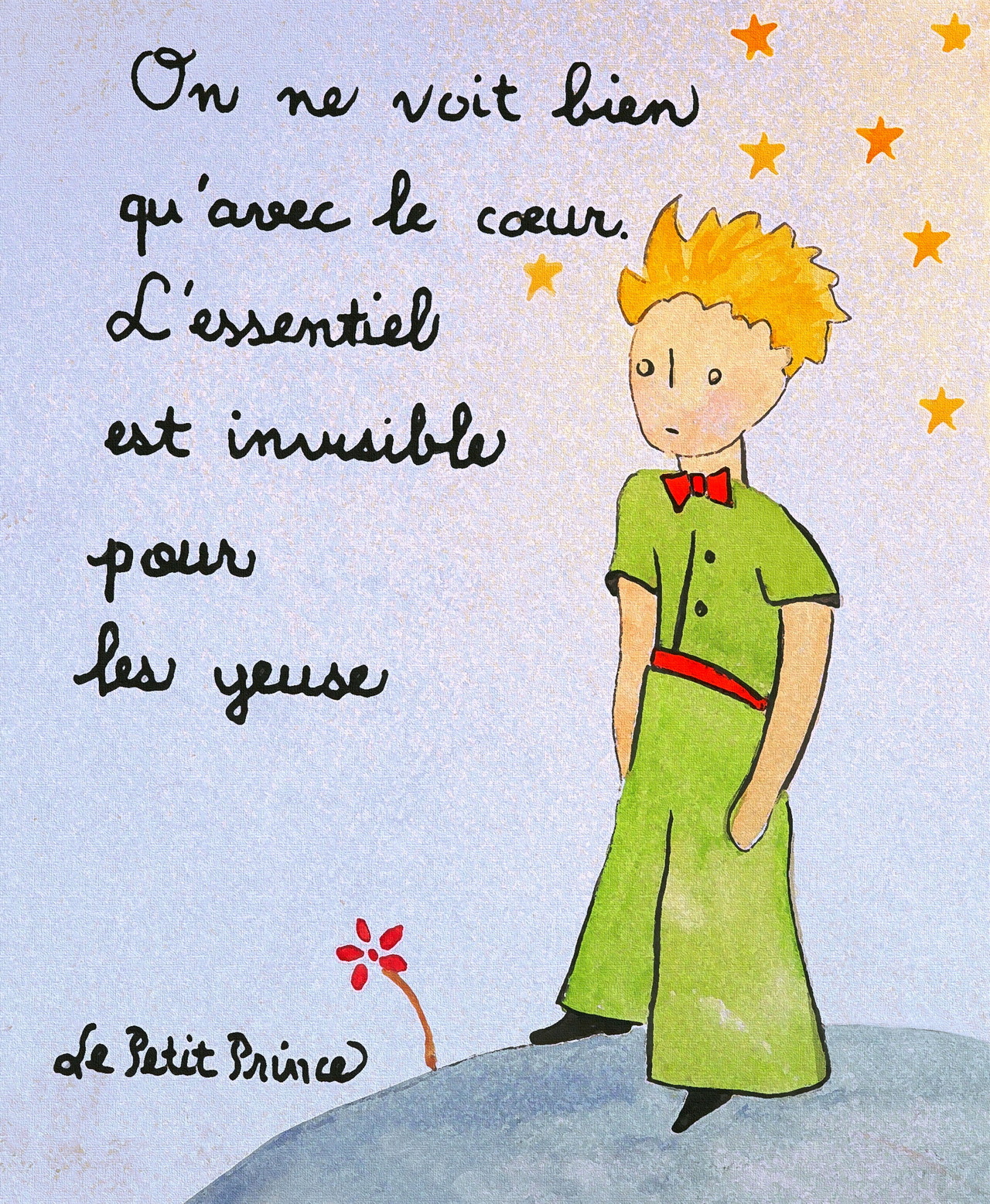
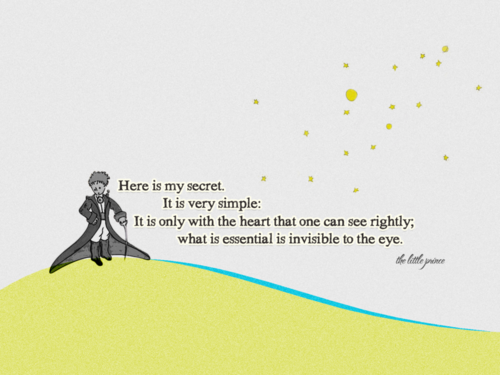
Saint-Exupéry said

saint exupery invisible

So how are you going to manifest YOUR unique, invisible, essential experience of reality?

From without…..

“Everybody needs beauty as well as bread, places to play in and pray in where nature may heal and cheer and give strength to the body and soul.” – John Muir

Just as we are constantly influenced by what’s inside us, so we are constantly influenced by what’s around us.

One of those influences is beauty.


Bay of Biscay

Monet like reflections

Moonrise over the Atlantic

Clematis

spiral

restaurant

A recent article in The Atlantic looks at the influence of beauty on happiness.

Beauty tends to feel like something that must be found in special places—parks and museums, galleries and exotic cities. Lunch is not a place one would normally think to look. But finding beauty in normal activities can bring deep happiness to life, studies show.

“In a paper titled, “Untangling What Makes Cities Livable: Happiness in Five Cities,” Abraham Goldberg, a professor at University of South Carolina Upstate, and his team conducted a statistical analysis of happiness in New York City, London, Paris, Toronto, and Berlin.”

In addition to the usual “Big Seven” influences (wealth, family relationships, career, friends, health, freedom, and personal values), Goldberg found that what makes people happiest is the beauty around them.

It seems part of humans’ appreciation of beauty is because it is able to conjure the feelings we tend to associate with happiness: calmness, a connection to history or the divine, wealth, time for reflection and appreciation, and, perhaps surprisingly, hope.

Beauty, famously, is “in the eye of the beholder” and maybe some of the images I’ve included here are not what you might find beautiful (but I do!), but what interested me about this article was not just that beauty can be found in big works eg architecture, great paintings etc, but also in everyday small objects and scenes.

I also especially liked the quotations towards the end which highlight a very interesting aspect of beauty – it’s connection to anticipation, or hope…..

“So long as we find anything beautiful, we feel that we have not yet exhausted what [life] has to offer,” writes Nehamas. “That forward-looking element is … inseparable from the judgment of beauty.”………… As the 18th-century French writer Stendhal wrote, “Beauty is the promise of happiness.”


From within….

Here’s an interesting recent research study looking at how the micro-organisms which live in our bodies might influence our behaviour. The researchers

concluded from a review of the recent scientific literature that microbes influence human eating behavior and dietary choices to favor consumption of the particular nutrients they grow best on, rather than simply passively living off whatever nutrients we choose to send their way.

It seems that different organisms have different nutrient needs and that are able to send signals which will increase the chance of them getting what they want. Amazing, huh? The communication seems to be two way, because its also been found that changing your diet changes the “flora” (that’s the community of micro-organisms in your gut) within 24 hours.

Some of the signals apparently go through part of the autonomic nervous system.

“Microbes have the capacity to manipulate behavior and mood through altering the neural signals in the vagus nerve, changing taste receptors, producing toxins to make us feel bad, and releasing chemical rewards to make us feel good,” said Aktipis, who is currently in the Arizona State University Department of Psychology.

Given that there are about 100 micro-organisms to every human cell in the human body, the concept that each of us is a living community of highly diverse cells is a strong one. There must be an immense amount of inter-cellular communication going on that we totally unaware of as we live our lives.

Makes you wonder, doesn’t it? Gives “acting on your gut feelings” a whole other dimension!

Blue flag

In the A to Z of Becoming, Part 2, G is for “Go”.

I’ve got three different contexts of the verb “go” for you to consider this week.

Firstly, as this is the month travel in the 12 monthly themes (the month of “Le Grand Depart”), where might you go? Are you planning any holidays, any weekends away, any day trips? Or maybe you could just break a routine and go somewhere different this week…..a different route to work, a different park for the children to explore, a different cafe, restaurant or even supermarket! Yep, just GO! Go somewhere different!

Secondly, “Go!” is a command. We shout it at the start of a competition or a race, but we can can use this ourselves to just start something. You’ve probably got a list of goals somewhere, either written down in a notebook, or rattling around in your head, so why not pick one and make a start? Take your first lesson in that foreign language you want to learn, or pick up that instrument you’ve been meaning to play, go out a buy a notebook to start your writing practice, sign up for exercise class…….whatever it is, just pick one and “GO!” Make a start!

Thirdly, we use the verb go in the phrase “have a go”, which means to try something. So why not give some thought to what you’d like to try and take the opportunity to do it? What would you like to “have a go at”? Baking? Cooking? Fishing? Tennis? Photography? Again, why not pick one and “have a go”?