Feeds:
Posts
Comments

Once again Iona Heath gets it right. In last week’s BMJ she wrote about the clash between organisational models and clinical models of health care. In short, she was pointing out that the moral imperative of a doctor was to provide the best care for the individual patient, and that the political perspective was focused at a population level.

I thought this paragraph was particularly pertinent.

Politicians tend to emphasise the uniformity of people. Despite the contemporary emphasis on choice, they cling to a normative view of patient aspiration, which is then reflected in the increasingly rigid guidelines that dictate clinical care. Clinicians, on the other hand, emphasise the diversity of patients and the challenge that this represents in providing the space needed to allow each individual patient to retain his or her moral stature—an aspiration that goes way beyond the meagre rhetoric of choice.

Here’s an excellent post on the School of Life blog by David Eagleman. He says…

….science never fails to provide more questions.  What we really discover from a life in science is the vastness of our ignorance.  When we reach the end of the pier of everything we understand, we find all the uncharted waters of what we do not know.  Given that, I’m surprised at the number of books in the bookstore that are penned with certainty.

This always surprises me too. The most strident promoters of scientism seem so sure of themselves. How can they be so sure and be scientists? Isn’t science about wonder, amazement, curiosity, and, indeed, a humble scepticism which never reaches the absolute, final last word on anything? For me, science is about trying to understand, and, maybe it’s because I’ve worked all my life as a doctor, but I’m never at the point where I’ve understood everything about anyone. And I never stop trying.

As I walked through Ueno Park in Tokyo on sunday morning this shrine caught my eye –

shrine

I went for a closer look once this young woman had moved on.

firebird

Goodness, isn’t this just amazing? I looked more carefully at the flickering flame –

firebird

I had no idea what this was all about but I found it completely captivating. At the base of the shrine was marble onto which the shadows of the overhead leaves played looking for all the world like fleeting reflections of the kanji letters below the dove with the flame.

reflection

Yesterday I asked the students if they knew what this was, and they told me that it was to commemorate those who died in Hiroshima and Nagasaki, and that the flame was a continuous flame which stretched right back to the fires in those cities after the bomb fell.

Then this morning, outside my hotel room door, I find the Daily Yomiuri and look what’s on the front page –

daily yomiuri

feather plant

I’ve been thinking about imagination.
I’m updating my knowledge of neuroscience at the moment and learning a lot about brain function and the mental processes from the perspective that a definition of mind would be “an embodied, inter-relational process of regulation of energy and information flow”. That’s a wonderfully dynamic and holistic model of the mind. The brain in this model is the organ which produces the mind, and on which the mind acts, and we can see how energy and information flows around the brain, between the brain and the rest of the body, and between brains.

Given that the brain has 100 billion neurons and that each neuron has up to 10,000 connections, the number of distinct brain states (where each neuron is either “on” or “off”) is as great as the number of known stars in the universe!

Each brain state represents an act of remembering, perceiving and imagining – all at once!

So, what’s this imagining process? I’ve been wondering if it’s the process of making connections – of putting elements together to make a pattern. Those patterns might represent what we’ve already experienced, what we are currently experiencing, or, perhaps even more astonishingly, ones which nobody has ever experienced…..not even ourselves!

Remembering is a creative act. Perceiving is a creative act. Both involve focusing the imagination. In the former, we focus it on the past, and in the latter, we focus it on the present. But when we focus imagination on either the future, or use it to play with the patterns inside our own minds, then we make new connections – like seeing these feathers on this plant and imagining a feather-plant……ah that’s where feathers come from! That must be why we find birds in trees and bushes so often….they’re collecting feathers to cover their bodies and make their wings so they can fly!

See how easy it is to get your imagination flowing when you make connections?

I had a stroll around Ueno Park in Tokyo this morning and went to the Paeony Garden.

parasol and paeonies

The plants grow shaded by parasols and the combination is stunningly beautiful.
Here’s one of the gardeners at work.

parasol and paeonies

…and one of the many keen photographers…

photographer

paeony garden ueno

parasol and paeonies

Here are some of the ones which especially caught my eye.

white paeony

yellow paeony

pink paeony

I’m a great believer in nurturing creativity and play is an essential part of that. Since I got an ipod touch I’ve found several apps which encourage me to play – especially with my photos.

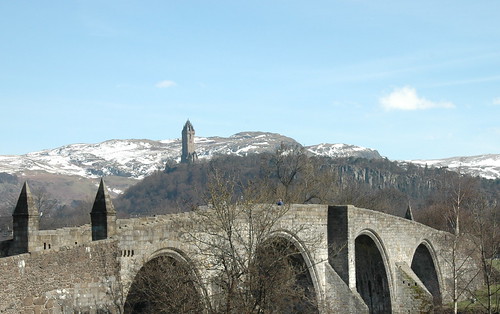
Here’s a photo I took of Stirling Bridge and the Wallace Monument

Old Stirling Bridge and Wallace Monument

And here’s what happens when you run it through the “Lego photo” app –

lego stirling bridge

Isn’t that fun? I guess the next step would be to actually get the lego bricks and make the image in 3D!

Finally, here’s a lego photo-ed version of a picture of Ava, my youngest grand-daughter.

lego ava

Have you found any apps which encourage your creative play?

I recently stumbled over Arthur Frank’s “The Renewal of Generosity” (ISBN 978-0226260174). Many years ago I read and was hugely impressed by his “The Wounded Storyteller”. It’s a great small book which is an important contribution to the struggle to create a better way of practising medicine in the 21st century. Doctors and patients are increasingly demoralised by the reduction of health care to technical procedures and the delivery of products (what Dan Siegel describes as “diagnose and drug” in his analysis of contemporary psychiatry). The everyday, subjective experiences of both patients and doctors are dismissed as irrelevant in the pursuit of measurement, targets and throughputs. Isn’t it some kind of indictment of our current health care that he can say this on page one –

My conviction is that at the start of the 21st century the foremost task of responding to illness and disability is not devising new treatments, though I’m grateful this work will proceed. Our challenge is to increase the generosity with which we offer the medical skill that has been attained.

That’s the word which really struck me – generosity. I think a lot about compassion and its central place in good health care, but I’ve not really considered the work generosity. It’s such a good word. Somehow it not only encompasses compassion but it contains within it a sense of enlarging life – my own life, and the lives of others to whom I am generous. It’s a welcoming, loving, life growing word. It’s a good word to bear in mind when considering “how to live”, how to find happiness and how to create well-being.

His key theme in this book is to weave together the teachings of ancient Stoicism (a much misrepresented classical philosophy I believe), with the case for dialogue. He primarily draws on the writings of the Stoics, of Levinas and Bakhtin.

The practice of medicine is a relationship between two people. What are we to call these two people? As a doctor, I’m fairly comfortable with the term, “patient”, but it bothers me that it seems to imply something passive, expecting the ill person to just be treated, and that contains the seeds of objectification – treating people not as people, seeing them as instances of disease, instead of persons who suffer. I hate the word “client”. It’s laden with commercialism and contractualism for me. However, Frank pulls a different set of words out of the bag and they hit me between the eyes –

The renewal of generosity will be hastened if participants in medical relationships think of themselves not (at least not only) as patients and professionals, much less as consumers and providers, but as guests and hosts.

Guests and hosts! He elaborates and explains, but I won’t share that here. Just think about this idea for a moment. I’ve never encountered it anywhere else. Wonderful.

I love so much of what he has to say about the importance of dialogue –

Dialogue suggests that the world is co-experienced by two of more people. Each one’s perspective is necessarily partial, and each needs to gain a more adequate sense of the world by sharing perspectives.

I wrote about that from a neuroscience perspective recently here.

The enlarging of perspective, or, in the other words, the attempt to see a more full picture demands dialogue. It prevents us from dismissing others through judgement and classification.

…no final, finalising discourse that defines anything once and forever. No last word can be said about this you, whose horizons of possibility remain open.

“whose horizons of possibility remain open”……how often do we forget that? How often do we squash hope with the illusion of certainty? How often do we practice as if we know exactly what a treatment will bring about for the person undergoing it? Having open horizons of possibility is a characteristic of healthy living.

We have other good reasons for dialogue apart from sharing our perspectives to gain a fuller picture. We use dialogue to value the other.

…the moral demand of dialogue is that each grant equal authority to the other’s voice……it’s being willing to allow their voice to count as much as yours

[doctors] are taught monological medicine: the doctor is the one cognitive subject in the consulting room, and the patient is an object for that cognition.

Identification with others requires giving up monologue.

The other element which we have to consider when we focus on dialogue is the other part of the doctor-patient (or host-guest) relationship – the carer. I think our system of medicine dismisses this almost entirely. The focus on “randomised controlled trials” is a focus on the statistics of groups. Once a drug or treatment is “proven” it seems to be irrelevant who delivers it, or how. Yet that’s not our experience when we are ill. Who the doctors and nurses are is important to us. How they talk, how they listen, how they treat and care for us. The idea that its the treatment which is important and the not the person administering it seems inhuman to me.

We can keep the question before us: what do they think about how I am imagining them? and we can believe that what they think matters.

We should honour patients’ stories, not dismiss them as “subjective” or “anecdotes”. They matter.

Finally,

…the person who we see ourselves revealed to be is seen most fully in others’ responses to us

Isn’t that so true? What have you seen of yourself in others responses to you today?

In “The Wounded Storyteller” (ISBN 0-226-25993-5) Arthur Frank describes his study of how patients talk about their illnesses, where he identified three major “genre” of narrative which we use to talk about illness – the “restitution story”, the “chaos story” and the “quest story”. I thought that was such an interesting insight and such a wonderful ideal to aim for.

Most patients tell the restitution type of story. It goes along the lines of “I’m broken, please fix me”. Our whole health care system seems created around this idea. Patients present their broken bits for fixing, the fixing is the outcome or target to be delivered cost-effectively, doctors are seen as the fixers and the process of health care is experienced as a passive one by the patient.

The chaos story is also very common. Frequently we become overwhelmed by not only the illness, but also the diagnosis and the treatments. In a chaos story a patient is lost in an ocean of suffering, confusion and distress. As they tell their story it comes tumbling out in all its complexity and it can be very hard to see the person who is suffering from the vast intense collection of symptoms and problems. Indeed, even the storytellers can’t find themselves any more in the middle of this terrible experience.

Frank proposes a beautiful alternative genre of story to tell – the “quest story”. A quest story has certain clear elements and they are the ones you find in “hero stories” in all cultures around the world. The “hero”, he proposes, is the patient. Their quest is health. The adventure is the illness. As the patient encounters various investigations, diagnoses, symptoms and treatments, they are experienced as challenges which need to be met in order to gain “boons”. It’s the gaining of these boons which grows the hero into the person who can attain the goal of the quest. (Think of the traditional tale of the prince who wants to marry the princess but first is told he needs to slay the dragon, overcome the wicked witch, and so on, before he can become the man worthy of the princess’ hand in marriage).

One of the best examples of this is Lance Armstrong‘s autobiographical “It’s not about the Bike” (ISBN 978-0224060875). Lance is a professional cyclist who was a great sprinter but when he tried the Tour de France he found he didn’t have the stamina for it. He developed testicular cancer with widespread metastases and was given only a slim chance of survival. He underwent surgery and chemotherapy successfully, became depressed by the whole experience, then got back on his bike. A year later he entered the Tour de France and won it. He went on to win it eight times in a row – more than any man has ever done before. In his book he says if he’d had to choose between cancer and winning the Tour, he’d choose cancer every time. That shocked me when I read it. He went on to explain, cancer and dealing with it made him the man who could win the Tour de France. That’s a quest story! (let me be clear – he’s not advocating cancer as a good thing, something to be welcomed, or worse, sought – he’s telling the story of how dealing with a serious illness can actually grow us, ultimately changing our lives for the better)

The challenge, I think, is to find a way to live, which is a quest story in it’s own right……to become heroes, not zombies.

water gem

water drop gem

Isn’t this beautiful?

Here’s an idea – look out for some water today and notice just how amazing it is – take a photo and share it!

We live with an illusion of certainty. The volcanic ash cloud over Europe this week is a clear example of real world unpredictability. Alan de Botton writes about this in his usual fluent way here.  He quotes Seneca in saying that we believe two things – that tomorrow will be like today, and that calamity can occur any day. We prefer to ignore the latter and proceed through life as if only the former is true.

We find ourselves divided between a plausible invitation to assume that tomorrow will be much like today, and the possibility that we will meet with an appalling event after which nothing will ever be the same again. It is because we have such powerful incentives to neglect the latter scenario that Seneca asked us to remember that our fate is forever in the hands of the Goddess of Fortune. This Goddess can scatter gifts, then with terrifying speed watch us choke to death on a fishbone or disappear along with our hotel in a tidal wave.

The financial crisis of 2007 onwards has dramatically revealed that the “masters of the universe”  are no such things at all. If you ever did believe what economists or politicians said, are you able to believe them now when they tell you they know for sure what will happen to the economy and how to manage it?
There have been many earthquakes and floods over the last couple of years – none of them predicted, and, probably, none of them avoidable. Yet we live as if earthquakes and floods only happen to other people. Does the Earth “behave” in predictable ways? Can you be certain?
The volcanic ash which has grounded planes throughout Europe for a week wasn’t predicted either. Will it happen again? When will the current problem stop? Day by day, almost hour by hour, thousands of people have had to live with complete uncertainty about  their travel plans.
This is the way the world is. These are “black swan” events as so well described by Nicholas Taleb.

My area of special interest is health care. How certain can we be in this area? Not very, is the true answer. Despite the fact that authorities claim to know for sure which treatments work and which don’t, in real life, they don’t. Nobody can say for sure whether or not a particular treatment will do what it’s intended to do for any individual patient. It’s amazing how often we forget that.

So what’s the opposite of certainty? Uncertainty? Well, yes, to some extent, but then it’s difficult to live with absolute uncertainty isn’t it? No, I think the opposite of certainty is reality. Certainty is an illusion. It only works for us as an illusion when we make our focus very narrow, and very limited. The more we generalise, and the longer the timescale we consider, the less we are able to be sure.

What are we to do? How to live with this? There are a lot of answers to that question. I’ll explore a number of them in future posts, but here’s a few to be going on with – living in the present, living mindfully, developing flexibility, adaptability and diversity, building connections and networks, building resilience and exploring what Taleb calls “the ecology of uncertainty”, resisting generalisations, and doubting those “experts” who claim to know for certain what’s best for you, in your life, based on their statistics.