Feeds:
Posts
Comments

As I was wandering around Valensole the other day I found myself in the Rue Grande.
rue grande

Doesn’t look that grand, does it?
However, what caught my eye, was the catalogue sticking out of the way too small letterbox in that door there.

old and new

This struck me for so many reasons. First off, the building looks uninhabited…..like for years! However, it’s a small village so the postie is bound to know! Of course, such worn external appearances are actually the norm in village France. Still surprises me that. It’s a quirk of the French (actually, now that I think about it, the Italians have the same quirk)….it’s kind of as if they don’t really care about the external appearance of a dwelling but they have an incredible sense of style and chic so you’ll see beautifully dressed people coming out of such places. La Redoute is a major fashion catalogue shopping company.

As part of the NHS’s 60th anniversary celebrations, Donald Berwick, President of the US organisation, the Institute for Healthcare Improvement, made a speech at one of the specially organised conferences. I’ve always been impressed by his writing and his speeches. I first encountered them when I read “Crossing the Quality Chasm” – the book which introduced me to the concept of “complex adaptive systems”, and I thoroughly enjoyed his “Escape Fire” ( a collection of ten of his annual addresses ).

His speech, in praise of the NHS, compared it very favourably to the state of health care in the US. In summary, he said this –

You could have had the American plan. You could have been spending 17% of your gross domestic product and making health care unaffordable as a human right instead of spending 9% and guaranteeing it as a human right. You could have kept your system in fragments and encouraged supply driven demand, instead of making tough choices and planning your supply. You could have made hospitals and specialists, not general practice, your mainstay. You could have obscured accountability, or left it to the invisible hand of the market. You could have a giant insurance industry of claims, rules, and paper pushing instead of using your tax base to provide a single route of finance. You could have protected the wealthy and the well instead of recognising that sick people tend to be poorer and that poor people tend to be sicker, and that any healthcare funding plan that is just must redistribute wealth. Britain, you chose well. As troubled as you may believe the NHS to be, as uncertain its future, as controversial its plans, as negative its press, as contentious its politics, please behold the mess that a less ambitious nation could have chosen.

He then went on to make ten suggestions for improvement. The first, I think was the most important and one that most health care systems haven’t even begun to implement on any significant scale –

Put the patient at the absolute centre of your system of care—In its most authentic form, this rule feels very risky to both professionals and managers, especially at first. It means the active presence of patients, families, and communities in the design, management, assessment, and improvement of care. It means total transparency. It means that patients have their own medical records and that restricted visiting hours are eliminated. It means, “Nothing about me without me.”

Apart from that he recommended strenghtening the Primary Care and Community aspects of the service, stopping the habit of more and more “reforms”, a strong plea NOT to pursue a market-led direction (ie I suspect, to do more like the Scottish NHS than the English one), and paying attention to the training and integration of the diverse employees of the NHS. Finally, he recommended aiming at health itself, not just health care.

He is astute enough to know that “great health care, technically delimited, cannot alone produce great health”. Of course it would be nice if the NHS was structured around trying to improve the health of its users, but the real big changes in health as such will be achieved through political means and societal changes, not health care ones.

I just read Professor Richard Wilkinson’s “The Impact of Inequality” (ISBN-13: 978-1-59558-121-1). I first read Wilkinson’s work on the impact of inequality on health in the BMJ back in the early 1990s. I found his research remarkable and disturbing at the same time. Essentially what he was highlighting was that in developed countries absolute income levels were not a determinant of health. Instead, what seemed to cause the greatest harm was the size of the gap between rich and poor. In other words, income inequality within a society impacts on many parameters of health, from infant mortality to life expectancy and many disease rates in between. This was a bit puzzling. We mostly believe that poverty, of the kind where your basic material needs of food, water and sanitation are not met, is indeed deadly, but that relative poverty ie the extent to which people feel poor compared to others in society could be deadly? How could that be? Was it true?

Well, over a decade has passed and dozens of more studies have shown the link between inequality and health. In “The Impact of Inequality”, Wilkinson sets out the case very clearly and then provides an explanation for the findings. In a nutshell, he shows that psychosocial stress has an enormous impact on health, and that the key element underpinning this stress is how we think others perceive us. Shame is a strong social force. We feel it when we are not respected, when we are judged to be inferior or to have failed, when we told we are just not “good enough” or when we are dismissed as irrelevant. Social status is the root of much of this shame in all societies, but especially in unequal societies which have strong hierarchies based on dominance and competition. The biological mechanism for this stress is the body’s inflammatory response. When experiencing stress, the human organism activates cellular and hormonal systems to increase defences and prepare the subject for “fight or flight” as a fundamental survival mechanism. Years of such inner responses produces an “allostatic load” – a fairly new measure for the accumulated inflammatory activity. A high allostatic load is associated with an enormous range of chronic diseases.

Let me just cite one example. In societies where there is great economic inequality, blood cholesterol levels are higher than those in more equal societies. These high lipid levels are part of the body’s inflammatory response. The reductionist, technological, “fix” for this is to prescribe statins for more and more people for greater and greater proportions of their lives. This isn’t exactly a matter of stable doors and bolted horses but even if the statins do what they say on the tin, the problem just shifts elsewhere. Unequal societies experience lower life expectancy, particularly in those who live in the poorest strata. If they don’t die early from heart disease, they die early from something else. The answer, if we take on board what Wilkinson shows us, is political. It’s about creating more humane, more caring, more “affiliative” societies by tackling the fundamental issue of inequality.

Feather

feather

Isn’t this beautiful?

I remember reading that Paulo Coelho starts writing a new novel when he finds a white feather somewhere. Wonder what this feather might be the start of?

It’s hard to know what size something is from a photo, isn’t it?

Here’s the feather again……..

feather on apple

floating petals

Look at these beautiful little flowers floating in the water of this fountain! Aren’t they wonderful? I love stumbling across a little moment of beauty like this.

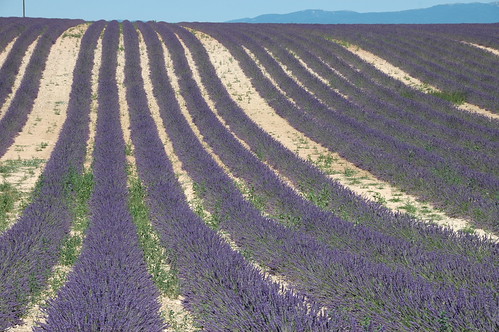
I was hoping to get here before the lavender was cropped and I just made it. Quite a few fields have been harvested already but I still found some in full bloom. What I can’t send you, unfortunately, is the smell of the lavender in the air. It gives you the sensation of the whole world having a lavender scent, and while that might sound as if it would be overwhelming, in fact, it isn’t. The scent of the growing lavender is somehow both more pervasive yet less intense than the cropped plant. Quite amazing.
I’m sure there are many parts of Provence where you can find the lavender, but I explored the area around the village of Valensole. Here’s one of the most prominent shops in the village –

valensole lavender shop

It’s a honey shop. A whole shop selling honey made by bees who live around the lavender fields. See how the lavender influences so much of life here? Not just in the colours of the fields, but influencing the colours of the paints used to decorate the shops and houses, and stimulating your nose with its scent and your taste buds through the honey.

Here’s a mural on a boarded up, disused shop –

valensole

Yes, the fields really do look like that. The lavender is grown in long rows on a very pale, sandy soil.

lavender fields

lavender fields

Some of the fields seem to stretch away forever………

lavender fields

And some have quaint ruins strategically left in the middle of the field for photographic reasons (just kidding!)

lavender fields

Butterfly

Ever tried taking a photo of a butterfly? I can tell you, it ain’t easy! They just will NOT stay still! Here’s my best attempt so far……

butterfly

Glasvegas

Oh I like this!

A lot!

Very Scottish, very Glasgow. Great wall of sound music. And such great lyrics (know any other songs about social workers?) –

I`ll be at your side to console
when your standing on the window ledge
I`ll talk you back from the edge
I will turn your tide
be your shepherd and your guide
when you’re lost in the deep and darkest place around
may my words walk you home safe and sound
when you say that I’m no good and you feel like walking
I need to make sure you know that’s just the prescription talking
when your feet decide to walk you on the wayward side
up upon the stairs and down the downward slide
I will turn your tide
do all that I can to heal you inside
I`ll be the angel on your shoulder
my name is geraldine, I’m your social worker

I see you need me
I know you do

hidden passion

See the passion flower hiding behind these leaves?

This made me think about passion. Passion must be one of the KEY ingredients of a good life I think. What makes a good teacher? Their passion. OK, you need a lot more than passion, but my argument is that those who are passionate about their teaching, passionate about their students’ learning, are the best teachers. What makes a good doctor? Passion. Passionate about his or her patients. Passionate about people, and about healing. Yes, I agree, a doctor needs a lot of knowledge and skill, but without passion for their work, they really aren’t such good doctors.
You could say this about any profession I reckon. If you are a professional and you’re not passionate about what you do, you’re in the wrong profession!
You can also say this about creative people – artists, musicians, writers and so on. Without passion for life, and for their creativity, they just don’t create such great works.
Bland isn’t good.
“Whatever….!” isn’t good.
Long live passion!

Clinical epidemiology has been cleverly spun into something referred to as “Evidence Based Medicine” (“EBM”). It’s such a powerful spin that we are seeing the term “evidence based” being used widely now to justify any decision made by any authority – whether that be politicians, civil servants, educators or scientists. In fact, the phrase is thrown around so freely and unthinkingly that it’s quickly losing its original meaning, instead becoming a code term for “fact” or undeniable Truth. “Evidence based” is a label now which is supposed to convey that the statement to which it is attached has a high value. The idea of “evidence based” as promoted by those who use the term is founded on the belief that what constitutes “truth” is, however, almost exclusively, the physical and the measurable. Let me quote from  Maya Goldenberg, who wrote about this in Social Science and Medicine. Volume 62, Issue 11, June 2006 –

Reflecting on how the popular idea of “patient-centred care” remains largely unrealized in clinical practice, Van Weel and Knottneurus (1999) note that while physicians are encouraged to make diagnoses in physical, psychological, and social terms, “the EBM that is currently promoted either restricts itself to physical evidence alone, or casts such evidence at the top of a hierarchy that tends to devalue any evidence ‘lower down’”. The hierarchy of evidence promotes a certain scientistic accounting of the goals of medicine, which, the worry goes, is incommensurable with the proposed reorientation of medical practice toward the patient’s search for meaning in the illness experience. The bridging of scientistic “measure” and existential “meaning” has received some attention in the critical EBM literature with the general consensus that we need an “integrated” model of evidence that properly reflects modern health care’s constitution by diverse academic traditions—including the humanities, social sciences, and the pure and applied sciences—that rely on equally diverse notions of evidence. While EBM values evidence that is statistical in nature and general in its application, and therefore places quantitative data derived through the application of recognised study designs at the top of its pre-graded hierarchies of evidence, the phenomenological approaches rooted in hermeneutics, ethnography, sociology, and anthropology, regard evidence as primarily narrative, subjective, and historical in nature. Unlike the impersonal and generalisable measures undertaken in EBM, this conception of evidence is illustrated in case histories, clinical encounters, and qualitative studies such as in-depth interviews and focus groups. The features of the medical encounter and the illness experience emphasised by medical phenomenologists and proponents of a more “humane” medicine suggest the need to reconsider what constitutes the goals of medicine and flip EBM’s hierarchy of evidence on its head. The quantitative measures and generalisations that come out of controlled trials and biostatistical analysis are not conducive to the questions of meaning that medical phenomenology wants to address and make central to medicine.

Goldenberg helpfully nails down the key issues – “ While EBM values evidence that is statistical in nature and general in its application, and therefore places quantitative data derived through the application of recognised study designs at the top of its pre-graded hierarchies of evidence, the phenomenological approaches rooted in hermeneutics, ethnography, sociology, and anthropology, regard evidence as primarily narrative, subjective, and historical in nature” – The EBM approach is a statistical approach. It tells us something about probabilities, derived from studies of large, supposedly homogenous groups. It doesn’t give us certainty about either effectiveness of a treatment, or about prognosis, in any individual patient. Nor does it give us any insights into either the experience of illness, or the experience of therapeutic recovery for patients.
The use of clinical epidemiology alone in the application of health policy or therapeutic practice is neither rational nor sensible. Health and illness are experiential. Human experiences can only be conveyed by human beings. If we want a more humane form of medical practice which is a closer fit with individual reality then we need to develop our phenomenological understanding and give such research considerably greater consideration than we currently do instead of dismissing the unquantifiable as irrelevant.