Feeds:
Posts
Comments

Adapting

I read an interesting article yesterday on a French website. They discussed the lifestyle of the Spanish on the other side of the Pyrenees from Toulouse, posing the question, how might the French adapt their lifestyle in the light of climate change which is producing the record high temperatures we are experiencing in France just now.

They explored three areas I thought worth sharing – town/city design, work patterns and food.

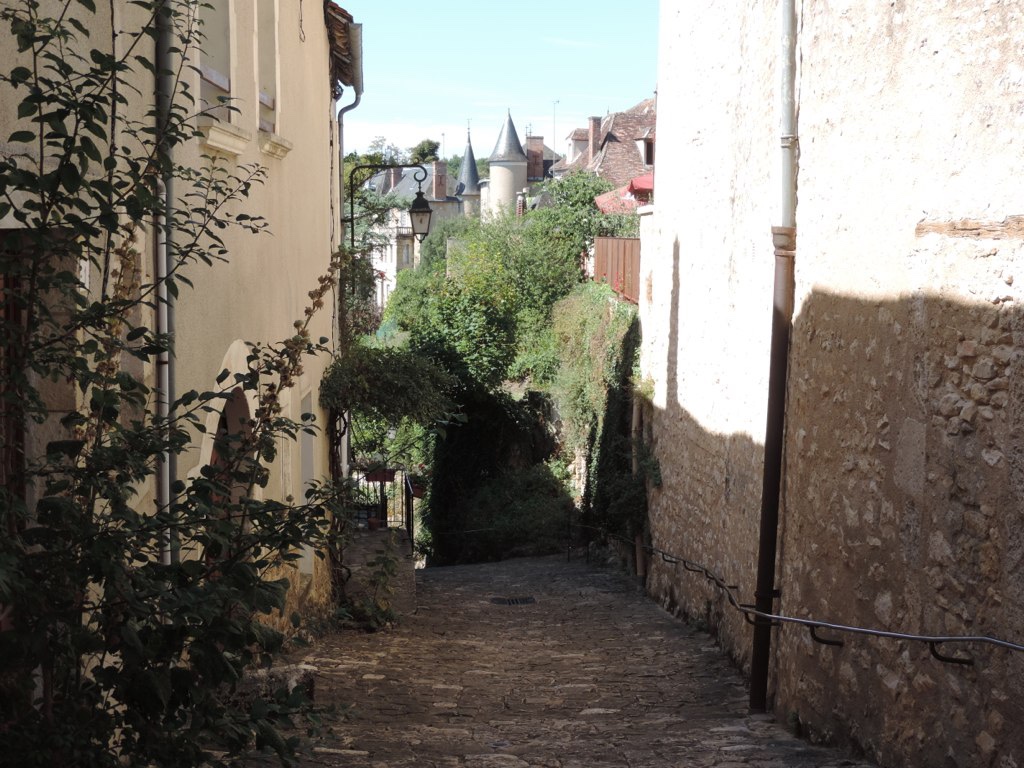
In medieval towns streets were narrow and buildings were tall which means you can walk around those old towns in shade at any time of day. In wider streets, the Spanish often stretch colourful sheets of material from buildings on one side of the street to the other. That design produces shade and creates a celebratory feel to the city centre. This idea reminded me of visits to Kyoto where there are permanent shades fixed above the pavements and to Bologna with its long arched cloister style design of structure over some of the pavements.

I’ve also seen several articles recently which describe how tree lined streets in cities maintain much lower, more comfortable temperatures in the heat of summer.

The second area explored was lifestyle – particularly work patterns. In Spain shops close in the middle of the day then open again much later in the afternoon, remaining open much later in the evening. Spanish people are also much more likely to take a siesta in the heat of the day. I wonder how often we adjust our to do and task lists throughout the day to take the weather into account? Which leads to the next point….employment law which supports switching to more flexible work hours when the temperature is over 30 degrees.

Finally, the third area was food. Refreshing cold tomato soup (gazpacho) is very popular in the hot summer months, but Spain is also famous for tapas – those delicious mini-dishes which are ideal for hot weather – eat little and often is the advice.

Maybe you don’t live in a part of the world which is facing more, hotter days, but wherever you are I’m sure climate change is going to challenge us all to adapt, to make changes to our lifestyles and our lived, built environments.

The water of life

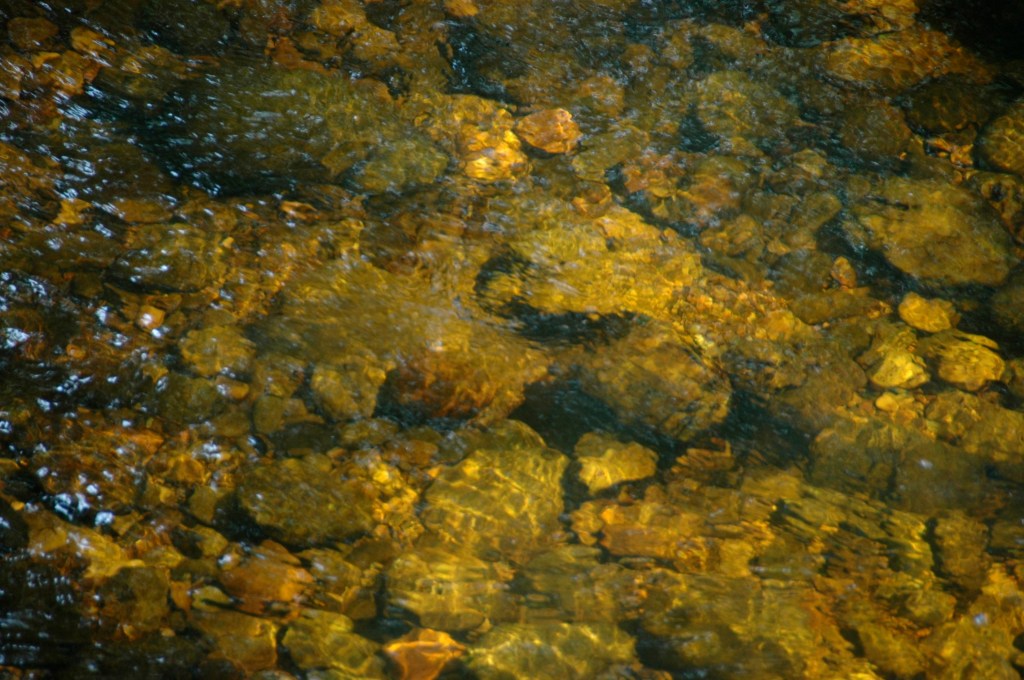
I have quite a few photos like this. They all show well worn, moss covered rocks with exactly this colour of water pouring over them.

I look at a photo like this and I see Life. I see flow. I see how the river is never the same twice yet remains the same river over hundreds of years. I see the co-existence Nature’s kingdoms. I see the co-creation of this present moment, overflowing with all we call the past….the experiences, events and memories which flow into the here and now from upstream. I see the river surging forward filled with potential, making its way towards an ocean, to dissolve into the salt waters, to be whipped up into waves and foam by the winds and lifted high into the sky by the Sun to form clouds. Clouds which will turn to rain again over the mountains and run fast back down paths just like this one.

I see Scotland. Because that’s where I took this photo and that’s where I have seen all the golden peaty water in the world. I know there must be other places to see water like this but I haven’t been to those other places.

But more than anything when I look at this photo I see the Life Force which surges through our bodies, yours and mine. The energy, the vibe, the living, beating web of existence which connects us, you and me. And every living organism on this glistening little planet.

Without this water of life, none of us would exist.

The flow of money

The cost of living crisis is causing hardship for millions and the months ahead seem even more worrying. While fossil fuel companies make historic profits, prices soar and wage rises below the rate of inflation amount to pay cuts. Millionaires and billionaires rake in ever more millions as the number of people needing to use food banks just grows and grows.

We hear a lot about national debt and a lot about tax rates. How do we make sense of it all? Well my starting point is Stephanie Kenton’s “The Deficit Myth”. She sets out a clear explanation about money.

The first thing is to ask “where does money come from?” Money is issued by (created by) the government. There is only one source of Sterling….the U.K. government. If you or I were to make any Sterling we’d be committing fraud. Once upon a time money creation was pegged to the amount of gold held in the central reserve. That hasn’t been the case for decades.

So when politicians say “how are we going to pay for….X?” the answer is “just do it”, the way they do when fighting a war….or bailing out failing banks. What the money is spent on is a political choice.

This doesn’t mean a government can just create as much money as it wishes….if there’s too much money for the country’s resources then inflation kicks in. But there’s the key point – are there underused “resources”?

“The Deficit Myth” makes it clear there is no “budget deficit” to be “paid off”. Government is not like a family or a business. Sterling is a “fiat currency”. Families and businesses can’t create the money they need, the government can.

Stephanie Kelton describes, in detail, the various deficits which do exist – “The good jobs deficit”, “the savings deficit”, “the health care deficit”, “the education deficit”, “the infrastructure deficit”, “the climate deficit” and the “democracy deficit”. These are the real unmet needs.

We don’t have enough good housing, enough decent jobs, enough care workers, nurses, doctors, teachers, enough work on producing sustainable infrastructure and power supplies….you get the idea?

But what about tax, because that’s the other big issue we hear about? Government doesn’t use tax to pay for services. That’s the insight from Modern Monetary Theory. Tax can only be paid with money already created and put into circulation by the government. First they spend, then they tax. Not the other way around.

So what’s taxation for? To take money out of the system to control inflation and to incentivise certain desirable activities. And also, to address inequality.

Money flows. But not the way politicians usually claim it does.

I recommend you read Prof Kelton’s book, or listen to a podcast like “The Pileus Hosts: The MMT Podcast”, with Patricia Pino and Christian Reilly, or follow Professor of Accounting Practice, Richard Murphy, “@RichardJMurphy” on Twitter. Indeed, I’d say “and not or”! Do all three!

Usefulness

It’s good to have something useful when you need a job done. But what happens if we turn utility into a god? What happens to our quality of life when we try to base all our decisions on usefulness?

You’re familiar with the saying “They know the price of everything and the value of nothing”?

It’s hard to argue against “value for money” but this drive towards ever more utility, ever more “efficiency” is the trap described so comprehensively by Prof Jacques Ellul of Bordeaux in his work on “The Technological Society”.

We need utility, but not at the expense of quality, value and those “invisibles” which Saint Exupery says we see “only with the heart”.

I heard a Conservative Party member say yesterday “The country is a business so it should be run as a business”, and immediately I thought “No! The country is a community and should be run as a community!”

Isn’t this our problem today? That we facilitate the rise to power of pathological narcissists and those who think “greed is good”? The “financialisation” of the economy under neoliberal thought let’s those who grab the most grab even more whilst those who we described as “essential workers” during the pandemic are left behind.

I really believe we need to address this imbalance and give more time, attention and resources to care, love, beauty and kindness, and put “utility” and “efficiency” back in its place. Like fire, utility and “cost effectiveness” are good servants but terrible, dangerous masters.

Those of you who are familiar with Iain McGilchrist’s “Master and His Emissary”, or his “Divided Brain”, will know that what I’m arguing for here is a rebalancing of the cerebral hemispheres to put the right hemisphere back in charge…..or as he has put it, to use the whole brain instead of only half (the left hemisphere which reduces everything to utility and what can be grasped and grabbed)

Just looking

Do you ever sit and just look?

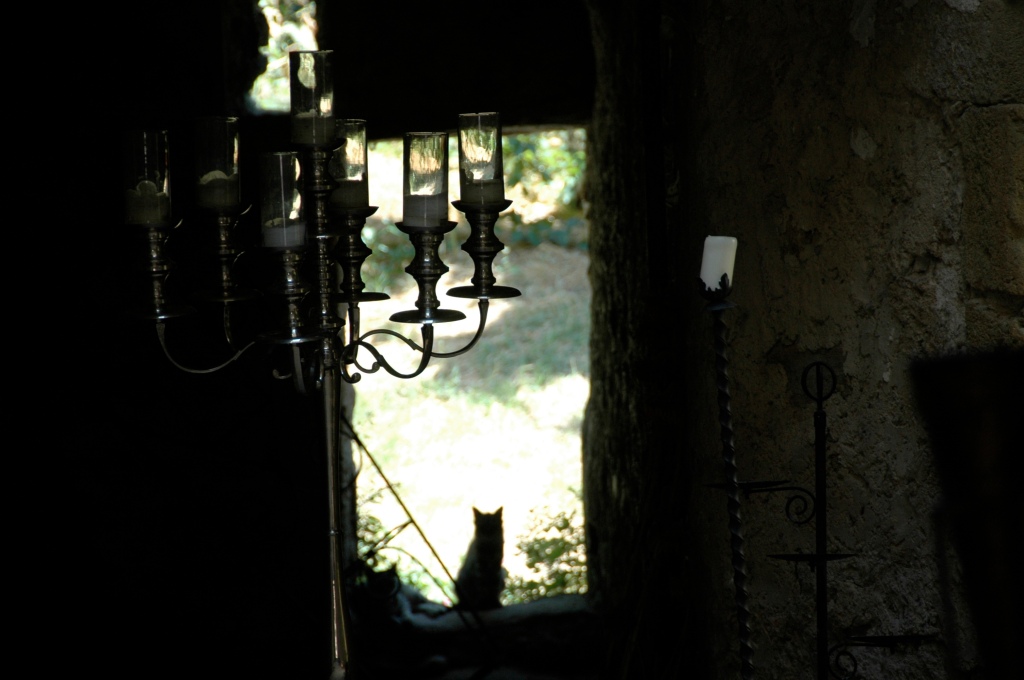
Cats seem to do that a lot. They can sit for ages, seemingly absolutely content, just looking.

I think it’s good to pause now and again. Our days are filled with places to go, people to see, things to do. In fact they can be so full that they fly by while we cruise along on autopilot, our minds filled with thoughts about the future and the past. When we live like that we miss the present.

So it’s good to hit the pause button, to reflect, and to connect.

Sometimes when we pause, we try to make even the pause “useful”. We practice some meditation or some mental exercise to “improve” ourselves. That’s a good thing. But I think it’s also good to just sit and look.

Take a few moments, sit somewhere comfortable, and just notice. Don’t judge what you see. Don’t categorise what you see. Simply notice.

Be more cat!

Transience

I found this in the forest yesterday. One of Nature’s serendipitous creations. I was struck by how delicate and beautiful the feather and the leaf were together.

The feather is soft and downy. An early feather, lost before it develops into a stronger, longer lasting one, perhaps? Or shed to be replaced by a more mature one? I don’t know, but it makes me thinking of an early chapter in a life story.

The leaf has fallen as it is browning. There are still traces of green chlorophyll but the leaf has been damaged by the intense heat of the sun, or has otherwise reached a late chapter in a life story.

Early and late, finding themselves together, at the same place, at the same time.

Both speak to me of transience. Of how all lives flow through stages of birth, growth and withering. Of how nothing stays the same. Of how every living form manifests itself as if appearing from nowhere, the life force pushing us from formlessness to material existence. But only briefly. Soon dissolving back into the one-ness from which we emerged.

Transience is a key feature of what makes something beautiful according to Eastern values. I learned that in Japan where they celebrate the cherry blossom every year.

No two feathers, no two leaves, share an identical life story. Although similar to other feathers and leaves, every one is unique and I’ll only find these two particular ones together at this very moment. A gift. A present. A moment to slow down, admire, and wonder. Special.

What an astonishingly wonderful, transient life we live.

The forest

I’m no gardening expert. I’m not even very knowledgeable about plants. But I love spending time in natural environments. As I’ve got older I’ve become ever more interested in the vegetable kingdom.

Back in my teens and twenties I was interested in ecology, joining Friends of the Earth, and reading books like “Limits to Growth”. Then as a GP I became a member of the British Holistic Medical Association, following a direction of travel towards holistic care with more of a focus on human beings than on the rest of the natural environment. I began to learn homeopathy in my thirties and as many of the remedies were prepared from plants those studies furthered my interest in and knowledge of ethnobotany.

Well, now in my sixties, I have a garden which has a wooded area. It’s really not big enough to be called a forest but I’m calling it one all the same! It’s very, very overgrown with ivy, brambles and creepers, but I’ve already forged some paths by cutting back and removing tangles of thorns, then mowing a route through the ivy. I’ve planted a few shade loving plants and here’s one of the first to flower – a wood anemone. Isn’t it beautiful?

My little forest is bringing me great joy. Some days it’s hard work, other days sit on a lounger in a clearing, listen to the birds and watch the branches of the trees high above swaying in the breeze.

Maybe I’ll learn a bit more botany and horticulture, maybe even learn more about the relationships between certain plants and human beings, but, mainly, this is a space which nourishes me.

Togetherness

Have you ever grown a pumpkin? They can be the most incredibly prolific plants. From a single seed they throw out feelers and spread in every direction until they find some walls to climb up.

Here and there along the way they put down more roots and throw up ever bigger leaves. One plant can produce several pumpkins.

I can’t believe just how much and how quickly they can grow.

But sometimes the seed doesn’t sprout or the plant doesn’t thrive. As best I can tell it depends on the circumstances. If you tend to the soil, adding nutrients from good compost, and if the weather conditions are favourable, the plant thrives. Without that, it doesn’t.

I’ve often wondered about that in relation to how we doctors treat our patients. Modern Medicine has developed along a technological fix it trajectory. We isolate problems then try to directly counter them. But the truth is that healing is always a natural process. Drugs don’t heal. Surgery doesn’t heal. At best they reduce the impact of a problem enabling the body to get on with what it does best – self repair, self regulation, self healing.

The only way I know to promote healing directly is by paying attention, to both the patient and their circumstances. To help them find and experience what stimulates and supports self healing – time spent in Nature, forest bathing, good nutrition, hope, care and love. But they didn’t teach me that in Medical School.

If we want healthier populations we have to address poverty and environmental issues. We have to address poor housing, hostile social environments and job insecurity. We have to address food production. We have to address loneliness and stress. In other words we have to tend to the circumstances if we want the people to thrive.

Shadows and maps

As I looked at the moon I noticed that the clouds which drifted by made what seemed like shadows passing over the moon’s surface.

As I look at this again I think it looks like a globe with the shapes resembling perhaps North and South America.

As we gaze at the moon I think we often drift into reveries. The Moon stirs our imagination and conjures up images and stories.

What do you see when you look at this photo? Does it inspire you….perhaps to draw, to paint, to write a poem or tell a story?

Isn’t it wonderful to stand on a beach looking out over an ocean? There is such an incredible variety of colours to see, and the water is never still, so the swells, the waves, the breaking surf, all contribute to a dynamic spectacle of constant movement.

I can be transfixed by the shapes which appear and disappear. I can be transfixed by the sounds of the waves crashing on the shore. The ebb and flow sounds like breathing to me and, unconsciously, I align my breath to that of the ocean. I tune in to the harmonies of the never ending sea.

I especially like an ocean view where I can see no islands, no coastlines, all the way to the horizon. And as I gaze at the horizon I think of how people used to wonder if that was the edge of the world. Once we learned that this little planet was like a sphere we sailed with increasing confidence towards an edge which couldn’t be reached.

There isn’t an edge. The ocean just keeps going.

But when we mapped out the world we split the water up into separate oceans and seas. This one is The Atlantic.

I start to wonder, where does the Atlantic begin and end? Where are the edges? Where’s the edge, the border, between the Atlantic and the North Sea? Or between the Atlantic and the Pacific? You get the idea…..

There are no edges between the oceans and seas. We humans just made them up. They aren’t visible. We’ve made up a lot of edges, borders and limits, we humans….the borders on land are just as imaginary as the ones on the oceans, on lakes and in rivers.

The reality is everything in this planet is connected and everything flows into everything else – ignoring the imaginary edges.