Removal day. For the last seven years I’ve rented an old house near the town of Cognac. We decided that when I retired from four decades of medical work that we’d emigrate from Scotland and go and live in France. We always hoped to buy somewhere if it turned out that we enjoyed living in France but with one thing and another it took much longer to get round to looking for a house to buy. However, this became the year to do it and today is the day the removal men are here.
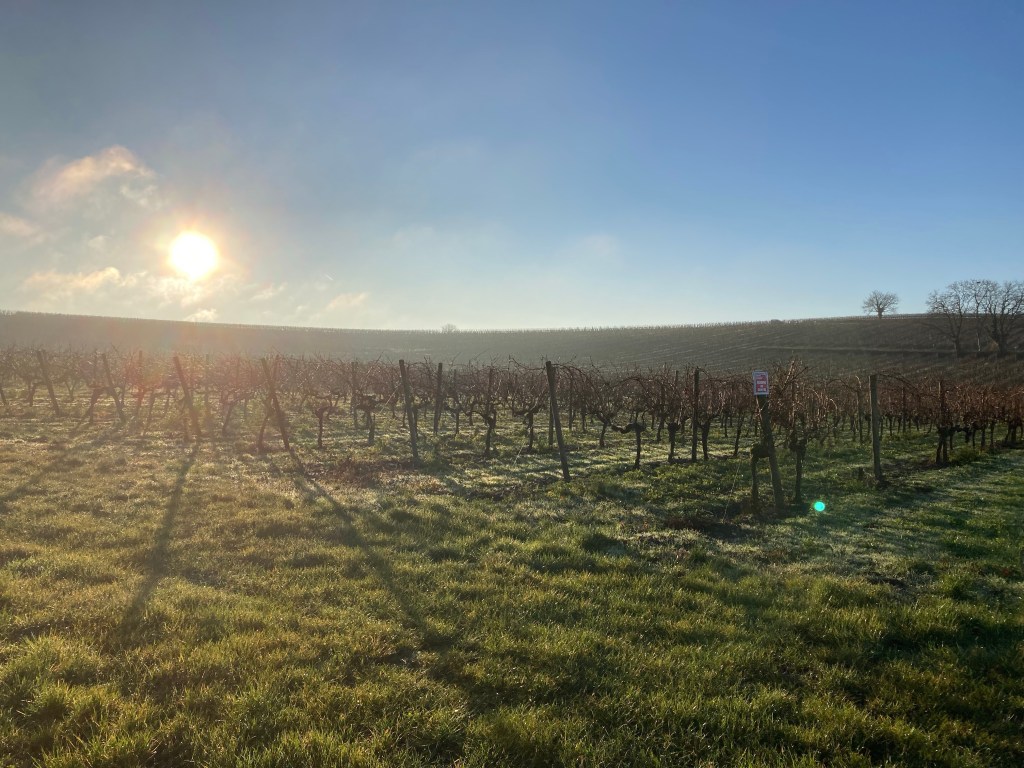
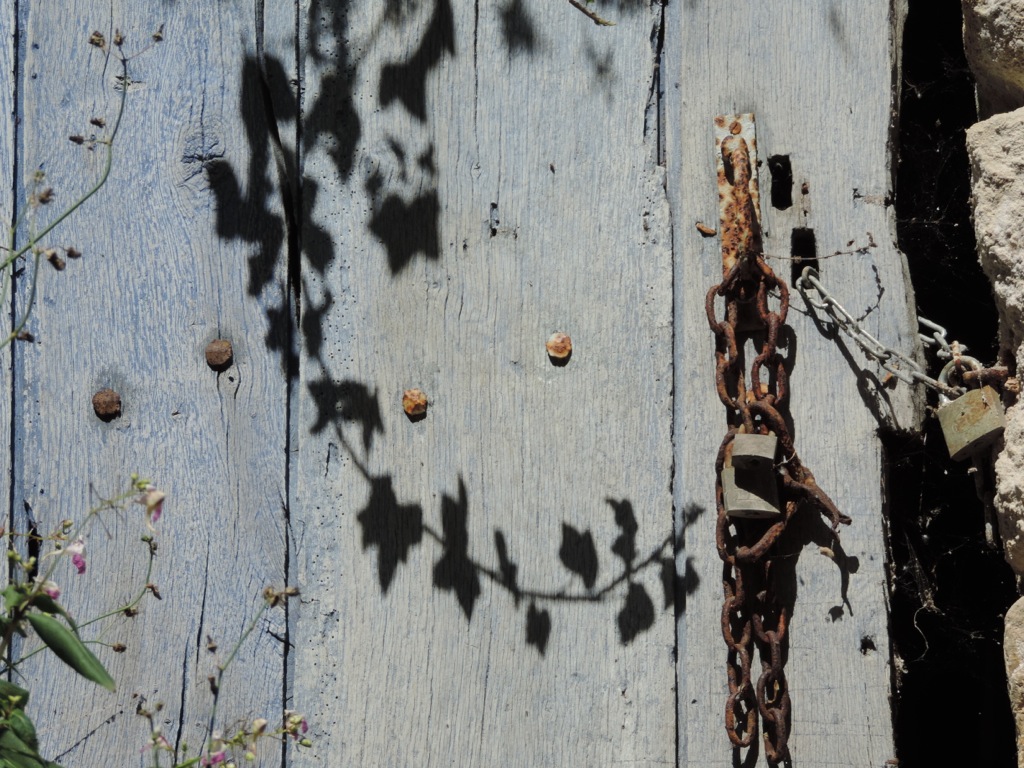
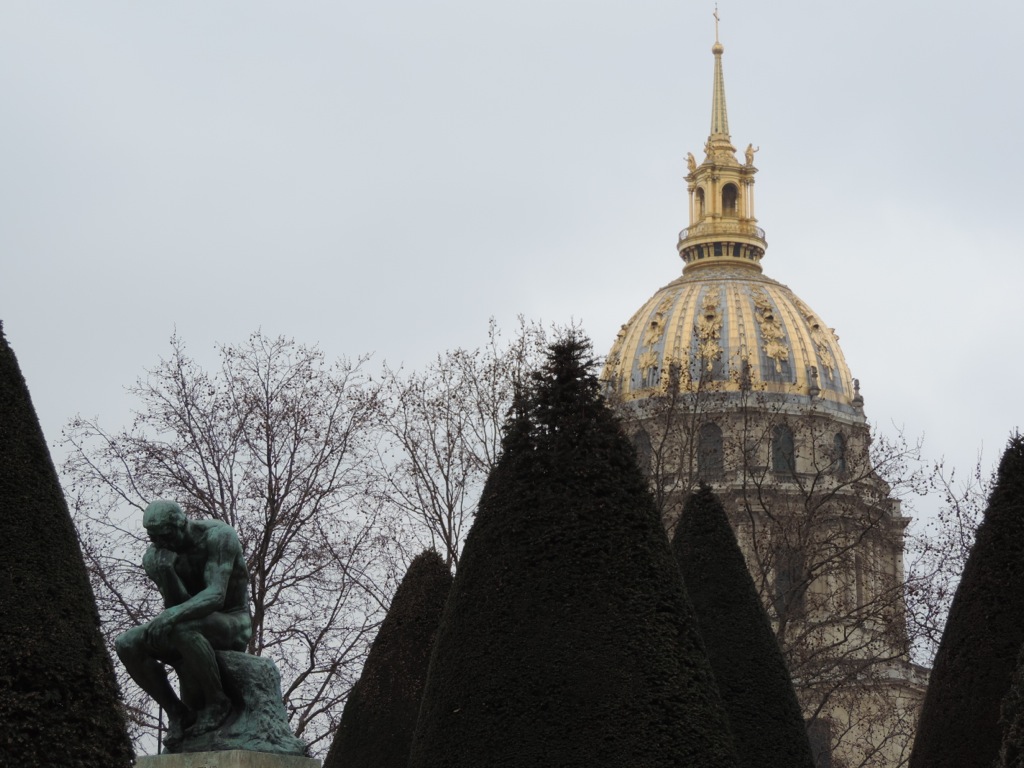
Here’s a couple of photos which, I think, nicely capture where we’ve been living.
So it’s goodbye to the Charente, and hello to the Charente Maritime, as we head about an hour north west of here.
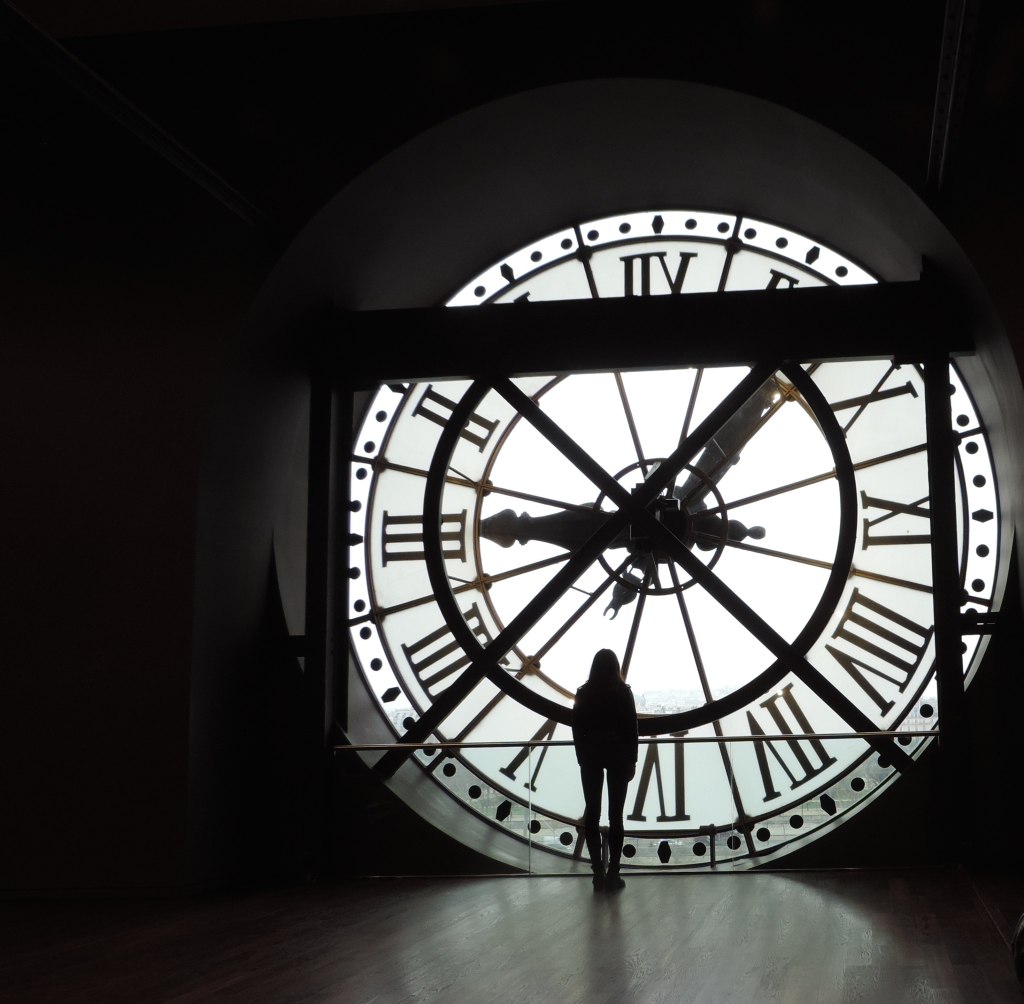
Time’s a strange phenomenon and it sure isn’t captured by clocks and watches. This has been a good seven years.
It’s pretty clear that the present changes constantly. You can’t nail it down. This present moment constantly appears out of the future and disappears into the past right before our eyes.
It’s also pretty clear that the future changes constantly. Have you ever looked at a 10 day weather forecast and noticed how when day 10 becomes day 9 the forecast often changes too? In fact the further out you gaze you less likely you can see clearly what lies ahead. It’s not, it seems to me, that the future lies ahead set solidly in place just waiting for us to get there and find it. No, the model of the future as an infinite matrix of singularities constantly flickering and waving in and out of potential existence, yes, that works for me.
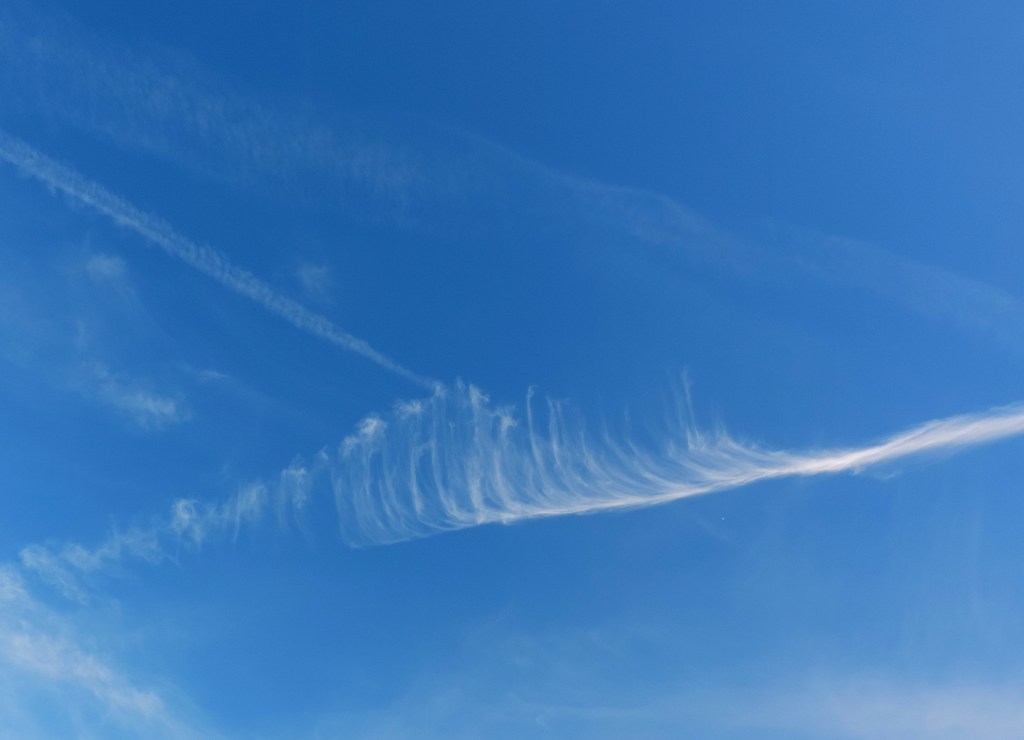
But the past…..well it’s easy to think of the past as done and dusted isn’t it? I mean you can’t go back and run it again, can you? However, looking at this jet trail makes me think the past isn’t so fixed after all. As I watch where the plane has been and see both the direction and shape of the trail it laid, I see that trail change before my eyes.
Well, you know, it seems to me the past doesn’t lie in some filing cabinet in our brain. Nobody has ever found such a “thing”. Memory, it turns out, is a creative process which involves imagination, attention and the ability to make a past event anew.
History isn’t a simple matter of just finding the facts, is it? We explore, put attention and effort in particular places, ignore or discard others, and we tell a new story of times gone by.
At a kind of simple level I often said to patients who had suffered a great hurt or loss, that we can’t change or erase what happened but we can alter our relationship to it. We can change our experience of it.
For the last seven years I’ve lived surrounded by vineyards. Watching the changes in the vines through the year has connected me to the progression of the seasons. They are a completely different environment from the one I grew up in, and lived all my life in, back in Scotland.
I’ve taken multiple photos of these vineyards and every one of them is unique. What makes this particular one stand out for me is the interplay between the land and the sky. The rows of parallel vines cover the entire landscape from this viewpoint making their distinct pattern the main one visible from this viewpoint. But then look at the sky. The clouds are small and white and most unusually they are lined up in parallel rows running at right angles to the rows of vines.
That correspondence is what makes this photo stand out for me.
The core of my four decades of work as a doctor was one to one consultations. For each and every patient I tried to recognise patterns of symptoms and signs which might indicate a particular diagnosis. But on top of that I tried to understand the patterns of their lives, their thoughts and emotions, their behaviour. Seeing the correspondences between the different patterns is the basis of holistic practice. Only by searching for them could I see and treat every patient, not as an example of a disease, but as a unique, individual human being.
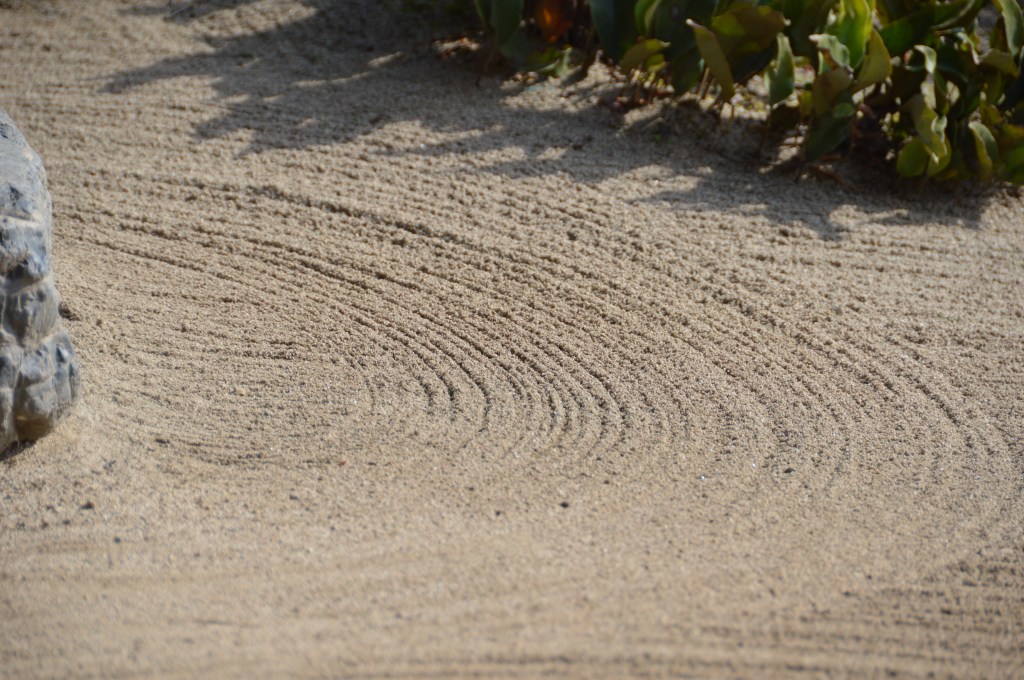
I’m sure you’ll have seen photos of Japanese stone gardens. Maybe you’ve seen a programme about them, or, if you’re very lucky, you’ve even visited some.
I’m no expert but I know one typical design is raked sand, or small stones, to create waves which seem to emanate from one, or a few, large stones.
I remember doing experiments in science class at school where we noted the different patterns which appeared on the sand when you made the membrane it was lying on vibrate, the way a loudspeaker vibrates, when you played sound through it. Seeing the beautiful and complex patterns appear before your eyes as a three dimensional, physical manifestation of invisible sound waves never ceased to astonish me.
Another experiment we did was with iron filings and magnets, and again, seeing the invisible magnetic energies manifest in gorgeous physical patterns was equally astonishing.
I’ve always had a fascination for the invisible. I love seeing the effects of invisible forces and that applies equally to energy waves, and emotions, thoughts and ideas.
I know the waves in the Japanese garden are created by gardeners but their imaginations and talents are invisible too.
More to look at, less to read, today. Here are two photos I took at quite different times and places. The first one is taken outside and makes me think of the beauty created by Nature. The second one is taken inside a church and makes me think of the beauty created by the human spirit when inspired by Nature.
Water fascinates me. I guess it fascinates a lot of us. Little children love playing with water, don’t they?
What caught my eye here was the shape of the water. This isn’t such an unusual sight. We often see sparkling lenses and jewels on leaves and petals, don’t we?
Water has an astonishing ability to take shape. At first it seems as if the shape is determined by the leaf….in other words, the water simply fills the space into which it has fallen. A different shaped leaf would have created a different shaped drop of water. But when you look a little more closely you can see that part of the shape is formed by the water itself. Can you see how the droplet curves down towards the leaf on all sides? It’s the surface tension between the water molecules themselves which creates this lens like shape.
When I look closely at this I get to thinking about the shape of a human life. I know we can describe a life through story but there’s another way of imagining someone’s life as a sort of three dimensional chart, moving forwards through time, leaving a trail of memories and impressions, filled with highs and lows, twists and turns, sometimes glowing with vibrant colours and light, yet in other places, dark, sombre and somewhat flat.
I often wonder about the shape of a human life and how, like water, that shape is created by place, environment and circumstances but also by a person’s inner qualities, values and thoughts.
Yesterday I wrote about my thoughts in relation to the pandemic and how it’s shone a light on pre-existing problems, from inadequately resourced and staffed health care systems to the absence of curative treatments.
Connected to that thinking is the need to dream and plan bigger. “Cathedral thinking”is a well known term for explorations of wider horizons, both in relation to timescales but also in relation to ambition.
It seems pretty clear to me that short term, quick consumption, fast profit approaches are simply inadequate. Between the pandemic and the climate crisis isn’t it obvious that we need to apply our fabulous creativity, our imaginations, and our abilities to form extensive social networks and come up with different ways of living together – not just we humans living together, but we and all forms of Life on this little blue planet.
Money, finance and economics are all tools we’ve invented to help us achieve what we want to achieve. They are often presented as constraints but we humans invented them and we have the imagination and the ability to make them work better for more of us. We can use them to mobilise resources and talents to create a more sustainable, more just and more caring world. If we want to.
When I was a teenager I remember being told my idealism would disappear as I got older….once I had responsibilities and had to “deal with reality”. Well my idealism, my ambition and my desire to contribute to the creation of a better world never went away.
As to realism – is it realistic to consider the Earth as a lifeless resource to be plundered in pursuit of never ending “growth”? Or is it more realistic to understand the planet as one vast living organism….complex, adaptive, resilient, but also finite, balanced and vulnerable to harm?
Dream big my friends. Stir up your ambition and let’s create a better, more realistic, way to live together. We humans and we non-humans.
….this pandemic has been, and continues to be, a revelation. It’s shining a light on much that is wrong with our societies.
Why does this virus cause such alarm? I reckon there are, at least, two reasons, one collective and one individual.
The collective problem is inadequate, under resourced, under staffed health services. It takes only a few hundred extra people a day to need hospital care in a country with a population of millions for the system to break – over extended, exhausted staff struggling to cope and hundreds of thousands of patients with non Covid conditions side lined and denied treatment. Whether here in France or back in my home country of the Scotland there haven’t been enough doctors, nurses, carers, therapists or clinical facilities for years. Covid is just the final straw.
The individual problem is there is no treatment. All those people who have tested positive but haven’t required hospital care have been told to isolate and wait till it’s gone. No treatment. Those who have required hospital care receive medical support, not a cure for Covid, because our system and method of health care rarely focuses on cure – it focuses on management. You think that’s not true? Well I reckon any treatment which has to be taken for life isn’t a cure. Modern Medicine doesn’t cure hypertension. It doesn’t cure Multiple Sclerosis. It doesn’t cure Dementia. I could go on. And it doesn’t cure Covid – neither the acute form nor the long form.
If we had adequate health services and treatments which cure can you imagine how different this pandemic would be?
If we had adequate health services and treatments which cure can you imagine how different health care would be?
Is that too much to hope for? Is that beyond our wildest dreams?
It’s shown a bright, bright light on much else too, not least the vulnerability and lack of resilience in our societies. Covid hits hardest those who live in poverty, in over crowded housing, those fed a diet poor in nutritional quality by corporations which produce and sell high sugar, highly processed foods. We see the results of that. It hits hardest those who already need the care which we fail to provide. It hits hardest those with precarious employment in poorly paid jobs.
I hope this pandemic drives a demand for change – towards creating sustainable, resilient societies where people are supported and cared for.
I hope this pandemic drives a demand for change – towards cures and at least adequate care for those who need it.
I hope that isn’t a crazy hope. I hope it’s the beginning of a dream and a demand.
I took this photo many years ago on a Sunday afternoon in the Jardins du Luxembourg. I loved that day strolling aimlessly along the paths and settling down onto one of the distinctive Fermob chairs (you can’t buy them in this green colour, that’s reserved for Paris, and you can’t buy them in the blue which is reserved for Nice, but I bought some red ones for my garden)
If you live in a country where you get snow you’ll know that sensation of waking up and knowing it’s snowed outside. You know before you look because it’s a very distinctive sound of silence. Well here in rural France Sundays have a particular sound of silence too. It’s not the same as a world covered with snow silence but it’s a silence you quickly learn is the kind you get on a Sunday. I don’t think I realised that such different silences were possible.
The sound of a Sunday here is largely down to an absence of activity in the vineyards. People are resting.
Sunday afternoons are still a down time here. All the shops and businesses are closed.
There is an Italian phrase I learned once – “dolce fa niente” – which I believe translates as “doing sweet nothing”. I think that’s something to aspire to, and for many of us, it’s most likely to be achieved on a Sunday afternoon.
Which reminds me of a song by the Kinks about Sunday afternoon. You know it?
I think one of the most amazing superpowers we humans possess is the ability to hold an awareness of opposites at the same time. This ability to handle paradoxes, to know two seemingly incompatible facts are true, allows us to use our fabulous ability to synthesise – to resolve such paradoxes and opposites by stepping up to a higher level and “seeing” the whole.
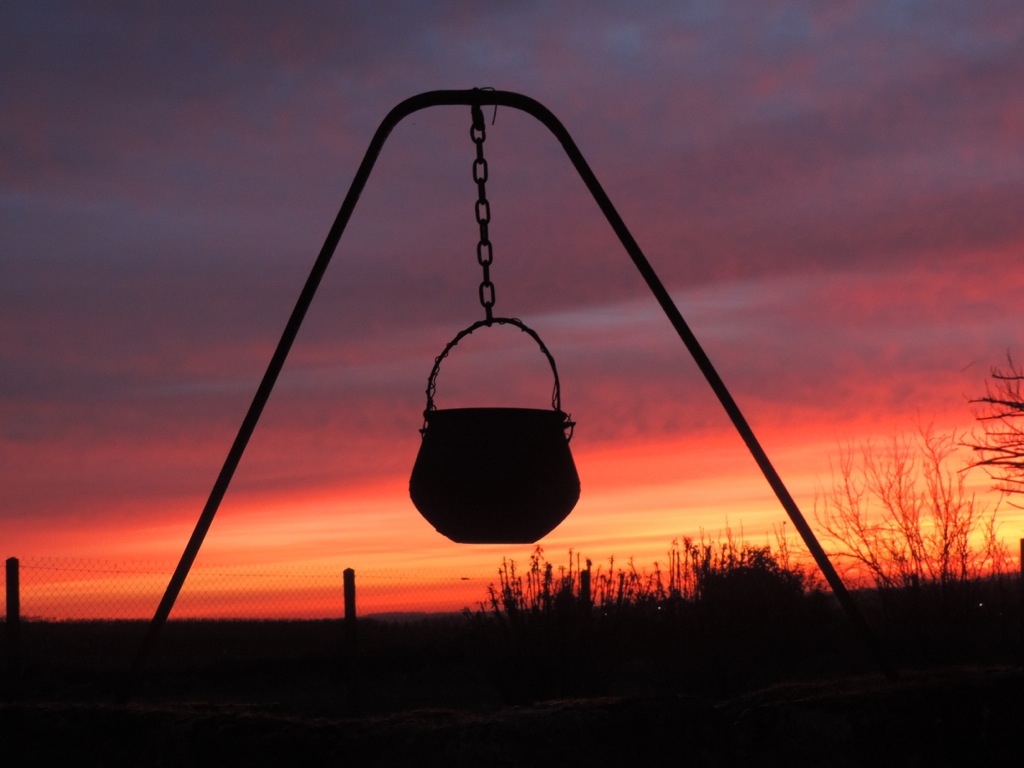
This is one of my most favourite photos. It’s of an old well in the garden of the house I’ve lived in for the last seven years. It’s taken at sunset. Here in the Charente we are treated to the most glorious sunsets. They frequently pull me outside with my camera. I noticed that I’ve labelled this photo “crucible” in my photo library and when I looked at it again I was struck by how that label brings out the paradoxes apparent in the image.
This isn’t a crucible. It’s a receptacle for bringing water back up from the depths of the well. But the sky seemed on fire that night and so this metal bowl took on the appearance of a pot, or, indeed a crucible. So in that one image I see fire and water, and my imagination is sparked to think of cooking, of spells and alchemy, and of water sources and how we need to dig deep sometimes to find what we need.
I’m sure you’ll have read a story or seen a movie where the characters are like cardboard cutouts – all one dimension – good or bad. They just don’t convince us, do they? They are neither realistic nor interesting. The best characters are full of conflicting and competing traits and characteristics. They are multidimensional, interesting and realistic.
We have two cerebral hemispheres, one which engages with the world in a linear, analytic way, and the other which absorbs the world whole. So we process reality in both analytic and synthetic ways at the same time. We explore the parts and pieces whilst at the same time having the ability to take a wider, more comprehensive, holistic view.
However we explain it, a view like this is utterly beautiful and appealing, isn’t it?
I welcome constructive criticism and suggestions. I will not, however, tolerate abuse, rudeness or negativity, whether it is directed at me or other people. It has no place here. ANYONE making nasty comments will be banned.