Feeds:
Posts
Comments

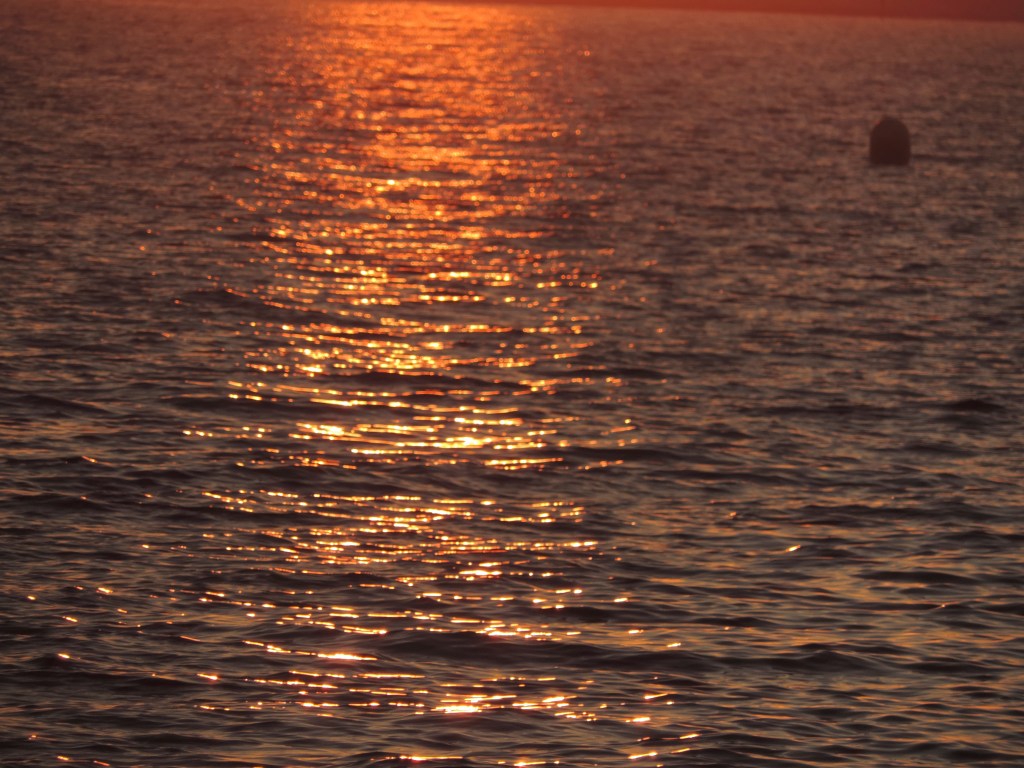
We all love a beautiful sunset don’t we? When the sky turns pink or golden I go to the window, or out into the garden for a better look. Tourists flock to the places where you get the best view of the setting sun.

Yet doesn’t the sunset mark the end of a day? I suppose it does, but it doesn’t feel like loss to me. It feels satisfying, uplifting and delightful.

So perhaps it’s understandable that my mind connected the experience of a sunset to the thoughts I’ve been having recently about the world entering the end of an era.

Is it? Are we really transitioning now from one world to another? From one way of living to another?

You could argue that evolution and development show us that change is a permanent feature but it feels that in this time of pandemic and climate change we are really seeing the sun setting on one era and the Earth rising into a new one.

So here’s my hope. A sea change. Or, more precisely, a “C” change.

I hope we are seeing a major shift from Control to Curiosity and from Consumption to Care.

I could go on – there are several other values and principles beginning with “C” which I hope will emerge but that’s for a larger piece of writing.

Let me just say today that I hope we are indeed entering a new era and that we will start to emphasise curiosity over control. This pandemic and the recent extreme weather events have shown us we can’t control the environment we live in. We need to promote curiosity so we can better understand how to live in a rapidly changing world, how to adapt, and how to thrive in the natural world. I hope we will start to emphasise care over consumption. Getting people to buy more stuff, consume ever more, ever more quickly, seems a rubbish idea to me. But there are millions of people who need more and better care.

I’ll leave you with that thought. Take it, play with it, consider it, debate it. I’d be interested to know what you think.

Montaigne for Life

A few years ago I visited Montaigne’s chateau in south west France and took this photo. I have a copy of his Essays and it’s one of the few books on my “special books shelf” in my library. (That’s the place I keep the books which have made the biggest impact on my thinking)

I thought I’d just take another moment today to promote Montaigne’s work. The complete “Essays” is a BIG book and I suspect a lot of people are put off by that, so the book I’m recommending today is Sarah Bakewell’s “How to live”.

The full title is “How to live: or a life of Montaigne in one question and Twenty attempts at an answer”. Isn’t that a brilliant title? Sarah Bakewell’s book is a biography of Montaigne which explores his essays in the context of his life. The Essays have stood the test of time and hundreds of years later are still cited by many people as a book which has influenced them. It’s not a self help book. It doesn’t teach you how to live but it’s the author’s attempt to record and make sense of his thinking, of his mind, his life and the world he was living in. He approached his attempts to understand in many ways and Sarah Bakewell explores a number of them in her book.

People identify with what Montaigne wrote. One of the commonest experiences readers have is to think “this could be about me”!

I love Montaigne’s humility and curiosity. Perhaps those are his two key characteristics which impress me most.

Why not see if his writing opens something up for you? If you’d like to, you could do worse than start with “How to live”.

Roots

I’m visiting the town of my birth just now. Stirling. I lived here until I went to university when I was 18, then came back to do my first four years of junior doctor training.

I still have family here and can trace back on my dad’s side of the family in Stirling to the early 1700s.

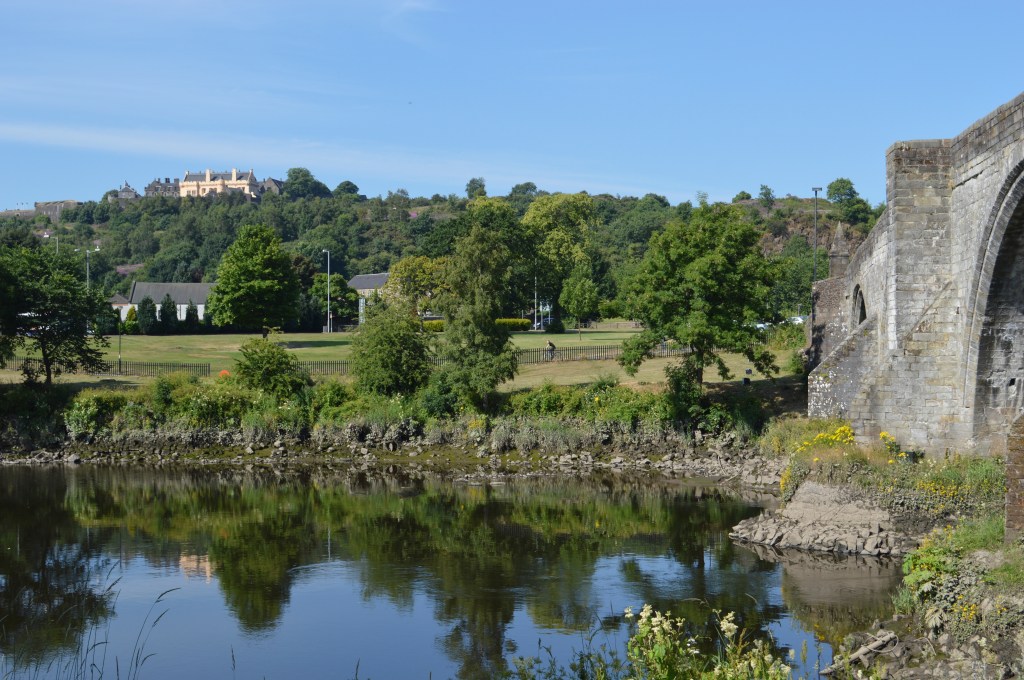
This photo shows the castle, still one of Scotland’s most beautiful castles in my opinion! And it shows the edge of Stirling Bridge on the right. You can also see the River Forth in the foreground. The Forth has an astonishing number of loops and bends as it makes its way to the North Sea from here.

Stirling has a nickname of “The Gateway to the Highlands” and Stirling Bridge was the only way to get from the Highlands to the Lowlands for many years, giving the bridge a significance immensely greater than its rather humble size.

Stirling also sits midway between Glasgow on the West coast and Edinburgh on the East coast in the narrowest part of Scotland.

Culturally it was a market town and a meeting point drawing peoples of different traditions from all four points of the compass.

I find myself wondering again how much the physical, cultural and historical features and flows created the person I am today.

Family stories, Scotland’s stories, Stirling’s stories all flow together to create the roots and origins of my personal narrative.

Place is more than landscape, more than buildings, more than we can see with our eyes, and the fuller understanding of place reveals not only our origins and our history, but shines a light on who we have become.

Do you have similar thoughts about the place of your origin? Or about the place where you live now?

Spreading the good

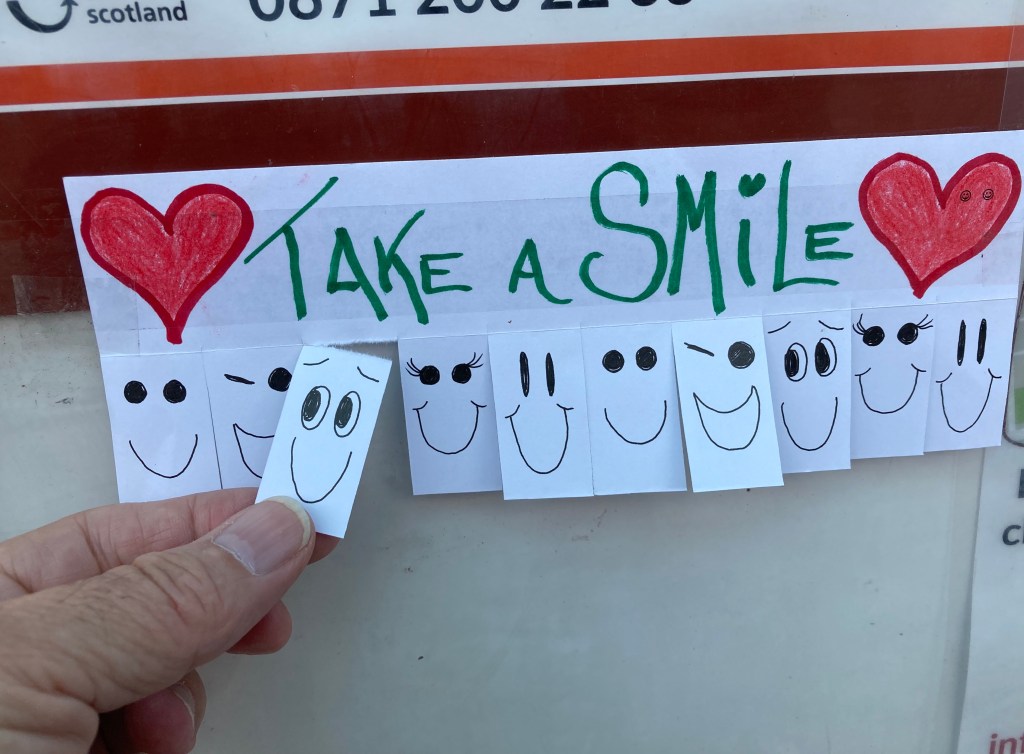
I stumbled across this in an Edinburgh bus stop yesterday and I thought you’d like it as much as I did. I’ve never seen something exactly like this before. And, guess what, it made me smile!

Yes, that’s my fingers. I couldn’t resist taking one. The person who created it had taken such care and imagination to make it so I actually felt that by taking one I was fulfilling one of the creator’s desires. Maybe when they check it out they will smile too!

This idea of putting some positivity out there for people to stumble across is something close to my heart. It’s one of the reasons I make these daily posts.

Have you any ideas about how to spread some more good? Feel free to share them if you want.

Meanwhile, I hope this has brought you a smile today.

Montaigne’s spirals

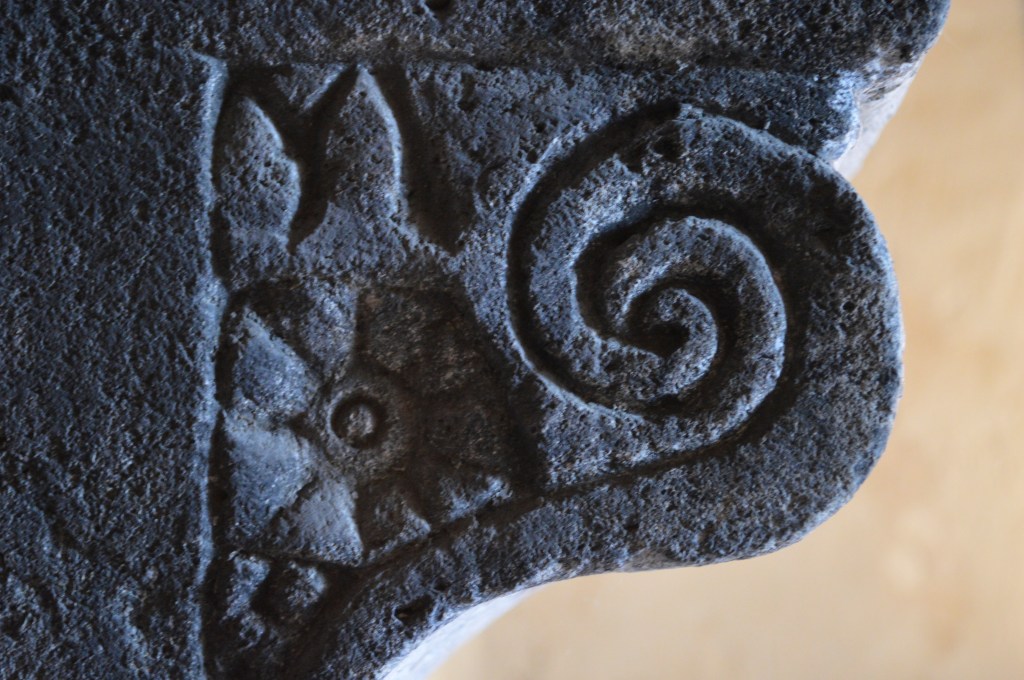
Yesterday I shared a photo I took of light on Montaigne’s floor, and here is one of the corner of one his fireplaces. I love this double spiral. I’m very familiar with double spirals from Celtic culture, and I have worn a yin yang symbol around my neck for many, many years, but this spiral looks very different. It’s as if each spiral cups the other in it’s curls which, to me, makes it look like each is protecting, even caressing the other.

Do you see that? Or is it just my imagination?

Having seen it my mind turns to the importance I give to kindness, to nurture and to protection. I really think if we try to base our personal and collective decisions on kindness, compassion and the willingness to look after others, I reckon we are starting from a good base. When I hear a political, economic or social policy being advocated, I test it against that. Who is the decision or plan going to affect, and will it spread more kindness, more care, more love?

So here’s my gift to you today….this little image of one spiral caressing the other. I hope it will act like a seed of positivity and love for you, so you and those around you will experience kindness and care today.

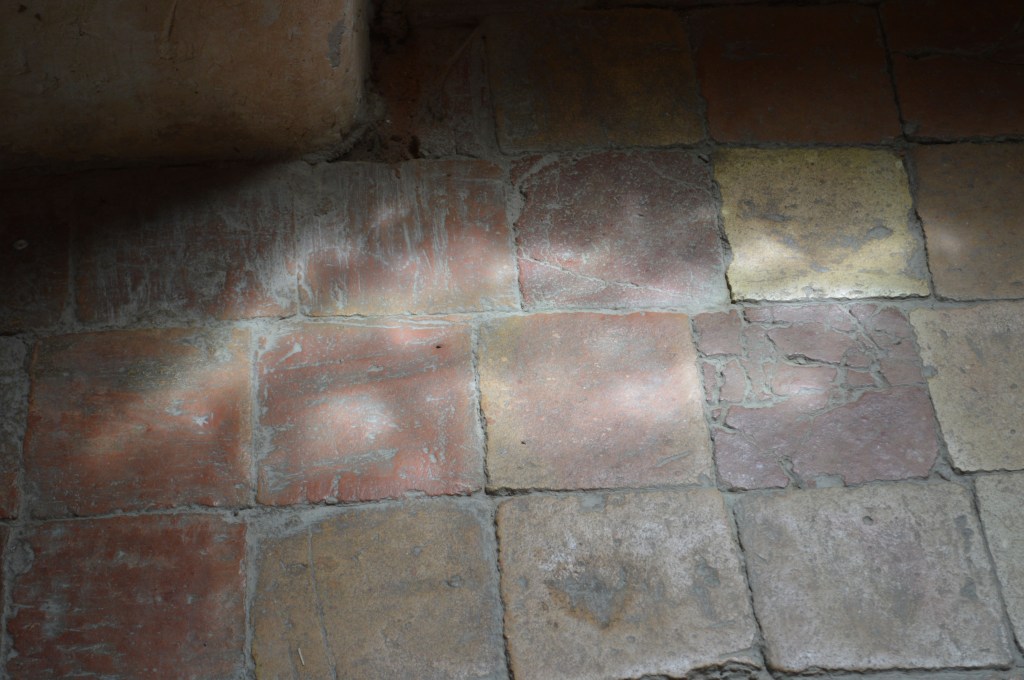
I took this photo in Montaigne’s château a few years ago. What caught my attention was the play of light on the ancient stone floor. I think it’s one of those photos which is beautiful in its own right, but also one which gets me wondering and musing every time I look at it.

A preliminary thought is that the light is ephemeral, likely to be gone in a moment, or in a few minutes at most. The fact it isn’t even a solid band of light enhances that sense of something fragile. And the light is playing on solid stone floor. Something firm, substantial and unchanging.

So it’s like a contrast between the impermanent and the permanent.

But, wait, look a bit more closely at the stone tiles and you can see plenty of evidence of change. One of them is almost shattered. It looks like it is in several small pieces, yet, I can tell you none of those pieces moved when you stood on them. They weren’t loose. Others have smooth indentations, surely changed by the effects of thousands of human feet walking over them over hundreds of years.

There aren’t really two distinct categories in the world, one insubstantial and changing, with the other solid and unchanging.

The reality is everything changes all the time. Just at different rates. Still, the contrast between the rapidly changing and the really slowly changing is very beautiful, and wondrous. It heightens our awareness of the constant flow of life and time.

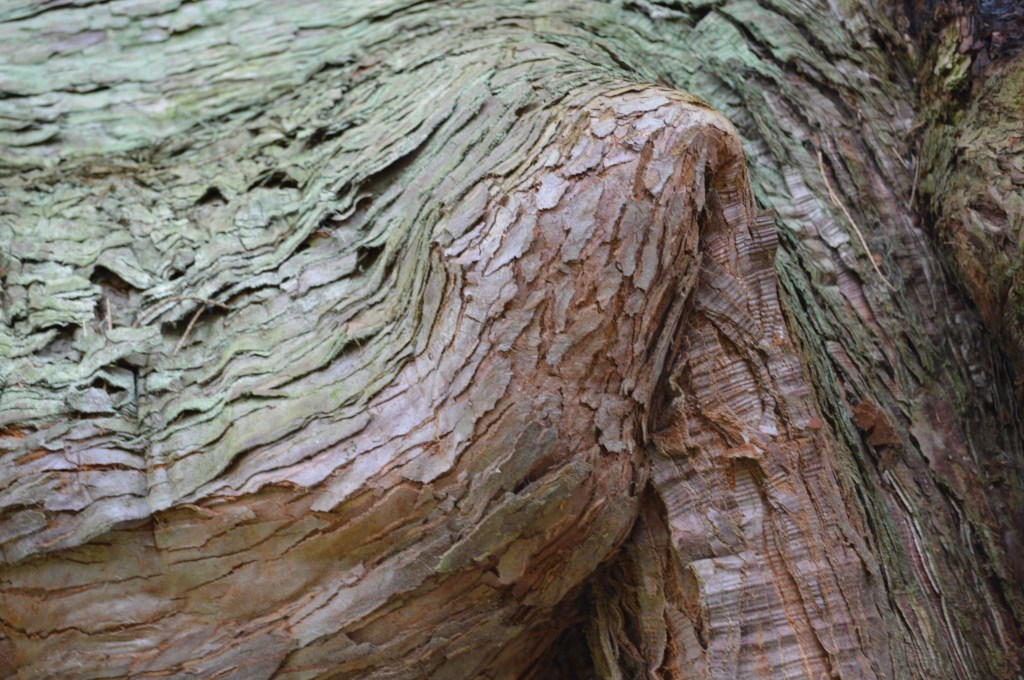
This tree has one of the most dramatic and startling shapes I’ve ever seen. You can tell that at some point as it was climbing straight upwards like all the other trees, then it almost broke in two, but survived and carried on growing horizontally for a bit.

I’ve often looked at this image and thought of how illness can impact our lives. One of the most useful questions I’d ask patients who were suffering from long term conditions was “When were you last completely well?” That would lead to an exploration of life events and the evolution of a particular illness.

Thinking that way isn’t a simplistic cause and effect approach. It’s about clarifying what usually turns out to be a number of factors and events which have made an impact.

The big events in our lives, births, deaths, beginnings and endings of relationships, jobs, moving house and so on, change us. They don’t just make an impact, because we adapt and carry on. But in our hearts, in our souls, and even in our bodies, we are changed by the events and relationships in our lives. Traumas don’t “go away” but, at best we adapt and continue off along a different road.

Commitment

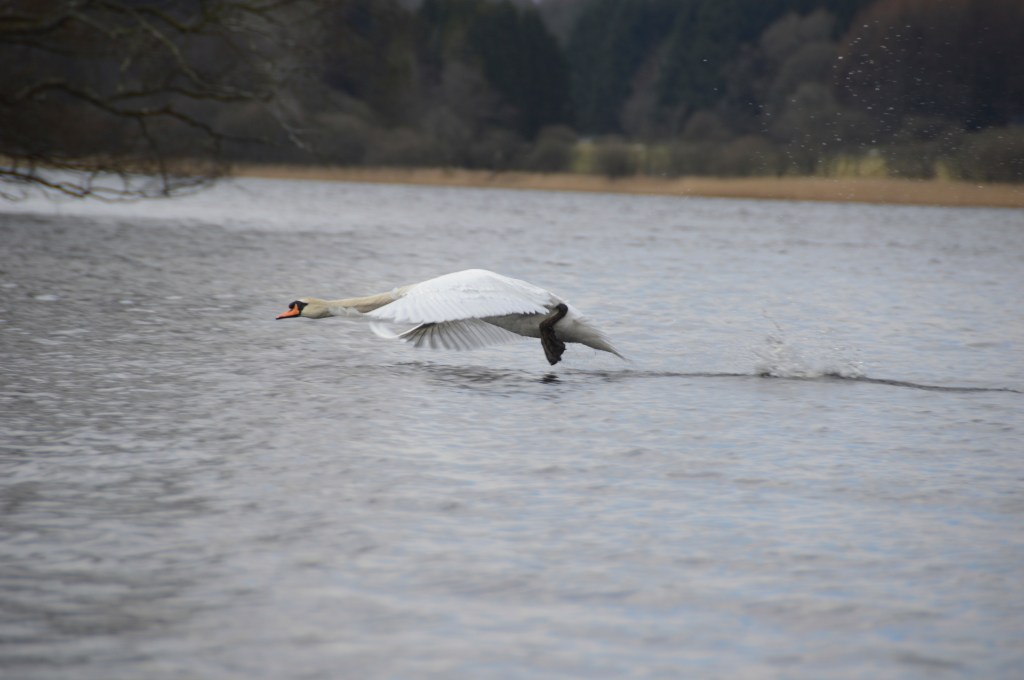
Swan watching is a delight, though probably we are most familiar with seeing them glide, seemingly effortlessly over the surface of the water.

On this particular day there were a lot of swans and many of them were taking off, flying or landing. In flight swans look as elegant as they do “swanning around” on the water, but take off and landing is something else. Both seem to involve a lot of effort, a lot of splashing and a lot of noise.

This photo of one swan taking off, however, captures two important aspects of swan flight.

The first is how streamlined they appear as they leave the surface of the water. Look at it with its neck fully stretched out, it’s whole body already parallel to the loch.

The second, maybe not so obvious unless you’re actually there, is how the swan has to commit to flight in order to take off.

It’s this second point which impresses me so much. It really doesn’t look easy to transition from the one state to the next, from swimming around to flying through the air.

It reminds me of seeing bird chicks in a nest growing their first flight feathers and preparing themselves for their first ever flight. They have to commit to it, and just do it. There is no third way.

Commitment – we need this if we are to achieve anything in life. With the Will, determination and commitment, we can achieve what we set out to achieve. Without it, “the game’s a bogey” as we say in Scotland. Or, in other words, we’ll fail.

What do you want to achieve today? Whatever it is, you’re going to have to commit to it.

The life force

Some people say there is no such thing as a life force. Maybe there isn’t. Well, not an entity or a thing you could call a life force, not something you can grasp, directly observe or measure. But as a concept, as a phenomenon, it makes a lot of sense to me.

I always found it helpful to think of the life force as a blend of the body’s self healing capacity, the energy state of the whole system, and the quality of that vague phenomenon we call well being or vitality.

It’s something we all know. It’s subjective, not objective, yet we can all detect it. You can look at a plant and know instantly that it’s in good or bad health. You know yourself whether or not your strength and resilience is in good form.

When I was a junior doctor in Paediatrics my mentor said he wanted to teach me how to recognise quickly a sick child. Seemed an odd comment at the time but as the weeks passed I understood perfectly what he meant. Once I was a GP it was indispensable to me to be able to walk into someone’s house and know in an instant that a child needed emergency care. You knew before examining them, before making a diagnosis, that you had to act with urgency.

At the other end of life’s journey I often wondered just what it was that changed so clearly when someone died. In that moment, in that instant, it was as if a light went out. Yes, I know about organ failure, about cardiac and respiratory arrest, about brain death, but there’s something not so easy to define which seems to occur at the moment of death and I still think of it as the end of the life force.

The other way I find this concept useful is in relation to healing. It just seems to me that there is no true healing other than through the processes of self repair. That helped me remember to be humble. Whatever treatment I recommended or delivered I knew that what I was doing was supporting the self healing, self repairing, self balancing functions of the person.

How’s your life force today? Vibrant? Strong? Healthy? Or weak, dull and needing attention?

Irrepressible life

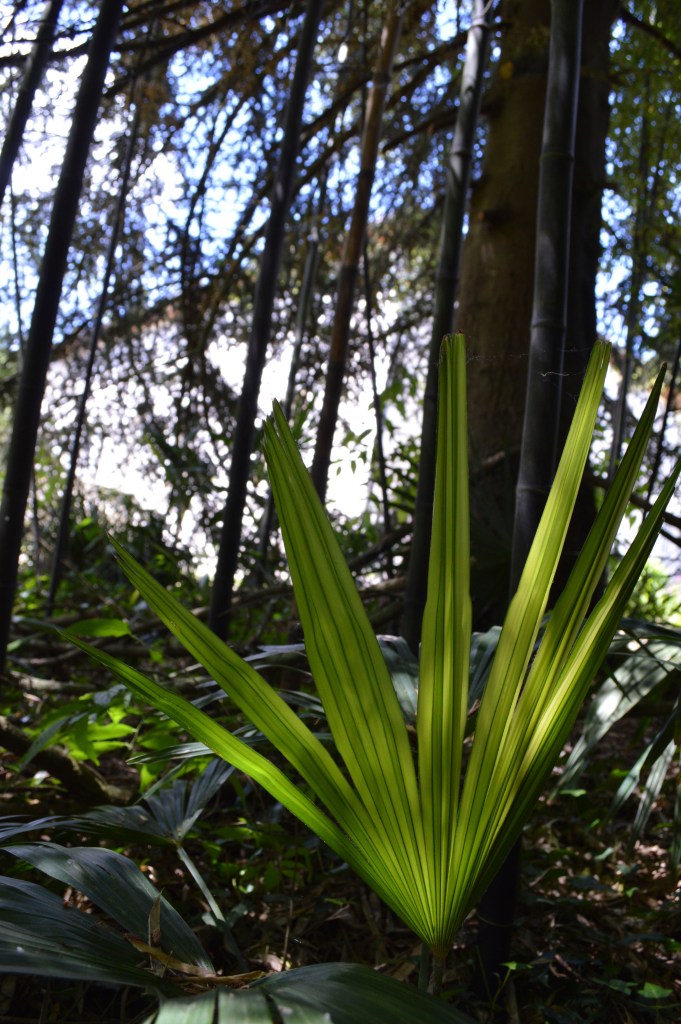
A walk in the forest never fails to throw up something startling, something curious or something amazing.

You know that favourite phrase of mine about discovering the wonder in the every day? I find that pretty much any day can feel a better day, can feel a good day, when I have a moment when something catches my attention and I am amazed.

I find this happens most in natural settings. Although I do believe you can find things to stir your curiosity and amazement in any environment, whether in a park, in the countryside or on a city street.

I particularly enjoy spending time around trees! It doesn’t have to be a large or dense forest but it’s good when a path is tree lined or there is an area of a park where several trees grow together. I like those “communities of trees”.

Search for “forest bathing” on this blog and you’ll find a few articles I’ve written about the health benefits which can arise from spending a bit of time amongst trees.

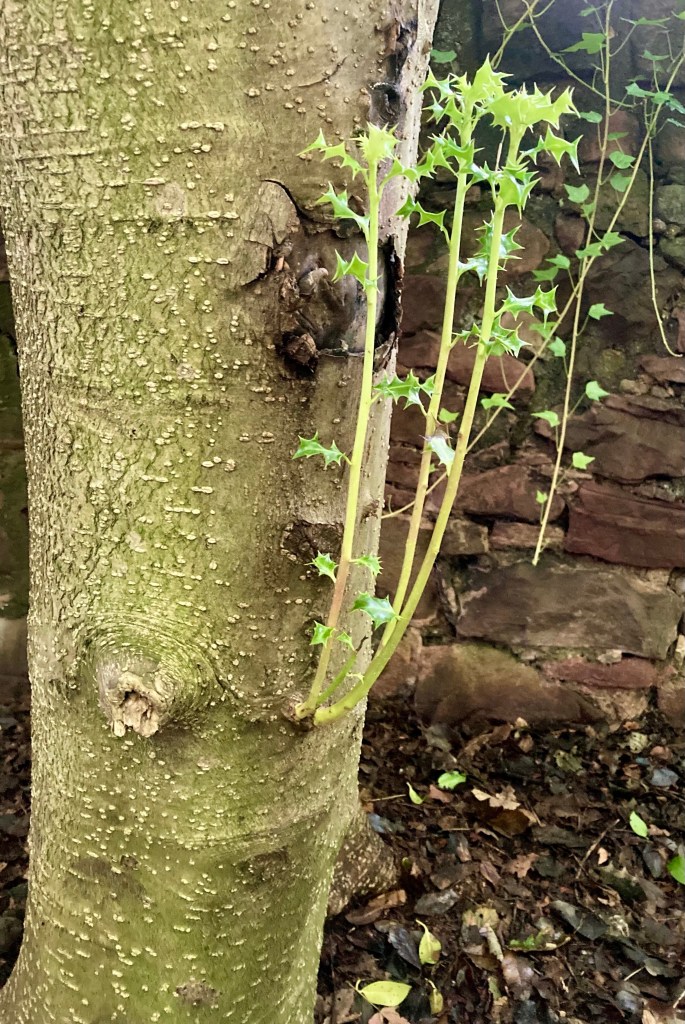
I took this photo earlier this week on a walk through a wooded area of one of Edinburgh’s many parks.

Isn’t it amazing? Look at this bright, vivid new growth emerging right out of the trunk of the tree and immediately stretching up towards the sunlight!

What a great image of LIFE – of creativity, of emergence, of the Life Force.

I love it. It resonates with me and delights me. I hope it does for you too.