Feeds:
Posts
Comments

True colours

Sky blue.

Sea green.

Blood red.

True. But not true. Well, look at it this way, we lived in a richly varied, ever changing world, so be careful when you apply labels to what you see. Generalising can make you colour blind.

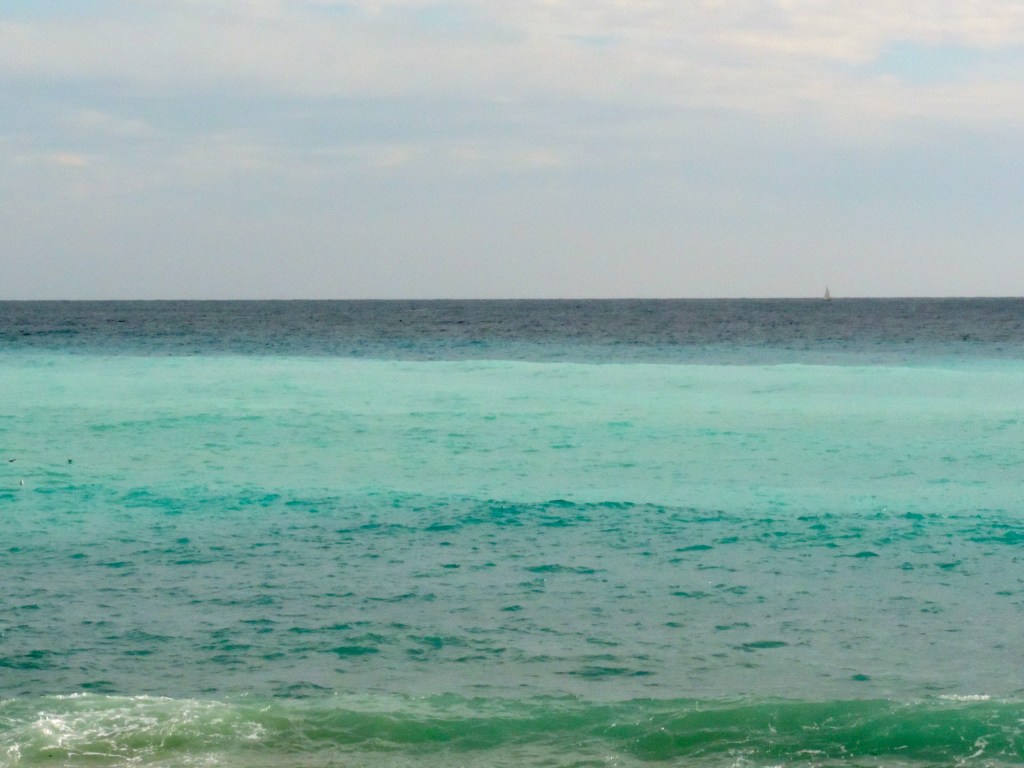
Take a few moments and allow yourself to appreciate the colours you see in this photo. Because, I mean, is « green » a good enough word to describe all the colours you see in this sea? I don’t think so.

I don’t really mean you to try and find more labels……to apply a larger list of colour words to the shades you see here. I don’t want you to try and find « more accurate labels ».

Instead I’d just like to share a few moments with you savouring the rich, deep and wide range of colours you can see. Don’t bother labelling them, just notice them. And linger at little.

My experience is, and I hope you have a similar one, that my mind has a tendency to close down once I apply a label. I find that if I stay curious and switch from classifying or « knowing », to savouring or « experiencing » that I see more, hear more, taste more, smell more, feel more…….

I find that staying curious, staying open, slowing down, allows me to experience a richness and a depth in daily life which just never runs out.

The general semanticists have a phrase « judgement stops thought ». Labelling, categorising, classifying, generalising are all forms of judgment. They aren’t bad things to do. In fact, they can be pretty useful. It’s just we have to remain wary of them. Wary of their capacity to blind us, to separate us from reality, and to keep us living in life’s shallows when we could swimming in the deeps.
Resonating

Yesterday I wrote about resonances – the symmetries, echoes and synchronicities which enrich our lives. So, here’s my suggestion for you today.

Look for, and savour, some resonances.

We spend too much of our lives on autopilot (zombies, not heroes!) and the way to counter that is to become more aware of the present. When we are more aware, we can become more engaged, and can, more consciously, relish and savour the everyday wonders which enrich life.

When we resonate we build and/or experience connection. We connect to what is greater than ourselves. We connect to the rest of planet, we create opportunities to empathise and sympathise with others. We build up our capacity to care and to love.

I think we can find resonances in a multitude of ways – reflections, similarities, echoes, synchronicities, getting « in tune with » and « harmonising with » others.

Try it for yourself today. See what resonances you notice. Be on the lookout for them. Then allow yourself a few moments to savour them. At the end of the day do your own reflection, as you think back over the day and relive any of the resonances you encountered.

What’s your experience? Is your day enriched by resonances?

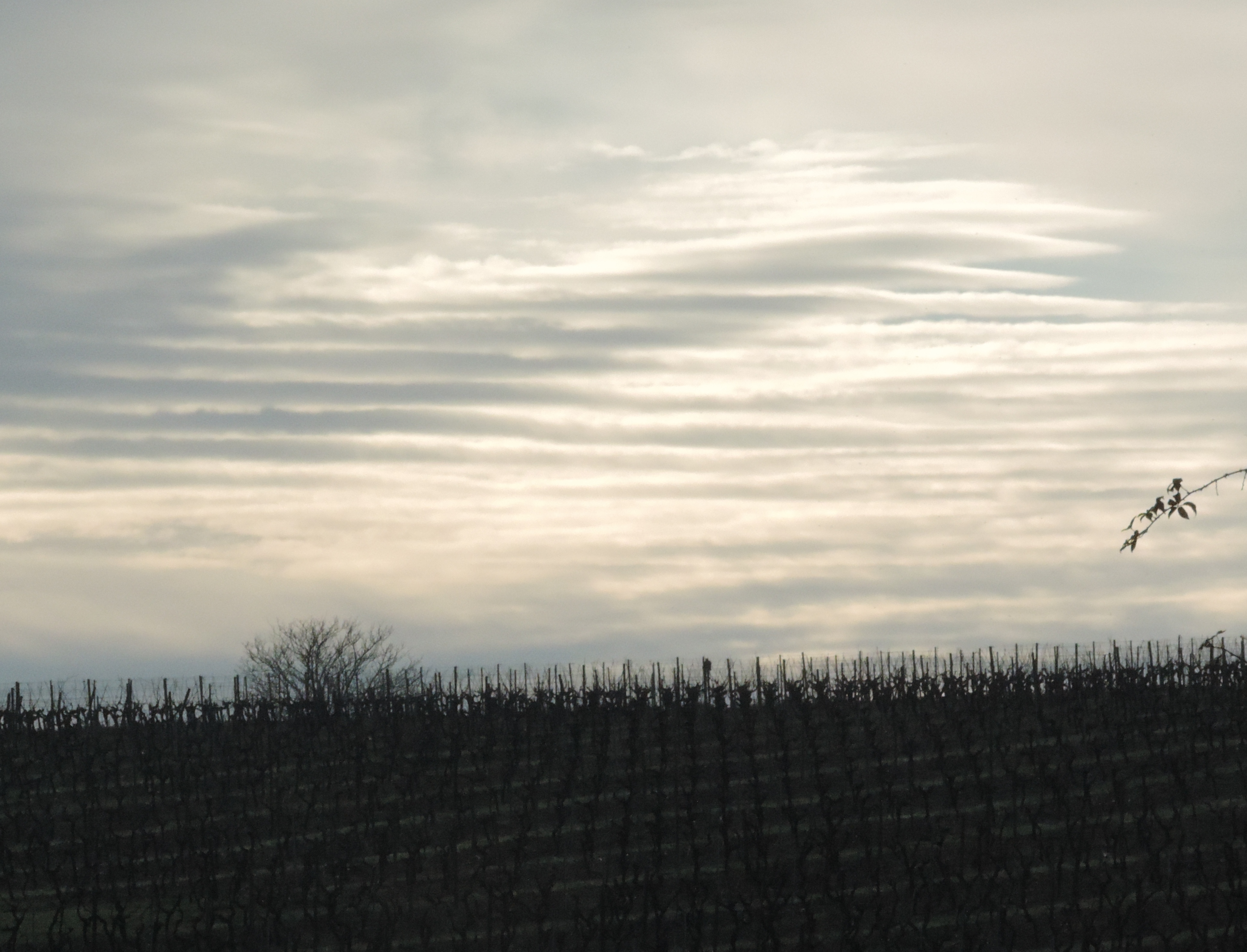
I love the resonances which I encounter in daily life. There are all kinds of resonances. There are similar patterns which occur at the same time, just like in this photo where the linear pattern of the clouds resonates with the linear pattern of the vines in the vineyard. I find that really delightful, particularly because the similar pattern is in two different media – the sky and the land, or the clouds and the vineyard. A common place to see this kind of resonance is at the beach where the patterns in the sand are often similar to those in the sea.

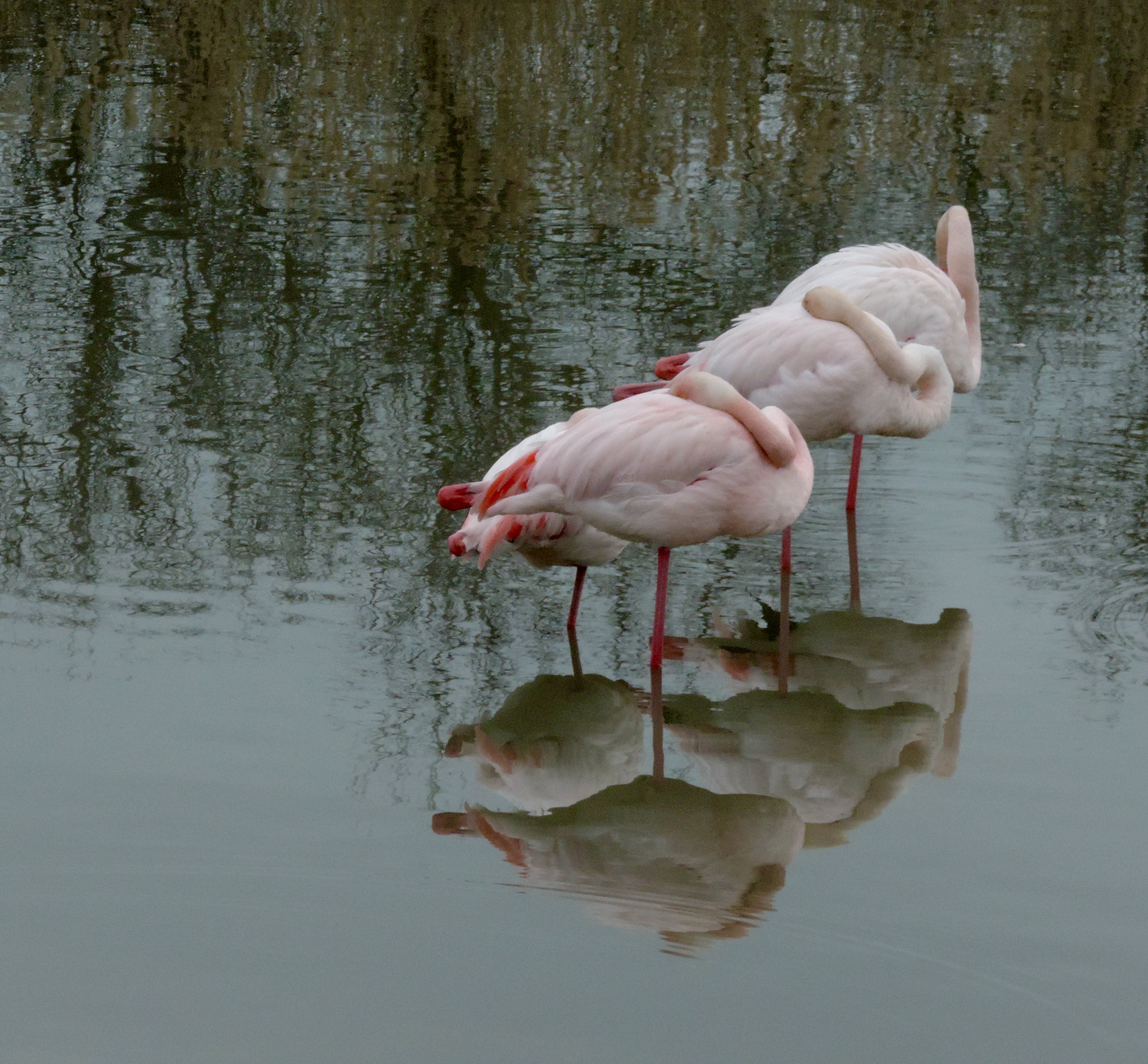
Another kind of attention grabbing resonance is that of reflection. Isn’t it just so beautiful when you see the still surface of a pond, a lake, or a loch, acting like a mirror, reflecting the surrounding flowers, trees and hills perfectly?

But there are also the resonances which are more like echoes or memories……where something we notice reminds us of something else, some other place or some other event.

Perhaps the kind of resonance which excites me most though are the synchronicities which we experience. Those times where something we read comes up in a totally different context, or totally different text. Or where something which is a recent focus of attention seems to find references in songs we hear, stories we read, or other experiences we have.

Still, at the end of the day, the resonances I love the most, are those experiences of connection with others, those moments when we feel « on the same wavelength » or are « in tune » with each other.

Resonances deepen the meanings in our life. They make life feel richer and more significant. They stir us in the depths of our being.

I’ve got a new camera, my first new camera in many years. My old Nikon had started playing up, switching itself off, becoming unresponsive and pretty much every photo I took needed editing afterwards. I’ve gone for a Sony RX100 (can’t for the life of me figure out why camera manufacturers have to give their products such bizarre names, strikes me as a failure of imagination!).

Here’s one of the first photos I’ve taken with it, (yesterday’s pic of Little Owl was taken the same day), and I’m really, really pleased with it. Look at the sharpness of the details.

This photo of a bee seeking nectar and gathering pollen in the process as it buzzes around the flowers of this lovely bramble plant is more than just a pleasing image. In fact, this is the kind of photo to delight me most. I like it for its beauty, but I also like the thought trains it inspires.

Let’s face it, this relationship between the bee and the plant is a superb example of an « integrative relationship ». Remember the definition? An integrative relationship is a mutually beneficial one between two well differentiated parts. This is the essence of health. In fact, it’s the essence of Life. Without these integrative relationships life just couldn’t exist. None of us can survive without others, and without healthy relationships spreading far and wide across a highly diverse web of non-human organisms.

The bee doesn’t have to become more bramble like, nor does the bramble have to become more bee like. It’s not uniformity and sameness which lies at the heart of this success. It’s difference AND the ability to create MUTUALLY BENEFICIAL bonds between them.

Isn’t this a great principle on which to base a society, or, indeed, a civilisation?

We humans haven’t quite managed that yet. We’re still pretty much in the thrall of competition, exploitation, consumption of resources and production of waste.

Mightn’t it be better to swing our attention and energies towards co-operation, mutual benefit, sustainable consumption and the minimisation, if not elimination of waste?

Maybe we need to be a little less arrogant and realise we have a lot to learn from the rest of the natural world.

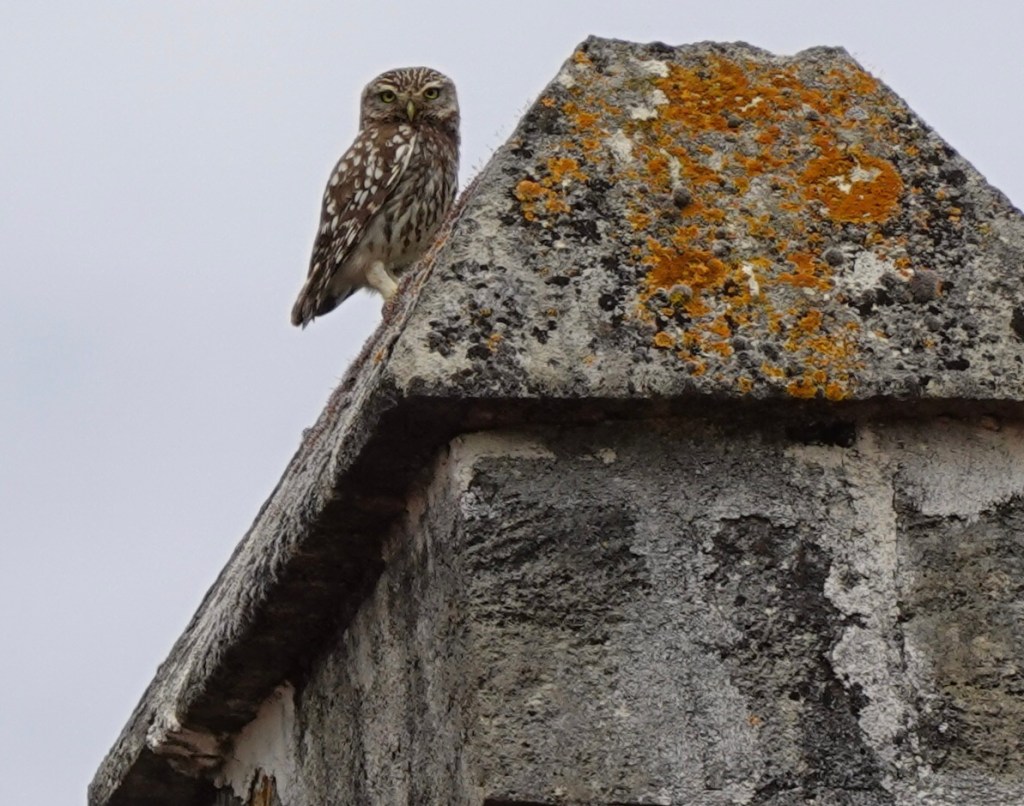
Here’s Little Owl sitting on the chimney stack of my house. You know, I used to think owls were nocturnal but Little Owl seems to be out and about during the day as well. He’s looking right at me as I take his photo.

I remember reading somewhere that creatures with two eyes facing forward are predators, whilst those with eyes on the sides of their head are vegetarian. Is that true?

Like us, birds pay two different kinds of attention at the same time. One half of their brain allows them to have broad awareness of their whole surroundings, whilst the other gives them focused attention so they can spot prey, or seeds, or whatever food they seek. This combination of broad and focused attention is something we tend to take for granted but it has a huge evolutionary advantage.

Perhaps related to that birds, especially predators, are able to take the view from above, and to zoom in on specifics, as it suits them. Classical philosophers long ago pointed out the benefits of taking « the view from on high » as well as the ability to focus and concentrate. I remind myself of that frequently as I look at both details and contexts…..it’s what I had to do in order to diagnose diseases, and understand the uniqueness of every single patient.

There is, of course, a huge variety of behaviours between different types of birds, but I do think they inspire us to think about that constant paradox of the need to be separate and the need to belong. Individual birds, like this Little Owl, are usually seen alone, whilst others, like starlings, usually turn up in huge flocks. The robin, the redstart and the hoopoe usually appear in the garden alone, or with either a single partner, or a youngster. But the goldfinches, swallows, sparrows and starlings are rarely seen without a whole bunch of family and/or friends around the them! That always inspires me to reflect on those two human needs which we all share – the need to be an individual and the need to be embedded in complex networks of relationships with others…….of how we develop an identity from our individuality AND from the groups of which are a part.

Hey, isn’t it amazing the places the mind goes to when looking at a single owl?

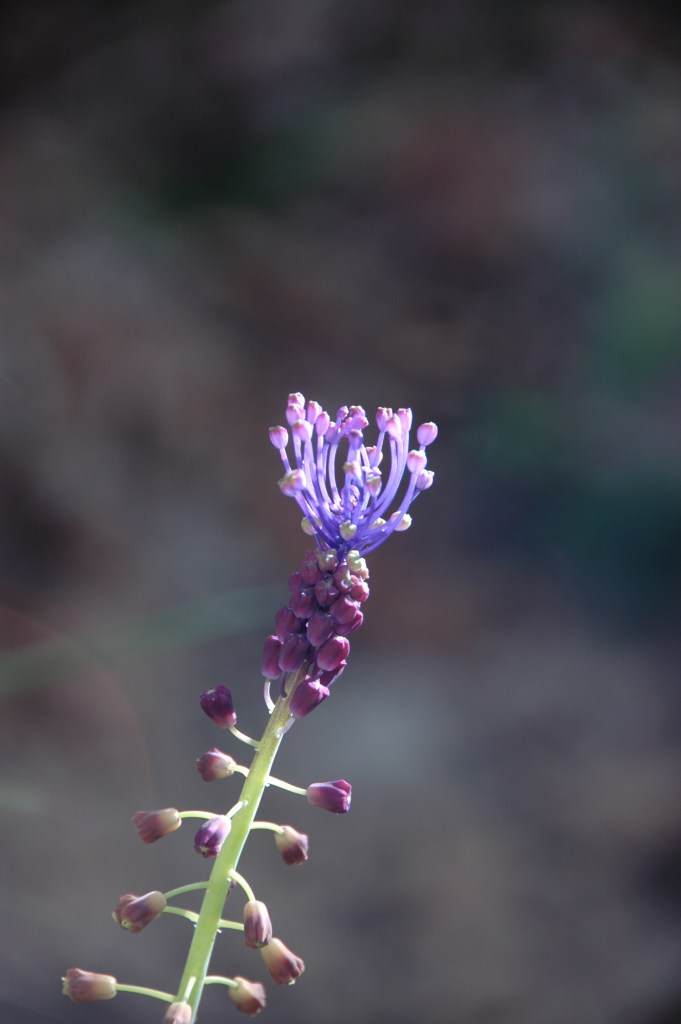
Sometimes a single plant just stops me in my tracks. This one did. Have you ever seen anything quite like it? The combination of colour and form is really something.

I was tempted to simply share this photo with you and tell you, briefly, about my astonishment, but, actually looking at it again just now sets off a train of thought which is never far from my mind. So I’m going to share that too.

I think the plant world is severely under-rated by we humans. Plants evolved before animals did and they’ve managed to establish themselves over the whole planet. In other words they’ve learned how to survive, adapt and thrive a long, long time before we humans did! Not only that but they’ve developed the ability to live sustainably. They don’t use up finite resources and they don’t pollute their environment.

But perhaps one of the most astonishing features of plants is how they can suck what they need directly out of the air and use the Sun’s energy to convert what they capture into stems, roots, leaves, flowers and seeds. Sure they gather some of what they need through their roots but photosynthesis is surely their super power.

We’ve learned fairly recently just how interconnected trees are in a forest, communicating directly but also through an incredible symbiotic relationship with micro-fungi…..to the extent that their networked way of living has been called the “wood wide web”.

But there’s more!

Think of the vast diversity of methods used by plants to have their seeds fertilised and disseminated. And how they use colour, shape and scent to attract pollinators and deter predators.

I’m not saying we need to turn into plants but surely the plant world is an abundant source of inspiration. There’s a whole movement now called biomimetics which looks to nature to learn how we might solve our problems.

Think of how all of our food is dependent on plants, and how a plant based diet has been shown time and again to be the healthiest one.

Finally, we’ve only scratched the surface of the healing power of plants.

As I said…..amazing!

Seeds and stars

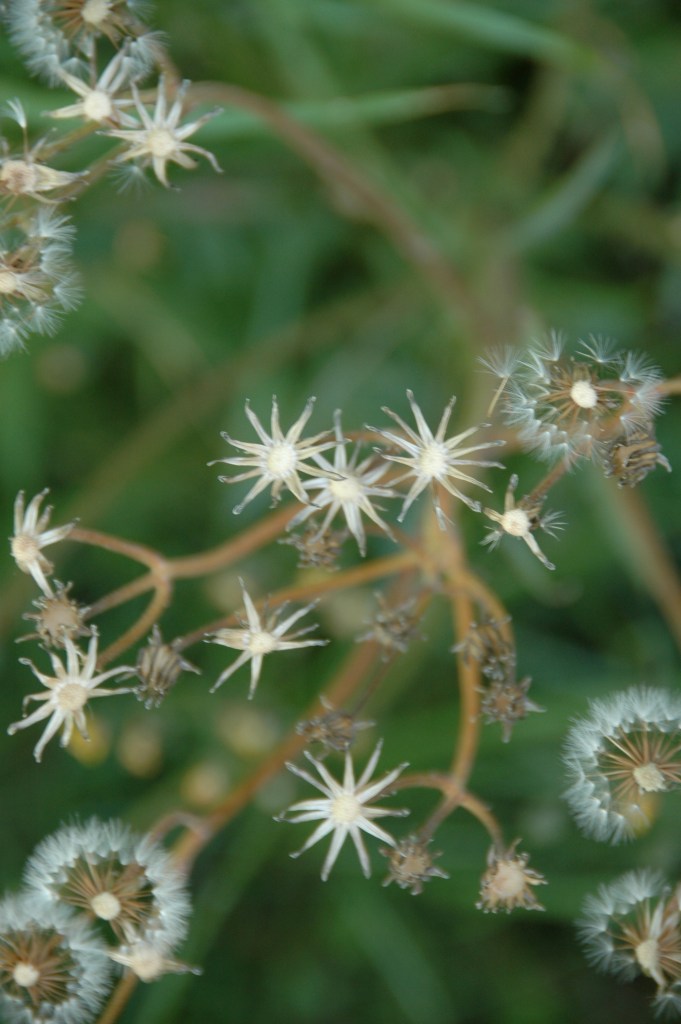
When I look at this photo I think of both seeds and stars. It looks like a constellation. I find myself gazing at it for ages seeing a pattern but not able to name it.

I’ve often wondered about that when I’ve learned the constellations in the night sky. How did a “W” shape come to be seen as a queen (Cassiopeia), and how did that other cluster of stars become “seven sisters”? It often seems that the imagined image is way more elaborate than the actual grouping of a handful of stars.

And yet, those patterns, once learned, can’t be unseen. Every winter I watch Orion rise in the East and make his way across the night sky to the western horizon, knowing that come late Spring I won’t see him again until next winter.

So when you look at these star-like seed-heads what do you see? Do any images form in your mind?

I also think there’s a nice symmetry between seeds and stars. Seeds, it seems to me, speak of the future. Every seed is full of potential. A potential which may or may not be realised at some future date. Stars, on the other hand, are so far away that their light takes many many years to reach us, so star gazing is a kind of witnessing of the past. As if right now, you are seeing what was happening on those stars many years ago.

But let me turn that around 180 degrees. Seeds contain the past, their genetic heritage is the result of millions of years of evolution and dozens of generations of ancestors. Stars, on the other hand, have been the source of imagining the future for many civilisations. Human beings have used the regular patterns of the movements of planets and constellations to know when to plant and when to harvest, to know how to navigate their way across the face of the Earth, and, also to make predictions about events in individual lives.

In both these views, seeds and stars stir both our memories and our imaginings.

I find that deeply satisfying.

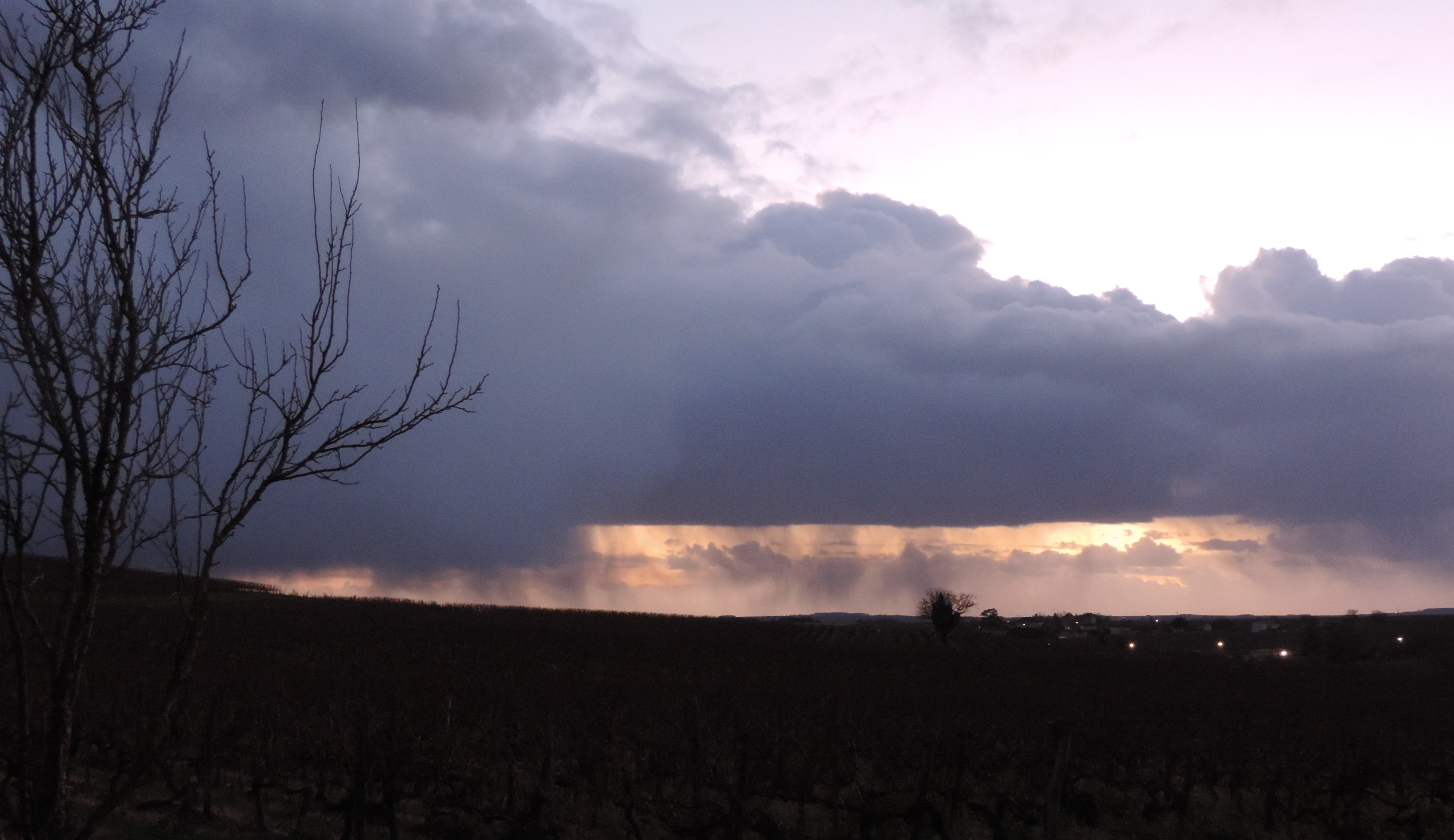
My title for this photo is “sun and storm”. What caught my eye, in the hours before sunset was how I could see the dark grey, almost purple cloud on the horizon, and the veils of rain dropping down from the cloud base to the ground, but all of this in the context of a bright clear sky (which you can see in the upper right of the photo) and the bright, shining sun, sitting just between the cloud base and the ground.

So here’s my question. Is this a stormy day or a sunny day?

Or, if you prefer, is this a photo of a storm or bright sunshine?

Trick question really…..because the true answer is « and not or ». But that’s not the way we tend to experience things when we are autopilot is it?

I remember one morning I parked my car in the station car park on the way to work and found that, as often happened, the nearest ticket machine wasn’t working. As I returned with a ticket from another machine I came across a man, furious and upset because the machine wasn’t working. He said to me « This is a terrible day! » I told him the other machine was working and it was only 7am, so if the worst thing to happen to him today was going to be finding that one of the ticket machines wasn’t working, would the day be so terrible after all? »

I guess that with hindsight he might have punched me on the nose! However, he said, thank you, you’re right. When you put it like that I can’t let a parking ticket machine ruin my day!

The thing is reality is complex and nuanced. It isn’t « this OR that ». This tendency we have to bring together our two powers of generalising and labelling tend to run roughshod over that. Once we become aware of the multidimensional and interwoven nature of reality then we can focus more on the unique and the special, on the here and now, on the amazing, rich, AND not OR!

Maybe if we did that more there would be less polarisation, less hatred and less fear…………..just saying!

The starlings around here form the biggest flocks. At certain times I can hear a whooshing sound caused by the noise of the air pushed aside as hundreds of them take off at the same moment from one of the surrounding vineyards.

There’s also this big tree on the crest of the hill. It’s a real favourite of theirs. They land on it in their thousands I reckon, creating a huge commotion of calls and cries. It sounds as if they are all talking at the same time! What a noise! You can’t ignore it. Then something strange happens. Over the course of a few seconds the entire flock falls silent. When this happens you can be sure that within the next few seconds they are all going to take flight, and that’s what you can see in this photo.

Of course starlings are also famous for murmurations, where as if they are one giant organism, they swoop across the sky, making rapid changes of direction which gives the impression of a giant shape shifting creature playing in the sky.

What impresses me so much though is their way of constantly gathering and dispersing. They seem restless birds and never settle in one particular spot, or formation, for long.

So they are a great example of how Life is about constant change, unceasing movement.

I know that we all learn that it’s good to pause and be still for a few moments, and that’s true. Especially if we want to draw our attention and focus into the here and now. But the truth is, even in the most settled moments, the most peaceful, mindful minutes of meditation or contemplation, that we are still creatures of constant movement. Our breath continues to flow in and out, our heart continues its constant beat, every cell of your being continues its metabolic processes of nourishment and activity.

One definition of a living being highlights this feature of « self movement ». In other words, what distinguishes the animate from the inanimate is this ability to move, to make movements, to act, without the stimulus of any external force.

Another definition focuses on « auto-poiesis » which means « self-making capacity » After all, it’s not just that our cells, organs and systems are constantly moving….they are constantly adjusting, adapting, repairing and growing.

So as I watch the starlings noisily gather and disperse I’m reminded of these rhythms, cycles and activities which we share with all that lives on this planet. I’m reminded of why I use the phrase « becoming not being » at the top of this site……because life really is a process of constant becoming.

I watch, I listen and I am amazed.

I’m a big fan of diversity. It’s a fundamental characteristic of healthy Nature. In fact, as David Attenborough points out in his excellent « A Life on Our Planet » biodiversity loss is one of the greatest threats to the existence of our species.

Monocultures in agriculture are unsustainable, requiring ever increasing chemical inputs as the soil becomes exhausted.

Monopolies damage markets.

A team of people who all think exactly the same way loses the ability to adapt and innovate.

Healthy communities are diverse ones if integration is held as important (integration being the creation of mutually beneficial bonds between well differentiated parts). We thrive together as we bring to the table our different perspectives and ways of thinking, with a desire to produce the greatest wellbeing for everyone.

Democracy is a great idea if it allows diverse communities within a society to connect, to compromise and to collaborate. On the other hand, autocracies tend to impose one view, one set of values, and one way of thinking on all the others…..something which fosters conflict and, ultimately, leads to the whole system falling apart.

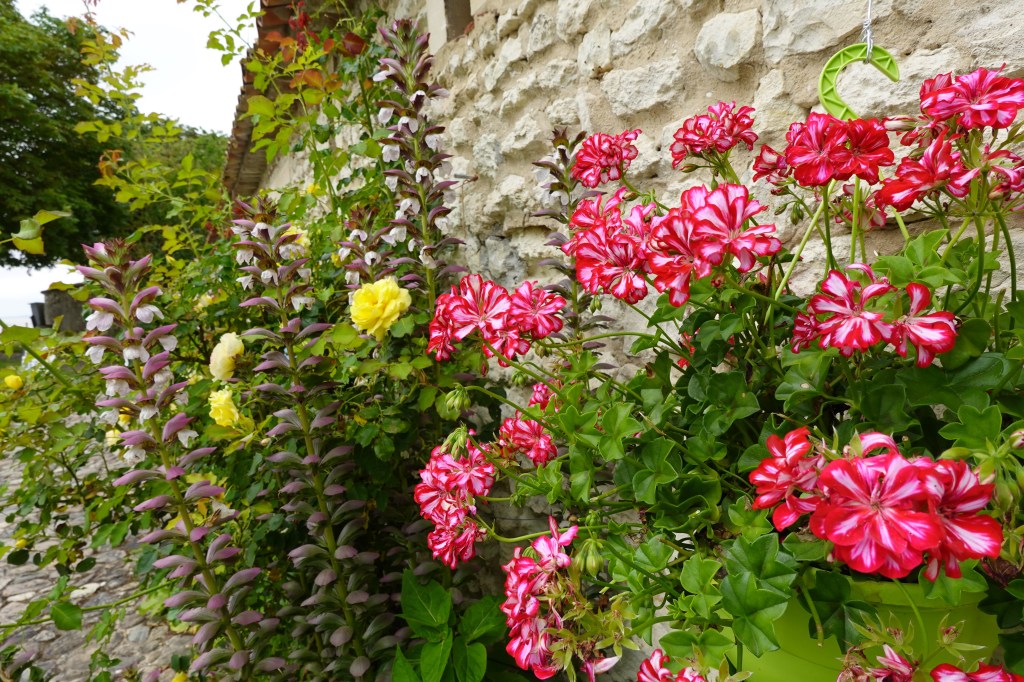
Diversity, as the photo above shows, is beautiful.

So, I don’t think of how to « tolerate » different views, opinions and ideas. I think how to integrate them. I don’t know how else to grow or flourish, let alone, survive.