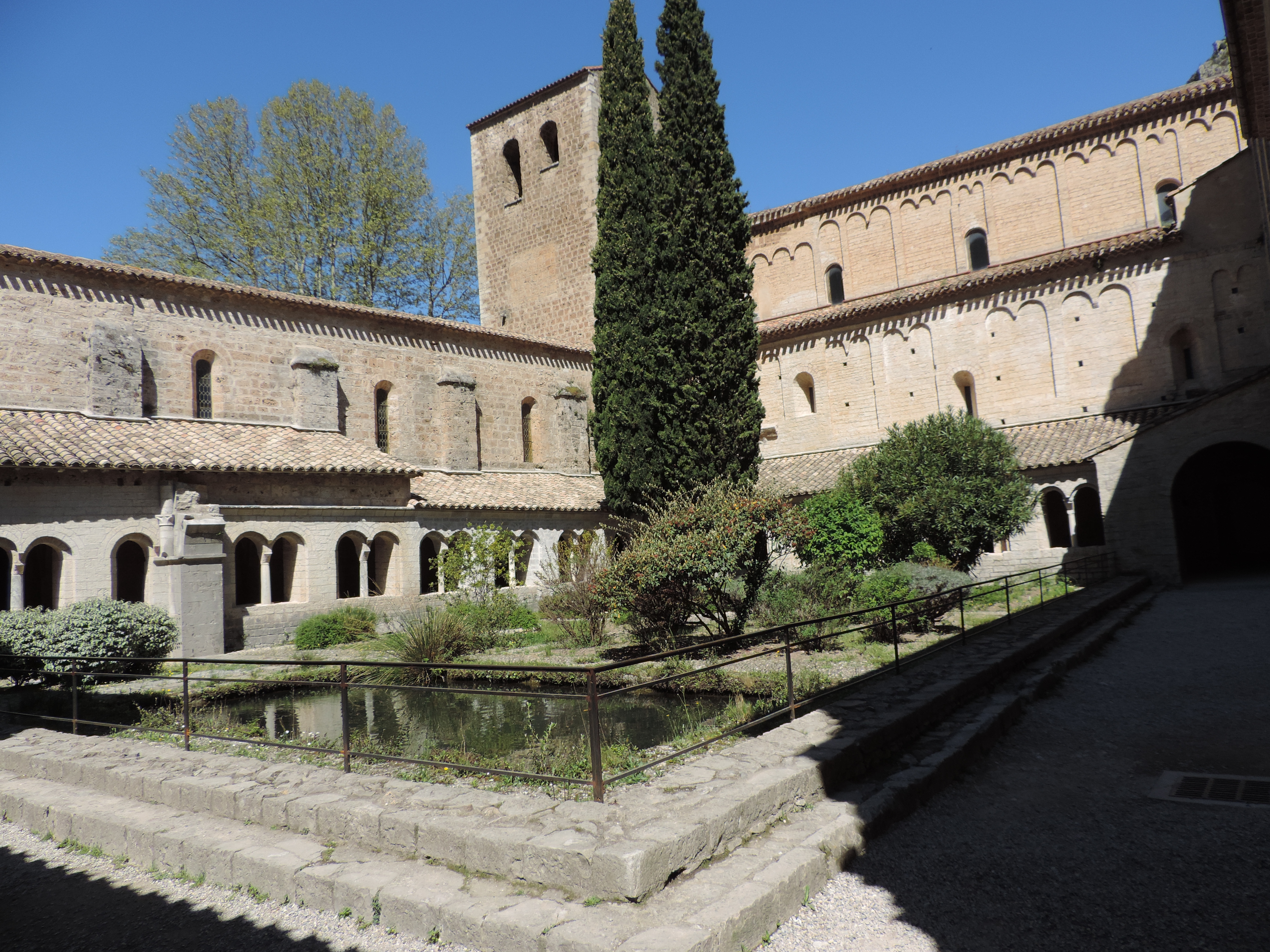
I am really a fan of courtyards and cloisters. I love the churches or monasteries which have a garden in the middle. Sometimes I’ve wandered around a church or cathedral and found it quite oppressive, then I’ve noticed the sunlight shining through an open door and I step out into the courtyard with its arches and covered walkways. It feels delightful and appealing.
I do enjoy the Japanese aesthetic of asymmetry but I find the symmetry of these arches around courtyards like these especially engaging.
Riads in Morocco also have this design of an inner courtyard and I like them just as much.
Is it that they are comfortable in the heat of the sun? Or is it that they somehow compel you to wander along the passageways viewing the garden, which often contains a central fountain, from every angle?
They feel safe. They feel secret. And they feel sacred.
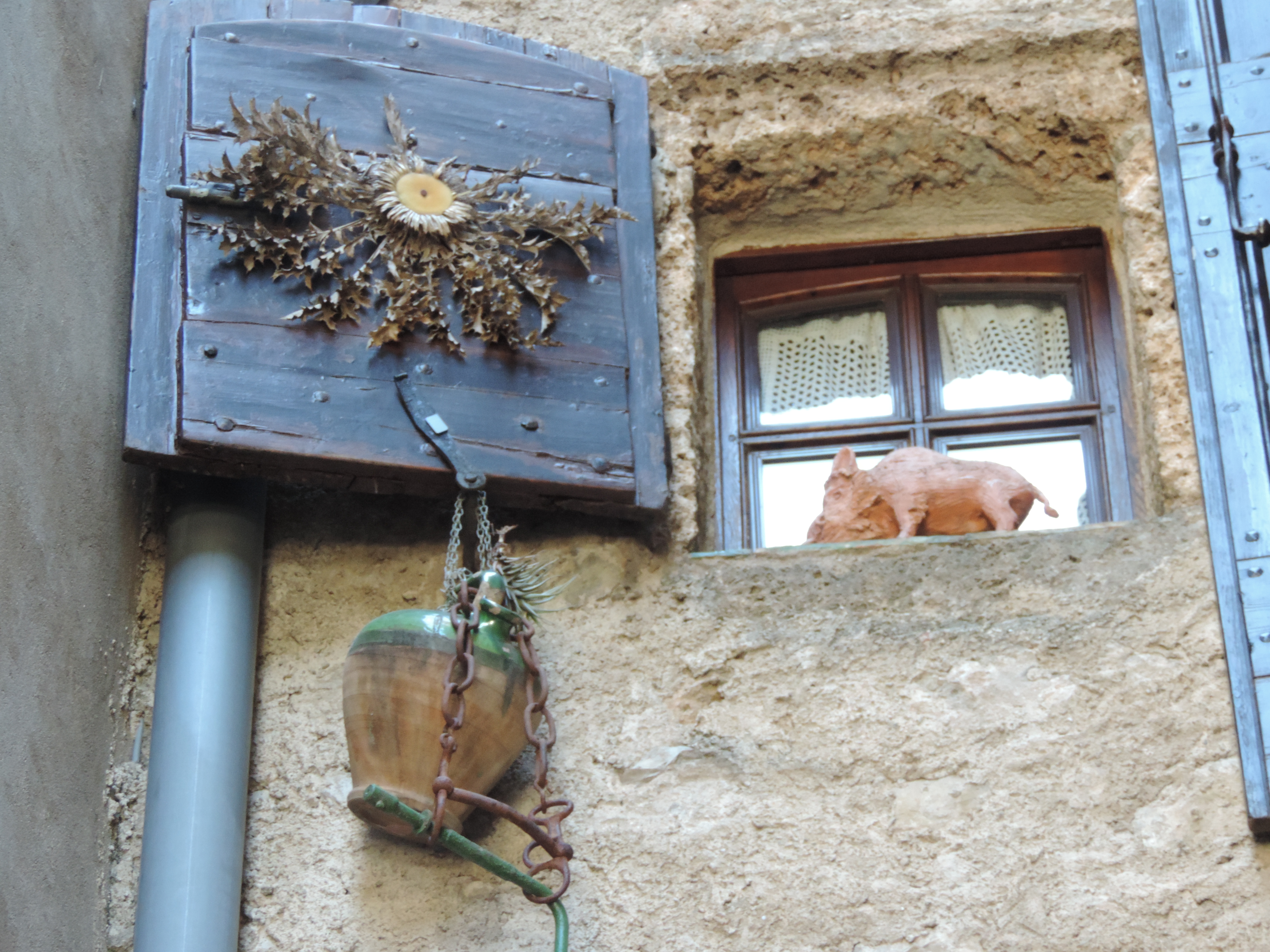
The “cardabelle” dried out and attached to the exterior of a house is a common sight in Saint Guilhem le Desert, in the far South of France. It’s a great example of one those uniquely human phenomena that I love to find.
First, its local purpose was to predict the weather. When it’s becoming more humid, a storm might be on the way, and the shepherds would notice that the flower had closed up. It keeps this ability long after it’s been removed from the fields and pinned to a doorway. So, shepherds would pay attention to it, and make sure that both they, and their flocks stayed safe. This primary use is very utilitarian.
But we humans don’t stop there. We love beauty. And so people would collect these plants and put them in, or on, their houses, simply because they found them beautiful. There’s beauty everywhere in nature, and it’s often used as a method of attraction – flowers to attract pollinators, birds to attract mates etc. But we humans have definitely taken it to new heights. We love to be surrounded by beauty and we can find it everywhere – in landscapes, in gardens, in the people we meet, the objects we create, the music we listen to, the art we make. Setting off today with an intention to notice beauty can be a good way to make today a good day.
But we do something else, something I don’t think any other creatures do at all. We have the capacity to symbolise. We can make anything we want into a symbol of something else. I don’t think any other creature does this. It enriches our lives, helps us to have a daily sense of purpose and to discern meaning in our existence. There’s a magical quality to symbols. We use them to focus our attention, to create a frame of reference through which we engage with, and co-create, the world. These “Cardabelles” are pinned outside houses for good luck. They are one of many, many items, we, in our different cultures use, to either bring good fortune, or to ward off evil, or misfortune.
I don’t think we should dismiss the value of symbols in life and reduce everything to utility. Symbols are powerful ways for us to get in touch with, and share, our values. They can act as anchor points, or, in complexity science terms, as “attractors”, organising our local reality around us.
We humans like a mystery. How many book titles include the word “mystery”? When something is mysterious our curiosity kicks in, and we love to be curious. We love to explore and we love to discover. Throughout my medical career every new patient presented a mystery to me….who were they, what were they experiencing, what kind of life did they lead, what kind of illness did they have and how had it come about? The questions were endless. I loved that. I loved knowing that I could never fully know another person. I was never done being curious. Everyone interested me. Everyone drew me in to explore their story, because in that exploration I’d come to a better understanding of them, and, crucially, as I came to better understand them, they came to better understand themselves. As we explored their mysteries together we created a therapeutic relationship. No matter what treatment I could prescribe, it would always be in the context of that therapeutic relationship.
Life is a mystery. It’s not all laid out before us in black and white. We never reach a point where we know all that we could know. I love that. It makes life enchanting. I wouldn’t want to live in a purely utilitarian world of simple facts and measurements. I love that the most important elements in life are unmeasurable, and so always contain some mystery – love, beauty, joy, wonder, awe, passion and imagination.
I’m wary of those who claim they know all there is to know about something or someone. I’m wary of those who think there’s noting more to know.
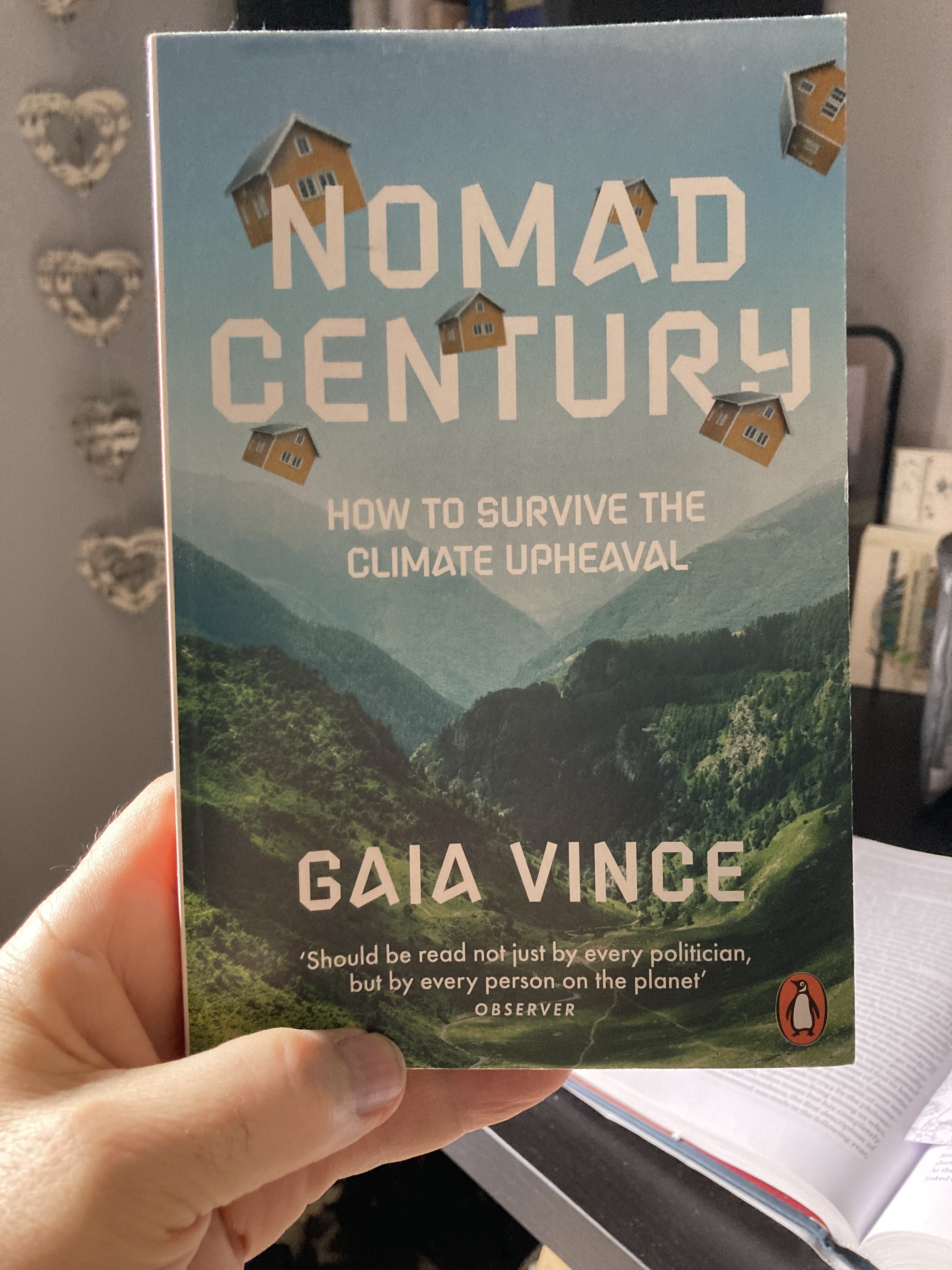
There are loads of books about climate change but science writer, Gaia Vince’s, book is probably the one I’ve enjoyed most. It is beautifully written, and easy read, and isn’t brimming over with despair about our changing climate. She doesn’t play down the significance, or magnitude, of the changes, but, in this book, she takes a focus on an aspect which I haven’t seen others do (or, at least, not so well) – migration.
“Migration is a survival strategy used widely in nature”
There’s a statement which resonates strongly with me. Whenever I try to explain reality, to demonstrate what “integration” actually means, and to highlight how important “cooperation” is, I focus on the human body. In the body are various organs…..heart, liver, kidneys, brain etc…..and in order for us to be healthy all of these organs have to relate to each other. They have to work with each other. They are not part of a competitive market fighting each other for nutrition and resources. Rather, they form “mutually beneficial bonds” – in other words, they create relationships which work both ways in the best interests of each part. This is integration – “the creation of mutually beneficial bonds between well differentiated parts”. Having explained that in relation to body organs, I go on to show how the same rule applies to all the cells and tissues of the human body, all of the billions and billions of cells which each of us has. And from there, it’s easy to see how the same principle applies throughout nature, across the globe, with complex webs of relationships forming between people, animals, plants, and the rest of the environment. Gaia Vance doesn’t use the word “integration” but what she focuses on is migration and cooperation.
For humans, migration is deeply interwoven with cooperation – it is only through our extensive collaboration that we are able to migrate, and it’s our migrations that forged today’s collaborative global society.
and
Studies across nature show that global dispersal is the most effective strategy for any species to prevent extinction.
and
…human brains are highly adaptive and we are hypersocial, able to cooperate with large numbers of unrelated people, supporting each other and sharing resources, ideas and knowledge
What she does so well in this book is to show just how natural it is to migrate. She describes the history of migration, in humans as well as in other species, and the history of borders and nation states (a surprisingly recent development in human civilisation). This reminds me of the writing of Rutger Bregman who challenges the whole issue of nation states and borders in his excellent “Utopia for Realists”.
This is a hopeful book which highlights how we need to think about migration differently – to move away from the toxic, xenophobic and racist narrative which seems to dominate in the world today.
We live in an inextricably interconnected interdependent world. None of us can live by ourselves. Our human super power is collaboration, and combing that with migration, learning how to plan for it, and manage it well, to ensure good integration, is our best hope in the face of a rapidly changing world.
Buy this book. Read it. Talk about it. Share it with your friends.
We have two focus modes in our brains, with each of our cerebral hemispheres using one or the other. The left hemisphere engages with the world through a narrow focus. It pays attention to re-cognising what we already know. It tries to help us identify objects, literally grasp them, or understand and manipulate them. The right hemisphere engages with the world through a broad focus, paying attention to the bigger picture. It seeks out patterns, connections and relationships. When the left hemisphere identifies something it should pass that info to the right for it to be contextualised. Sadly, we’ve developed habits of not bothering to do that, sticking with our generalisations and abstractions.
What we pay attention to becomes magnified. It is the means by which we engage with the world. It creates our experience of the world. If we prioritise the left hemisphere focus we engage with a world of objects, of tools and “things”. We engage with a desire to manipulate and control. But if we prioritise the right hemisphere we engage with a world of relationships, of contexts and patterns, with a world of subjects. We engage with a desire to belong, to make connections, and to see the whole picture.
We live in what has been termed “the attention economy” where the big digital companies make their money through advertising, and advertising only works by grabbing your attention. Politicians have become adept at this too, casting out statements designed to shock, enrage or stoke fear….because shock, anger and fear are primary responses to threat.
But as you’re “doomscrolling” or reading social media headlines and posts, which of them command your attention? Are they the ones that make you feel enraged, afraid, insecure, inadequate? If so, those are the feelings which are going to get magnified. Those are the feelings that are going to shape your perception of reality. Or are they the ones which delight you, which stir feels of wonder, curiosity or joy? Do they put you in touch with the three classic values of beauty, truth and goodness? Do they increase your feelings of dignity, decency and compassion? If so, that’s how you are going to perceive reality.
What we focus on, and what’s important here is to be aware of what we are focused on, shapes our world and our day to day experience of life.
Our attention is our super power. We should use it wisely.
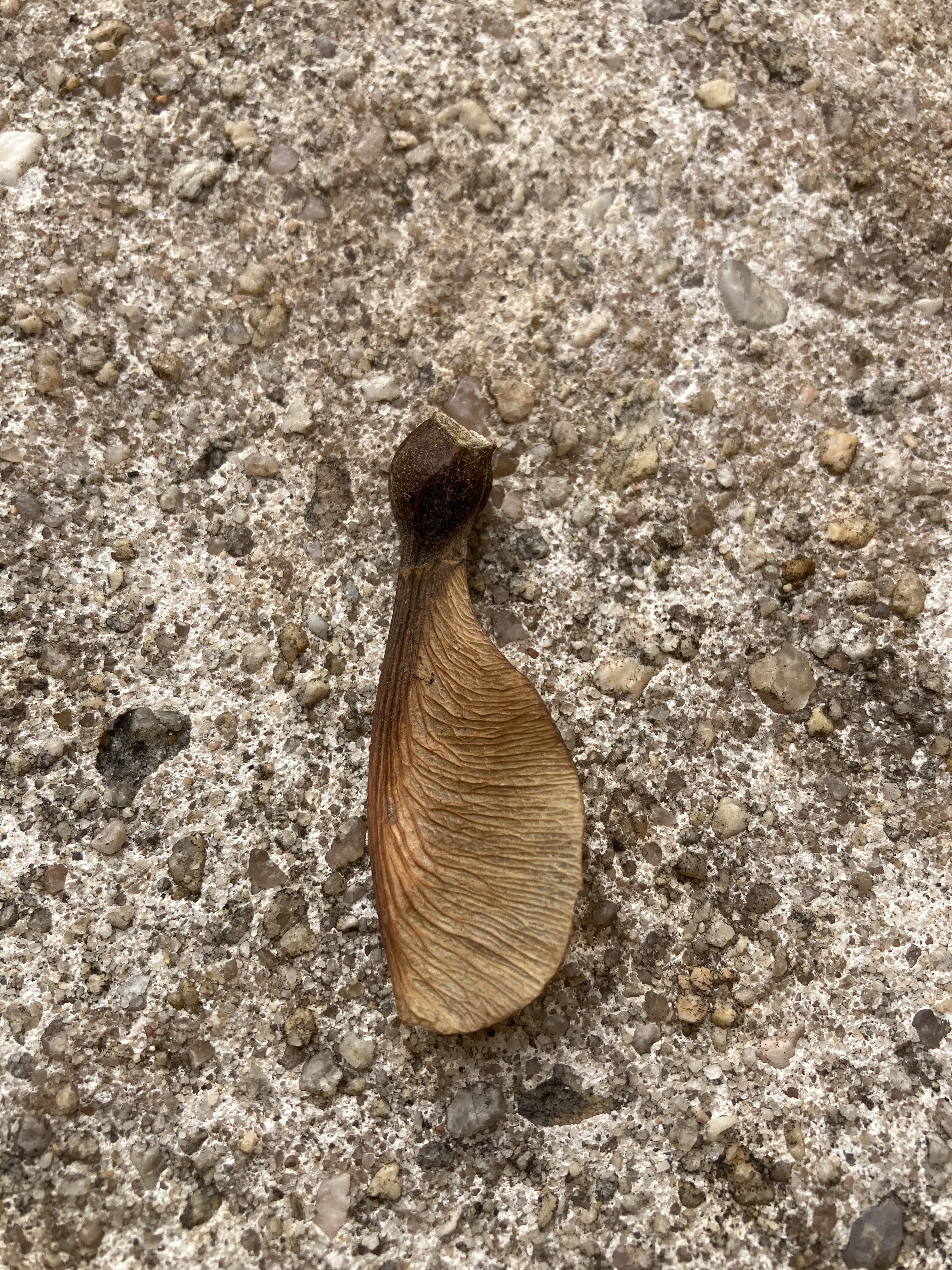
This single seed isn’t uncommon, is it? You’ll all be very familiar with this kind of seed distribution….where a plant creates an appendage which allow it to be carried far and wide by the wind. Well, first of all, this is pretty astonishing, isn’t it? I mean how amazing to be able to create a structure like this all by yourself? Trees, of course, don’t use any machinery or tools to manufacture a structure like this. And how even more amazing that a structure and strategy like this seems to have evolved on our planet. Isn’t nothing short of miraculous. You don’t have to look outside of Nature to be amazed, to find what seems utterly magical and enchanting. Truly amazing.
But there are a couple of other things I think about when I contemplate this single seed. The first is that even with our advanced scientific methods, nobody can tell you whether or not this particular seed is alive. And nobody can predict exactly where, when, or even if, it will grow into a tree. Nature, and Life, are fundamentally unpredictable. There’s a body of thought which argues that if we have enough “data” we can know “everything”….we will be able to predict the future with accuracy once we have enough data and the means to analyse it. I reckon that’s wrong headed. Nature, and Life, just aren’t like that. No amount of data will enable you to make accurate predictions about individuals….whether they be winged seeds, or human beings.
The second is that abundance is at the heart of Nature. Seeds like these are produced in enormous numbers. You could argue that they are “inefficient” in terms of modern management theory, because they are produced in numbers which far, far exceed the number of new plants which will grow from them. But these are key features to natural systems – abundance and “redundancy” (this latter term refers to having multiple systems which mostly aren’t used, but are there to provide flexibility and adaptability). Our industrialised capitalist system creates false scarcity – how many times do you come across an advert which tells you that if you don’t buy this now, then it’ll be too late, it’ll all be gone? If we created an economic and social model based on Nature, it would be based on the reality of abundance. We could house the world’s population in decent housing. We could feed the world’s population. We just don’t choose to, preferring to create an elite of billionaires instead……
Management theories based on pushing for ever more “products” or “services” from the least possible resources (human, material, social and financial) are not healthy, and they aren’t natural. Look how well they responded to Covid for example. From “Just in time” delivery systems, to the closing of hospital beds and failing to stock equipment needed to deal with crises…..it goes on and on. We need management systems better attuned to the reality of Life on Earth – and that doesn’t involve cut after cut after cut, or reducing human being to cogs in multinational corporate machines.
Thirdly, this seed lying on a stony path reminds me of the parable of seeds, as I was taught it at Sunday School. I don’t know if that parable is still taught, but amongst other things, surely it teaches the importance of the environment. If your seed doesn’t fall on fertile ground it’s unlikely to thrive. We need healthy water, air, and soil, and none of us can provide that by ourselves. Our human super power is co-operation and our ability to work together to create healthy conditions for individuals to thrive.
Any other thoughts come to you when you look at this little seed?
Butterflies never cease to amaze me. Their lifecycle is one of the most strange and hard to understand in the whole of nature. The fact that this form only exists for a small part of the entire life of this creature (most of it spent as a caterpillar, then pupa, before emerging restructured as a butterfly) is really astonishing.
But what else amazes me is the way they fly….apparently completely randomly, and utterly unpredictably, yet really fast, covering huge areas of the garden in seconds. They just don’t fly like other insects or like birds. How do they actually manage to fly so skilfully? And why do they seem to fly so randomly? It’s only February here in South West France, but yesterday I watched two large yellow butterflies flying around the garden. I can watch them for ages, trying to predict where they will go next. It’s impossible.
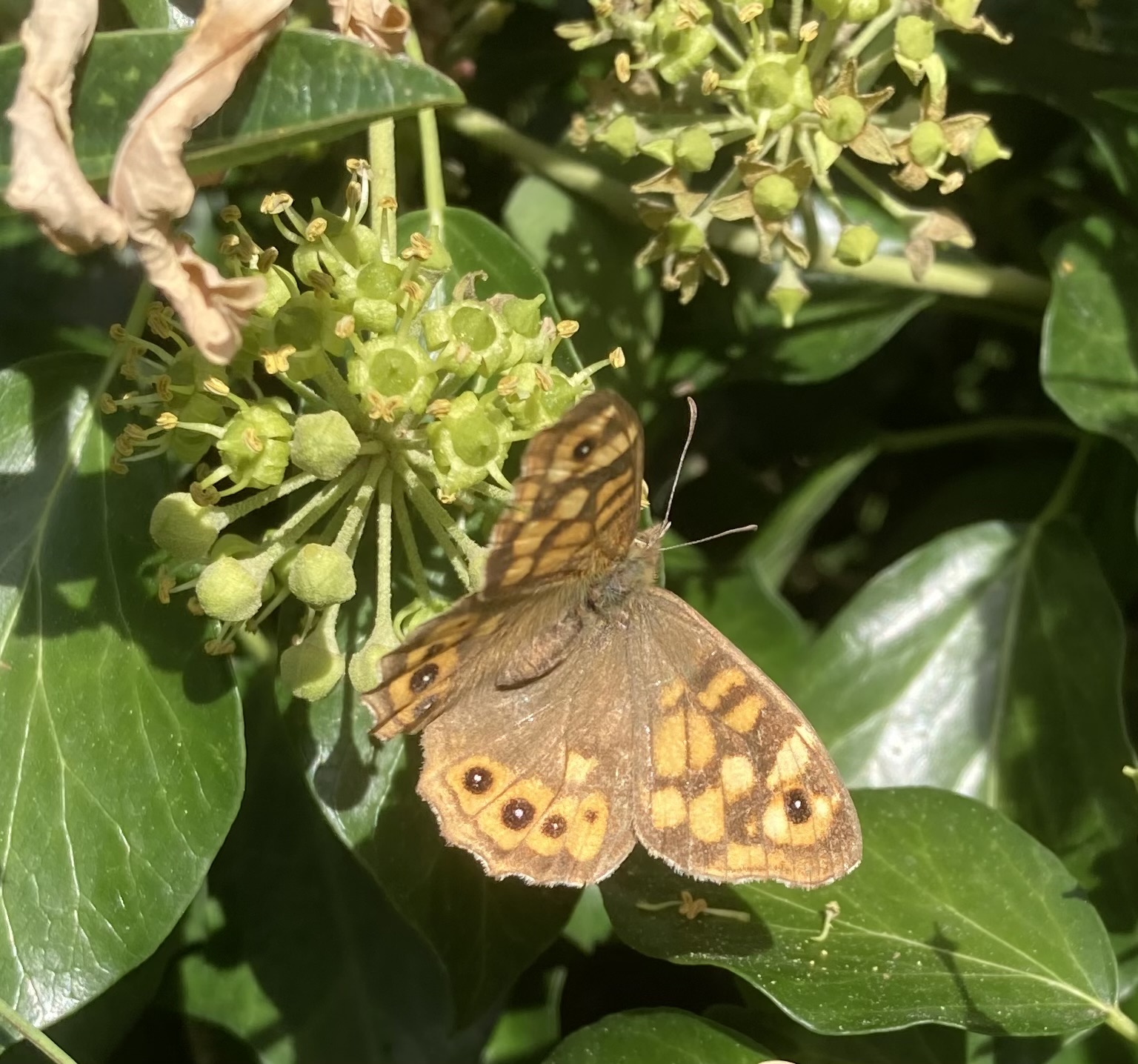
The third thing that amazes me about them is the patterns and colours on their wings. Yes, some species are pretty plain, but other look like complete works of art – like the speckled wood butterfly, pictured here, at the top of this post.
They are symbols of transformation, and they inspire thoughts about unpredictability, and the importance of following non-linear paths in life. And they also delight me because they are beautiful.
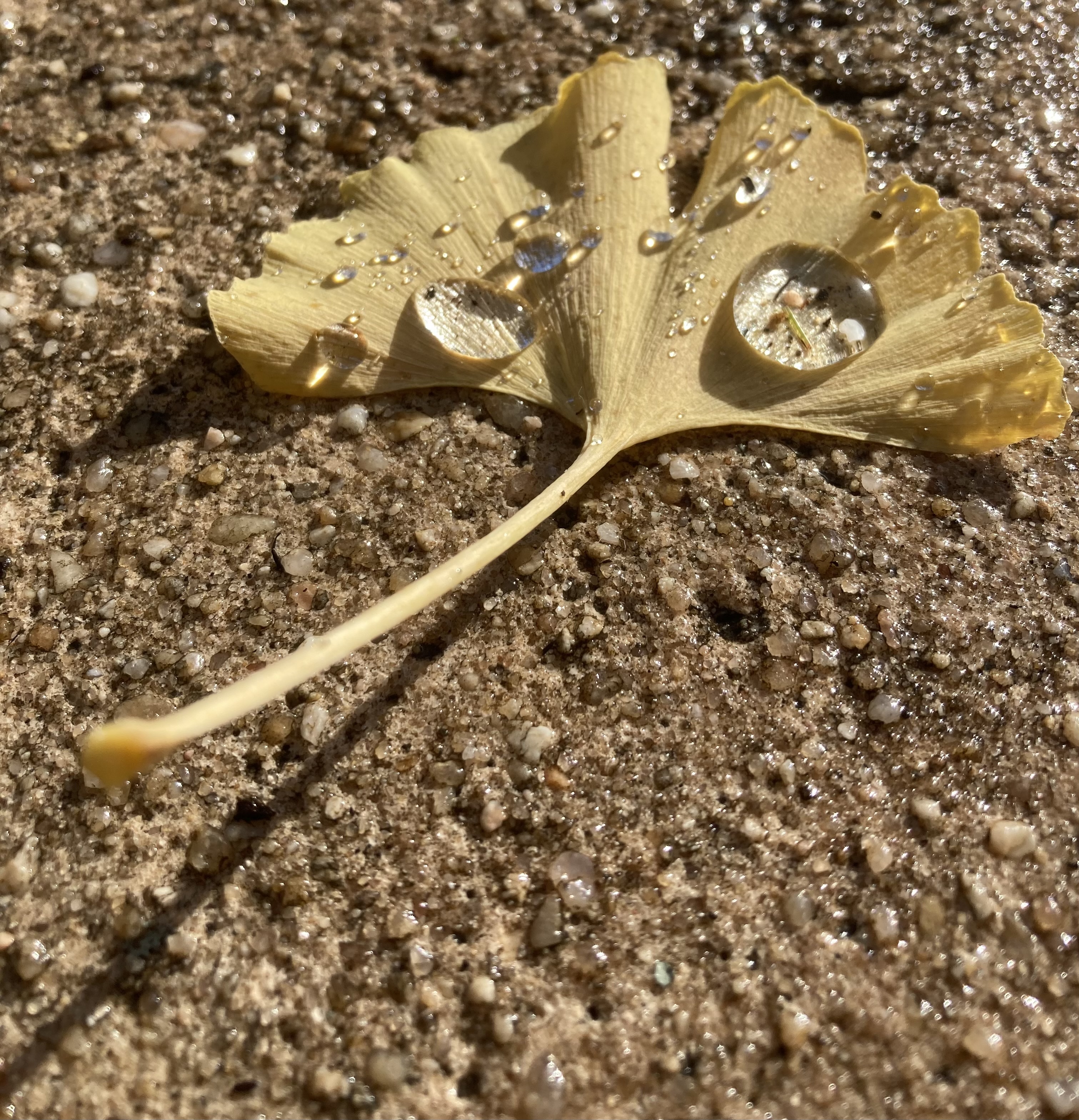
I find many trees beautiful. Some have especially lovely leaves which are so distinct in shape and colour that it’s easy to spot and recognise them. But what I find more powerful than just noticing and naming a tree, is to focus in on an individual leaf and take the time to really see it. There are no two leaves which are completely identical. Their uniqueness emerges as we consider their exact location at a particular time on a specific tree, or even, when we see a single leaf lying on the ground after a shower of rain.
The uniqueness of the leaf doesn’t lie in its “essence”, or even its particular shape, size and colour, but in its contexts and its relationships…….the tree on which it grew, the place where that tree grew, the season, the day and the time we noticed it, and took a moment to photograph it, the place the seed from which the tree grew came from, the person, or creature which carried the seed to this specific place, planted it, nurtured it, looked after it……and so on……
It’s the same for each of us. Every single one of us is unique. Over four decades of work as a doctor engaging with patient after patient individually, I never encountered two identical patients with two identical stories. Everyone had a special, un-repeatable, un-copiable (is that a real word??), presence. There was, and there remains, something incredibly special, even magical about uniqueness….perhaps not least because it can never be completely known.
There’s great beauty in uniqueness. There’s something “enchanting” about it. Not least because it’s the gateway through which we pass to encounter the “real”……all generalisations blind us to reality. They reduce complex individuality to features, characteristics or measurements. Labelling, judging and categorising extinguishes uniqueness and turns the beauty and wonder of diversity into something bland, soulless, and inhuman.
My life experience is that an awareness of uniqueness, and a desire to explore it and understand it, leads to a richer, deeper, more satisfying life.
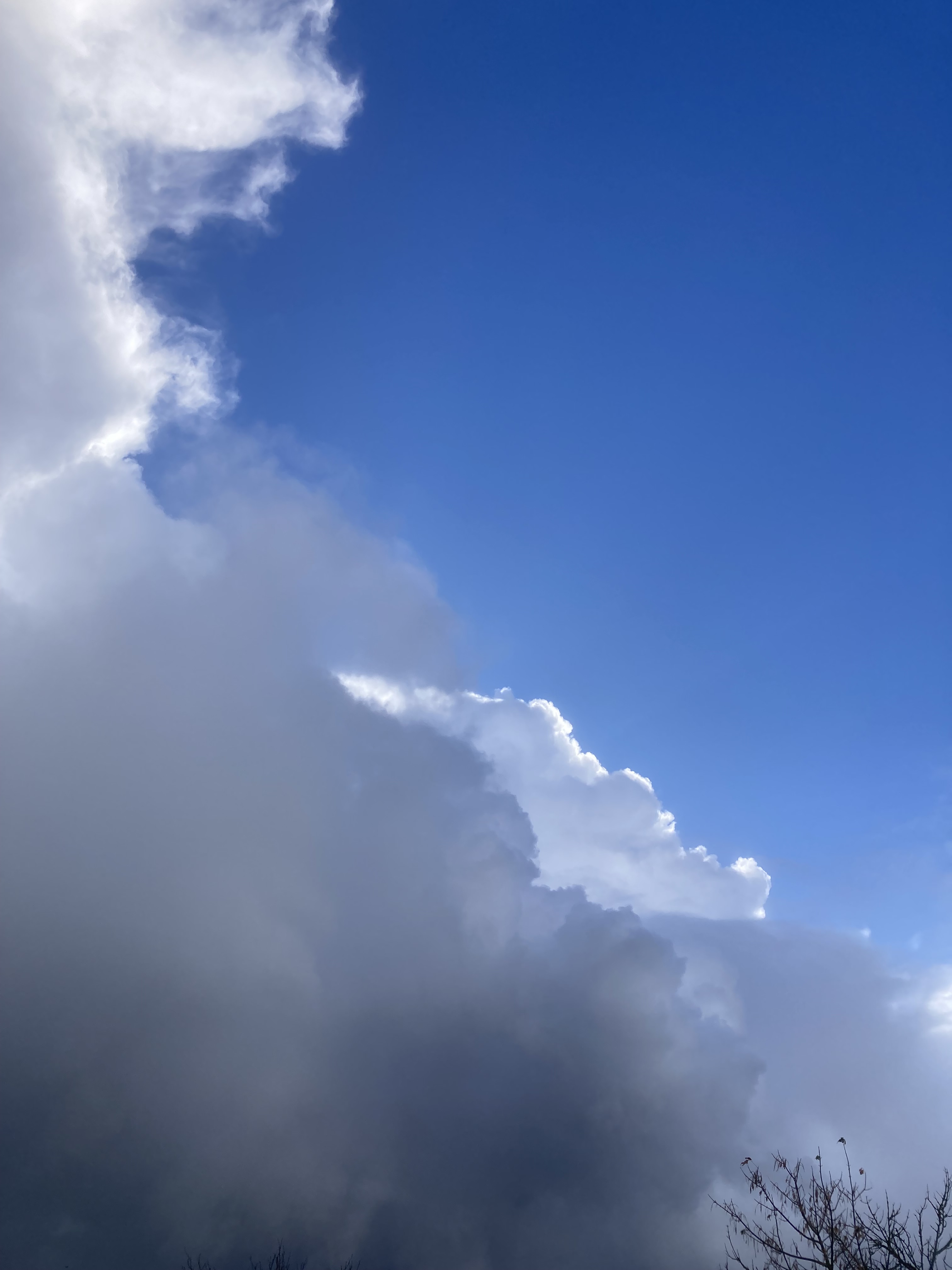
Silver linings – even behind the darkest storm clouds we can see sunlit fluffy white ones ready to emerge. When I look at this image I realise you can approach it two ways, partly because it’s a snapshot. You can see a white cloud in the process of being obscured by a black stormy one, or you can see a black stormy cloud moving away to reveal a white one. But it’s not just the lack of time context which allows us to approach this image in two ways. We can apply the same old glass half full, half empty adage. If you are of an optimistic disposition you’ll probably be tempted to see this as an image of the end of a storm. On the other hand, if you’re rather more pessimistic, or fearful, then you’ll see this as a storm approaching.
Pretty much the same thing happens all the way through the average day, doesn’t it? Don’t you know some people whose stories are full of mishaps and “bad luck”? And others who seem to land on their feet in every circumstance. Why is that?
Well, again, you can’t really know without context. When someone has suffered a lot of trauma in the past, it’s easy to understand why they might be fearful, and wary. And when someone is currently in difficult circumstances…..poverty, poor housing, surrounded by violence, even war, it’s not difficult to understand they will have trouble seeing the positive potentials in each day.
However, as ever, it’s not black and white. Psychologists who study happiness can find high levels of positive thought and happiness amongst very poor populations, although they also find that being extremely rich and famous is no guarantee of happiness either.
It’s not fixed either. If circumstances are changed that can help a lot….one of the best arguments for “Universal Basic Income”. We can choose, as a society, to create healthy, affirming and supportive environments for children to grow up in. We can, and should, expect politicians to look after the Commons, to tend to the water, the air, the soil, to the food supply and so on. That would be a good start, don’t you think?
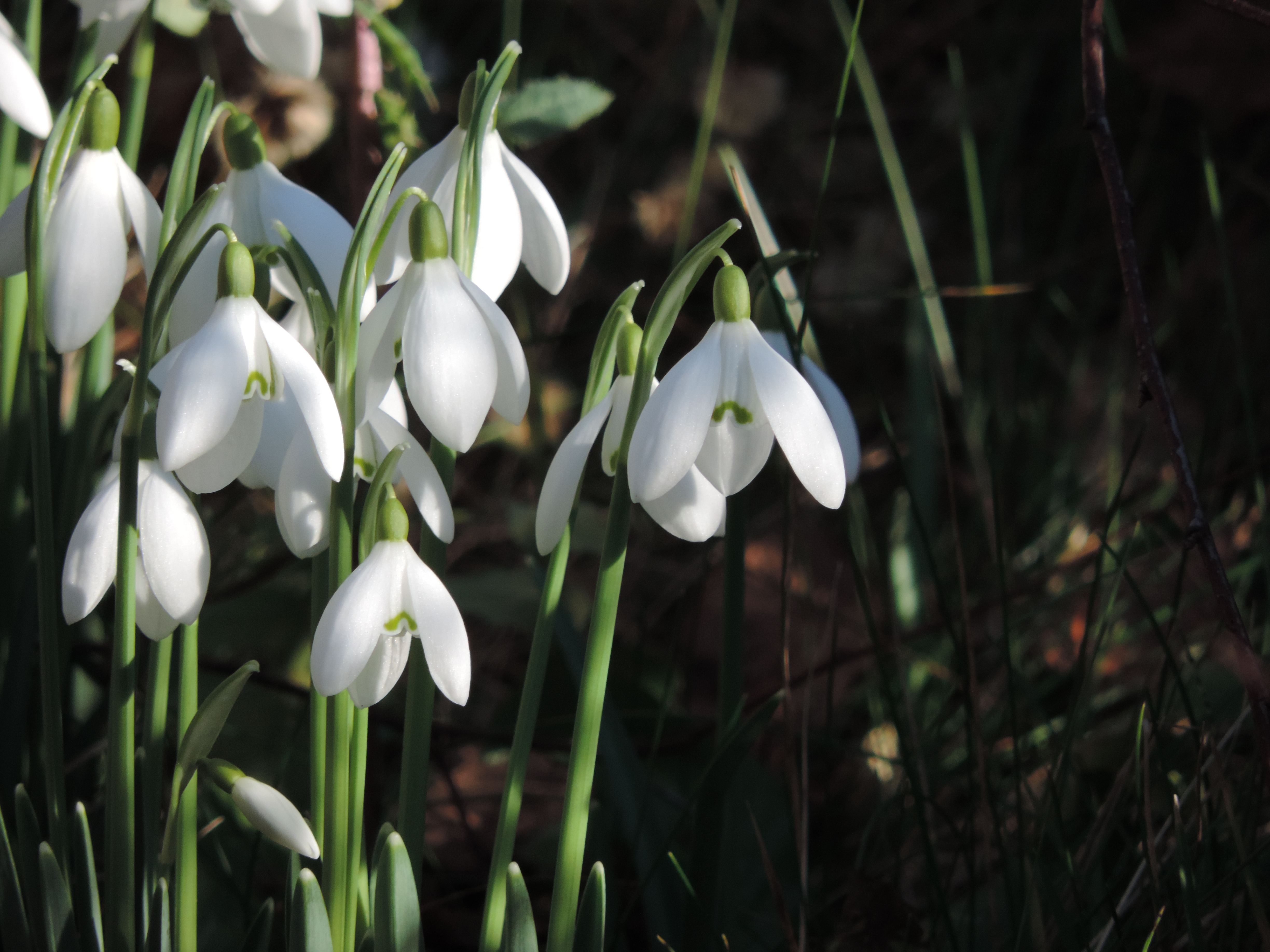
It’s the time of year where flowers are beginning to appear in the garden here. Not least the snowdrops which always make me think that we are on the cusp of the end of Winter and the beginning of Spring. The cycle of the seasons is the best evidence that Life isn’t linear. It loops, and spirals and circles and returns. I love that feeling of a rhythm over the year.
I know that many people think seasons don’t seem as distinct as they were in the past, but I’m not sure if that’s just a feeling we get when it’s not a nice day in summer, or when it feels unusually warm in the winter. However, yesterday’s news including warning of exceptionally high levels of pollen throughout the south west of France. Apparently some blossoms are a couple of months earlier than usual.
There’s no doubt the Earth’s climate is changing, and these disruptions to our familiar cycles are one of the alert signals. We still have these patterns of sprouting, flourishing, fruition and sleep, but maybe they are all shifting, maybe the balance between them has changed. Nature has astonishing powers of adaptation and I’m sure that’s happening already in the plant world, and even amongst many birds, insects and other creatures. Maybe we humans are late to the party. We certainly seem reluctant to change our habits and our lifestyles to respond to the changes in the climate (which are of our making, at least in part)
The underlying lesson I take from this though is that rhythms are important to us. We should learn to recognise them and to live according to them. They aren’t rigid, however, and we should be prepared to adjust to stay in tune with the rest of the planet.
I welcome constructive criticism and suggestions. I will not, however, tolerate abuse, rudeness or negativity, whether it is directed at me or other people. It has no place here. ANYONE making nasty comments will be banned.



 Heroes Not Zombies