Feeds:
Posts
Comments

Archive for the ‘personal growth’ Category

Fushimi Inari Shrine Torii Gates


Every New Year near Kyoto, there is a tradition to climb the hill to the shrine at Fushimi Inari. It’s a spectacular trip at any time of year, but the main reason people go there at the start of the year is for luck and prosperity.

This is the time of year when you meet people and say “Happy New Year”…….what are you wishing for them? Is it happiness? Luck? Prosperity?

Look at the path in the photo above. See how it winds around the corner……we can’t quite see where it is leading, can we?

That’s where we are, unable to see what lies ahead, but we can certainly choose which direction we want to go, and how we want to walk today……and isn’t that how we find happiness, luck and prosperity?

By choosing the direction we want to go, and by living today the way we really want to live.

Happy New Year. I hope its a year of growing, of flourishing, of becoming more fully you.

Read Full Post »

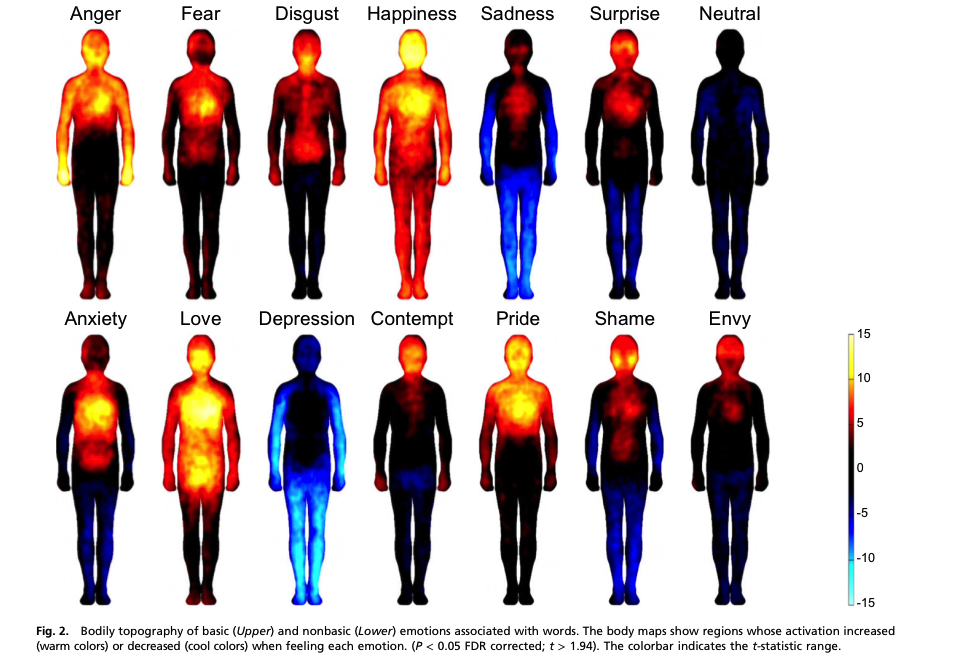
Here’s a fascinating study of 700 people asked to record what happened in different parts of their bodies when they experienced different emotions.

You’ve probably come across the idea of embodied cognition and embodied metaphors (briefly, we now know there are neural networks around the hollow organs of the body, especially the heart and the intestines, revealing that we don’t do all our cognitive work inside our skulls! and that metaphors like “heart broken”, “heart to heart”, “gut feeling” and so on, demonstrate how we experience the whole world through our whole being – body and mind)

This particular study is a self-reported one – it does not show physiological body changes, rather a representation of what people say they experience subjectively. Look at the beautiful summary image they produced –

embodied


How well does this show the shutdown experience of depression, the fist clenching of anger, the whole body experience of happiness, the links between anxiety and fear, or between shame and disgust, or between envy and contempt?

Another thing that strikes me about this is the degree to which the shutting down in depression is focused in the limbs – which makes me wonder about the links we are discovering about the healing power of exercise.

Interesting, huh?

Read Full Post »

Rays of light

In the fields of holistic and integrative medicine people often talk about taking a body/mind/spirit approach. The body and the mind aspects are pretty uncontentious. But what about “spirit”?

For many people the word spirit conjures up either organised religion, or non-denominational ideas like spirit beings, beliefs about life after death, or reincarnation, and so on. But is there a spirituality which isn’t supernatural?

Think of the idea of the “thin spaces” for example, where you feel connected to something greater than yourself.

In fact, I do think this is a key to the concept of spirituality – connection – connection to something greater than yourself. There’s a great pdf about integrative medicine (download here) across on the humanmedia.org site which includes a page on spirituality. They say it is

a means of connection and/or self-reflection through which one finds comfort, purpose and inner peace.

Not a bad definition, and it highlights both the key ideas of connection and of purpose. We are meaning seeking, meaning creating, beings. We do that through stories, through seeking patterns, by joining things up……and that gives us our myths, our beliefs and a sense of purpose. It’s pretty hard to live a life with no sense of purpose.

The Humankind document goes on to say that spirituality includes the qualities of

compassion, humility, generosity and simplicity

I wonder if thinking about qualities such as these helps us to see spirituality as something essentially integrative – in the sense of it being that which connects and pulls the body and the mind together……

Back to the idea of spirituality including a sense of being connected to that which is greater than yourself – remember this little RSA Animate video of Jeremy Rifkin’s fabulous talk on “empathic civilisation”? No? Click through and watch it now.

What does spirituality mean to you? What part does it play in your life?

Read Full Post »

James Hollis, in “The Middle Passage”, says

The invitation is to shift gears for the next part of the journey, to move from outer acquisition to inner development

and

…it is this emphasis on inner, rather than outer truth, that distinguishes the second adulthood from the first.

Whilst I think these developmental shifts are a perpetual presence in our lives, there is no doubt that we are more aware of the transition phases at some times than we are at others, and this is where I am now, at the end of 2013, in one of those transitions. So, I’m enjoying shifting gears, and throwing myself more fully into the process of becoming.

Are you ready to accept the invitation to change gears? I wonder what inner truths we’ll discover?


Read Full Post »

Atlantic

Kenneth Steven, in his poem of imagined fragments, “A Song Among The Stones”, describes what the journey might have been like for the Celtic Christian monks who are believed to have travelled from Iona to Iceland.
On the first page, these two lines grabbed me

yet this is the place they came to find
an island thin to the divine

That’s a wonderful phrase, “thin to the divine”. I can think of many places where it feels as if the land is thin to the divine, those special places which move and stir your spirit. Off the West coast of Scotland is definitely one of those places for me.

Where are yours?

Read Full Post »

As we come towards the end of another year, there are many articles and programmes looking back over 2013, and looking forward into 2014. In the socio-economic world what we hear about most is “growth”. Concern about whether or not there has been “enough”, and how we can all strive to produce more. Every single country in the world is measured in terms of the “growth” of its economy. Very little growth, bad marks. Increasingly more growth, good marks!

But growth of what? And for what?

Growth of consumption. That seems to be one marker. Consumption of what? Doesn’t matter. Stuff. Just, the more consumption, the better. Growth of “activity”. That’s another. But what kind of activity? Just activity. Busy turning financial derivatives into even more complex products to sell others. Busy making stuff. Busy moving stuff. Just activity.

Why? Why is more consumption and more activity good no matter what is being consumed, no matter what activities are being carried out?

Is it to produce more and more wealth for less and less people? Because that’s the sure and certain trend we are seeing.

Meantime we are seeing two other forms of growth. Growth of the number of people alive on the planet. Growth of the amount of finite resources we are taking out of the planet. Growth of the number of drugs people take every day. Growth in long term diseases and cancer.

Something isn’t going right, don’t you think?

Marc Halévy, in his “Prospective 2015 – 2025”, [ISBN 270331017X] takes this whole issue by the scruff of the neck and points out with stark clarity that we are just not on a sustainable path. More than that, we seem to be caught in a communal delusion, that this current path of ever more consumption by ever more people is a good thing – in fact THE good thing – THE criterion on which to judge the health of any economy.

This is just crazy. It makes no sense.

Marc suggests an alternative and he captures it in a simple French phrase – “la jouissance de la frugalité”.

These aren’t the easiest words to translate into English (help me out here if you are good at translating!) – but you get a bit of the sense of “jouissance” from the french phrase “joie de vivre” (which, interestingly, is one of those phrases we English speakers use directly as it is). It’s something to do with pleasure, joy, delight, satisfaction, something life enhancing. It’s, fundamentally, about quality. And “frugalité” isn’t exactly “frugality” as we would say in English. In fact, frugality isn’t a word which is used much by English speakers any more, but Benjamin Franklin had it as one of the most important of his virtues. It doesn’t mean something inadequate, or poor. It isn’t about poverty. But it is about “less”…..a kind of making the most of whatever it is you have…..

We can find this suggestion in the “sweetness of life”, and in the “slow movement“.

It’s about more quality for less consumption. It’s about living in the present, savouring, enjoying, mindfully experiencing every single moment.

Once you apply that personal principle to the universal, then you stop to ask yourself at each level. Does this enhance my life? Does it enhance the life of the human species? Does it enhance Life on Earth? Does it enhance the Universe?

Enhance might not be the best word, but I hope you get the idea. We need to shift our focus from more, more, more numbers and stuff, to deeper, greater, more impactful quality of living.

We need more of “la jouissance de la frugalité”

fishermen Lake of Menteith


Read Full Post »

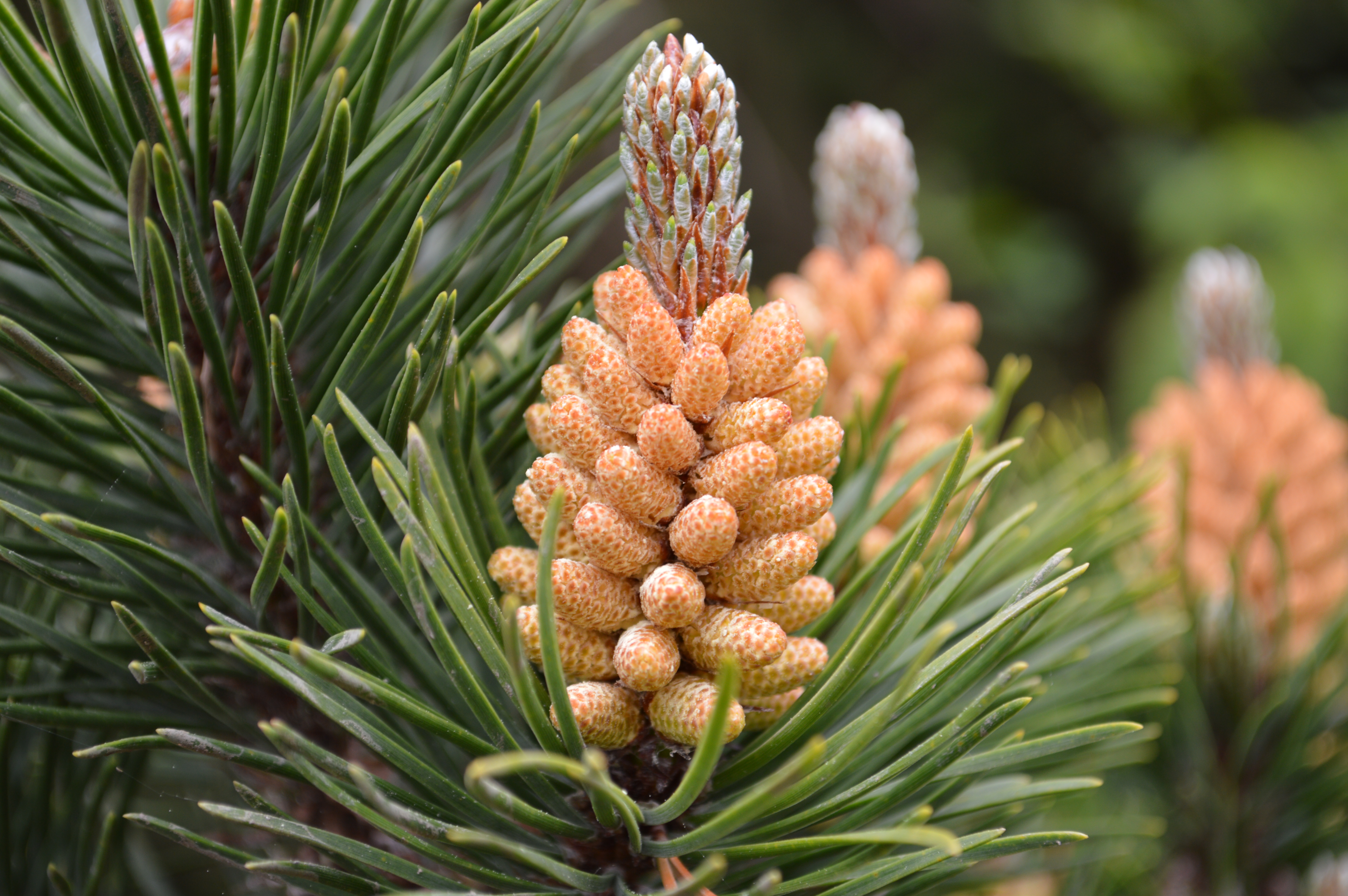
DSC_0012


Here’s what you can do.

You can do what the whole universe does.

You can do what absolutely everything in the universe can do.

You can realise your potential, your completely unique potential.


Read Full Post »

Hmmm…..haven’t come across this acronym before but its an exciting one!

It stands for Music Evoked Autobiographical Memories.

This interesting study used “No. 1 songs” to stimulate autobiographical memories in patients with brain injuries. They compared this method to the standard psychological “AMI” – Autobiographical Memory Interview. It’s a very small study of 5 patients and a very specific type of problem so the conclusion that music was more efficient than verbal prompts at eliciting autobiographical memory needs further study.

However, this whole idea has pricked my imagination. How often does a particular song or piece of music take you right back to a particular place, time or person in your life? How often do we share music with old friends or family to recreate our shared autobiographical memories?

One element of the study which is especially interesting is that most of the MEAMs were associated with positive emotions. When you think of our brain’s bias to negativity (Rick Hansen says our brains have velcro for negativity and teflon for positivity), and the common claim that we need a ratio of 3 – 5:1 positive to negative thoughts a day to experience flourishing, then surely music must be a GREAT tool for embedding positive, accessible experiences into our memories.

I know, there are lots of other reasons why music plays an important part in our lives, but, hey, MEAMs just sound such fun!


Read Full Post »

One of the greatest emotions to you can experience. When I teach Heartmath, I ask people to think of a moment of AWE as one of the possible “heart feelings”

If you’re not quite sure what constitutes AWE try this – it is (no, I’m not going to say “awesome” – yuk!) FANTASTIC!


Read Full Post »

For a long time there have been two broad views of the universe. Determinism and meaningless chance.

Most religious traditions have the idea of a Creator, of some super-natural spirit or force which is in control. There is comfort in this view, in that it helps to make sense of Life, and brings a feeling of there being some control over events (even if that control is in the hands of God, rather than of human beings).

With the rise of materialism and decline in religious beliefs, many feel that the universe is a heartless, meaningless place where we are all the repeated victims of chance. Of course, some who see the universe this way gain great comfort and security from humanistic principles ie that we are the masters of our own destiny.

In the second half of the 20th century a third view has arisen. Complexity science has allowed us to understand that chaos is absolutely not the same as randomness. Once you understand the principles of complex systems (networks and webs of interconnected parts which are all acting on each other), then you find that whilst the behaviour of chaos can be hard to discern, it allows us to see that everything holds together. Indeed, if you consider the “universe story” of energy, to the first atoms, the creation of stars and planets, to the first elements, the emergence of Life, and evolution of consciousness in human beings, you can see this other view appear – one which does not require an external “super-natural” controller, but isn’t random and meaningless either. There is a direction of travel in the universe story towards ever and ever greater complexity. As complex systems move to “far from their equilibrium” points into the chaos zone they can develop completely unpredictable levels of greater organisation and complexity (see the concept or “dissipative structures“)

I do think we are in the early days of this new paradigm, but, for me, it makes a lot more sense than the materialistic, nihilistic scientism which has dominated the last century and more, and doesn’t require me to believe in any super-natural beings. I’m very happy to know such a new paradigm is emerging because so much seems to be falling apart – the economic/financial system, social structures, the health of the planet and the health of human beings who consume ever more drugs to try and control ever more chronic disorders. We need new ways, different, more creative ways of understanding and organising our shared Life.

If you’ve read anything about this emerging paradigm, do let me know – I’m keen to read whatever I can get a hold of!

Read Full Post »

« Newer Posts - Older Posts »