Feeds:
Posts
Comments

Archive for the ‘Uncategorized’ Category

Pausing to reflect

I’m quite a fan of benches. I’ve got several photos of different benches I’ve come across over the years, usually when they are in a quiet place, under trees, or, facing a wonderful scene, like looking over a valley, off to mountains, or across a lake or the sea.

It’s not that I frequently feel the need to sit down. It’s that a bench is always an invitation to pause.

When I worked as a GP in Edinburgh we had two surgery premises, one in Portobello, and the other up near Cameron Toll. So pretty much every day I’d be driving between the two places, and my favourite way to go was through Holyrood Part. I’d pass a bench at the side of the road. There might be somebody sitting on it, or it might be empty, but, invariably I’d look at it with a sense of longing….thinking, if only I had time to just pull up here, and sit there for a few minutes. Of course, I never did. I was always rushing to get to the next patient, or to start the next clinic.

It’s important to pause. It’s really important to step out of the flood of demands and habits which keep us in a kind of autopilot through the average day. And the best way to do that is just stop. Just stop for a bit. You don’t have to learn to meditate, but you can do that in your pause if you want. But what actually helps is to simply interrupt the automatic pilot, stop, observe, reflect and contemplate.

It’s refreshing and it brings you back into the real world of the present moment, away from all the ruminations and hoped for, or feared, anticipations.

Read Full Post »

Ethnobotany

This is Echinacea….maybe one of the best known medicinal plants, with a reputation for helping to boost the immune system. If I ever get a cold or flu, I take Echinacea daily until it’s gone. I don’t remember where I read it, but back when I was a GP I remember reading a few studies which seemed to show that taking Echinacea during viral illnesses could be associated with less severe symptoms and a shorter duration of illness. I’ve adopted the practice ever since.

I have quite a fascination for medicinal plants. There’s something extra special about finding or growing a plant with reputed healing powers. I was pretty excited last year to discover “self heal” suddenly growing all over the garden, and I do like to see plants like Echinacea, Chamomile, and Pulsatilla growing nearby. I even like the poisonous ones with potential powerful pharmacological effects (even though I don’t actually swallow any of them!) – Foxglove (Digitalis), Aconite, Belladonna, and Trumpet flowers (Brugmansia) – although the only ones I’ve managed to grow so far are the foxgloves.

I can’t remember when I first encountered the term, ethnobotany, the study of the place of plants in human lives, but I’ve often thought that, in another life, I’d probably have enjoyed studying ethnobotany at university. One of my favourite books on my bookshelves is “Plants of the Gods”, subtitled “Their Sacred, Healing and Hallucinogenic Powers” by Richard Evans Schultes and Albert Hofmann.

When I learned homeopathy as a young GP it fired up my interest in the potential healing powers of plants many fold, and I still think that’s one of the reasons why I enjoyed learning homeopathy so much. To be able to enjoy the beauty of a plant, to be fascinated with its growth, but in addition to know stories about human beings have interacted with it over the centuries seems, to me, to deepen and expand my enjoyment.

Many years ago I went to an ethnobotany exhibition at Inverleith House in the Royal Botanic Gardens in Edinburgh. In the middle of each room were plant filled stalls laid out like a street market, with explanations about each plant. I remember thinking, how on earth did nomadic tribes discover that one particular plant was good for treating diarrhoea, whilst a different one was great for dyeing your clothes purple? I mean, was it decades of trial and error? How many purple people died from diarrhoea?

That still absolutely fascinates me. How did the tribes in South America discover that a particular tree was good for treating fevers, only for us to discover decades later that it contains quinine, a great malaria treatment? And how interesting that when Samuel Hahnemann read about that in Cullen’s Pharmacopeia, he decided to take some of the tree bark himself, leading him to come up with the idea of “like treats like”, and, hence, the whole therapeutic method of homeopathy?

Read Full Post »

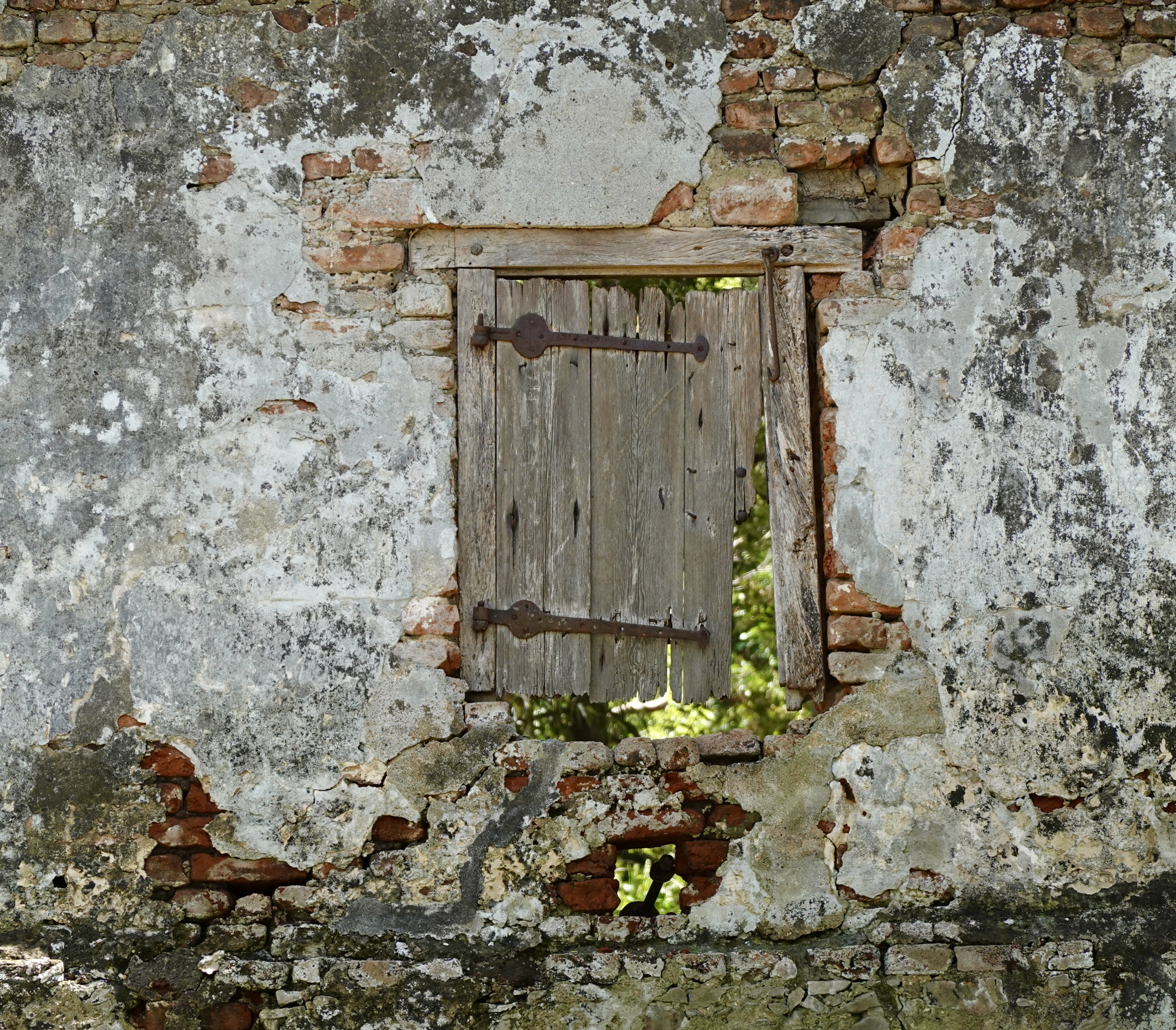
For some people beauty is found in perfection, but what is perfection? The trouble with trying to find beauty in perfection is that we are never really convinced about perfection….there’s always something just not quite right, isn’t there? And, actually, just as beauty is in the eye of the beholder, so perfection is not something everyone can agree on.

In Japanese culture, one of the many aspects of a concept called “wabi sabi” is finding beauty in imperfection. I think this photo is a good example of that. It caught my eye because I found it beautiful and when I look at it again, now, I find the whole image beautiful.

It’s hard to just put your finger on what makes such an image beautiful. There’s a similar, though different, concept in the West as “shabby chic” – and there is no doubt that when I travel around France, Italy and Spain, I find lots of examples of old, often neglected buildings which have a real charm to them. But I can also walk in areas of urban neglect where I find it hard to see any beauty at all. Were we better at building beauty in the past?

What do you think? Do you find beauty in “wabi sabi”?

Read Full Post »

This photo inspires two opposite thoughts in my mind – one about longevity and one about brevity. This tree stump reveals about a hundred rings. I haven’t actually counted them all, but I think there are around a hundred of them, and that’s not unusual for a tree. In fact, many trees have a far greater longevity than human beings do. Some of them have lived several hundred years. Methuselah, a tree in Eastern California, is reckoned to be the world’s oldest tree, and seems to have been alive for over four and half thousand years. We humans average around eighty years, and can reach just over a hundred in a minority of cases. What enables any living organism to live for many years? One feature is persistence. The thing is nothing stays the same. Objects are not as fixed as we believe them to be. A tree, like any other living creature, is constantly metabolising nutrients, turning some into energy and others into structures such as fibres and cells. It’s actually more true to say that all living things are systems of constant flow and change…..but they look stable and fairly fixed over time. We can identify them, one from the other, not least because of this capacity to retain an internal integrity – a persistence over time.

On the surface of this tree stump is the shadow of a couple of flowers. From the shape of the shadows I’d say they are some kind of allium. If you look carefully you’ll see a few scattered purple petals. The shadows won’t last long at all. A cloud might pass over the sun at any moment and they’d disappear. Or over a few minutes the Earth will turn and the Sun won’t cast the shadows of the flowers in this direction any more. The petals which have fallen from the flower remind us how brief is the life of a flower. They really don’t appear for very long at all….certainly not nearly as long as a tree. Both the shadow and the flower make me think of the polar opposite of persistence – transience. Transience is the other fundamental characteristic of all life. Nothing lives for ever. Even a tree thousands of years old will die. We humans, all within a much shorter period than that. In Japanese culture transience is greatly valued and you can see that most clearly during the season of the cherry blossom, where the national newspapers chart the spread of the blossom from the south to the north of the country, and when thousands upon thousands of people go out to admire the trees, take photos, have picnics, and enjoy the colours.

Persistence and transience.

We need both. And it’s not a matter of balancing them so that one cancels the other out. Reality is a constant flow of change…..but it’s not formless chaos. Very distinct, very knowable, very recognisable individuals appear, live a life, then fade away back into the whole from which they emerged. Isn’t it amazing how we have evolved the ability to be aware of, even to relish, or celebrate, these polar opposites? Persistence and transience.

Read Full Post »

Not simple

Living organisms are not simple (no, not even the simplest of them!). Look at this tree. How could you begin to trace its beginning and its end? Where do its roots begin and end? Where does the trunk begin and end? What makes the branches emerge exactly where they do, and what determines the direction they will grow and distance they will stretch?

And, to think, this tree began as a single seed. How absolutely impossible to predict the exact shape and size of this tree from an examination of that seed.

We like to chop reality into pieces, calling this a part, and that, another part, as if there are clear divisions between what we are calling “parts”. But that’s just what our brains do. Specifically, that’s how we engage with the world from the perspective of our left cerebral hemisphere. That hemisphere was never intended to function alone, and all its hyper-focus, all its re-presentation, all its re-cognising, labelling and categorising, was always meant to be passed back to the right hemisphere for re-contextualisation, for re-absorption into the whole, so we could see the connections, the relationships, the ever changing, developing flow of the world.

I’m convinced that the world is a more satisfying place, that life is better, when I open my mind to awe, to wonder. I’m convinced that the world becomes meaner and more shallow when I reduce it to “things”, “objects” and utility.

How amazing it is to really stand and see a tree, a single tree, to gaze, and to wonder at its origins, its history, its connections and its here and now reality. How amazing.

Read Full Post »

There’s an ancient spring opposite my house. It was there in the times of the Celts and the Gauls, then the Romans came and built a small viaduct and channel to harness it. The pool at the spring’s origin flows over a small wall into a narrow channel, and out into a stream which runs for kilometres through the countryside. Several of the villages near me have the word “moulin” in their name. It means a “mill”. The water flowing along this stream powered the millstones which ground the wheat. There’s little left of actual mills, but there are some with remnants of great stone wheels in their gardens, or at the sides of a house. The road follows the route of the stream. It follows it so closely you’d think they had both been created at the same time, but I think the water probably found its own way, and the people followed.

From time to time, I’ll spend a while across at the spring, gazing at the water flowing past the ancient Roman walls, and listening to it gurgling its way to the stream. It’s such a delightful experience. A few moments under the trees, standing on the grassy slope, paying attention to the flowing water.

There are many aspects of Nature which enhance our lives. The Japanese practice “forest bathing”, benefiting from time spent amongst trees, an experience I highly recommend. Researchers have discovered benefits to hospital patients in terms of speed of healing and reduction in pain and complications if they have a view of nature through the window from their beds.

Experiences of flowing water, for me, is one of these many circumstances which enhance an ordinary day. Fountains can have a similar effect. We don’t have any near us, but many French towns have a number of fountains in their central squares, and they always draw me to them.

Do you have anywhere nearby where you can spend a few moments next to flowing water? A stream, a fountain, a waterfall? If so, all you need to do is to pay a little attention to it. Focusing on some flowing water for a few minutes often seems to make a day a better day.

Read Full Post »

We humans are social creatures. We’ve evolved in such a way that we need the assistance and care of others to survive our first months on this planet….longer than most other infant creatures. And our brains have evolved in a way which enables us to be especially able to tune in to others, to empathise, and to create social relationships.

None of us could exist today without a vast web of relationships and connections with others. We share a common planet, a common atmosphere, a common water cycle of oceans, clouds, rains, rivers and lakes. We share environments, whether they be physical, geographical, social, or cultural. That doesn’t mean we are all the same. We are all, every one of us, absolutely unique. But none of us can exist in that uniqueness if we are disconnected.

Our political and economic structures of the last couple of hundred years or so have driven a kind of hyper-individualism, grounded on competition and struggle, but all that comes at the expense of denying our most fundamental reality – we are not alone – we share the one planet, we survive and we thrive because we have evolved the capacity to care for each other, to collaborate and to form “integrative relationships” – mutually beneficial bonds between well differentiated parts.

There is another story to tell. It’s the story of connections, of inter-dependency, and of a shared commons. It’s a story which emphasises compassion, care and love. Is that such a hard story to tell?

Read Full Post »

Making life good

There are lots of ways to make life good, but, here’s two practices which work best for me.

The first is, “stop”. Take a pause. We have a tendency to go through life semi-consciously, following habits, zoning out, and just not noticing the here and now. We can drive a regular route and when we arrive at our destination we can’t remember what we saw on the way. We can get to the end of January and think “Where did that go?” Everything is getting faster…..the news cycle, where the latest drama shocks you and upsets you, then, before you know it, it’s gone, as if it never existed, having already been replaced with the next shocker. Technology develops faster and faster, and the latest smartphone is virtually redundant from the moment you buy it, because already they are hyping the next “better” model. “Fast fashion” is just that….try and keep up….what you bought today is out of date tomorrow. “Doom scrolling” hooks us into an endless flow of mini posts, headlines, adverts, each one forgotten within days, of not within minutes.

The counter to all this is to slow down and pay attention. Yes, it might even involve actually stopping. You can set off today with an intention to notice…to see what catches your attention, to notice beauty, to allow yourself to be curious. But you have to slow down to reap the benefit. You have to pause, to really become aware of the present – what do you see, hear, smell, or taste, or what can you feel, right now?

The second is “reflect”. You can reflect right within the moment…as you notice something, take a moment to reflect on it, to contemplate it. And the other thing I like to do is take out my phone and take a photo. If you photograph what caught your attention, you give yourself multiple opportunities to reflect on it later.

There’s my two practices for today – “Stop” and “Reflect”. Try them both.

Read Full Post »

Look at this nest hanging from a tree in a garden at the foot of the mountain. Some nests are pretty amazing. This one is a sphere with a small entrance on one side. Why has the bird has chosen this exact spot to create it? We don’t know, but I’d imagine it’s got something to do with safety. After all, isn’t that one of the most basic needs of all forms of life? Shelter. But why hang it way out on the branch like this, where, surely, it’ll be buffeted by wind and rain more than it would be if it were closer to the tree trunk, or in a more dense area of branches and twigs. Again, I expect it’s about security. I expect it’s harder for predators of all kinds to reach it way out there.

But the other thing I thought about when looking at this photo, is the location of the nest in the surrounding landscape. A phrase from one of TS Eliot’s plays came to mind, where a character asks if people huddle together in cities in such large numbers because they like to be close to each other. I saw a graphic the other day showing the growth of cities over the last fifty years. Tokyo is the most densely populated city in the world by far, with something like a quarter of the whole population of Japan living there. I live in a hamlet of about 20 houses, just at the edge of a small village, surrounded by fields and trees. There are so many little villages and towns in rural France where you can pass through without seeing a single soul. All you see is shops and businesses which have long gone, and many abandoned old houses in various stages of disrepair. There’s a common issue in small to medium towns in France where they have developed shopping malls and zones around the edges of the town, and now, the middle of the town is almost dead. When we used to live near Cognac, we could walk down the main streets hardly seeing another soul, but as we passed the shopping outlets on the edge of the town we could see the parking lots were full to overflowing.

Why do we choose to live where we live? Of course, that’s a very complex question, related to where you were born, where your relatives live, where you can find gainful employment, where there are the necessary services providing education, health and social care. And a host of other factors too. But there’s also the issue of personal preference between city dwelling and country dwelling. There’s no doubt some people really prefer city life to that of a small town, or a village, and there are others who have the exact opposite preferences.

What would be your ideal place to live? If you could choose freely, what size and type of community and environment would you like to live in? And, do you know why?

Read Full Post »

Our brains have evolved a brilliant talent for spotting patterns, and one of the patterns it is best at noticing is a face. Not only do we have an ability to recognise a face quickly in a crowd (even if we have trouble putting names to faces as we get older!), but we see faces where there aren’t any.

Look at the surface of this rock. Doesn’t it, for all the world, look like a painting by Munch? A distorted face, perhaps, but a face all the same. These faces which are not really faces, but simply face-like patterns, always amaze me. I tend to see them most commonly in trees and rocks, but sometimes they are apparent in flowers or even buildings.

What’s the point of that? I wonder. What’s the value in being able to see faces which are not actually faces? Is it just a sort of side effect of the face-pattern-spotting skill? Maybe it is. However, even though I don’t know why we’ve developed this ability, I love it. It speaks to our capacity for imagination and creation which is so fundamental to human life. And it adds a layer, or, better, perhaps, reveals a depth, to perception which takes it beyond the mere utility of seeing. It can inspire. It can bring us moments of wonder and delight. It can spark our creativity and slow us down, stopping us from just breezing past, not really noticing. It brings beauty and reflection to life itself.

What face-patterns have you spotted recently?

Read Full Post »

« Newer Posts - Older Posts »