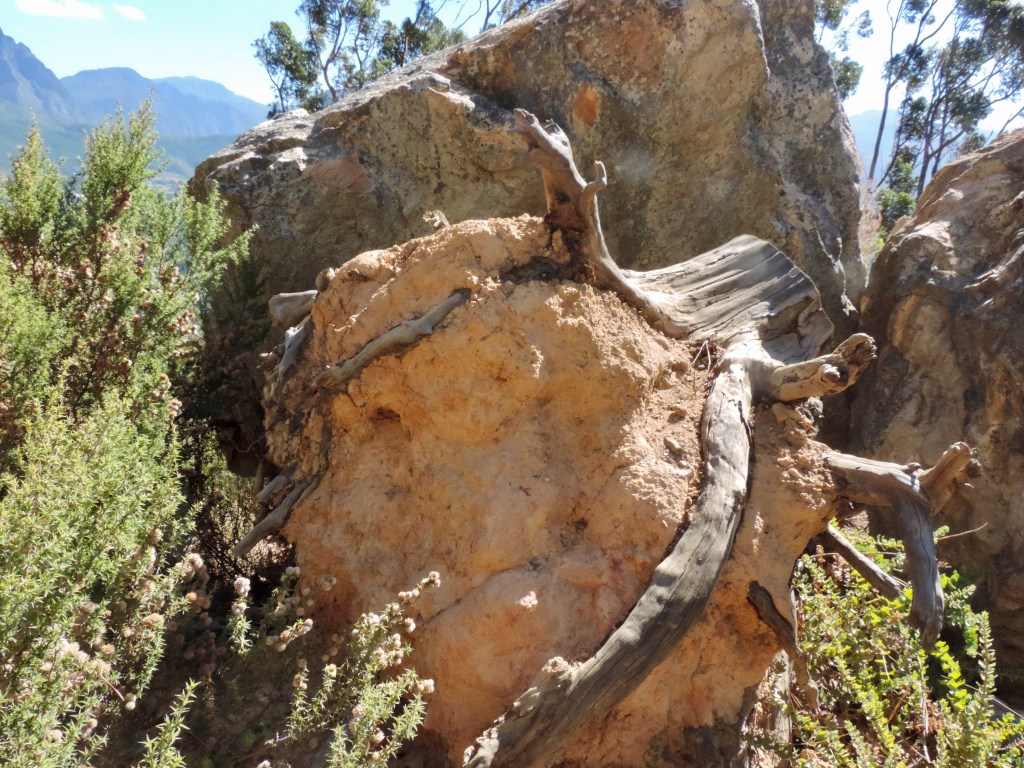
I think this looks like a weird lizard creature with extremely long arms wrapped around a huge pieces of fruit.
But it isn’t. It’s a plant wrapped around a rock. Perhaps the remains of a plant’s roots wrapped around rock.
I love it when I see something which challenges the classification of the world into three kingdoms – animal mineral or vegetable – whether that challenge comes from my imagination or from the structure or behaviour of what I’m looking at.
These metamorphoses highlight the interconnectedness of all that exists. There wouldn’t be any animals without plants and minerals after all, so to understand any of them we need to see them in their contexts, exploring their interconnections over time.
All that exists emerges within the flux of constant flows, some moving very slowly, others at speed, each stream changing the others.
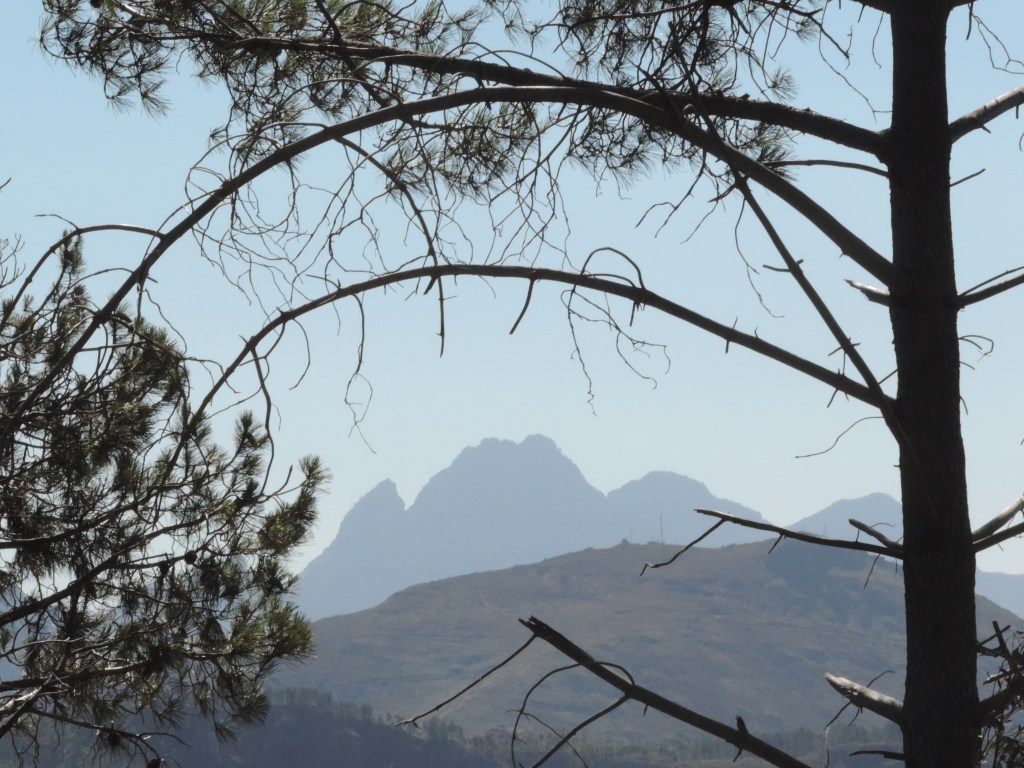
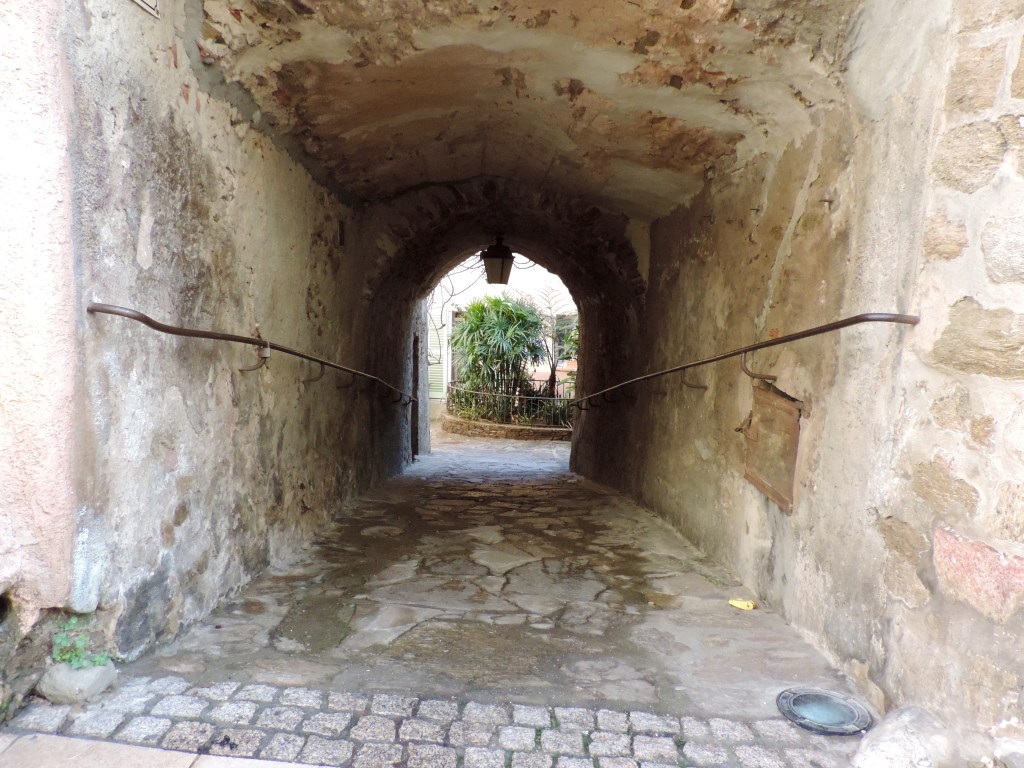
I’m not especially aware of framing my shots when I take them but, clearly, composition is important to me. I don’t press the button until what I see in the viewfinder pleases me.
We frame what we look at all the time, and, mostly, we do it unconsciously.
Framing is a way of directing our attention. We include what we want to focus on, and exclude from the frame, what we wish to ignore.
We humans have many ways of creating frames, not least by telling stories and by deliberately pointing towards whatever we want others to notice.
Magicians pull off their tricks by diverting the audience’s attention, by getting them to “watch this”, not that.
Politicians do the same. Whether we call it “spin” or “setting the agenda”, they frame what they want us to pay attention to, and exclude what they hope to hide.
Advertisers tell stories, direct attention, create frames, to get us to pay attention to particular products.
PR companies portray for their clients the images, the stories, they want the public to pay attention to.
There are lots of people busy creating frames for you to look through. Again, for the individual viewer, that’s mostly unconscious. So, sometimes it’s a good idea to notice the frames, to become conscious of where we are directly our attention, what we are including, and what we are excluding……whether we are the ones doing the framing, or somebody wishing to influence us is doing the framing on our behalf.
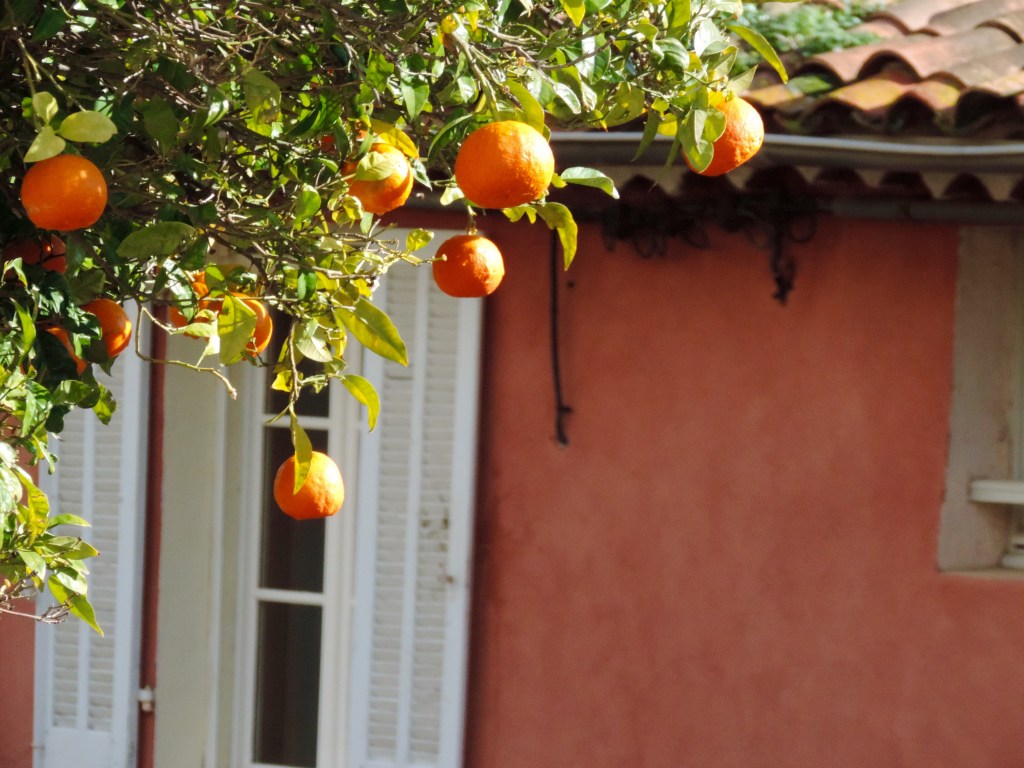
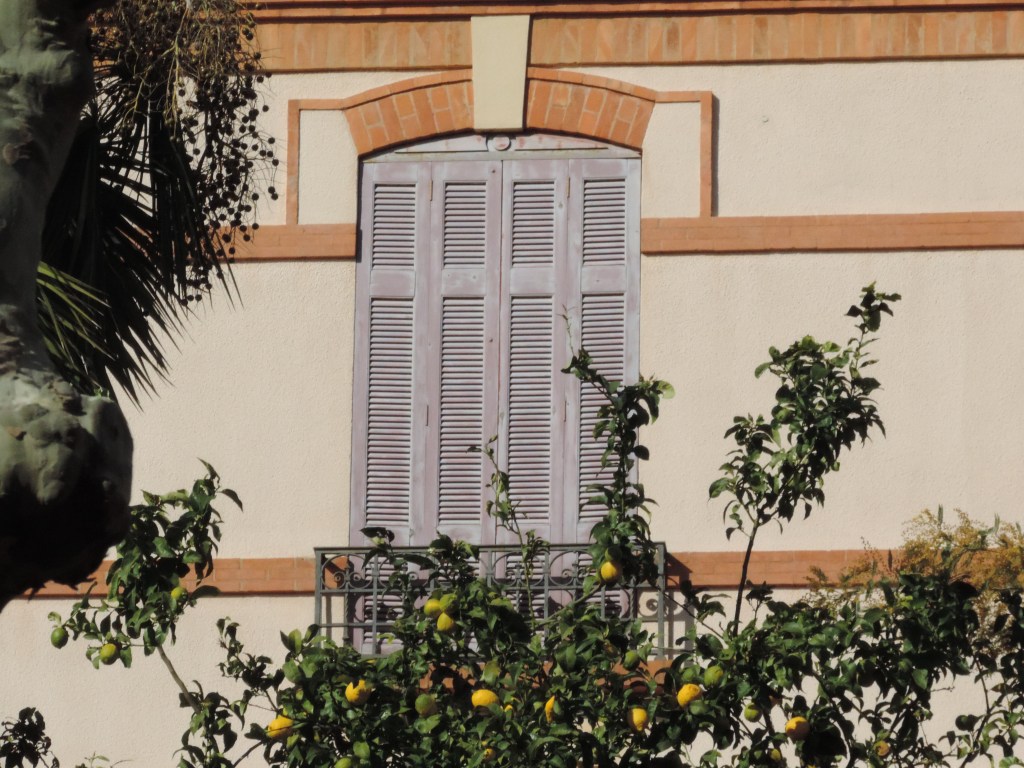
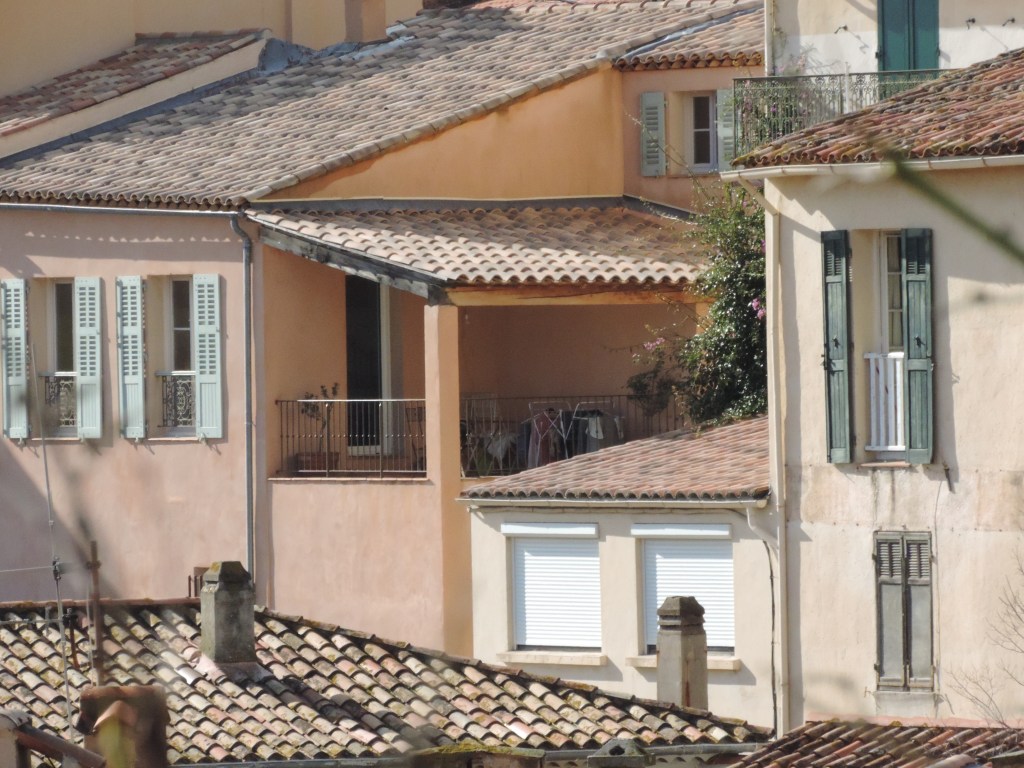
I took these photos one February a few years ago while visiting Bormes-les-Mimosa in the south of France. How many towns do you know which include a plant in their name? I’ve taken a number of photos of the mimosa blossoms there at this time of year. But I’ve visited this town at various other times of year as well. I love the colours used on the walls of the houses and the pastel shades used to paint their shutters. But perhaps one of the things I like best about this town are the citrus trees everywhere. Aren’t they beautiful?
One of the interesting characteristics of the citrus family is that many of them produce fruit several times a year, so there isn’t a single season to see the trees laden with all the fruit. So when I visit a town like this I’m struck by a certain consistency and continuity.
Consistency and continuity.
I’ve often been told those are two of my strongest characteristics. Despite the fact that I have ups and downs, good days and bad ones, and that I experience every day as different and every person as unique.
I read an article by Dr Clare Gerada today in the Guardian. She’s a GP and at one time was President of the Royal College of GPs. In her article she was reflecting on the changes in General Practice over the last 30 years, and reflecting with sadness over what had been lost. Her main point was that continuity of care had gone almost completely and that with that caring personal relationships built up over many years.
That’s an observation I’ve heard others make. It’s the experience my elderly relatives have had and it’s the experience I had during my dad’s final illness.
She said continuity had been sacrificed in a drive towards “efficiency” and I think that’s the hub of the issue. I’ve read a number of terms to describe the current system – “evidence based care”, “efficient care”, but also, “protocol, guideline and target driven care”.
Also, “industrialised” and “taxi rank” Medicine. These two latter terms capture key features. The health care system has been transformed by applying the practices used in industry where tasks and procedures take precedence over human beings, and where cost managent and/or profit becomes the goal. Where quantities, what can be measured, is given priority over qualities and experience. Taxi rank medicine is where you receive care from whichever doctor happens to come along next. Whether or not you’ve ever seen that doctor before, or will do ever again, is considered irrelevant.
If there is one single change I’d like to see in health care it would be to prioritise continuity of care. The more continuity there is, the more personal the care can be, the more relationship based, the more “joined up” and “holistic”. The more human.
Continuity of care requires putting human beings at the centre of Medicine. It matters who this patient is, who this doctor is, who this nurse or therapist is. We are human and each of us is unique.
We are not interchangeable machines.
Is it really a revolutionary thought to say that people matter more than procedures, profits or data in Medicine? (By the way I’m not saying data doesn’t matter, it’s just that, like fire, it makes a better servant than a master)
We, most of we humans, live together. Not many of us don’t have any neighbours. Many live in cities, and most of the rest live in towns, villages and hamlets. Some live in much less densely populated areas where the nearest neighbour is a field away.
But none of us live in isolation. To have power, clean water, food, housing, clothes, health care, education etc we live in societies of networks.
So here’s a fundamental paradox of human reality. We are all separate and unique, yet we are all interconnected and have shared interests and needs.
When I look at this photo I see diversity and uniqueness in a tight cluster. I zoomed in to frame this little group of dwellings because I liked the colour palate but the rest of the town where I saw these particular houses looked quite like this.
I emigrated from Scotland to France about seven years ago. I’ve felt welcomed here. My daily experience is of friendly, helpful neighbours. My learning French so we can chat to each other has, no doubt, helped.
Since coming here the U.K. government decided to “end freedom of movement”, so it’s not so easy for people to travel to and from the U.K. for fun, work, education or even love any more. There is a lot more paperwork, tough “criteria” of acceptance, and financial barriers now.
Around the world most states seem to be tightening their borders, trying to control the flow of human beings and even once accepted across the border people don’t become “citizens”, either ever, or only after a few years and certain tests.
So the people living in these houses next to each other, neighbours, or inhabitants of the same part of this world, are classed as different – nationals or foreigners.
How is that helpful?
Maybe it’s always been this way, but my impression is that division and opposition is getting worse, that societies are becoming more divided and people are becoming more angry and aggressive.
Well that’s the impression I get from the media. It’s not my daily experience which continues to be one of welcome, friendship and care.
I just wonder if it would be possible to build a society on the human values of care, acceptance, cooperation and collaboration instead of on division and competition.
It seems possible at the neighbourhood level. What if we could scale that up?
What does the exclamation“What a grey day!” conjure up for you? Something bleak? Something a bit miserable, bland, boring? Something colourless and interesting?
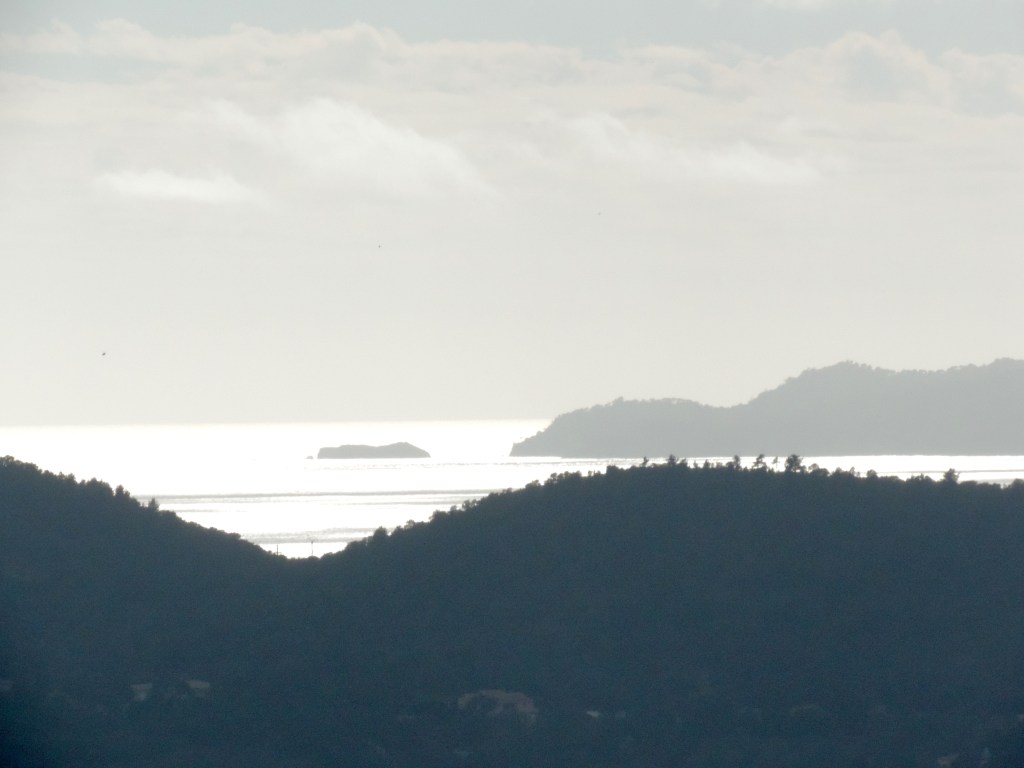
Grey gets a bit of a bad reputation I think. Now let me be clear I love colour, and I’ll share some gorgeous colours tomorrow, but look at this first photo. I took it on a visit to the South of France. It’s the Mediterranean coast. It was a grey day. Blanket, thick grey cloud covering the sky. But it was beautiful. And the light was beautiful.
I can gaze at this image for ages and lose myself in it. I love the curves, the gentle slopes, the shades of grey, dark in the foreground, bright on the horizon. It draws me in, calms me and delights me.
There’s nothing really “clear” or “sharp” about this image and I think that explains a lot about its power. We are drawn to mystery. Curiosity is one of our core features. It’s a characteristic with which I identify strongly. I love it when something catches my attention and my enthusiasm for knowledge and understanding start to surge.
I love to be fascinated. I love to be intrigued. The world brims with questions, puzzles and mysteries to me.
I love to wonder in this wonderful world.
One of the things I loved about medical practice was that every single patient would tell me a unique story, a story which stirred my curiosity. I always wanted to understand, to know what they were experiencing and to explain why.
And here’s the thing….knowledge and understanding were never an endpoint for me. They were a beginning. I loved to make a diagnosis, to be able to see and understand a certain illness. But diagnosis was a starting point. It was the beginning of something. It opened the door to finding the underlying causes, the factors which were contributing to this current suffering, and to finding the best ways to help.
Knowledge and understanding are not goals, in the sense that they are not destinations. I get frustrated with the insistence on outcomes, on measured end points, because life is not a series of end points. It’s a process, and ongoing, complex, multiply connected flow.
I love that life is curious and unknowable and that every day is filled with wonder. The desire to explore and discover is present all the time. Isn’t that fabulous? Isn’t that delightful? Isn’t that amazing?
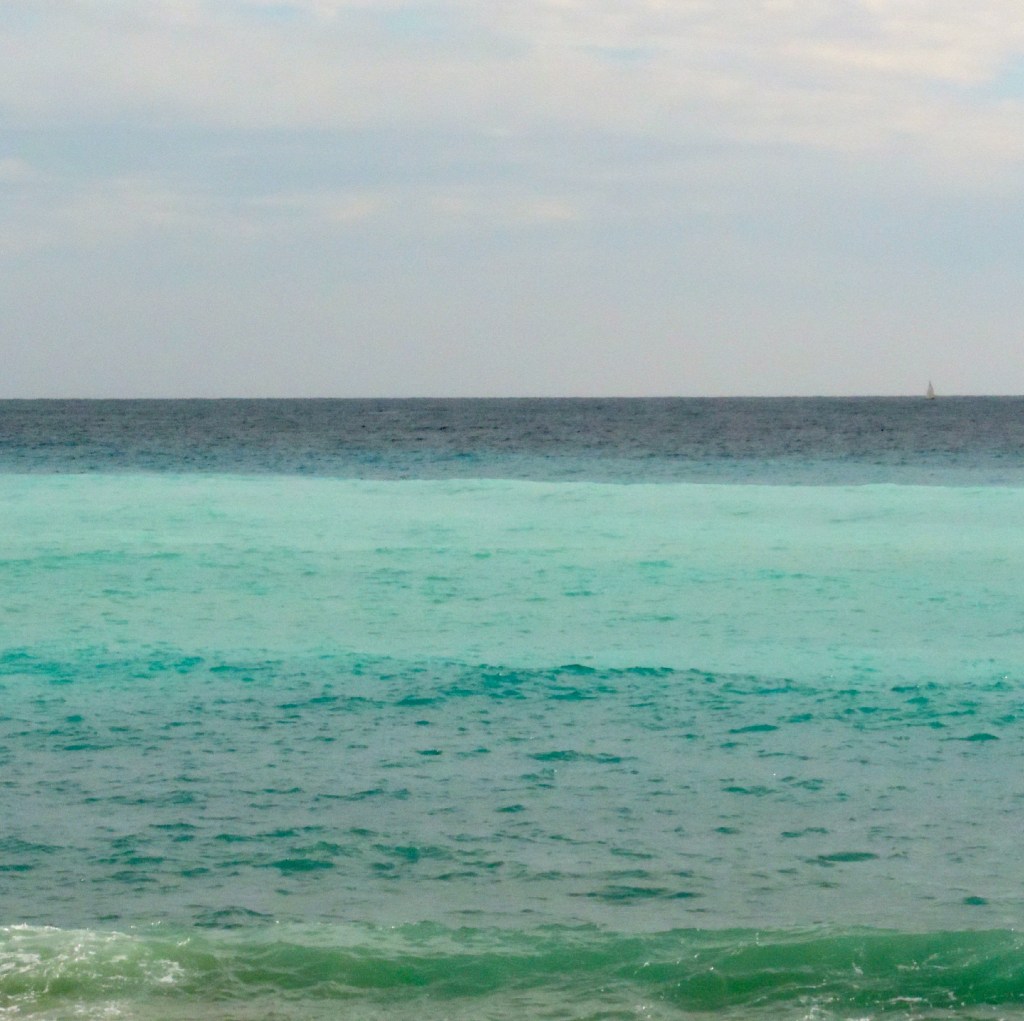
The sea isn’t a “thing”. The water isn’t a “thing “. A wave isn’t a “thing”.
We talk as if we and the world we live in are objects, “things”, entities with clearly defined boundaries. Fixed. Or changing only through a sequence of discrete steps and stages.
But none of that is true. You, me, everyone else and all that exists in this world are constant flows of energy and information.
All that exists is a constantly changing flow responding, adapting and interacting with all that exists.
Nothing exists in isolation.
Nothing is fixed.
“Things” are a delusion. Or, at best, a partial appreciation of a small aspect of the greater “all that is”.
I feel very aware of that when I stand at the water’s edge gazing out towards the horizon, breathing in time with each breaking wave.
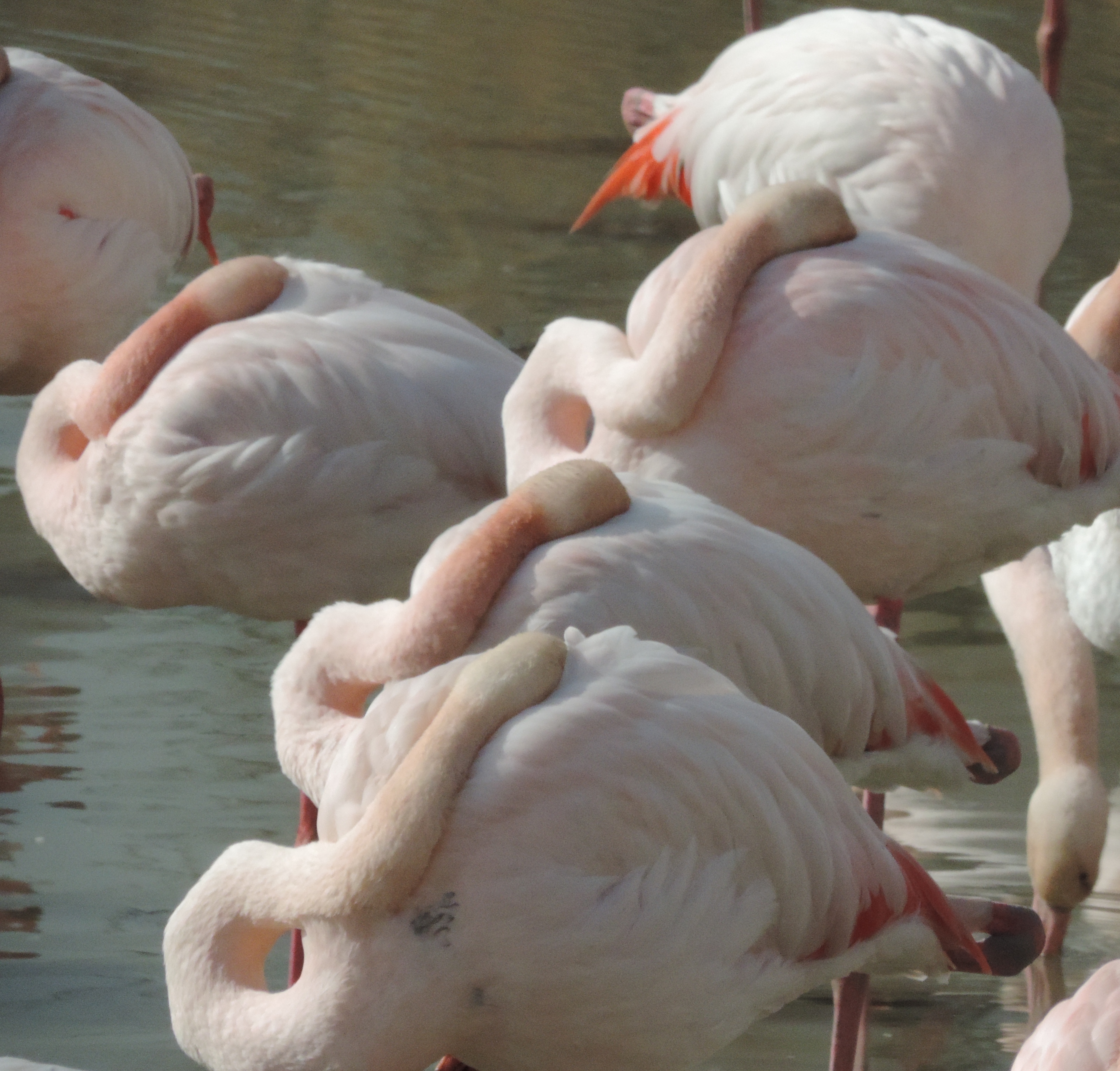
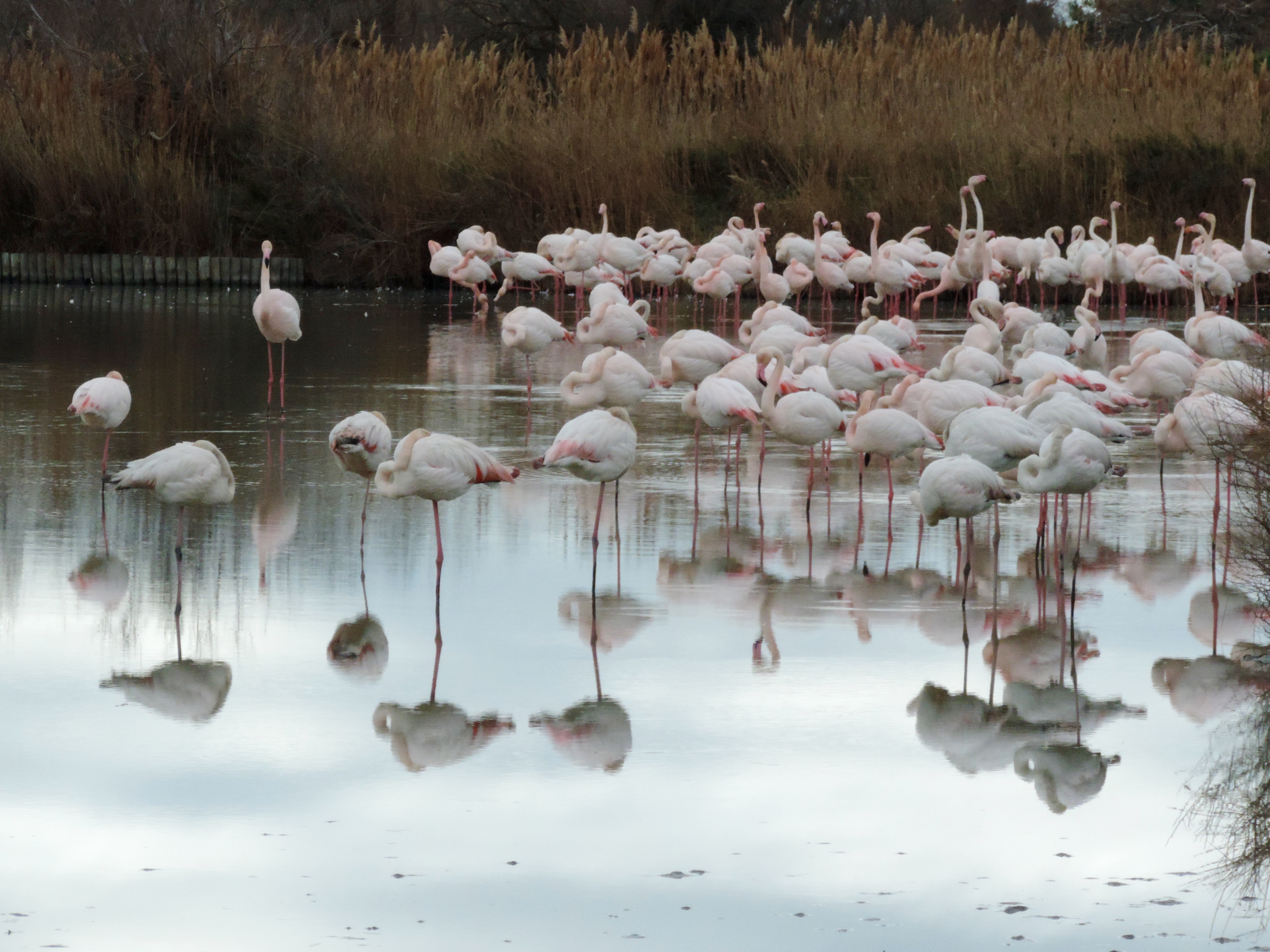
I have loads of photos of flamingos. I think they are such extraordinary birds. Look at the way they stand on one leg and wind their long necks around to tuck their heads into their feathers in order to sleep!
These ones in the Camargue have beautiful shades of pink feathers, some, suddenly richly red, but mostly more subtle pinks.
They are amazing to watch taking off and landing too. Their long gangly legs and super long necks make them appear prehistoric and really not suited for flying at all, but once in flight they stretch out like Concorde.
As with all birds which flock the way different individuals behave in relation to each other is unceasingly fascinating. Look at the mirrored patterns in these photos.
Birds really do seem to capture that essential paradox which we share – the need to be separate individuals and the need to belong and share.
When this caught my eye I thought it looked like a stained glass window. The metalwork formed a frame and the coloured light seemed perfectly contained within it.
But in fact the stained glass window was behind me and as the shaft of sunlight shone through it, it channeled directly through the ironwork onto the back wall of the church.
I like stained glass windows. They are often my favourite feature in a church building. But this particular experience was different. What I was looking at was the result of the sun, the window behind me, the wrought ironwork in front of me and the pale stone of the church wall.
To see the actual stained glass window I had to look behind me, but, somehow, the view straight ahead was way more captivating. It was more subtle, more delicate and more beautiful.
Sometimes life is like that. What lies behind us colours what lies ahead and makes it more interesting, and even more beautiful.
One of the most impressive phenomena in Japan is the season of cherry blossom. The newspapers cover its progression across the country on the front page and the tv news shows a sort of weather map which actually tracks the appearance of the blossom from the south of the country to the north. Families gather for picnics under the trees and millions of people go out to take photos.
I was told that it is, at least in part, the transience of the blossom which makes the phenomenon so important and beautiful.
Here in France we have the mimosa blossom. It’s just as spectacular and lasts only three or four weeks. Having lived here for seven years it’s something I’m now very aware of, and look out for.
Isn’t it beautiful?
I’d never seen a mimosa tree before I came to France but already I feel this annual blossom enhances my life. I enjoy the beauty of it and it inspires me to reflect on the glory of seasonal change, and how transience, even our own transience, can heighten and deepen the intensity of each moment.
Near the place where I lived for seven years here in France I could walk up through the vines and see this “dolmen”, a prehistoric stone structure. The first thing that strikes you is the size of the top stone. How on Earth did the ancient peoples manage to lift that immense slab of rock up onto those standing pillars? In fact, how did they get the pillars to stand up? And how did they get all those rocks up to the top of the hill from wherever they found them, or, imagine, quarried them out of a rock face?
You just stand and look at this and you’re filled with awe and curiosity. So many questions. So many “how did they do this?” questions. Even if there are theories or traces of evidence which might give some answers to those questions you’re then faced with all the “why” questions.
Why did the ancient peoples go to such effort to construct this? A question which would be answered, at least in part, by knowing what activities were carried out in there. Was it a burial chamber? A place of worship? A place of celebration and/or ritual?
There are a lot of structures like this in this part of rural France and they all feel familiar to me. They are familiar because I grew up in Scotland with some Orkney heritage so standing stones, stone circles and burial chambers are all part of my personal landscape.
I think all such prehistoric creations inspire awe, curiosity and a deep knowledge that there is so much we can never know.
That not being able to know transcends any frustration at our ignorance and transports us into enchantment and mystery.
I welcome constructive criticism and suggestions. I will not, however, tolerate abuse, rudeness or negativity, whether it is directed at me or other people. It has no place here. ANYONE making nasty comments will be banned.