Feeds:
Posts
Comments

Archive for the ‘Uncategorized’ Category

Multiplicity

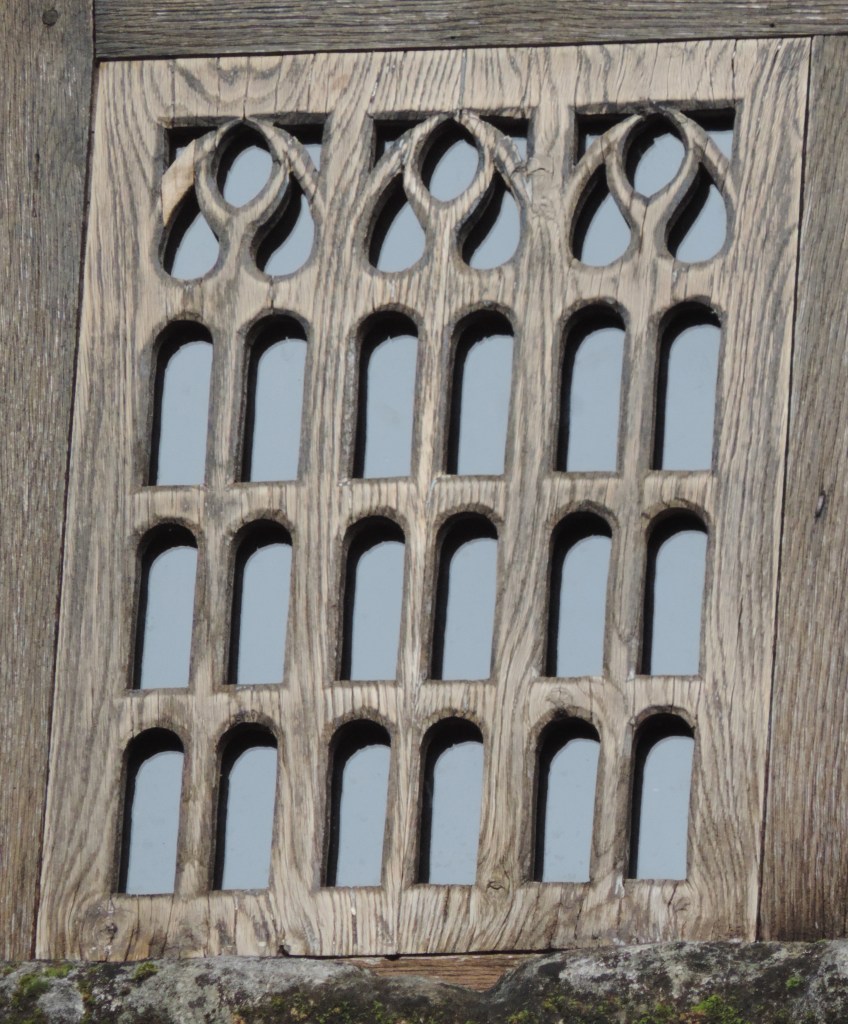
Isn’t this a beautiful window? Some windows are best for looking out through, whilst others are mainly for letting light in, but I really like a window like this one which surpasses any mundane utility.

It’s beautiful to look at. I don’t know what it’s like to look through or what this frame does to the light as it pours into the building but it certainly fires up my imagination.

What strikes me most about this is how the window has become multiple instead of single, and that reminds me that our individual experience of reality is multiple, made up of an infinite number of complex flows of energy and information. How our multiple experience of reality is created by the web of relationships we establish with the world.

And how our collective experience of reality expands this complexity, this multiplicity, to an unimaginable level.

None of us has the final understanding of anything. Knowing and truth is always a work in process, never complete, but constantly moving towards something more whole, something more nuanced, something more coherent.

Time and again, in consultation after consultation, I found myself learning something new, something significant, about this patient (and often about myself!). One thing I learned from a career in Medicine was there was always more to learn, always more to discover and that understanding was a never completed process. That’s one of the reasons why I appreciated and valued continuity of care so much.

Over time, through multiple experiences, and consistent engagement, I’d get to know a person better – and that was at the heart of good diagnosis and care.

Multiplicity is a concept and a phenomenon. I delight in it. It shows me uniqueness, keeps me alert to change and reminds me to be humble in my conclusions and perspectives.

Read Full Post »

Making a splash

We all love to watch breaking waves, don’t we? There’s something quite mesmerising about them. The higher the spray when the water hits the rock the better!

There’s something both beautiful and awe inspiring about them. Maybe it’s that sudden appearance of a mass of brilliant white erupting out of the blue green sea, or the way the sunlight catches the foam making it shine so. It’s delightful.

I think it’s also awe inspiring because we intuitively know that we are witnessing the power of the sea. It’s a sudden revelation of hidden energy.

Energy isn’t something we normally see. Well we can when it manifests as light but other forms of energy are invisible. But it’s something we can be aware of all the same. We feel it in the strength of a muscle. We witness it in the destruction of a storm, the eruption of a volcano, or in the size, height and noise of a wave crashing onto rocks.

We know our own energy levels too. For instance, if I asked you to assess your current overall energy level right now, and to give it a number from 1 to 10 where ten is the greatest energy you can imagine having and one is the least, you could tell me straight away. You’d say “6” or “9” or “3” or whatever.

But how would you come up with that number? What would you measure and what would you use to do the measurements? You wouldn’t have to check your blood pressure, your pulse, or your blood sugar level. You wouldn’t need any instruments. You’d do an instant, holistic, intuitive assessment and you’d know straight away. You’d give the number which conveyed your current energy state.

Isn’t that interesting? That we can sense and assess energies that way?

I think there’s another reason we are fascinated by these breaking waves. They are about impact, about “making a splash”. And that feels good – to have an effect, to make something happen, to “make a splash”.

Read Full Post »

A sense of humour

I know there are many serious problems in our lives, in the situation of the whole planet even. I know there is a lot of terrible suffering. There’s plenty to get angry about. Lots to be afraid of. Much to be upset about.

But we humans still need to celebrate our sense of humour. I don’t know who was the first to say that laughter is the best medicine but we know that laughter increases levels of healthy and protective chemicals in our bodies. It’s good for us.

It’s just not possible to be happy all the time, but actually it’s not possible to be angry and upset all the time – not without seriously harming ourselves.

So I thought it might be an idea to pause today and think about what makes us laugh. Sense of humour is very personal and also very cultural. Scottish, French and American humour doesn’t always translate well. It’s difficult to tell a good joke in a different culture. But I believe we have more in common than we sometimes realise.

This photo is one I took a few years ago in a pretty village in France. It still makes me smile.

The village I’ve moved to has some fun, light hearted “sculptures” around and they make me feel glad I’ve moved here. I like that there’s that light heartedness, that sense of fun.

Here’s my recommendation today – allow yourself some time to watch a video, or a movie, or to read a book or a poem, that makes you laugh. Or enjoy sharing a funny memory or story with someone who shares your sense of humour.

It’s good for you!

Read Full Post »

Music of the cosmos

The first thing I thought of when I noticed the pattern on this bark was morse code. It seemed that if I only knew the language I could read the message.

Then I thought of those musical scores cut into rolls of card which a pianola turns into music.

The idea that Nature was communicating, either by a message, or, better, through music thrilled me. It does again as I look at this photo today.

Yesterday was a sunny, surprisingly mild day here and I was able to sit outside in the garden for lunch. I can’t remember a time I heard so much, and such diverse birdsong. The garden was full of it. I hear them again as I write this at dawn. The morning is filled with the sounds of many birds calling and singing.

The ancients believed that the cosmos was filled with music, created by the planets and the stars in their heavenly spheres. Our understanding of the universe has reached the point where we see it isn’t a big empty space with various fixed objects scattered across it. Rather, we know now, it’s a symphony of vibrating energies, constantly interacting, constantly in flow.

The sound of the universe is the music of the cosmos, created, not just by stars, but by all the energy flows, all the vibrations, and, here on Earth, the songs of living creatures, expressing themselves and communicating with each other.

Listen. It’s beautiful, and astonishing.

Read Full Post »

The map is not the territory

I think this old photo of moss on a log looks a bit like either a satellite photo of part of the Earth, or the “satellite” view on Google maps.

Which brought that old phrase to mind – “The map is not the territory”.

Are you familiar with that saying? It’s used a lot in NLP circles but I first came across it in the writings of the General Semanticists who wrote their books decades before NLP was invented.

It’s designed to remind us that reality and our representations of reality are not the same. Our left cerebral hemisphere works this way all the time – it “re-presents” the information it receives. Our frontal lobes are also where we make maps – as Dan Seigel wrote, they are where we make a “me map”, a “you map” and a “we map”.

Maps are great. I love them. They can help you explore unknown territory and help make it become familiar. But they are an invention.

It’s too easy to slip into autopilot and navigate our every day using our pre-formed maps (either ones we invented earlier, or the ones given to us by others). But when we slow down, become deliberately aware, then we find the territory is richer, more complex, more dynamically changing, than any of the maps led us to believe.

Read Full Post »

Prepared

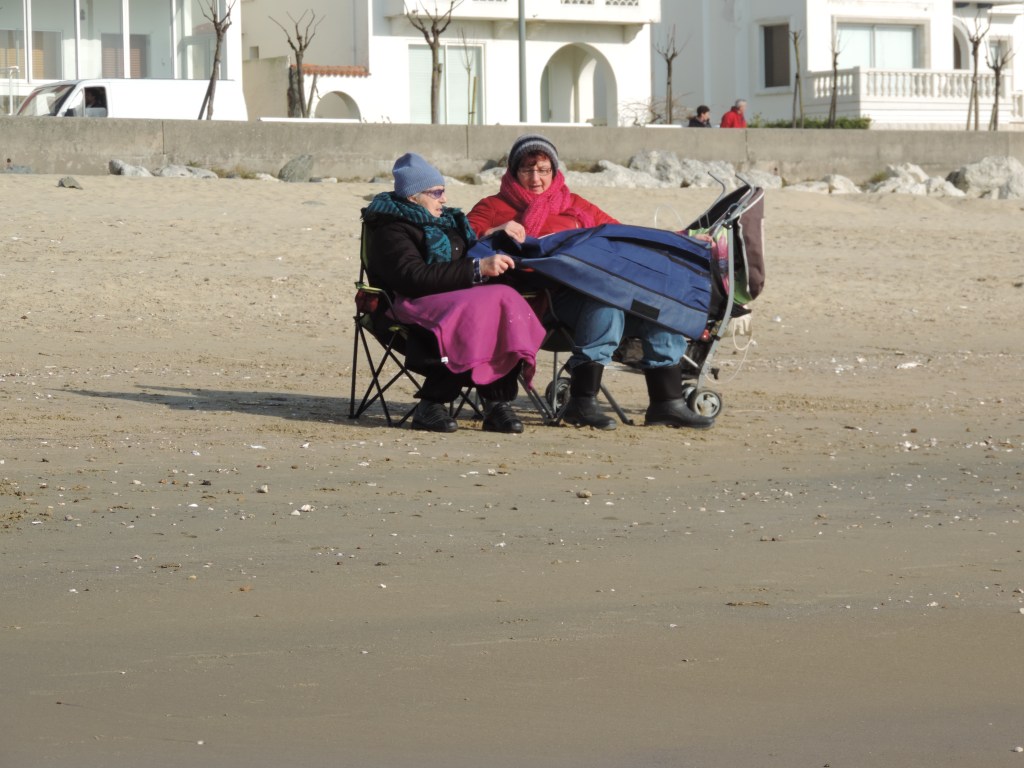
One February several years ago I was walking along the beach at Royan in the south west of France. The beach is long and wide at that point but there were barely half a dozen people on the beach. It was very cold!

Then I spotted these two old ladies on their beach chairs! Now that’s an impressive piece of planning and preparation!

Who said “There’s no such thing as bad weather, only unsuitable clothing”?

Well I guess these two ladies enjoyed sitting in the sunshine on the beach – while staying cosy – not to bask in the heat, because it wasn’t even warm, nor to get a suntan, except maybe on their faces, nor even to boost their vitamin D levels, because they weren’t exposing their skin.

Nope, they weren’t there for utilitarian reasons. Just because they plainly enjoyed sitting on the beach in the sun.

I was impressed!

Read Full Post »

Manifesting life

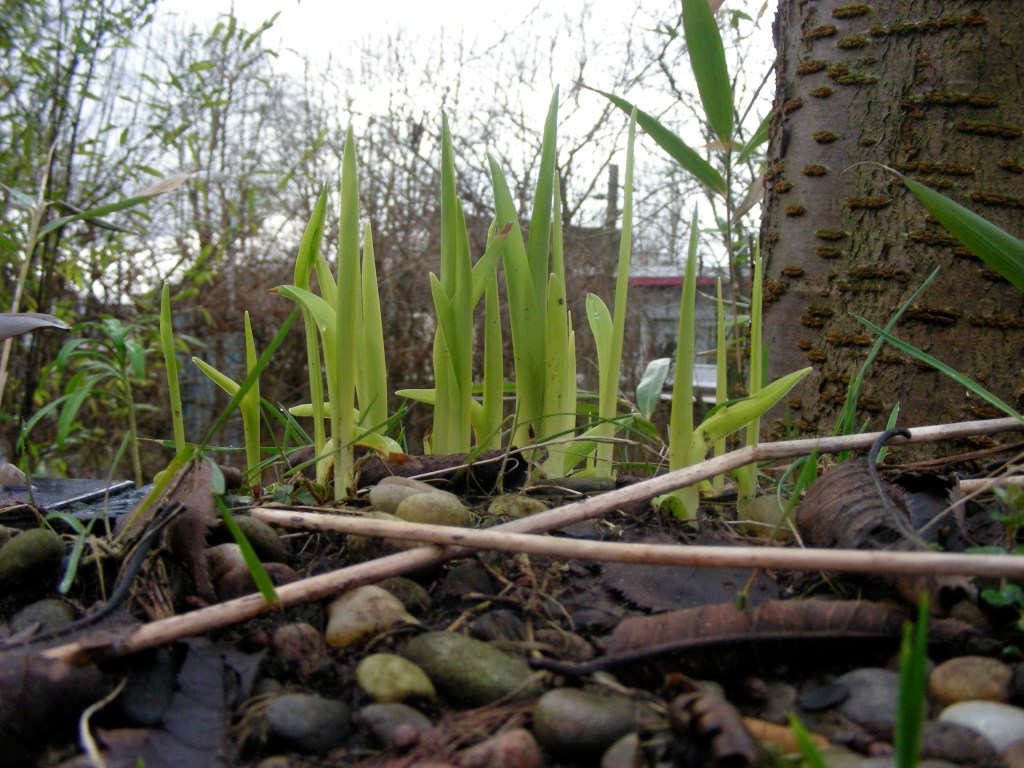
In the winter months it can seem as if all, or most, the plant life is dead. We even talk about them as “dying back” in the winter. But then along comes a bit more sunshine and suddenly there are green shoots everywhere.

The last episode of David Attenborough’s Green Planet looked at how plants find enough to root into, to grow and flourish in the tiniest cracks in tarmac or concrete. So even in the middle of “concrete jungles” in our biggest cities if you look carefully you’ll see green leaves popping up.

Put that alongside the ability of seeds to lie dormant for years then burst into activity the moment some sparse rain falls, then you realise that Life is everywhere on this little planet. It just needs the right circumstances to manifest.

It’s like that in our lives too. Our natural state is one of readiness – to survive, to grow and to flourish. We just need the right circumstances to allow all that to be manifested.

And there’s the problem – as this pandemic has made clearer than ever – we don’t organise our societies in a way where we maximise the supportive conditions for survival, growth and flourishing.

Shouldn’t we do that? Shouldn’t we organise ourselves around provision, protecting, nurture and nourishment? Or, to put it more simply, around care and the creation of opportunities for Life?

Read Full Post »

When my son was very little, one day he asked for something that was too expensive for us to buy. I told him I didn’t have enough money to be able to buy it and he replied “Just go and get some more from that hole in the wall” (He meant the ATM cash machine)

It was a pretty logical response because he thought that’s where money came from. He didn’t know I had to put it in the bank in the first place.

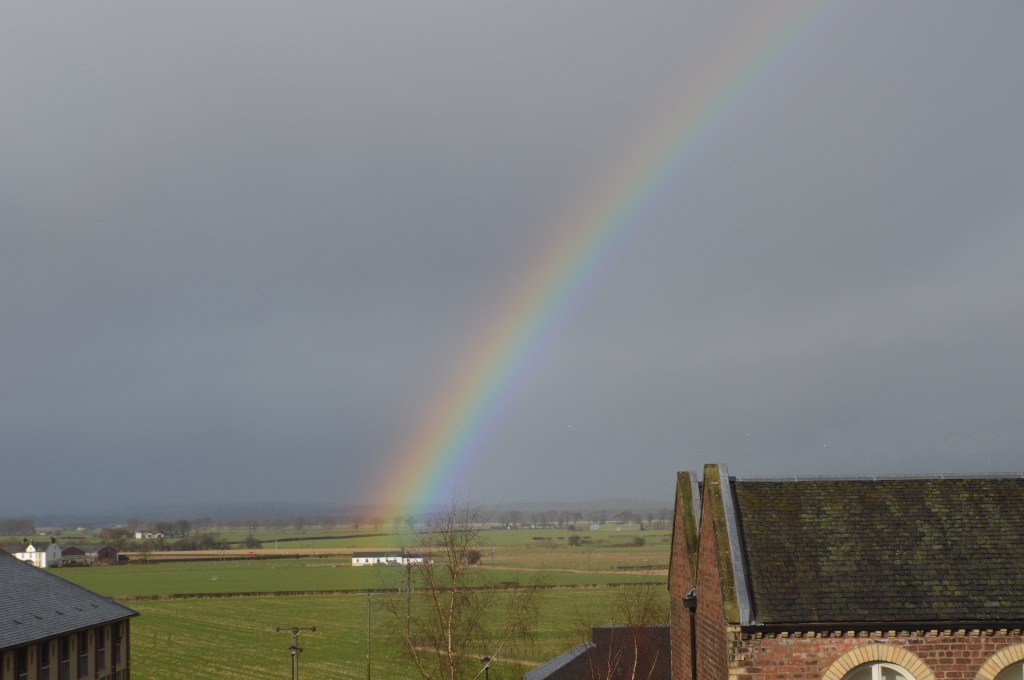
There’s an old myth that at the end of a rainbow you’ll find a pot of gold. Of course, the catch is that you can never get to the end of the rainbow – it’s always further away.

You’ll have heard a repeat of the old myth about why a government wants to impose austerity measures including cutting back on essential services and depriving the poor of the little they have. It’s called “There is no magic money tree”.

The odd thing about that one is there seems to be an endless supply of money when a government wants to wage a war, or to find billions during a pandemic. So maybe the magic money tree only exists when certain people say it does?

So where does money come from?

A common belief is that it comes from taxation. I’m sure you’ll have heard phrases like “taxpayers money” and “we have to increase taxes to pay for X”.

But if you think about it money doesn’t grow anywhere, and the only people who can create money are the governments which issue the pounds, dollars, yen or whatever.

To pay taxes, the money must have been created by the government and distributed into the economy in the first place. Taxation gathers some of that money back from people to the government.

So when you hear the “how are we going to pay for X?” or “we have to pay for what we spent in the pandemic” remember that the money comes from political decisions. The government decides to create some. Or it doesn’t.

But, wait, that doesn’t mean they can just create as much as they like without limits! The limits are the limits of the resources of the country – the people and the physical resources. As Prof Kelton makes clear in “The Deficit Myth”, the deficits are not enough trained people working at delivering what we all need, deficits in housing, deficits in health care and deficits in education.

People create money. It’s not a natural resource like water, air or food. Just remember who those people are and challenge them if they claim they can’t fund better work, better housing, better education or better health care.

Read Full Post »

Calm and peaceful

We live in troubled times. Fear, anger, frustration, anxiety and uncertainty are feelings all too familiar to far too many of us. These disturbing feelings are, much of the time, there for a reason. They are alerting us that something isn’t right. They are provoking us to deal with something.

I know the preferred response is to soothe them, to take the edge of them, blunt them, or try avoidance through distraction.

And, like all feelings, if they are too strong, or last too long, then they can become all consuming.

So we need to do a couple of things, don’t we?

We need to find the ways to cope and to respond so that we benefit from these rather unpleasant feelings.

I think what’s most important is that we understand them, that we understand what we are experiencing and why.

Some of it is personal. There’s an issue to address, a relationship to improve, a task which we should complete, a habit we should change.

But a lot of it is collective. We live in a world undergoing climate change. We live in political systems which are controlling and untrustworthy. We live in economic systems which favour the rich, punish the poor and vulnerable, and which are becoming more and more unequal. We live in social systems which promote greed and selfishness. We live in mass production industrial systems which pollute and poison.

When we understand what’s underlying all the fear, anger and anxiety, then we need to act.

I find there are two types of action which help. One is to do what I know makes me feel more calm.

This photo is an example. It’s a scene of peace and calm. I experienced a profound sense of wholeness and tranquility there that day and I can recreate those feelings today by looking at this photo, taking three, long, deep breaths, and activating my imagination to recreate that moment in my mind. You can do that too, with your own photo, your own memory of such an experience, or by using this photo to spark your imagination into recreating a similar time of peace and calm which you experienced in your own life.

There are loads of other ways to build positive emotions and to cope with disturbing ones. The important thing is to act – to do whatever works for you.

But I think there’s another stream of activity needed too….the one focused on our shared world. The causes of these disturbances are real and we need to act together to change them.

I’m not going to enumerate all the ways we can address and respond to these complex issues but I think that deciding to live more consciously is an important first step. That can lead to changing my daily life by choosing to eat food which is less processed, more local and more seasonal. It can lead to different choices about buying and consuming. It can lead to deliberate communication with others and to participation in campaigns.

Taking action, achievable action, to address the causes of fear, anger and frustration is a good step towards more peace and calm.

Read Full Post »

Glow

I’ve taken countless photographs of sunsets and sunrises. The way the sun lights the sky is an endless source of fascination for me. Sometimes it’s the Sun itself which captures my attention, as it changes colour to become a deep red sphere sinking below the horizon.

But maybe some of the most spectacular events are where the entire sky changes colour. When this happens it feels like you are inside the colour. It’s a shift from standing looking at a far away event to finding yourself immersed in the very heart of it.

I’ve never seen a full eclipse or the Northern Lights but I’ve seen film footage of people experiencing both of those phenomena and what strikes me is how emotional they become. I think I’d be the same.

There’s a difference between standing at a distance feeling outside of something and having the full immersion experience of being within it. The latter strongly stirs our emotions. The former might, but mostly, I find, not so much.

This reminds me of C S Lewis writing about the shaft of sunlight illuminating the dust in his shed and distinguishing between looking at the sunbeam and looking along the sunbeam. That profound shift of perspective to become aware of our existence within what we experience.

After all, this ability to stand “outside” of daily experience is a sort of trick of the mind which we use to create a distance between ourselves and whatever we are witnessing.

The reality is we are never “outside” of reality, of Nature, of Life or of daily experience. We are constantly immersed in the cosmic flow, responding, reacting, participating.

Isn’t that wonderful? To be immersed in the glow of beauty and wonder? Isn’t it deeply moving?

Read Full Post »

« Newer Posts - Older Posts »