Feeds:
Posts
Comments

Archive for the ‘Uncategorized’ Category

Persistence

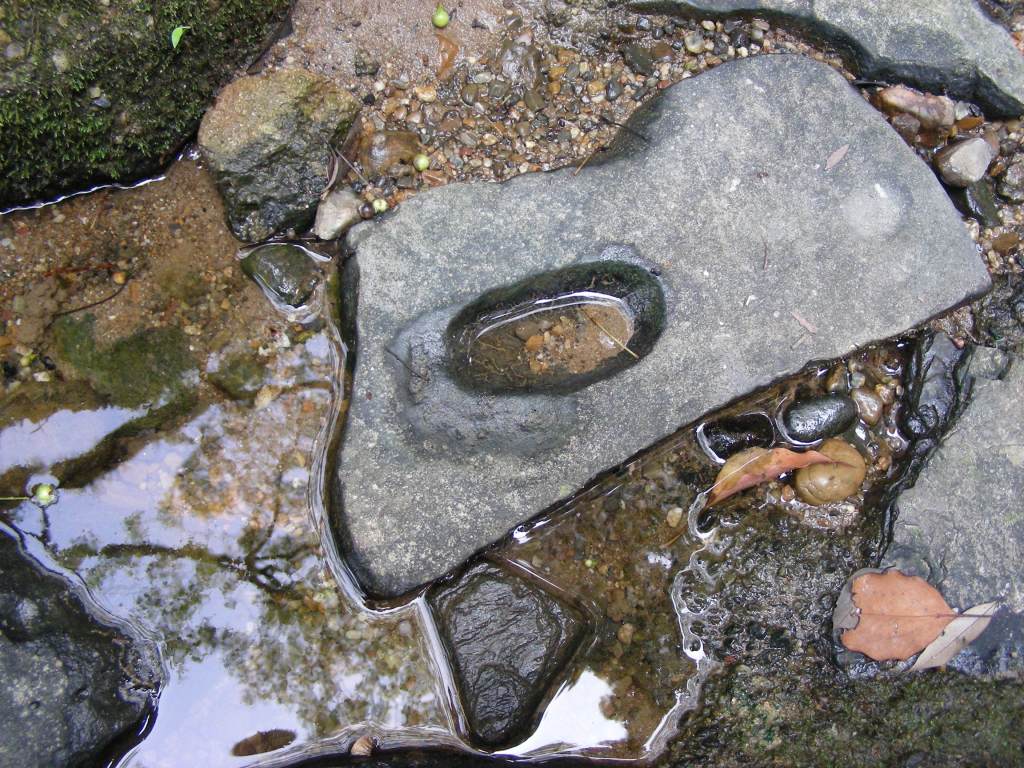
When I came across this flat stone the first thing I noticed was the pretty large hole in the middle of it. The hole doesn’t actually go all the way through. It’s a wide and deep indentation.

How do you think that came about? My theory is that it was created by a constant drip, or steady flow, of water. Either from where it lay before it was placed here, or by water falling onto it on the path. I suspect the former because surely it must have taken many, many years to create an indentation this size.

You might argue it’s been chiselled out but I’m not convinced about that. It looks natural to me. However, even it’s been created by human hand, it’s going to have required a steady and lengthy effort.

Whatever the process involved in the creation of this indentation, the one thing I think about every time I look at it is the value of persistence.

There’s a lot to be said for persistence and it’s a quality which I think I have in abundance. Stuff happens. Storms blow in and pass by. Crises appear, then they disappear. But when you keep on a steady path you can see your way through all of those challenges.

Persistence is a particular kind of strength. It’s not violent and not even particularly strong or powerful over a short period. It’s a gentle power. A steady strength.

Imagine how long it’s taken for soft flowing water, or little drips, to carve out this space in the stone.

I worked, one to one, with patients for about forty years. In both the GP and hospital clinics where I worked we prioritised continuity of care. We developed long term relationships with each patient. Doing that required persistence. It required the ability to stand with and be steady with someone through their crises.

Of course patient care requires flexibility too. You have to be able to change treatments if they aren’t helping, but in order to do that you need that continuity of care and that persistence to stick with them through any necessary changes.

So I just want to celebrate that quality today. Persistence.
Read Full Post »

Metamorphosis

If you didn’t already know, then how could you imagine that a tadpole could turn into a frog?

If you didn’t already know, how could you imagine a butterfly would’ve spent part of its life as a caterpillar?

Some of the most memorable lectures at university were the ones on embryology. We had an amazing anatomy lecturer, Professor Romanes. The lectures were in one of the classical old lecture theatres in the Medical School, a horseshoe shape of steeply rising benches and desks curved around an immense rolling blackboard. Over the course of a 50 minute lecture Professor Romanes would create the most astonishing works of art on these boards using a set of coloured chalks. Mesmerising. He added to the magic of foetal development which, to be frank, still astonishes me. The metamorphoses over the first few days and weeks in the womb are utterly incredible. At the earliest stages it’s impossible to envisage how those few cells will turn into a human body.

At a completely different level I’m sure we all have that experience of looking at old photos and thinking “That was me?! I looked like that?!” Yes, we know who it is, and we might even remember the event, but the changes in appearance, and of course in personality, behaviour, knowledge and beliefs is a metamorphosis in its own right.

Development and growth are truly amazing phenomena in Nature. The future is indeed impossible to predict in detail. We can’t be certain about it.

But we can be sure that the best, the healthiest metamorphoses will come about when we pay attention to nurture and nourishment.

We know we can encourage growth, development and change towards a thriving existence through care, love and attention.

Read Full Post »

Making your way

It’s a funny phrase that, “make your way”. When I go from one place to another it doesn’t occur to me that I’m “making” anything. Simply moving from here to there doesn’t seem to be a creative process.

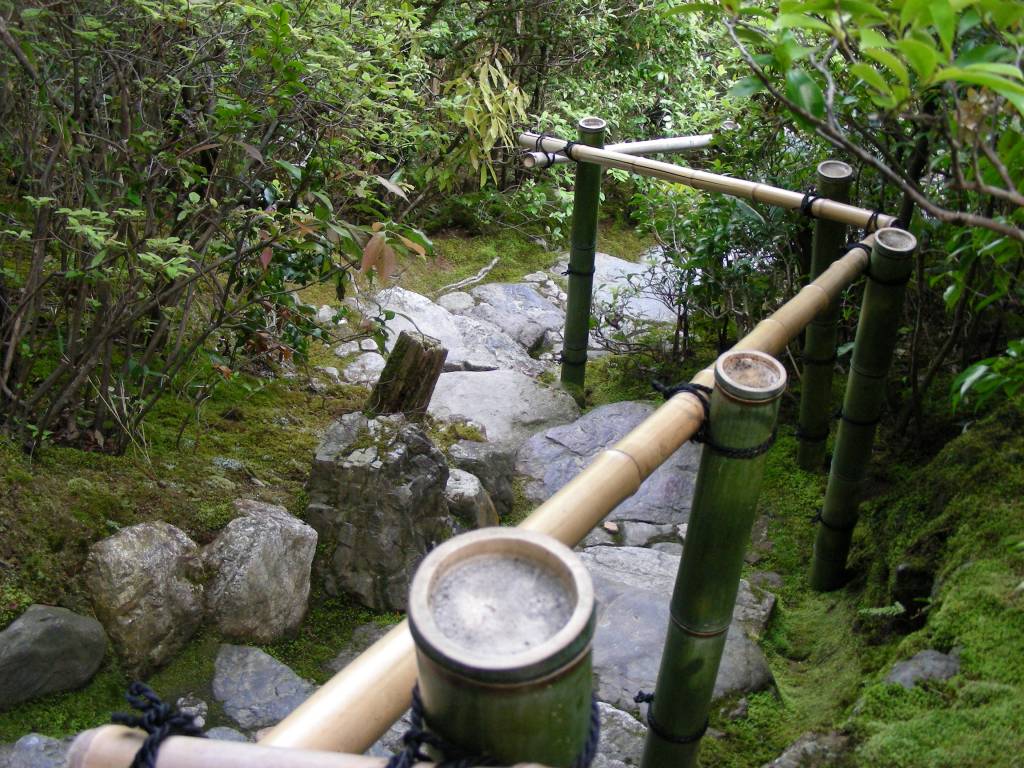
But look at this path. Isn’t it beautiful? It takes imagination, creativity and effort to make a path like this. I took this photo in Japan, and you’d have a pretty good chance of guessing that I think. Isn’t that amazing too? That the look of a path can convey such a strong sense of place and culture.

That gets me thinking about the vast web of drovers paths which crisscross the wilder parts of Scotland. It makes me think of all the pilgrims paths which wind their way across Europe towards Santiago in northern Spain. It makes me think of the traces of Roman roads which can be found across most of Western Europe. And I’m sure you’ll start to think about ancient ways wherever you live.

But we “make our way” in other ways too. We find a path through life, or rather, we create a path through life. I’m a big fan of stories and have always been keen to hear a patient’s unique story. However, the metaphor of the path is an equally good one which can help to illuminate how someone got to where they are now.

When you reflect on your own life, what paths do you see? Who did you create them with? What stepping stones did you lay?

Read Full Post »

Self healing

Self healing is our default. It’s what our bodies do. It’s a characteristic of all living organisms, of all “complex adaptive systems”. It’s an evolved phenomenon without which no Life is possible.

Think of a time you’ve been injured and a bruise appears. Over a few days, without your conscious involvement, the bruise changes colour, and fades away. Usually it’s gone without a trace of having ever existed, the damaged tissues now healed.

Or of a time when you’ve had a sore throat, a bad cold, or a tummy upset. A few days on and the symptoms have gone. Your body has done what bodies do. It’s healed.

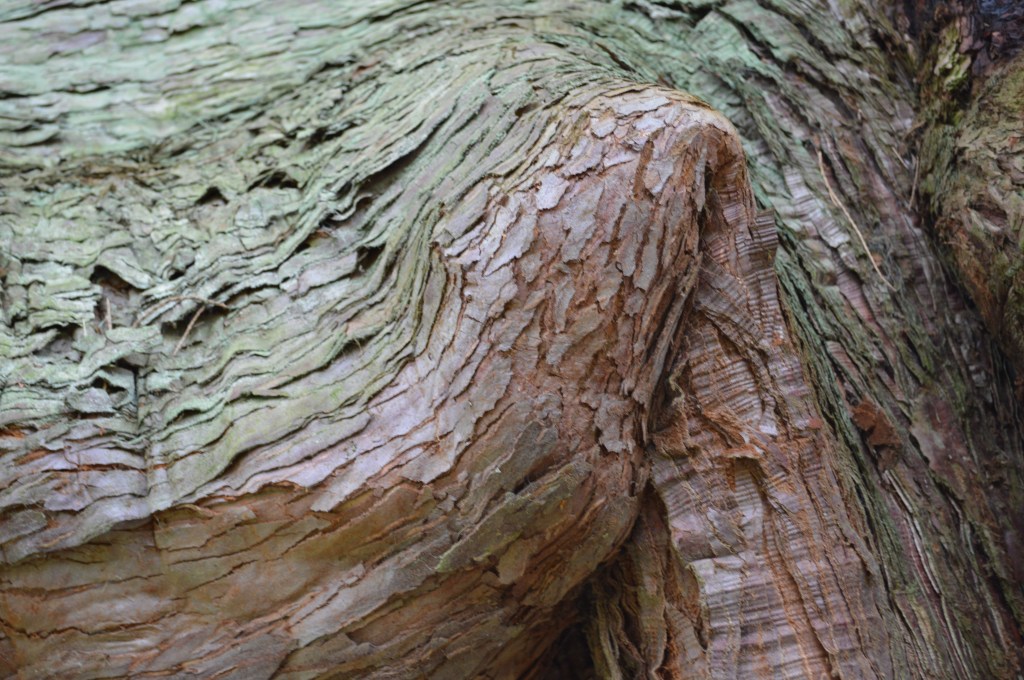
But sometimes healing doesn’t return the body to its previous state. Like in this photo of a tree which has been damaged, presumably in a storm, bent over, almost in half. It survived. It healed itself, but it’s a different shape now, a dramatically, strikingly different shape. That injury has become part of its story, leaving it forever changed, but still living, still growing, actually still thriving.

Sometimes self healing fails catastrophically and the creature, or the person, dies. Sometimes self healing fails and an illness becomes chronic, never going away. But in the vast majority of occasions self healing works incredibly well.

Throughout my career as a doctor I tried always to support, stimulate or nurture self healing. It’s the best medicine after all. In fact there’s no healing which isn’t self healing. The difference I might be able to make is to assist, or accelerate it.

I still find it strange that this isn’t the main lesson taught to all doctors, nurses and therapists. And I still find it uncomfortable to hear healing described in war terms, as if we have to fight, conquer or overcome some enemy disease. Those metaphors don’t sit easily with me.

Healing takes time and therapy should support it through care, support and loving attention.

Perhaps the most fascinating thing I discovered as a doctor was the uniqueness of every single patient. We heal through the, largely unconscious, strategies of adaptation. With apparently similar diagnoses and symptoms some patients will find movement helps, others that movement makes things worse. Some find heat helps, others cold. Some get increased thirst or food cravings, others don’t. And so on over a seemingly endless set of variables.

Uncovering an individual patient’s adaptive strategies is often the key to discovering how to support their systems of self healing.

There really is no one size fits all chemical or technological fix in Medicine.

Read Full Post »

Liminal

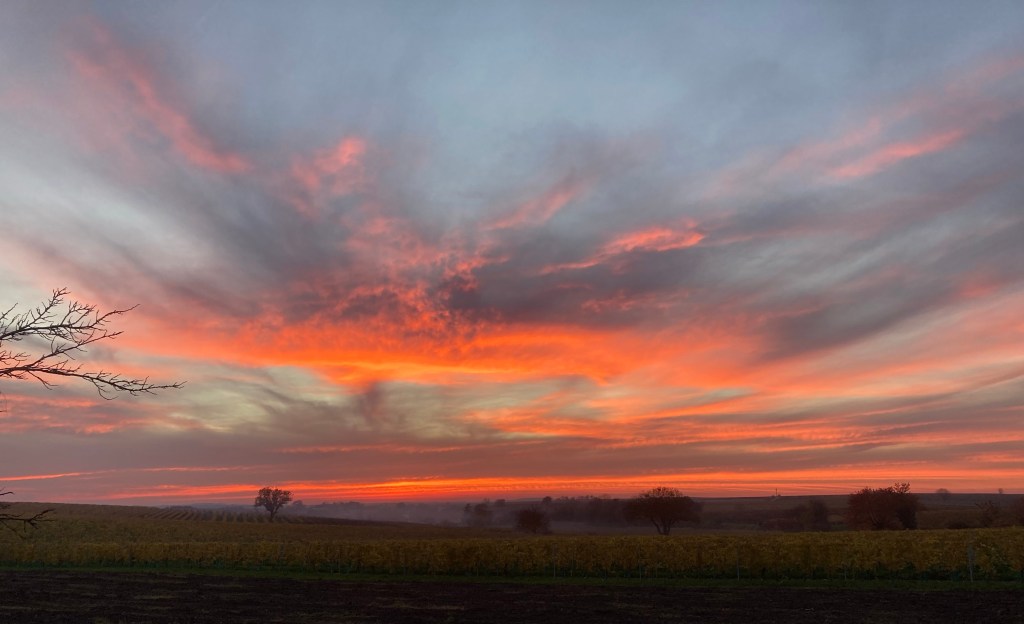
Last night the spectacular sunset compelled me out into the garden again, camera in hand. As I looked across the vineyards to Salles d’Angles I saw a mix of mist and woodsmoke lying in front of the village. It looked both beautiful and mysterious.

Twilight seems a magical time. It’s where the Sun has dropped below the horizon but it’s light still illuminates the sky. In that liminal time between day and night the world seems filled with half seen objects, semi-obscure plants and buildings, hints of things which draw us towards them stoking my curiosity and stirring my heart

Mists do something similar. They too create liminal spaces where the world fills with hints and suggestions. They too spark the imagination and stir a sense of wonder.

I enjoy the liminal spaces. They feel full of potential and possibility. They engage me. They fire up my imagination. They make me aware of “becoming not being”.

As I write this I’m struck by the fact that a very different take on all this would be to see obscurity and uncertainty. How often do we find ourselves lost or disoriented in liminal spaces just because we focus on uncertainty and demand it’s opposite, certainty, that slippery, impossible to achieve alternative.

We can’t bear too much uncertainty however, can we? We don’t want to feel lost all the time (although I’m reminded of Rebecca Solnit’s brilliant writing, “A Field Guide to Getting Lost” which I’ve written about before).

But can we bear too much certainty either? Too much predictability and sameness?

I don’t think we can.

Hey, once again, I find I need “and not or”. I need times of bright sunny certainty and twilight times of obscurity. I need knowledge and wonder.

To be fully human we have to embrace these opposites, polarities and paradoxes. How do we do that?

Well, I think it takes a blend of wonder, awareness, acceptance and gratitude.

Read Full Post »

kind and gentle

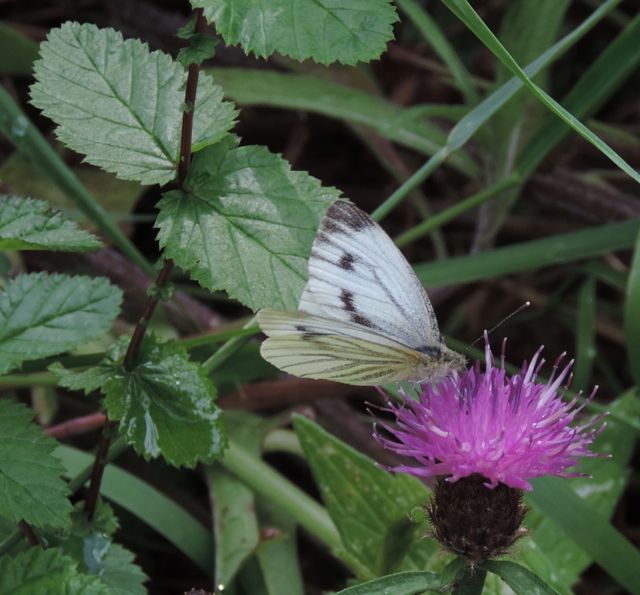
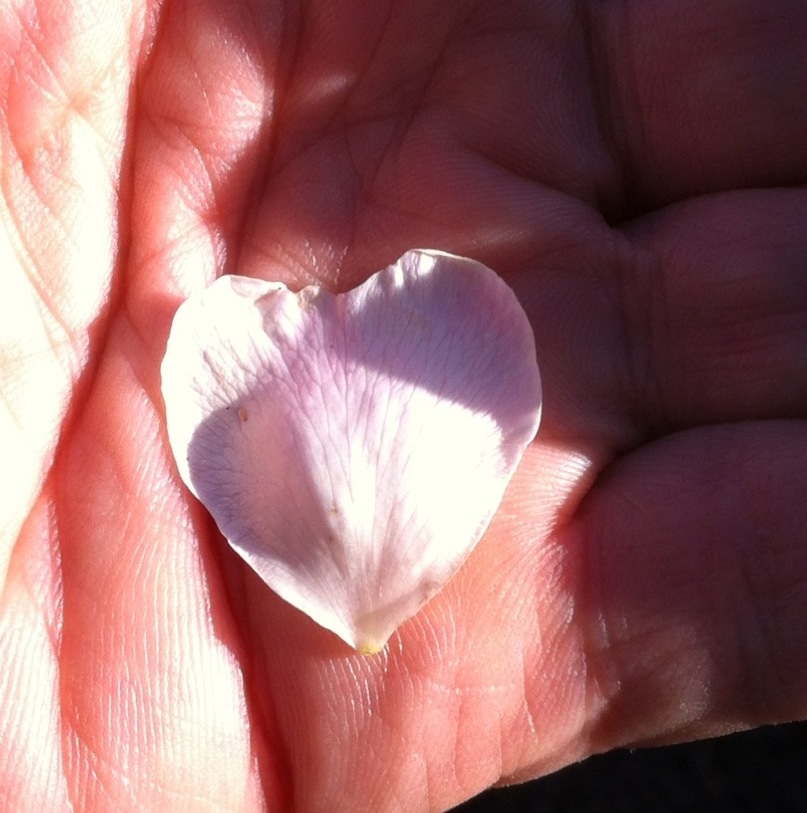
There’s something very delicate about this little petal. Delicate, soft, precious, beautiful.

When I see something as delicate as this I feel kindness stirring in my heart. I feel moved to care for it, to be careful with it.

We talk about a softening of the heart don’t we? And when the heart softens, the eyes soften too. When we see that softening we see kindness, gentleness and care.

I often think this is a fundamental requirement in health care. If you can’t soften your heart and your eyes then you probably shouldn’t be a nurse or a doctor.

But the need for kindness and gentleness goes way beyond health care. It’s a fundamental requirement in teachers too.

And, actually, I think it’s a fundamental requirement in living. The world becomes a better place through soft eyes. The world becomes a better place when we meet with soft hearts, defaulting to treat each other with kindness and gentleness.

I know. There’s a lot of cruelty and hatred in the world, but there’s lots of kindness too. I think that together we create the conditions and environments which enable and nurture the main emotions we feel.

Let’s create and feed the conditions which enable and nurture kindness and gentleness.

That’s something we can all do. That’s living by the heart.

Read Full Post »

The unknown

I like this photo of a forest at night, lit just by moonlight. There’s something gently beautiful about moonlight. It stimulates the imagination.

Imagination must be one of our most remarkable powers. We use to see into the future, even the immediate future as we find our way from one place to another.

We use our imagination to make maps. Dan Seigel, the psychiatrist and neuroscientist who coined the term “Mindsight” said that we use the very front part of the brain to make three kinds of maps – a me map, a you map and a we map. These are special kinds of maps or patterns that we imagine to enable us to know ourselves and others.

We use our imagination to put ourselves in the shoes of others, to feel empathy and compassion.

We use our imagination to express ourselves creatively. It seems we are the most creative of all the species, painting, singing, dancing and telling stories.

We are essentially story tellers, which would be impossible without imagination.

We use imagination to solve problems, to create solutions and find ways out of difficult places.

However imagination does something else too….it shows us possible futures including the one where we don’t exist any more. It could be that we humans are the only creatures able to imagine our own deaths. We know we are mortal and that can be difficult to bear.

Fear would be impossible without imagination, and existential fear, the fear of death, is thought to be at the root of all fear. After all people don’t really fear flying in a plane. They fear crashing in a plane and dying.

Imagination stirs our curiosity too, though. When we think about the future we don’t fear it all the time. Rather we wonder about it, anticipate it, can feel excited about it, the way children look forward to Christmas.

I think imagination is something we all have. But we all use it differently.

How about you? What are you going to use your imagination for today?

Read Full Post »

Becoming not being

From the very beginning I put this phrase at the top of my blog – becoming not being. It seems a very simple concept, and I think it really is. It shifts our attention from entities to events, from objects in themselves to subjects in the process of change.

I’ve been in the habit of recalling this phrase for many years now and it’s at the basis of my understanding of every human being as never fully knowable. That keeps me curious and, I hope, humble. It means I can never say I know all there is to know about anyone or anything.

I recalled this phrase yesterday when I read this –

The idea that will change the game of knowledge is the realization that it is more important to understand events, objects, and processes in their relationship with each other than in their singular structure.

MIHALY CSIKSZENTMIHALY

It comes from an interview with the great psychologist, Mihaly Csikszentmihaly, whose concept of “flow” grabbed me and became an integral part of my way of looking at life.

That call to wake up and see the world as living, changing inter-related phenomena and events rather than as discrete, entirely separate objects reminded me of two other thinkers and writers.

The world of quantum mechanics is not a world of objects: it is a world of events. The world is not a collection of things it is a collection of events. The difference between things and events is that things persist in time events have a limited duration. A stone is a prototypical thing: we can ask ourselves where it will be tomorrow. The world is made up of networks of kisses not stones.

Carlo Rovelli

The physicist, Carlo Rovelli, captures this idea beautifully when he asks us to realise that reality is events, not objects, “kisses not stones”

The other is the psychiatrist and philosopher Iain McGilchrist whose exploration of the differences between the right and left brain continue to enlighten me. He says the right brain seeks “the particular”.

Individuals, as befits individuals, will fail to conform to an overall pattern

Iain McGilchrist

To know a particular person, the more you consider their connections, the better you might know and understand them. The right hemisphere has a tendency to explore connections. Iain McGilchrist says it is interested in the ‘betweenness’ rather than in the separate ‘things’.

Identity from a right hemisphere perspective emerges from this exploration of connections and difference.

Becoming not being – try it out for yourself see what the world looks like through this lens.

Read Full Post »

Spreading waves

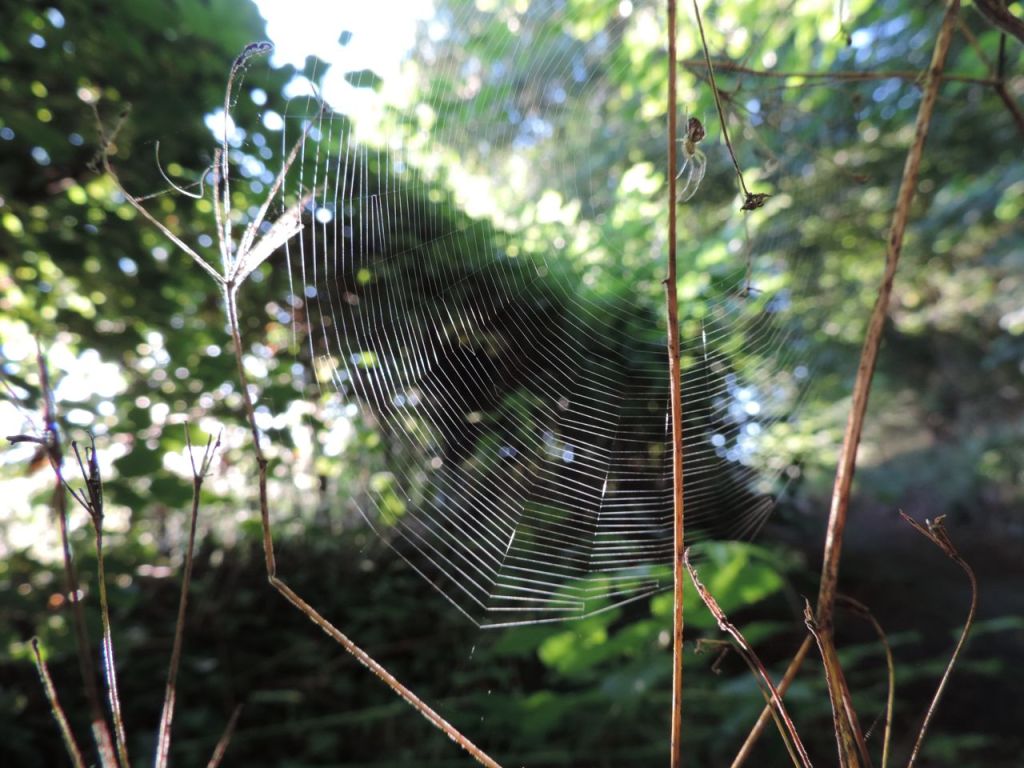
Although this is a photo of a spider web it makes me think of invisible waves spreading around the world.

The way the sunlight has caught the strands of this web makes them radiant and when I think that word I see waves radiating. I had to be at just the right angle on to this web to see it. If I moved my position it disappeared so I remember it as an invisible web made visible by the light of the sun.

My understanding of reality is based on the concept of flows – material flows, energy flows and information flows. Only the first of these is visible. All three interact continuously and together they produce all the phenomena we experience.

I am constantly becoming, constantly emerging in the flux of these three flows. So are you. So are we.

Everything I think, everything I say and everything I do ripples out across the world meeting other waves wherever they are. All these flows interact and influence each other. What you think can affect me. What you say can affect me. What you do can affect me.

We, you and I, influence and affect others just by living. Our breathing changes the air. Our energy touches and moves others. Our ideas, thoughts and imaginings set off around the world and change it.

We can’t stop any of that. But we can choose what information, thoughts, ideas, energies and even physical materials which we want to disperse. We can choose to be toxic or nurturing. We can choose to pollute or care. We can choose to hate or to love.

If we want to choose though, we have to be aware. We have to wake up, become conscious if we want to live as heroes not zombies.,

We have to be aware of what we are being exposed to and we have to become aware of what we’re sending out, what we’re exposing others to.

The only thing we can’t do is not change the world.

So maybe we should choose how we want to change it. We can be the sources of love and kindness. We can spread care and compassion. Just by practising.

Read Full Post »

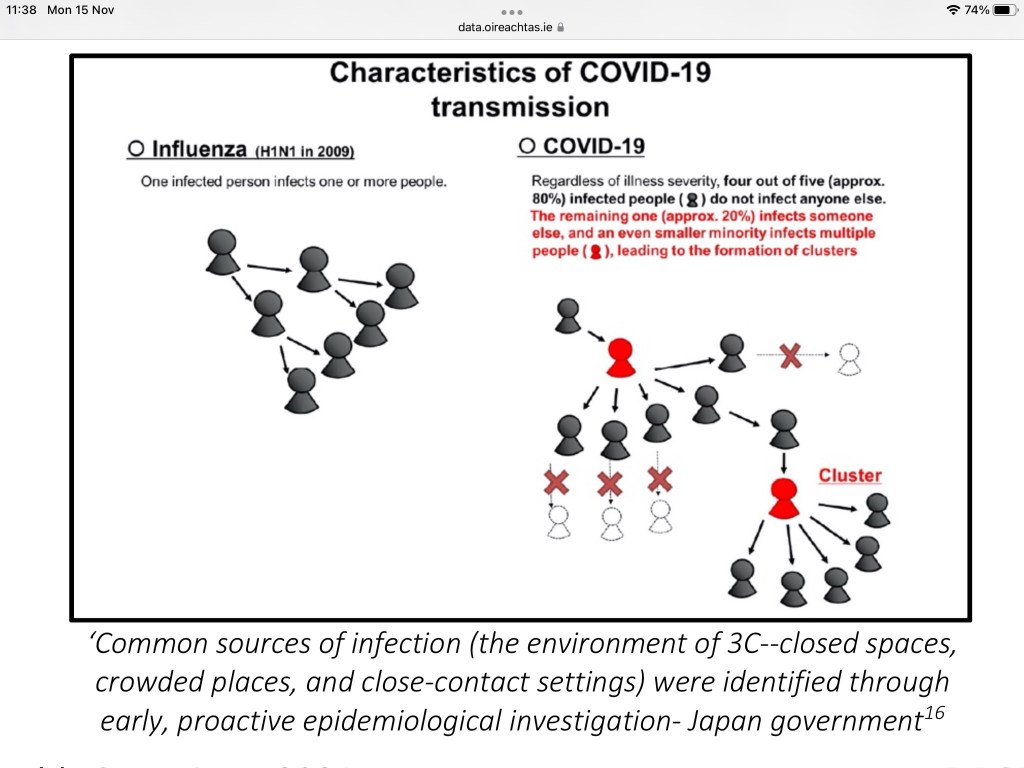
I usually start each post here with one of my own photos but today is different. This diagram is taken from a fascinating important new research paper from Ireland. You can read the whole paper here.

These researchers found that 50% of Covid deaths in Ireland occurred from infections acquired in less than 400 buildings in the whole country – out of about 2.5 million buildings!

They show that this infection spreads in unsafe places because of poor quality air. And that can be fixed by improving ventilation and measuring air quality or mitigated by limiting the number of people in a particular place at the same time and by wearing masks in such places.

It turns out the Japanese authorities had this right from the beginning with their public education about the “3 Cs” – closed places, crowded spaces and close contacts.

The same principle applies to workplace outbreaks where over half in Ireland occurred in about 150 buildings. It’s the same with care homes where the majority of deaths were in a small minority of homes. It’s the same phenomenon in peoples homes where the most overcrowded homes have the highest risks of infection.

This virus doesn’t spread primarily via surfaces. It spreads in the air, and the poorer the air quality, the greater the presence of the virus. It’s the same thing in Public transport as it is in homes, offices and other buildings.

Why is this important?

Because it shows a better way to manage this pandemic – avoiding both lockdowns and letting the virus run wild through the population.

At a Public Health level this shows government should target the improvement of air quality in public places through better ventilation and air quality monitors. They should target Public Health education about the “3 Cs” and encourage both caution and mask wearing in those situations.

At a personal level knowing this enables you to make better choices. Having caution and wearing masks in higher risk situations and paying attention to sufficient ventilation.

It also shows how important it is to reduce the problem of overcrowded homes and poorly ventilated work and social places.

Read Full Post »

« Newer Posts - Older Posts »