Feeds:
Posts
Comments

Archive for the ‘Uncategorized’ Category

Who am I?

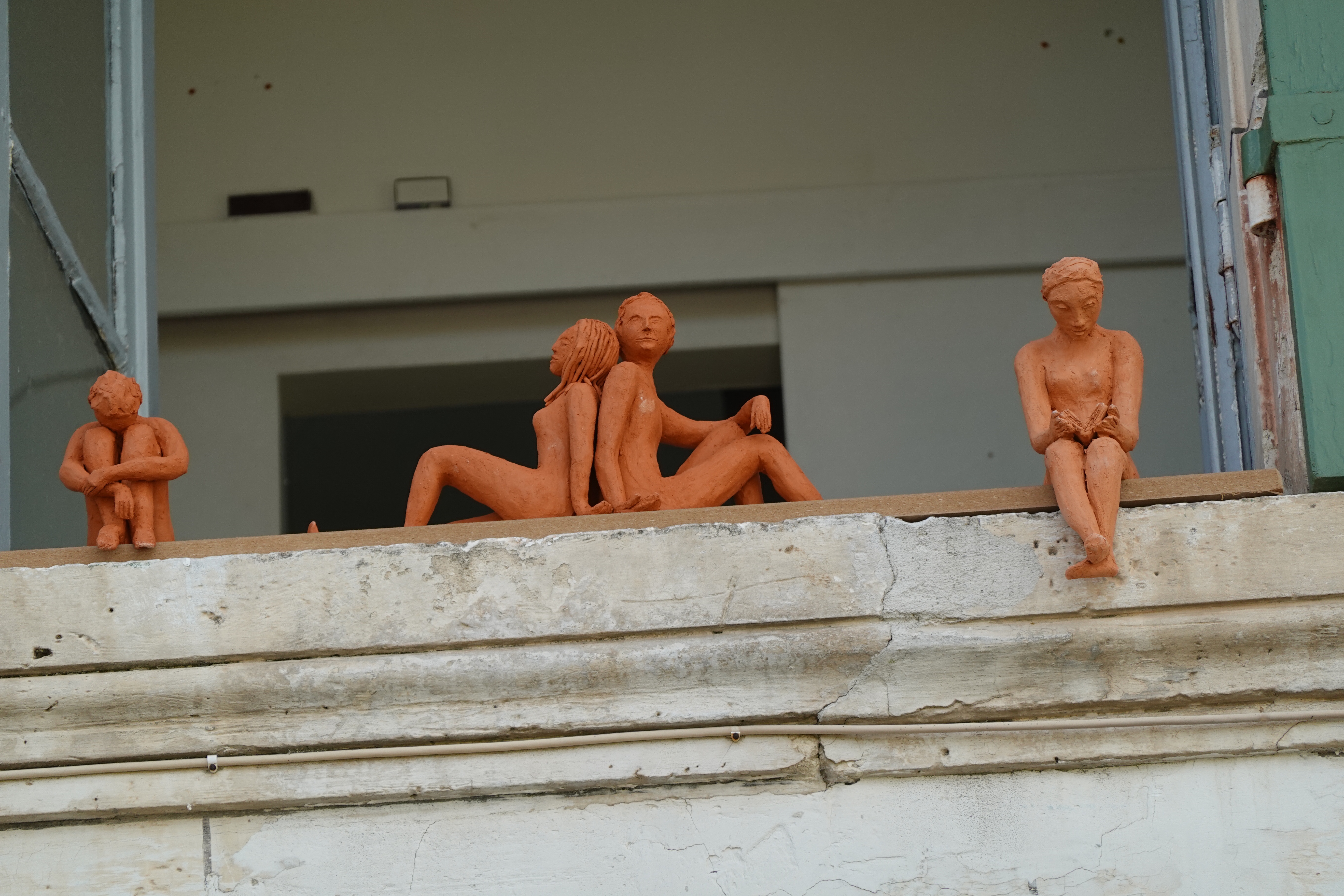
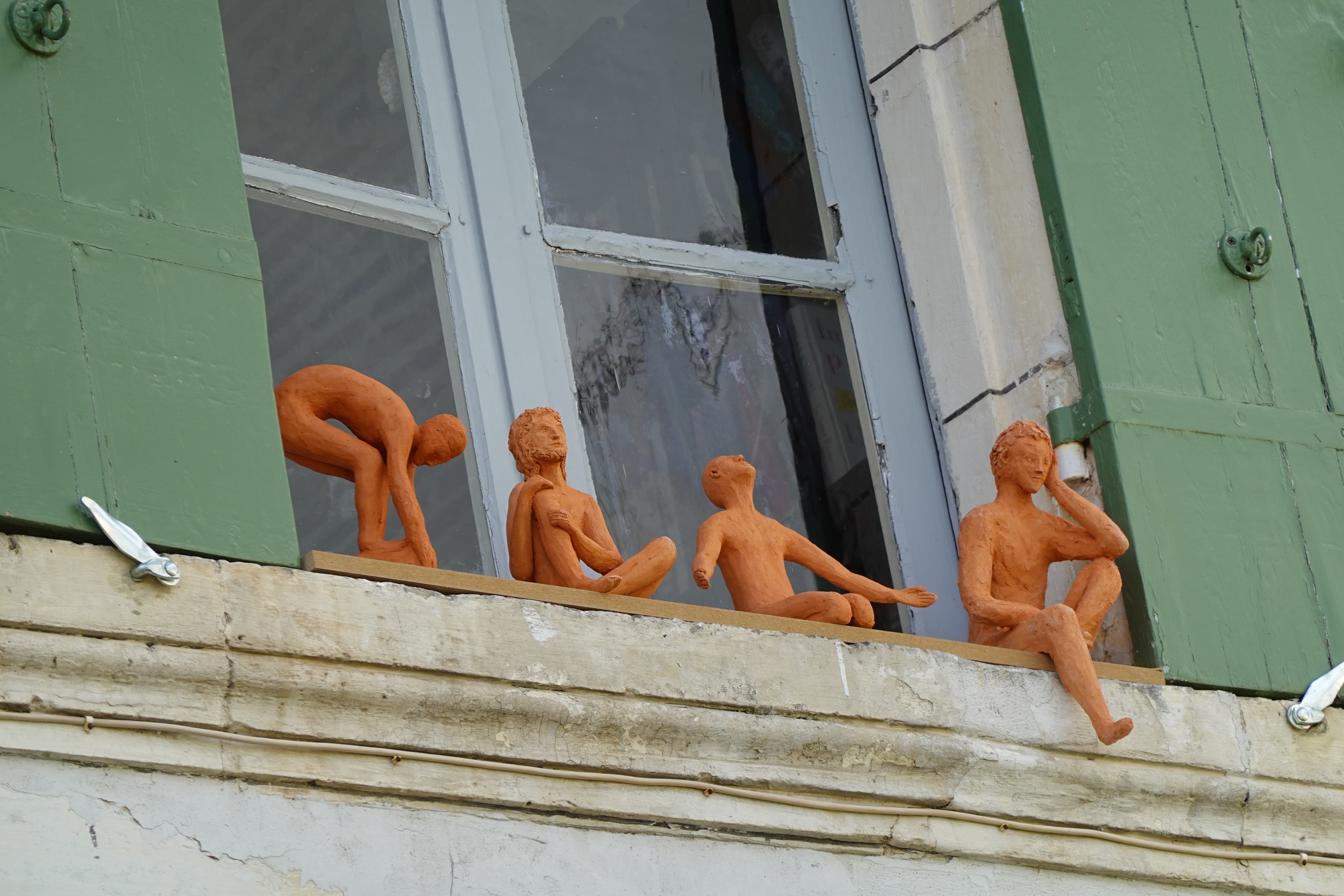
I had a day out in Aubeterre recently. It’s one of “Les plus beaux villages de France” (an official designation given to several French villages considered to be “the most beautiful”. I’ve been several times before but on this occasion there was a pottery festival underway. It’s striking to see just how different and distinctive each potter’s work is, laid out on the various stalls around the village.

However, this work wasn’t even on a stall. It was laid out on the upstairs windowsills of a house. The potter had a notice at ground level inviting you to look up and see if you could identify the different characters – several were listed – the thinker, the doubter, the sad one, the reckless one etc.

I love how the potter has managed to make each little person so expressive and I was reminded of Anthony Gormley’s “The Field”, one of my all time favourite works (search on my blog for “the field”).

I took a while to photograph them all and see if I could identify some of them. But you know what struck me after a few moments?

This is something we do. We pick out a characteristic or trait we have spotted in someone then we give them that label in our minds. We think of somebody as a complainer, as shy, as extrovert or as fearful. And the danger is we reduce them in the process.

We don’t do this just according to behaviours or emotions. We do it in other ways too….nationality, race, or gender for example.

Sometimes we do it with medical diagnoses. A doctor or nurse might refer to a patient as “the diabetic”, or “the heart failure” etc. Some people even identify themselves by their diagnosis, wearing a chronic illness as a kind of badge.

I get it. Labels and categories can be a useful way of starting to understand someone. But, oh, are they dangerous!!

They are dangerous because they reduce. They reduce the complexity of reality to categories, hiding uniqueness by turning individuals into “examples of”.

They are dangerous because they are judgements and “judgement stops thought”, as the general semanticists taught.

They are dangerous because they feed prejudices, oppositions and the tendency to see the world in terms of “us and them”.

So I prefer to look again at these little pottery characters and see them, not as different people, or worse, different types of people, but to see them as some of the aspects of the Self.

After all, we can all identify with a selection of these characters, maybe even all of them. We are complex, nuanced, multidimensional, vastly interconnected beings and within us all we can see different facets, different modes, different adaptive responses and different archetypes, all of which become activated for a time according to the events and experiences of our lives.

What we have in common are these themes, these threads, these archetypes, and what makes us unique is the fact that not a single one of them captures “who we are”.
Read Full Post »

Emerveillement

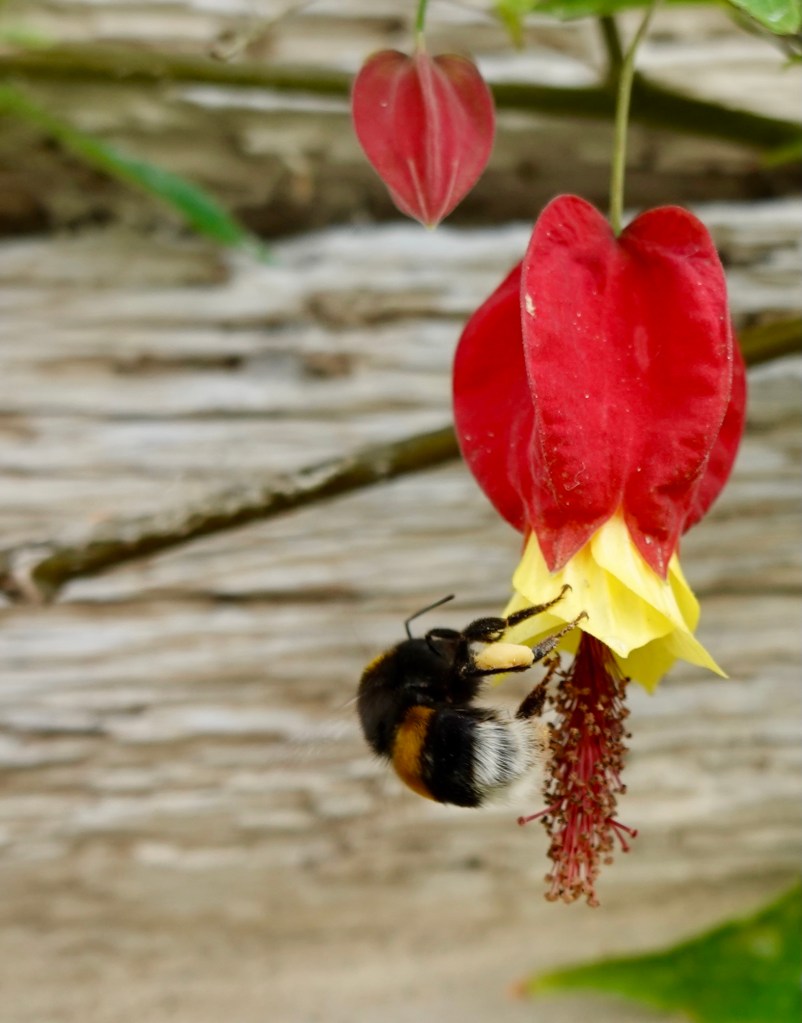
If you’ve been reading my posts for a while you’ll probably be familiar with the French word, “émerveillement”. It’s one of my favourite French words, yet it’s a hard one to capture in a single word translation into English. It includes qualities like “wonder”, “amazement”, and “marvel”……so it’s that experience of noticing, of paying attention to, something, and being thrilled and intrigued by it. There’s a delight which emerges as well as a stoking of the fires of curiosity.

Here’s one of those experiences from the other day. I mean, just look at this! What an astonishing flower! Look at the colours, the shapes, the structure and see how it’s perfectly created to attract and involve the bees. In fact, look at the bee too, collecting the nectar and getting covered in pollen!

This is the kind of experience which makes me feel alive!

Read Full Post »

Upwards

I was walking around Western Harbour between Leith and Newhaven recently. There are a collection of high rises there built at great speed during the last house building boom.

It’s not a pretty development, and it hit the buffers when the financial crash came so there is more green space between the blocks than the developers had planned.

Perhaps one of the biggest advantages of living in one of these flats is the view across the Firth of Forth.

I noticed the plants growing on this one balcony on the second floor. Somebody here is creating a green space right outside their window by filling the balcony with plants. If you look closely you’ll see a climbing, flowering plant is heading on upwards to the third floor.

I wonder if it will start to make it along that next balcony and if the residents will see that as a bonus and encourage it, or as a nuisance and cut it back.

There’s quite a boom in interest in gardening and green spaces. The lockdowns which accompanied the pandemic forced many people to confront the realities of their immediate living space and three things have happened.

Those with gardens have spent more time in them, enjoyed that space and realised how much a garden can add to your quality of life so they’ve started to learn a bit, to tend the garden more and to grow more of what brings them joy. There’s a growing body of evidence that time spent close to Nature in green spaces is good for health and well-being.

Others have started to put more indoor plants into their living rooms, their kitchens, and to plant up window boxes. Why are they doing that? Because it brings them joy, and adds to the quality of their everyday.

I wonder if this caring and tending does something else. I wonder if spending some time nurturing, looking after and encouraging plants develops our capacities to nurture and care more generally? I don’t know if it does but I know that whatever we pay attention to, whatever we focus on, whatever we practice tends to increase.

There’s a third thing which is happening since the onset of the pandemic. A boom in house sales outside of cities. In France the most active housing market is in Brittany, right out there on the Western tip of the country and I’ve read several reports saying there’s big demand for houses with gardens within an hour to an hour and a half of all the big cities in France. Teleworking is part of that shift, and changes in work patterns to spend only a day or two at most every week in city centre offices, while the rest of the time is spent at home is also a growing trend.

The shift from city to smaller towns has the potential to revive local communities as people commute less, spend more time in local cafes, stores and shared spaces.

So seeing this single balcony starting to flourish and the climber spreading upwards makes me think of these changes and gives me hope. We humans are creative creatures. We have fantastic powers of adaptation and a love of Nature brings out some of the best in us.

Read Full Post »

Outcomes and fixes

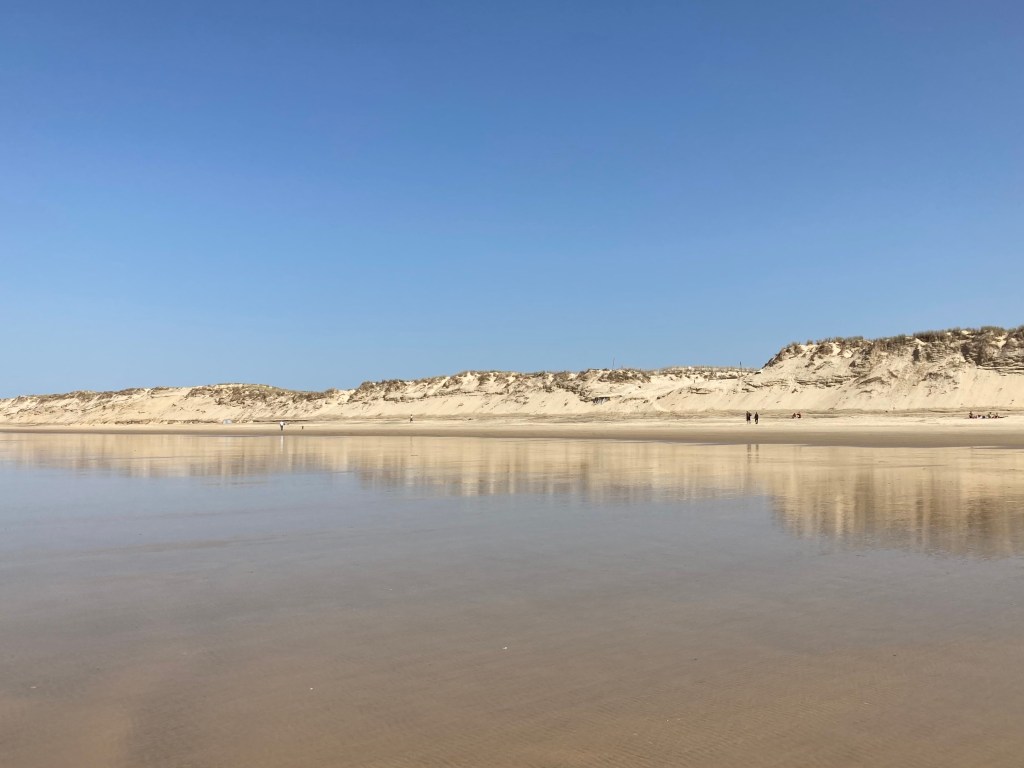
I took this photo at the “Cote Sauvage” (the wild coast) earlier this year. I hadn’t been to this, one of my most favourite beaches, for over a year because during the pandemic we were forbidden to travel more than a few kilometres from home for many weeks and public spaces including parks, forests and beaches were closed.

I think you can feel the sense of expansive openness I experienced once I got here. But the first thing which struck me was how much this landscape had changed. Storms and high tides had completely changed the dunes. It was no longer possible to walk down into the sand directly from the forest behind. The slopes had been turned into cliffs. And the wooden walkway from the car park had been totally destroyed.

Months later I returned and the walkway had been reconstructed. The new cliff edges of sand, however, are the same.

These large scale changes of landscape caused by the interaction of the sea, the wind and the land are amongst the most dramatic changes I’ve seen over a mere matter of months.

Partly this gets me thinking about the fact of constant change. Even large structures on the surface of the Earth are constantly changing – mostly slowly, but occasionally dramatically. We’ve seen a number of these dramatic events over the last couple of years – floods, forest fires and volcanic eruptions. Melting ice caps, shrinking glaciers, earthquakes. Hurricanes and cyclones and other extreme weather events.

But this image also gets me thinking about our somewhat delusional perspective on outcomes and fixes – in every area of life – but, especially in the context of the pandemic, in the area of health.

There is almost an obsession with so called outcomes in health care. That’s always struck me as odd. Human beings are complex ever developing creatures. Looking at only a small period of time in anyone’s life always runs the risk of failing to really understand them. We need to hear their full story, not just measure a couple of changes over a short period of time.

Choosing to focus on an isolated set of measures in a whole person seems to me to give too much importance to the “outcomes” instead of the lived experience of an individual. It seems precious little research looks at the life time consequences of interventions and treatments.

The focus on measurable outcomes shifts the attention from the long term to the short term, and to data from story.

And what this does is delude us into thinking we are “fixing” things.

There’s been a pursuit of simple fixes in this pandemic – we were told lockdown would fix the problem, then mass testing would, then vaccines would.

In fact, we need to address the factors involved in creating the pandemic and its devastating effects…..from the way we interact with Nature (forest destruction, over consumption, pollution, carbon production), to the way we run our societies (inequality, poverty, overcrowded housing, precarious jobs, run down under-resourced Public Services, lack of adequate safe care of the elderly) if we want to really deal with the pandemic.

Quick fixes don’t last. And they aren’t fixes. Despite what politicians and Big Pharma tell us.

Read Full Post »

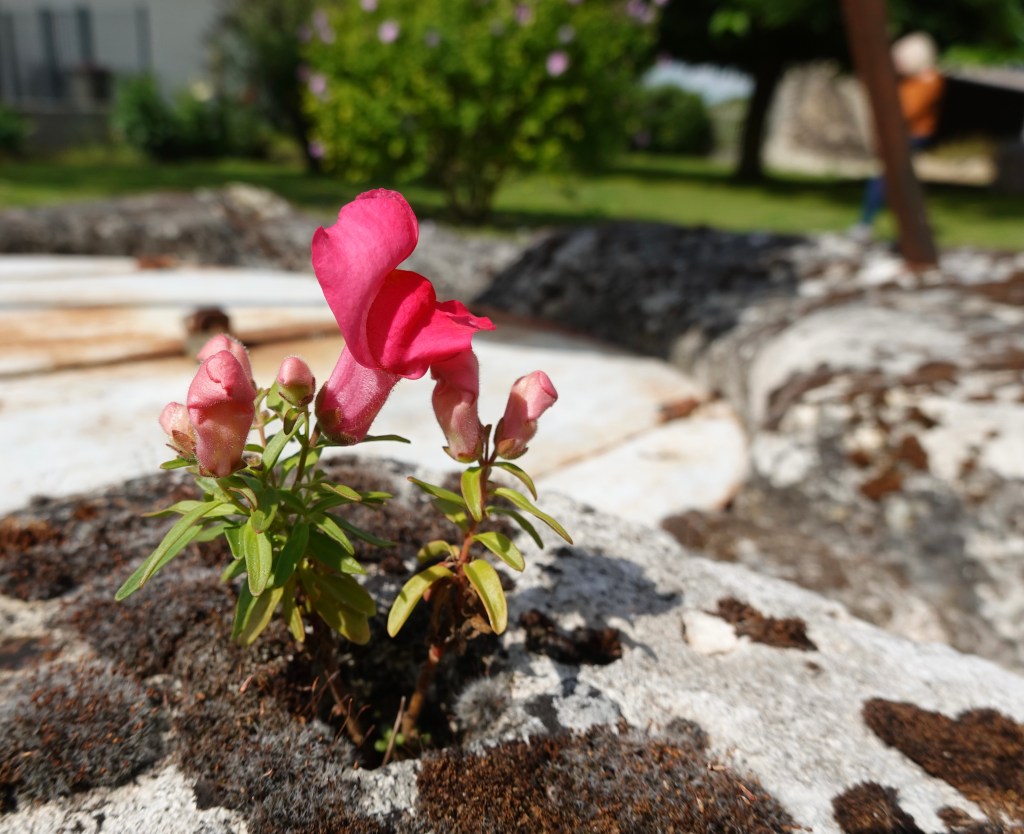
We have an old well in the garden. Its wall is very worn and covered with lichen and moss. Lichen and miss are strange life forms which seem able to grow on the most unlikely ground. I’m quite used to seeing that.

But a few weeks ago a little plant started to grow in a small indentation in one of the stones. Really this indentation isn’t much bigger than a button and it seems pretty shallow. Honestly I never considered it as a likely place for a flower to grow and I certainly didn’t plant one there.

But over a few days this tiny plant grew and blossomed. Isn’t it beautiful?

Really this is the kind of thing that astonishes me. I don’t know how the seed found its way into this tiny recess….either dropped by a bird, or simply blown in the wind. But having found itself there it sure didn’t need much to germinate, grow and flourish.

It reminds me of why I agree with the view that we live in a friendly universe. What I understand by that is whilst entropy shows us that ultimately everything falls apart, there are powerful creative forces in this universe which provide the conditions for life to emerge….more than that…for life to flourish.

Isn’t that astonishing?

Read Full Post »

Innovation

I thought I’d share a couple of innovations with you today. These are just two which caught my eye recently.

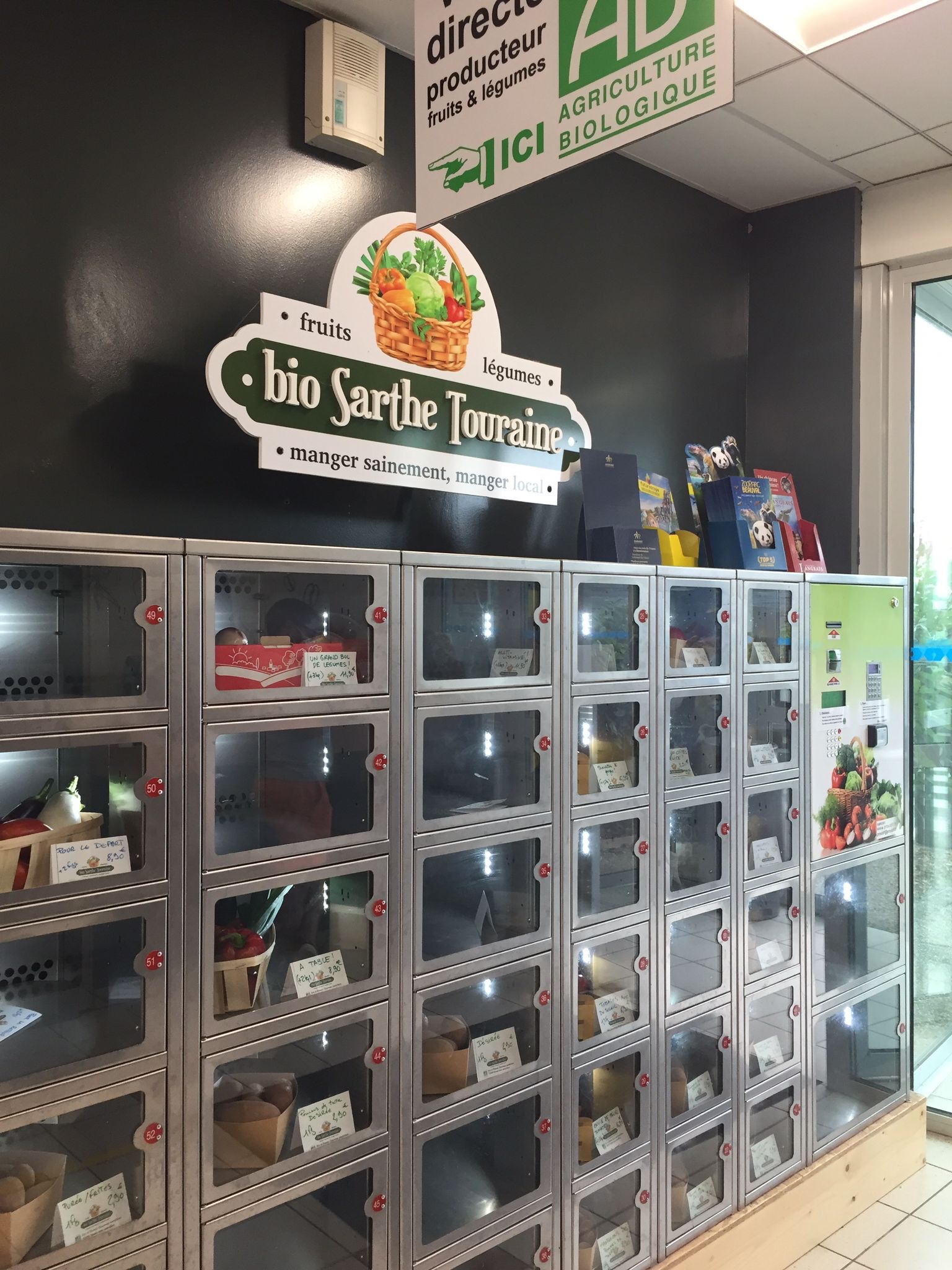
On the left is a dispensing machine with a difference. Everything on sale here is an organic vegetable. You can choose a basket of selected veg to make ratatouille or soup or you can just choose some potatoes or other vegetables.

I’ve never seen anything like this selling organic veg and the amazing thing is it was in a motorway service station just south of Saint Malo.

Surprising, huh? I’ve no idea how long it’s been there or if it is successful but it certainly caught my eye.

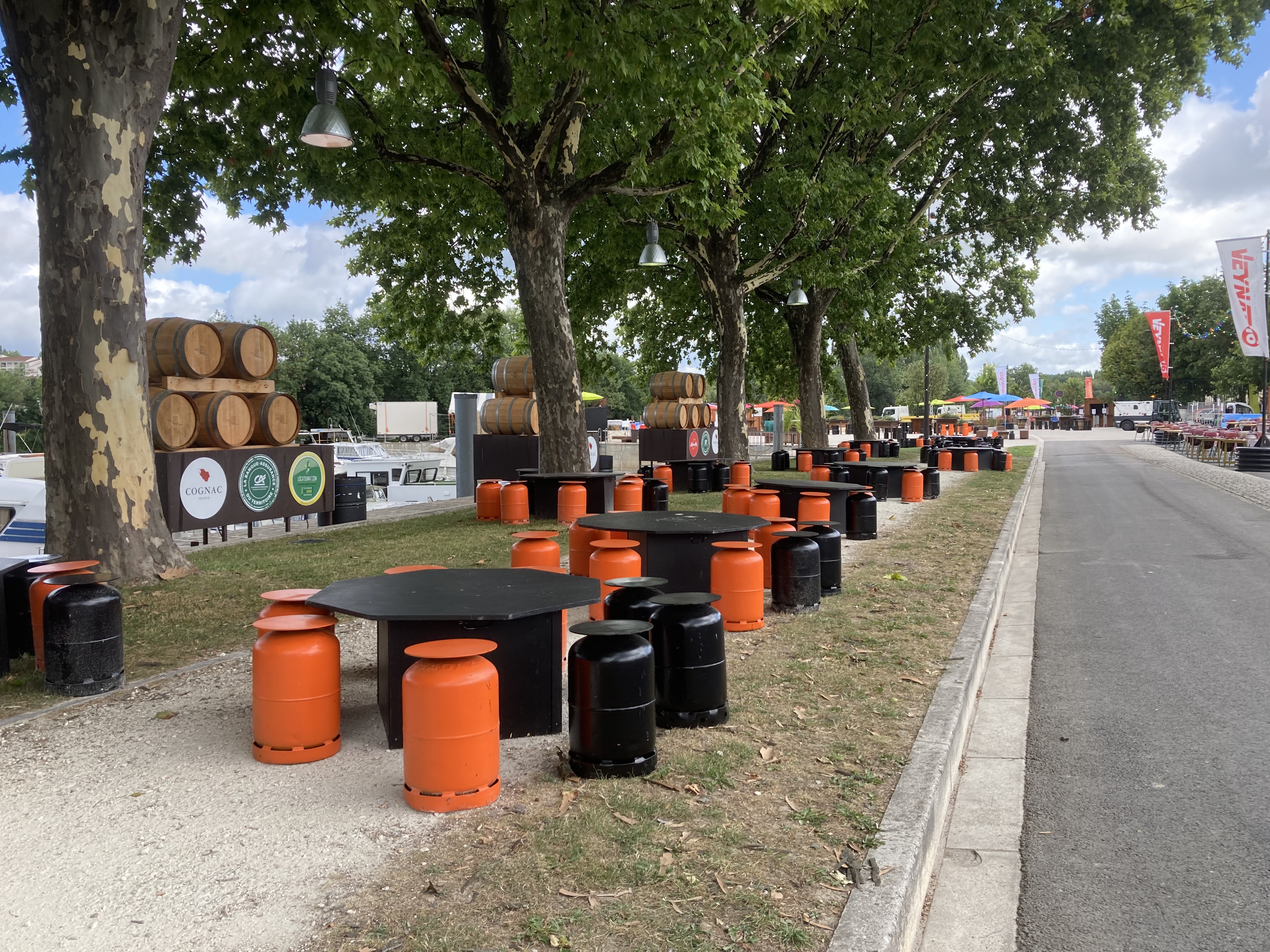
The one on the right is outdoor tables and seating set up for a festival down by the Charente in Cognac. The stools have been made from old gas cylinders. Looking pretty attractive and what a good use of old cylinders.

Ok, neither of these are a big deal, but they are examples of what gives me hope. We humans are a very creative species and we use that creativity to adapt to changing circumstances. There’s no doubt that in the light of climate change and the pandemic that we need to adapt and maybe this kind of innovation is just a signal that we are in the process of doing that. After all the big changes emerge from the interactions of all the individual ones, even small ones, don’t they?

Read Full Post »

Relationships

I was tempted to post this photo with no words. I mean who doesn’t like a photo of duckling? It’s just a charming, delightful, heart warming image, don’t you think?

But I do think this image says something about the way not only ducks, but many other creatures including we humans, need the care of others, learn by copying, and gain security by sticking together.

In other words relationships are fundamentally important.

Does that need to be said?

I think it does. For two reasons. First, because we have moved into an increasing separated, transactional society. Health care, for example, should be centred on relationships. Health is about people, individual unique people in relationship with the others. Anything which degrades or impairs the quality of the relationship between patients and doctors, between patients and nurses, between patients and carers or between team members should be addressed and changed. Just the other day I heard the U.K. Health Minister laud as innovation and improvement a centre which was doing twice as many cataract operations in half the time. I’m sorry, Minister, but innovation and improvement would be improving the quality time spent between patients and professionals. We need to build long term kind and caring relationships into the heart and core of our services, just as Victor Montori says in Why we Revolt.

Secondly paying more attention to relationships will help address the imbalance between competition and co-operation in our societies. Some of the most impressive stories of the pandemic have been the kindness and care of neighbours, strangers and families for each other, as well as the impressive scientific and clinical co-operations which have improved our ability to treat those who get sick from Covid.

So, yeah, this is a lovely photo of ducklings, but it reinforces my desire to contribute towards the creation of a different world.

Read Full Post »

Order and chaos

I took this photo a few years ago because I was struck by the contrast between the two areas of the landscape I could see.

To the left are rows and rows of vines, all well tended, individually pruned, (and sprayed multiple times!) – a managed area of land, impossible without intense human effort.

To the right is a field of wild flowers, a whole range of diverse species each flourishing in a part of the land left untouched (for this year) by human hands.

I find both beautiful.

What this image stirs in me are the writings of two medical writers – Iain McGilchrist and Dan Siegel.

Iain describes the different ways our two cerebral hemispheres engage with the world. The left seeking structure and order while the right seeks to explore difference, novelty and betweenness.

Dan describes the mind as an integrative process managing the flow of energy and information. It integrates order and chaos. Too much of either is unbalanced. The mind seeks to integrate them.

Search this site for either of these authors and you can find a number of posts I’ve written about their insights.

Read Full Post »

Remember TINA?

Do you remember TINA?

That was one of Margaret Thatcher’s slogans. Well I’m not sure she ever used the acronym but she sure believed the statement which led to it – “There Is No Alternative”.

What she meant, of course, was that she was determined she was right and would entertain no criticism.

I hated that from the first time I heard. It struck me as both arrogant and ignorant.

At best it was a delusion, and at worst, a deliberate lie.

Almost a couple of years ago the ancient, high stone wall separating the garden from our neighbours’ property fell down. A huge, sudden crash and down it went. If you look back through my blog you’ll find lots of photos of the wall….or more specially of the glorious false vine which grew on it. Some experts have blamed the fall on the ivy, and maybe it did contribute but it was beautiful all the same.

The wall still hasn’t been repaired (don’t ask!) but the neighbours did chop down the remains of the ivy plant to stop it regrowing.

Well look at this – it hasn’t given up yet!

I listened to an excellent episode of the onbeing podcast the other day. It featured an interview with the forest scientist, Suzanne Simard. I recommend it. Her work on the interconnectedness of trees and fungi in the forest is mind expanding. Yet she had to fight to have it accepted as the dominant orthodox model was based on Darwinian competition, not collaboration and cooperation.

In that interview she says

You know, I’ve learned through my work, in studying how systems work, that they are regenerative systems. You know, they’re built that way. They’ve evolved that way — that the old help the young, that the large helps the small, and it’s reciprocal, and that this network, this system, will grow. And out of it emerges incredible stuff, like the ability to sequester carbon in our ecosystems, for example; the productivity of a beautiful cathedral forest; the sense of wonder and health and vitality and health you get — that we get when we interact with that incredible place.

You know, even in our own societies, look at what we’ve achieved, and look at the joy we’ve developed, listening to the symphony, watching our children grow. It’s just full of joy. And we’re built for that. And that’s what gives me incredible hope, and honestly, hope is the only way to go, right? And it’s also — that hope is based on understanding. It’s an understanding that our ecosystems are meant to heal themselves, and yes, there are tipping points, and yes, we do — if we don’t make changes, they can collapse, but they can also go the other direction. The system will respond, if we make those choices, and it will rebuild and re-self-organize again in a way that is going to be healthy for maybe even the human population, the human society, right? I think it’s all there. We have all the tools. We have all the fundamental building blocks. We just need to make the right — make good decisions.

So I look at this photo again and I see resilience, re-growth and the ability of Nature to find another way.

I love that.

Be wary of those who claim “there is no other way” – there always is.

Read Full Post »

Nourish and nurture

Whenever I look at this photo I think of the relationship between a mother and her child. We humans have evolved with a uniquely long period of nurture for our newborn. Our species needs more care and attention for many more months than most others do in the earliest phase of life. From the perspective of evolution that must grant us some advantage, and, as best I understand it, the current thinking is that it allows the development of the brain and the capacities for social interaction.

Is there a more stark example of how much individual human beings need others? None of us would have survived on our own, and although we develop much greater autonomy as we mature, we still thrive best when we are nourished and nurtured.

I think within us all are two aspects, themes, or strands of being. You might think of them as energies….like yin and yang. Or you might think of them as feminine and masculine principles, perhaps related to Mother and Father archetypes or gods. Or you might think of them as the right and left hemispheres of the cerebral cortex and the ways in which each engages with the world.

I have four verbs in my mind when I contemplate these two energies, archetypes or principles. Nourish, nurture, provide and protect.

I know we can’t reduce everything to four simple words and I also know that as society and culture evolves we develop a more complex way of understanding these actions….a way which doesn’t limit the feminine and masculine to the genders of female and male. After all, we have all always had both within us.

This particular photo makes me think of the first two verbs – nourish and nurture. It seems to me that that’s how we begin in life. We start within the womb being nourished by our mothers. Then when we are born our mother’s milk is the first, and for many the only, food we receive. Nourishment is mainly about food….it’s about supplying us with enough of the right food that we need to grow our body and brain. Think of how quickly a baby grows into a toddler, and from there into a child, then teenager, and how much they change in those first ten to twenty years. It’s pretty astonishing and we kind of take it for granted.

Nurture involves more than nutrition. It involves care, encouragement, support and education. How we are treated by our significant carers in the first five years affects the size of the brain and the number of connections which are forged between the millions of neurones. You can imagine how important that is for our future abilities and wellbeing.

In my heart, I feel moved by an image like this. This relationship of care, this relationship of nourishing and nurturing, is so important, it really can’t be overstated.

I hope we see more of this in the years to come – better nutrition for all, more care, attention and nurturing for all.

That would be a good start, don’t you think?

Read Full Post »

« Newer Posts - Older Posts »