Feeds:
Posts
Comments

Dealing with obstacles

obstacles

How do you deal with obstacles?

What do you do when you come up against the immovable? Push harder? Jump up and down? Scream and shout? Cry “unfair”?

What does a river do?

It flows around it.

But more than that, look, it creates beauty as it does it!

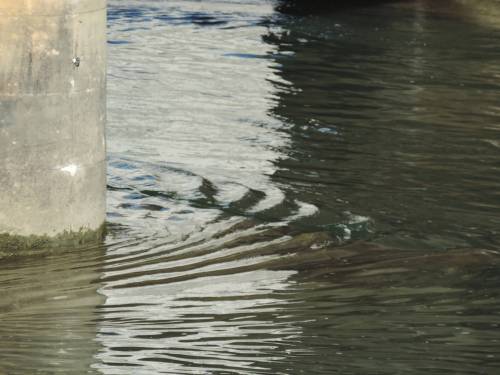
This photo is of the River Charente flowing through Jarnac. There’s a road bridge over the river and I was struck by the beauty of the patterns as the water flowed around one of the concrete pillars. I thought….there’s a lesson here…..

Iain McGilchrist, in The Master and His Emissary, says we use our two cerebral hemispheres differently. The hemispheres, remember, control the opposite sides of the body, so the right control the left hand, and the left hemisphere control the right. It’s the same with vision where the right field of vision is the responsibility of the left hemisphere and the left field of the right hemisphere. I’m simplifying here, but you get the idea. In birds which have their eyes on the sides of their heads instead of in the front of their faces, each hemisphere controls the opposite eye but the idea is the same.

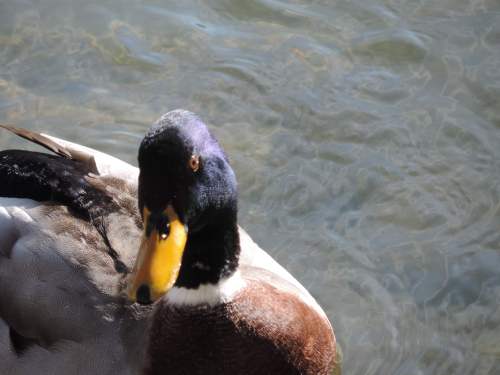
The right hemisphere supports a broad, vigilant attention. In a bird the left eye, therefore, is taking everything in to be aware of predators.

left eye

See how this duck is looking at me?

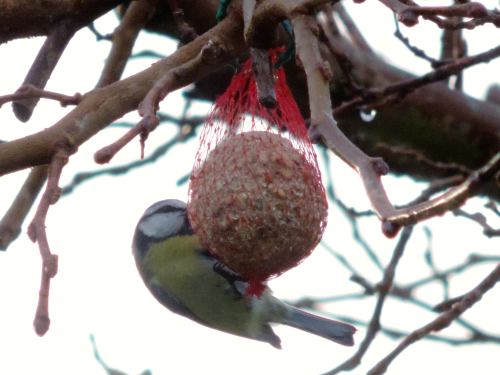
They use the left hemisphere to focus the right eye on details….for example, when picking out food.

right eye

There’s something else interesting about the field of view of interest to each hemisphere.

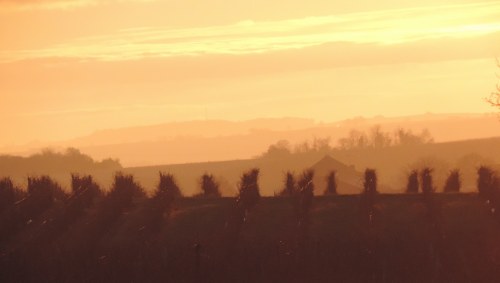
In we humans, the right hemisphere is more interested in what is far from us….

distance

while the left is more interested in what is close up….

catkins


Deep past

Near where I live now there’s a dolmen. A dolmen is a Stone Age rock structure which looks like a table. It’s got three standing stones, each about ten feet high, and a massive 5 ton slab of stone laid on top as a cover. Originally it’s thought that the walls were filled with slabs of stone, then the whole dolmen was covered with a cairn of stones. The cairn and most of the walls have gone since it was built about 3500 to 5000 years ago.
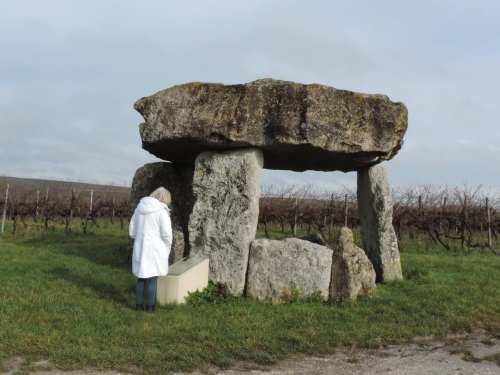
dolmen size

There’s a small plaque with some information on it, but otherwise it’s just sitting in the middle of a vineyard.

Look at the size of the roof! It weighs about five tons. How on earth did they get it here then hoist it up to sit on these standing stones? Seriously, how did they do that? And where did the stones come from? If they came from far away, how did they transport them? When you step inside things begin to get even more interesting.
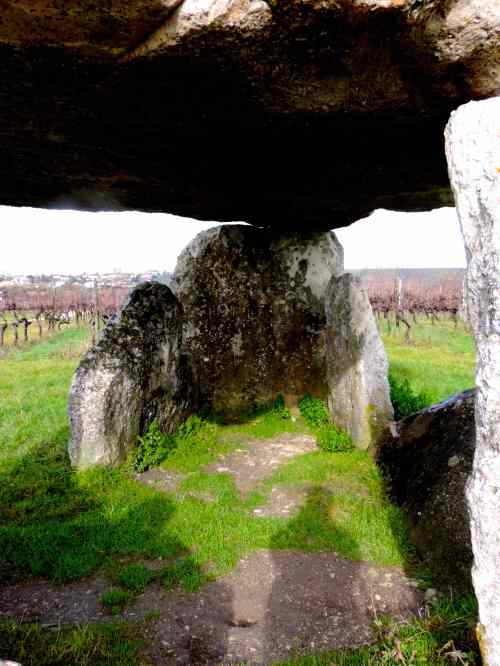
dolmen inside

It feels cool and damp inside, and the sun makes it way in casting long shadows as it does so. The sound quality in there is startling. It is such an open structure that it comes as a complete surprise to hear a kind of echo. It feels impossible to resist singing, or calling out, just to hear the quality of the sound.
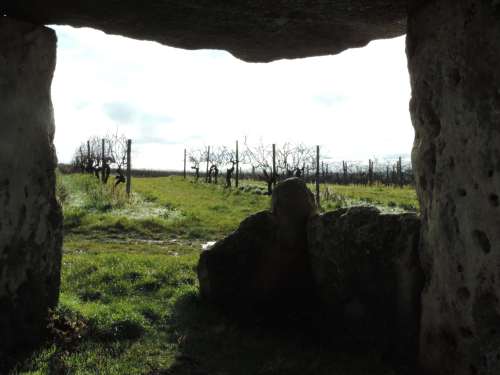
dolmen view

Nobody knows the purpose of this dolmen. Was it a burial chamber? A structure for the celebration of rituals or ceremonies? We don’t know. Of course, when it was built there were no vines here, so I’m guessing the makers would look out over the fields and have a great view of the surrounding countryside.
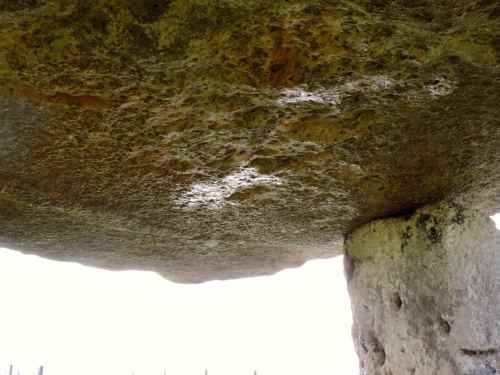
dolmen roof

The underside of the roof has these damp patches on it, and between the sun, surrounding puddles, and passing clouds, the wetness on the stone shimmered strongly suggesting the waves of the sea. Which was made even stranger when I looked more closely at some of the stones –
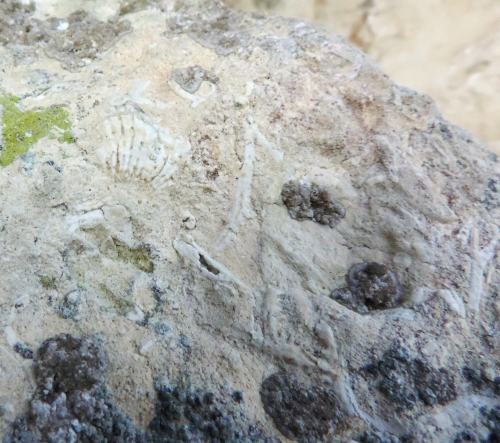
dolmen shell.jpg

The stone is a mixture of limestone and iron, but there are many little fossil shells in it, which, when you are standing on top of a hill in the middle of the Charente, miles from the coast, is pretty bizarre!

I love the way the lichen grows on some of the surfaces….tracing spirals and circles –
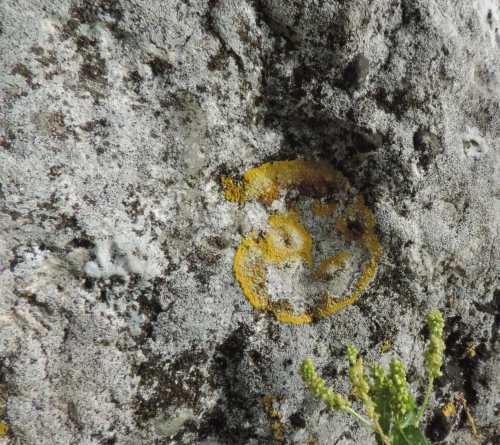
dolmen lichen.jpg

Something of the quality of this whole structure forces you to slow down, take your time and just be there. It really feels as if you are in touch with the deep past. I was going to say the distant past, but the strange thing is, when you stand under here, touching the stone, the past doesn’t feel distant at all, just deep….like roots.
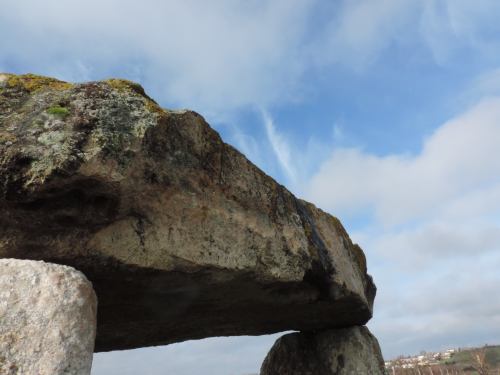
dolmen sky

Seeing faces

Have you ever noticed that we seem to be so well equipped with the ability to see faces that we can see faces where they don’t actually exist?

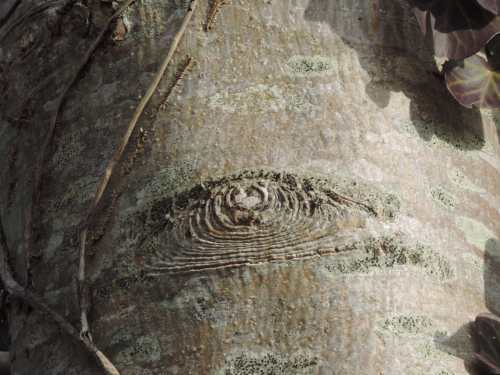
tree eye

I know this is a knot in a tree but I can’t escape the feeling that the tree is looking at me…..the Spirit of the forest?

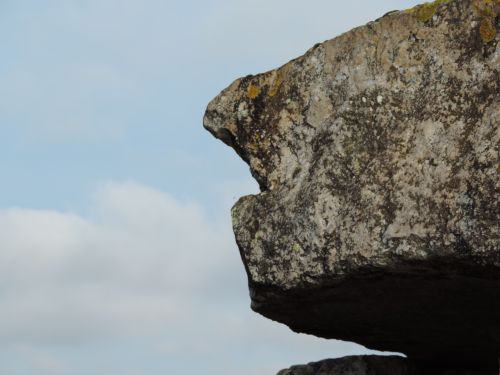
And we don’t only see faces in living organisms, we see them in rocks too…..

rockface

There’s a Stone Age dolmen near where I live. It’s like a huge three-legged table with vertical stones each about 3 metres tall and a 5 ton enormous rock laid on top of them like a table top. I took a lot of photos when I went to explore it but this one particular shot looks for all the world like the profile of a face….perhaps in the same way that owners come to look like their dogs this rock reflects the face of one of the people who created the dolmen?

As above so below

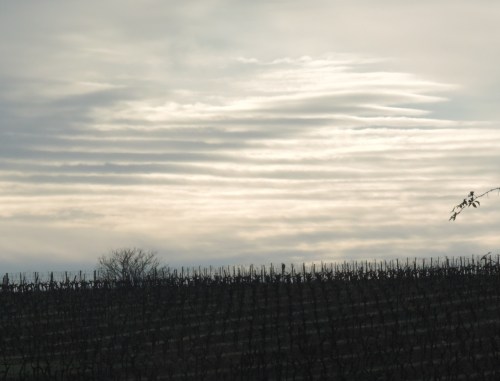
skyvine

Not only was this an unusual cloud effect, but the way it echoed the vineyard below really caught my eye.

Of course, the vineyard is man-made, or at least man-cultivated, and the clouds, as far as we know, are not!

This kind of symmetry is my favourite kind….the kind where one part of reality echoes another.

There’s something else though about this image, or at least the taking of this image, and that’s the “exposure” readings for the vineyard and the sky. They were very, very different. With my camera I took a number of shots, exposing primarily for the sky, which darkened the vineyard considerably, exposing for the vineyard, which obliterated the cloud pattern in the sky, and a “weighted” exposure, which is the one you see here.

What strikes me about this is how when I just look at the same scene, without a camera, I don’t have any of those exposure problems. As I look at the vineyard and the clouds above I see them all perfectly clearly. I don’t have to choose.

How do our brains do that?

Isn’t something as everyday as vision just astonishing?

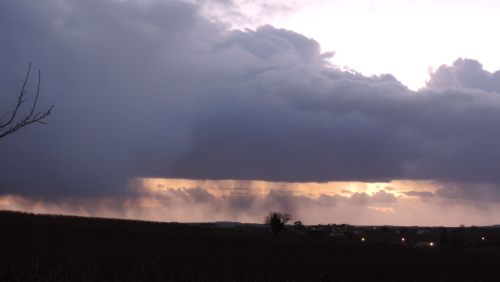
weather passing

I saw some weather passing by the other evening.

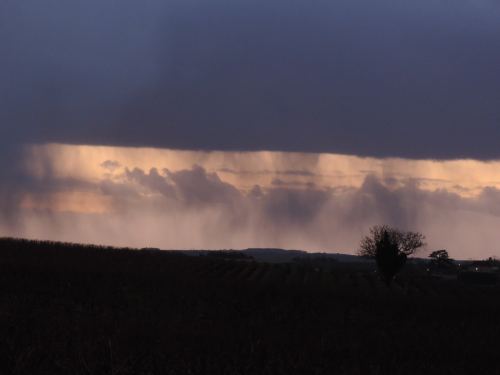
When I zoomed in it looked even more spectacular –

weather window

….like looking through a small window – or even a letterbox!

There’s something very appealing about wind and rain and clouds and light all at once – particularly when you can see the whole weather system from a distance!

Why does it feel so great and cosy to be warm and comfortable inside your house while the rain hammers on the window, or the wind blows a gale outside? Is it the contrast? Whatever the reason, it seems to heighten the pleasure of being inside doesn’t it?

The other thing I like about seeing the weather passing by like this, is how transient it is. How brief it is. A few minutes later and this photograph would have been impossible. That’s one of the many things I enjoy about photography – the call to action! When you see whatever it is that catches you eye, there’s no point thinking “I’ll come back and take a photo of that some time” – it’ll be gone! You have to be present. You have to act. Now.

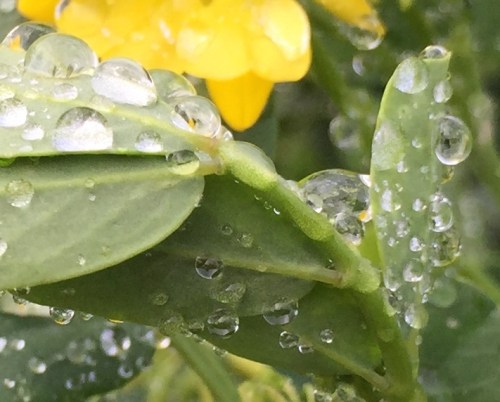
drops1

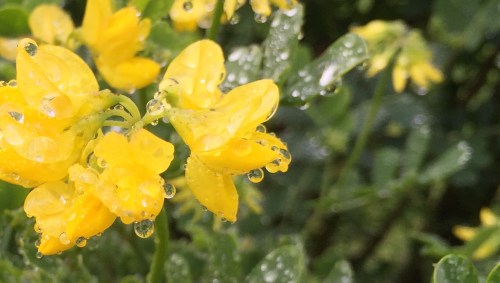
drops2

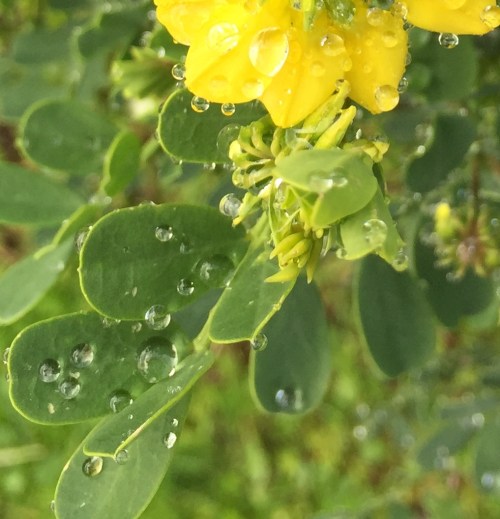
drops3.JPG

What catches your eye?

What do you notice when you look out of your window, or walk in the area where you live?

Attention is a complex phenomenon. It’s an interactive, dynamic process. What we pay attention to is partly influenced by our values, beliefs, preferences and prior experiences. Then once we pay attention to something, that attending to acts like a magnifier, increasing our awareness of whatever it is, filling more of our consciousness with it. And that, in turn, sets us up to notice more like that around us.

Water droplets sparkling on blades of grass, leaves and the petals of flowers, all catch my attention. I notice patches of shining water beads on the grass in the morning and as the sun moves across the sky the light “activates” the sparkles on different plants.

One thing I find really draws me into the present is to get up close and personal.

The particular is what absorbs me.

And having the intention to make some photographs somehow makes it even easier to slip into the details of what is right before me and helps me to fill my consciousness with the world around me, right here, right now.

Here are just a few photographs which I took of the water droplets on a single plant in the garden yesterday. Aren’t they glorious? Aren’t they absorbing? Don’t they draw your eye, and your attention right into them?

I do really love some of the larger Parisian galleries like the Musée d’Orsay, and the Louvre, but some of my most favourite ones are much smaller. The Rodin museum is a long time favourite of mine. I like it best when it’s warm enough to be able to stroll in the gardens there. It has that wonderful combination of Nature and Art which really encourages you to take your time and savour it.

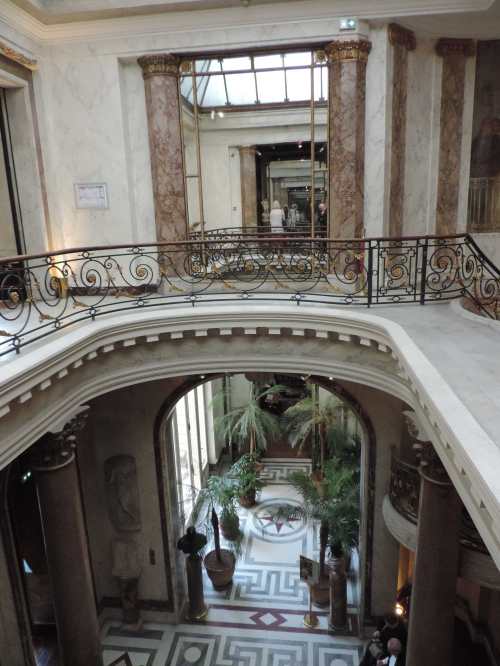
On my last trip to Paris I found another smaller gallery, the Musée Jacquemart André. Look at the main foyer –

gallery

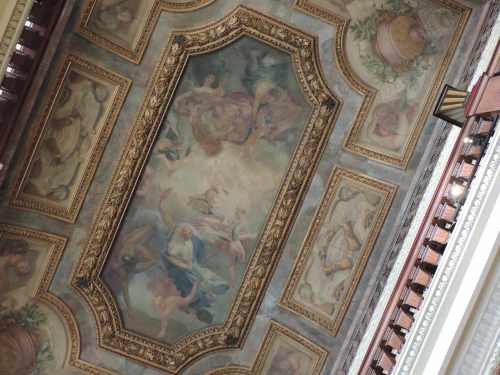
And the ceilings…..

ceiling.jpg

I went there to see an exhibition of portraits of the Medici from Florence, but the building itself entranced me.

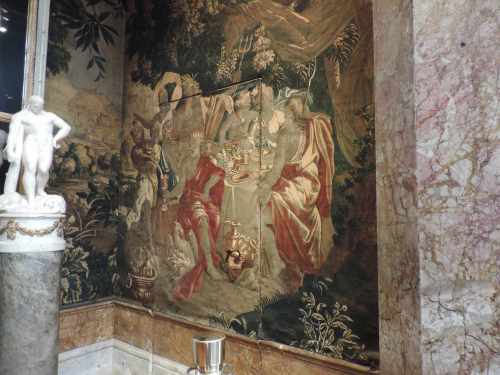
Here’s one of the many things which caught my eye and surprised me, a wall covered with a tapestry which has had a door cut into it –

tapestry door

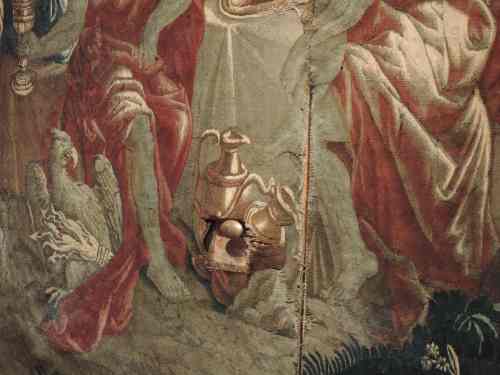
Maybe for the owners of this gallery, back when it was a private house, bought and used tapestries the way people use wallpaper nowadays, but they seem like such works of art to me that I was shocked to see a door cut into it. Then when I looked a little closer I noticed the door-handle!

doorhandle

I’m not sure what I think about that!

What do you think? Does this make art more utilitarian? Does it make the everyday practical more beautiful?

Whatever you think about it I think it’s a great example of the extraordinary in the ordinary….”l’émerveillement du quotidien”.

Varieties of light

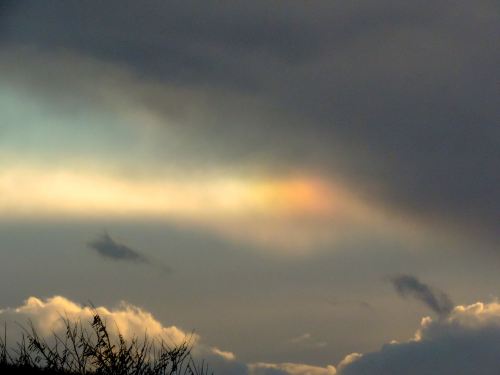
prisms of light

This caught my eye.

It was a stormy day with the wind blowing strongly from the West. One minute I’d look out and see blue sky, then the next, an enormous black cloud would roll over making it seem that night had fallen early. Minutes later, maybe after a few peals of thunder, a heavy shower, or even some hailstones, the cloud would move on and there was blue sky again.

Then late in the afternoon I looked out and what caught my eye was the colour.

There was this little prism of coloured light between the clouds.

That’s unusual here in the Charente. I go once a week for a French language lesson with a local retired Cognacaise woman and I can’t remember how it came up but I showed her a photo of a rainbow which I’d seen while back visiting family in Scotland. She said she’d seen a rainbow when she was a girl but not since.

That little statement startled me. Then I thought, how many rainbows have I seen since I moved here just over 12 months ago? And I couldn’t remember seeing any.

Can that be right?

Are there rainbows pretty much every week in Central Scotland but virtually none in the Charente?


Time

Have you ever visited the Musée d’Orsay in Paris?

No?

Put it on your list.

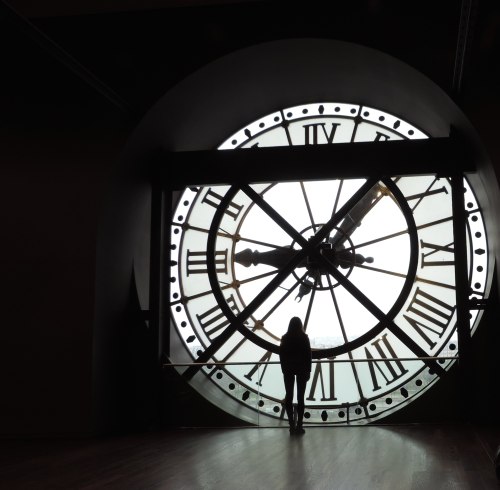
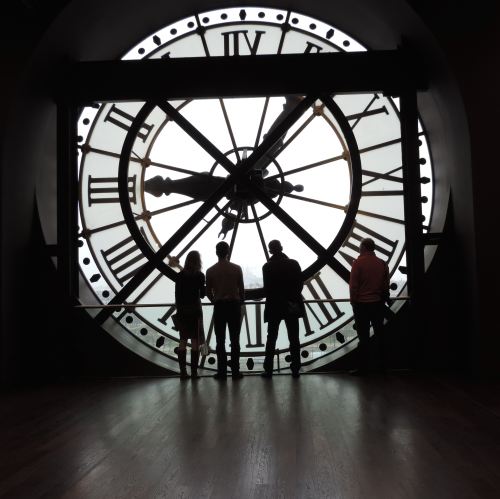
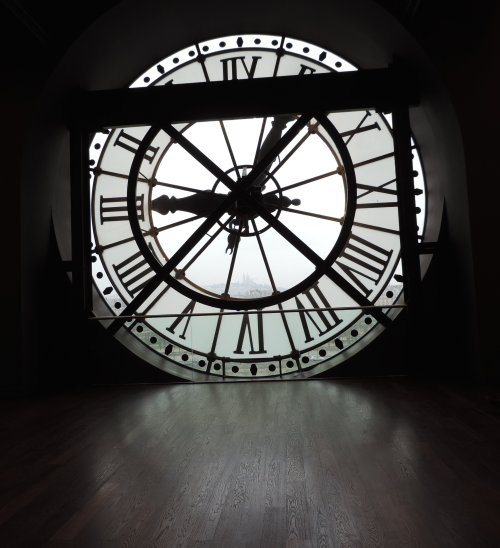
It’s one of my favourite places in the world. It was originally a railway station and has been turned into an art gallery on the banks of the Seine. It’s an astonishing building. Quite incredible that anyone would construct a railway station to look like this, but also, quite brilliantly transformed into a gallery.

When I go I like to go straight from the main entrance, down through the sculpture gallery right to the far end of the building where you can find an escalator that takes you up to the fifth floor where there is a fabulous collection of the work of the Impressionists.

Before you get to their work though you pass through the room with the clock in it.

That’s the one I want to share with you today.

Here are three photos I took –

one

group

seeing beyond

These all stimulate my thoughts about time and how we relate to it. They conjure up my thoughts about “taking time” – in other words, slowing up, savouring, taking the time to fully experience the here and now, but also, taken in sequence, these three images provoke the following thoughts –

Firstly, how good and necessary it is to spend some time by yourself. Remember Julia Cameron’s “Artist’s Way”? I often told people about her exercise of making an “artist’s date” – actually scheduling into your diary a piece of time – it might be an hour, half a day, a day – and there are only two rules to apply to that piece of time – you have to spend it alone (no sharing!) – and you have to spend it doing something you enjoy (no chores!). You should then schedule in a regular series of these dates at a frequency you can manage – daily, weekly, forthnightly….whatever. Whether or not you are an artist, I think this is a very, very valuable exercise to try.

Secondly, how good and necessary it is to spend some time with others. There is something truly magical about sharing an experience with someone else – whether that be a visit to a gallery, listening to song, watching a movie, having a meal – we are social creatures, we human beings and sharing experiences with others makes our heart sing.

Thirdly, when we lose ourselves in something….a view, a book, a creative act……we experience “FLOW” – what Czikszentmihalyi wrote about in his study of happiness. It’s that time when we are “in the zone” and time “stands still”. Just gazing through this clock to Montmartre is an entrancing experience.

Isn’t strange that time doesn’t pass at a constant speed? Despite what clocks seem to tell us?