Feeds:
Posts
Comments

The importance of story

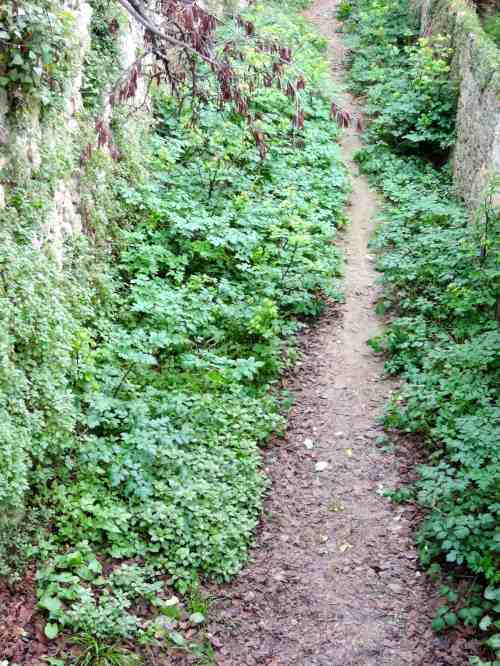
What do you think about this path?

path

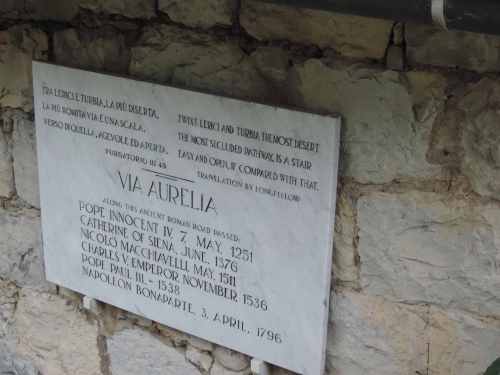
Not very impressive is it? Not sure it would catch your attention at all if you stumbled across it. But then what about this sign on the wall telling you a little bit about this path, the “Via Aurelia” (nice name, huh?)

notice

Now, I’m sure that’s not a complete listing of all the famous people who have walked along this very path, but even knowing that Napoleon, Emperor Charles V, Macchiavelli and Catherine of Siena, (not to mention the various Popes!), walked along here completely changes it doesn’t it?

And I’m sure that if you were to read some of the stories about where these people were coming from and where they were going to, then this little, apparently unimpressive little path, would take on another quality altogether.


On reflection

on reflection.jpg

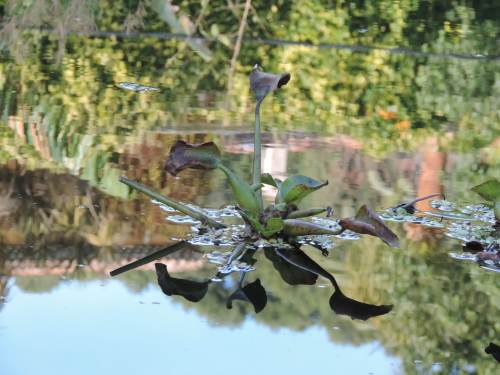
I love it when I see a beautiful reflection in a pond or a lake. Here’s one I saw recently in a botanical garden in Menton.

When you look at an image like this it’s quite disorientating at first as you try to figure out exactly what you are looking at. The funny thing is that when you are actually there, there is no confusion.

I suppose it just goes to show how context helps us to make sense of what we see. Focus in on a part of what you see, then pull it out into a separate, disconnected image, and it isn’t so clear any more.

Twists and turns

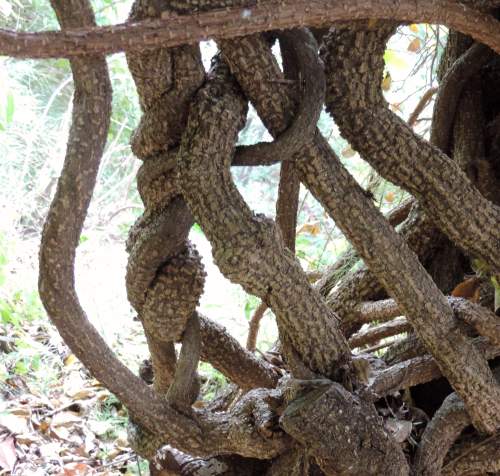
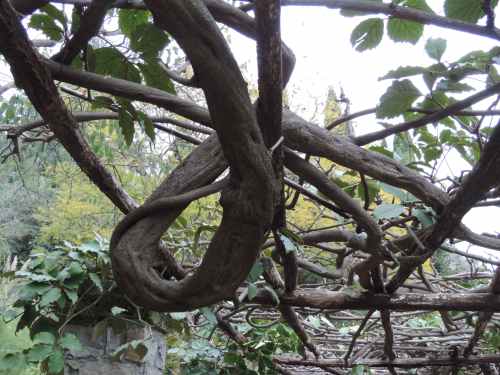
There are no straight lines in Nature

twists and turns1

twists and turns2

And there are no straight lines in Life either…..

Have you ever thought that it’s the ability to change direction, to turn this way and that, to respond to the changes around us, to grasp our opportunities to connect to the others we encounter along the way…..that create these beautiful, elaborate, complex, unpredictable paths in our lives?

Edges

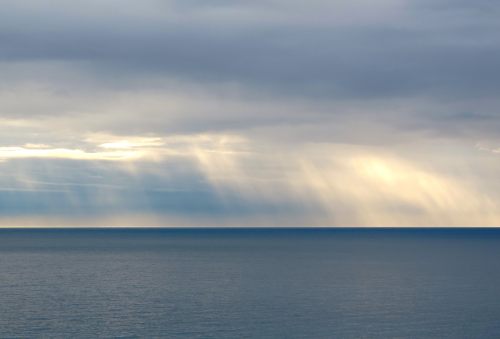
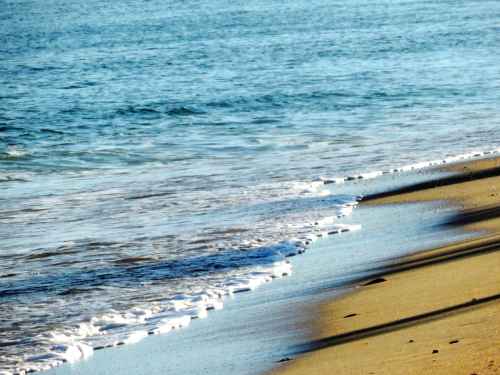
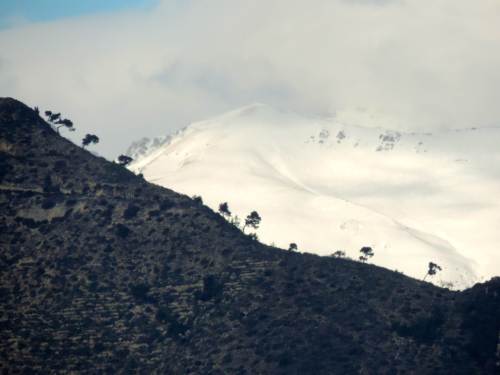
I love the places where different elements meet. There’s a magic there. Here are three I saw recently.

Where sun, air, clouds and rain meet the sea…..

rainatsea.jpg

Where the sea meets the land…..

seasand

and where the snow meets the forest and the clouds meet the mountains…

snowline

Iain McGilchrist, in his Master and His Emissary, describes how our right cerebral hemisphere has an approach to the world which focuses on “betweenness”. I think looking out for, and noticing, the meeting points, these boundaries, margins and connections in the world is a great way of activating your right hemisphere.

It’s a good way of just enjoying the sheer beauty of the world too!

Exploring

Since I moved to France sixteen months ago I’ve been settling in to a new rhythm of life, looking out onto vineyards every day and enjoying the slower pace of the Charentaise way of life. I haven’t travelled much apart from a few visits back to Scotland to see family and friends. Recently I decided it was now time to do a little exploring and I’d start with a road trip around some of France.

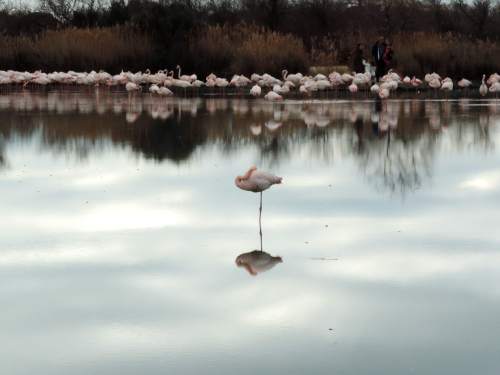
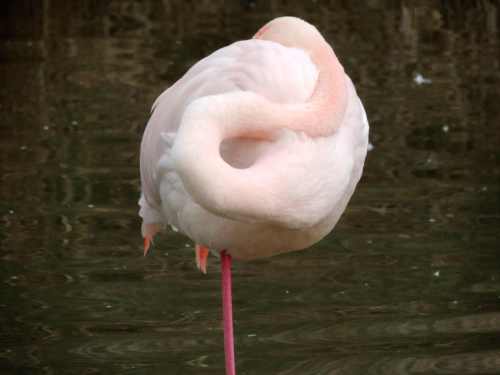
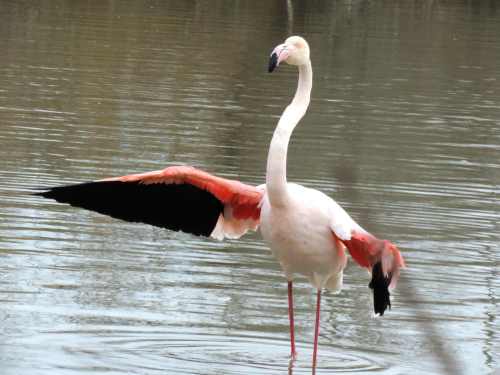
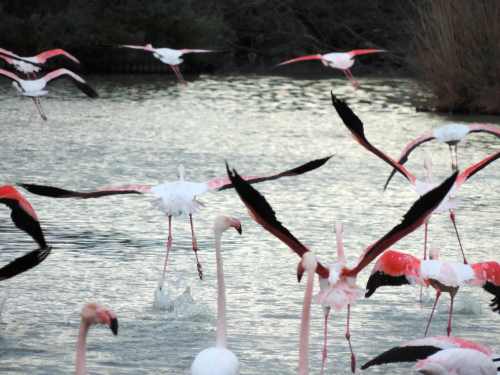
One of the first places I was drawn to was the Camargue to see the flamingos there. I don’t know if you are familiar with the idea of a “bucket list” but it involves having a list of all the things you’d like to do before you “kick the bucket” (check out the amusing movie, “Bucket List” for an entertaining take on this idea). I heartily recommend you put seeing flamingos on your bucket list. Wow! What incredible and beautiful creatures!

I took a lot of photographs. I mean a LOT. Here are just a few

sleeping on one leg

sleeping

making big

taking flight

Likin’ lichen

lichen

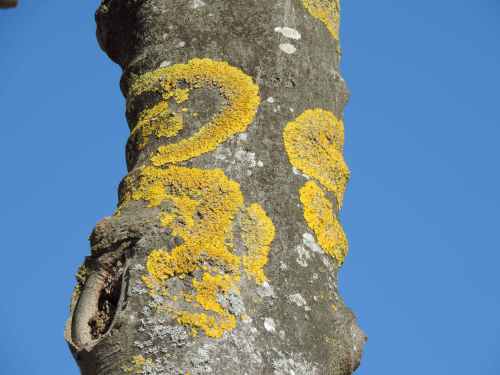
Next time you are passing some lichen can I recommend you stop for a moment and take a look.

Isn’t it amazing? Sometimes the colours are subtle, sometimes striking – this particular yellow lichen makes all the more impact because of the blue sky behind it.

But look at the shapes too…..Nature’s art work.

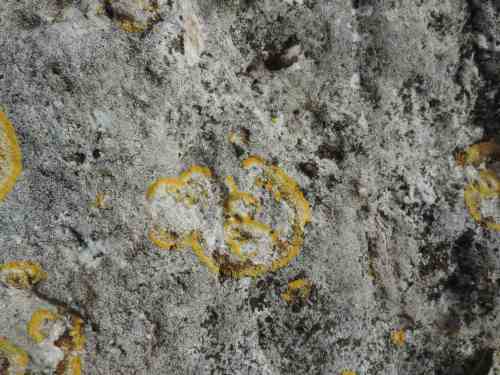
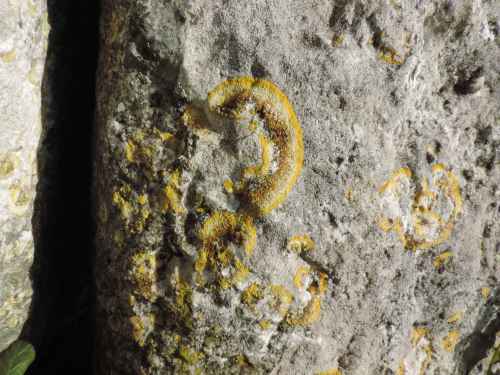
Here are another couple I spotted recently

lichen spiral

lichen ear

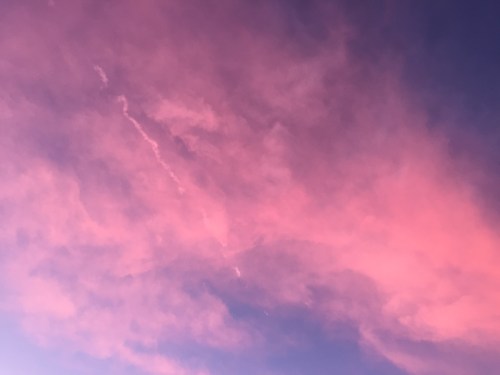
sky above

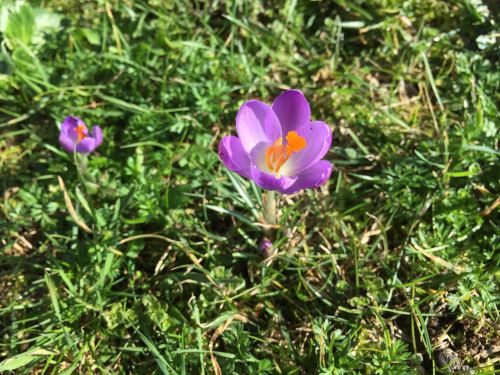
Sometimes the beauty of the sky straight above your head reminds you of something you saw earlier when you looked down at your feet….

crocus.jpg

Dealing with obstacles

obstacles

How do you deal with obstacles?

What do you do when you come up against the immovable? Push harder? Jump up and down? Scream and shout? Cry “unfair”?

What does a river do?

It flows around it.

But more than that, look, it creates beauty as it does it!

This photo is of the River Charente flowing through Jarnac. There’s a road bridge over the river and I was struck by the beauty of the patterns as the water flowed around one of the concrete pillars. I thought….there’s a lesson here…..

Iain McGilchrist, in The Master and His Emissary, says we use our two cerebral hemispheres differently. The hemispheres, remember, control the opposite sides of the body, so the right control the left hand, and the left hemisphere control the right. It’s the same with vision where the right field of vision is the responsibility of the left hemisphere and the left field of the right hemisphere. I’m simplifying here, but you get the idea. In birds which have their eyes on the sides of their heads instead of in the front of their faces, each hemisphere controls the opposite eye but the idea is the same.

The right hemisphere supports a broad, vigilant attention. In a bird the left eye, therefore, is taking everything in to be aware of predators.

left eye

See how this duck is looking at me?

They use the left hemisphere to focus the right eye on details….for example, when picking out food.

right eye

There’s something else interesting about the field of view of interest to each hemisphere.

In we humans, the right hemisphere is more interested in what is far from us….

distance

while the left is more interested in what is close up….

catkins


Deep past

Near where I live now there’s a dolmen. A dolmen is a Stone Age rock structure which looks like a table. It’s got three standing stones, each about ten feet high, and a massive 5 ton slab of stone laid on top as a cover. Originally it’s thought that the walls were filled with slabs of stone, then the whole dolmen was covered with a cairn of stones. The cairn and most of the walls have gone since it was built about 3500 to 5000 years ago.

dolmen size

There’s a small plaque with some information on it, but otherwise it’s just sitting in the middle of a vineyard.

Look at the size of the roof! It weighs about five tons. How on earth did they get it here then hoist it up to sit on these standing stones? Seriously, how did they do that? And where did the stones come from? If they came from far away, how did they transport them? When you step inside things begin to get even more interesting.

dolmen inside

It feels cool and damp inside, and the sun makes it way in casting long shadows as it does so. The sound quality in there is startling. It is such an open structure that it comes as a complete surprise to hear a kind of echo. It feels impossible to resist singing, or calling out, just to hear the quality of the sound.

dolmen view

Nobody knows the purpose of this dolmen. Was it a burial chamber? A structure for the celebration of rituals or ceremonies? We don’t know. Of course, when it was built there were no vines here, so I’m guessing the makers would look out over the fields and have a great view of the surrounding countryside.

dolmen roof

The underside of the roof has these damp patches on it, and between the sun, surrounding puddles, and passing clouds, the wetness on the stone shimmered strongly suggesting the waves of the sea. Which was made even stranger when I looked more closely at some of the stones –

dolmen shell.jpg

The stone is a mixture of limestone and iron, but there are many little fossil shells in it, which, when you are standing on top of a hill in the middle of the Charente, miles from the coast, is pretty bizarre!

I love the way the lichen grows on some of the surfaces….tracing spirals and circles –

dolmen lichen.jpg

Something of the quality of this whole structure forces you to slow down, take your time and just be there. It really feels as if you are in touch with the deep past. I was going to say the distant past, but the strange thing is, when you stand under here, touching the stone, the past doesn’t feel distant at all, just deep….like roots.

dolmen sky