
first thing this morning, originally uploaded by bobsee.
this caught my eye when I stumbled out of bed this morning……
first thing this morning, originally uploaded by bobsee.
this caught my eye when I stumbled out of bed this morning……
Posted in from the dark room, photography | 6 Comments »
Every time I see a patient for a first consultation I draw the following diagrams to explain what I’m trying to do and how it might fit with whatever other treatments they are receiving.
First I draw two simple shapes –

I say, “The circle on the left represents health and the disordered looking circle on the right represents ‘not health’. In acute diseases, it’s usually pretty easy to understand what’s caused the problem (represented by the red arrow). For example, along comes the flu virus and gives you flu, or along comes the number 6 bus and knocks you down and breaks your leg”. “The whole purpose of undergraduate training in medicine is to teach doctors how to recognise the disordered circles. It’s called ‘making a diagnosis’. This training focuses on the disease or the lesion. The doctor says ‘I know what this is. It’s the flu.’ or ‘You’ve got a broken leg’ or whatever. Whatever the problem, the body sets about its normal activity of trying to repair damage and restore health. This process is represented by the sweeping purple arrow –

“Interestingly, because doctors are trained to diagnose the problem in terms of the disease, all the treatments you are offered are intended to fight, suppress, or remove the disease. What the treatments are not designed to do is enhance the process represented by the purple arrow. Benjamin Frankin understood this. He said ‘God heals and the doctor takes the fee’. It seems strange to me that at medical school we only learn about pathology, about diseases and how to fight them, when, in reality, nobody, but nobody, gets better from any illness without the healing process working. It’s the body’s own capacity to self-repair, self-heal and self-restore which returns, or attempts to return you to health. Treatments directed against diseases might give the body a better chance to do that. In fact, with many diseases, the problem may be too serious for the body to manage to self-heal without the support of fighting the disease. Fighting the disease isn’t a bad thing. It’s just not enough. We need to see what we can do to support and promote your self-healing.”
I then add the following elements to the diagram –

What this shows is the addition of arrows, representing treatments, on the top right directed against the disease. The horizontal lines represent the kind of wall these treatments attempt to put between the disease and the outside world. Many, many treatments are called “anti-something” – anti-biotics, anti-inflammatories, anti-depressants, anti-hypertensives – that’s because most treatment is intended to act against the disease. I point out that, that may be important to do, but that what is missing are the treatments represented by the arrows added on top of the big purple arrow. These represent any treatments intended to support and stimulate the processes of self-repair and self-recovery. (I might then have a discussion with the patient about what factors influence these processes). The final element of this little diagram is the addition of the arrows around and within the circle which represents health. What I say about them is “In acute disease, as we already discussed, the cause is often obvious and single. In chronic diseases, however, the factors which have produced the problem are typically multiple. The aetiology, or origin, of chronic disease in a person is multifactorial. Some of these factors may be internal – genetic factors, hormonal and nutritional factors for example. Some of them will be external – impacts from the environment, viruses, bacteriae, physical trauma, emotional and psychological traumas and so on. Really anything which impacts on you as a person can impact on your health, and may be a factor involved in causing the illness.’
I find this introduction opens up a holistic, mind-body approach to any illness, empowers the patient, allows for their to be hope, and takes away any “either/or” thinking about dealing with illness from a biomedical perspective of fighting the disease or a biopsychosocial perspective of helping a person with an illness to recover better health.
What do you think? Tell me if this is clear and whether or not you think it is helpful. It’s easy for me to adjust the conversation with the patient at the time, but in a little post like this it might not be so clear?
Posted in from the consulting room, health | 4 Comments »
Here are three interesting placebo stories.
What do you think about these stories?
The placebo effect is not understood. Often placebos are seen as some kind of pretend medicine, probably because of the kinds of experiments mentioned in the first and third stories where the person taking the placebo is deliberately tricked. But the effects are not pretend. The volunteers receiving the more expensive placebo really did experience less pain. The patient with the lymphatic cancer even more tragically showed how the placebo effect reversed his pathology and how the loss of the belief (an essential component of the placebo effect) led to a rapid death. Nothing pretend about that. So that’s the first thing we should understand about the placebo effect – it’s real, and it’s significant. In fact some people say we should change the name of the placebo effect and call it the self-healing effect. That’s what placebo studies reveal – the capacity of the human body to self-heal.
The study of the anti-depressants reveals another important point. With belief in a treatment the treatment can be effective. It’s not just belief in placebos where we see this. It’s also true of pharmacological drugs and even of surgical operations. Without belief, any treatment is less likely to work. I’ve seen this frequently as a doctor. If a patient doesn’t believe in a particular pain killer or blood pressure pill or whatever, it doesn’t work for them. Similarly, if someone is convinced a drug will harm them, it’s highly likely it will.
I don’t think any doctor should use a treatment he or she does not believe in. No doctor should trick a patient. Trust is essential if belief in treatments is going to extend beyond the short term. And from the point of view of the patient, beware of agreeing to any treatment you believe will harm you, or which you don’t believe will help. If you’re in that position, ask the doctor, and others who you trust, for their advice and support to help you clarify your beliefs about the proposed treatment.
What do you think? Do these stories surprise you? Do they change what you think about medical treatments?
Posted in health | 10 Comments »
I use movie clips a lot when teaching. I’ve posted a bit about some of the movies I use before (put “how we cope – learning from the movies” into the search box at the top right of this blog to see some examples). People now often suggest movies I might want to see because they show something about human character, about coping mechanisms or some of the ways in which things go wrong. Today, a colleague at work lent me “Control“.
It’s the movie based on the autobiography of Ian Curtis, the Joy Division singer’s widow. I was never really a Joy Division fan but I do still really like some of their songs. It’s no secret that this is a depressing movie. Ian Curtis hanged himself at just 23 years old. I found it a very powerful story, not least because it tells of a young man’s struggle with epilepsy. Convulsions are very scary to witness if you’ve never seen one before and the way they appear so suddenly and so completely take over a person’s life for a few seconds or minutes is always very dramatic. Ian Curtis couldn’t deal with having this complete loss of control and an experience of somebody he knew dying from an epileptic seizure probably magnified his fear of the disease and the terror that the next fit may well be his last. As the band begins to find success, his marriage begins to drift and he starts an affair he with a Romanian woman. In short, his life begins to unravel on all fronts at once. You might think success (selling more records, getting concert dates, becoming famous) would be a positive but to Ian it felt that he was being sucked empty by it. He gave his everything into his music and his performances but felt that success brought demands for more and more. He was losing control of his own life.
It was all too much and he committed suicide aged 23.
We all need to feel that we have some control in life. How much control varies between individuals and it alters at different points in life. But everyone I’ve ever met needs some sense of being in control of at least some important part of life. What a lot of people miss though is that we almost always have choices, and even though we find ourselves in circumstances outwith our control we can still choose how to respond. When it feels as if the choices have run out, it’s a very, very hard place.
I posted recently about change. Well in the face of too much change it can feel as if our choices have run out. But you know what? I don’t think they ever do. It’s just that sometimes it takes someone who loves us, or cares about us, to help us realise that.
It strikes me this is an important part of the practice of medicine – not just treating diseases, but helping people to see, and to make, more positive choices. A doctor can only do that if he or she understands the relationship between a patient’s illness and their life.
Posted in from the consulting room, from the viewing room, health, movies | 1 Comment »
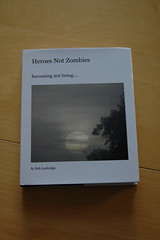
I’ve just taken delivery of my first attempt to use blurb.com to produce a book. It’s fabulous. It was so easy to do and the quality of the hardback book I’ve received is way beyond my expectations. And for any fellow bloggers, it’s a real treat to be able to page through a hard copy of your blog. I really do recommend it.
I am SO thrilled with the result. Click here to go and see for yourself.
What I wanted to do was produce a hardback copy of my first year of blogging. The blurb service has a program to download called “booksmart” and you use this to create your books. Included in the program is a great tool called “blogslurp” which downloads a complete copy of your blog into a template on your hard drive. You can then edit every single page, choosing different page layouts, upgrading low resolution photos for higher resolution copies from your photo library, and deleting or adding any text you choose. You then hit “upload” and that’s it. If you want you can preview the book as a pdf but I didn’t bother. I chose the largest format hardback book they do.
I am delighted with the quality of the printed copy and it got to Scotland in less than 10 days from the time I hit the upload button.
Here are some photos of the book to give you an idea what it looks like.


Posted in creativity, from the reading room, photography, writing | Tagged blurb.com, book publishing | 9 Comments »

Striped crocus, originally uploaded by bobsee.
I like the purple crocus so much I took a photo of this one too
Posted in from the dark room, photography | 5 Comments »

purple crocus, originally uploaded by bobsee.
Saw this in the garden of the hospital last week on a rainy day.
It’s just lovely, isn’t it?
Posted in from the dark room, photography | 5 Comments »
Two of my best blog friends have posted interesting writing ideas yet. I’m going to point them out to you so you can go and check them out.
First of all, mrschili, across in her inner door blog, picked up an idea from a fellow blogger (wordlily), about writing a six word autobiography. The results are fascinating and enlightening. Try it for yourself. What would your six word autobiography be?
Secondly, Dr Tom Bibey, posted about writing a single paragraph entitled Where I Come From. His short paragraph about his origins and influences has gone on to inspire several others. Check them out. And, then……..yep, try it out for yourself. What would your write for “Where I Come From”?
Posted in creativity, life, writing | 6 Comments »
New research from Edinburgh University claims that happiness is partly determined by your genes.
In fact, they claim that
genes may control half the personality traits keeping us happy. The other half is linked to lifestyle, career and relationships
This study was one of those identical twin studies where the researchers compare identical twins. These studies are great favourites with psychologists and are used to highlight traits which each twin (who has his or her own uniquely different social setting) shares – as the twins have different social backgrounds, the commonalities are reckoned to be more to do with their shared genetic make-up.
The Edinburgh researchers looked at the presence of three traits – tendency to worry, sociability and conscientiousness – all three of which have been linked to happiness and well-being in other studies.
“Although happiness is subject to a wide range of external influences we have found there is a heritable component of happiness which can be entirely explained by genetic architecture of personality.”
So, is this a depressing study? No, not at all. It strikes me as very logical that part of who we are is influenced by our genes – we are dealt a hand we have to play. And part is determined by modifiable factors in our lives. This conclusion is supported by those who promote positive psychology techniques. Dr Alex Linley of the Centre for Applied Positive Psychology said –
“What it means is that, rather than a single point, people have a range of possible levels of happiness – and it is perfectly possible to influence this with techniques that are empirically proven to work. “Simple things, like listing your strengths and using them in new ways every day, or keeping a journal where you write down, every night, three things that you are grateful for, have been shown to deliver improvements.”
I agree with him. There’s a lot of mileage in understanding what our range is (the hand we are dealt) and learning how to grow within that range to have the best experience of life we can. In fact, I think this is a more defensible view than the New Age kind of thinking promoted in the likes of the “you can be anything you want to be” brigade.
Posted in life, personal growth, psychology | Tagged happiness, positive psychology | 10 Comments »
It’s an old adage in medicine – “First do no harm”. I really think this must be our first consideration when thinking of all therapeutic interventions. The first question I have is what harm might it do? The next question is what good might it do? Then it’s a matter of weighing the one against the other. Is the potential pay-off worth running the risk of the possible harm?
When I started as a General Practitioner it was common for us to do serial injections of tiny amounts of allergens to reduce somebody’s allergic disease symptoms. Hay fever and allergies to house dust mite were probably the commonest allergies treated. A series of injections would sometimes bring some relief from sneezing, runny noses, itchy eyes and so on. The trouble was, that the potential harm turned out to be sudden death. Not that it ever happened to any of my patients, but the authorities rightly decided that the risk of death was too high a price to pay for possible relief from itchy eyes and runny noses, so they withdrew the treatment from GPs.
Well today there was a report about GlaxoSmithKline having evidence that one of their drugs (seroxat) increased the suicide risk in under-18s but they didn’t tell the authorities about this concern for a long time. This created the false belief that it was a safe drug when it wasn’t. Prescribers were likely to fall at the first hurdle – the first do no harm hurdle. What makes this case worse is that they also had evidence that their seroxat wasn’t even effective in treating depression in the under-18s so prescribers then fell at the second hurdle too.
It’s not good enough.
In this time of pushing drug solutions for all health problems through claiming that published trial evidence (usually paid for by the drug manufacturers) will reliably guide doctors, this type of bad behaviour by the drug companies undermines trust and shakes the very foundations of Evidence Based Medicine.
Posted in from the consulting room, health | 4 Comments »


