Feeds:
Posts
Comments

Dandelion

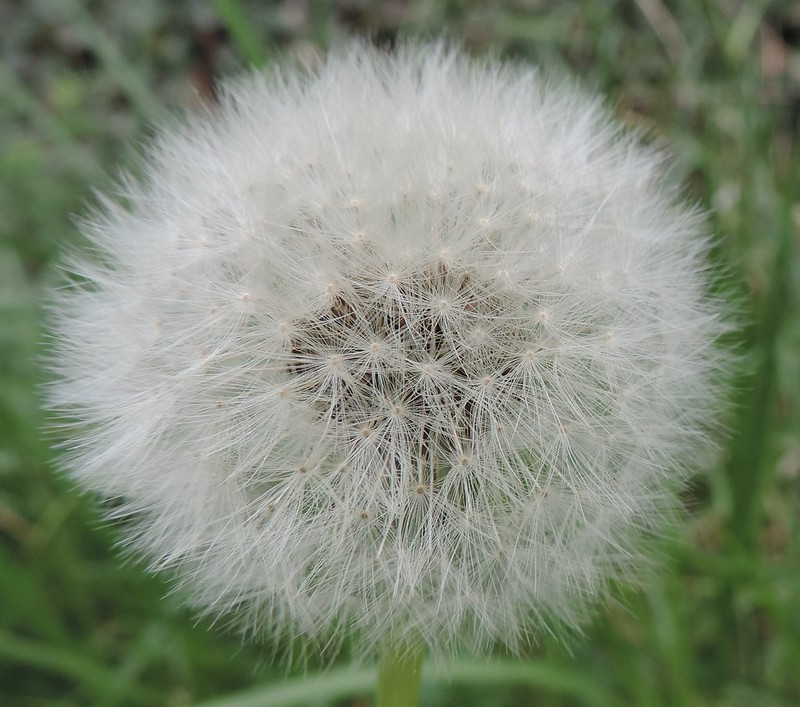
A dandelion seed head – did you ever play with one, blowing the seeds off and counting the number of blows it took to scatter them all, saying that the number equalled the time of day? We even called the dandelion seeds like this a “dandelion clock”.

Strange game when you think about it. Was there ever a relationship between the number of puffs and the hours of the day?

Yet, this image remains a powerful symbol of the passage of time, and hence of change.

It’s one of my favourite images.

i don’t know if you have ever stopped to think about what the inevitability of change really means. You might be surprised to know that it’s only in fairly recent times that scientists have begun to describe the universe in a historical and evolutionary way. Before this understanding there has been a way of thinking based on the idea of permanent laws – laws of physics, laws of the universe, laws of Nature – laws which don’t change. But this idea is undermined by the discovery that the universe is constantly changing. As it changes, it changes itself, because we have also discovered that everything is connected, that there are no “essential fixed, unchanging elements” which are the raw materials or building blocks on which these so-called laws act.

This new understanding shifts the focus from being to becoming, and gives becoming primacy.

All is in a constant process of becoming.

There are no fixed states. There are no permanent entities. There are no unchanging laws.

Yes, there is what endures. Yes, through our lifetimes there is plenty which seems to last. But ultimately, if you take a longer term perspective, nothing endures. Nothing is fixed.

Some people might find this scary. Some people might find the uncertainty this brings hard to handle. But I find it stimulating. Understanding the inescapable nature of change helps you to become aware of emergence – life is in a continual process of emergence – constantly producing the new, constantly creating.

It’s this connection between impermanence, change, emergence and creativity which excites me.

Shifting the emphasis from being to becoming, shifts your focus to the processes of creation. It also moves the attention away from objects and onto connections/relationships and actions. (See my series on this blog under the A to Z of becoming title, for practical ways to explore this)

This “dandelion clock” becomes a symbol of change, and so one of creation – after all it is a SEED head, literally bursting with potential new lives.

Dandelion path

Flourishing.

A lovely word. As a descriptor of a quality of life, it says so much more than just surviving, existing, or getting by.

It’s a word which says something about realising potential. It’s about blossoming, growing, developing and essentially about becoming all you can be.

Flourishing as a verb refers to a process. It’s not a fixed state. It’s not a goal which can be achieved then there’s something else beyond that. Flourishing is ongoing. Flourishing is a way of living.

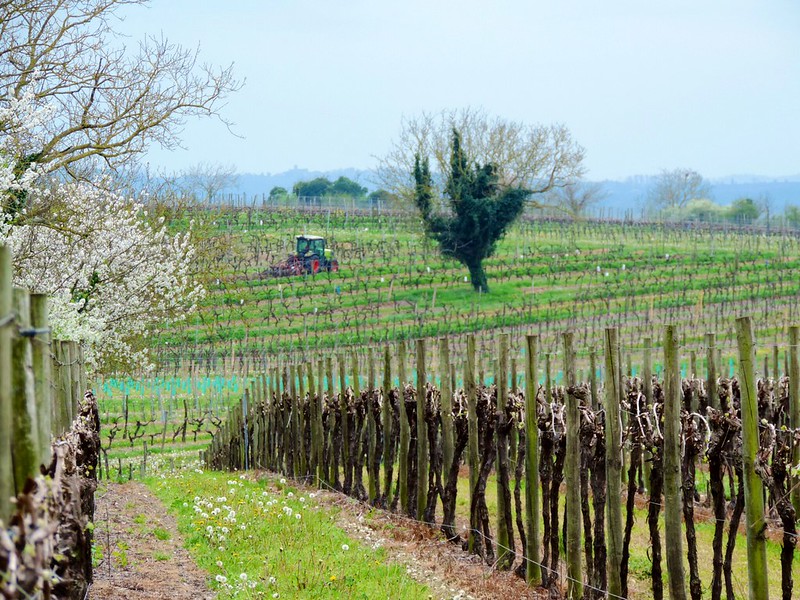
What strikes me about this photo is that it really is a snapshot of that process of flourishing. There is an abundance of life, and there is also an abundance of potential. I know that as I return to this path through the year I’ll see a even more flourishing as the vines grow and the grapes appear.

How to live?

A question we all ask ourselves from time to time.

i suggest one way is to get into the flow of flourishing…..to pursue whatever it is that furthers flourishing – both our own personal flourishing, and that of all the other Life around us. Because in prioritising flourishing we can not only become, as fully as possible, all we can become, but we become the person who supports and encourages the flourishing of others.

Thats the Flourisher’s Way.

Cockerel

This is the bird which lives a couple of houses away from me. I hear him every day but now I have seen him!

And it sure looks like he has seen me too!

In my A to Z of Becoming, O can stand for Observe. So that’s my theme for this week.

I’m sure you will have had the experience of traveling a familiar route and when you arrive you realise you have been so lost in thought that you haven’t noticed anything en route. This can even happen when you a driving car. It’s not that you aren’t seeing anything but I think these experiences say something interesting about how we observe. In other words, observing is not just about what our eyes “see”, it’s about how we process that flow of information and energy within us.

One way to change what you observe is to set an intention to observe. Before you head off on your usual journey you can ask yourself “what am I going to notice today?”. Then while you are out, you are more likely to notice what is around you and so observe.

I find an easy way to increase your awareness and so your observation is to set the intention to photograph what you notice. These days with smartphones, we all have a camera in our pockets or bags, but the way to make sure you take more photographs is to actually have the device in your hand. I do that with my camera. When I set off out to observe and to photograph I set off with my camera in my hand – not in my bag or my pocket – in my hand.

Happy observing!

Place

Where we live is important in understanding who we are.

I don’t just mean the environment or the climate, although those things are certainly important. I mean more that aspect we think of as culture.

Not culture in the sense of theatre, opera and so on. But culture in terms of an approach to life, a focus on certain activities, a set of values and priorities which all influence design and choices.

The interaction between ourselves and the environments and cultures in which we live is a constant two way feedback loop. We are influenced by what is around us, and that influences our choices. Our choices then change the environment around us and fashion a culture. And then back around again..being further influenced by what is around us.

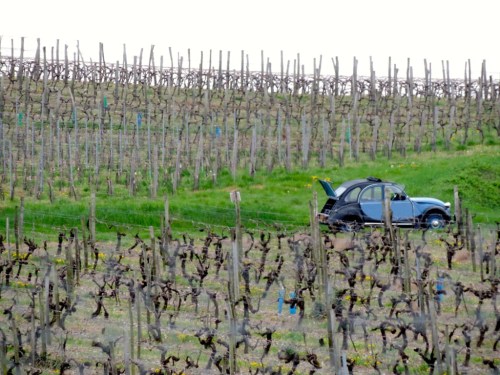
I think this photo I took the other day captures something of the culture of France. Or at least of the part of France where I am living now.

It says something about priorities. It says something about a connection to Nature and seasons. It says something about a kind of economic activity. It says something about aesthetics and design.

It’s hard to define the culture we co-create, but living it is clear.

Living it is a different kind of knowing from defining, labelling and categorising.

The engaged life

To be fully alive is to be engaged with the rhythms and patterns of the natural world, but to be fully human is to reflect upon and celebrate this relationship – David Fideler


There is a tendency to reduce thinking to rational thought. But thinking is not only about logic.

Thinking involves contemplation, reflection and the experience of sensations and emotions.

It does seem to me, however, that one way to move from zombie to hero mode, is to think – in the fullest meaning of thinking – to become aware and then to make conscious choices

wired

“Always think of the universe as one living organism, with a single substance and a single soul; and observe how all things are submitted to the single perceptivity of this one whole, all are moved by its single impulse, and all play their part in the causation of every event that happens. Remark the intricacy of skein, the complexity of the web.” Marcus Aurelius

For many years the dominant model of reality has been one of discrete parts. Now we are beginning to understand that everything is connected, that nothing can be fully understood if it is cut out of reality and considered as a separate part. This shift in world view moves us away from the machine model with its command and control management systems, to the life model of the organism, always changing, never fixed or permanent, vibrant, dynamic and flexible. Life can’t be controlled like a machine, but it can be enjoyed as a flow….beautiful, good and emergent. Becoming not being.

Where I live now

spring home

Here’s where I live now. With a cherry tree just coming into blossom.

The cherry blossom’s transience is a powerful reminder of the impermanence and constantly changing nature of all life.

I like how that dominates this photo.

This is where I live now. It’s not where I lived last year, and maybe it won’t be where I’ll be living next year. But that makes it all the more special for me.

Every day can be approached this way – every day is unique and has never been experienced by us before. Nor will it ever be experienced by us again.

First and last. The idea of living in the present moment.

But it’s difficult to really live in the present moment if that means only being aware of what exists in the here and now. How would we tie our experience of life together if we only had a focus on what was right here now? Well, we do something pretty amazing and unique to weave these moments together – we tell stories.

It’s through story that we experience the present moment not as something separate and detached from the rest of our lives, but as something created by our past experiences and memories, informed by our values and desires, and fashioned by our hopes and expectations.

That’s what story does – weaves the past, the present and the future into a seamless whole.

So, “where I live now” can’t be understood only from one image. It can only be understood as an integral part of the story of “me”.

The story of “me’, with me as the main protagonist, or “hero”, and me as the author, or “creator”. A story which is constantly becoming, continuously emerging, in amazing, and unpredicted ways.

Your story has the same characteristics. But it’s your story. Distinctly yours. Nobody else’s. Weaving your story today out of the threads of the past, the present and the future – that’s how you become the unique and amazing hero and creator that you are.


The living world is a realm of dynamic processes. A flower is not a thing, but an event, like a butterfly emerging from a chrysalis. But with the word, we take a living event and freeze it forever into a useful but stable category. As Goethe wrote, “How difficult it is, though, to refrain from replacing the thing with its sign, to keep the object alive before us instead of killing it with a word.”

  • David Fideler, in “Restoring the Soul of the World”

When you see a tulip opening in the warmth and light of the sun, you know in your heart this is not a thing, but an event.

Iain McGilchrist says, in “The Master and His Emissary”, that we use our left hemisphere to label and categorise. In so doing, we take the actions, the verbs of the real world and re-present them to ourselves as nouns, or as objects. If we stop there, we mis-understand the world. But if we re-present them to our other hemisphere then we can see the links, the connections, the what he calls “the between-ness” of the re-contextualised representations.

How much more wonderful the world seems to me when I see dynamic processes and connections all around me, rather than a collection of separate and separated “objects”.

Épanouissement

Wingspan

One of the great things about learning a second language is how you keep stumbling across words which are difficult to translate exactly into your first language. I find that doesn’t just expand my vocabulary, but it increases the ways I have to think about, and express, my experiences.

So, here’s a new word for me, and, if you don’t speak French, it’ll be a new word for you too – épanouissement.

I have a Larousse English-French dictionary app on my iPhone – here’s what it says about this word – “blooming”, “opening up”, “lighting up”, “fulfilment”, “self-fulfilment”.

Doesn’t that give you a nice, rich and deep range of ideas and concepts all at once? I love that.

When I took this photo yesterday, I was lucky to catch the bird stretching out its wings and then when I looked at the image on my computer I thought that the combination of the bird stretching out and the tree blossoming really conveyed one underlying phenomenon.

Isn’t this what Life does in the Universe?

Life emerges, expands, grows, matures, expresses itself.

Don’t each of us, as living beings, express ourselves to our fullness? And doesn’t a tree do that, a bird do that, just as you and I do that?

I wouldn’t claim to know what life is all about, but it seems to me that this Universe manifests itself through “épanouissement” – it opens up, it blooms, and it lights up the cosmos with a constant process of self-fulfilment.

Daily I become the most “me” I can become.

Daily the bird in the tree becomes the fullest expression of its unique life. Daily the tree grows from one form to another through the seasons, expressing the uniqueness of its own particular life.

I hope you enjoy both your own personal “épanouissement” today, as well as having the opportunity to enjoy that of some of the other lives around you.


The “N” in my A to Z of Becoming, can stand for “nourish”, so here’s my focus for this week – what nourishes my heart, feeds my soul?

Looking back over the series on re-enchanting life which I posted over the last couple of weeks (scroll down to read them, if you haven’t seen them already), I realise that everything which I find enchanting, stirs my blood, sets my heart beating stronger or faster, and touches me right down to the core of my soul.

Beauty is one of the common factors. Difficult to define but don’t we sure know it when we see it, hear it, touch it?

Love is one of the common factors. Wherever love stirs, the heart leaps and the soul expands.

You’ll have some of your own, I’m sure, but here’s just a few photographs I’ve taken recently which nourish me –

…the first “gariguettes” of the season – wow! what a taste!

The love locks in Paris – it’s as if they exude love into the air, surrounding you, filling you, gladening your heart.

Relaxing by a pool at lunch time, seeing the simple pleasures of sharing a bite to eat, of chatting with friends, of reading, sailing a boat, or simply snoozing..

Cheers! Here’s to whatever nourishes your heart, your soul, your body and your mind. May you taste it, feel it, hear it, see it, know it, be amazed by it, every single day.