Feeds:
Posts
Comments

We humans, like all other living organisms, are “complex adaptive systems”, and as such, we share a fundamental capacity to self-organise, self-defend, and self-heal. We know that, don’t we? Whenever you’ve had a cut, within a few days, the wound has been repaired, and often, without even leaving a scar. Whenever you’ve broken a bone, whether or not you’ve needed surgery or the help of a temporary plaster, your body repairs the damage. Whenever we’ve caught a virus, usually within a few days, our body has got rid of it, and repaired any damage done.

But in Modern Medicine, we don’t pay much attention to any of that. We are sold the idea that drugs “cure” or “heal”, when, actually, what they do is modify disease activity within the body.

There isn’t a single drug on the market which has been designed to stimulate and/or directly support self-healing.

And I’m not aware that any drug companies or research groups are even working on trying to do that.

Yet, nobody, but nobody, will recover from any illness without the natural self-healing functions doing what they are designed to do. There is no “artificial healing” (just as you could argue there is no “artificial intelligence”) – there is only natural healing. Natural healing is limited, of course. We are mortal creatures. Every single one of us will die, one day, from something….trauma, infection, or disease. Despite claims that some drugs are “life saving”, the marketers don’t actually mean they can stop you from ever dying! Similarly, natural healing can only achieve what is possible within the biological limits of a living creature.

I’ve no doubt many drugs can make life more comfortable, and many can modify the life history of a chronic pathology. But is that enough? Shouldn’t we, routinely, be exploring, with our patients, what we can do to promote and sustain self healing?

Take the example of post-surgical recovery. When we create the conditions which support self-repair and healing, then patients require less painkillers, develop less complications and make a longer lasting, quicker recovery.

If we don’t use the methodologies which are directly intended to stimulate and sustain self-healing and/or we don’t help patients to access the care and environments which are conducive to self-healing, we aren’t really doing a complete job. Are we?

So, here’s my challenge. See if you can find out what we know supports self-healing….then look to draw upon some of that any time you, or your patient, is ill.

General Practice

A wide ranging review of General Practice in the UK has just been published in the British Journal of General Practice. It makes for disturbing reading. Here’s one of their conclusions –

Overall, these findings reveal a system that is approaching — or, in some cases, beyond — breaking point. Staff members are stressed, demoralised, and leaving; clinical care appears to be compromised; and many patients are dissatisfied, frustrated, and unable or less willing to seek care. We believe there are significant risks to patient safety and to the future survival of traditional general practice in UK.

Here’s another –

Quality efforts in UK general practice occur in the context of cumulative impacts of financial austerity, loss of resilience, increasingly complex patterns of illness and need, a diverse and fragmented workforce, material and digital infrastructure that is unfit for purpose, and physically distant and asynchronous ways of working. Providing the human elements of traditional general practice (such as relationship-based care, compassion, and support) is difficult and sometimes even impossible. Systems designed to increase efficiency have introduced new forms of inefficiency and have compromised other quality domains such as accessibility, patient-centredness, and equity. Long-term condition management varies in quality. Measures to mitigate digital exclusion (such as digital navigators) are welcome but do not compensate for extremes of structural disadvantage. Many staff are stressed and demoralised.

I first expressed the desire to be a doctor when I was three years old. The role model I had was the family doctor who attended the home birth of my younger sister. I was trained according to the dominant values of the time (which are referred to within this study) – “relationship-based, holistic, compassionate care, and ongoing support to patients and families”. The authors of this study find that it is increasingly difficult, and in many cases, impossible, to practice according to these values, even though, GPs still hold them. This results in stress, frustration, and burn-out which impacts adversely on both recruitment and retention of doctors in Primary Care.

So, what’s going on? How did we get here? This paper outlines several factors, not least financial austerity, underfunding, increasing inequality, increasing complexity of illness and an ageing population. But it also highlights a problems which arise from a particular management philosophy – the authors don’t actually use that term – where on the grounds of so-called greater efficiency, health care teams have become more diverse, digital and both algorithmic and protocol-driven services delivered by less qualified staff have increased, and the whole service is disintegrating. The efficiency actually goes down, the dangers increase, and dissatisfaction mounts (in both patients and staff).

The authors don’t give any quick and easy solutions but they shine a bright clear light on the problems, and put their finger on at least one issue at the heart of the problem – the loss of continuity of relationship-focused care delivered by holistically and compassionately.

They do use the word “dehumanised”, and that’s long been my experience. We need to get back to those traditional values and stop doing what impairs them. We need to get back to a health service which puts patients and their GPs at the heart of the system, and stop thinking we can use new technologies and industrial management practices to make things better.

Take a moment to look

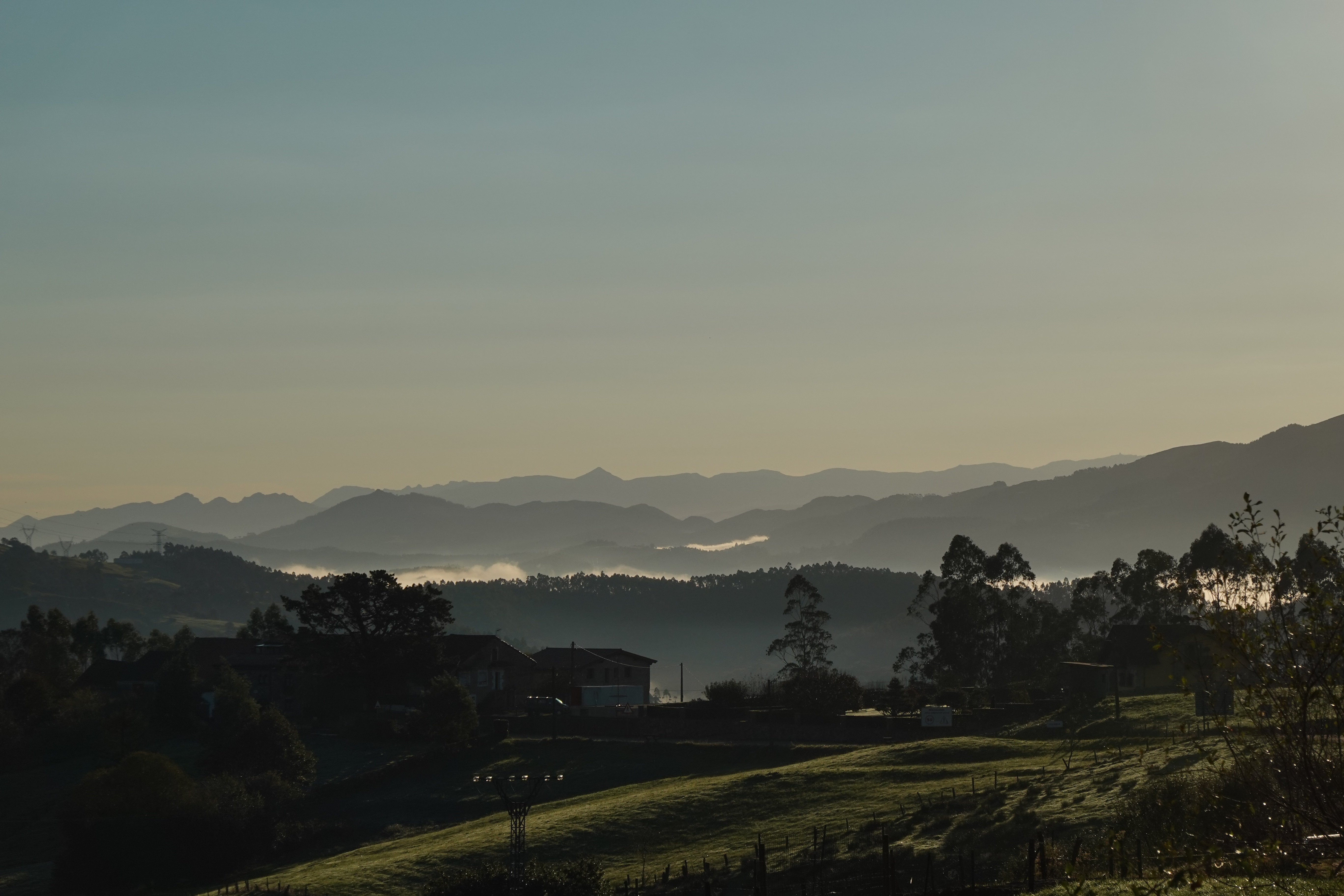
I was driving up the road from Comillas to the sequoia forest early in the morning and as I turned a corner the patches of mist lying in the valleys caught my eye, so I pulled in to a lay-by and took this photo. In fact, I took several photos, and also took a few moments to gaze from side to side and into the distance, just taking in the whole landscape stretching out before me.

As I look at this photo now I see even more than I saw when I stood at the side of the road. Yes, of course, I still see how several valleys are holding the morning mists, giving the impression of white river, and maybe a soft white lake. And as the range after range of mountains recedes into the background I notice, as I have done many times before, how the distance is, so often, a shade of blue….although at this moment, the early morning autumnal light brings a green tinge to it all.

But now I notice the electricity pylons, the ones in the foreground with their insulators catching the sunlight, and the more distant, much larger ones in the top left of the scene. I see a fence, where someone has claimed this little patch of planet Earth for themselves….something we humans have done for centuries, producing borders, privatising the commons, creating a distinct “mine” and “yours” (or, at least, “mine” and “not yours”!). I see a handful of houses, and a van. I see a road sign telling drivers to keep to less than 50 km per hour….a rule somebody has decided to impose, no doubt with the intention of keeping pedestrians safer. There’s a sign with the name “Valoria”, a tiny village of a handful of houses.

I love taking photographs, particularly of anything which catches my attention. I find that when I upload them to my computer and take my time with them, I invariably notice much more than I did when I was actually there. It’s not that the photographs are better than being there (in fact, if I hadn’t been there, I couldn’t have taken the photo anyway), but they enrich and enhance the experiences I had at the time.

I think it’s good to slow down. It’s good to take your time before you press the shutter and take a photo. And it’s good to return to the image you’ve created, time and again, to explore, to savour, to enrich.

Is it physical?

One of the things which frustrates me most about Medicine is this question – “Is it physical?”, which may be asked in a slightly other form – “Is it organic?”, (or, the apparent opposite – “Is it functional?”), “Is it a problem of the body or the mind?”. This way of thinking which divides illnesses into two categories, separating out the mind from the body, is still way too common. It’s common in patients who refuse to accept their illness could have anything to do with their mind – “it’s a virus”, “it’s a hormone problem”, “it’s my genes” – usually because they have been led to believe that a problem involving the mind is a “mental problem”, which strangely continues to carry a stigma that an infection, or a broken leg don’t carry. Separating out the mind from the body is a common misunderstanding not least because it is promoted by doctors who should really know better by now.

The human being is a living, multicellular organism. Starting from a single, fertilised egg cell, the foetus doubles and doubles and doubles the number of cells, until the fully formed human being is born with trillions of cells on board. Trillions. It’s too big a number to visualise. In fact, the number of cells in a human body are estimated, not accurately counted, partly because cells die and are replaced constantly. None of these cells exist in isolation. They are all in constant communication with, and respond to, other cells within the organism, so that although we each have a heart, two lungs, a stomach, a liver, a brain etc, none of these organs exist by themselves. Every single one of them is “integrated” with all the others – that means each is in an active two-way relationship with other organs, tissues and cells. The cells of your body don’t compete with each other. They collaborate. They work together to make the whole organism healthy, so that it can adapt and to grow.

The mind, as best we understand it so far, is more than a function of the brain. It’s embodied. There are extensive neural and endocrine networks throughout the body which work together to produce what we call the mind. This understanding of mind is sometimes referred to as “embodied mind”. Search for that term online to learn more if you like. It’s a useful concept which allows us to see that the mind is not confined to the skull.

It turns out that terms like “heart felt”, and “gut feeling”, are not mere metaphors, but reflect biochemical activities and phenomena which involve, not only the heart and the digestive system, but the whole organism.

I used to say to patients and medical students, I only ever saw a body without a mind in the mortuary, and I never met a mind without a body.

It makes no sense to me to separate out the mind from the body, because when illness occurs, it might arise in a specific tissue, or organ (or it might not), but the response to the disorder is a whole being response – we use the powers of every system within the body, and our abilities to think and to feel (I mean emotional feeling), to defend and repair.

The big problem with separating off the mind from the body and looking for “physical” or “organic” problems is that if all the lab tests and imaging comes back within normal limits, an illness ends up being classed as “mental” – and treatments for mental disorders are then offered. Or worse, it is dismissed as “not real”.

But there is another way to look at all of this – a holistic way – where we don’t separate out the mind from the body and whatever the disease, we seek to address the person, not simply some of their cells or organs. Yes, maybe there are cellular pathologies which can be, and should be addressed, but healing and repair always involves a whole person.

Wouldn’t it be better if we never limited ourselves to addressing “pathologies” in cells and systems, but, rather, in addition (and not or, remember), we engaged with the whole person through their story, their actions, their thoughts and feelings? Shouldn’t we address the circumstances of their lives, because nobody lives in isolation from environmental influences?

It makes no sense to me to address only a pathology found in a particular tissue or organ. Medicine isn’t a kind of mechanics. It’s an art, and science, of understanding and relating.

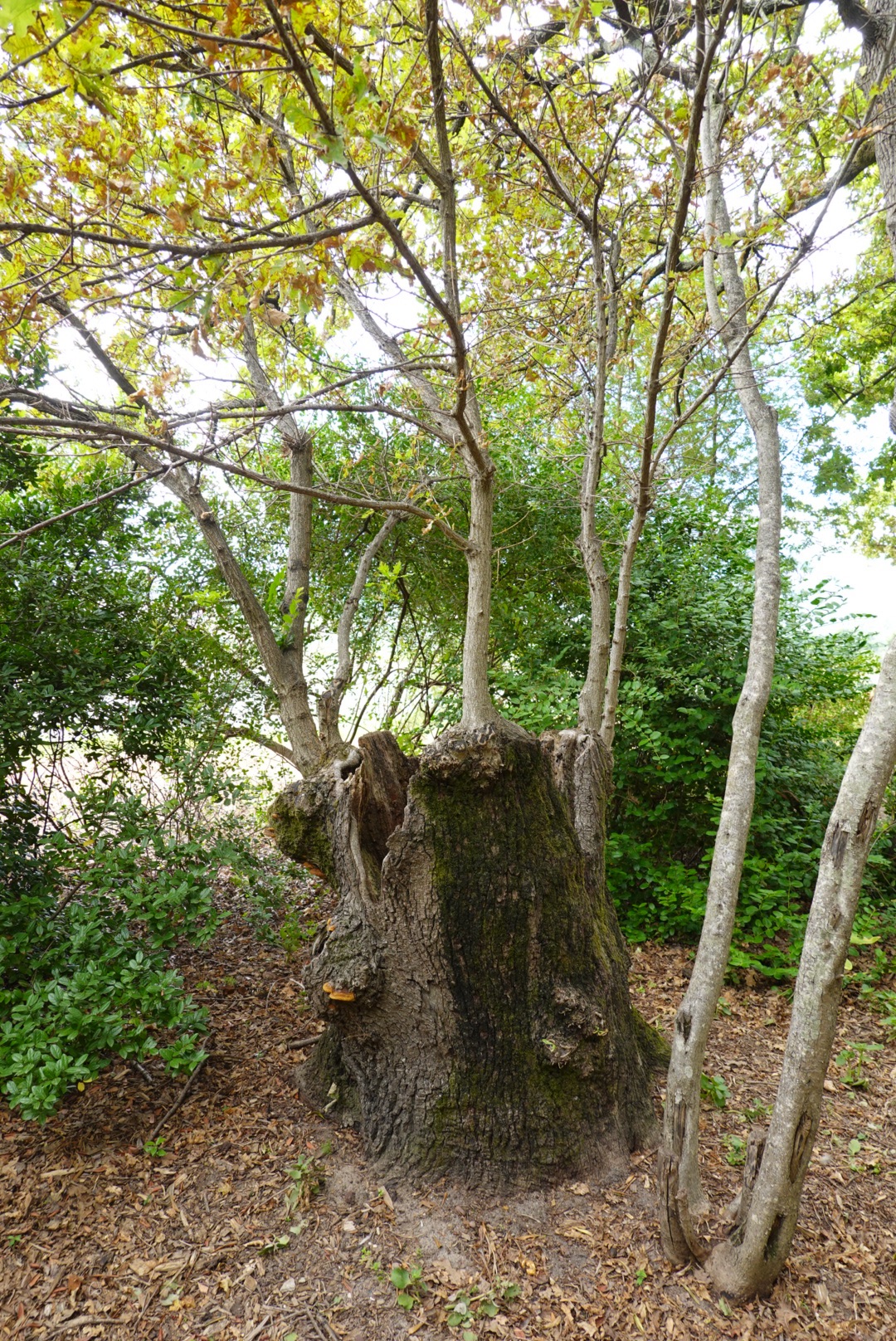
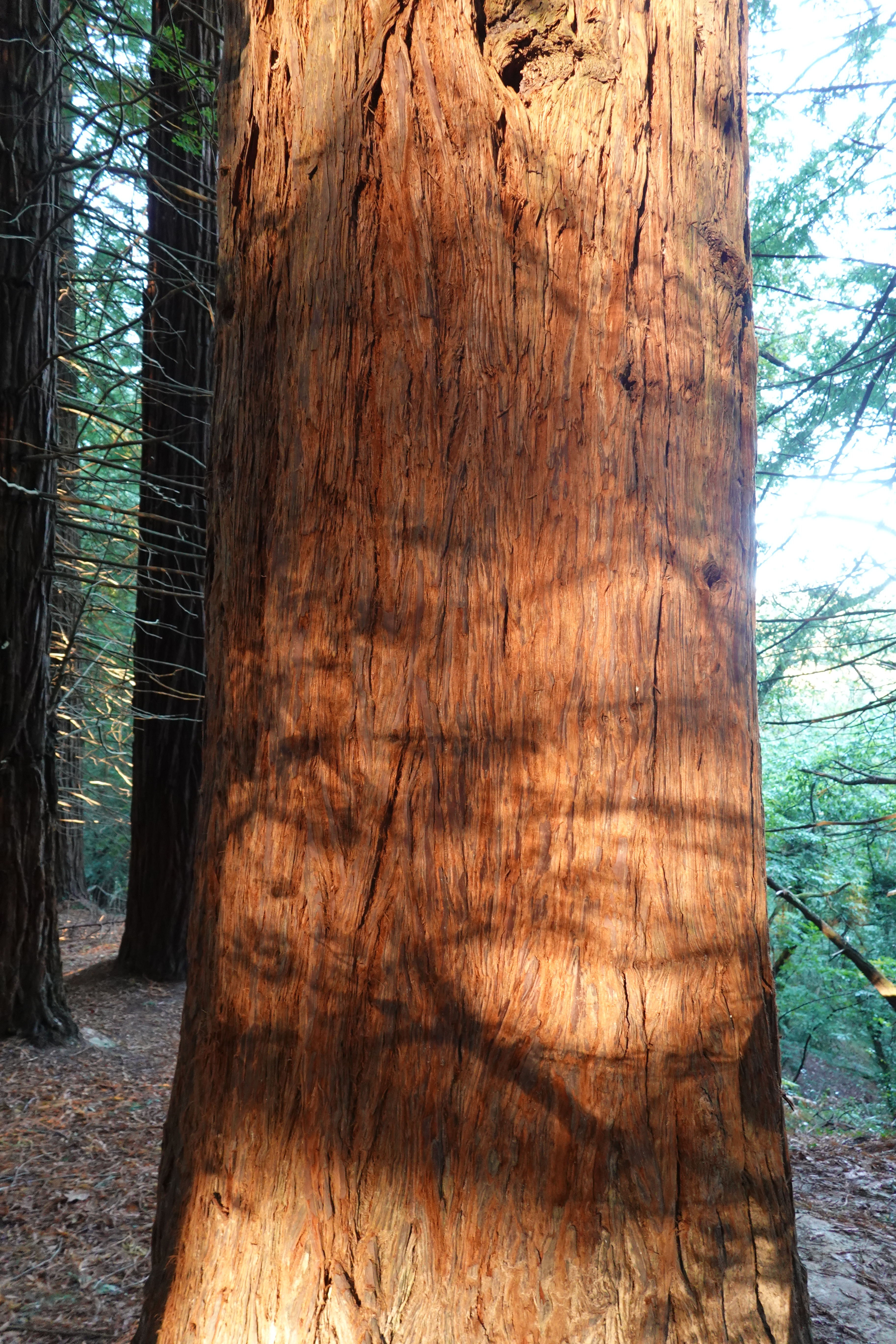
By the way, do you think you can see the suggestion of a heart on the bark of that sequoia in the photo I’ve posted above?

Outside and inside

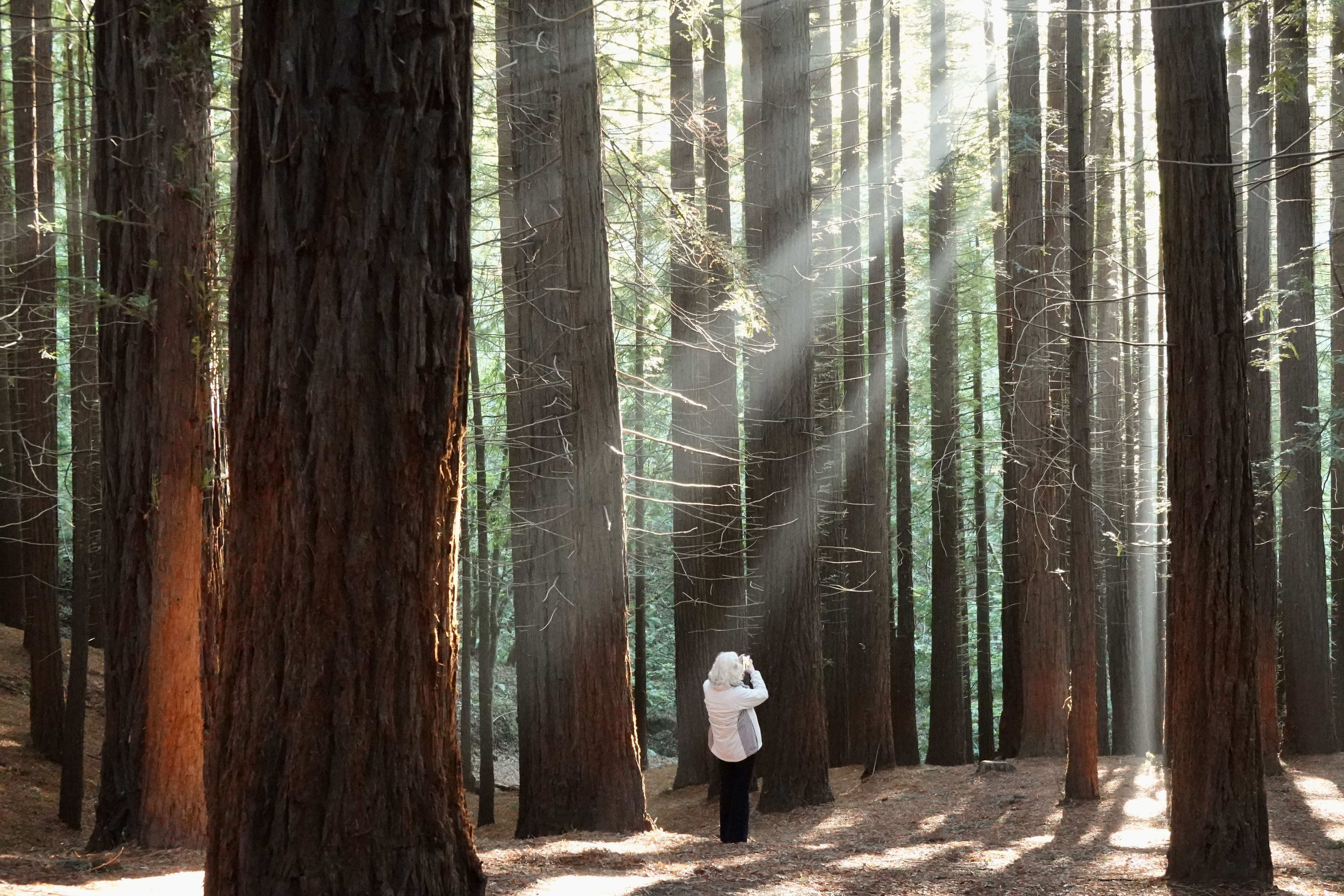
We made a visit to a sequoia forest in Catalonia recently and this is one of the many photographs I took. When I look at it now a passage from C S Lewis comes to mind. It’s many, many years since I read his little essay, “Meditation in a Toolshed”, but I’ve never forgotten it. It’s pretty easy to find online if you search for it. It starts like this –

I was standing today in the dark toolshed. The
sun was shining outside and through the crack at
the top of the door there came a sunbeam. From
where I stood that beam of light, with the specks
of dust floating in it, was the most striking thing in
the place. Everything else was almost pitch-black.
I was seeing the beam, not seeing things by it.
Then I moved, so that the beam fell on my
eyes. Instantly the whole previous picture
vanished. I saw no toolshed, and (above all) no
beam. Instead I saw, framed in the irregular cranny
at the top of the door, green leaves moving on the
branches of a tree outside and beyond that, 90 odd
million miles away, the sun. Looking along the
beam, and looking at the beam are very different
experiences.

He goes on to describe several examples of the difference between “looking at” and “looking along”, where he juxtaposes the “objective” vs the “subjective” (although he doesn’t use those terms), the “quantitative” vs the “qualitative”….and issue which has been at the heart of my career and my life. He summarises his idea with this –

We must, on pain of idiocy, deny from
the very outset the idea that looking at is, by its
own nature, intrinsically truer or better than
looking along. One must look both along and at
everything. In particular cases we shall find reason
for regarding the one or the other vision as inferior.

Most of the essay is about how we seem to have developed a habit of favouring the objective over the subjective to the point where the latter is dismissed as irrelevant, or even, unreal. I’ve heard a junior doctor say that his mentor told him “You can never believe patients. They lie all the time. You can only believe the results (the laboratory findings)”, and time and again, in neuroscience, our inner thoughts, sensations and feelings are reduced to biochemical reactions and neural pathways….as if the MRI scans and biochemistry reveals “the truth”, whereas the patient’s reported experience is dismissed as “anecdote”, or, worse, “illusion”.

As I look at this photo I see my wife, Hilary, standing in a sunbeam in the middle of the forest. I am “looking at” her in the forest. She is “looking along” the sunbeam and photographing the illuminated trees. And I know in that moment that these are two different representations of reality. Both are true. But there’s more – because as I am “looking at” this scene in the forest, I recall, and re-create, the experience I had of standing in the forest surrounded by the massive trees. I feel again the awe which I felt as the sunbeams shone through to the forest floor. I feel again the wonder I had standing amidst this community of trees (which, by the way, were planted only about seven years before I was born!)

We can understand a lot by measuring, by being objective. But we fail to grasp reality if we dismiss both the inner experience of others, and our own subjective one.

That means we need to value personal stories. We need to be curious about them, to respect them and to listen with non-judgemental empathy. Otherwise, we are only scratching a surface. Worse than that, we are in danger of replacing an understanding of what it is to be human, with a distorted and demeaned mechanistic one.

Spring and autumn are the two seasons where I notice change happening right before my eyes. Right now, in October, here in France, we are beginning to see leaves change colour. I love to gaze for a few moments at a plant like this, where some of the leaves are still bright green, some have patches of red or brown appearing, and some have gone fully deep red or even purple.

This reminds me of two things – the first is that change never stops. Everything in the world is constantly undergoing change. We are not the same today as we were a few weeks ago, and we are very different from what we were a few years ago (just browse through your photo albums to see how you’ve changed since you were a baby). The reality is that we change moment by moment. That’s why the advice to “be present”, or to “be here now”, is so relevant. Every single moment is unique, and if we breeze past it without noticing, it will be gone forever (except, of course, in the background of our subconscious the changes never cease to play their part).

The second is that change is so variable. It is heterogenous, not homogenous. You and I are unique. Our daily lives are unique. Our moment to moment experiences are unique and become even more unique over time, as nobody shares with us an exact personal history, an identical string of experiences. Just looking at this one plant and seeing the huge variation in colour as the leaves begin to change makes me even more aware of this uniqueness, of diversity.

So awareness of change slows me down, inspiring me to savour this moment, to live today as fully as I can. It inspires me to pay attention to the flow of Nature, to be aware of the fact that there are no fixed objects in this world, only different rates of change.

And awareness of change does something else for me – heightens my appreciation of uniqueness, of difference, and of diversity. Reducing life to abstractions, selecting single characteristics and bundling everyone who shares them into a single category is such a deluded way of living. We need to stop putting people into little boxes, labelling them and judging them, because when we do that, we just stop seeing them as they really are.

Seamless

Just a few more beautiful words from the book, “Orbital” (and photo I didn’t take!) –

“Before they came here there used to be a sense of the other side of the world, a far-away-and-out-of-reach. Now they see how the continents run onto each other like overgrown gardens – that Asia and Australia are not separate at all but are made continuous by the islands that trail between….. Continents and countries come one after the other and the earth feels – not small but endlessly connected, an epic poem of flowing verses.”

This isn’t a small world. It’s huge. But there really is just a constant ever changing flow of Life on this planet, manifesting through diversity, relationships and an infinity of connections. We belong here. Together. We become here. Together.

The view from on high

In “Orbital”, by Samantha Harvey, she describes how the astronauts aboard the International Space Station are first entranced by the Earth at night. It’s when night falls over the surface of the planet that the presence of human beings becomes most obvious….the networks of streets, buildings, roads sparkling and shining so brightly you can easily see them from Space. Then as daylight comes they see the Earth as a planet where humans beings are invisible, see it as a living, whole organism with its oceans, clouds, weather systems, forests and deserts. But then they come to realise just how much of the Earth is the way it is exactly because of human choices and actions.

We change the planet just by living here. How it changes comes down to our collective choices and those of the corporations and individuals with the greatest power and wealth.

Normally I use my own photos to illustrate my posts but, having never been to the International Space Station, this time, I’m borrowing a couple of photos from the French astronaut and photographer, Thomas Pesquet. Look him up. Check out his photos. They are simply astonishing.

“They come to see the politics of want. The politics of growing and getting, a billion extrapolations of the urge for more……The planet is shaped by the sheer amazing force of human want, which has changed everything, the forests, the poles, the reservoirs, the glaciers, the rivers, the seas, the mountains, the coastlines, the skies, a planet contoured and landscaped by want.” – from “Orbital” by Samantha Harvey.

This is the modern version of a very old philosophical exercise – taking the view from on high – to stand apart, above, and look out over the greater whole.

A change of perspective

“The earth, from here, is like heaven. It flows with colour. A burst of hopeful colour. When we’re on that planet we look up and think heaven is elsewhere, but here is what the astronauts and cosmonauts sometimes think: maybe all of us born to it have already died and are in an afterlife. If we must go to an improbable, hard-to-believe-in place when we die, that glassy, distant orb with its beautiful lonely light shows could well be it.” – from “Orbital” by Samantha Harvey.

The mental capacities we humans have developed allow us to do incredible things, not least the ability to create a distance, and the ability to change our perspective. The ability to put a space, or a pause, between all the signals and stimuli entering our bodies, and carrying out an action, is the difference between reacting and responding. You know about the famous “knee jerk”, where a doctor hits a tendon in your knee and your legs jumps forward….this is an instant reaction carried out at the level of the spinal cord. It doesn’t require any thought, and it’s not possible to suppress or enhance it consciously. But when we act in life, we have the chance to put a gap into the stimulus-response loops which pass through our brains. We don’t need to act only on auto-pilot. We can “stand back”, consider, or reflect, and then choose what actions we want to take. This is responding instead of reacting…..an important skill in managing anxiety and learned loops of behaviour.

It’s this same “necessary distance” which enables us to have a sense of self, separate from the world in which we are living. Of course, that separation is a sort of delusion because we never step outwith the flow of all that exists. But it’s a useful skill.

The other skill, to change perspective, is a different way of creating a distance, of stepping off the treadmill, switching off the autopilot. We can do it by altering, or disrupting a habit. Walking a different route, shopping in a different store, visiting a different town or country. It’s a big part of why I decided to emigrate from Scotland to France when I retired….to force myself to experience a whole gamut of different perspectives….physical, cultural, social…..to learn to communicate and think in a different language.

In her book, Orbital, Samantha Harvey describes in detail these experiences of distance and perspective. In this passage I quoted above she prompts us to think about heaven and earth by flipping the normal perspective. Instead of standing on the surface of the earth gazing “towards the heavens”, she describes the astronauts on the International Space Station, gazing down towards the surface of the earth and finding it “heavenly”.

I often think this life, this planet, is heavenly. It is so improbable, so incredible, so amazing…..how did it come to be? How did Life come to exist, and the myriad of species evolve? How, despite all our seeking, and all our statistical beliefs, this planet we call Earth, we call Home, remains singular, unique, quite unlike any other in the entire universe.

When you stop to experience this planet, and take time to reflect, and to wonder, it’s not hard to experience it as heaven. There is so much beauty in this world. We should protect that, nourish that, care for that, value that, make it a goal to enable all human beings to experience this planet as heaven on earth.

The Earth

“The Earth is a mother waiting for her children to return, full of stories and rapture and longing.”

“Orbital”, by Samantha Harvey, describes the experiences of six astronauts aboard the International Space Station. It’s a beautiful little book, which reads as a poetic meditation on The Earth, Nature, Life and Space exploration. One of the lines which struck me, early in the book, was the one above.

The idea of Earth as a mother is an ancient one, but one we’ve become distanced from. The truth is we are born on this planet, emerging from millions of years of flows and interactions between energies, molecules and information. We have evolved as a part of Nature, with the planet’s resources of air, water, and nutrients, supporting us, enabling us, and with the Earth’s atmosphere protecting us from harmful solar and cosmic rays. We couldn’t exist without her. Mother Earth. We only exist because of her. Mother Earth.

But our direction of travel over the last few hundred years has been to distance ourselves from her, to objectify her, to treat her as a resource to be plundered, a wildness to be tamed. We talk of Nature as if “it” is something not human, as if “it” is something “out there”, separate from us, apart from us. And I think we’ve lost a lot along the way.

In this sentence, Samantha Harvey describes the mother as “waiting for her children to return”. Shall we return? We should. We really should.

And we’ll find her waiting for us with our “stories and rapture and longing”. That’s what we humans excel at – stories – telling the stories which enable us to make sense of ourselves, of our lives, of others and of our universe.

What kinds of stories are we telling these days? I think we need more stories of “rapture and longing”. I love the French phrase, “l’emerveillement du quotidien”, the wonder of the everyday. That’s where rapture lies….if we slow down, pay attention and allow ourselves to be filled with the wonder and beauty of the everyday. If we pay a particular kind of attention….the attention of longing and loving. Not a longing to possess, to control, to hold onto. But a heart’s longing, a soul’s longing, of deep resonance with “the other”, a harmony, a connection, a loving, caring attention.

Shall we do that now? Shall we return to Mother Earth filled with our stories of rapture and longing? It would take a change of direction….and a healthy one, I believe. But let’s start today.