Feeds:
Posts
Comments

We have a real tendency to divide up our experience of the world, put the pieces into separate boxes and label them. Brian Broom talks about this in his excellent book, “Meaning-full Disease“. He says we discriminate, categorise and judge. It’s kind of how we make sense of the world. The human body is remarkable and is endowed with an incredible amount of sensory equipment to detect the world we live it – we sense light and colour, sounds, smells, textures and so on. In fact, our sensory systems are under constant bombardment. If we didn’t discriminate we wouldn’t be able to make sense of it all. We can only deal with so much at a time. We are pattern-seeking creatures, constantly trying to recognise and make sense of the sights, smells and sounds that surround us. Of course, we lose something in this process of discriminating. We ignore most of the signals coming our way and only pay attention to the ones that most interest us. As I said in an earlier post, “we are what we pay attention to“. If we want to grow, if we want to develop and change and not be stuck in deep ruts, then we need to shift our attention, to deliberately try to break our attention-habits and notice what else is in the world. I am a doctor specialising in homeopathic medicine. This is a method which is based on noticing difference. When a patient tells me their story, I don’t want to know just what symptoms they have in common with other patients I’ve known (so I can make a diagnosis), but I want to notice what is different, what makes this person unique. Picking out patterns is a good skill, but we just have to be wary that we don’t always only see the same old patterns. We also categorise everything. We love labels. Often a so-called diagnosis is nothing more than a label. I saw a little boy recently who had an itchy bottom. His mum said the paediatrician had diagnosed the problem as “pruritis ani”. That’s a latin label. You know what it means in English? Yep, “itchy bottom”. So how helpful is that label? Labels, categorising sadly tend to limit our vision. Once we place something in a box we tend to stop being aware of it, stop noticing how different it is from anything else in the same box. Finally, to judge those boxes, calling some “good” and some “bad”? I can’t remember who said it, but I remember once reading “Judgement stops thought”. How true. When we judge something and especially when we judge a person, we stop thinking, stop noticing and stop actually seeing.

Nothing stays the same. We are always constantly changing. We grow, we develop, we change. The processes of discriminating, categorising and judging create a false impression that the world is made up of fixed, separate things. It’s not true. Nothing exists except embedded in a web of connections, and nothing exists without changing. The world is not really so easy to pin down, and thank goodness for that. Life is dynamic. It flows, it moves and constantly changes. Too much pinning down, labelling and judging creates a false impression of a fixed, stagnant world. So, beware. Shift your attention, break your habits and try to see the connections between things, try to see how nothing just is anything, but instead how everything is in the process of developing and changing. Everything is becoming not being…….


I think it’s good to know where you feel most relaxed, to know what helps you to feel good about life. We all need some time for ourselves. I often tell my patients that they should schedule into their busy diaries some time for themselves – not time to catch up on chores (well, you need that too probably!), not time to spend with your loved ones (yes, you DO need that too!), but time spent alone. It can be simply an hour one day a week (that’s better than no time at all) and it shouldn’t involve anything elaborate. A walk in the park, sitting watching the world go by for a wee while, listening to music, or reading, or just noticing your environment, really whatever works for you is good.

For each of us particular environments are most relaxing. Some of us prefer the seaside. For others, its a park.

This photo is taken in Princes Street Gardens, Edinburgh – plenty of seats there!

Go on, try it. Schedule some YOU time!


seats in park, originally uploaded by bobsee.


We are all different and we all find different ways to relax or wind down. One of my colleagues always asks her patients to tell her what’s their idea of a great holiday. The answer can reveal a lot about a person’s coping strategies. I think it’s important to know what makes you feel good, where you feel good, when you feel good. We often get fixated on our problems and one way to not get stuck with problems is to focus on possible solutions. The solutions come from what works for us, the places, times and situations that help us to feel good.

This boat (for many people a boat is a symbol of freedom) and the blue, blue sky, at the seaside represents a way of relaxing for many people.

Where do you go to relax?

What’s your favourite holiday?


boat and the sky, originally uploaded by bobsee.


There are 4 million CCTV surveillance cameras in the UK. But who is at the viewing end? This camera is at the Floral Clock in Princes Street Gardens, Edinburgh (no clock there! Long since gone! Just a patch of earth…)

This poor man looks like he’s bored stone rigid! No wonder, this camera’s video feed must be worse than watching paint dry!

But seriously, we live in a command and control society. Who’s in command? Who wants the control?


surveillance, originally uploaded by bobsee.


Saturday, 19th May was an usual night in the sky. Venus and the waxing moon were only about a degree apart just after sunset. I looked out of my window and took this photo.

moonvenus40.jpg

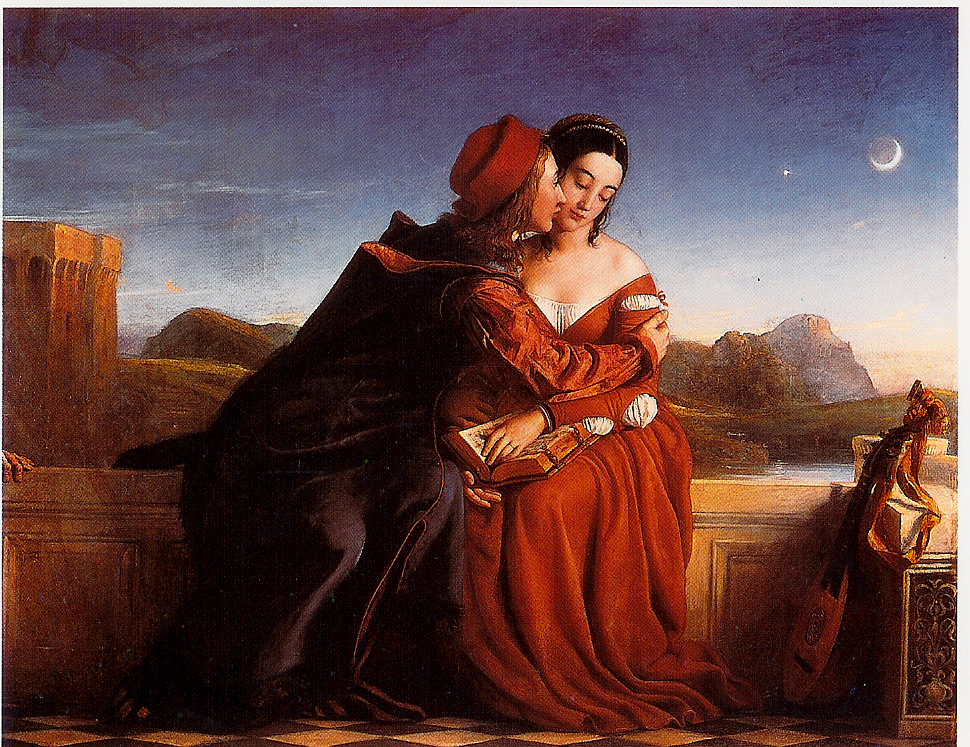
The following day I was browsing around Edinburgh and found myself outside the National Gallery on the Mound. On the spur of the moment I decide to have a look around. It’s a lovely building and I like many of the paintings there. Having browsed for a bit I went down to the gallery shop to see if they had any postcards of some of my favourite paintings there. Well, have a look and see what I found…….

Francesca

This is “Francesca di Rimini” by Dyce. I don’t recall ever seeing this painting before but look at the sky! Yes! There it is! The exact same configuration of Venus and the Moon.

So what are the chances of that? I love these synchronicities in life. I can’t explain them but they do add to the pleasure and the wonder of life.

We all experience the world differently. Think of the last time you shared an experience with a friend or loved one then talked about if afterwards. Think of, say, a journey, or movie, or a meal in a restaurant. If you both talk to a third person about that shared experience, chances are you will both tell about different parts of the experience and will have felt differently about. One of you will probably have noticed very different aspects of the journey, or the movie or meal, than the other one. This is because we all interact with a shared world of places, people, and phenomena, but we do it from our own, unique, subjective viewpoint. No two of us share an identical experience because no two of us is the same.
What influences these different ways of experiencing a shared journey, or movie, or meal? I read a blog post recently which began with the statement “You are what you pay attention to”. A variation of this idea was a huge billboard I saw in Tokyo – “You are what you buy” – ok, so it’s a similar idea! The point is that what we notice and therefore what affects us most is fundamental to the creation of our individual world views.
I think there are three major foci of attention. Not three separate, distinct, world views, but three dynamically changing “attractors” which create our experience of the world.

  • Body-objective. The physical, the shared, external reality. The world of objects, things, facts. The measurable world. You have an experience of who you are within a particular body. The size of that body, for example, profoundly affects how you see the world and how you see yourself in the world. Think of the amount of concern many people have with body shape for example.
  • Mind-subjective. What you experience is always personal. Nobody can really know or share your subjective experience. If you have a pain, nobody else can feel that pain. You can try to communicate it, and others can try to empathise (to imagine what it might be like to be you), but they can’t actually experience it. Our subjective experience involves our minds. Without a mind, there is no subjectivity. Yes, there are many bodily sensations but they are all experienced with the mind. You feelings, your sensations, your emotions, your memories and your imagination are all subjective. None of this is measurable.
  • Spirit-meaning. We are meaning-seeking, meaning-creating creatures. We continuously try to make sense of our daily lives. For some people, this is the most important aspect of life. It’s a focus on purpose, values, ideas and the reasons to live.

None of these world views is complete and none of them are superior to the others. All are equally valid. If we try to squeeze others into our own personal world view, we’ll find they don’t quite fit and communication will fail. To communicate with, to connect with, to touch another, we have to understand what kind of world they live in and to what extent we can share that world.
My final point is that life is a dynamic process. We move around these foci or “attractors” with different ones exerting different degrees of pull all the time. We can see our lives as constantly moving, continuously evolving and growing as we shift and shade our world views, developing richer experiences as we become more flexible and less fixed in one particular view.

Meaning-full Disease. Brian Broom
ISBN 978-1-85575-463-8

I read a reference to Brian Broom’s work in “Why Do People Get Ill?“, and like that book, his “Meaning-full Disease” should go on every doctor and would-be doctor’s reading list – not just on their shelves, but in their active reading list. Professor Broom leads the post-graduate programme in MindBody Healthcare at Auckland University of Technology and works as a physician specialising in allergies and clinical immunology, a psychotherapist and a mindbody specialist in Christchurch. That tells you something about what you might expect from this book. His main area of interest is psychosomatic disease. This is a term which has fallen out of favour and come to mean illnesses without any associated physical disease. However, it is making a comeback thanks to work like this and Leader and Corfield‘s work amongst others. It is particularly making a comeback because of its focus on the links between the body and the mind in illnesses where there are significant pathological changes to be found.
Broom explores the truly fascinating observations that patients’ physical diseases are often best understood by uncovering the meanings that their illnesses have for them. He pleas for a more holistic, more humane practice of medicine by placing the scientific world view in its rightful place – not as the bearer of all truth, but as a subset of experience.

“the lifeworld is a rich, multidimensional, experienced reality of which the scientific world is a part-representation, a reduction, or an abstraction.”

He sets out a powerful argument for seeing both subjective and objective experience as different manifestations of an underlying unified phenomenon, referring to both phenomenologists such as Merleau-Ponty and Husserl, and Japanese writers, Yasua and Ichikowa (the latter he quotes as saying “my ‘object-body’ and my ‘subject-body’ are inseparably united in their deeper layer, and cannot be separated clearly and decisively, except through intellectual abstraction”. I particularly enjoyed his reflections on this so-called divide between objective and subjective where he says to touch your left hand with your right – as you do this you experience you left hand objectively and in the same moment subjectively your left hand feels touched. He goes on to muse about the position of hands pressed together in prayer which similarly dissolves the barriers between subjective and objective. A lovely image and a nice way to get us thinking about these two ways of experiencing the world.
There is much more to illness than the biomedical model elucidates for us. This in no way devalues the model which is still a powerful way to not only conceptualise disease but to treat it, but trying to understand a person’s whole experience by seeking what lies behind the pathology requires quite other skills which doctors are sadly not so strongly encouraged to acquire. One of the best passages in Professor Broom’s book is where he describes the process of his work moving back and forth in a consultation between the “thing of the illness and it’s meaning”. Sounds like how a consultation should be.

Richard Horton has written an excellent review of “How Doctors Think” by Jerome Groopman here.

The main point he makes is that doctors make mistakes primarily because of failures in the ways they think.

Good doctoring is about listening and observing,
establishing a trusting environment for the patient, displaying
authentic empathy, and using one’s skills and knowledge to deliver
superb care. But a neglected aspect of this professionalism is getting
doctors to think about their own thinking. Only by doing so are doctors
likely to reduce the number of errors they make. What should they do?

Here’s a summary of his recommendations in answer to that question –

  • Encourage patients to tell and retell their stories. “a critical element of any mutually respectful therapeutic partnership
    that the doctor acknowledges the patient’s version of the truth of his
    or her story.”
  • Slow down. “The more time a doctor takes, the fewer cognitive errors he will make”
  • Once a decision is made, always retain an element of doubt.

None of these recommendations is in tune with current medical thinking. Doctors are encouraged to make diagnoses on the basis of the results of investigations. The art of listening to a patient’s story to make a good diagnosis even before a physical examination and any tests are run has receded as doctors are increasingly encouraged to treat patients according to protocols and guidelines created on the basis of statistical analyses of what’s measurable (stories are dismissed as anecdotes and unreliable subjectivity). Rather than slow down, health authorities around the world push doctors to see more and more patients more and more quickly. And doubt? Still, young doctors are encouraged to be certain and to believe in the rightness of their decisions. Retaining a healthy amount of doubt would make doctors more humble and more able to recognise when they are not getting it right after all.

A healthy being has certain qualities or characteristics. Health is much more than the absence of disease. Health is a positive phenomenon in its own right. How can you know if you are healthy? And how can you increase your health?

Adaptation. How are you coping with change? Nothing stays the same. No two days are the same. Sometimes we feel stuck but always our bodies, our minds and the environments in which we live are changing. Change is the reality of life. When we are healthy we cope with change. We adapt. I was once invited to teach in Santa Fe, and flew to Albuquerue from Edinburgh arriving late at night. My host, a doctor colleague, picked me up and took me to his house about 10pm. I went to bed and fell asleep only to wake about 4 hours later gasping for breath. Alarmed I wakened my host saying “I think I’ve developed asthma!”. “Don’t be silly,” he said, “We’re 7,000 feet up here. You’ve come from sea level. It’s the altitude.” By the next afternoon I was breathing completely normally. I had adapted. A healthy organsim adapts. Whether the changes in your life are physical, emotional or social, coping is a fundamental part of health.
Creativity. Human beings don’t just cope by maintaining some kind of status quo however. We continuously grow and develop. Physically and psychologically. Creativity is the ability to both express yourself and to make something new. In biological terms we use the word “emergence”. This is the word coined to capture the idea that things change in a growing system so that new behaviours and new phenomena appear (usually unexpectedly). The abilities to solve problems with new solutions, to express ourselves and to continuously make our lives new is also a fundamental part of health. An organism that is not growing and developing is dying. Think of your house plants for example!
Engagement. “No man is an island.” We all exist within multiple environments – geographical, social, cultural and so on. It is actually impossible to consider someone fully without situating them in the world. In fact, there is a kind of paradox at the heart of all our lives. We need to be separate, unique (we even have a whole immune system dedicated to recognising what is not us and keeping it out!), but we also need to be connected, to love and be loved, to share. Depression is a real black hole. It sucks everything of life inwards and cuts us off from others and from the world. A healthy person is engaged with the world, interacting, loving and being loved.

So, there’s my three criteria. If you want to know how healthy you are check yourself out against them. How are you coping? How are you growing? and How are you connecting?

When you feel ill, you want to try and figure out what’s going on. If it’s not something simple and obvious then you might need to go and consult a doctor. It’s likely the doctor will ask some questions. These questions are not random. The doctor has been trained to ask them. In fact, the doctor will have a lot more questions in his or her head than the ones you are actually asked. It’s these “back questions” that interest me. The ones running continuously through the doctor’s mind which form the basis of the whole consultation.
Doctors are trained to think about illness in a particular way. The thinking model is known as the “biomedical model”. The biomedical “back question” is this –

“What is the diagnosis?”

By diagnosis, we mean, what is this disease? Of course, there are other “back questions” which become more important once the diagnosis is made – “What action do I need to take?” and “What’s the prognosis?” for example. However, those questions are completely dependent on the answer to “what is the diagnosis?”. In the biomedical model, the diagnosis is the identification and naming of the disease. Once that’s done, the treatments are applied with expectations wholly informed by the doctor’s understanding of disease.
But disease is only part of the problem. You don’t feel diseased, you feel ill. Illness involves both the disease and the person who has the disease. Illness is the whole experience of your suffering. We are not machines and no two of us are identical. If a doctor wants to more effectively treat a patient they should use a different model from the “biomedical” one. They need a model which helps them understand the person who has the disease. This other model has been given many names but let’s use the one “holistic”. To understand the whole of a person’s illness the doctor needs to have different “back questions”.
I think to do this a doctor needs to use these four key “back questions”

  1. “What’s this person’s experience?” – the doctor needs to hear your story including a good clear description of what you are feeling, what sensations you have been experiencing, when you’ve had these sensations and in what circumstances. Your experience of illness is subjective. Nobody else can experience the pain, or nausea, or breathlessness, or distress, or whatever it is that you are experiencing. The doctor can only try to understand what your subjective experience is by enabling you to tell your story.
  2. “What kind of world does this person live in?” – we all experience the world differently. We pay attention to different aspects of life and we are affected differently by them. To understand who the person is who has this illness, the doctor needs to know what you are affected by, what’s important to you and how you experience the world.
  3. “How does this person cope?” – we all have different coping strategies. Some cope by retreating, hiding away, shutting down, whilst others cope by crying for help, needing company and support. There are many other patterns but if the doctor is going to figure out how best to help you he or she needs to find the treatments that will work best with your particular coping strategies.
  4. “What sense does this person make of this?” – we are meaning-seeking creatures. We always want to make sense of our lives. Why has this happened to me? Have I done something wrong? Is it because of my diet, or a bug that’s infected me, or my genes, or is it God punishing me? The sense we make of our illness may not only influence our chances of recovery but can actually determine the prognosis.

If these four “back questions” continuously run through the doctor’s mind, the question “what is the diagnosis?” will fall into place, not as THE important question, but as AN important question. The disease can still be named, but it will now be understood within the context of the person who has the disease. Only then will this individual, will YOU, get the most appropriate help to restore your health.