Feeds:
Posts
Comments

Posts Tagged ‘writing’

A key theme of “heroes not zombies” is waking up and becoming aware. It’s too easy to drift through a day in a state of semi-consciousness, doomscrolling social media, following routines, swallowing the stories corporations and governments want you to swallow. The Romans used “bread and circuses” to control the population. Modern capitalism uses algorithms.

But there’s a way to break out of these mind-numbing loops….paying attention to what strikes you.

In homeopathy, there’s a teaching about looking out for the “Strange, rare and peculiar”, the symptoms a patient relates which strike you, which stand out, which seem particularly relevant, or particularly unusual. These symptoms might be the key to understanding the patient and finding the right remedy for them. It’s a practice which is the opposite of seeking what is “usual” or “typical”. The thing is, in diagnosis you need to grasp both – the typical symptoms can point to a pathology, but it’s the particular, the personal, and striking ones which point to the patient who has that pathology, which open the path to understanding what the patient is experiencing, how this disease emerged in their life and how it’s affecting them.

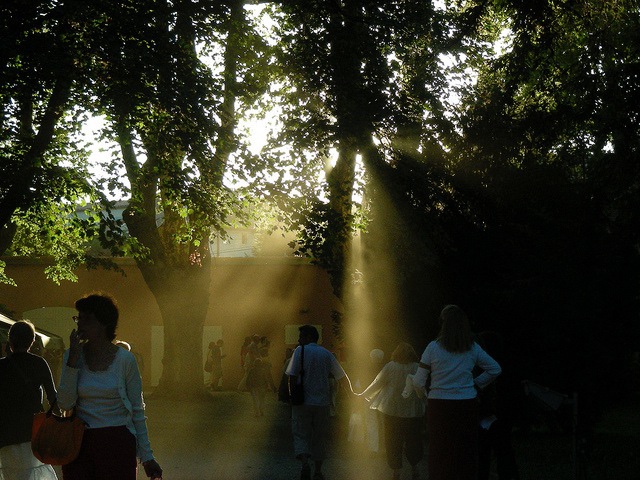
I’ve often written here about the power of wonder and awe. I experience wonder and awe when something strikes me. I’ll be wandering through the forest and suddenly see a flower I’ve never seen before, or I’ll hear a bird call I’ve never heard before (or, certainly, not around here). The important thing is to follow that noticing. When something strikes me, I’m drawn to it, I slow down, stop, and explore further. I allow myself to pass a few moments appreciating whatever it is.

We can do the same through the day with lines we read in books. I’m sure you have the experience of reading a novel, or a non-fiction book, and a particular phrase or sentence leaps it out at you. It strikes you. When that happens, why not note it down? Why not slow down, and consider it? I use a mix of methods in this situation. In some books I’ll underline the particular phrase. In others, I’ll get out my phone and take a photo of the passage, then save that photo to my Notes app. Or I’ll get out my notebook and copy it down. “And not or” is my motto. I’ll often do a combination of those things.

Sometimes we’ll be struck by coincidences, or by a feeling of deja vu. These moments can be gold. They can stop us in our tracks and inspire some wonder, some reflection. They are worth noting down too.

Other times I’m struck by a phrase I hear, maybe just a snippet of a conversation, or a remark in the cafe, or in a queue. Again, it’s worth noting these down, taking a moment to consider them, to enjoy then, to reflect.

When I visit a gallery I’ll move fairly quickly through a room, scanning the works of art, then, almost always, some particular painting strikes me, grabs my attention, and stops me. Those always become my favourite paintings.

Wherever you are, whatever you are doing, noticing what strikes you changes your day. It jolts you out of zombie mode, and gives you an opportunity to make the day your own, to make the day special.

Try it out….notice what strikes you today, and explore it.

Read Full Post »

One way to understand how deeply interconnected we are, and how change, not statis, is the norm, is to think of three flows – flows of materials, substances, atoms, molecules, and other particles; flows of energy, electromagnetic, gravitational, sounds, and other energy waves; and, information, language, symbols, ideas, and thoughts? You might have other examples for each of these three flows. You might dispute one or more of the ones I’ve chosen, but let’s stick with the general idea here – there are flows of materials, energies and information which swirl around this planet. The flow around, into and through us, for the most part, invisibly. And they flow out of, and beyond, us…changed.

It’s almost like we are a wave, or a vortex. A whirlpool perhaps, a coalescence, an efflorescence, transforming these flows into something which has self-integrity, something which appears separate, and consistent over the course of a lifetime. We, like everything else on this little planet, are transient, and exist only as a temporary flux. Some writers describe us as being like a wave which appears briefly on the surface of the ocean, a wave which can be pointed to, a wave which can located, even named. Waves don’t leave the ocean, and they don’t last for long, soon dissipating and disappearing back into the vast waters from which they came.

The chapter I read in Rick Rubin’s, The Creative Act, today, describes the idea of data, entering us, filling our inner vessel, where it is changed, not least by the relationships which from between it, and what was already there. He says these relationships produce our beliefs and stories, and, ultimately, our world view.

We can choose what we want to make with all of this – our unique stories, our art, our creations – and then we can choose to share them, where they set off, hopefully, to encounter others, other stories, other creations, other people.

I don’t like the word “data”. I’m sure it’s just a personal thing, but I have a feeling or disgust, or repulsion, when I come across the word “data”. I know, for many others, “data” is the stuff of their daily existence, maybe even what gives their lives meaning. But, I just don’t like it. I prefer the word “information”. I prefer “stories”. I prefer “encounters” and “relationships” and “patterns”. But, as I say, maybe that’s just me. I’m also not a great fan of the idea of a “vessel” inside us…..just as I’m not a fan of the idea of memory being like a filing cabinet in the brain somewhere. So, I prefer this concept of flows, flows of materials, energies and information, which we alter as they enter our inner “vortex”, and emerge changed as we breathe, or act, or talk them out into the world again.

Read Full Post »

Rick Rubin writes –

Turning something from an idea
into a reality
can make it seem smaller.

This immediately stimulated my memories of reading the philosophy of Gilles Deleuze. It’s a few years since I did that, and I’m no philosopher, so I can only share with you, what I, personally, got out of reading some of his work. One concept he described, the one which came to me when I read these lines by Rick Rubin, was that of the “virtual”. I think his idea of the virtual was pretty complex and nuanced, but as I read it, the virtual contained what he called “a multiplicity of singularities”.

A “singularity” is a specific. I think of it this way. Today, as I wake up, stretching before me are a pretty much infinite number of possibilities. The day lies there full of potential conversations, encounters and experiences. There are sights and sounds and smells and tastes and textures which I could pick up on and enjoy. As the day unrolls, I make certain decisions, choices. I have certain encounters, certain experiences. Moment by moment they are the specifics of my day. All the other possibilities that were there at the start disappear. It’s a bit like the collapse of the wave. Like how Schrodinger’s cat can be both alive and dead until we open the box, then it’s the one or the other.

It’s even more complex than that, of course, because, moment by moment new “multiplicities of singularities” emerge….ones which only come into existence because of the actual moments which have led to this particular moment.

OK, that’s spiralling a bit out of control, and I’m sure some professional philosopher will be able to point out how much I’ve got wrong about the idea, but my point is, as inspired by Rick’s words, the actual, the specific, the singular, feels like a reduction. It’s the same with every choice we make. Once we make a choice, we choose one thing, one action, and in doing so, don’t choose the others. That’s why making decisions can be difficult. We can’t help imagining all the other possibilities we are about to turn away from. We feel, perhaps, that we are making the world smaller.

But there’s no alternative here. It’s not possible to live without singularities, without specifics, without actuals. If we don’t engage, if we aren’t aware, if we don’t reflect and consider, then the choices are made for us. Because this moment does actually exist. And the other moments which could have been disappear, or morph into some potential future set of possibilities.

So, I don’t fear this phenomenon of making anything “smaller”. Instead, I choose to be aware, to be engaged, and to co-create this actual moment of my unique existence in this vast universe.

Awareness and engagement open up the universe to us. They open the doors to co-creation of this moment, at this time, in this place. Embracing that is a joy, a celebration, which stirs wonder, awe and gratitude.

What not to like?

Read Full Post »

“There’s a time for certain ideas to arrive,
and they find a way
to express themselves through us.”

There’s a theory about where ideas come from, and where memories reside. I’ve read this theory, or some version of it, in several places over the years. Most recently I read it in Rick Rubin’s “The Creative Act”. He suggests that sometimes great ideas come to us but we don’t act on them, then some time later we see them expressed by someone else. It isn’t that other people have stolen our ideas, it’s that the idea’s time has come, and if we don’t act on it, then someone else may.

I read a very similar view a few years ago in Elizabeth Gilbert’s excellent, “Big Magic”, where she said if we don’t write when inspiration comes our way, then, maybe somebody else will. Maybe the idea or inspiration will flow on to someone else because it needs to be expressed. Maybe we will miss our opportunity.

Iain McGilchrist, in “The Matter with Things”, explores memory and consciousness, and dismisses the idea that they lie encased in our skulls. Rather, he argues, our brains act as “receivers” which filter out some of the signals being received to present us with our experiences of consciousness and memory.

Others have argued something very similar……from Jung’s “collective unconscious”, to Sheldrake’s “morphic fields’.

So, it’s not a new idea that we have the ability to “tune in” to whatever is flowing through the universe, nor that that includes ideas, inspirations, memories, and so on. This tuning in is a bit like turning on a radio, the old fashioned, analogue kind, turning the dial, and listening as voices and music begin to appear in the white noise, first of all quiet and fuzzy, till we tune in better and it comes through loud and clear. Aren’t you still amazed that you can sit in a room somewhere, hearing only silence, but, in fact you are surrounded by, you are bathing in, a whole world of songs, stories and speech? You just need to switch on the radio, and tune it in for it all to be revealed.

That still amazes me.

But the idea that the universe is full of stories, words, ideas, images, and music, and that all we need to do is to create the space for it to appear, all we need to do is tune in, and listen….then be inspired…… then we can choose to act on these inspirations, these dreams, these ideas…..express them. Well, that amazes me too.

Read Full Post »

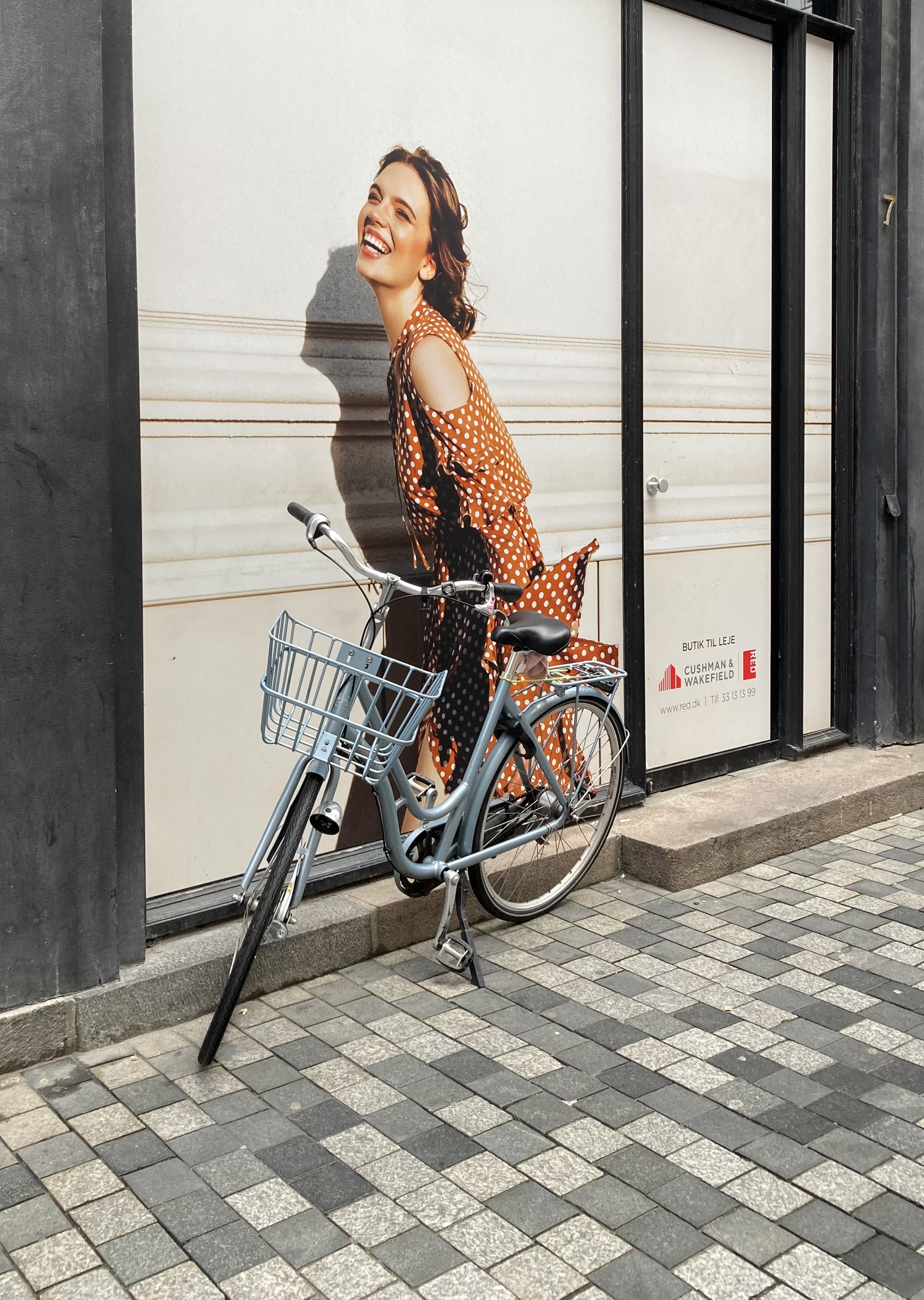
There’s been a shift in social media channels. Not long ago many people presented themselves as “Influencers”, but now, not so much. Increasingly I’m seeing the term “Content creator” instead. Or, sometimes, “Digital content creator”. I must say, the first time I noticed this shift I wondered mainly about the word “content” – I don’t find it appealing, but I understand it will cover anything from text, images and videos, to the spoken word or music (and maybe more, I’m not sure!). I do think of myself as a photographer and a writer. I do both of those things frequently…..pretty much every day. But, I guess none of that is “content” unless I publish it (or upload it) somewhere, like here on my blog, or on a social media platform like Bluesky (or Facebook, Threads, Mastodon, Substack, or whatever). However, having wondered for a while about what constitutes “content” I shifted my attention to the second word….”creator”.

A few years ago when thinking about health, and how did I know a patient was becoming more healthy, I hit on a three word acronym – ACE – for Adapation, Creativity and Engagement. Briefly, for me, the healthier someone became the better I saw their ability to cope, to deal with whatever they had to deal with, to adapt and change. In addition, I’d notice they were becoming more creative, more able to solve problems, to come up with new ideas and ways of living, to be better able at expressing themselves. And, finally, I’d see they were becoming more engaged, building connections and relationships, deepening connections and relationships, paying better attention to the here and now.

It struck me then, and it continues to strike me, that we humans are naturally creative creatures. Maybe you learned from a religious teacher that God created us in His likeness? I always thought that meant He created us as creative creatures. (We are more than simply creative creatures, and there are several other factors we can consider which contribute to our “human-ness”, but I’ll explore that another time.

Rick Rubin’s “The Creative Act: A Way of Being”, begins with a chapter entitled “Everyone is a Creator”. He writes –

To create is to bring something into existence that wasn’t there before. It could be a conversation, the solution to a problem, a note to a friend, the rearrangement of furniture in a room, a new route home to avoid a traffic jam.

He goes on to explore how through our senses and our brain/body processes, we create experiences for ourselves, we create our internal reality, from the undifferentiated external reality. In other words, just being alive is a creative act.

Finally, he writes –

To live as an artist is a way of being in the world. A way of perceiving. A practice of paying attention……your entire life is a form of self-expression. You exist as a creative being in a creative universe. A singular work of art.

I couldn’t agree more.

It’s not just “content creators” who are creative, it’s you and it’s me and it’s everyone you know. How does it change your perception of someone once you start to explore their creativity? What do you notice when you start to ask yourself, “in what ways is this person creative?”

Read Full Post »

I get it.

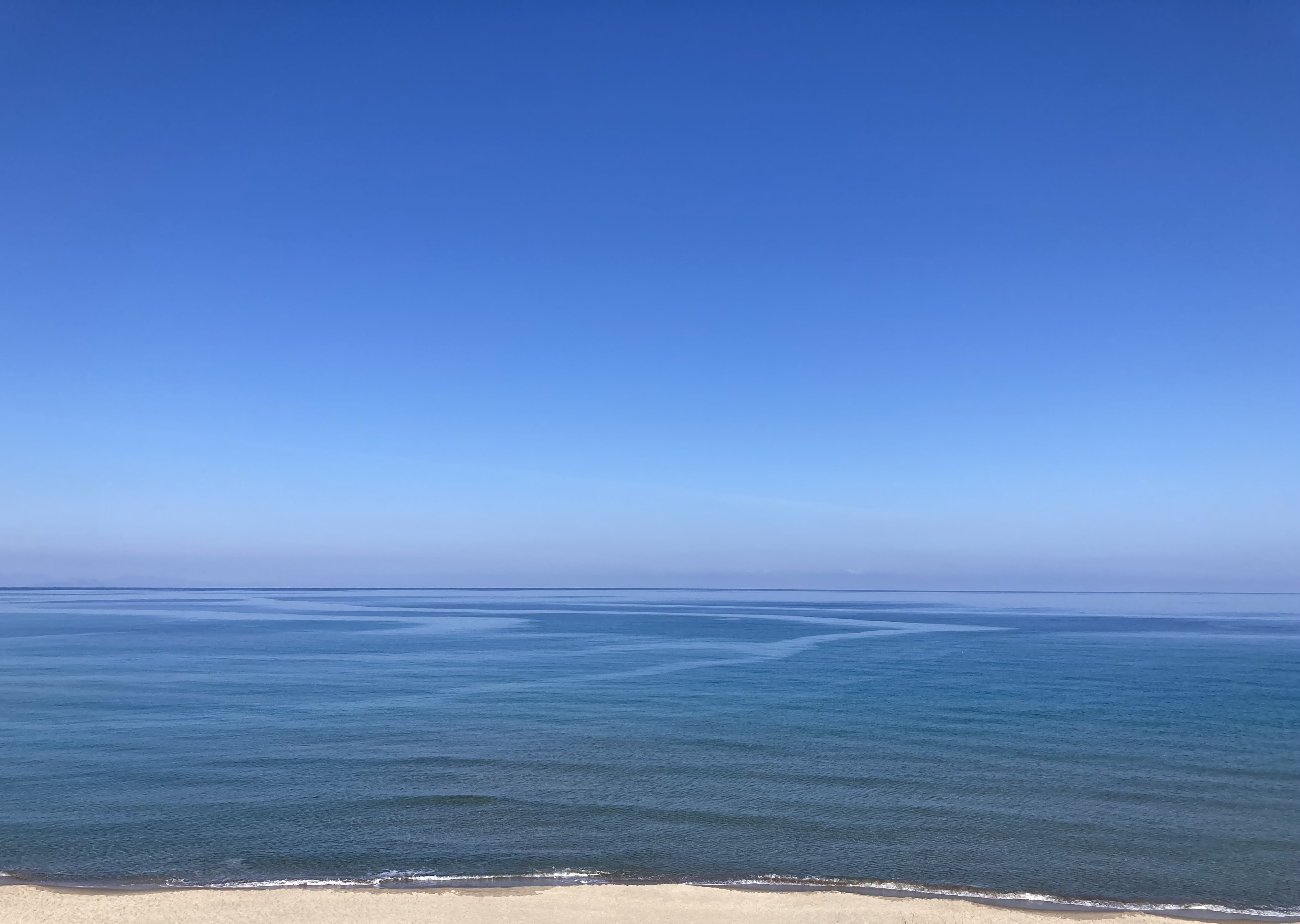
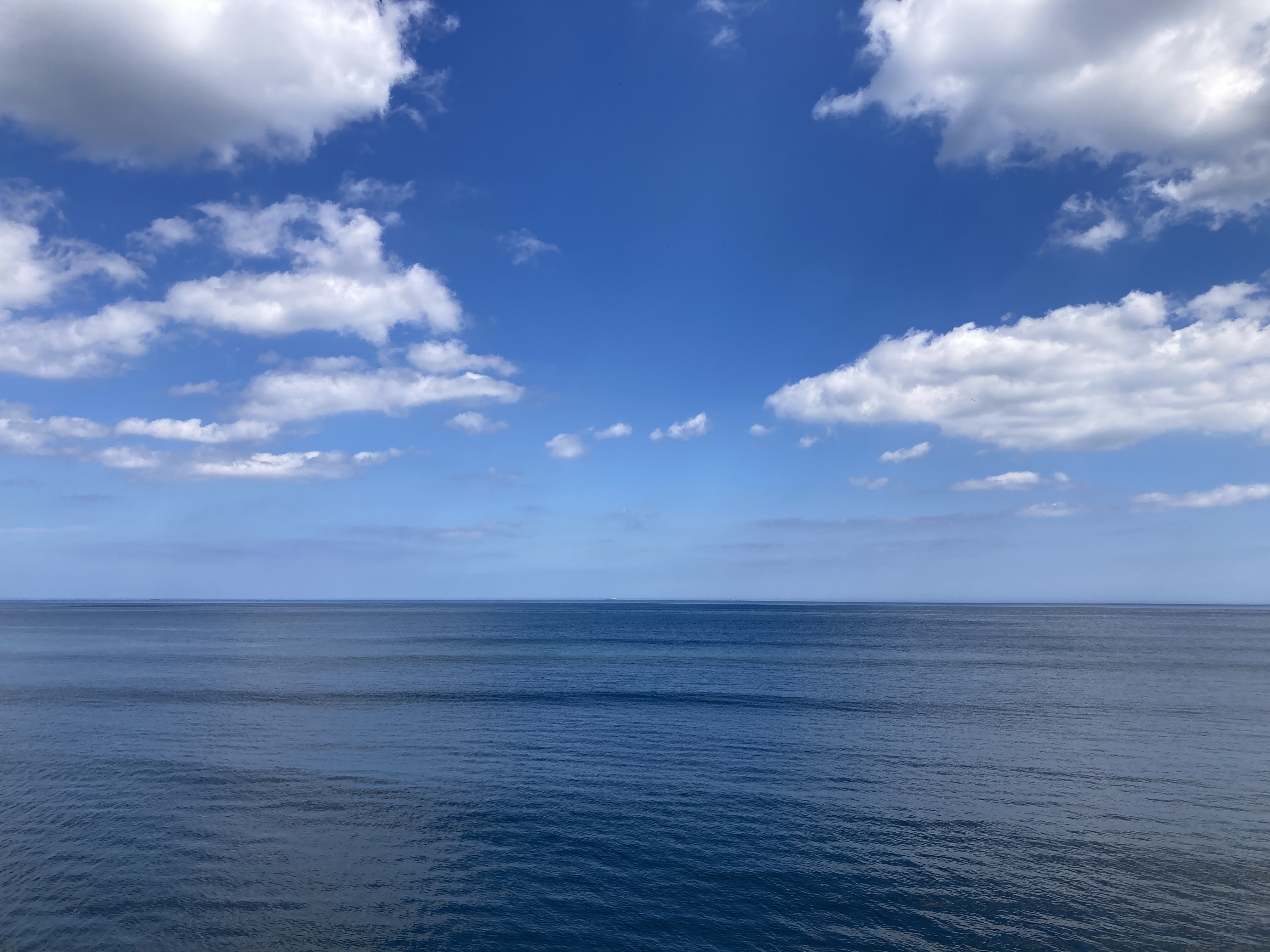
As you stand, alone, gazing out to the vast expanse of the sea, it’s easy to think you are separate. Separate from everyone else, separate from other creatures, standing on the outside, looking in, at this world you find yourself in.

But, that’s an illusion.

We are not separate. We don’t exist apart from Nature. We don’t survive all by ourselves. We are not disconnected.

Yet, this sense of being separate lies at the heart of so much dysfunction and trouble in this world. We have created a system of society, of politics and economics, on the foundations of this delusion. The idea that by encouraging selfishness, actions and choices which put our own interests, not just above those of all others, but with no thought whatsoever to consequences, we can create a healthy, thriving life, is just crazy.

So, why do we live this way? Why do we support the idea that we can consume more and more of the Earth (what we call “resources”) forever and forever? We live in a finite planet. What we burn and destroy won’t come back. The species we eliminate won’t come back. We can argue about timescales, but the Club of Rome’s “Limits to Growth” report, published decades ago, was, essentially, correct. Unlimited growth in a finite world is going to hit the buffers one day, maybe not in our lifetime, but in the lifetime of our grandchildren, or our grandchildren’s grandchildren.

Should we care about our grandchildren’s grandchildren?

I think we should.

Why do we support the idea that a tiny minority of the people in the world should be allowed to grab as much of it as they can? Why do we have billionaires? Does it matter what they do? Does inequality matter? A question which won’t even occur to the narcissist.

Iain McGilchrist’s thesis about our brain asymmetry helps me understand. It rings true and it helps me to see that if we use our left hemisphere excessively, and, as if it is disconnected from our right hemisphere, then we are going to experience the world as if everything is disconnected. Our reductionism and selfishness will narrow our view so much that we’ll fail to see that we, and everything else on this planet, are intimately, inevitably, interconnected.

We are embedded in this world. We exist, for a brief time, in a vast web of relationships. We are the individual waves which appear on the surface of the sea, then dissolve, back into it.

Can we learn to take a longer view? Can we begin to act as if our grandchildren, and their grandchildren matter? Can we make choices which take into account the ripples and effects of those choices, and the effects they have on others, on our environment, on the world in which we belong?

I watched a short video last night which promoted the part of the world where I live, Nouvelle Aquitaine. One phrase they used really struck me – “Vous êtes unique, nous sommes unis” – You are unique, we are united. It’d be good to live that way, owning and respecting our own uniqueness, and that of all others, and feeling connected, deeply knowing, that we are all one.

What do you think? Can we develop and share a different vision for our lives and our world? A vision more consistent with the use of both our cerebral hemispheres, a connected world of embedded lives, where everything we do has consequences, for ourselves, for our loved ones, for others? Can we learn to see the bigger picture, the longer timescale, a better way to live?

Read Full Post »

I’m really enjoying reading Aldo Leopold’s “A Sand County Almanac”, published in 1949. He was a naturalist who bought a farm in Wisconsin and this little book is full of beautiful observations and reflections. Read this extract –

We know now what was unknown to all the preceding caravan of generations: that men are only fellow-voyagers with other creatures in the odyssey of evolution. This new knowledge should have given us, by this time, a sense of kinship with fellow-creatures; a wish to live and let live; a sense of wonder over the magnitude and duration of the biotic enterprise.

Fabulous.

But it could have been written yesterday.

How much progress have we made with this understanding and knowledge in the last, over seventy years, since he wrote these words? How’s it going with our “sense of kinship with fellow-creatures”? Maybe there are individuals, and even groups of individuals, who feel this strongly, but where is it in the politics and economics of any country? Which political party, or politician, has risen to power on the back of a promotion of our “sense of kinship with fellow-creatures”? Heavens, they can’t even have a sense of kinship with children dying in war, famine or poverty. They can’t even have a sense of kinship with people who were born on some other patch of land, other than the one they, themselves, were born on. But, I think it’s still something we should aspire to. It’s still something we should call for. Not just kinship with children everywhere, but with our “fellow-creatures” too. The loss of species threatens the very survival of our own species. Industrial farming techniques produce poor quality food to shipped into factories and, not just processed, but “ultra processed”, something we are learning causes inflammation in our bodies, triggers chronic diseases, and, I read today, even pushes microplastics into our brains.

“a sense of wonder over the magnitude and duration of the biotic enterprise”……..I am firm believer in the power of wonder. I haven’t the slightest doubt that it contributes to the experience of a better life, of a better today, of a better present. If we had more wonder, we might be more humble, we might be more careful, we might fall in love more, we might understand more, we might care more.

These are values I think we can build better lives on, values we can create better societies from……let’s have more “kinship”, more “wonder”, and more desire to “live and let live”.

Read Full Post »

I watched the prequel to “Yellowstone” recently, “1883”. There’s a character in it called “Shea Brennan”, who has a monologue about death of loved ones, how we deal with grief, and how that can inform our life choices.

“An Apache scout told me once, when you love somebody, you trade souls with ‘em. They get a piece of yours, and you get a piece of theirs. But when your love dies, a little piece of you dies with ‘em. That’s why you hurt so bad. But that little piece of him is still inside you, and he can use your eyes to see the world. So, I’m takin’ my wife to the ocean, and I’m gonna sit on the beach and let her see it. That was her dream.”

I thought it was a really moving, and rather beautiful, scene. Surprisingly, I haven’t heard that idea before, the idea that when you love someone you exchange a piece of your soul for theirs. In fact, I don’t think I’ve ever come across the idea that the soul can be broken up and a piece given away before. I’m more familiar with the idea that when you love someone your soul becomes entwined with theirs.

In fact, I prefer the image of the entwining, over the one of pieces being exchanged. The soul doesn’t feel a divisible concept to me, and, I’d say, my experience of life is that when you love someone you entwine your soul with theirs, and that your souls are entangled for ever after. Even if a relationship ends, through, drift, breakup, or death, the souls remain entangled.

However, let’s stay with the movie quote for now, because the other aspect of the belief he outlines, is that if your loved one has died, then they are able to experience the world through you in some way. That, too, strikes me as a beautiful thought, and, again, isn’t one I’ve really considered before. In the movie the character’s wife had a dream to see the ocean, so he decides to make his way to the coast so he can sit on the beach and she can see the ocean through him.

I think those with whom our souls are entangled, do continue to be affected by our experiences. Even as I write that, it strikes me as a radical, perhaps even crazy, idea, but there’s something there rings true. And it’s something I’ve encountered many times, in my dealings with patients and their relatives.

I follow the work of Christopher Ward on Instagram. He has something he calls “modelstrangers” where he stops people in the street and asks if he can make their portrait with his camera (he makes really wonderful portraits). As he takes photos he speaks to them, or actually, he does little interviews, and lets them do most of the talking. Recently, he encountered a young woman called “Amaal”, who said her brother, aged 20, had died last year, and she said “I have to live for both of us as he can’t enjoy it”, “so I want to enjoy everything” and she goes on to describe the beautiful, ordinary experiences of everyday life, which she nows pays close attention to, and which she enjoys. Really, it was a beautiful little interview. She’s obviously a very special person, but it’s the same sentiment…..that a loved one who is no longer with you can now only enjoy the delights of this world through you.

Whatever you believe about souls and about afterlife, I think this notion that we become entangled with others through love, and that we can consciously choose to share our daily experiences with them, wherever they are, for ever after, is a beautiful, life enhancing, deeply nourishing idea.

I’ve long believed that we should “relish the day”, that we should be “heroes not zombies”, becoming ever more aware of the beauty and mystery of this world, that we should stir our capacity to wonder as we go through an “ordinary” day, but, now I think I can take that a step further, and call to mind my loved ones, and share these daily delights with them, even if they aren’t here in my same time and place, to enjoy them for themselves. In fact, especially if they aren’t here in my same time and place, to enjoy them for themselves.

Here’s a link to the Instagram video (I don’t think you have to sign up for Instagram to watch it) – https://www.instagram.com/reel/DJraxjsoFw9/

Read Full Post »

In the obsessively micro-managed world we live in now it’s more important than ever for us to take a pause. We are being bombarded with talk of crises, of doom, of having to everything faster, consume ever more, do everything so-called more efficiently.

But we humans are not machines. And we shouldn’t lead our lives, or construct our workplaces according to industrial machine-like principles.

Time and time again you can find creatives….artists, writers, composers, musicians, sculptors and so on tell you they need to have some breaks, some times where they just sit, or they sit and daydream. We need times to just step off the treadmill. We need to pause to gather our thoughts, to become more aware of the present moment, and to restore our depleted reserves of energy.

What length should a pause be?

There is no fixed amount. It can be a short as taking three deep breaths. It can be a few minutes, or a few hours. We need bigger breaks than that too, which is why it’s important to take all your annual leave from work. For some people it’s a sabbatical that they need. But the kind of pause I’m thinking about here, is the kind we all need, every single day.

I’m impressed by how in France there is a habit of stopping for a proper lunch…not grabbing a factory produced sandwich and a can of coke on the way to work and wolfing them down at the desk. They take time to go to a restaurant or cafe, to sit down, have a meal and share some time with workmates or friends. Then back to get on with the rest of the day. There’s still a widespread tradition of working five days a week, not seven here, so that everyone can have some family time, some home time, to do with as they want.

How about you? What pauses do you build into your everyday? What pauses would you like to build in, and why not start today?

Read Full Post »

“I would love to live like a river flows,
carried by the surprise of its own unfolding.” – John O’Donohue

I live in the Charente Maritime, in South West France. I took this photo in Saint Savinien which is a small town just a few kilometres from where I live. The River Charente runs through the town, as it also runs through Cognac, near where I lived when I first moved to France a decade ago. It winds and twists its way through both the Charente and Charente Maritime departments and as you travel around you come across it again and again.

The primary characteristic of the River Charente is that it pretty much always looks the way it does in this photo. It flows incredibly smoothly. Maybe there is somewhere along its way where it breaks into white river rapids, but I’ve never seen that. It just never seems choppy, no matter whether it is flowing fast or slow. In fact, the impression you get is that it is at ease. It’s a river which flows calmly and almost effortlessly. So much so that people around here will tell you it is responsible for the rather laid back, “zen”, “take it easy” attitude so typical of this area.

Flow is a fundamental characteristic of all life. You could argue that it is the key characteristic, distinguishing the animate from the inanimate…..except that even the inanimate also flows, just over a much longer duration than the animate. You have to take a longer view to be able to see the flows of glaciers, continents and mountains.

I think flow is a marker of a good day. I feel I’ve had a good day when my activities, my thoughts, and my feelings have all been flowing like the Charente…..strongly, smoothly and incessantly…..with an ease, a freedom and purpose.

Read Full Post »

« Newer Posts - Older Posts »