Feeds:
Posts
Comments

Archive for the ‘Uncategorized’ Category

The brighter edge

We tend to think of the phrase “silver lining” in the context of clouds but I thought of it when I looked at this photo. Although, on closer inspection, this looks more like a “golden lining”. So, hey, that must be a whole level better, don’t you think?

Are you aware of any golden linings in the world just now? In the midst of all the news about the pandemic, a climate crisis, loss of biodiversity, pollution and increasing inequality?

Actually, I do. Maybe I’m a bit strange but in the midst of these challenges I see some glimmering, golden linings.

The first is the number of acts of kindness and care we can see all around us. During lockdowns we saw hundreds of thousands of people helping out their neighbours. In the health and social care sectors we’ve seen the most astonishing levels of dedication and courage. In the midst of hardship we see food banks delivered by volunteers, ordinary unpaid people who just want to help.

Secondly we’ve seen how quickly we can learn in a crisis. The collaboration amongst researchers and clinicians around the world produced new vaccines and new, better ways of caring for the sick.

Thirdly these crises have brought forward new solutions, new ideas and new policies in the domains of science, economics, agriculture and technology.

Sure, it’s easy to be overwhelmed by the extent and severity of the problems we face, and to despair about greed, violence and divisiveness. But we need hope to move forward, as well as having awareness and understanding.

Our golden lining is the profoundly social and creative character of our species. If we align ourselves with these fundamentals, then maybe we will see the golden lining turn into a new dawn, a new era.

I hope so.

Read Full Post »

Complexity

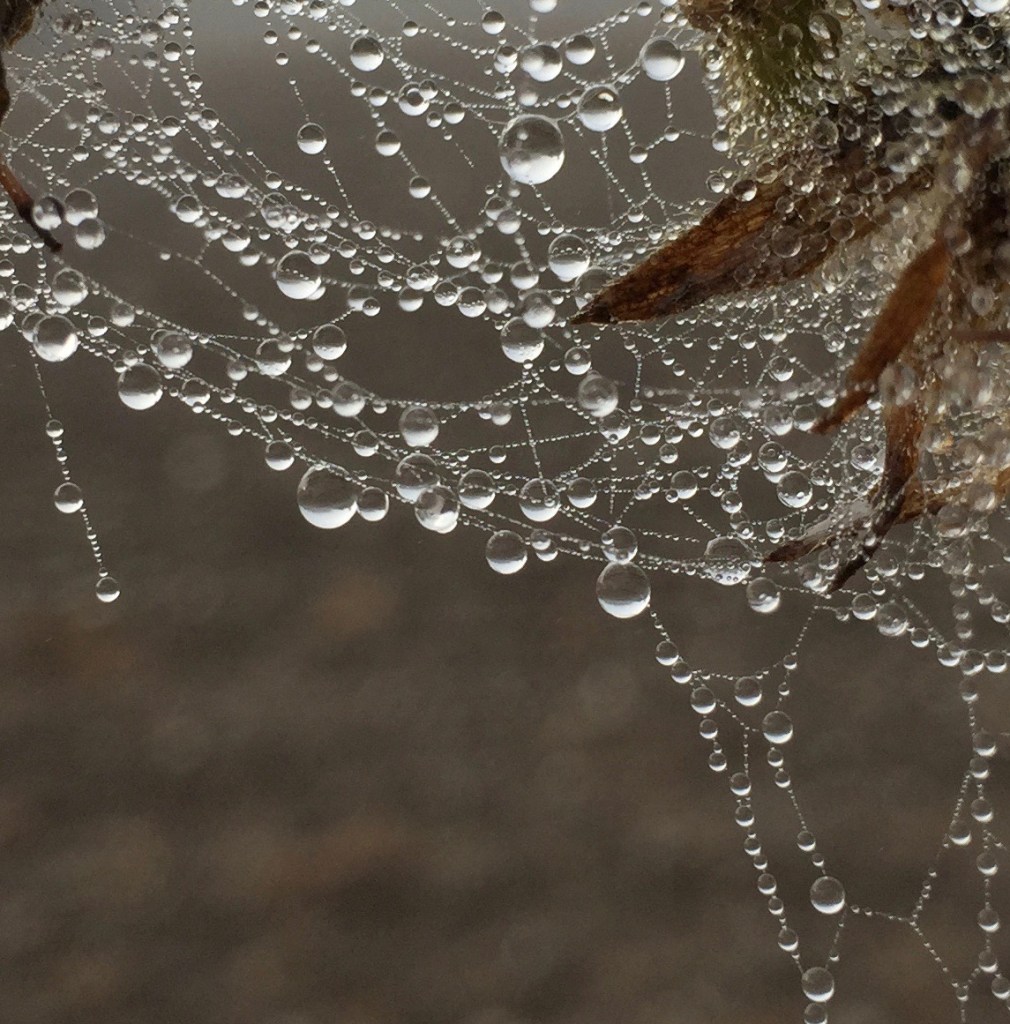
I’m quite fascinated by webs. They always make me think of “complexity” …… which is the basis of reality.

Complex systems are made of nodes and connections. Pretty simple, huh? But really that’s their structure. We see that everywhere. In these webs, in nets, and in networks…..all multiply connected nodes.

When you look in the human brain, that’s what you see. Specialised cells called neurones, each connected to up to 50,000 others. I mean it’s literally mind boggling isn’t it? Hard to imagine billions, yes billions, of cells, every one of which has a node which connects it to up to 50,000 others. Can you imagine how many possible variations there are of actively firing neurones? Each pattern of firing is associated with each thought, feeling, image, perception, memory, action, behaviour…..the scope is infinite.

We can think of the body as a vast complex web too, the trillions, yes trillions (I can’t even envisage what a single trillion looks like!) of individual cells, every one of which is multiply connected to others.

This model scales beautifully. We can see this pattern of nodes and connections within a cell, between cells in a single organ of the body, between organs and tissues, and beyond the body to families, communities, ecosystems.

There’s a special kind of complexity which describes any form of Life in Nature – complex adaptive systems.

Complex adaptive systems (that includes you and me) consist of parts which connect with each other non-linearly. That means the effect of each connection is modified by other connections within the network and changes ripple through the whole system magnifying in intensity, or damping down activity everywhere.

This gives a complex adaptive system certain characteristics. They are all unique, all unpredictable in detail, all self-regulating, and self-repairing. They are “open”, constantly experiencing flows of energy, information and molecules within themselves and within the environments in which they live. This openness and connectedness is the key to their ability to adapt.

Individual healing is a process of adaptation and growth of multiply interconnected nodes, networks and webs.

It’s hard to imagine healthy individuals thriving in unhealthy environments. Which is why it’s so important that we consider the contexts of a person’s life if we want to help them towards health.

Whether we’re thinking about this pandemic or climate change, I think it helps to focus on these images of complexity because they remind us that we are all interconnected, we are all unique, and that we co-create the conditions, and the environments, in which we live. We have to address these problems at both the scale of the individual and the scale of the planet.

Isn’t Life amazing? Isn’t this planet astonishing? Isn’t complexity beautiful?

Read Full Post »

I took this photo outside the Guggenheim in Bilbao a long time ago. It’s one of my favourite photos and one of my favourite sculptures.

If you look very closely you can see that each sphere reflects several other spheres, and in some of those reflections you can see even more spheres reflected. It’s a bit like one of those halls of mirrors which generate an infinity of images.

If I look very, very closely I can see myself in several of the spheres. And at the same time each sphere contains an image of the immediate surroundings. It’s almost like a hologram where every node shows the whole scene.

But what I always think of when I look at this photo is the concept of the Self as multiple.

We each think of ourselves as a single, unique human being, and we’re right to think that, but in fact that “single” is “multiple”. Every one of us has multiple threads woven together to create a unique tapestry. Every one of us has multiple facets which each glisten when a different light shines on them.

One pretty straight forward way to get a sense of this in yourself is to think of how you are, how you behave, what you think and feel, in different relationships and different situations. Chances are you can see pretty clearly how different you are at work from when you are at home with your family. Or how different you are with different friends.

This only feels odd or false if you try to say that only one of these aspects of your Self is the “true me”. They all are.

Different relationships will bring to life different parts of you, and certain situations will repeatedly bring to the fore particular thoughts, feelings, behaviours and energies.

There are whole therapeutic practices built around the concepts of multiple selves in relation to each other – communities or families of selves.

I’ve always found it helpful to consider each patient as multiple. It helps prevent labelling, categorising and so failing to get to know and understand a whole person. So, I’m always very keen to hear as many stories as possible …. not just the story of the present problem, but family stories, relationship stories, work stories as well as past medical stories.

And here’s the thing which I found hard to grasp at first – not all these selves fit together nicely. We contain multiple and often paradoxical selves. That’s just how things are. We are complex beings with egos, shadows, different drives and desires. It takes a lifetime to get to know them and accept them, but that’s what growth and flourishing are about.

Read Full Post »

Turning better

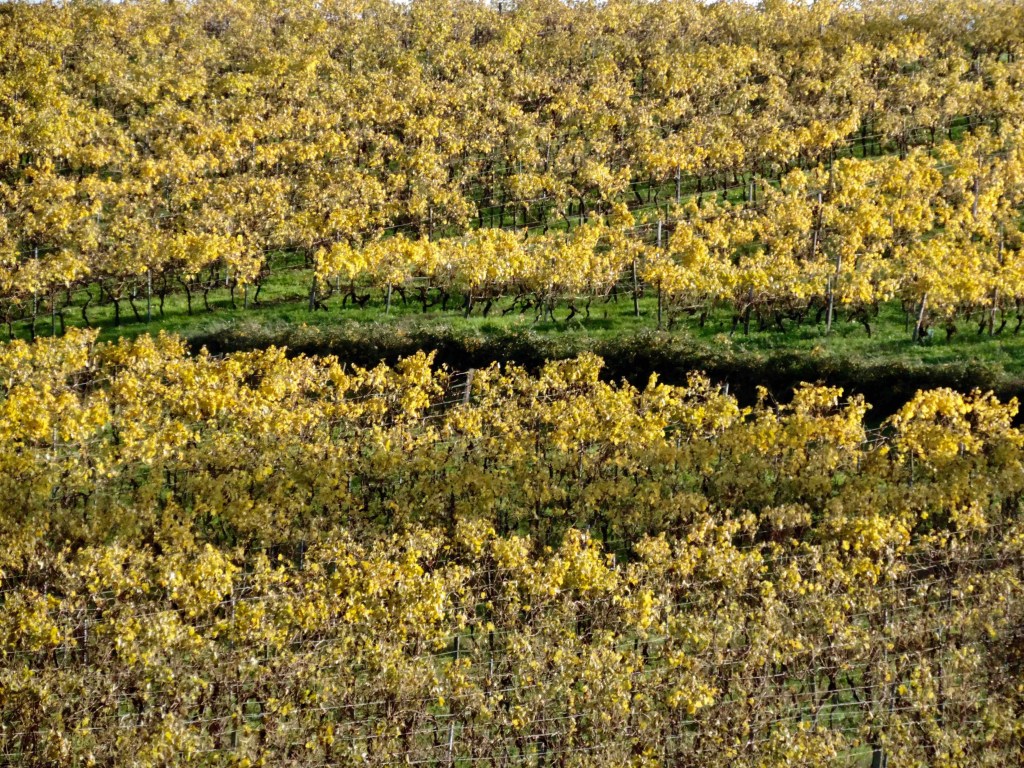
This is what the world looks like around me just now. For the last seven years I’ve lived at the edge of a village just south of the town of Cognac. Cognac isn’t a very big town but it’s name, at least, is known around the world, because all around this region are vineyards dedicated to the work of producing a drink which is also called “cognac”.

Looking out over rows of vines has been a completely new experience for me. I come from Scotland after all! I’ve loved watching the seasons manifest themselves as they sweep through the vineyards and they are probably at their most beautiful at this time of year.

I’ve watched the vine workers go about their daily tasks through seven annual cycles now and two things have really struck me.

There are times when every single plant is tended by human hand. You’ll see the workers move along the lines, pruning and tying up every single plant, one at a time, from dawn to dusk. That’s the phase I witnessed first when I moved here.

How things progressed from there surprised me. For the rest of the year they use machines. Huge machines and tractors spraying chemicals everywhere. Fungicides, insecticides, herbicides….you can see what all these chemicals have in common – “cides” – “killers”.

Then comes the harvest, frenetic activity from well before dawn to well after dusk, driving up and down the vines in vast metal machines which straddle the vines and strip the grapes from the plants, collecting them in huge tractor pulled trailers.

Then the vineyards quietly turn yellow, golden or red. There’s a silence in these days which has become familiar to me.

I’m not an expert in “viniculture”. I don’t know how to rear and tend to vines to produce the best harvests, but I’m sad that the process seems so reliant on machinery and chemicals around here. And I know that an increasing number of vineyards are going “bio”, switching to methods which require a lot less consumption of chemicals and petroleum.

I don’t know if it’s possible for this “new” organic way to completely replace the high carbon footprint, chemically dependent one, but I hope so. And increasingly I express my preference by choosing the “bio” cognac, pineau and wine, which seems increasingly available.

In this week of COP26 in Glasgow we’re all being made more and more aware of our need to act, not just speak. It’s probably a good sign that I find my own awareness of these issues is increasing and that that’s affecting my decisions and choices.

Nobody says it better than David Attenborough. Here’s his latest speech in Glasgow.

Read Full Post »

Emotions like water

When I took this photo of an Iris flower it was the shape of the water which caught my eye. It looks like a little angel with her arms stretched upwards to the left, and her long dress trailing downwards to the right.

At least, that’s what my imagination creates for me when I look closely.

Isn’t it strange that water can take such a shape? Perhaps not. After water will take the shape of whatever bounds it. Isn’t the shape of a river determined by the rocks and the earth over and around which the water flows? A constant process of co-creation between the flowing water and the solid earth.

That’s enough for me. Water itself, it’s shape shifting and constant flowing, it’s ability to hold a position for a while. All that fills me with wonder and awe.

However, there’s something else comes to mind when I ponder water – emotions.

Emotions are like water. They flow. There’s a clue in the name – e “motions”. It’s easy to forget that because in the midst of an emotional experience it’s easy to lose sight of the fact that, whatever it’s nature and intensity, it is temporary. Emotions don’t stand still. Like water, they arrive, we find ourselves immersed in them, then they move on.

Emotions, like water, can flood us. We can feel like we are drowning in them, overwhelmed with sadness, incandescent with rage, paralysed with fear, ecstatic with joy……

In the midst of the most intense emotions it can be hard to swim. But we can learn and we can practise. We can learn to breathe, to pause, to step back and to notice. We can learn to watch emotions flow past, as the water flows past in the river.

And there’s something else. Emotions can arrive like the rain, or a storm, or the flood waters of a bursting river bank. They can arrive, like water does, from outside us. Learning to see an emotion coming depends on understanding the situations which create them, and we can choose, at least some of the time, to create the situations or to leave them.

When we learn what brings us joy, we can create the situations and habits and experiences which bring us joy.

When we learn what brings us fear, anger, anxiety, we can learn how to be prepared, how to adapt.

We can’t live without water. And we can’t live without emotions either. They are a necessary part of our survival, an essential characteristic of being human.

So it pays off to learn about emotions, to become more aware of them, and to remember that they come and go, as water flows.

Read Full Post »

Scary

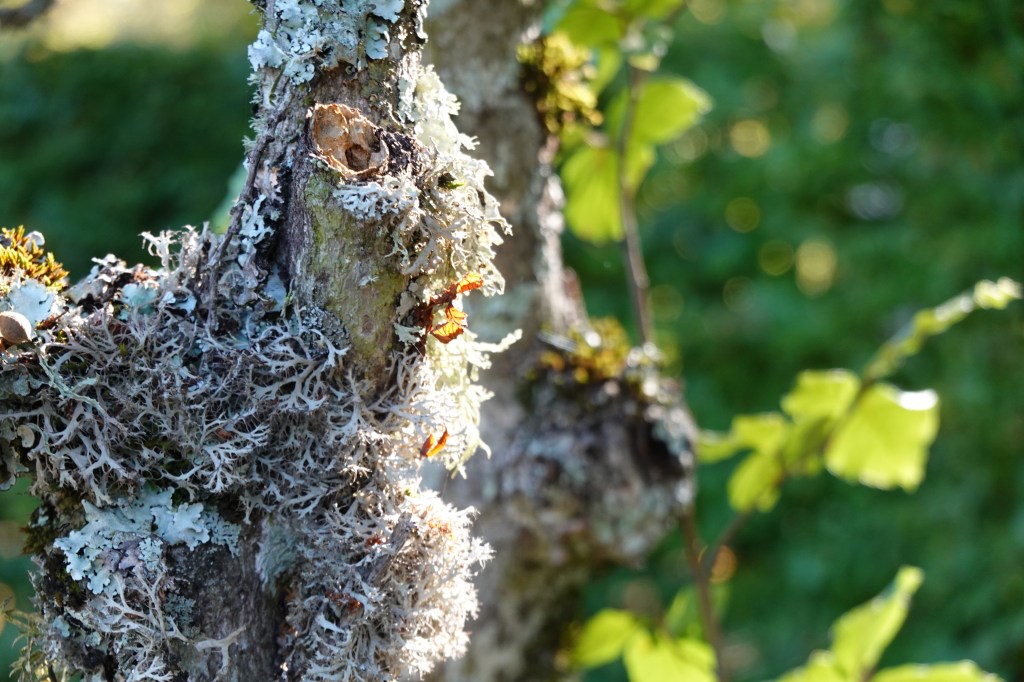
I find lichens and mosses quite beautiful so I often feel drawn to photograph them. That’s what I did here in this garden. It was only later when I uploaded my shots to my computer to review them that I got a bit of a fright when I got to this one.

When I looked at the photo I saw a scary monster! The face of some creature straight out of a fantasy novel!

We have special circuits in our brains for spotting faces and they work so well that sometimes they see faces where no face exists. Like on this occasion. That always fascinates me. And once seen these faces can’t be unseen.

Our experience of seeing, then, is a creative act. We don’t just project an image onto some internal screen the way a camera lens does. We actively work with the visual stimuli to create what we see.

I decided to share this particular photo with you today because it’s Halloween. And this is the time we like to scare ourselves and others. Personally I’m not a fan of horror movies but there is something thrilling about being scared – remember Michael Jackson’s “Thriller” music video?

Actually people like to be scared, but only up to a point. There’s a fine line between being thrilled and being seriously upset with overwhelming fear. And that zone where the thrills occur is very variable. Different people tolerate or even seek it to very different degrees.

To some extent the thrill of being scared works only when we know we are kidding ourselves. For example we know that we are not in any real danger when we see someone with an axe in a movie or on the stage. It’s a completely different matter to be approached by someone like that as you walk down the street!

That’s the power of fiction isn’t it? It allows us to explore and experience a whole gamut of emotions and disturbing situations safely. Well that’s one of the things it does. I know fiction does a lot more than that – bringing pleasure, developing empathy and helping us to make sense of our lives, for example.

So, what are your favourite scary stories or movies? And how do you celebrate Halloween?

Read Full Post »

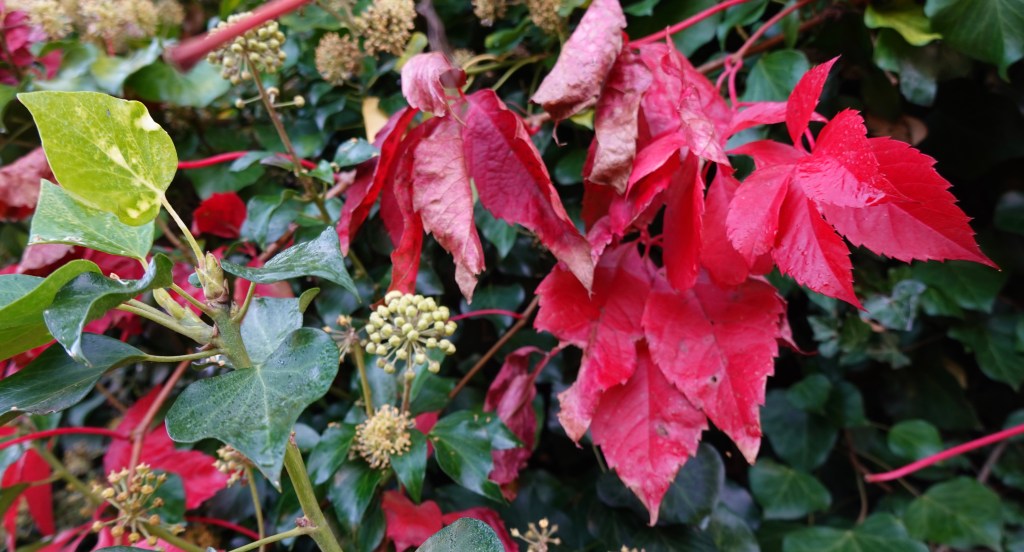
Every two weeks I put two yellow bags of rubbish out for the recycling lorry to collect. There’s a spot to leave them next to a wall about a hundred paces or so from my house. As I walked that regular route this week I stopped beside this ivy which was growing over the old barn near here. I stopped because I was so attracted to the gorgeous red leaves.

When I stopped to look more closely, I took a photo, then noticed the seed heads everywhere amongst the leaves. What unusual and amazing seed heads I thought.

When I look at this photo again I see the red leaves immediately, then quickly after that I see those amazing seed heads. I let my attention wander across the image. I follow the flow of my attention.

There’s a French word, “flâner”. It means to stroll or to wander. Aimlessly. Well, I say aimlessly because it’s not about walking to get to a destination. The aim of wandering is to wander. A “flâneur” is a wanderer.

In our goal driven busy society simply strolling around, wandering, isn’t really valued very highly. But it feels good to let go of all the “have to”s and the goals and all the narrow driven focus that they entail, and just wander, following the flow of your attention, noticing and wondering, then moving on.

Because here’s one of the fundamental paradoxes of our reality. Our brains have evolved to develop two apparently opposite skills…..focus and a wandering attention.

It turns out we need them both.

Read Full Post »

From the top

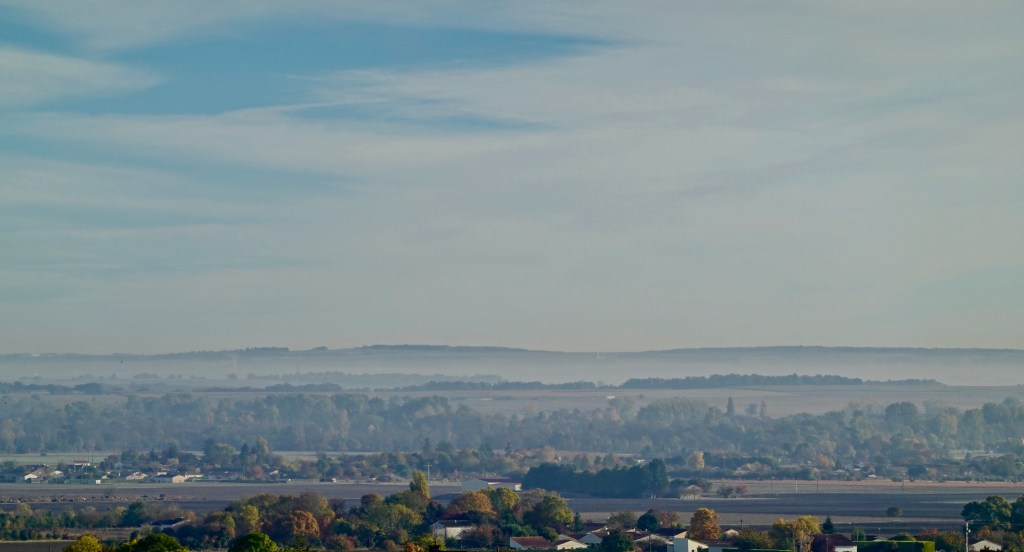
This is the view from the end of my street. The countryside around here is very different from the one in Scotland where I grew up.

The two biggest differences are the vineyards here, and the mountains there.

We’re only about 100 metres above sea level here but this is the highest point around….as you can see.

When I stand somewhere with a perspective like this I always think of the phrase “the view from on high”. It’s not just a physical description but a classical philosophical teaching.

When we take a “view from on high” we do two things – take an overview, seeing the whole, rather than just the parts – and we see the contexts or environments in which whatever we’re looking at exists.

Both of those actions enable us to see connections and so to understand.

The trouble with reductionism is that it ignores this perspective and while that might be useful when studying a part in detail, it always needs to be complemented with an exploration of the connections.

One way we humans do that is to tell stories. Stories tell us about the time and place where something exists or occurs. Stories can weave together the threads and paths which have led to what we’re considering.

Stories and taking “the view from on high” can help us to understand.

Read Full Post »

A focus on quality

There are some words in French which I really like but find hard to translate directly into English. It’s not that I don’t understand the particular French word, but more that I have to think less like a dictionary and more like a thesaurus to cover the multiple nuances of meaning.

Emerveillement is one of those. I’ve mentioned that many times and you can pop that into the search box at the top of my blog and find a number of articles about it. It covers elements of wonder, awe and joy.

Épanouissement is another. It’s often used to refer to the blossoming of a flower but is also used to refer to human development and flourishing. Thriving would be another aspect to throw in there, so putting those connotations together it’s a good word to consider when thinking “what is health”?

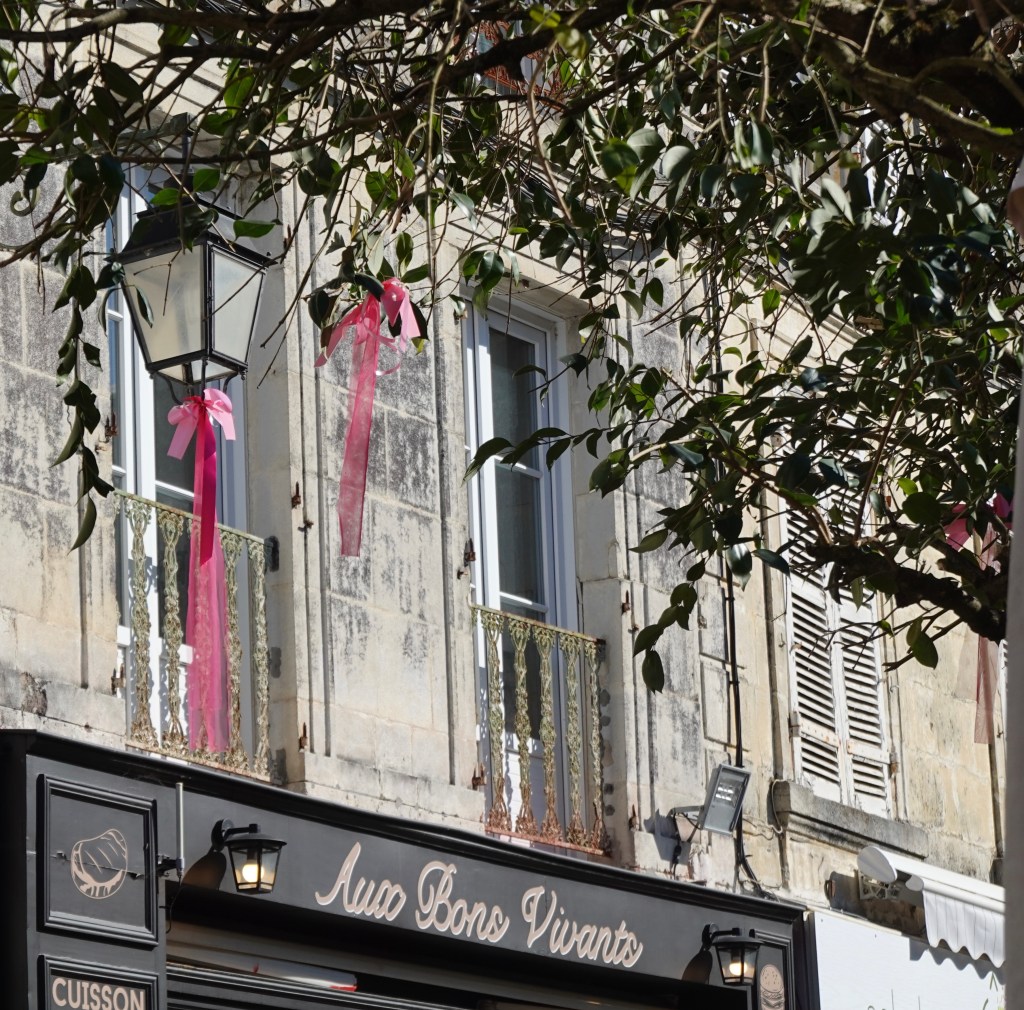
“Bon vivant” is another one. This clothes shop in Cognac is called “Aux bons vivants” which would translate as something like “to those who live well”. The thing about “bon vivant” is that it means someone who loves life, someone who enjoys fine food and drink, someone who is concerned about quality and who enthusiastically enjoys life’s sensations…..in the sense of enjoying sensuality.

But “bon vivant” is one of those phrases which has made it into English and an English speaker who knows no French might use it like how “entrepreneur” is used in English. Was it George Bush who was alleged to have said “The French don’t even have a word for entrepreneur”?

In making its way into English however it seems to have acquired some negativity. It can often be used in a judgemental way to refer to someone who likes “fine things”, is “sophisticated” and a bit superior, or even someone a bit greedy. But I don’t think it ever carried those negative judgements in the original French.

To be someone who wants to live well you need to be passionate about life, to rate quality over quantity, to savour and enjoy the sensations of experience.

I love that. If you can park the judgements then you can find much to relish, much to appreciate in the life of a “bon vivant”.

I mean who doesn’t want to live “a good life”?

Read Full Post »

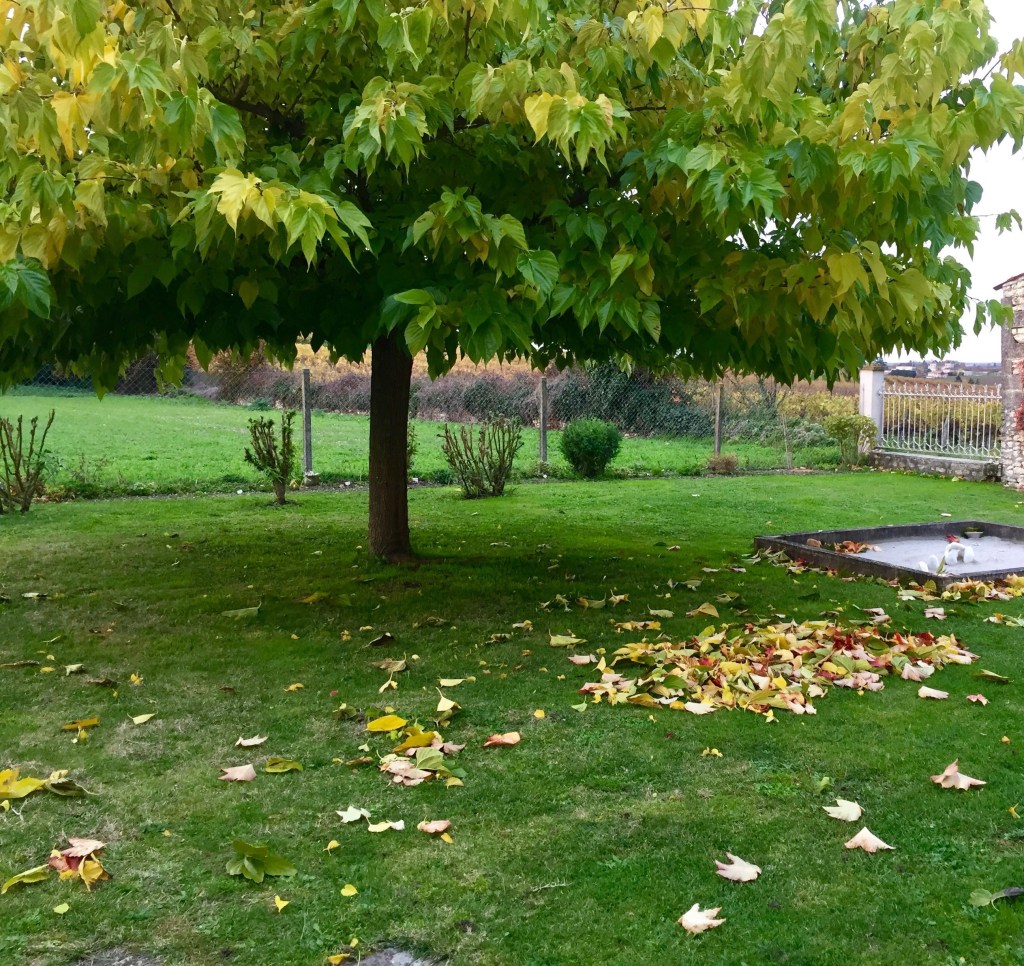
Autumn is perhaps my favourite season. Not just because of the beautiful colours. Not just because like springtime it’s a season of change which makes me acutely aware of the cyclical nature of time. But because it blends endings and beginnings together beautifully.

I started university in the autumn. I started most of my jobs in the autumn as I progressed through training in various specialties then on into first General Practice then Hospital Practice. All of which embedded a sense of beginnings for me at this time of year.

But all around I see the leaves start to fall. I see the flowers and most of the plants in my vegetable plot die back.

I see that summer is over and winter is coming.

So perhaps this is the season where I’m most aware that each ending heralds a beginning and each beginning is tinged with the melancholy of something ending.

I like it best when I’m most aware of Life’s complexity and paradoxes. It feels richer, deeper, more nuanced then.

It feels more colourful when reality is less black and white.

Read Full Post »

« Newer Posts - Older Posts »